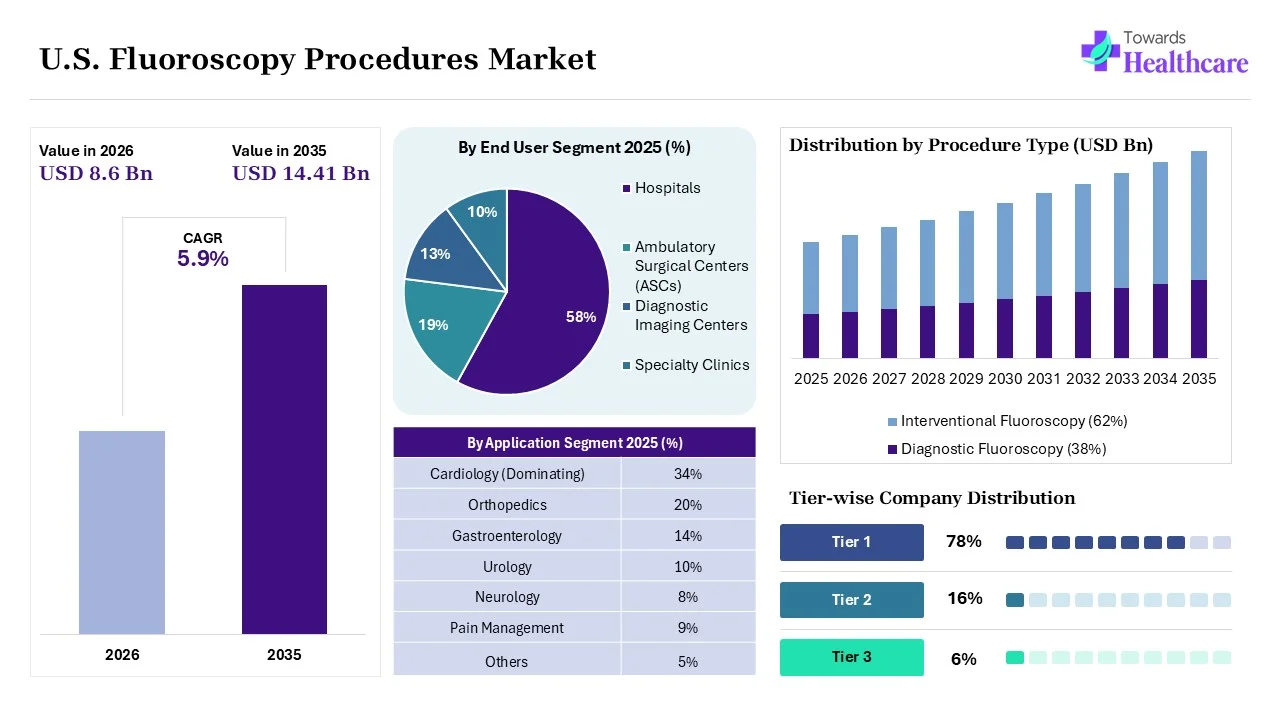
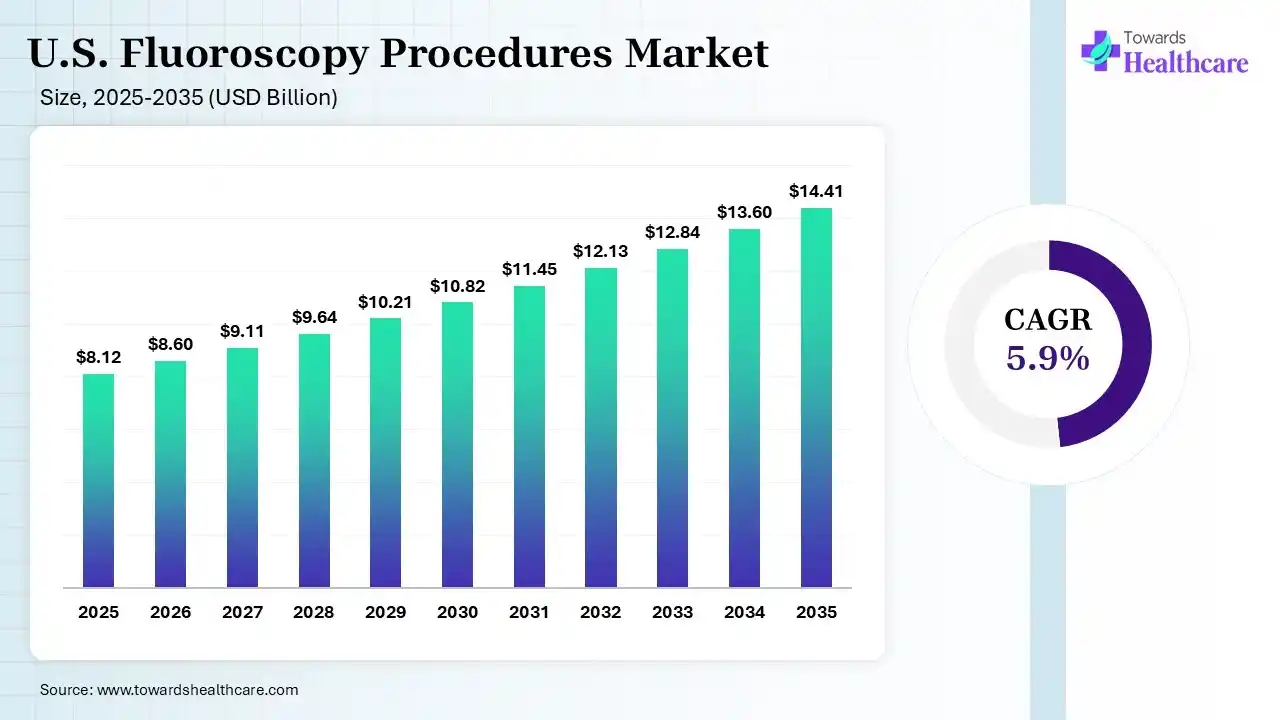
The U.S. fluoroscopy procedures market size was estimated at USD 8.12 billion in 2025 and is predicted to increase from USD 8.6 billion in 2026 to approximately USD 14.41 billion by 2035, expanding at a CAGR of 5.9% from 2026 to 2035.
Fluoroscopy is a research method of moving body structures, similar to an X-ray. An incessant X-ray beam is passed through the body structure being inspected. Fluoroscopy used for diagnosing health challenges like heart or abdominal disease. It also applies to guide management, like implants or injections, or in orthopaedic surgery. It supports the medical care provider to look inside joints, organs, muscles, and bones. Fluoroscopy technology involves exposure to ionizing radiation, which can slightly increase the risk of developing cancer later in life. Applications for fluoroscopy involve swallowing research, upper and lower stomach imaging, angiography, and device placements like stents, needles, lines, and tubes.
Fluoroscopy technology offers real-time X-ray imaging to guide bone, heart, vessel, digestive, and pain management safely. Most fluoroscopy processes do not need continuous fluoroscopy and can be precisely performed using pulsed fluoroscopy as low as 7.5 pulses per second. This advancement remains a significant modality in the age of high-resolution cross-sectional imaging modalities like computed tomography (CT), ultrasound, and magnetic resonance imaging (MRI). It is an exclusive and significant device in diagnostic radiology and remains an important part of practice and residency training.
The AI-driven fluoroscopy technology significantly lowers radiation exposure to patients and the scatter outcome to endoscopy personnel. An AI-enabled technology aided in lowering radioactivity doses by choosing the region of interest in pathology and exposing that area. AI-based technology raises radiation safety and means fewer challenges to patients and staff in technology such as advanced endoscopy, also in settings like cardiac cath labs. Advancement of an AI-driven fluoroscopy technique to lower radiation exposure while using image-guided endoscopic technology. AI-based technology significantly enhances pre-procedural planning, intra-procedural navigation, and post-procedural assessment. AI-based algorithms and machine learning applications are poised to augment fluoroscopy by mechanizing image analysis, enhancing radiation doses, and assisting in real-time decision-making during advanced procedures.
3D Fluoroscopy:
3D fluoroscopy guidance is a novel, promising, and feasible technology used for pointer interventions, with high technology success, short procedure times and fluoroscopy periods, comparable accuracy to CT fluoroscopy, reducing complication rates, and is simple to perform. Real-time 3D fluoroscopy is used for real-time needle intervention with a improve degree of precision.
Cone Beam CT:
CBCT-driven technology provides improved 3D visualization, lowering radiation exposure while maintaining high diagnostic precision and limited needle puncture times. CBCT-guided robotic involvements play a significant role in progressing interventional radiology and are expected to enhance procedural results in IR.
Multimodality Image Fusion:
Recent developments in multimodal image fusion guidance have presented innovative strategies for roadmaps in neuroendovascular technology. This advancement allows the incorporation of different imaging modalities, involving pre-acquired datasets like computed tomography venography (CTV) or magnetic resonance venography (MRV), with real-time two-dimensional (2D) fluoroscopic images.
| Table | Scope |
| Market Size in 2026 | USD 8.6 Billion |
| Projected Market Size in 2035 | USD 14.41 Billion |
| CAGR (2026 - 2035) | 5.9% |
| Historical Data | 2020 - 2023 |
| Base Year | 2025 |
| Forecast Period | 2026 - 2035 |
| Measurable Values | USD Millions/Units/Volume |
| Market Segmentation | By Procedure Type, By Application, By End User, By Equipment Type, By Technology |
| Top Key Players | GE HealthCare, Carestream Health, Hologic, Inc., Ziehm Imaging GmbH, Koninklijke Philips N.V. |
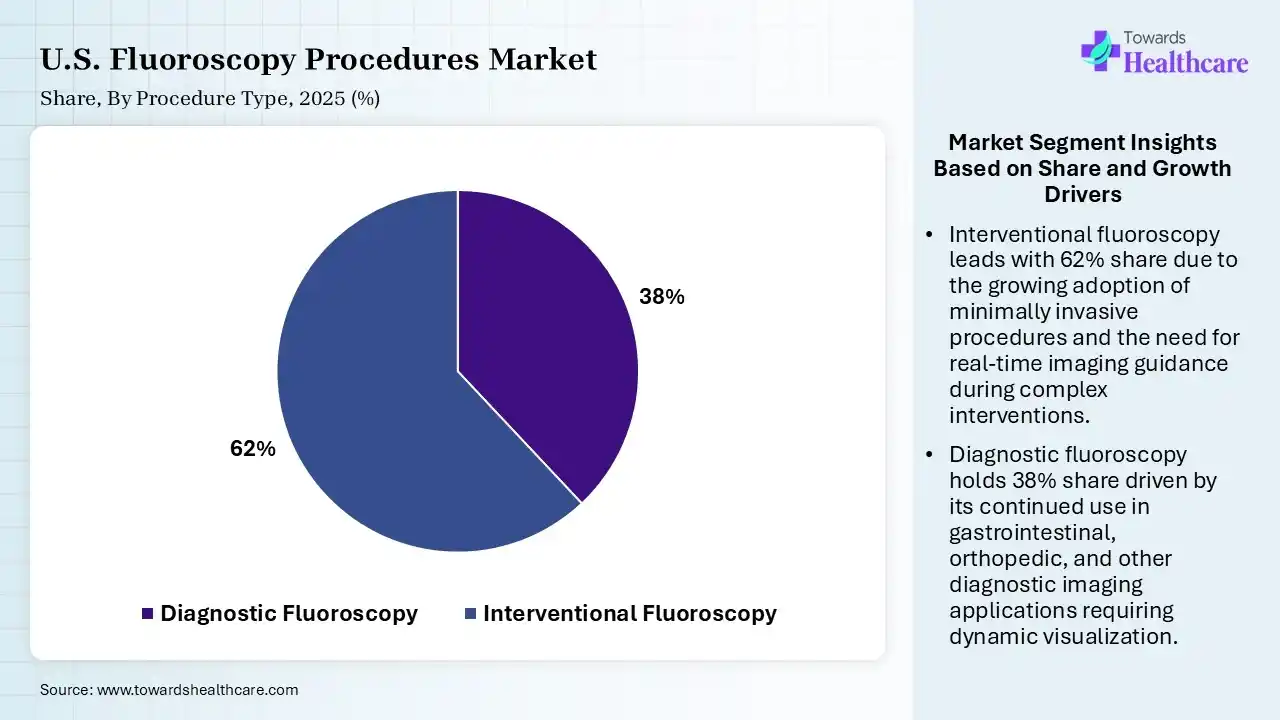
| Segment | Share 2025 (%) |
| Diagnostic Fluoroscopy | 38% |
| Interventional Fluoroscopy | 62% |
The Interventional Fluoroscopy Segment Led the U.S. Fluoroscopy Procedures Market in 2025
The interventional fluoroscopy segment contributed the largest market share of 62% in 2025 and is expected to grow at the fastest CAGR of 6.60% during the forecast period in the market, as interventional fluoroscopy supports physicians in seeing inside the body in real time. It provides advantages such as faster healing and smaller cuts. Interventional fluoroscopy shows marvelous benefits over invasive surgical technology, as it needs only a very small incision, substantially lowers the risks of infection, and allows for a shorter recovery time compared to surgical technology.
The diagnostic fluoroscopy segment held a significant share of 38%, as this type of fluoroscopy offers detailed, live images that assist in monitoring, diagnosing, and guiding a diversity of healthcare procedures, from basic diagnostics to challenging surgeries. It works by releasing a controlled X-ray beam through the body and capturing the X-rays that pass through it. It is used to direct a pointer to a precise area of the body, like when performing a lung or liver biopsy.
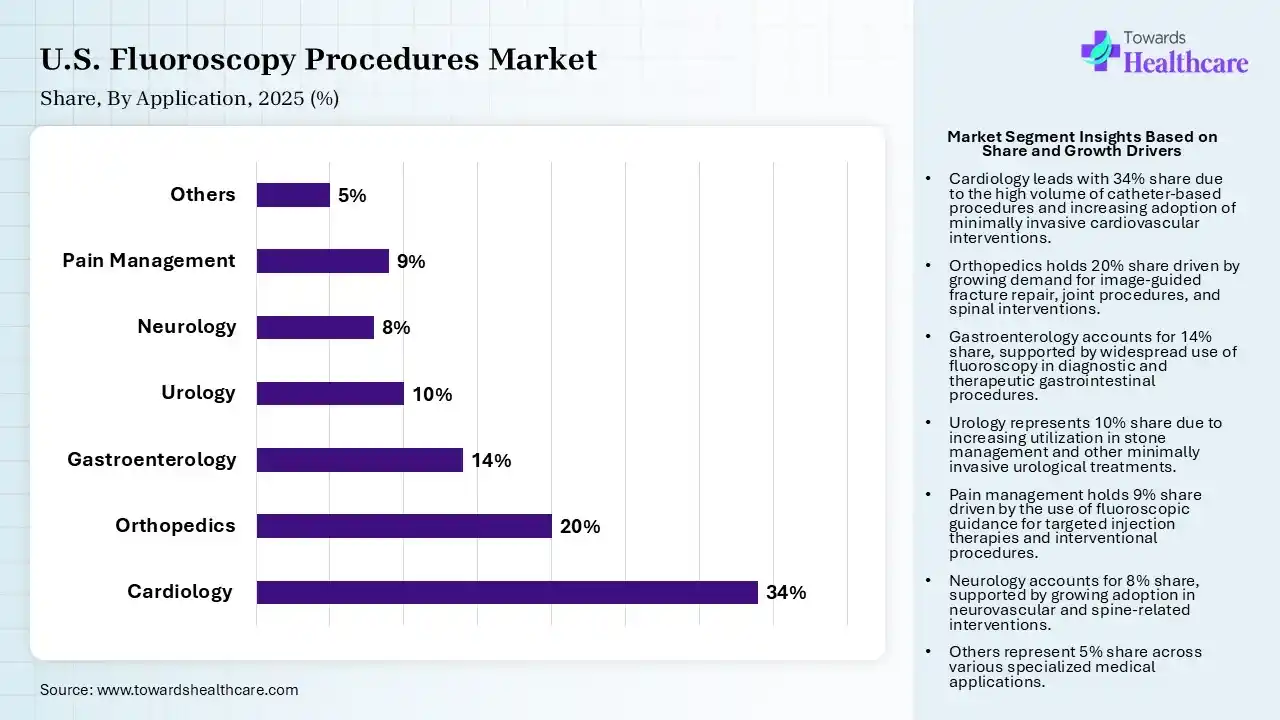
| Segment | Share 2025 (%) |
| Cardiology | 34% |
| Orthopedics | 20% |
| Gastroenterology | 14% |
| Urology | 10% |
| Neurology | 8% |
| Pain Management | 9% |
| Others | 5% |
Cardiology Segment Led the U.S. Fluoroscopy Procedures Market in 2025
The cardiology segment contributed the largest market share of 34%. Fluoroscopy supports the real-time imaging of blood vessels, specifically for coronary angiography, which identifies blockages in the coronary arteries. Fluoroscopy offers a clearer picture of multifaceted heart conditions, like collapsing trachea, congenital heart faults, and vascular abnormalities.
The orthopedics segment held a significant share of 20% of the market. Fluoroscopy assists in fracture alignment, implant positioning, and joint measures. Fluoroscopy is a healthcare procedure that allows physicians to see real-time movements in the part of the body. Fluoroscopy-guided injections provide a multitude of benefits for the management of pain.
The gastroenterology segment held a significant share of 14% of the U.S. fluoroscopy procedures market, as this technology is usually applied in the management of common bile duct stones, malignant obstructive jaundice, and post-operative bile leaks. Fluoroscopy enables dynamic and functional imaging, which is often invaluable in assessing gastrointestinal pathologies.
The pain management segment held a significant share of 9% of the market and is expected to grow at the fastest CAGR of 6.8 % during the forecast period, as fluoroscopy provides modest benefits in short-term pain relief, while CT offers improved anatomical visualization. minimally invasive technology guided by fluoroscopy, less pain, limited hospital stays, and rapid recovery compared to outdated surgery.
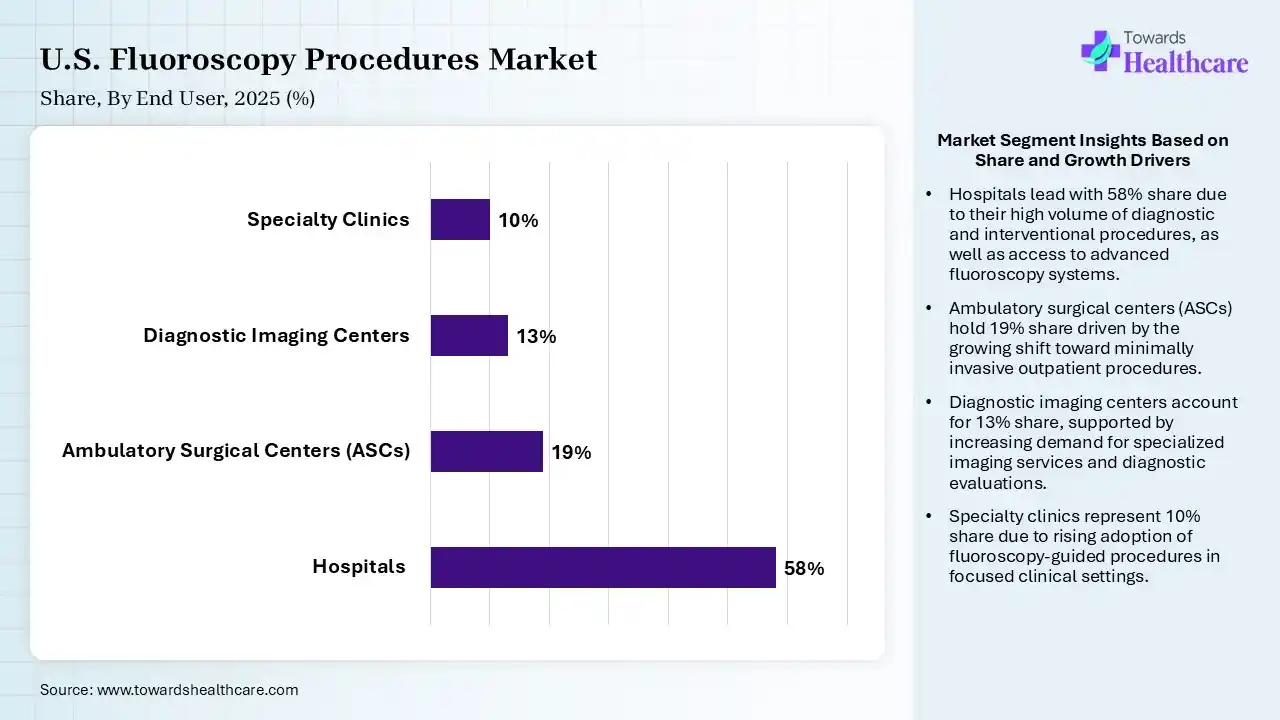
| Segment | Share 2025 (%) |
| Hospitals | 58% |
| Ambulatory Surgical Centers (ASCs) | 19% |
| Diagnostic Imaging Centers | 13% |
| Specialty Clinics | 10% |
The Hospitals Segment led the U.S. Fluoroscopy Procedures Market in 2025
The hospitals segment held a significant share of 58% in the market, as medically appropriate fluoroscopy examinations offer clinical advantages that outweigh the challenges from the radiation received during the examination. Fluoroscopy offers detailed, live images that contribution in diagnosing, monitoring, and guiding a different of medical technologies, from basic diagnostics to challenging surgeries.
The ambulatory surgical centers (ASCs) segment contributed the largest market share of 19%, and is expected to grow at the fastest CAGR of 7.1% during the forecast period, as fluoroscopy enables incessant imaging, which is specifically valuable during procedures that require live guidance, like catheter insertion or orthopedic operations. ASCs demonstrated an exceptional capability to enhance quality and customer solutions while simultaneously lowering expenses.
The diagnostic imaging centers segment held a significant 13% share of the U.S. fluoroscopy procedures market, as these centers are equipped with advanced machines and trained lab specialists, offering highly precise and reliable test output. Diagnostic Centers involve blood tests, liver function tests, kidney function tests, sugar level, lipid profile, ECG, thyroid test, X-Ray, and ultrasound.
The specialty clinics segment held a significant 10% share of the market, as they offer the benefits of condition-driven patient-centred care, the motivation for superiority. Multi-speciality hospitals provide a broad range of healthcare services under one roof. A multi-specialty hospital offers comprehensive care, access to multiple specialists, and a streamlined experience.
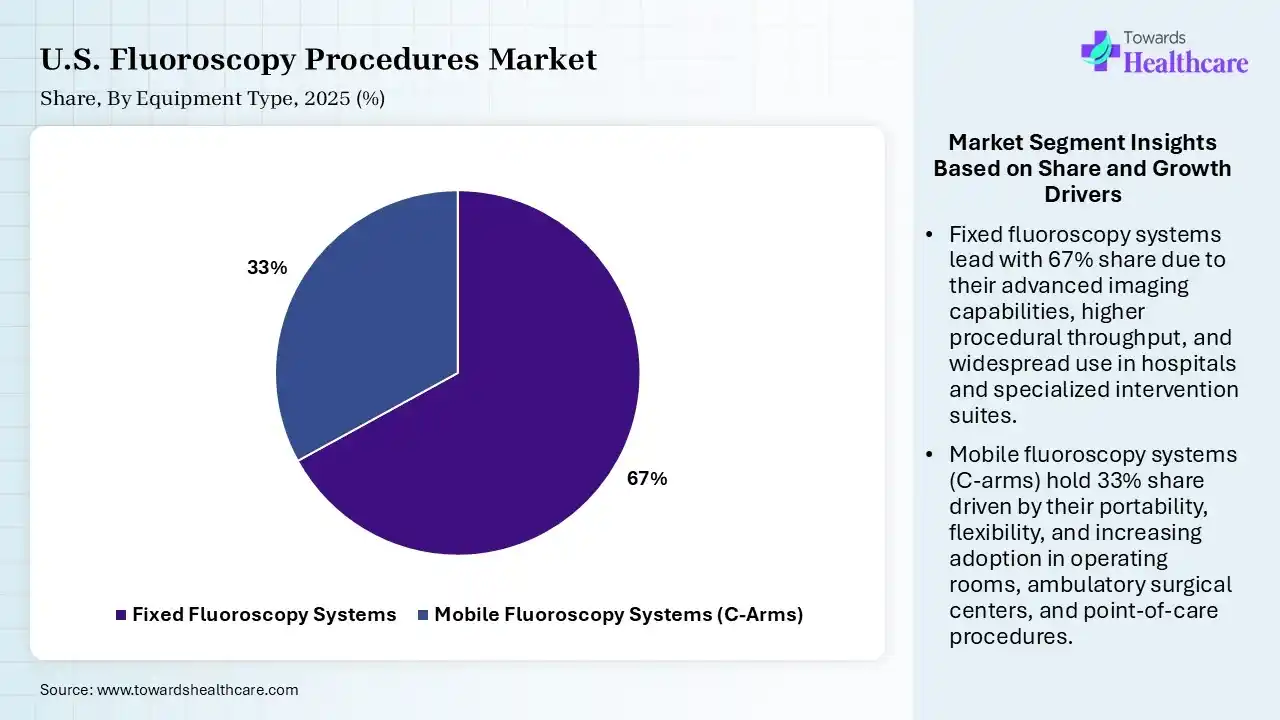
| Segment | Share 2025 (%) |
| Fixed Fluoroscopy Systems | 67% |
| Mobile Fluoroscopy Systems (C-Arms) | 33% |
The Fixed Fluoroscopy Systems Segment led the U.S. Fluoroscopy Procedures Market in 2025
The fixed fluoroscopy systems segment contributed the largest market share of 67%, as fluoroscopy is a type of healthcare imaging that demonstrates a continuous X-ray image on a monitor, much like an X-ray. The real-time, dynamic nature of a fluoroscopy gives it exclusive benefits over CT, MRI, or X-rays for analyzing patient conditions.
The mobile fluoroscopy systems (C-Arms) segment held a significant share of 33% in the market and is expected to grow at the fastest CAGR of 7.00% during the forecast period. Mobile fluoroscopy moves around in a facility, offering flexibility for different departments like emergency rooms and operating theaters or even remote regions in the larger medical care complexes, ensuring that diagnostic imaging is conducted in the most convenient and appropriate manner.
| Segment | Share 2025 (%) |
| Conventional Fluoroscopy | 22% |
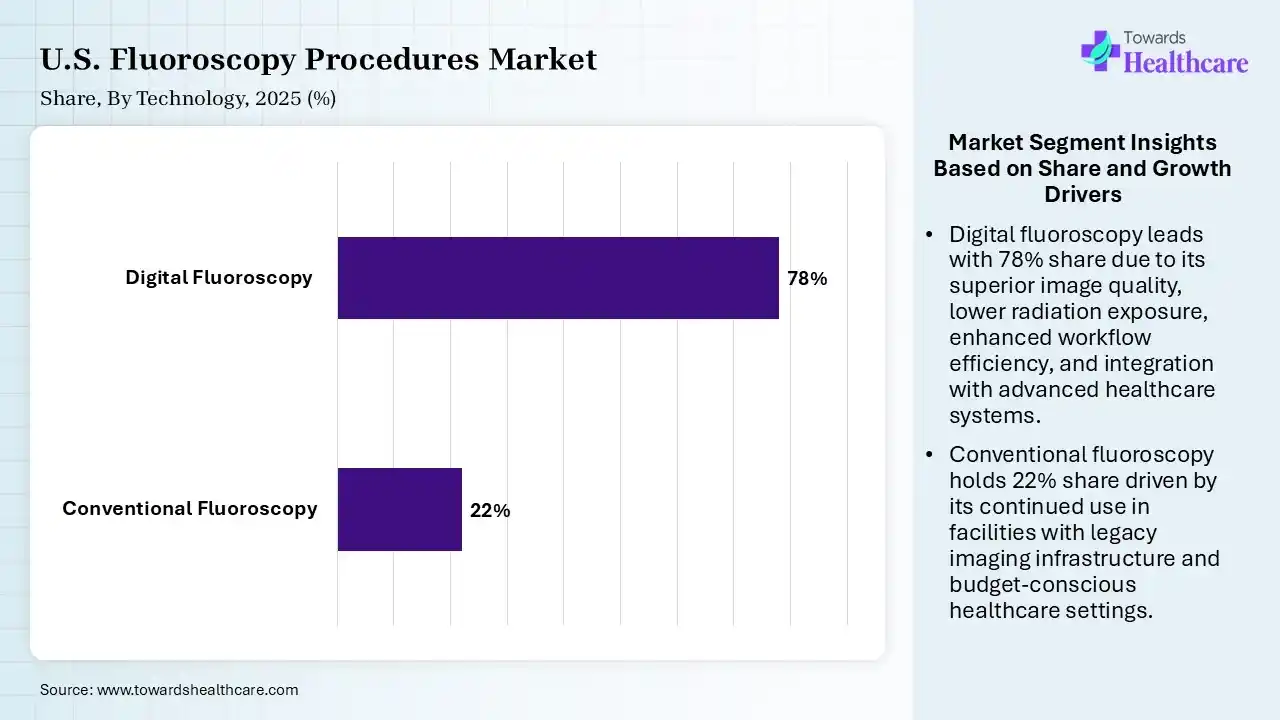
| Digital Fluoroscopy | 78% |
The Digital Fluoroscopy Segment led the U.S. Fluoroscopy Procedures Market in 2025
The digital fluoroscopy segment contributed the largest market share of 78%, and is expected to grow at the fastest CAGR of 6.80% during the forecast period, as DF over conventional fluoroscopy involves the rapidity of image acquisition and post-processing to improve image contrast. Digital radiography is vast in terms of speed, dynamic range, and reusability. Digital radiography information is shared with any part of the world nearly instantly via the internet.
The conventional fluoroscopy segment held a significant share of 22% in the market. Conventional fluoroscopy offers real-time shifting images of the internal structures of the body, enabling dynamic visualization during procedures. Conventional fluoroscopy is used for a wide range of tech, including orthopaedic, gastrointestinal, and urological interventions, providing versatility in clinical applications.
In the U.S., increasing prevalence of long-term diseases and an increasing demand for minimally invasive technology in sectors such as orthopaedics and cardiology are driving market growth. The country’s well-developed healthcare infrastructure, large patient population, and rising reliance on image-guided treatments support widespread adoption of fluoroscopy procedures. An aging demographic requires more diagnostic and interventional imaging, particularly for cardiovascular and orthopedic conditions, further strengthening U.S. fluoroscopy procedures market expansion.
Additionally, continuous technological advancements in fluoroscopy systems, including digital imaging, lower radiation dose capabilities, and enhanced visualization tools, are improving procedural efficiency and patient safety. Growing investments by healthcare providers in advanced imaging equipment, coupled with favorable reimbursement frameworks, encourage greater utilization across hospitals and specialty clinics. The increasing number of surgical and diagnostic procedures, along with strong clinical research activities and early adoption of innovative medical technologies, further contributes to the sustained growth of the U.S. fluoroscopy procedures market.
R&D:
Manufacturing Processes:
Patient Services:
| Company | Headquarters | Latest Update |
| GE HealthCare | United States | In July 2025, GE HealthCare announced the commercial availability of an advanced floor-mounted digital X-ray system, Definium Pace Select ET. |
| Carestream Health | United States | Carestream Health announced the introduction of its all-new DRX-Transportable System, a PC-independent retrofit system that delivers all. |
| Hologic, Inc. | United States | In November 2025, Hologic, Inc. announced that its Genius Digital Diagnostics System achieved expanded CE marking in the European Union, which recently approved it to image and review both cell and tissue specimens. |
| Ziehm Imaging GmbH | United States | Ziehm Imaging presents innovative mobile C-arm technologies for high-quality imaging from head to toe. |
| Koninklijke Philips N.V. | United States | In May 2026, Philips introduced SmartIQ to address the trade-off between image quality and radiation dose in coronary events. |
In March 2025, "Adora DRFi is a testament to Canon Medical’s dedication to delivering innovative solutions that prioritize both clinical excellence and patient care,” said Satrajit Misra, Chief Sales and Marketing Officer of Canon Medical Systems USA. This system combines versatility, efficiency, and advanced imaging technology in a way that redefines what’s possible in a hybrid radiography and fluoroscopy system.
By Procedure Type
By Application
By End User
By Equipment Type
By Technology










Principal Consultant
Shivani Zoting is a dedicated research analyst specializing in the healthcare industry. With a strong academic foundation, a B.Sc. in Biotechnology and an MBA in Pharmabiotechnology, she brings a unique blend of scientific understanding and strategy.
Learn more about Shivani Zoting
Reviewed By
Aditi Shivarkar is a seasoned professional with over 14 years of experience in healthcare market research. As a content reviewer, Aditi ensures the quality and accuracy of all market insights and data presented by the research team.
Learn more about Aditi Shivarkar