Pipeline Programs

CGT Companies Tracked

Manufacturing Facilities


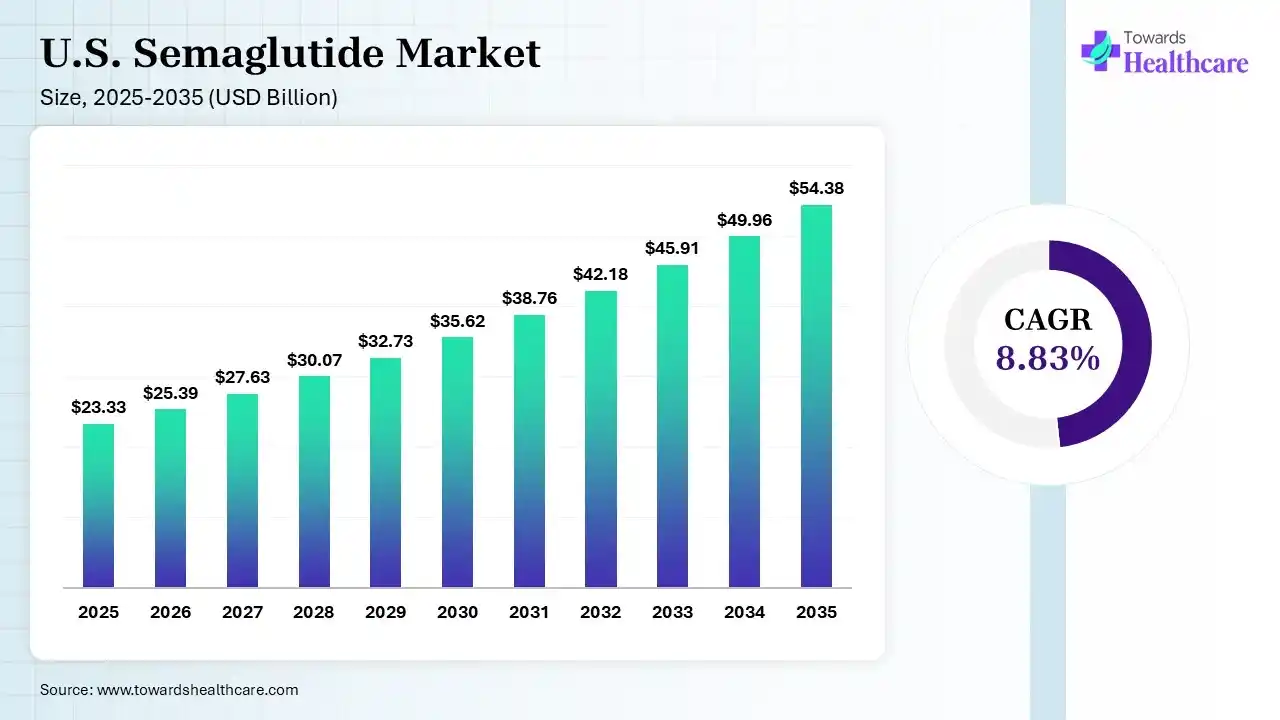
According to Payal Rabde, who specializes in research related to chronic metabolic diseases, GLP-1 receptor agonist molecules, and healthcare services, with 4+ years of experience in market research and industry analysis, extensive research indicates strong growth opportunities in the U.S. Semaglutide market. The U.S. Semaglutide market size was estimated at USD 23.33 billion in 2025 and is predicted to increase from USD 25.39 billion in 2026 to approximately USD 54.38 billion by 2035, expanding at a CAGR of 8.83% from 2026 to 2035. Her analysis highlights that the U.S. Semaglutide market is rapidly expanding due to growing product launches, new pricing regulations, an expanding clinical pipeline, rising demand for oral products, and key industry players like Novo Nordisk, Eli Lilly and Company, Amgen Inc., Roche, and Viking Therapeutics.
The U.S. Semaglutide refers to the GLP-1 receptor agonist molecule developed by Novo Nordisk and distributed across the U.S. It goes by three different U.S. brand names, such as Ozempic, Wegovy, and Rybelsus. These drugs help in targeting type 2 diabetes, obesity/chronic weight management, and cardiometabolic risk management. Furthermore, the report also highlights their route of administration, product type, patient age, distribution channel, end user, and payer, along with detailed company competitive-intelligence benchmarking.
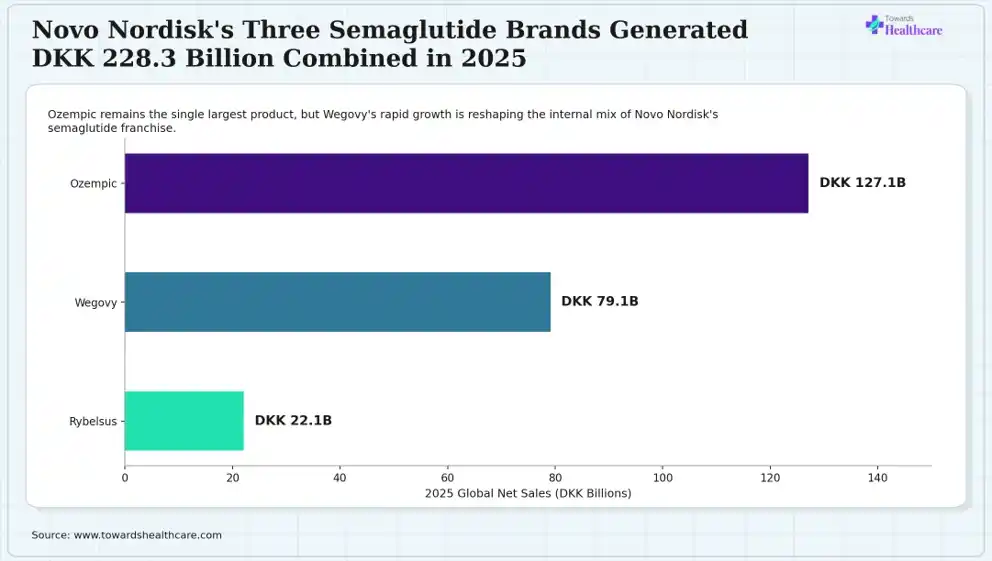
As the market research analyst, I interpret that the given horizontal bar chart illustrates Novo Nordisk semaglutide brand revenue in FY2025, reflecting significant growth. The global net sales of Ozempic (type 2 diabetes) in 2025 were noted to be DKK 127.1 billion, Wegovy (obesity) contributed DKK 79.1 billion, while Rybelsus (oral, diabetes) was reported to be DKK 22.1 billion.
Key Insight:
The FY2025 revenue of Novo Nordisk reflects that Rybelsus was the only product with declining revenue by 5%, which shifted their prioritization towards higher-growth GLP-1 treatments, that is Wegovy.
Source: Novo Nordisk, “Financial Performance,” Annual Report 2025; Novo Nordisk SEC Form 20-F, Feb. 2026.
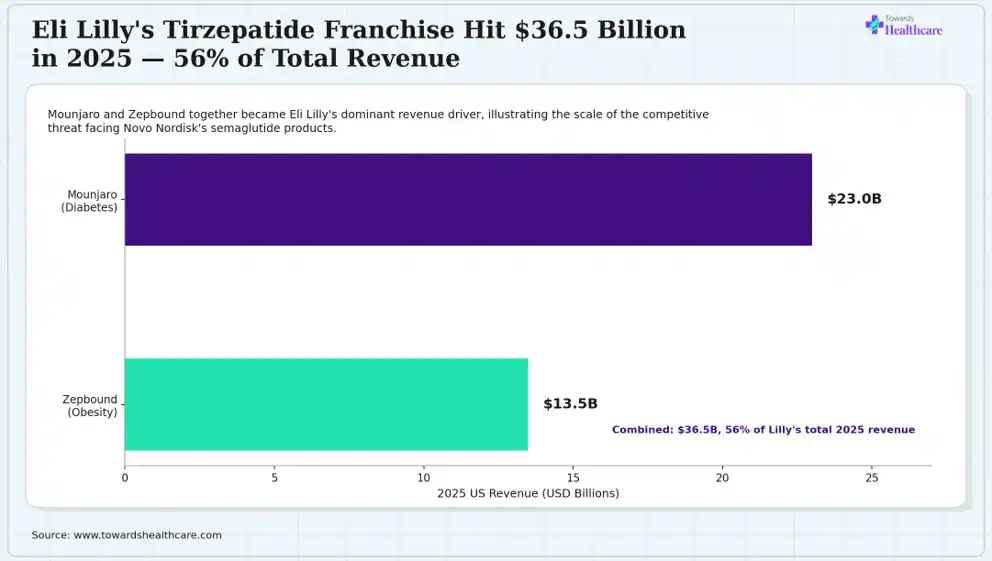
The above-mentioned horizontal bar chart represents Eli Lilly's tirzepatide franchise revenue for FY2025. The 2025 revenue of Mounjaro (type 2 diabetes) was reported to be $23.0 billion, while that of Zepbound (obesity) was noted to be $13.5 billion, whereas the combined share of Lilly's total 2025 revenue resulted in a 56% rise, achieving $36.5 billion.
Key Insight:
Tirzepatide's 2025 revenue of $36.5 billion contributed to more than half of Eli Lilly's entire company revenue, highlighting that it is the commercial engine of one of the world's largest pharmaceutical companies and not a niche competitive threat to semaglutide.
Source: Yahoo Finance / Zacks, “Lilly's GLP-1 Blockbusters Drive 2025 Revenue Surge,” Feb. 2026 (citing Eli Lilly FY2025 results).
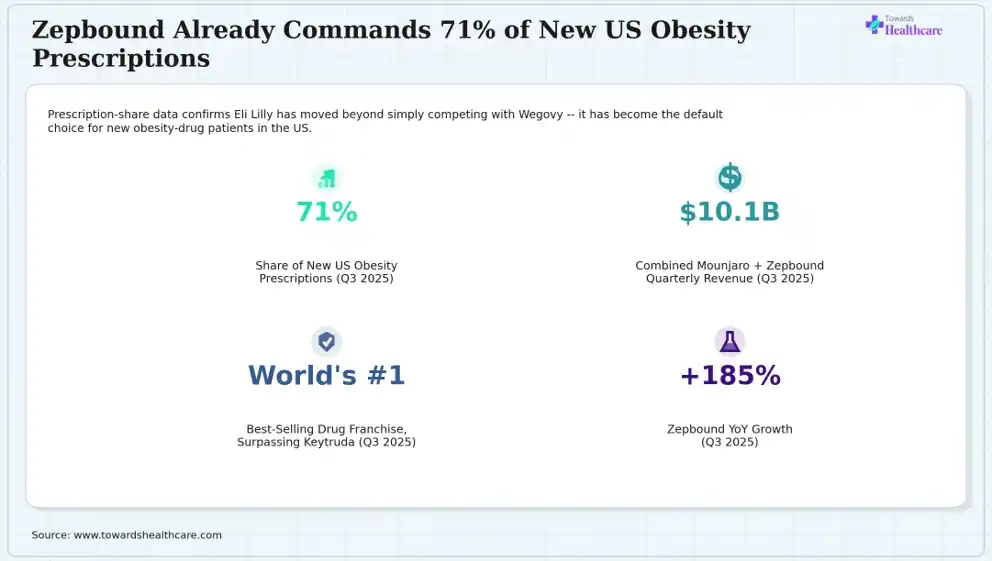
As per the analysis, the infographic stat panel encompasses Zepbound prescription and revenue share metrics. The Q3 2025 Zepbound share of new U.S. obesity prescriptions contributed to 71%, while its YoY revenue growth increased by 185%. The combined Mounjaro & Zepbound quarterly revenue for Q3 2025 was $10.1 billion, making the company the world's first best-selling drug franchise.
Key Insight:
The 71% new-prescription share highlighted that Lilly is experiencing continued revenue share gains in the obesity category even before full conversion of prescriptions into trailing revenue.
Source: Pharmaceutical Technology, “Massive sales for weight loss drugs spur Eli Lilly's Q3,” Oct. 2025; BioPharma Dive, Oct. 2025.
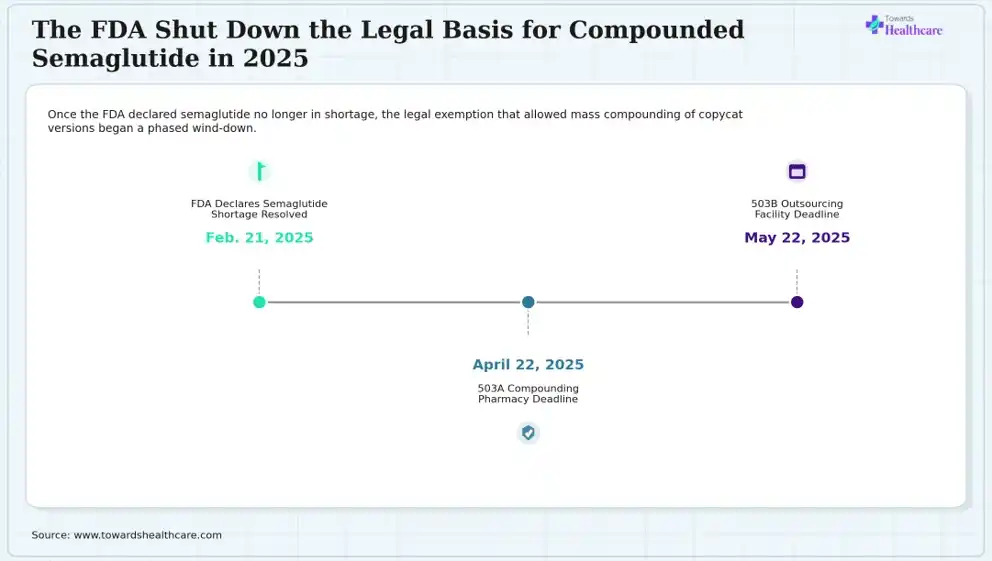
The given timeline infographic covers FDA semaglutide shortage resolution and enforcement deadlines. On February 21, 2025, the FDA declared the semaglutide injection shortage resolved. Enforcement discretion ends for 503A compounding pharmacies was announced on April 22, 2025, while on May 22, 2025 highlighted that enforcement discretion ends for 503B outsourcing facilities.
Key Insight:
A narrow, federally defined window with roughly a two-month gap between the shortage-resolved declaration and the final enforcement deadline was provided to the compounding pharmacies and their patients to transition before losing legal access to compounded semaglutide.
Source: FDA, “FDA clarifies policies for compounders as national GLP-1 supply begins to stabilize,” 2025; American Med Spa Association, Feb. 2025.
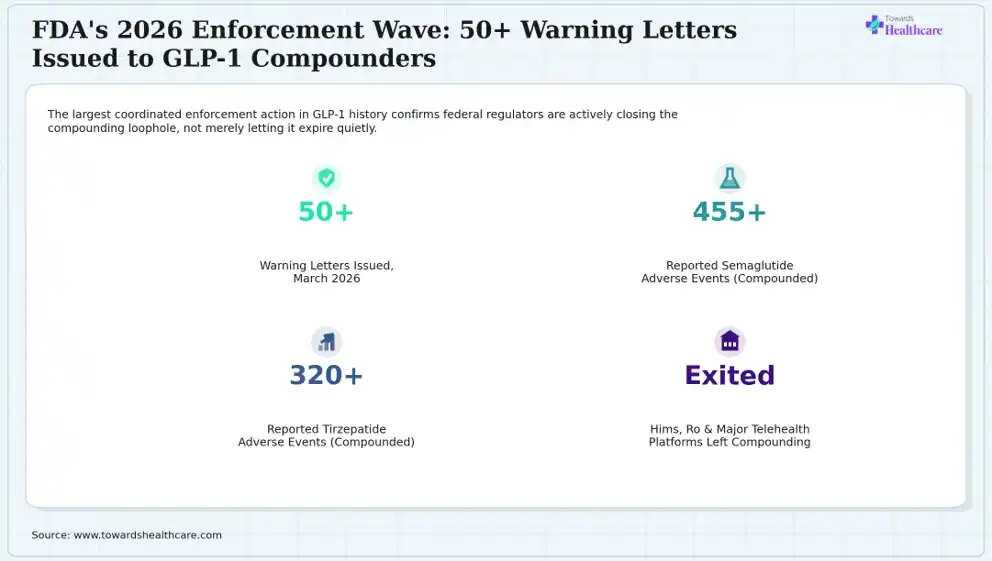
Based on our research, the infographic stat panel outlines FDA 2026 GLP-1 compounder enforcement metrics, which were the largest coordinated enforcement action in GLP-1 history. The federal regulators reported adverse events tied to compounded semaglutide and compounded tirzepatide to be more than 455 and over 320, respectively. In March 2026, they issued warning letters to more than 50 compounders, in which they also highlighted major telehealth platforms that exited compounding, such as Hims, Ro, and others.
Key Insight:
The compounded-drug distribution channel that once reduced branded pricing by roughly 70% experienced substantial closing in under 18 months, due to major telehealth platforms voluntarily exiting compounded semaglutide ahead of the enforcement wave.
Source: Pharmacy Times, “FDA Moves to Permanently Close the Door on Compounded GLP-1s,” 2026; Telehealth Ally, “Compounded Semaglutide FDA Ban 2026,” 2026.
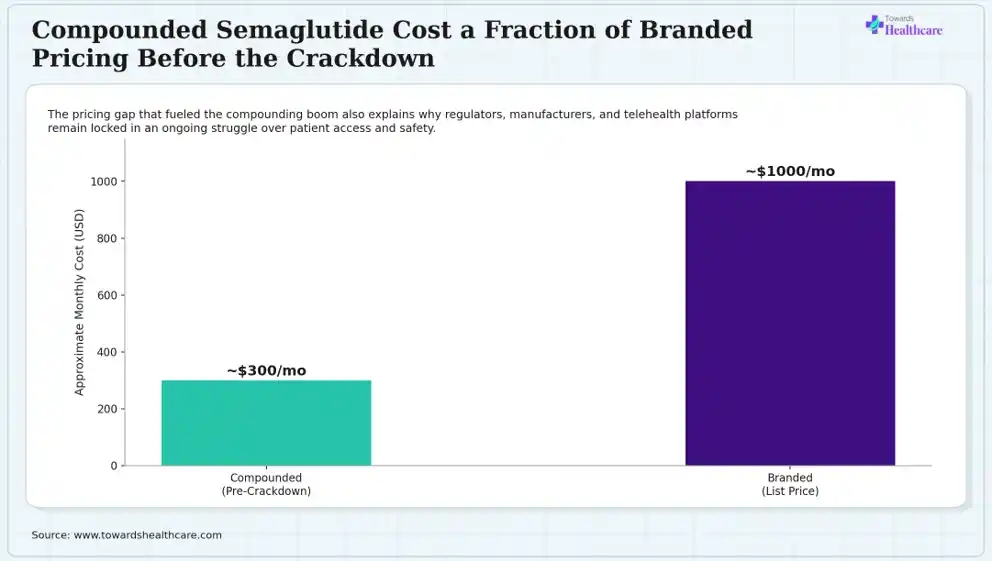
According to the survey conducted, the bar chart compares compounded and branded semaglutide monthly costs. The compounded semaglutide (pre-crackdown) was reported to hold approximate monthly cost of $150-$300, while that of branded semaglutide (list price) was reported to be more than $1,000.
Key Insight:
An approximate 3-7x price gap between compounded and branded products was the reason that made compounding scale rapidly during the 2022-2024 shortage period, independent of any efficacy or safety considerations.
Source: Pharmacy Times, “FDA Moves to Permanently Close the Door on Compounded GLP-1s,” 2026.
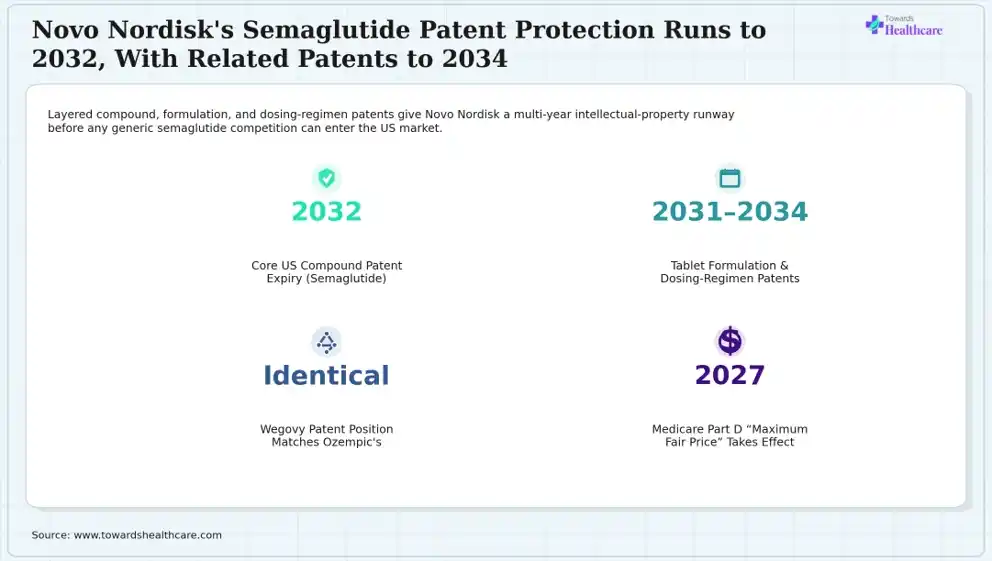
As a market research analyst, I interpret the above-mentioned infographic stat-panel focuses on Novo Nordisk semaglutide patent and pricing timeline. The Medicare Part D “Maximum Fair Price” effective date is under patent protection till January 2027, where the Core U.S. compound patent is expected to expire in 2032. Furthermore, tablet formulation & dosing-regimen patents are predicted to expire between 2031-2034, while the Wegovy vs. Ozempic patent position is anticipated to be the identical underlying compound patent.
Key Insight:
With the patent on the core compound, formulation, and dosing regimen expiring between 2032-2034, will make the generic competitors to design around specific delivery and dosing claims rather than focusing on launching a simple bioequivalent copy.
Source: Novo Nordisk, Full Year 2025 Investor Presentation, Feb. 2026.
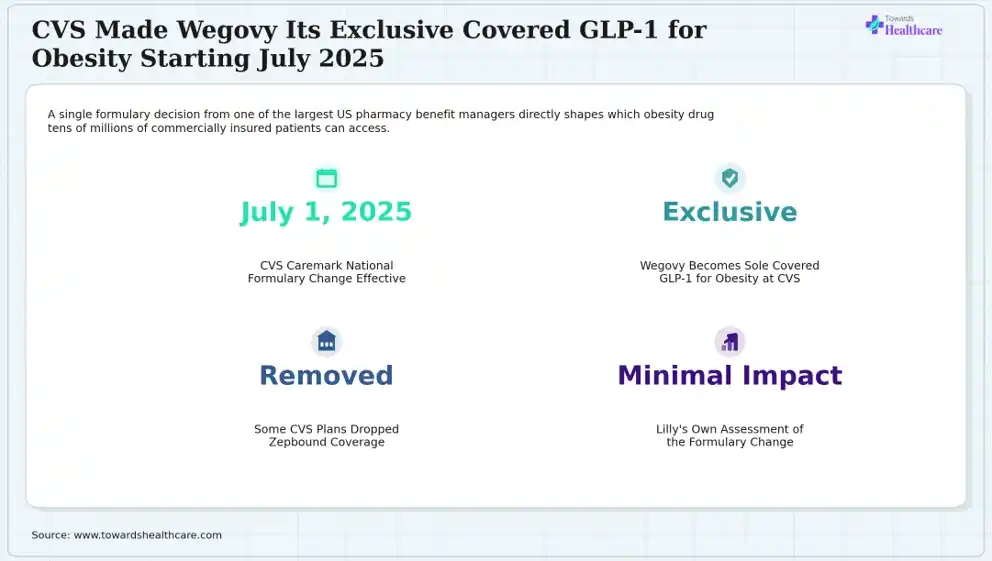
The above-mentioned infographic stat panel covers CVS Caremark Wegovy formulary exclusivity metrics. July 1, 2025 was the effective date of the CVS Caremark Wegovy formulary, which highlighted Wegovy as CVS Caremark's sole covered GLP-1 for obesity. Eli Lilly's stated impact assessment focused on the “Minimal impact” cited by the company, where Zepbound coverage impact was removed from some CVS plans.
Key Insight:
Lilly's own public assessment of the impact was minimal, even with CVS's exclusive formulary decision favoring Wegovy, where Zepbound's continued 71% new-prescription share confirmed formulary exclusivity alone was no longer sufficient to reverse Novo Nordisk's competitive losses.
Source: Drug Discovery Trends, “Lilly is set to lead pharma by revenue in 2026,” Nov. 2025; Novo Nordisk SEC Form 6-K, July 2025.
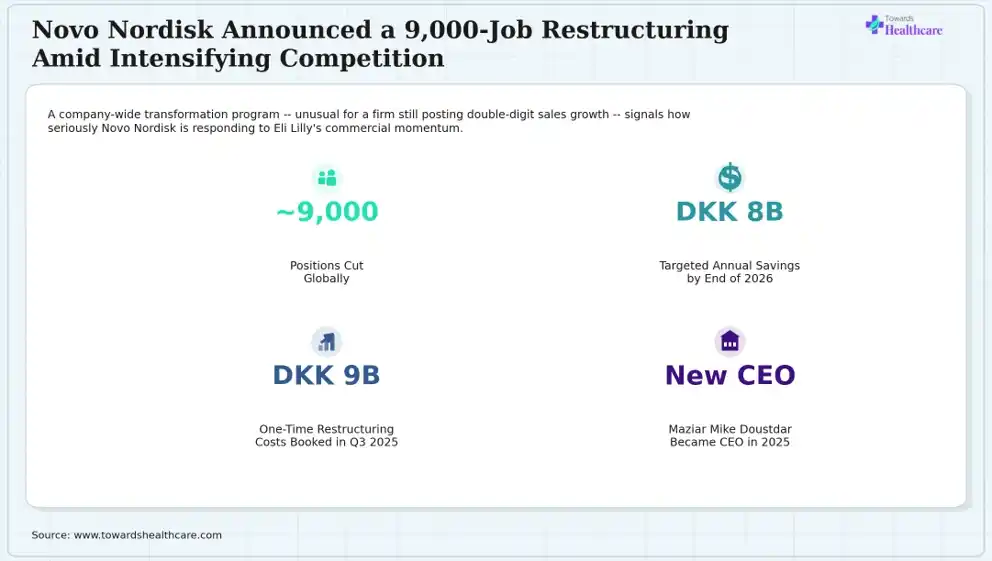
Based on the information gathered by Aman, this infographic stat-panel encompasses Novo Nordisk's 2025 restructuring metrics. In 2025, Maziar Mike Doustdar became CEO of the company, were the same year, Q3 results for one-time restructuring costs booked were announced to be DKK 9 billion. Additionally, positions cut globally were recorded to be approximately 9,000, while the company’s targeted annual savings by the end of 2026 are expected to reach DKK 8 billion.
Key Insight:
The restructuring of this scale at a company with growing sales of 10% at constant exchange rates represents that the company considers cost structure as a critical competitive lever against Eli Lilly's lower-price, higher-momentum challenge.
Source: The Motley Fool, “Novo Nordisk (NVO) Q3 2025 Earnings Transcript,” Dec. 2025.
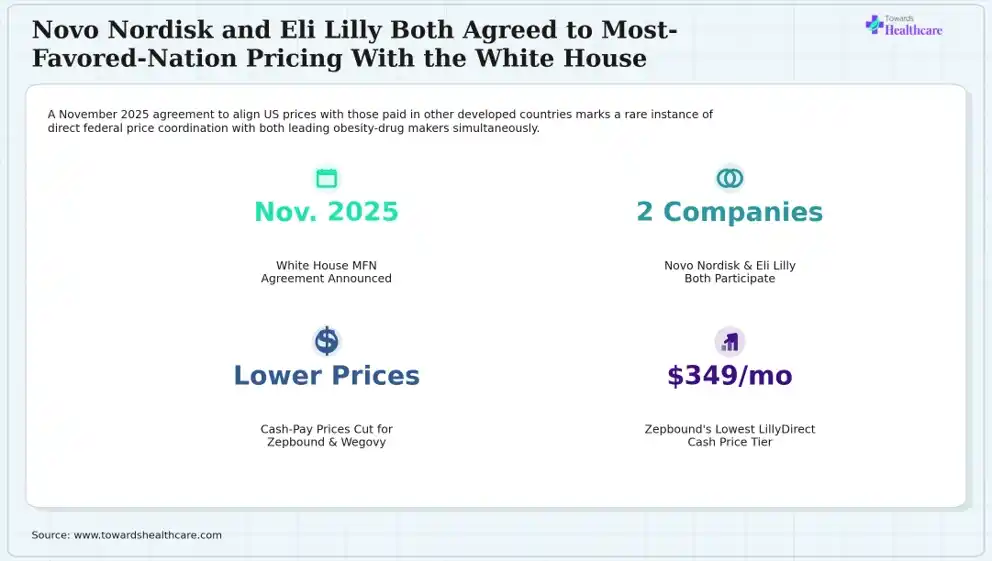
As per the analysis conducted by Aman, the infographic stat panel reflects White House MFN pricing agreement metrics. In November 2025, an agreement was announced that focused on a Most Favored Nation (MFN) drug pricing initiative, where Novo Nordisk and Eli Lilly were the key participating companies. It also highlighted that Zepbound's lowest LillyDirect cash-pay price tier was $349/month.
Key Insight:
After the acceptance of a federal pricing framework by both leading obesity-drug manufacturers, cash-pay pricing has become a third front in the Novo-Lilly competitive battle.
Source: BioSpace, “Lilly clocks 56% revenue increase in Q1 but declining prices stunt growth,” 2026.
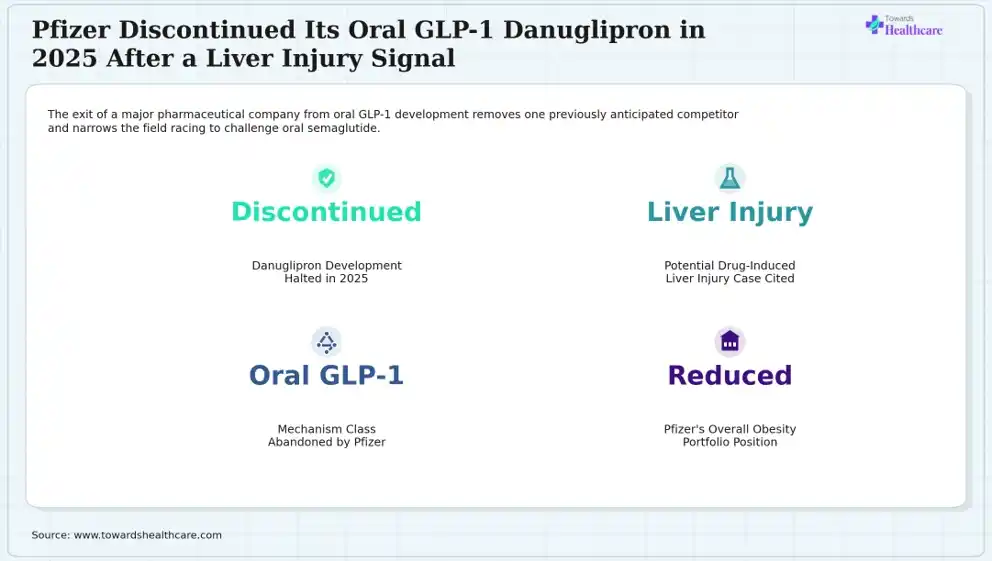
The given infographic stat panel highlights Pfizer danuglipron discontinuation metrics. The drug was discontinued in 2025 due to potential drug-induced liver injury cases, which increased safety concerns. This, in turn, abandoned oral GLP-1 monotherapy, which resulted in a decline in Pfizer's obesity portfolio presence.
Key Insight:
The discontinuation of danuglipron resulted in the removal of the field's most closely watched oral GLP-1 candidates, where despite its elimination, the competitive pressure faced by Novo Nordisk's oral Wegovy pill and Rybelsus is not reduced.
Source: Drug Discovery Trends, “Lilly is set to lead pharma by revenue in 2026,” Nov. 2025 (citing Pfizer's 2025 danuglipron discontinuation).
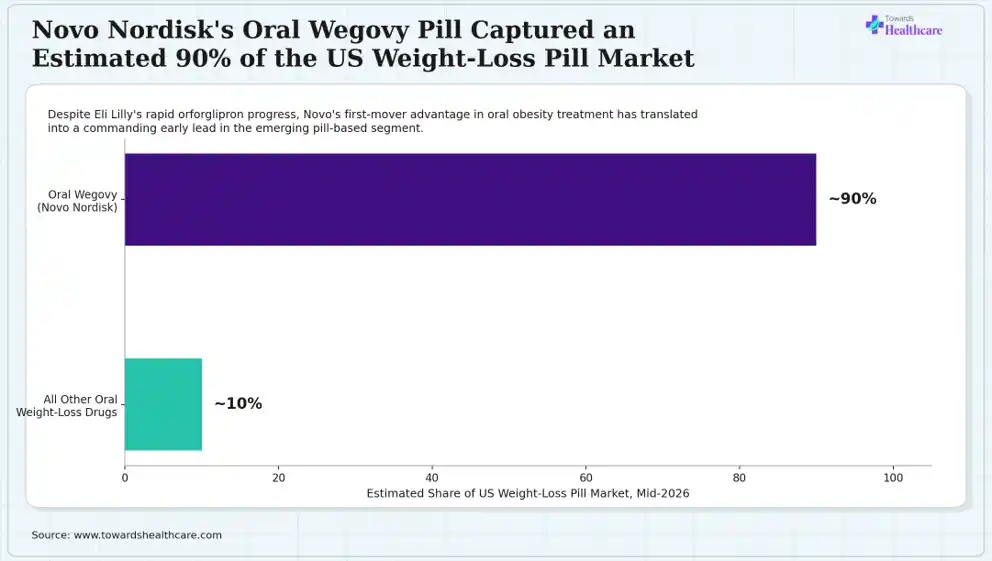
According to the survey conducted, the horizontal bar chart covers U.S. oral weight-loss drug market share in mid-2026. The estimated share for mid-2026 for Oral Wegovy (Novo Nordisk) was reported to be approximately 90%, while that of all other oral weight-loss drugs was noted to be approximately 10%
Key Insight:
The direct contradiction to the broader injectable-obesity narrative made the early oral pill from Novo Nordisk to dominate the market, while Eli Lilly's Zepbound has already overtaken Wegovy, representing a first-mover advantage that can balance losses in an established one.
Source: Novo Nordisk, Full Year 2025 Investor Presentation, Feb. 2026 (citing IQVIA Xponent/NPA weekly prescription data).
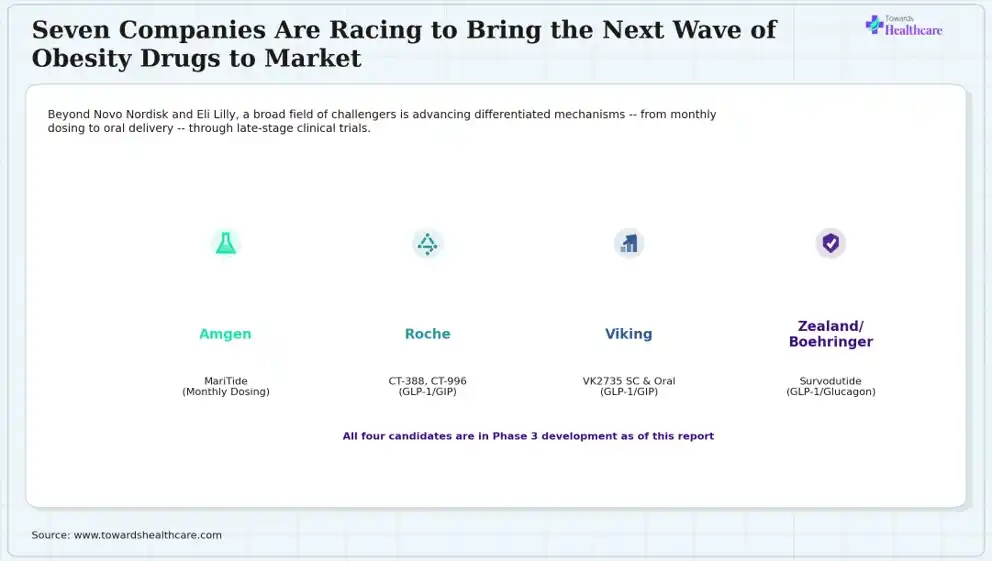
Based on our research, the given ecosystem infographic highlights four leading Phase 3 obesity-drug pipeline competitors. Amgen, Roche, Viking Therapeutics, and Zealand Pharma/Boehringer Ingelheim are the major companies in Phase 3 trials, with their lead products such as MariTide (GLP-1 agonist/GIP antagonist), CT-388, CT-996 (GLP-1/GIP), VK2735 (GLP-1/GIP), and Survodutide (GLP-1/glucagon)
Key Insight:
The growing candidates in Phase 3 development are anticipated to induce a new wave of competition for Novo Nordisk and Eli Lilly within a similar multi-year regulatory window.
Source: Company pipeline disclosures as supplied in competitive intelligence benchmarking, cross-referenced against public clinical trial status.
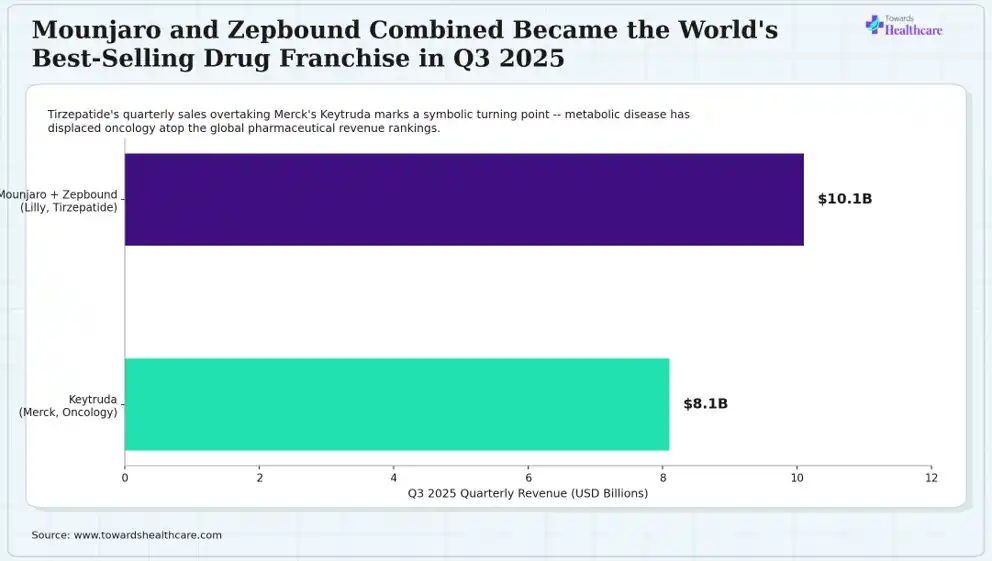
As the market research analyst, I interpret that the horizontal bar chart compares Q3 2025 revenue of tirzepatide and Keytruda. The Q3 2025 revenue of Mounjaro + Zepbound (Eli Lilly, tirzepatide) was noted to be $10.1 billion, while that of Keytruda was reported to be $8.1 billion.
Key Insight:
With the growing revenue of Tirzepatide compared to Keytruda, it indicates that metabolic/obesity therapeutics are contributing as the single largest revenue category in the pharmaceutical industry, with a growing shift to their direct implications, creating new challenges for Novo Nordisk.
Source: BioPharma Dive, “Lilly hikes revenue forecasts on booming obesity drug sales,” Oct. 2025.
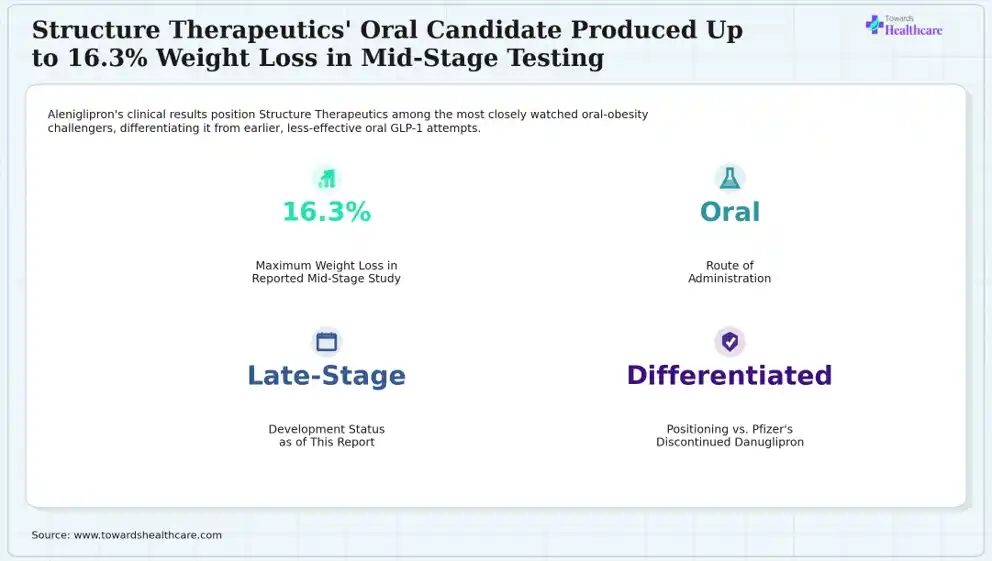
As per the information gathered, the infographic stat panel illustrates Structure Therapeutics' aleniglipron clinical data. The product is in late-stage development, offering an oral route of administration and 16.3% of maximum reported weight loss in a mid-stage study, which makes it different from Pfizer's discontinued danuglipron.
Key Insight:
Structure Therapeutics is considered a credible oral-obesity contender due to aleniglipron's reported efficacy within the range of injectable GLP-1 therapies, along with a 16.3% weight-loss result.
Source: Company competitive intelligence data as supplied, describing Structure Therapeutics' reported mid-stage clinical results.
| Indicator | Value | Source |
| Novo Nordisk combined semaglutide brand revenue (global, FY2025) | DKK 228.3 billion | Novo Nordisk Annual Report 2025 |
| Eli Lilly combined tirzepatide franchise revenue (FY2025) | $36.5 billion | Eli Lilly FY2025 results, Feb. 2026 |
| Zepbound share of new U.S. obesity prescriptions (Q3 2025) | 71% | BioPharma Dive, Oct. 2025 |
| Oral Wegovy share of U.S. weight-loss pill market (mid-2026) | ~90% | Novo Nordisk investor presentation, Feb. 2026 |
| Compounded vs. branded semaglutide monthly cost | $150–$300 vs. $1,000+ | Pharmacy Times, 2026 |
| FDA warning letters to GLP-1 compounders (March 2026) | 50+ | Telehealth Ally / Pharmacy Times, 2026 |
The above-mentioned table highlights companies, their revenue, product shares, and regulatory developments. The FY2025 global combined semaglutide brand revenue by Novo Nordisk was reported to be DKK 228.3 billion, while Eli Lilly contributed to the combined tirzepatide franchise FY2025 revenue, which was noted to be $36.5 billion. Q3 2025, Zepbound's share of new U.S. obesity prescriptions contributed to 71%. In mid-2026, oral Wegovy held approximately a 90% share of the U.S. weight-loss pill market, while March 2026 recorded more than 50 FDA warning letters to GLP-1 compounders. Furthermore, compounded vs. branded semaglutide monthly cost was reported to be $150-$300 and more than $1,000, respectively.
This section covers eight segmentation dimensions such as Product, Disease Indication, Route of Administration, Product Type, Patient Age Group, Distribution Channel, End User/Care Setting, and Payer, with their market share, CAGR percentages, and global sales.
|
Product
|
Global Sales
|
Source
|
|
Ozempic (type 2 diabetes)
|
FY2025 global sales were recorded to be DKK 127.1 billion, reflecting a rise of 6% YoY
|
Novo Nordisk Annual Report 2025
|
|
Wegovy (obesity)
|
FY2025 global sales were noted to be DKK 79.1 billion
In July 2025, it was considered the sole covered GLP-1 for obesity on CVS in Caremark's national formulary
|
Novo Nordisk Annual Report 2025; SEC Form 6-K, July 2025
|
|
Rybelsus (oral, diabetes)
|
FY2025 global sales were reported to be DKK 22.1 billion, representing a decline of 5% YoY, making it the only declining brand
|
Novo Nordisk Annual Report 2025
|
The above-mentioned table highlights various drugs and their global sales. The Ozempic (semaglutide) segment led the market with 69.42% in 2025 and is expected to witness faster growth with 9.20% CAGR, due to their broad adoption range. Wegovy (semaglutide) segment held the second-largest share of 24.10% in 2025, due to growing obesity rates, while the Rybelsus (oral semaglutide) segment held a 6.48% share in 2025 and is driven by its oral route of administration.
In this market, the oral segment is experiencing dynamic evolution, where 90% of the U.S. weight-loss pill market share was captured by Wegovy right after its early-2026 launch. In 2025, one of the competing oral entrants, danuglipron, was discontinued by Pfizer, while in the same year, the submission of oral orforglipron to the FDA and Japanese regulators for obesity by Eli Lilly's contributed to the most credible near-term oral competitive threat.
This section encompasses direct tension between originally supplied segmentation and verified 2025-2026 regulatory developments. In February 2025, resolution of the semaglutide shortage was declared by the FDA, which promoted compounding wind-down deadlines by May 2025, as well as more than 50 warning letters were also issued to compounders in March 2026. Additionally, the compounded semaglutide was entirely withdrawn due to major telehealth platforms, including Hims and Ro. Thus, this verified regulatory trajectory challenges continued high growth of the compounded segment and should be treated as a material correction.
February 21, 2025, phased enforcement deadlines for compounding pharmacies were issued right after the resolution of the shortage of injectable semaglutide (Ozempic/Wegovy) as declared by the FDA.
Source: FDA, “FDA clarifies policies for compounders,” 2025
July 1, 2025, Wegovy was recognized as the only GLP-1 medicine covered for obesity, due to a change in CVS Caremark's national formulary.
Source: Novo Nordisk SEC Form 6-K, July 2025
October 30, 2025, Eli Lilly was recognized as the world's best-selling drug franchise for the quarter, as it recorded Q3 2025 revenue of $17.6 billion, with a rise of 54% YoY and combined Mounjaro and Zepbound sales of $10.1 billion, which crossed Merck's Keytruda sales.
Source: BioPharma Dive; CNBC, Oct. 2025
In November 2025, to align U.S. prices of weight-loss medicines with other developed countries, the Most Favored Nation (MFN) drug pricing presented by White House was accepted by Novo Nordisk and Eli Lilly.
Source: BioSpace, 2026
In December 2025, the successful completion of a $4.7 billion (plus $0.5 billion contingent) acquisition of Akero Therapeutics, leading to the expansion of semaglutide into FGF21-class MASH treatment, was announced by Novo Nordisk.
Source: StockTitan / SEC Form 20-F, Feb. 2026
In February 2026, the FY2025 results of Novo Nordisk confirmed DKK 8 billion in targeted annual savings, the simultaneous rollout of Wegovy pill and Wegovy HD (7.2 mg) across international markets, and a 9,000-position global restructuring.
Source: Novo Nordisk Annual Report 2025; SEC Form 6-K, Feb. 2026
In March 2026, in a single coordinated enforcement wave leading to more than 50 warning letters to compounding pharmacies and telehealth firms were issued by the FDA, making it the largest regulatory action in GLP-1 history.
Source: Telehealth Ally, “Compounded Semaglutide FDA Ban 2026”
It is the Semaglutide originator that contributed to Ozempic/Wegovy/Rybelsus combined FY2025 sales of DKK 228.3B, along with a 9,000-job restructuring.
The company acts as the primary competitive threat via tirzepatide, where it also recorded $36.5B in FY2025 revenue from Mounjaro and Zepbound, indicating 56% of total company revenue.
It is a pipeline competitor with MariTide, which is a monthly-dosing GLP-1/GIP antagonist in Phase 3.
It is a pipeline competitor with CT-388, CT-996 (GLP-1/GIP), and petrelintide in the development phase.
It is an emerging competitor focusing on subcutaneous and oral formulations of VK2735 in phase 3.
It is an emerging competitor consisting of Survodutide (GLP-1/glucagon) in Phase 3.
It is an oral-focused emerging competitor that distributed Aleniglipron, providing up to 16.3% weight loss results in mid-stage testing.
It is a former oral GLP-1 competitor responsible for the discontinuation of danuglipron in 2025 due to its potential liver injury signal.
It is a federal regulator that declared the semaglutide shortage resolved in February 2025 and issued more than 50 compounder warning letters in March 2026.
It is a pharmacy benefit manager that made Wegovy the exclusive covered GLP-1 for obesity on its national template formulary in July 2025.
Aditi is a pharmaceutical research expert with strong experience in GLP-1 receptor agonist molecules, regulatory standards, and obesity pipeline markets. She conducted detailed market research, analyzed company data, clinical trends, and industry developments. Based on her comprehensive analysis, the following strategic key takeaways highlight the most important market insights and opportunities.
For Service Providers & CDMOs
For Pharma & Biotech Sponsors
For Investors & Corporate Strategy Teams
Based on my assessment, the market is expanding rapidly due to growing semaglutide global sales. I also see that the reduction in the price range and demand for oral products will drive market growth. I also anticipate that growth in collaboration and expansion of Medicare platforms will increase their accessibility. Additionally, increasing interest in obesity management is also accelerating the development of new candidates, which will create new market opportunities.
Payal Rabde led the primary market research, developed the methodology, analyzed trends, segmentation, competition, forecasts, and strategic opportunities, forming the report's analytical foundation.
Aman was responsible for collecting and validating clinical trial data, research publications, company information, partnerships, and other quantitative datasets, strengthening evidence-based analysis and market estimations.
Aditi reviewed the complete research document, performed quality checks, validated findings, refined content, corrected inconsistencies, and finalized the report, ensuring accuracy, clarity, credibility, and publication-ready quality.
By Product
By Disease Indication
By Route of Administration
By Product Type
By Patient Age Group
By Distribution Channel
By End User/Care Setting
By Payer

















Principal Consultant
Payal Rabde is a Healthcare Market Research Analyst at Towards Healthcare Research & Consulting with 4+ years of experience in pharmaceuticals, biotechnology, medical devices, and life sciences.
Learn more about Payal Rabde

Reviewed By
Aditi Shivarkar is a seasoned professional with over 14 years of experience in healthcare market research. As a content reviewer, Aditi ensures the quality and accuracy of all market insights and data presented by the research team.
Learn more about Aditi Shivarkar