


Hike Medical, the organization automating device-driven care from referral to dispense, announced it has raised $22.5 million in seed and Series A funding to reimagine the entire supply chain for orthotics and prosthetics and durable medical equipment (DME), so many patients can access the care that keeps them transformed. The round was led by Max Altman at Saga Ventures, with participation from Indicator Ventures, Fifth Down Capital, RiverPark Ventures, and other funds; strategic investor and commercial partner Orthofeet, Inc., and angel investors like Monaco CEO Sam Blond and Super Bowl champion and former head coach of the New England Patriots Jerod Mayo.
Born into three generations of orthotics and prosthetics physicians, Hike Co-founder and CEO Aadi Bhanti had a courtside view of how cumbersome the technology of ordering and supplying a custom insole really was. Every year, tens of millions of Americans spend around $100 billion on devices which aid in independence and healthy living, including diabetic inserts, braces, prosthetic limbs, wheelchairs and cranial helmets. But according to Hike research, 60 cents of each dollar is lost to waste, remakes, and fraud, causing an excess of paperwork and dense payer requirements to get patients the care they require. It is simpler, in solutions, to prescribe opioids than to order a diabetic patient a pair of custom insoles.
Hike started in the lab, modernizing how custom insoles were made by a mobile foot scan and 3D printer, suggestively lessening wait times from weeks to days and remake rates from 1 in 15 to just 1 in 400.
Recently, the team set a goal to fix the other half of the challenges, rapidly increasing to manage the entire supply chain, starting at the point of referral. Hike's platform integrates back-office, point-of-care, and tool fabrication for O&P, podiatry, and DME suppliers, serving as an all-in-one solution for device-driven care, including:
"Patients shouldn't have to wait weeks for a device because the systems behind their care don't talk to each other," said Bhanti. "Being part of a family that's touched this industry for three generations means we have a duty to make it better. We've proven this model in custom foot orthotics, making the process faster, more accurate, and built around the patient instead of the paperwork. Now we're taking it across the rest of device-based care. At the end of the day, we're engineering human movement."
Hike supported its leadership team ahead of the round, hiring organization veteran Jerry Tang as chief operating officer this year. Tang was employee number 30 at Flexport, where they rose to SVP of Global Operations overseeing logistics, as the organization grew from a $100 million to an $8 billion valuation. They then served as COO at Dandy, the digital dental lab joining at its Series A and supporting the organization to unicorn status.
The advance investment will build on that transformation, funding hiring in the engineering and sales roles in San Francisco and production in Peoria, as Hike expands the platform beyond insoles to serve the broader DME sector.
"The next generation of category-defining companies won't just build software on top of broken industries. They'll own the entire value chain, end to end, as Hike does," said Max Altman, co-founder and managing partner at Saga Ventures. "Full vertical integration is what it takes to recreate a business at scale in healthcare. We're backing Hike to do this across the entire device market. Aadi and the team can own the entire category."
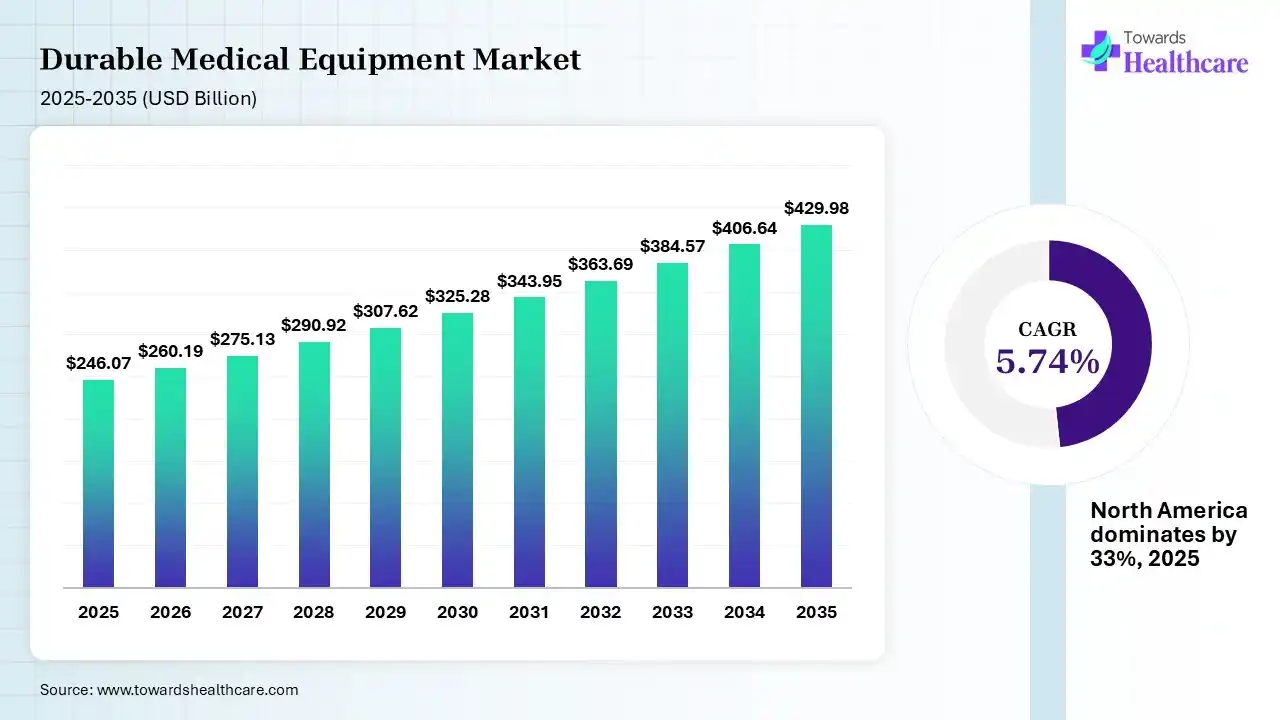
According to Towards Healthcare, the durable medical equipment market is projected to grow significantly, with estimates indicating the market size will increase from USD 260.19 billion in 2026 to approximately USD 429.98 billion by 2035, expanding at a CAGR of 5.74% from 2026 to 2035. DME supports safety, lowers caregiver need, and increases independence in mobility and activities of daily living (ADLs). DME provides medical, physical, and psychological advantages by promoting independence and reducing reliance on caregivers. Increased autonomy may improve mental well-being and social engagement for individuals with incapacities.
Hike Medical exists to support patients in accessing the device-driven care they need to keep transforming. The organization treats the durable medical equipment (DME) supply chain from referral to dispense, connecting AI-driven back-office automation, point-of-care clinical tools, and in-house production in one technology. Hike's technology improves output with shorter wait times, reduced remake rates, and more targeted care. Based in San Francisco with production in Peoria, Ill., Hike is engineering human transformation.
A recent report by Towards Healthcare highlights that the durable medical equipment market is growing. DME plays an important role in improving patient mobility, enhancing quality of life, and supporting independence for patients in need. Durable medical equipment plays a significant role in enhancing the overall quality of life for patients facing healthcare challenges. By reducing physical restrictions and providing assistance with tasks that may otherwise be complex, DME supports and improves the daily living experience. From adaptive devices to mobility aids, every tool serves to promote greater comfort, convenience, and functionality, eventually enriching the lives of consumers.


