


Based on knowledge, Iran rolled out a cell therapy, WhartoCell, made from umbilical cord-derived stem cells by researchers at Royan Institute, which has been included in clinical application after Iran's Food and Drug Administration approved it to treat osteoarthritis.
WhartoCell, an allogeneic stem cell therapy derived from Wharton's jelly of the neonatal umbilical cord, offers lowering inflammation, supporting cartilage regeneration, & improving joint function in patients suffering from osteoarthritis. This cell therapy utilized mesenchymal stem cells that have anti-inflammatory and immunomodulatory properties to progress tissue repair & regeneration.
Mehdi Lotfipanah, Director of Public Relations and International Affairs at Royan Institute, commented that the launch of novel cell-based therapies needs a scientific and evidence-based approach to ensure their proper integration into clinical practice.
According to Royan Institute’s researchers replied that technology may have a wide range of purposes in regenerative medicine, such as cartilage repair, tendon & ligament injuries, bone fracture healing, avascular necrosis (AVN), and the management of inflammatory joint disorders.
According to Towards Healthcare, the Middle East cell line development market is projected to experience significant growth, with estimates suggesting the market size will increase from USD 200.04 million in 2026 to approximately USD 487.36 million by 2035, representing a compound annual growth rate (CAGR) of 10.4% from 2026 to 2035. The overall market growth is primarily driven by a rise in rates of cancers & autoimmune disorders, with a variety of national plans that offer funds for biotechnology parks & research centers. The trend is fostering a broader use of high-throughput automated systems, 3D cell culture models, and single-use bioreactors in the MEA companies.
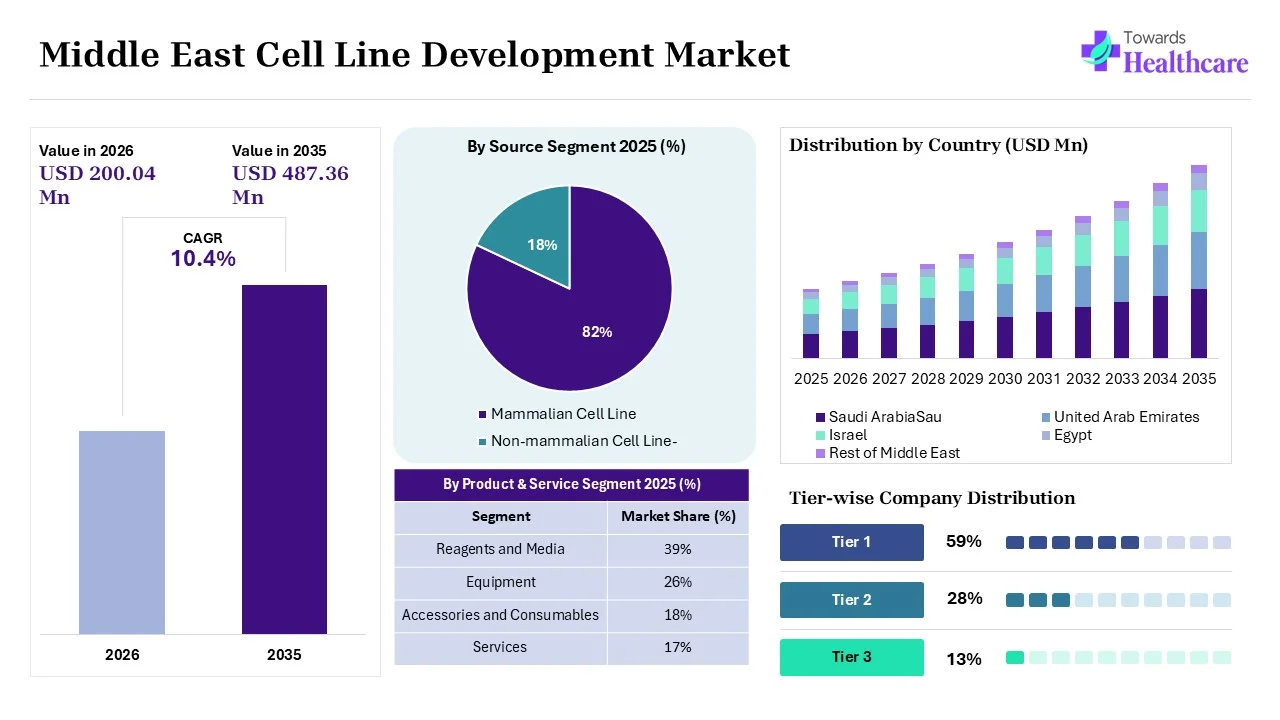
According to Towards Healthcare, the Middle East cell line development market is advancing, as Saudi Arabia and the UAE are actively lowering their dependency on imported drugs. For this, nations are promoting initiatives, such as Saudi Arabia's National Biotechnology Strategy, focused on making the Kingdom a global biotech hub by 2040, which triggers high demand for strong cell lines for monoclonal antibodies and recombinant proteins. Alongside, the MEA is projected to explore more than 50 new R&D alliances among international biotech players and Middle Eastern academic institutions, to provide vital technology & knowledge transfer.


