


SpudCell is the first artificial cell that can feed, grow, and achieve an entire life cycle. It is made entirely of non-living chemical mechanisms, marking a significant step for synthetic biology, based on a brief.
Researchers are referring to the project as “SpudCell”, the name having industrialized, in part, as a play on Sputnik, the first-ever artificial satellite, but also in a humorous observation of the cell’s asymmetrical potato-like shape.
Although many contemplate the cells’ status as an alive entity, experts claim that the cells are not technically alive as they are not self-sufficient. SpudCells are based on continuous deliveries of food and ribosomes; they have no immune defenses and cannot dispose of their own waste, as reported by the Museum of Science.
The University declaration came after the publication of the scientific innovation on Biotic, an independent non-profit science organization specializing in the development of bioengineering.
Biotic co-founder Kate Adamala acted as an important spearhead in the effort as an associate lecturer at the University and a synthetic biologist in the College of Biological Sciences.
Adamala and her lab team have been working on this project for numerous years now. She highlights the foundation that others have built over those years, which enables her research team to build off of in the manufacturing of SpudCell.
“It’s a big community, it’s not something that one lab, even one group of labs, is working on: it’s been an international effort,” Adamala said.
The determination has been decades-long and multinational, with researchers in the world building off of preceding research over time, the previous prominent initiative to make synthetic cells dating back to Canadian inventor, physician, and physiologist Thomas Chang in 1957.
Associate professor in the Department of Genetics, Cell Biology and Development, Aaron Engelhart, alongside the rest of Engelhart’s lab, was an additional significant contributor and co-creator of SpudCell.
Engelhart said he and his collaborators are striving toward the advancement of SpudCell and expanding its capabilities in the future.
“We’d like to be able to have it undergo growth a little bit better, have the process be a little bit more controlled and [have the cells] synthesize their own ribosomes,” Engelhart said. “There are definitely areas in which we’re excited to see where the field and our labs take it over the coming years.”
According to Towards Healthcare, the synthetic biology market is projected to experience significant growth, with estimates suggesting the market size will increase from USD 32.04 billion in 2026 to approximately USD 239.38 billion by 2035, representing a compound annual growth rate (CAGR) of 25.04% from 2026 to 2035, driven by the fact that synthetic biology is developing beyond the manipulation of microbes to yield wanted chemicals.
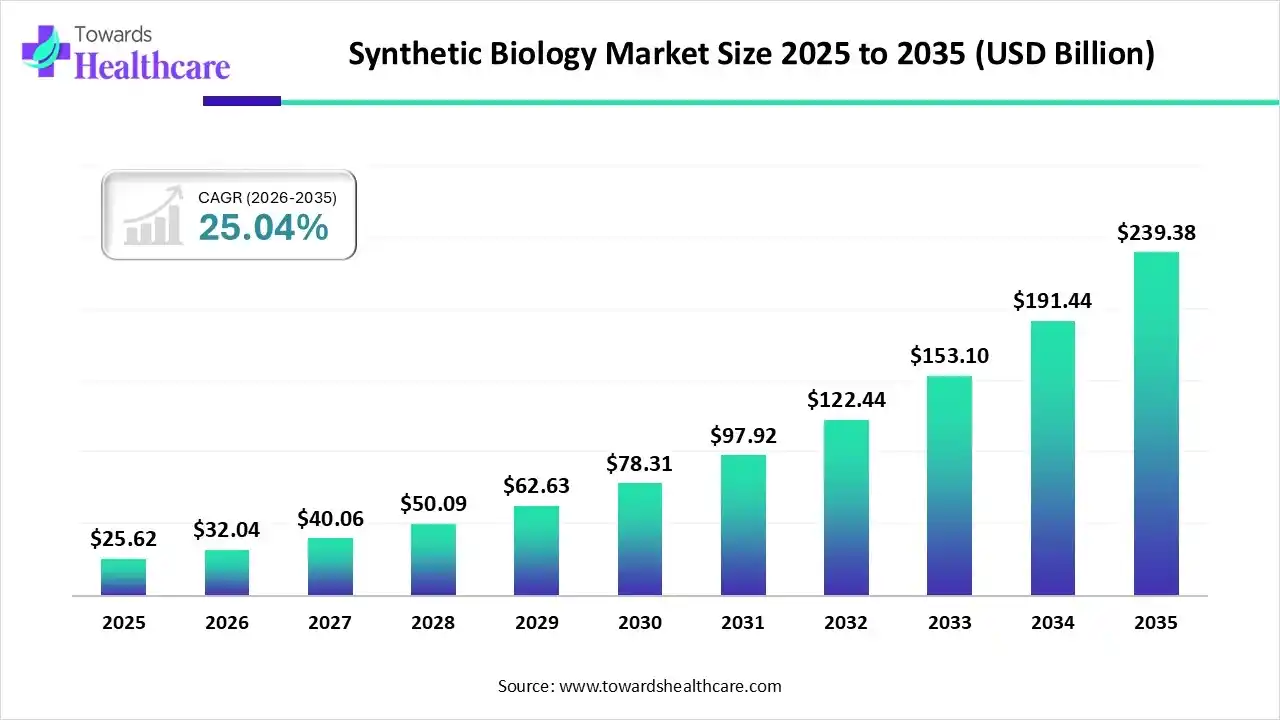
Major approaches to release genetically engineered organisms in the environment to permanently substitute whole populations of target species have been proposed as a means to eliminate vectors of diseases, remove invasive species, and lend pliability to threatened plants and animals. Synthetic biology products have been developed to offer substitutes to existing high-value commodities, particularly those based on the petroleum supply chain and non-renewable resources. Synthetic biology, redesigning organisms so that they produce a substance, like a medicine or fuel, or gain a advance ability, like sensing something in the environment, is a significant aim of synthetic biology.
Worldwide reactions to SpudCell met with various optimism, awe, and debate in the precise community.
In an episode from a London-based magazine and media publication, New Scientist, podcast host and editor Rowan Hooper shared his thoughts on SpudCell, referring to it as the “breakthrough of the year”.
Hooper discussed in what way, in addition to SpudCells’ strength for healthcare contributions, it potentially leads to an answer to one of the most significant philosophical questions people have been asking for centuries: how did we come to be alive from unliving matter?
In the future, SpudCell holds the strength for use in cancer management, carbon capturing in climate efforts, and chemical production, based on CNN. Similarly, Adamala discussed her individual aspirations for the future of SpudCell and how she hopes the project will ultimately advance into a bioeconomy.
The University of Minnesota Twin Cities is a public land-grant research university in the Twin Cities of Minneapolis and Saint Paul, Minnesota, United States. It is the flagship institution of the University of Minnesota Technology and is organized into 19 colleges, schools, and other significant academic units.
A recent report by Towards Healthcare highlights that the synthetic biology market is witnessing growth because synthetic biology allows novel treatment procedures for tumors, immune diseases, and metabolic disorders. Synthetic biology is applicable in pharmaceutical advancement. Synthetic biology enables the manufacturing of valuable small molecules that are challenging to synthesize with chemical engineering or produce naturally, like the compound artemisinin. This compound is applied in anti-malarial therapy, but it was hard to produce at a large scale until synthetic biology allowed for the manufacturing of a precursor molecule, artemisinic acid, with the support of a synthetic yeast.


