
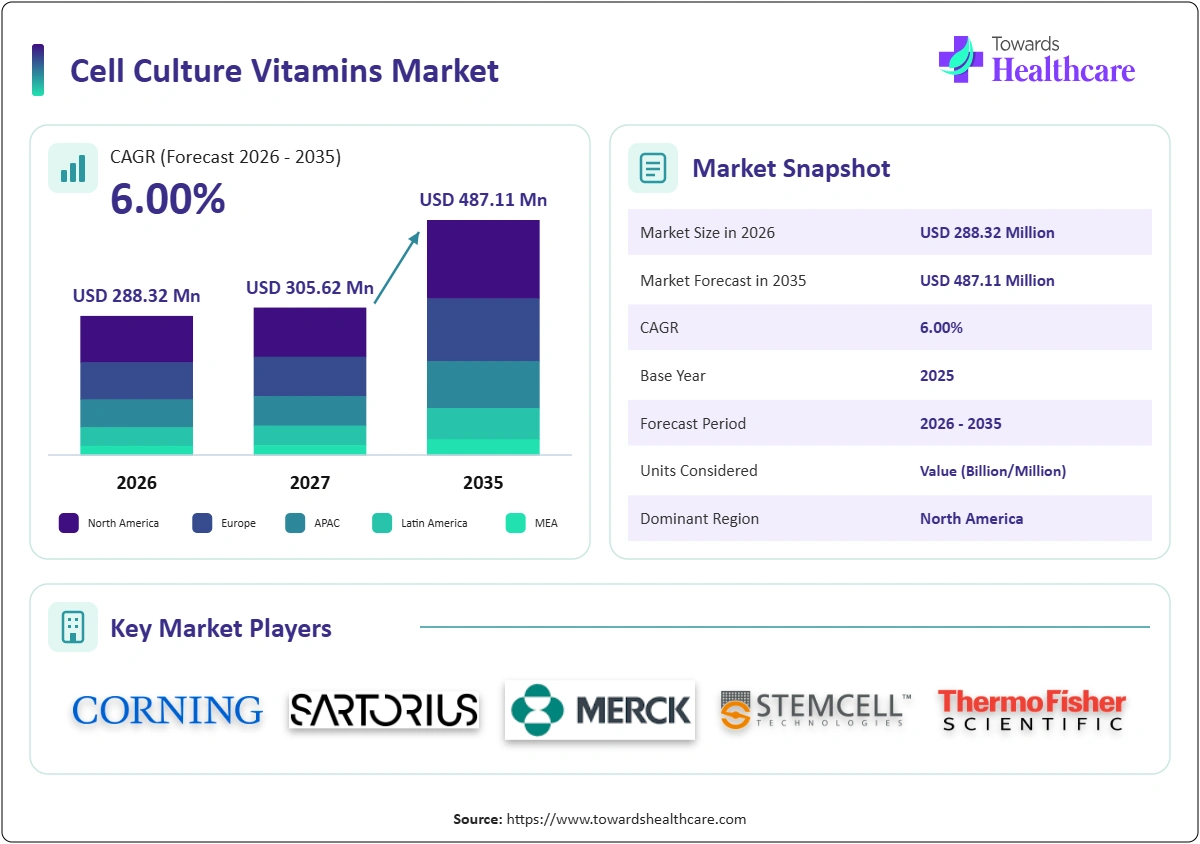
The cell culture vitamins market is projected to grow from USD 272.00 million in 2025 to USD 487.11 million by 2035 because vitamins are important ingredients in every cell culture medium and feed, and biologics, vaccine, and cell therapy manufacturing are expanding. Higher biologics output, more chemically defined and serum-free media, cell and gene therapy scale-up, and demand for GMP-grade, traceable vitamin ingredients support steady growth, lifting the market to USD 364.00 million by 2030 and sustaining a CAGR of 6.00% from 2026 to 2035.
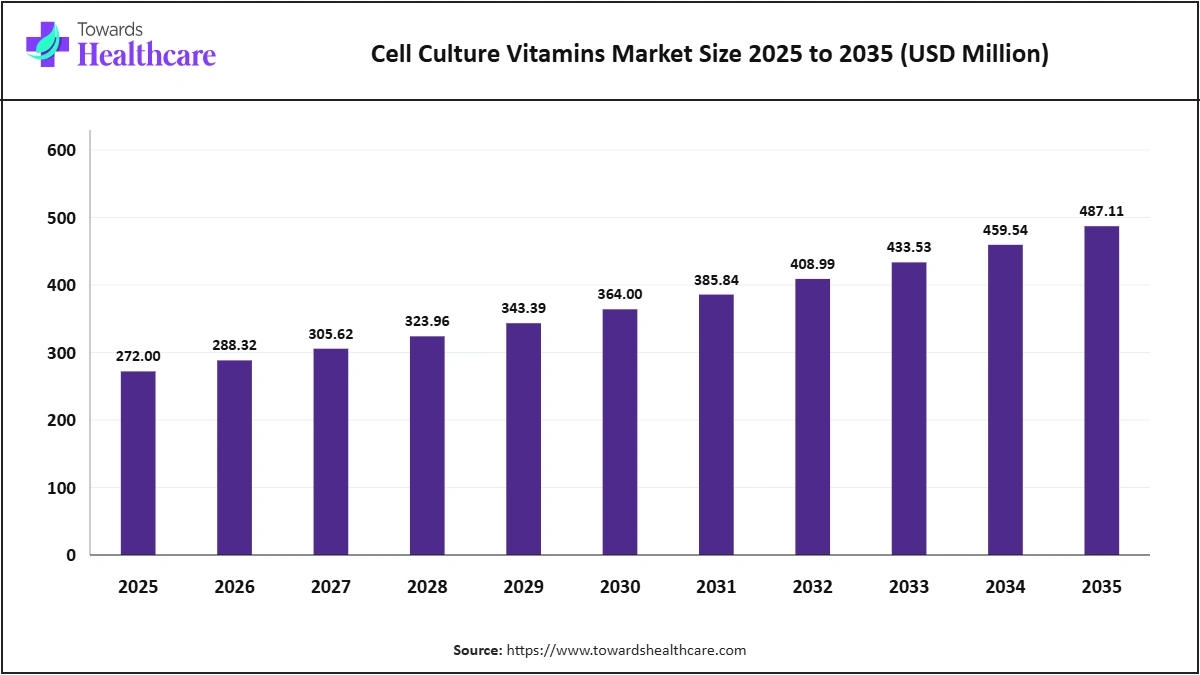
Analyst View: It is estimated that the volume of vitamins used in cell culture media, feeds, and supplements by product, form, grade, application, end user, and region, multiplied by average prices, which are much higher for GMP and pharmaceutical-grade material. Volumes reflect the amount of culture media produced for biologics, vaccines, cell therapies, and research, while prices reflect the shift towards high-purity, documented grades.
The total was cross-checked against media supplier activity and against published estimates, which places our base year slightly above the highest credible comparable figure. The growth rate reflects rising biomanufacturing volumes and GMP grade adoption, which we judge supports a slightly higher rate than the most conservative comparable estimate, moderated by the low share of vitamins in total media cost and price pressure on commodity grades.
Driver: Rising biologics production, particularly monoclonal antibodies and vaccines, is increasing the demand for specialised cell culture ingredients. The expansion of cell and gene therapy manufacturing, wider adoption of serum-free media, and growing emphasis on GMP-compliant, high-purity ingredients are further supporting market growth. In addition, investments in vaccine manufacturing capacity are creating opportunities for suppliers of cell culture vitamins.
Restraint: Despite their importance in maintaining cell growth and productivity, vitamins account for a relatively small share of overall cell culture media costs, limiting the scope for premium pricing. Suppliers also face price competition from commodity-grade ingredients, while the sensitivity of certain vitamins to light, temperature, and storage conditions creates additional challenges in maintaining product stability. Furthermore, lengthy supplier qualification and validation processes can delay the adoption of new products, particularly in GMP manufacturing. Budget constraints across academic and research institutions may also limit spending on specialised, high-quality vitamin formulations.
Opportunity: The development of pharmaceutical-grade vitamin ingredients is creating opportunities for suppliers catering to biopharmaceutical manufacturing requirements. Growing interest in media optimisation to improve cell growth and production yields is also supporting demand for specialised vitamin formulations. In addition, the expansion of biomanufacturing capacity across Asia Pacific, emerging applications in cultivated meat production and the development of stable lyophilized vitamin formats are expected to open new avenues for market growth.
Note: 2025 is the base year; 2035 values are forecasts.
Sources: Expert interviews, secondary sources, Towards Healthcare database, and Towards Healthcare analysts.
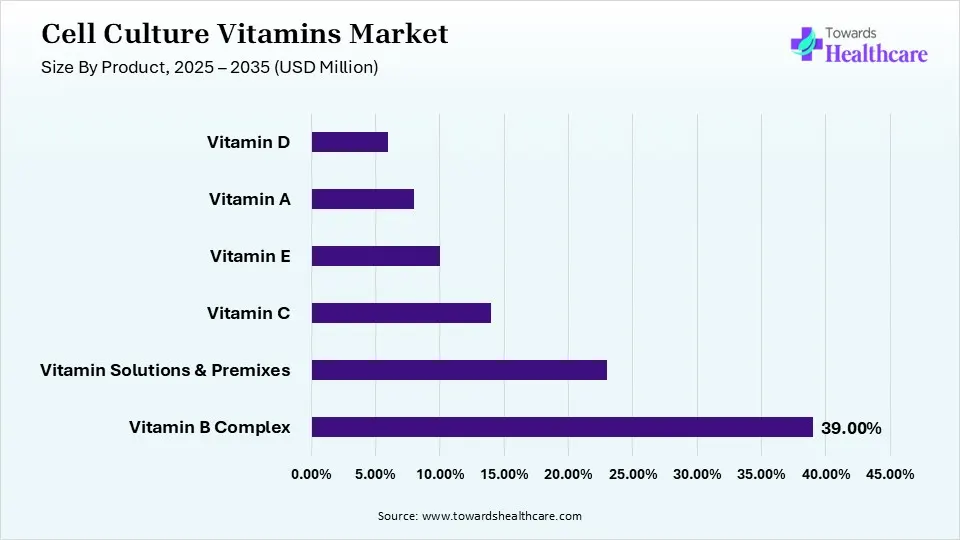
Vitamin B Complex: Vitamin B complex dominated the product segment in 2025, accounting for 39.00% of the global market, valued at USD 106.08 million. The segment is projected to reach USD 184.27 million by 2035, growing at a CAGR of 5.68% during 2026-2035. Its leading position is largely attributed to the role of B vitamins in cellular energy production, amino acid metabolism, and nucleotide synthesis. These vitamins are widely incorporated into basal media and feed formulations used for CHO, HEK293, stem cell, and other cell culture applications, supporting their consistent demand across research and biopharmaceutical manufacturing.
Vitamin solutions and premixes, such as MEM and RPMI vitamin solutions and custom vitamin blends, give users ready-to-add mixtures that simplify media preparation and improve consistency.
Its demand is supported by the role of vitamin C in collagen synthesis and cellular protection against oxidative stress. Commonly supplied as ascorbic acid or more stable derivatives, it is particularly relevant to stem cell, fibroblast, and tissue culture applications.
Moreover, vitamin E protects cell membranes against oxidative damage and is used in serum-free and chemically defined media.
Demand for vitamin A is primarily linked to its role in regulating cell differentiation and development. Its derivatives, particularly retinoic acid, are used in specialised cell culture protocols, including stem cell research and neural cell differentiation.
Vitamin D is the fastest-growing product because of growing use in immune cell, bone, and stem cell culture and research on its role in cell signalling.
Note: 2025 is the base year; 2035 values are forecasts.
Sources: Expert interviews, secondary sources, Towards Healthcare database, and Towards Healthcare analysts.
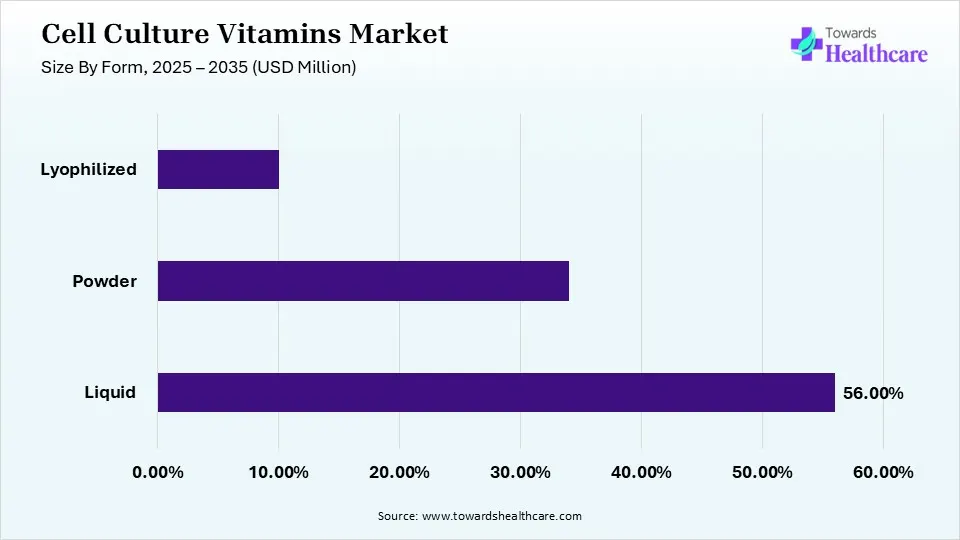
Liquid: Liquid formulations dominated the segment in 2025, accounting for 56.00% of the cell culture vitamins market, valued at USD 152.32 million. The segment is projected to reach USD 264.46 million by 2035, growing at a CAGR of 5.67% during 2026-2035. Their leading position is largely driven by ease of handling, convenient incorporation into cell culture media, and widespread use in research laboratories. Liquid formulations also allow straightforward preparation of media and feed solutions, supporting their adoption across research and biopharmaceutical applications.
Powder vitamins are used by media manufacturers to make dry powder media and by large biomanufacturers for long shelf life and lower shipping costs.
Lyophilized vitamins are the fastest-growing form because they offer better stability for sensitive vitamins and suit GMP supply chains.
Note: 2025 is the base year; 2035 values are forecasts.
Sources: Expert interviews, secondary sources, Towards Healthcare database, and Towards Healthcare analysts.
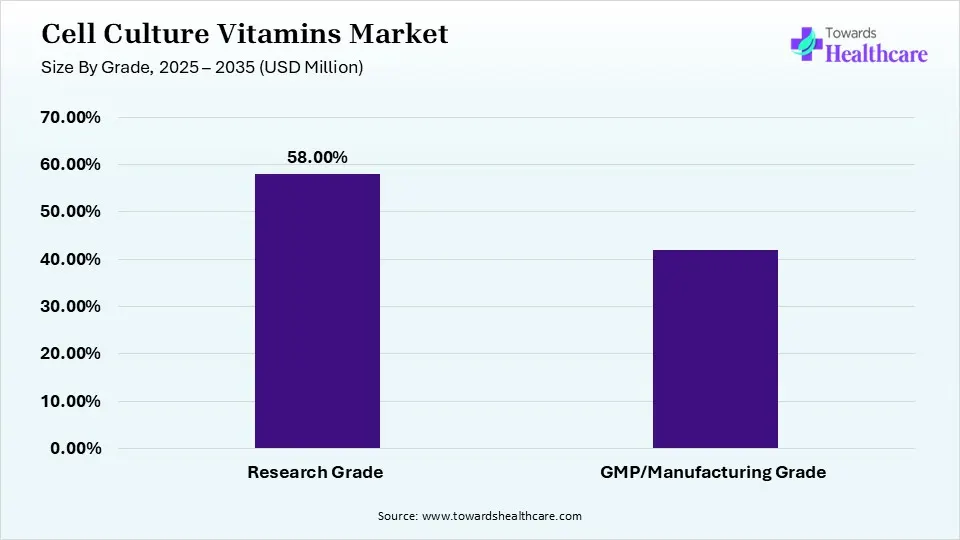
Research Grade: Research grade vitamins dominated the grade segment in 2025, accounting for 58.00% of the cell culture vitamins market, valued at USD 157.76 million. The segment is projected to reach USD 259.88 million by 2035, registering a CAGR of 5.12% during 2026-2035. Its leading position reflects the widespread use of research-grade supplements in academic institutions, research laboratories, and drug discovery activities, where these ingredients support routine cell culture studies and experimental work.
GMP and manufacturing-grade vitamins are growing faster because biologics, vaccine, and cell therapy producers need ingredients with full documentation, traceability, low endotoxin, and multi-compendial compliance, as offered by new pharmaceutical-grade ranges.
Note: 2025 is the base year; 2035 values are forecasts.
Sources: Expert interviews, secondary sources, Towards Healthcare database, and Towards Healthcare analysts.
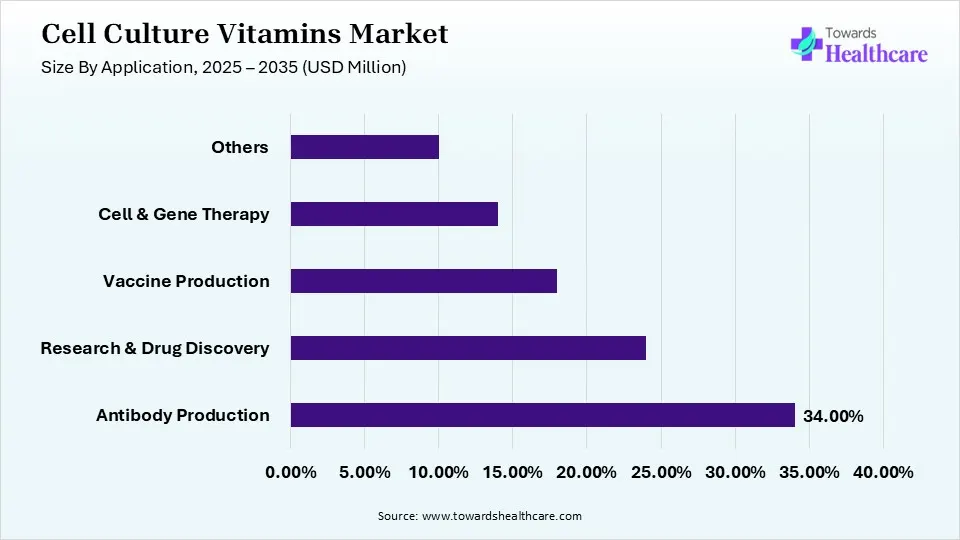
Antibody Production: This segment accounted for 34.00% with USD 92.48 million of the cell culture vitamins market in 2025 and is projected to reach USD 156.42 million by 2035, expanding at a CAGR of 5.40% from 2026 to 2035. Antibody production is the largest application because monoclonal antibodies and other recombinant proteins are made in large volumes of culture media and feeds rich in vitamins.
Demand in this segment is supported by the widespread use of cell culture techniques in academic institutions and pharmaceutical research laboratories. These applications include basic biological research, assay development, compound screening, and early-stage drug discovery, where vitamins play an important role in maintaining suitable conditions for cell growth and experimental studies.
Vaccine production uses cell culture media for viral vaccines and viral vector production.
Cell and gene therapy is the fastest-growing application because CAR-T, stem cell, and viral vector manufacturing need defined, high-quality media ingredients.
This category includes emerging and specialised applications such as cultivated meat production, diagnostic testing and industrial biotechnology. Growing interest in alternative protein development and the expanding use of cell-based technologies across industrial and diagnostic applications are expected to support demand for cell culture vitamins in this segment.
Note: 2025 is the base year; 2035 values are forecasts.
Sources: Expert interviews, secondary sources, Towards Healthcare database, and Towards Healthcare analysts.
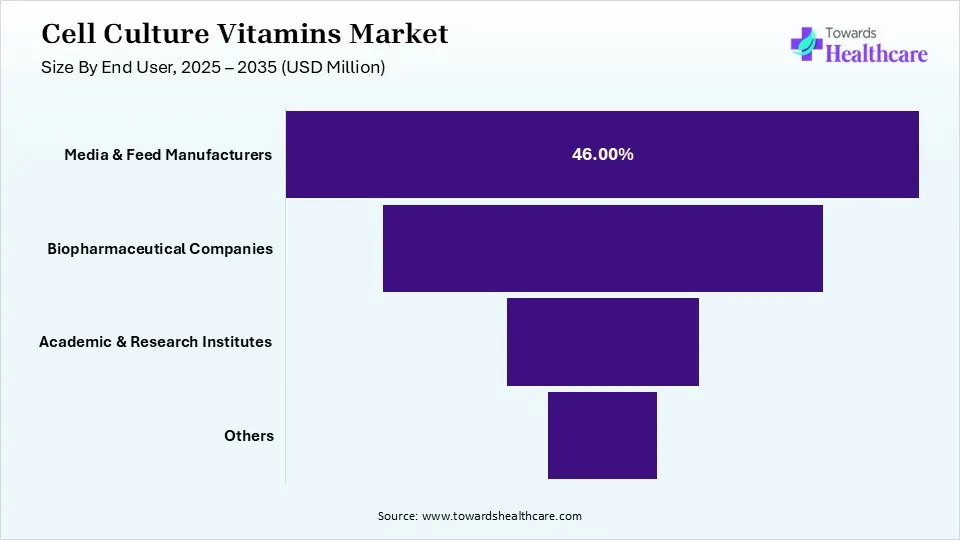
Media & Feed Manufacturers: Media and feed manufacturers represented the largest end-user segment in 2025, accounting for 46.00% of the cell culture vitamins market, valued at USD 125.12 million. The segment is projected to reach USD 212.68 million by 2035, growing at a CAGR of 5.45% during 2026-2035. Their leading position reflects the significant role they play in incorporating vitamins into basal media, feed formulations, and specialised supplements supplied to biopharmaceutical companies, research laboratories, and other cell culture users. The growing demand for customised media formulations and consistent ingredient quality is further supporting vitamin procurement across this segment.
Biopharmaceutical companies buy vitamins directly for in-house media preparation and feed optimisation, and are growing faster as they customise media to raise yields.
Demand from this segment is driven by the extensive use of vitamin supplements in cell culture studies across universities, research centres and academic laboratories. These ingredients support a range of research activities, including cellular metabolism studies, cell growth analysis and experimental investigations.
Others include CDMOs, cell therapy developers and cultivated meat companies.
Analyst View: Market segment values were estimated by mapping vitamin consumption volumes and pricing across product categories, formulations, quality grades, applications, and end-user groups. The assessment considered established cell culture media formulations and supplier product portfolios to determine the contribution of each segment. In 2025, vitamin B complex, liquid formulations, research-grade ingredients, antibody production and media and feed manufacturers represented the leading segments. Looking ahead, vitamin D, lyophilized formulations, GMP-grade ingredients, cell and gene therapy applications and direct procurement by biopharmaceutical companies are expected to gain a larger share as manufacturing requirements and purchasing patterns evolve.
| Region | 2025 Share | 2025 Value (USD Million) | 2035 Value (USD Million) | CAGR 2026–2035 |
| North America | 41.00% | 111.52 | 186.88 | 5.30% |
| Europe | 27.00% | 73.44 | 127.83 | 5.70% |
| Asia Pacific | 24.00% | 65.28 | 134.53 | 7.50% |
| Latin America | 5.00% | 13.60 | 23.67 | 5.70% |
| Middle East & Africa | 3.00% | 8.16 | 14.20 | 5.70% |
Note: 2025 is the base year; 2035 values are forecasts.
Sources: Expert interviews, secondary sources, Towards Healthcare database, and Towards Healthcare analysts.
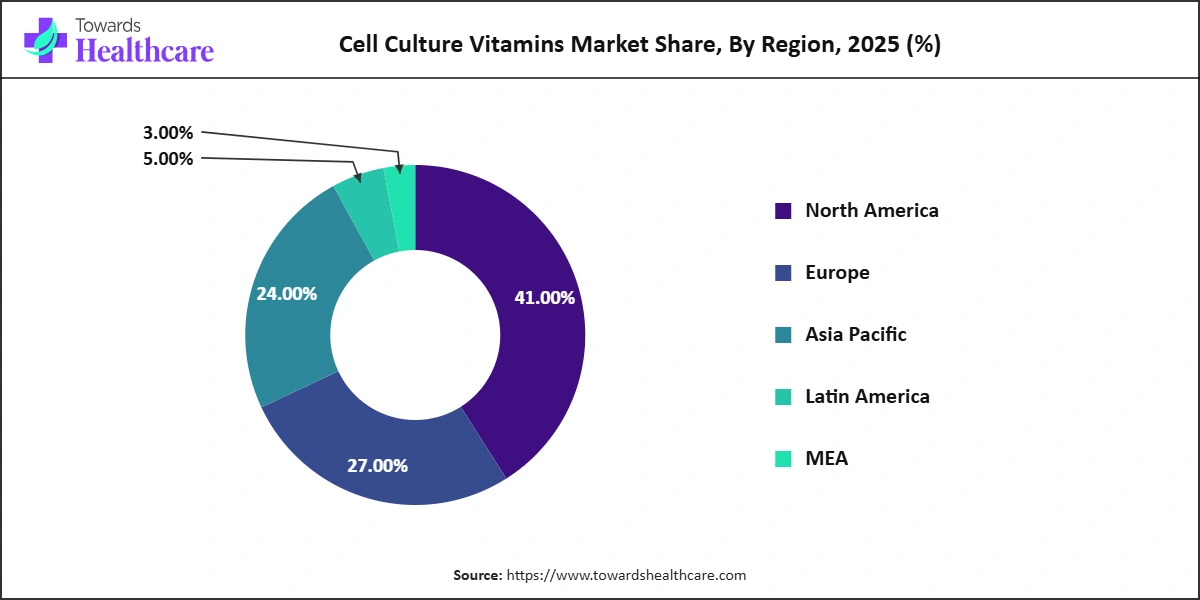
North America: North America dominated the cell culture vitamins market in 2025, accounting for 41.00% of global revenue, equivalent to USD 111.52 million. The regional market is projected to reach USD 186.88 million by 2035, growing at a CAGR of 5.30% during 2026-2035. Its leading position is supported by a well-established biopharmaceutical manufacturing industry, the presence of major cell culture media suppliers such as Thermo Fisher Scientific, and a strong pipeline of cell and gene therapy developers, particularly in the United States. Continued investment in biologics production and advanced therapies is expected to sustain regional demand for cell culture vitamin ingredients.
Europe: This region accounted for a 27.00% share of USD 73.44 million of the cell culture vitamins market in 2025 and is projected to reach USD 127.83 million by 2035, expanding at a CAGR of 5.70%. Europe has major biopharmaceutical manufacturers, media and ingredient suppliers such as Merck KGaA, Sartorius and dsm-firmenich, and strong vaccine production.
Asia Pacific: This region accounted for 24.00% USD 65.28 million of the cell culture vitamins market in 2025 and is projected to reach USD 134.53 million by 2035, expanding at a CAGR of 7.50% from 2026 to 2035. Asia Pacific is the fastest-growing region, supported by rapid growth of biologics and biosimilar manufacturing and CDMOs in China, South Korea, India, and Singapore, and media suppliers in Japan such as FUJIFILM.
Latin America: Latin America accounted for 5.00% of the cell culture vitamins market in 2025, representing a value of USD 13.60 million. The regional market is projected to reach USD 23.67 million by 2035, registering a CAGR of 5.70% during 2026-2035. Demand across the region is supported by ongoing vaccine and biologics manufacturing activities, particularly in Brazil, Argentina and Mexico. Continued development of biopharmaceutical production capabilities in these countries is expected to support the adoption of cell culture vitamins over the forecast period.
Middle East & Africa: This region accounted for 3.00% USD 8.16 million of the cell culture vitamins market in 2025 and is projected to reach USD 14.20 million by 2035, expanding at a CAGR of 5.70% from 2026 to 2035. The Middle East and Africa are supported by new biomanufacturing and vaccine projects in Gulf countries and South Africa.
Analyst View: Regional market shares were estimated based on cell culture media consumption, vitamin usage patterns, and biopharmaceutical manufacturing activity across individual markets. North America maintains the largest revenue share, supported by its established biologics manufacturing base and strong cell and gene therapy industry. In contrast, Asia Pacific is expected to record the fastest growth over the forecast period, driven by expanding biomanufacturing capacity, rising investments in biologics production, and the development of pharmaceutical manufacturing infrastructure across the region.
| Rank | Company Name | Market-Specific Revenue (USD Million) | 2025 Share | Key Products / Business | Headquarters |
| 1 | Merck KGaA | 38.00 | 13.97% | Vitamins, media and supplements | Germany |
| 2 | Thermo Fisher Scientific | 34.00 | 12.50% | Gibco vitamin solutions and media | United States |
| 3 | Cytiva | 18.00 | 6.62% | HyClone media and supplements | United States |
| 4 | dsm-firmenich | 16.00 | 5.88% | Pharmaceutical-grade vitamins | Switzerland |
| 5 | FUJIFILM | 12.00 | 4.41% | Media and reagents | Japan |
| 6 | Lonza | 10.00 | 3.68% | Media and supplements | Switzerland |
| 7 | Sartorius | 7.00 | 2.57% | Cell culture media and supplements | Germany |
| 8 | Corning | 6.00 | 2.21% | Media and supplements | United States |
| 9 | HiMedia Laboratories | 5.00 | 1.84% | Vitamin solutions and media | India |
| 10 | STEMCELL Technologies | 4.00 | 1.47% | Media supplements | Canada |
Note: Company revenues and shares are 2025 estimates.
Sources: Company press releases, expert interviews, secondary sources, Towards Healthcare database and Towards Healthcare analysts.
Merck KGaA held the leading position in the cell culture vitamins market in 2025, accounting for an estimated 13.97% share, equivalent to USD 38.00 million in revenue. Thermo Fisher Scientific followed with a 12.50% share (USD 34.00 million), while Cytiva ranked third with 6.62% (USD 18.00 million). Merck KGaA's competitive position is supported by its broad portfolio of high-purity vitamins, cell culture media and supplements catering to research and biopharmaceutical manufacturing requirements.
Thermo Fisher Scientific serves the market through its Gibco range of vitamin solutions and media products, while Cytiva, part of Danaher, offers HyClone media and supplements. Other notable participants include dsm-firmenich, FUJIFILM, Lonza, Sartorius, Corning, HiMedia Laboratories and STEMCELL Technologies. These companies compete through specialised vitamin ingredients, cell culture media, supplements, and products designed for specific applications, including stem cell research and biomanufacturing.
The top 10 companies accounted for an estimated 55.15% share of USD 150.00 million of 2025 revenue, while the remaining 44.85% USD 122.00 million was shared among many fine chemical makers, media formulators and regional suppliers. The cell culture vitamins market is moderately concentrated, and competition centres on purity, consistency, GMP documentation, regulatory compliance, supply security, custom formulation, and price. Ingredient makers are partnering with distributors to reach biopharmaceutical users worldwide.
The cell culture vitamins ecosystem links vitamin and fine chemical producers with media formulators, distributors, biopharmaceutical manufacturers, and research users.
| Ecosystem Stage | Role in the Market | Key Companies |
| Vitamin Producers | Make high-purity vitamins | dsm-firmenich, Merck KGaA, fine chemical makers |
| Media Formulators | Blend vitamins into media and feeds | Thermo Fisher, Cytiva, FUJIFILM, Lonza, Sartorius |
| Distributors | Supply ingredients globally | Brenntag and life science distributors |
| Biomanufacturers | Produce biologics and therapies | Biopharma companies, CDMOs, vaccine makers |
| Research Users | Culture cells for research | Universities, institutes, pharma R&D |
Sources: Company press releases, expert interviews, secondary sources, Towards Healthcare database and Towards Healthcare analysts.
The Towards Healthcare Companies Quadrant positions key participants in the cell culture vitamins market by market strength, reflecting revenue scale, market share and geographic reach, and by innovation and growth strategy, reflecting product portfolio breadth, R&D intensity and partnerships. Positions reflect each company's estimated 2025 cell culture vitamins revenue and our assessment of its product quality, innovation, and reach.
Sources: Company press releases, expert interviews, secondary sources, Towards Healthcare database, and Towards Healthcare analysts.
Leaders: Merck, Thermo Fisher Scientific, Cytiva, dsm-firmenich, FUJIFILM and Lonza combine large vitamin revenue with broad media portfolios and GMP capability.
Innovators: Sartorius, Corning, HiMedia Laboratories and STEMCELL Technologies bring pharmaceutical-grade ingredients and specialised supplements.
By Product
By Form
By Grade
By Application
By End User
By Region
The cell culture vitamins market was defined as vitamins and vitamin solutions used in cell culture media, feeds and supplements, including vitamin B complex, vitamins C, E, A and D and premixes, worldwide. The 2025 base year was built bottom-up from vitamin volumes used in cell culture by product, form, grade, application, end user and region, and average prices, and checked top-down against media supplier activity and the vitamin share of cell culture media.
Market values across product segments, regions and companies were estimated by assessing demand across different product types, formulations, quality grades, applications and end-user categories. The estimates were cross-checked against company disclosures, regulatory information, industry data and published third-party research to improve consistency and reliability. Inputs that could not be independently reconciled were excluded from the final assessment. All segment, regional, and company estimates were aligned with the same 2025 base year to ensure consistency across the analysis. Forecast values for 2026-2035 were subsequently recalculated using the respective CAGRs and validated against the base-year estimates.
Analyst View: The cell culture vitamins market is a small but essential segment of cell culture media ingredients, tied closely to biologics, vaccine, and cell therapy production. Our estimate links demand to vitamin volumes and prices, so the forecast follows biomanufacturing growth, the shift to defined media, and adoption of GMP grades. The main upside comes from cell and gene therapy and pharmaceutical-grade ingredients, while the main risks are price pressure and slow supplier qualification.