Pipeline Programs

CGT Companies Tracked

Manufacturing Facilities


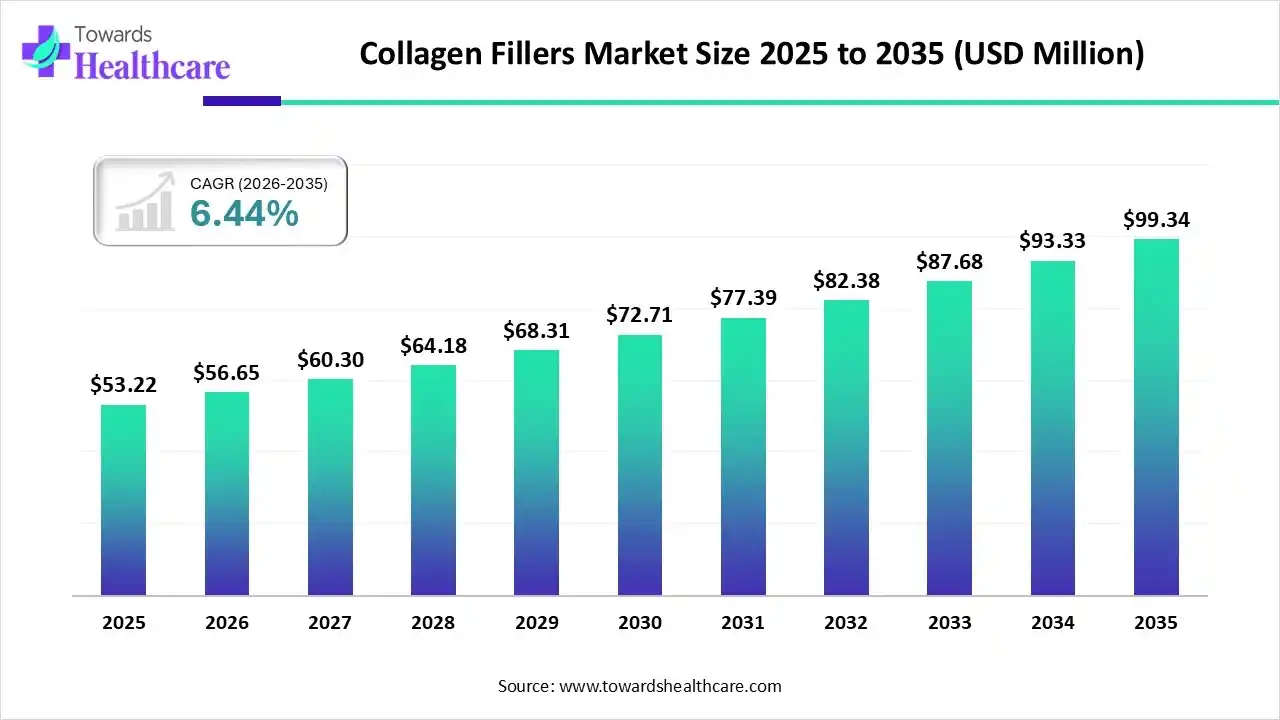
The global collagen fillers market size was estimated at USD 53.22 million in 2025 and is predicted to increase from USD 56.65 million in 2026 to approximately USD 99.34 million by 2035, expanding at a CAGR of 6.44% from 2026 to 2035.
The widespread social media platforms are enhancing demand for natural-looking results, with significant anti-ageing solutions, including bioengineered /recombinant collagens. Alongside, there is a growing number of dermatology clinics & medical spas, which are increasingly leveraging advanced aesthetic solutions, such as reconstructive measures, and facial enhancement solutions.
The collagen fillers market comprises injectable aesthetic and medical products formulated using natural or bioengineered collagen to restore facial volume, smooth wrinkles, enhance contours, and support tissue regeneration. Demand is driven by the rising number of minimally invasive cosmetic procedures, a growing ageing population, technological advancements in collagen sourcing and purification, and an increasing acceptance of aesthetic treatments across both medical and non-medical settings globally. These fillers are used in cosmetic dermatology and reconstructive procedures, offering biocompatibility and temporary aesthetic correction.
Collagen fillers are injectable dermal fillers derived from natural or bioengineered collagen that restore facial volume, smooth wrinkles, improve skin texture, and enhance soft tissue for cosmetic and reconstructive applications. The collagen filler market is expanding due to the increasing preference for non-surgical aesthetics for natural-looking facial rejuvenation. Key trends include the development of longer-lasting collagen formulations, combination aesthetic treatments, and personalized cosmetic combination aesthetic treatments, and personalized cosmetic procedure. Technological advancements in recombinant collagen production, bioengineered materials, and precision injection techniques are improving product safety, durability, and treatment outcomes. Future opportunities are driven by the expanding medical aesthetic industry, increasing acceptance of preventive anti-ageing treatments among younger consumers, growing demand in emerging economies, and continued innovation in regenerative aesthetic medicine and minimally invasive cosmetic solutions.
Currently, firms like Modiface and Crisalix are immensely using generative AI tools and augmented reality (AR) platforms, which enable patients to visualise potential post-treatment results before the procedure begins. Moreover, the widespread adoption of AI-powered ultrasound imaging is supporting the visualisation of soft-tissue layers and significant vascular structures in real-time, also assisting practitioners in avoiding complications during the injection process.
Shifting Towards Biostimulatory Focus
Immersive Sculptra (PLLA) and Radiesse (CaHA) are bolstering, which stimulates natural collagen for gradual, long-lasting firmness in cheeks, body, and under-eye areas.
Surging Holistic & Personalized Solutions
Globally rising focus on full-face harmonisation, customised mapping (often with 3D imaging), and highlighting concerns, including post-weight loss sagging ("Ozempic face"), is also an emerging trend.
Studying Biomimetic & Recombinant Collagen
Researchers are working on novel products by using non-animal sources and mimicking natural collagen, which further displays allergy issues, with enhanced safety/longevity.
Encouraging Recombinant Human Collagen
Alongside, the ongoing efforts into injectable recombinant human collagen type III (rhCol III) microgels are compared against traditional animal-derived collagen and hyaluronic acid fillers for boosting the regeneration of "gold collagen" (Type III), which supports raising skin elasticity.
| Alliances | Description |
| VeCollal | In December 2025, it secured investment from Seventure Partners to widen its plant-based collagen option. |
| Alpha Aesthetics Partners | In December 2025, partnered with Privé Med Spa, a Kentucky-based premier medical aesthetics practice known for delivering advanced, results-driven aesthetic and wellness care. |
| Avignon Clinic | In June 2025, collaborated with Galderma, focused on exploring the regenerative aesthetics in the Philippines. |
| Key Elements | Scope |
| Market Size in 2026 | USD 56.65 Million |
| Projected Market Size in 2035 | USD 99.34 Million |
| CAGR (2026 - 2035) | 6.44% |
| Leading Region | North America by 43.4% |
| Market Segmentation | By Source Type, By Product Type, By Application, By End User, By Region |
| Top Key Players | Allergan Aesthetics (AbbVie), Galderma, Merz Pharma, Sinclair Pharma, Teoxane, Revance Therapeutics, Anika Therapeutics, BioPlus Co., CollPlant Biotechnologies, Integra LifeSciences |
How did the Bovine Collagen Segment Lead the Market in 2025?
In 2025, the bovine collagen segment dominated with 52.4% share of the collagen fillers market. These collagens are mainly rich in type I & III, which offer the vital support for skin, hair, nails, and connective tissues, aligning with beauty and health trends. A prominent development in the market in 2025 is that Maypharm Co., Ltd. introduced "SKINCOLLA," showcased as the first recombinant human collagen filler by integrating Type I rhCollagen with hyaluronic acid (HA).
Bioengineered/Recombinant Collagen
In the coming era, the bioengineered/recombinant collagen segment will expand at 6.8% CAGR. They are mainly employed by inserting human collagen genes into host organisms like yeast, bacteria, or plants, with their high compatibility with human tissue. Recently, CollPlant Biotechnologies expanded its photocurable recombinant human collagen (rhCollagen) dermal filler, with positive non-clinical results. This enables boosted stability and probably longer-lasting results as compared to conventional fillers.
Which Product Type Dominated the Collagen Fillers Market in 2025?
The injectable collagen fillers segment captured 54.5% share of the market in 2025. Day by day, the globe is highly preferring minimally invasive aesthetic procedures, with increased emphasis on facial rejuvenation and lowering signs of ageing. Persistent advances are escalating innovative injectable moisturisers/skin boosters, such as Juvéderm's SkinVive, which contains lightweight hyaluronic acid for deeper hydration of the skin and optimises overall quality.
Combination Fillers
Besides this, the combination fillers segment is anticipated to expand at 6.9% CAGR. This mainly comprises hybrid products that blend collagen with other materials, or the practice of using collagen fillers, with other aesthetic treatments. The latest developments include platelet-rich plasma (PRP) and exosome-based therapies used in combination with procedures, especially microneedling or laser resurfacing. Another major groundbreaking encompassed combined dual-functionalized HA fillers with agents, such as Vitamin B3 (niacinamide).
Which Application Led the Collagen Fillers Market in 2025?
In 2025, the wrinkle correction segment registered dominance with 34.7% share of the market. Specifically, younger demographics are looking for youthful appearances, which accelerates demand for anti-ageing solutions, such as collagen fillers. Moreover, the population is widely using biostimulators in conjunction with radiofrequency (RF) microneedling or laser therapies for tackling both volume loss and skin texture simultaneously. Radiesse is a popular CaHA filler, offering immediate volume and then acts as a scaffold to stimulate natural collagen production.
Facial Volume Enhancement
The facial volume enhancement segment will register the fastest growth at 7.0% CAGR. Primarily, a rise in the ageing population is increasingly demanding volume restoration and wrinkle reduction. The broader application of Gouri is a fully liquid PCL (polycaprolactone) injectable, which supports even distribution for a holistic collagenesis effect, whereas Aesplla is another PLLA alternative for volume restoration in the mid-face, temples, and chin. Recently, in vitro studies have shown hydration and volume by using combined hyaluronic acid (HA) and dextranomer microspheres.
Why did the Dermatology Clinics Segment Dominate the Market in 2025?
By capturing 45.7% share, the dermatology clinics segment registered dominance in the collagen fillers market in 2025. The board-certified professionals facilitate safe, personalised treatments, from subtle rejuvenation to complex contouring, which boosts patient confidence. Additionally, patients are choosing these end users due to their specialised facilities, faster procedures, and minimal downtime, which also steps with the trend of non-surgical improvements.
Medical Spas
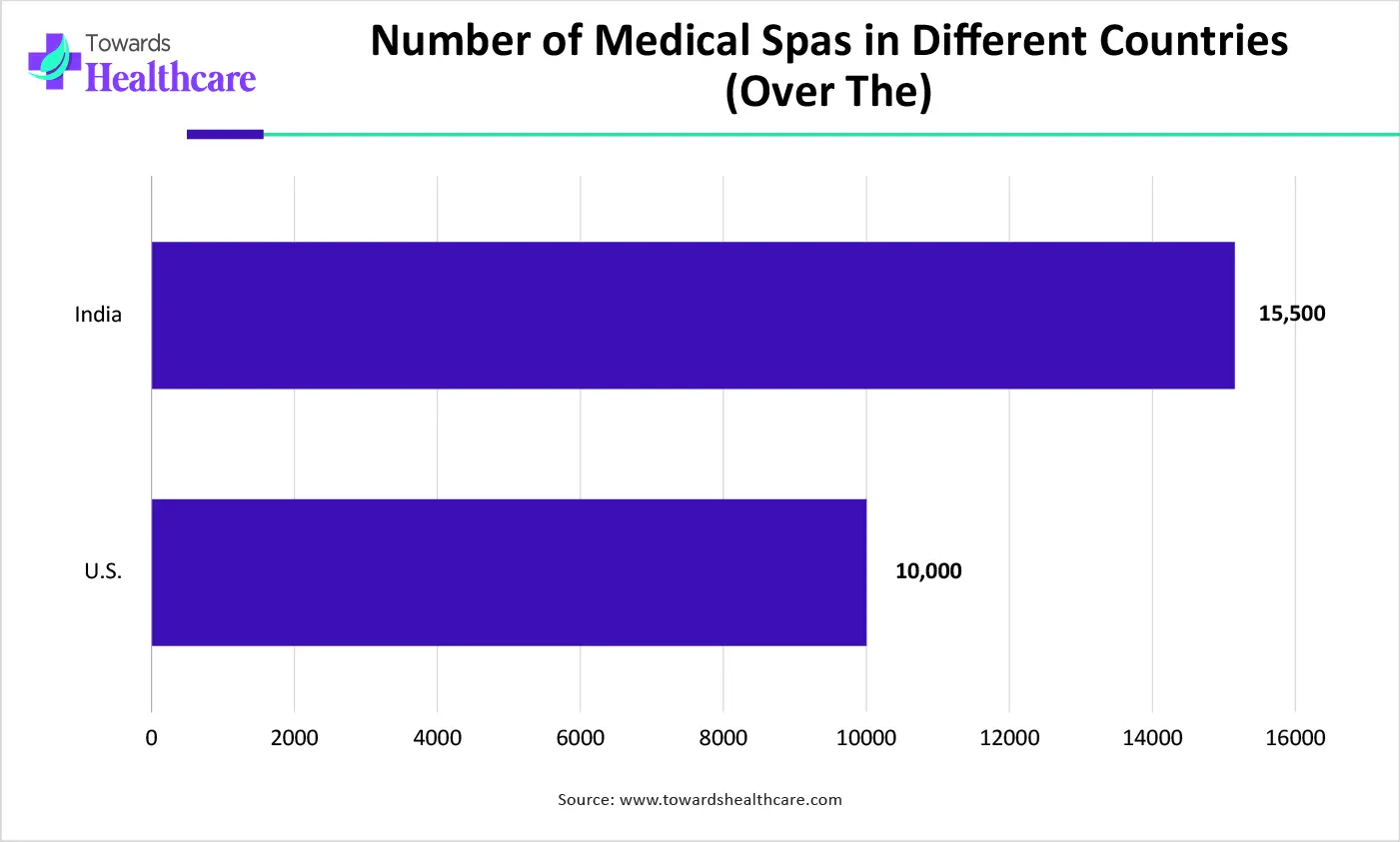
The medical spas segment will grow at 7.2% CAGR in the coming era. The worldwide rising demand for non-invasive treatments, like Botox & fillers, along with raised interest in self-care and beauty, driven by social media, fosters fillers from corrective to preventative/maintenance routines by these facilities.
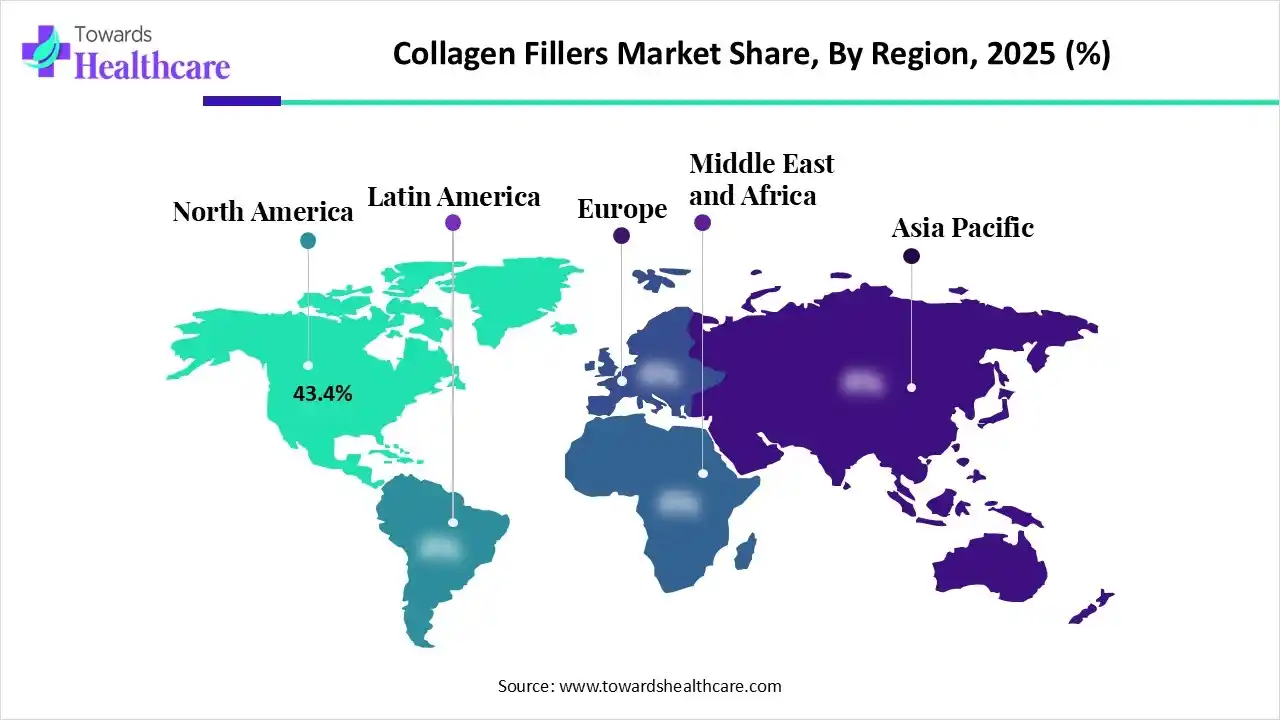
In 2025, North America held 43.4% share of the market, due to the broader movement towards natural-looking results, with technological advances in bioengineered collagen, and greater adoption of lip fillers and jawline sculpting. Also, the region is fostering the development of longer-lasting, more sophisticated options that either contain synthetic materials or act as biostimulators to promote the body's own collagen production.
U.S Market Trends
The collagen fillers market in the U.S. is mainly driven by the latest approvals by the FDA, such as Zyderm and Zyplast, which are bovine-derived collagen for fine and deeper facial lines. U.S. consists of advanced healthcare infrastructure, which increases access to aesthetic treatments, increasing the use of collagen fillers. Rising demand for anti-aging and facial rejuvenation treatments is also increasing their use. A growing geriatric population is also increasing their use.
Canada Strengthens Its Collagen Filler Market
Canada is witnessing significant growth in the collagen filler market due to increasing demand for minimally invasive aesthetic procedures, rising awareness of cosmetic enhancements, and growing disposable income. The presence of advanced dermatology and aesthetic clinics, increasing adoption of bioengineered collagen fillers, and continuous technological innovations in facial rejuvenation treatment are further driving market expansion.
In the prospective era, the Asia Pacific will expand at 8.0% CAGR, with increasing spending on alternative cosmetic treatments, especially in China, India, and Southeast Asia. Alongside, South Korea, Thailand, and India are appealing to international patients who are looking for inexpensive, high-quality aesthetic procedures.
China Market Trends
In China, NMPA is increasingly approving locally developed collagen implants, like those by Sunmax Biotechnology and Changchun Botai Pharmaceutical, which are already NMPA-approved Class III medical devices for use in facial corrections. The growing beauty consciousness across China is increasing the adoption of facial rejuvenation treatments, driving the demand for collagen fillers. The expanding medical aesthetic industry and medical tourism are also increasing their use, where advancements in injectable fillers are also creating new opportunities.
India Expands Its Collagen Fillers Market
India is witnessing significant expansion in the collagen fillers market due to rising demand for non-surgical cosmetic procedures, increasing disposable income, and growing awareness if aesthetic treatments. The expansion of medical aesthetic clinics, greater adoption of advanced dermal fillers, and increasing influence of social media and beauty trends are further driving market growth.
Latin America is anticipated to expand notably in the market during the forecast period, due to rising demand for aesthetic procedures and increasing beauty consciousness. Expanding medical tourism and social media influence are also increasing the adoption of collagen fillers for various aesthetic treatments.
Brazil Market Trends
Recently in Brazil, different studies have showcased adverse effects, like nodules, which detect issues regarding particular product properties (like particle shape/size) than the injection technique. Alongside, continuous regulatory modifications by ANVISA (Brazilian Health Regulatory Agency) assist in the safer commercialisation of these advanced injectables.
Argentina Market Trends
Due to expanding beauty culture, the demand for facial rejuvenation and wrinkle reduction is increasing, driving the adoption of collagen fillers. Expanding aesthetic clinics and medical tourism are also increasing their adoption. Moreover, the shift towards minimally invasive procedures is also increasing their use.
Europe is expected to show significant growth during the forecast period due to an increasing geriatric population. The presence of a well-established healthcare infrastructure and high consumer awareness is also increasing the use of collagen fillers. Rising disposable income is also supporting their uptake.
UK Market Trends
Increasing cosmetic popularity among the UK population is driving the demand for collagen fillers. Expanding anti-aging treatments, non-surgical aesthetic solutions, and beauty trends are also increasing their use. A growing shift towards minimally invasive procedures and facial rejuvenation is also promoting their adoption.
Germany Market Trends
Germany is experiencing a rise in the geriatric population, which is increasing the demand for anti-aging treatments. Growing healthcare spending and expanding dermatology clinics are also driving aesthetic treatments. High beauty consciousness is also increasing the use of collagen fillers.
MEA is predicted to show lucrative growth during the upcoming years due to expanding aesthetic clinics. Increasing disposable incomes and beauty trends are also increasing the demand for aesthetic treatments. Growing social media influence and preference for non-surgical options are also increasing their use.
United Arab Emirates (UAE) Market Trends
UAE is experiencing a rise in medical tourism, which is increasing the use of collagen fillers for advanced aesthetic treatments. Increasing disposable income and the growth of aesthetic clinics are also increasing their use. A growing geriatric population and social media influence also encourage their adoption.
Qatar Market Trends
Increasing disposable income, beauty consciousness, and demand for anti-aging treatments are increasing the use of collagen fillers in Qatar. Expanding aesthetic clinics and medical tourism are also increasing demand. The presence of advanced healthcare infrastructure is also promoting the use of minimally invasive aesthetic procedures.

| Company | Description |
| Allergan Aesthetics (AbbVie) | A prominent company mainly specializes in hyaluronic acid (HA)-based dermal fillers under the globally recognised Juvéderm collection. |
| Galderma | This leader explored Sculptra, which is a regenerative biostimulator. |
| Merz Pharma | It substantially facilitates Belotero (hyaluronic acid fillers) for hydration and fine lines & Radiesse, a vital collagen-focused offering, supports natural skin regeneration. |
| Sinclair Pharma | They offer different aesthetic products that act as collagen stimulators instead of traditional "collagen fillers" made of animal or human collagen. |
| Teoxane | A company unveiled its novel Teosyal RHA Collection of Resilient Hyaluronic Acid (HA) dermal fillers. |
| Revance Therapeutics | It commercialises RHA Collection of resilient hyaluronic acid (HA) dermal fillers in the U.S. market. |
| Anika Therapeutics | Specifically, its major product lines are based on hyaluronic acid (HA). |
| BioPlus Co. | This involves offering hyaluronic acid (HA) dermal fillers created to stimulate natural collagen production indirectly. |
| CollPlant Biotechnologies | Its significant provision comprises a photocurable regenerative dermal and soft tissue filler candidate. |
| Integra LifeSciences | They highly focus on diverse regenerative medicine, wound care, and surgical reconstruction. |
In May 2026, “While previous research has shown that biostimulation with RADIESSE has a positive impact on both collagen and elastin production, the latest evidence published today demonstrates it also supports a broader remodeling process including notable improvements to sun-damaged skin,” said Owen Sunga, M.D., Executive Vice President, Head of Global Medical Affairs.
By Source Type
By Product Type
By Application
By End User
By Region





Principal Consultant
Payal Rabde is a Healthcare Market Research Analyst at Towards Healthcare Research & Consulting with 4+ years of experience in pharmaceuticals, biotechnology, medical devices, and life sciences.
Learn more about Payal Rabde

Reviewed By
Aditi Shivarkar is a seasoned professional with over 14 years of experience in healthcare market research. As a content reviewer, Aditi ensures the quality and accuracy of all market insights and data presented by the research team.
Learn more about Aditi Shivarkar