


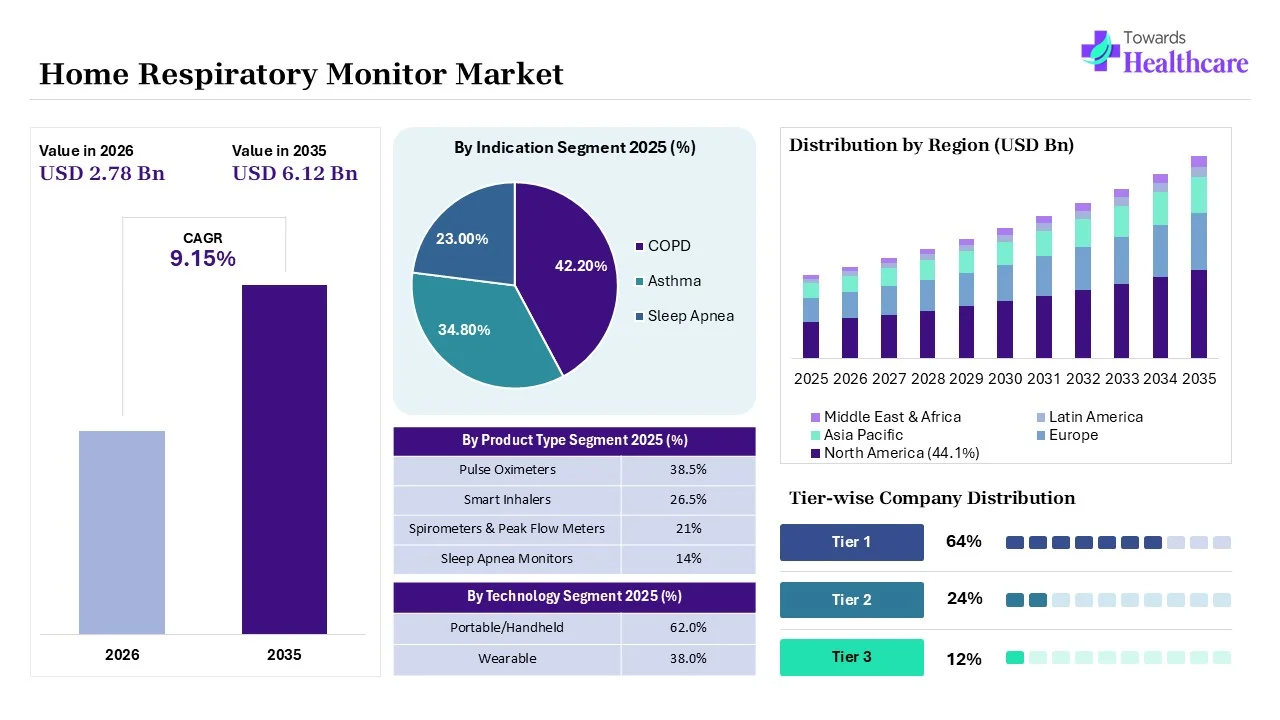
The global home respiratory monitor market size was estimated at USD 2.55 billion in 2025 and is predicted to increase from USD 2.78 billion in 2026 to approximately USD 6.12 billion by 2035, expanding at a CAGR of 9.15% from 2026 to 2035.
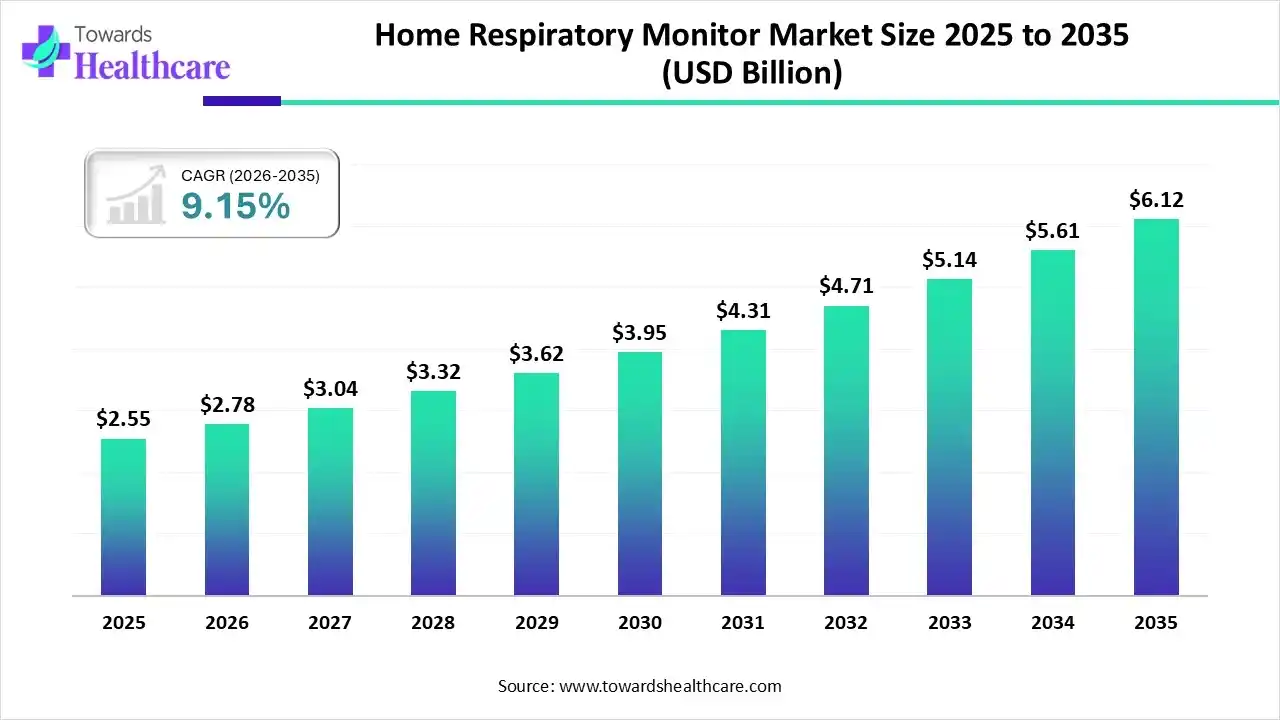
Day by day, the globe is facing a huge rise in COPD and asthma cases, which are demanding more sophisticated respiratory devices. Whereas leading firms are fostering the development of portable solutions, with the use of AI-enhanced approaches.
Primarily, the home respiratory monitor market has shifted from "clinical-only" use to a remote patient monitoring (RPM) standard, and this has been majorly fueled by the "Hospital-at-Home" movement. However, home respiratory monitors are now combined with AI-powered analytics that predict exacerbations in COPD and Asthma patients up to 48 hours before they occur. Moreover, the market has been transforming medical-grade wearable biosensors and patches to track respiratory rate & blood oxygen consistently.
Home respiratory monitors are portable medical devices designed to continuously or periodically measure respiratory parameters such as oxygen saturation (SpO2), respiratory rate, airflow, and breathing patterns in home settings. The home respiratory monitor market is growing due to the increasing prevalence of chronic respiratory diseases, rising adoption of home healthcare, and the growing elderly population. Technological advancements, including wearable sensors, wireless connectivity, AI-powered analytics, and smartphone integration, are improving real-time monitoring and enabling early detection of respiratory deterioration. Key trends include platforms and telemedicine integration, allowing healthcare providers to monitor patients outside hospitals. Future opportunities lie in personalized respiratory care, expansion of digital health ecosystems, and increasing demand in emerging economies. Supportive reimbursement policies and the shift towards value-based healthcare are further accelerating adoption while reducing hospital admissions and improving long-term patient outcomes.
A foremost step by leading companies is a greater emphasis on the development of non-contact sensing, smartphone-based diagnostics, and AI-assisted smart inhalers to manage conditions such as COPD, asthma, & sleep apnea. For example, the APNEAL App is a smartphone-based device that meets FDA/CE requirements and uses phone sensors, like an accelerometer, gyroscope, and microphone, to determine sleep apnea. Whereas the EU RESPIRE project explored a 34% reduction in asthma-related hospitalizations by utilizing machine learning models.
Pushing IoT & Perfect Connectivity
The globe has demonstrated that nearly 75% of devices are predicted to have smart connectivity, conveying data directly to providers for real-time monitoring, which enhances medication adherence by up to 50%.
Promotion of Multimodal Sensing
Firms are emphasizing a combination of sensors to record chest and abdominal movements, i.e. dual breathing belts, to grab the entire data on breathing mechanics.
Fostering FMCW Radar-Based Systems
Researchers are investigating Frequency-Modulated Continuous-Wave (FMCW) radar to track respiration rates & patterns in infants and adults without any requirement of skin contact.
The home respiratory monitor market consists of the devices used for monitoring parameters of respiration like breathing rate, oxygen saturation, airflow, and lung functions in a home environment. This monitoring is useful for patients suffering from chronic respiratory diseases such as asthma, COPD, sleep apnea, and other lung disorders as it helps in early detection of heath-related events and timely interventions. The home respiratory monitor market is growing constantly due to factors such as rising number of respiratory diseases, growing aging population, and demand for home healthcare solutions. The developments in technology like wireless connectivity, remote patient monitor, and digital health technology integration are encouraging more people to adopt home respiratory monitoring devices. The growing awareness about preventive care and trends towards reduced hospital dependence are boosting the demand globally.
| Key Elements | Scope |
| Market Size in 2026 | USD 2.78 Billion |
| Projected Market Size in 2035 | USD 6.12 Billion |
| CAGR (2026 - 2035) | 9.15% |
| Leading Region | North America by 44.1% |
| Key Applications | Chronic obstructive pulmonary disease (COPD) monitoring, asthma management, sleep apnea monitoring, home oxygen therapy monitoring, neonatal respiratory monitoring, post-discharge monitoring, remote patient monitoring (RPM) |
| Primary End Users | Patients at home, hospitals, pulmonologists, sleep clinics, home healthcare providers, nursing facilities, telehealth providers |
| Key Challenges | Data accuracy concerns, device reimbursement limitations, regulatory requirements, patient compliance, cybersecurity risks, integration challenges with healthcare systems |
| Measurable Values | USD Millions/Units/Volume |
| Market Segmentation | By Product Type, By Indication, By Technology, By Region |
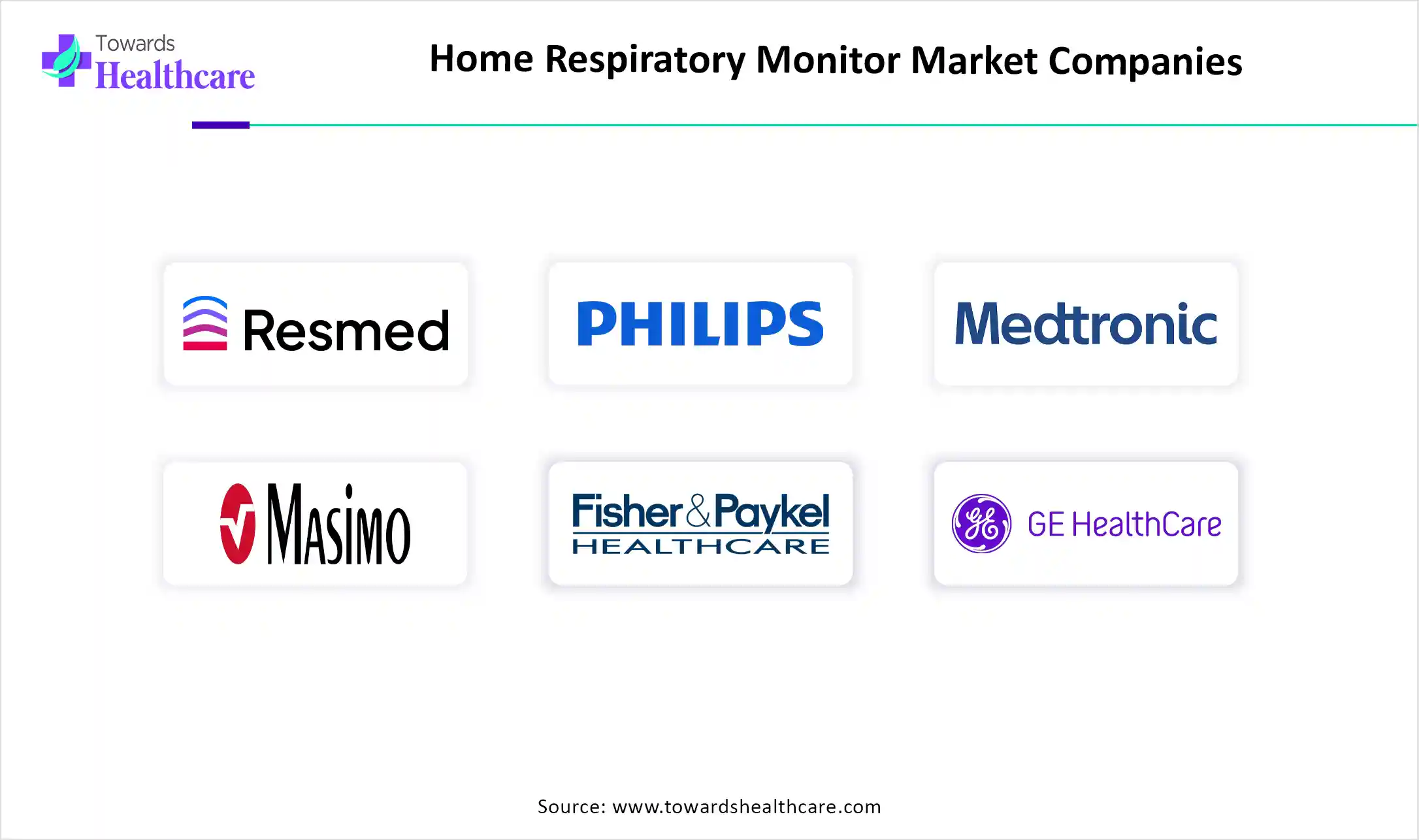
| Top Key Players | ResMed Inc., Koninklijke Philips N.V., Medtronic plc, Masimo Corporation, Fisher & Paykel Healthcare, GE HealthCare, Propeller Health, Teva Pharmaceuticals (Digihaler), Vyaire Medical, Smiths Medical (ICU Medical) |
| Segments | Shares % |
| Pulse Oximeters | 38.5% |
| Smart Inhalers | 26.5% |
| Spirometers & Peak Flow Meters | 21.0% |
| Sleep Apnea Monitors | 14.0% |
Which Product Type Led the Home Respiratory Monitor Market in 2025?
In 2025, the pulse oximeters segment held nearly 38.5% share of the market. This is driven by its crucial, non-invasive, & instant measurements of blood oxygen saturation and heart rate, which allow for early detection of hypoxemia and monitoring of chronic issues, including COPD, asthma, and COVID-19. Ongoing efforts are focusing on designing devices for persistent, overnight, or long-term monitoring to detect silent hypoxia. Zynex Medical NiCO employs laser technology to record four hemoglobin species for rigorous detection of hypoxia and hyperoxia.
Smart Inhalers
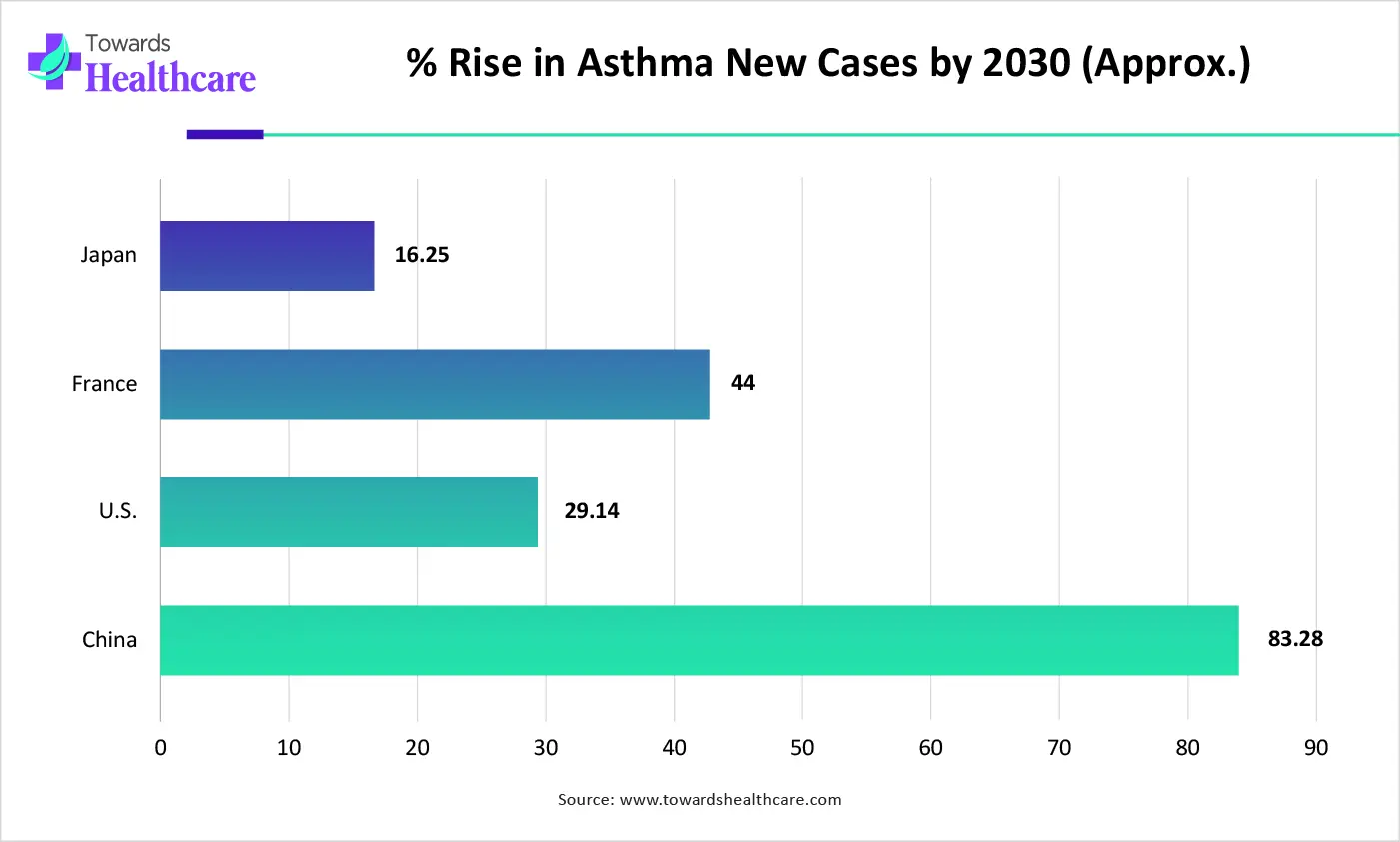
The smart inhalers segment is expected to grow at the fastest CAGR. Globally accelerating cases of asthma and COPD require consistent, long-term monitoring & optimized, accurate drug delivery, which is fueling demand for these inhalers. These devices are highly utilizing machine learning to assess inhaler usage patterns and anticipate asthma or COPD attacks up to five days in advance.
| Segments | Shares % |
| COPD | 42.2% |
| Asthma | 34.8% |
| Sleep Apnea | 23.0% |
How did the COPD Segment Dominate the Market in 2025?
The COPD segment led with approximately 42.2% share of the home respiratory monitor market in 2025. As per a study, in 2025, there will be nearly 480 million cases of COPD across the world, which demands continuous, at-home, or affordable management of chronic exacerbations. Inogen Rove 6, Philips EverGo AI+, & CAIRE FreeStyle Comfort Smart are substantial, featuring adaptive algorithms that assist in adjusting oxygen flow based on movement & oxygen saturation (SpOâ‚‚) levels.
Asthma
The asthma segment is estimated to expand at a rapid CAGR during 2026-2035. A recent research study has shown the adoption of Respiratory-Responsive Vocal Biomarkers (RRVB) to find real-time changes in respiratory state & asthma exacerbations using smartphone apps. However, ADAMM (Automated Device for Asthma Monitoring and Management) also support tracking of cough, breathing patterns, heart rate, & temperature to facilitate tailored asthma management feedback.
| Segments | Shares % |
| Portable/Handheld | 62.0% |
| Wearable | 38.0% |
Which Technology Led the Home Respiratory Monitor Market in 2025?
The portable/handheld segment captured an approximate 62.0% share of the market in 2025. This is mainly propelled by their daily monitoring of lung health, which enables early detection of changes in chronic concerns, such as COPD, asthma, and post-COVID recovery. Philips Respironics is one of the robust and sophisticated portable ventilators, which features AI-driven respiratory pattern detection, focused on escalating remote monitoring for both clinical and home use.
Wearable
Moreover, the wearable segment is predicted to expand at the highest CAGR during the forecast period. This mainly offers continuous, non-invasive monitoring of breathing patterns, lung sounds, and oxygen levels, which enable early detection of respiratory issues. A major transformation includes wearable, paper-based, & electrochemical sensors, like using polyaniline/Prussian blue nanolayers that are directly united into face masks to monitor hydrogen peroxide levels in exhaled breath.
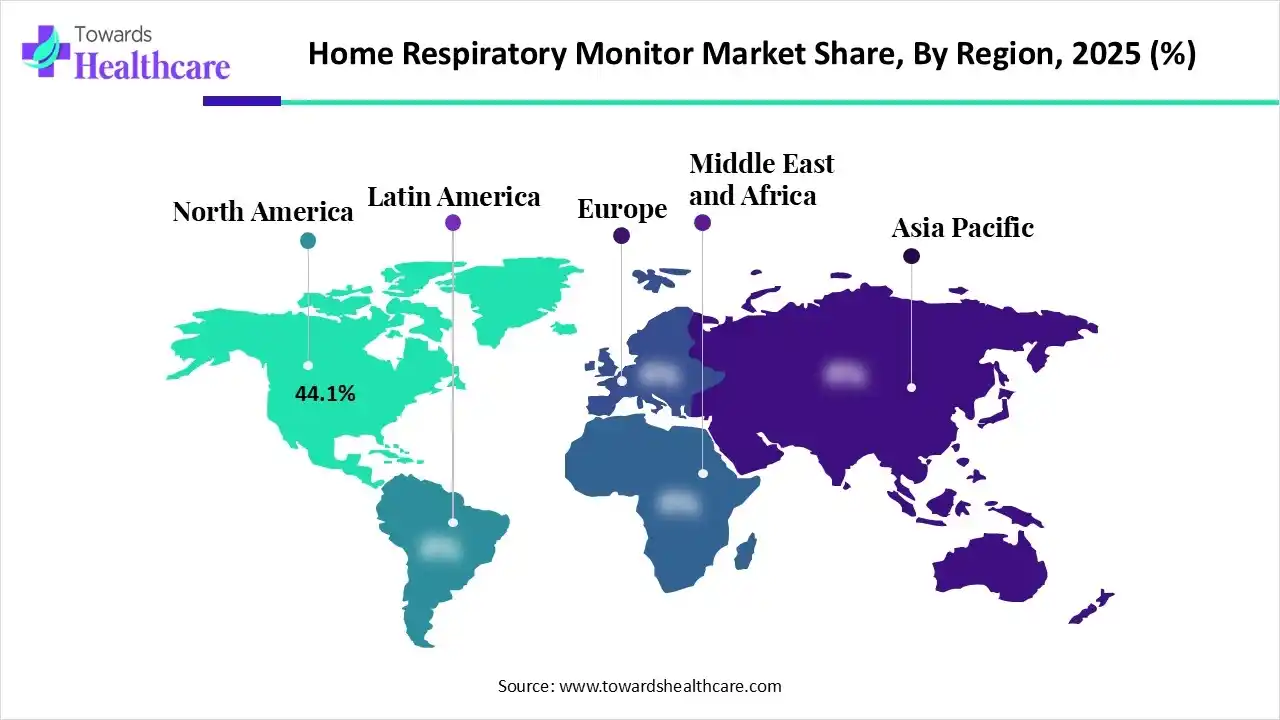
With an approximate 44.1% share, North America registered dominance in the home respiratory monitor in 2025. The regional growth is propelled by a rise in the prevalence of asthma (25M+ Americans) & an advanced Medicare reimbursement structure for Remote Physiological Monitoring (RPM) & Remote Therapeutic Monitoring (RTM). Whereas, the Sleepiz One+ secured FDA approval for use in the US as a contactless, bedside device for monitoring breathing rates and heart rates, & it is a "wired-to-wireless" shift for home monitoring.
U.S. Market Trends
The U.S. held a major share of the market, as it focused on exploring AI-assisted diagnostics. TytoCare broadened the use of Tyto Insights for Wheeze Detection by employing AI in the analysis of lung sounds from a home stethoscope. Alongside, Makani Science acquired FDA 510(k) clearance for a wearable, non-invasive monitor to facilitate continuous, real-time respiratory data.
Canada Market Trends
The home respiratory monitoring sector in Canada is witnessing rapid development due to the growing number of individuals suffering from chronic respiratory illnesses, the aging population, and the increasing uptake of remote patient monitoring facilities. The increase in the home care demand and the advancement in connected monitoring devices and telemedicine services are giving a positive push to the market.
Mexico Market Trends
In Mexico, the home respiratory monitoring sector is developing as a result of increasing awareness of respiratory health and the improvement in the availability of the homecare services. The increasing number of asthma patients and those suffering from Chronic Obstructive Pulmonary Disorder (COPD) and other sleep disorders is propelling the demand for portable respiratory monitors.
Asia Pacific is anticipated to witness rapid growth of approximately 10.2% in the home respiratory monitor market due to the rising instances of respiratory conditions, especially in China & India. Whereas Japan is emphasizing the progression of eldercare, non-contact monitoring, including Nemuri SCAN, a bed-placed sensor to record heart rate, respiratory rate, and body movements during sleep.
India Market Trends
India is promoting connected smart respiratory devices, which explore IoT-enabled solutions to enable data transmission directly to smartphones and healthcare providers. The latest advancement comprises Lupin Adhero, which is connected to a Metered Dose Inhaler (MDI) to monitor medication usage patterns.
Japan Market Trends
Japan's home respiratory monitor market is being supported by the requirement to care for an aging population, widespread occurrence of chronic respiratory diseases, and a highly developed healthcare infrastructure. Growing adoption of tech-driven remote patient monitoring and the increased need for continuous respiratory monitoring devices will drive the sector.
China Market Trends
China happens to be one of the fastest growing home respiratory monitoring markets due to the increasing number of respiratory diseases, proliferation of telemedicine services in the country, and growing healthcare spending. Increased support by the government and people’s need for home management of respiratory diseases will drive growth of the market.
The Europe home respiratory monitor market is witnessing significant growth due to the rising prevalence of chronic respiratory diseases such as COPD and asthma, an aging population, and increasing adoption of home-based healthcare. Strong government support for digital health, expanding telemedicine services, favorable reimbursement policies, and widespread use of wearbale an connected respiratory monitoring devices are accelerating market growth. Continuous investments in remote patient monitoring technologies further strengthen regional adoption.
UK Leads the Home Respiratory Monitor Marekt with Advanced Home Healthcare
The UK dominates the home respiratory monitor market due to its well-established National Health Service (NHS), widespread adoption of remote patient monitoring, and increasing burden of chronic respiratory diseases. Government initiatives promoting digital healthcare, strong reimbursement support, and growing use of AI-enabled and connected respiratory monitoring devices have accelerated, and emphasis on home-based care further reinforces its market leadership.
Germany Emerges as a High-Growth Market fir Home Respiratory Monitors
Germany is witnessing significant growth in the home respiratory monitor market due to its aging population, increasing prevalence of COPD and other chronic respiratory diseases, and strong demand for home-based healthcare. The country’s advanced healthcare infrastructure, widespread adoption of digital health technologies, favorable reimbursement policies, and growing use of remote patient monitoring solutions are accelerating market expansion. Continuous investment in connected medical devices further supports long-term growth.
R&D
Clinical Trials & Regulatory Approvals
Patient Support & Services
| Category | Market Role & Examples |
| Technology Providers | Sensor technology, wireless connectivity, AI-based respiratory analytics, cloud infrastructure providers enabling connected respiratory monitoring |
| Product Manufacturers | Companies developing portable respiratory monitors, pulse oximeters, ventilators, sleep monitoring devices, and respiratory diagnostic equipment |
| Service Providers | Home healthcare companies providing respiratory therapy management, device monitoring, and patient support services |
| Platform Providers | Digital health platforms integrating respiratory data with electronic health records (EHR), telemedicine, and remote care workflows |
| CROs/CDMOs | Limited direct relevance; medical device testing and manufacturing partners support respiratory device development |
| Software Vendors | AI analytics, remote patient monitoring software, respiratory disease management platforms |
| Research Institutions | Universities, pulmonary research centers, digital health innovation labs developing respiratory monitoring technologies |
| End-User Industries | Hospitals, home healthcare, medical device companies, insurance providers, telehealth companies |
| Tier 1 | ||||
| Company Name | Headquarters | Country | Why Relevant to This Market | Key Products/Services |
| ResMed | San Diego, California, USA | USA | Global leader in respiratory care and sleep medicine with major revenue exposure from home respiratory solutions | AirSense CPAP systems, AirView cloud monitoring platform, respiratory care devices |
| Philips | Amsterdam, Netherlands | Netherlands | Major respiratory care player with strong presence in home sleep and respiratory monitoring | Respironics devices, DreamStation systems, connected respiratory solutions |
| Medtronic | Minneapolis, Minnesota, USA | USA | Large respiratory and patient monitoring portfolio serving hospitals and home care markets | Portable ventilators, respiratory monitoring technologies |
| Tier 2 | ||||
| Company Name | Headquarters | Country | Why Relevant to This Market | Key Products/Services |
| Vyaire Medical | Mettawa, Illinois, USA | USA | Dedicated respiratory care company focused on monitoring and ventilation solutions | Respiratory diagnostic devices, ventilators, monitoring systems |
| Nihon Kohden | Tokyo, Japan | Japan | Strong patient monitoring expertise including respiratory parameters | Patient monitors, pulse oximetry systems |
| Breas Medical | Mölnlycke, Sweden | Sweden | Specialist in home mechanical ventilation solutions | Vivo home ventilators, respiratory support systems |
| Tier 3 | ||||
| Company Name | Headquarters | Country | Why Relevant to This Market | Key Products/Services |
| VitalConnect | San Jose, California, USA | USA | Develops wearable remote monitoring technologies applicable to respiratory and vital sign tracking | VitalPatch wearable biosensor platform |
| Current Health | London, UK | United Kingdom | Digital health platform supporting home monitoring programs | AI-powered remote patient monitoring platform |
| BioIntelliSense | Golden, Colorado, USA | USA | Specializes in continuous wearable health monitoring | BioSticker, remote monitoring solutions |
Strengths
Weaknesses
Opportunities
Threats
In October 2025, Synchrony Medical launched the FDA-cleared LibAirty™ Airway Clearance System in the U.S., introducing advanced at-home respiratory therapy for chronic lung disease patients. CEO Anat Shani said, "Our clinical studies showed that LibAirty enabled patients to clear twice as much sputum as standard vest-based therapy, with improved comfort and increased patient satisfaction. Through the launch of LibAirty in the United States, we look forward to bringing a new standard of care to people living with chronic lung disease across the country."
By Product Type
By Indication
By Technology
By Region






Principal Consultant
Payal Rabde is a Healthcare Market Research Analyst at Towards Healthcare Research & Consulting with 4+ years of experience in pharmaceuticals, biotechnology, medical devices, and life sciences.
Learn more about Payal Rabde

Reviewed By
Aditi Shivarkar is a seasoned professional with over 14 years of experience in healthcare market research. As a content reviewer, Aditi ensures the quality and accuracy of all market insights and data presented by the research team.
Learn more about Aditi Shivarkar









