Pipeline Programs

CGT Companies Tracked

Manufacturing Facilities


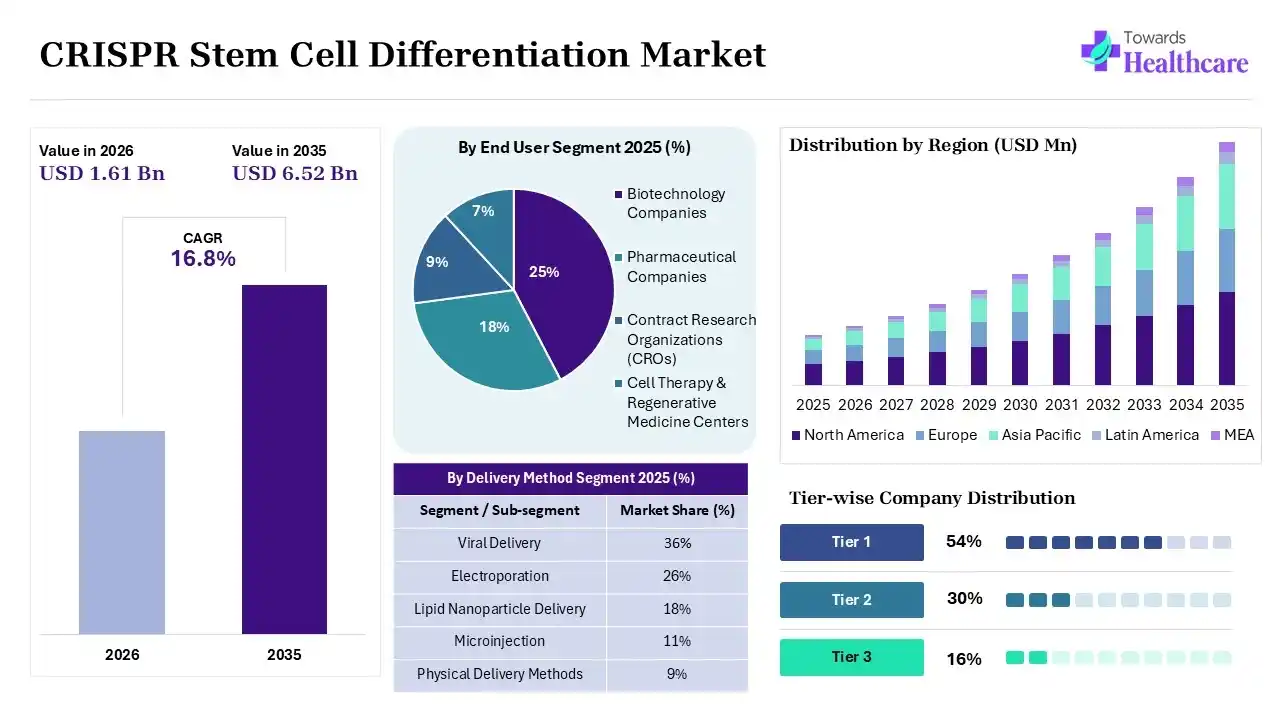
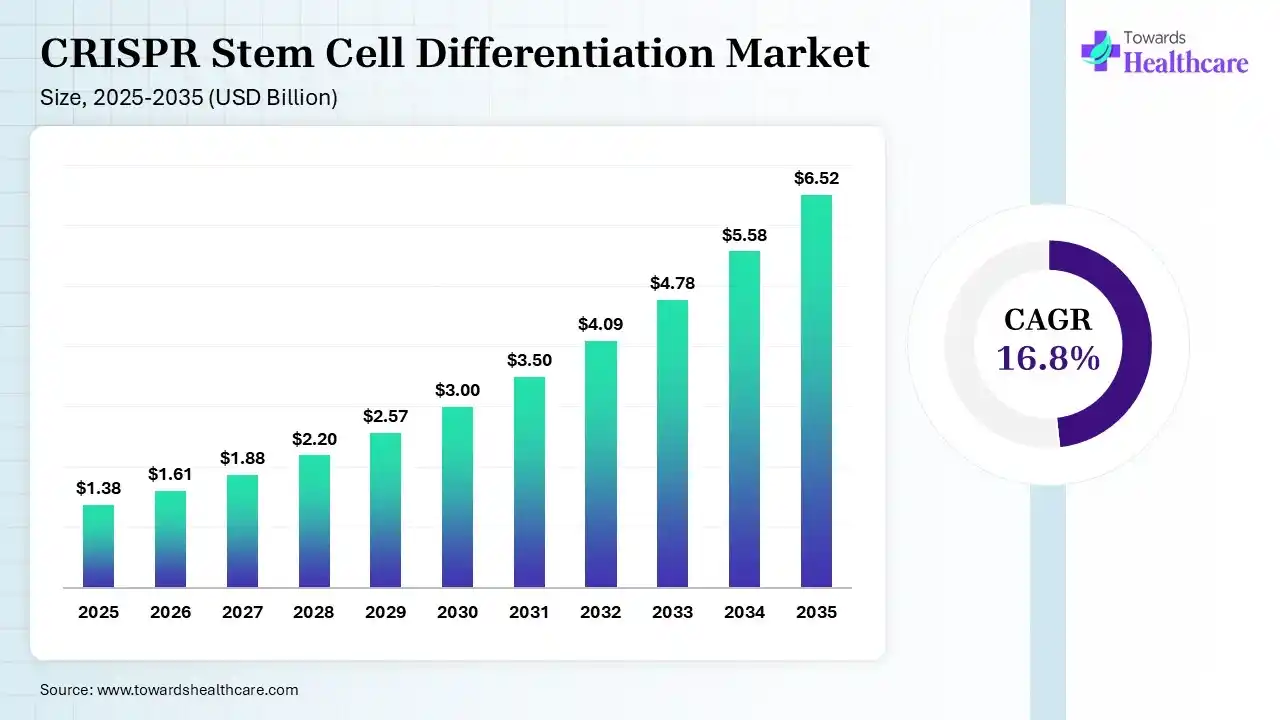
The global CRISPR stem cell differentiation market size is calculated at USD 1.38 billion in 2025, where it continues to grow in 2026 at USD 1.61 billion due to the rising demand for precise gene-edited cell therapies. It is expected to reach USD 6.52 billion by 2035 with a CAGR of 16.8% due to growing drug discoveries. North America accounted for 42% of the market in 2025 due to high R&D investments.
What is CRISPR Stem Cell Differentiation?
CRISPR stem cell differentiation refers to the use of CRISPR gene editing technology to develop specific functional cells by modifying genes in stem cells. These are used for disease modelling, drug discovery, cell therapy, and regenerative medicine applications.
CRISPR gene editing was initiated in 2012; the first dosing of CRISPR-based therapies for sickle cell disease & beta thalassemia was conducted in 2019, and 2020 contributed to the initiation of CRISPR eye injection, systemic CRISPR, and LNP delivery solutions. 2022 marked the dosing of a hypercholesterolemia patient with editing therapy, where the first-ever CRISPR-based medicine was approved in 2023. In 2025, prime editing therapy was dosed for CGD, and CRISPR-based medicine was delivered in vivo, where 2026 is experiencing growth in platform therapy clinical trials.
Based on the information gathered by Payal Rabde, the market is driven by the increasing prevalence of chronic diseases and growing demand for precise gene-edited cell therapies. Additionally, increasing demand for personalized medicines, growing drug discoveries, demand for animal testing alternatives, and technological advancements are also increasing their use.
The major market drivers include growing genetic diseases, advancements in CRISPR gene editing technologies, growing regenerative medicines, R&D investments, and government support.
It includes high R&D costs, complex regulations, ethical concerns, and limited availability.
It covers growing next-generation CRISPR platforms, expanding regenerative medicine applications, AI-powered genome engineering, focus on off-the-shelf allogeneic cell therapies, and demand for advanced disease models.
Off-target effects, consistency, quality concerns, and reimbursement uncertainties are the major market challenges.
| Table | Scope |
| Market Size in 2026 | USD 1.61 Billion |
| Projected Market Size in 2035 | USD 6.52 Billion |
| CAGR (2026 - 2035) | 16.8% |
| Leading Region | North America by 42% |
| Historical Data | 2020 - 2023 |
| Base Year | 2025 |
| Forecast Period | 2026 - 2035 |
| Measurable Values | USD Millions/Units/Volume |
| Market Segmentation | By Product, By CRISPR Technology, By Stem Cell Type, By Differentiation Application, By Delivery Method, By End User, By Region |
| Top Key Players | STEMCELL Technologies, CRISPR Therapeutics, Thermo Fisher Scientific, Merck KGaA, Vertex Pharmaceuticals |
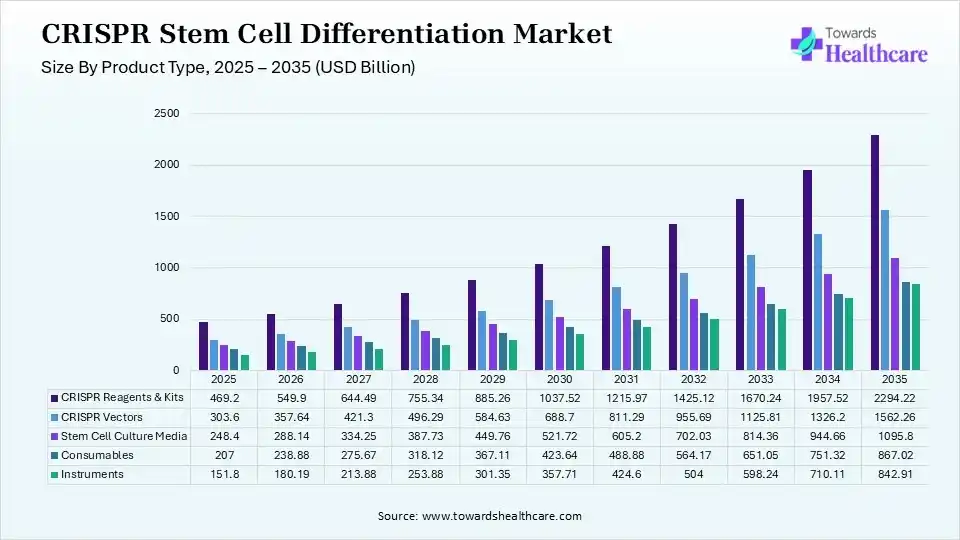
| Segment | Share 2025 (%) |
| CRISPR Reagents & Kits | 34% |
| CRISPR Vectors | 22% |
| Stem Cell Culture Media | 18% |
| Consumables | 15% |
| Instruments | 11% |
The CRISPR Reagents & Kits Segment Dominated the Market With 34% in 2025
The CRISPR reagents & kits segment led the CRISPR stem cell differentiation market with a 34% share in 2025, driven by high editing frequency, which increased routine laboratory demand. Growth in genome engineering studies also increased reagent consumption. Continuous protocol optimization also expanded recurring purchases.
The instruments segment held the second-largest share of 11% of the market in 2025 and is expected to witness the fastest growth during the forecast period, due to automated editing and cell processing platforms improving productivity. High-content imaging also supports differentiation validation, which increases its demand. As per the survey conducted by Payal Rabde, advanced instruments are also expanding laboratory capacity.
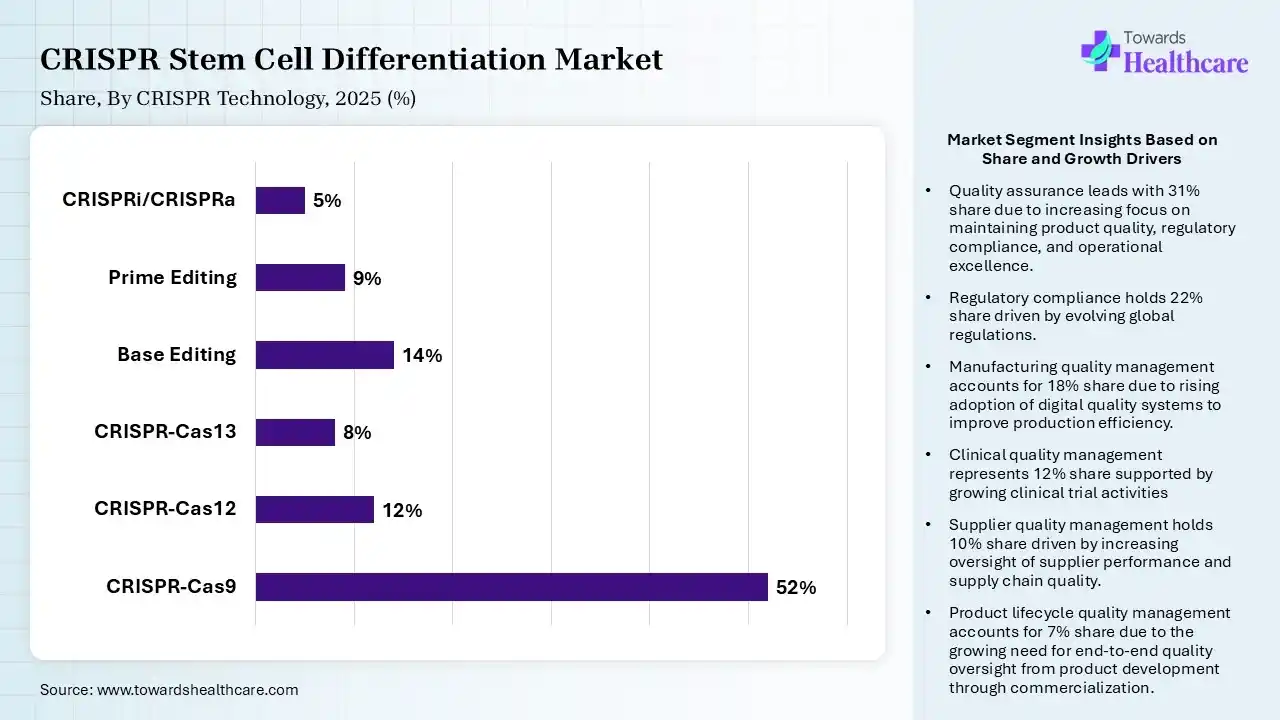
| Segment | Share 2025 (%) |
| CRISPR-Cas9 | 52% |
| CRISPR-Cas12 | 12% |
| CRISPR-Cas13 | 8% |
| Base Editing | 14% |
| Prime Editing | 9% |
| CRISPRi/CRISPRa | 5% |
The CRISPR-Cas9 Segment Dominated the Market With 52% in 2025
The CRISPR-Cas9 segment accounted for the highest revenue share of 52% of the CRISPR stem cell differentiation market in 2025, driven by extensive validation, which made Cas9 the preferred editing platform. Broad protocol availability also accelerated their adoption. Strong research funding also supported their continued usage.
The prime editing segment held the second-largest share of 9% of the market in 2025 and is expected to show the highest growth during the forecast period, due to highly versatile editing without double-strand breaks driving innovation. Increasing investment accelerates platform development. Expanding therapeutic potential also fuels their adoption.
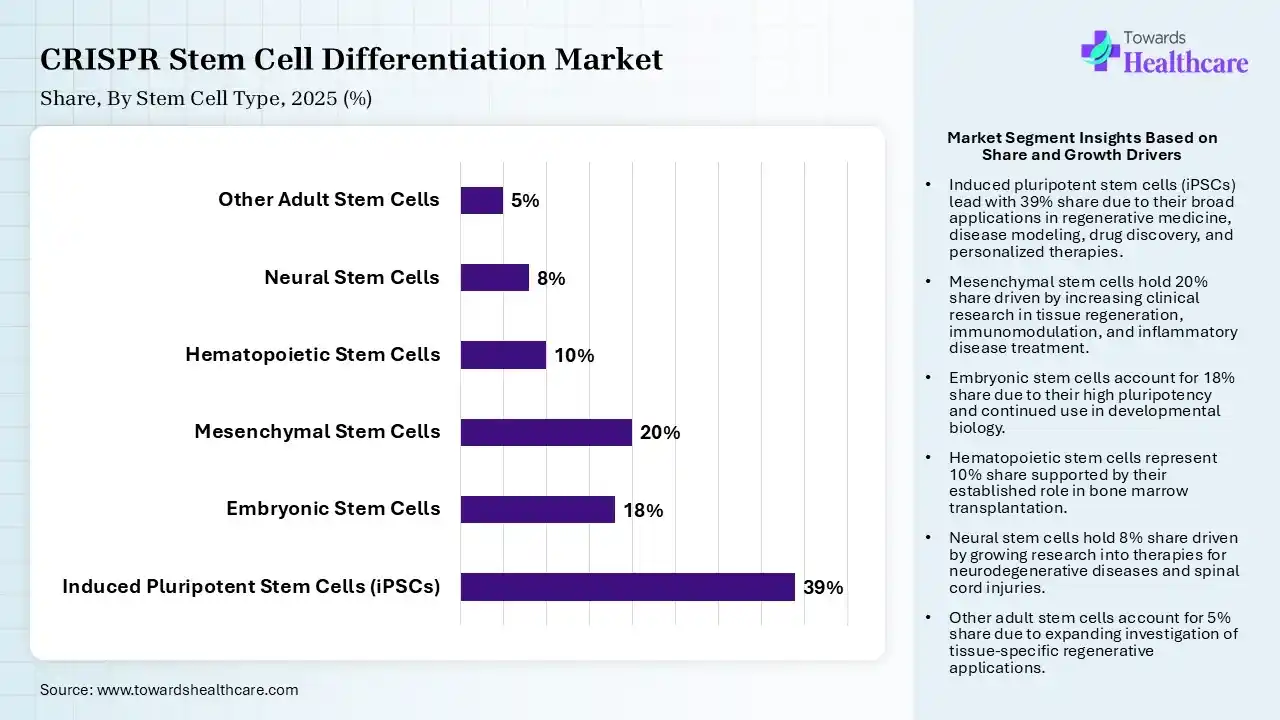
| Segment | Share 2025 (%) |
| Induced Pluripotent Stem Cells (iPSCs) | 39% |
| Embryonic Stem Cells | 18% |
| Mesenchymal Stem Cells | 20% |
| Hematopoietic Stem Cells | 10% |
| Neural Stem Cells | 8% |
| Other Adult Stem Cells | 5% |
The Induced Pluripotent Stem Cells (iPSCs) Segment Dominated the Market With 39% in 2025
The induced pluripotent stem cells (iPSCs) segment held a major revenue share of 39% of the CRISPR stem cell differentiation market in 2025, driven by patient-derived models, which improved translational relevance. Growth in the demand for personalized medicine expanded their utilization. Ethical advantages also increased their research adoption.
The neural stem cells segment held the second-largest share of 8% of the market in 2025 and is expected to expand rapidly during the forecast period, due to rapid expansion in neurological disease modeling. Precision editing improves neuroscience research, increasing their use. Regenerative medicine attracts funding, which drives their adoption.
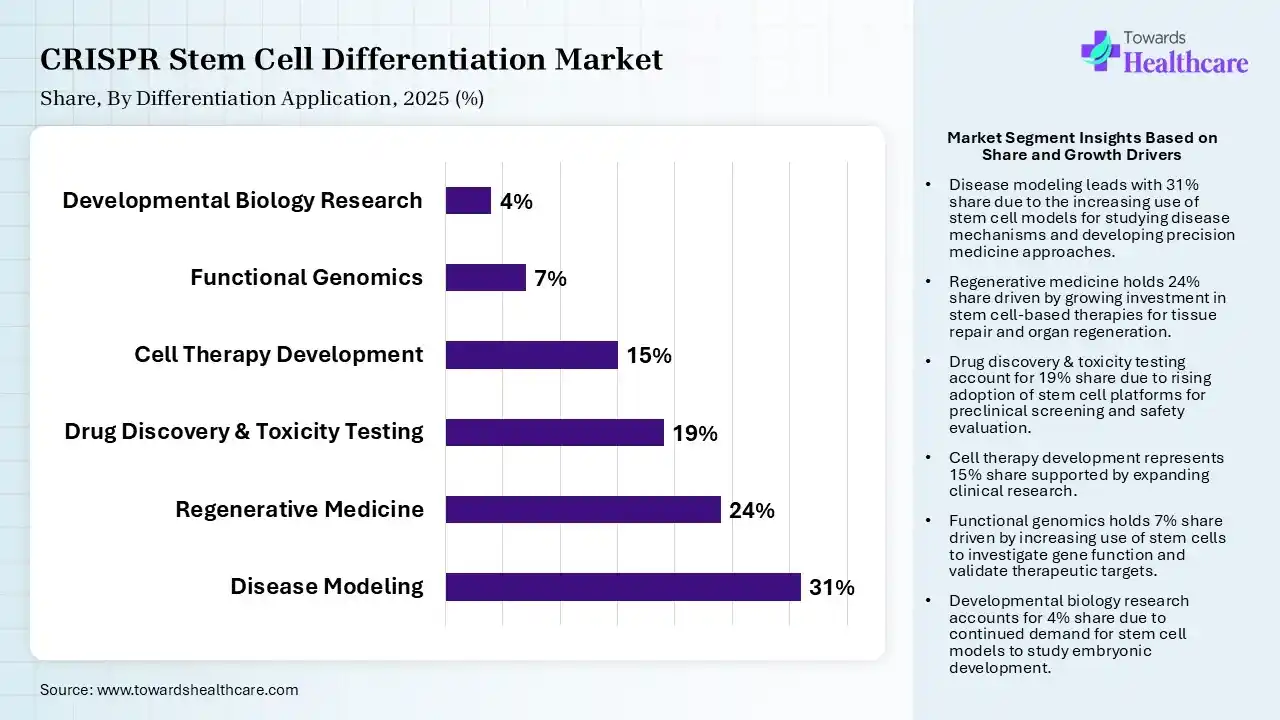
| Segment | Share 2025 (%) |
| Disease Modeling | 31% |
| Regenerative Medicine | 24% |
| Drug Discovery & Toxicity Testing | 19% |
| Cell Therapy Development | 15% |
| Functional Genomics | 7% |
| Developmental Biology Research | 4% |
The Disease Modeling Segment Dominated the Market With 31% in 2025
The disease modeling segment contributed the biggest revenue share of 31% of the CRISPR stem cell differentiation market in 2025, driven by gene-edited stem cells that replicate human diseases effectively. Drug target validation became more accurate, which increased their use. Growth in the use of precision medicine also expanded their research demand.
The cell therapy development segment held the second-largest share of 15% of the market in 2025 and is expected to gain the highest share during the forecast period, due to a growing clinical pipeline accelerating demand. Genome editing also enhances therapeutic safety. Commercial manufacturing also expands globally, which increases their use. Additionally, expanding applications in sickle cell disease and ex vivo therapies are also increasing their use.
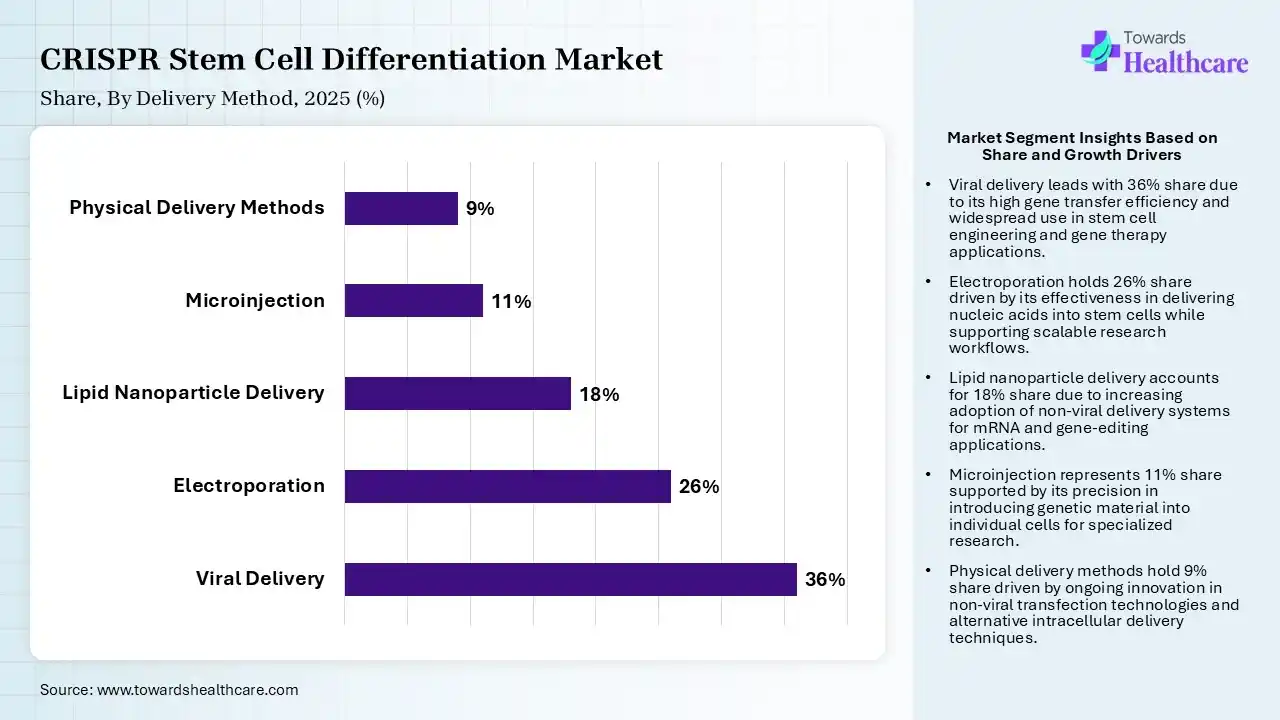
| Segment | Share 2025 (%) |
| Viral Delivery | 36% |
| Electroporation | 26% |
| Lipid Nanoparticle Delivery | 18% |
| Microinjection | 11% |
| Physical Delivery Methods | 9% |
The Viral Delivery Segment Dominated the Market With 36% in 2025
The viral delivery segment held the largest revenue share of 36% of the CRISPR stem cell differentiation market in 2025, driven by high editing efficiency, which supported complex studies. Stable gene delivery also enhanced reproducibility, which increased their use. Based on the analysis of Payal Rabde, established protocols also encouraged their adoption.
The lipid nanoparticle delivery segment held the second-largest share of 18% of the market in 2025 and is expected to grow with the fastest CAGR during the forecast period, due to non-viral delivery, which improves the safety profile. Clinical translation accelerates investment, which drives their use. Nanotechnology advances enhance editing efficiency, which increases their demand.
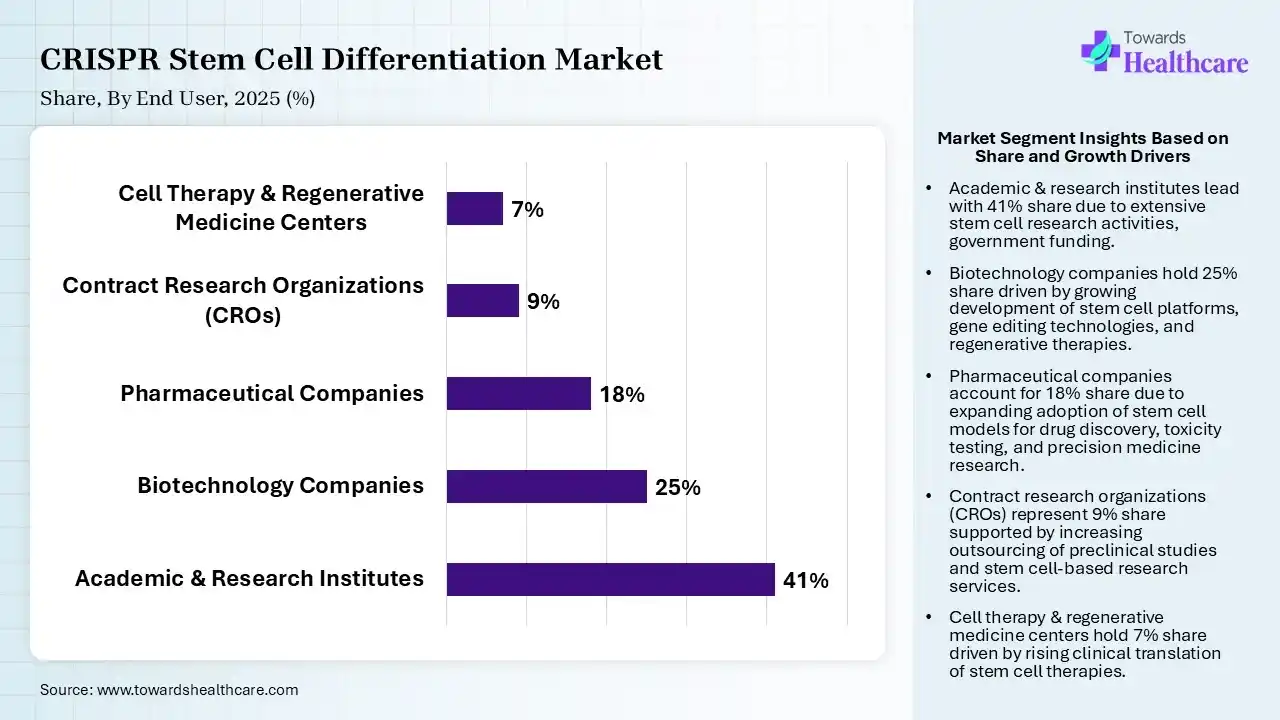
| Segment | Share 2025 (%) |
| Academic & Research Institutes | 41% |
| Biotechnology Companies | 25% |
| Pharmaceutical Companies | 18% |
| Contract Research Organizations (CROs) | 9% |
| Cell Therapy & Regenerative Medicine Centers | 7% |
The Academic & Research Institutes Segment Dominated the Market With 41% in 2025
The academic & research institutes segment accounted for the highest revenue share of 41% of the CRISPR stem cell differentiation market in 2025, driven by government funding, which supported genome editing research. Universities drive technology innovation, which accelerated their advancements. Large collaborative projects also sustained demand.
The cell therapy & regenerative medicine centers segment held the second-largest share of 7% of the market in 2025 and is expected to show the highest growth during the forecast period, due to clinical translation expanding globally. Personalized therapies increase infrastructure investment, driving adoption rates. Advanced manufacturing also supports their commercialization.
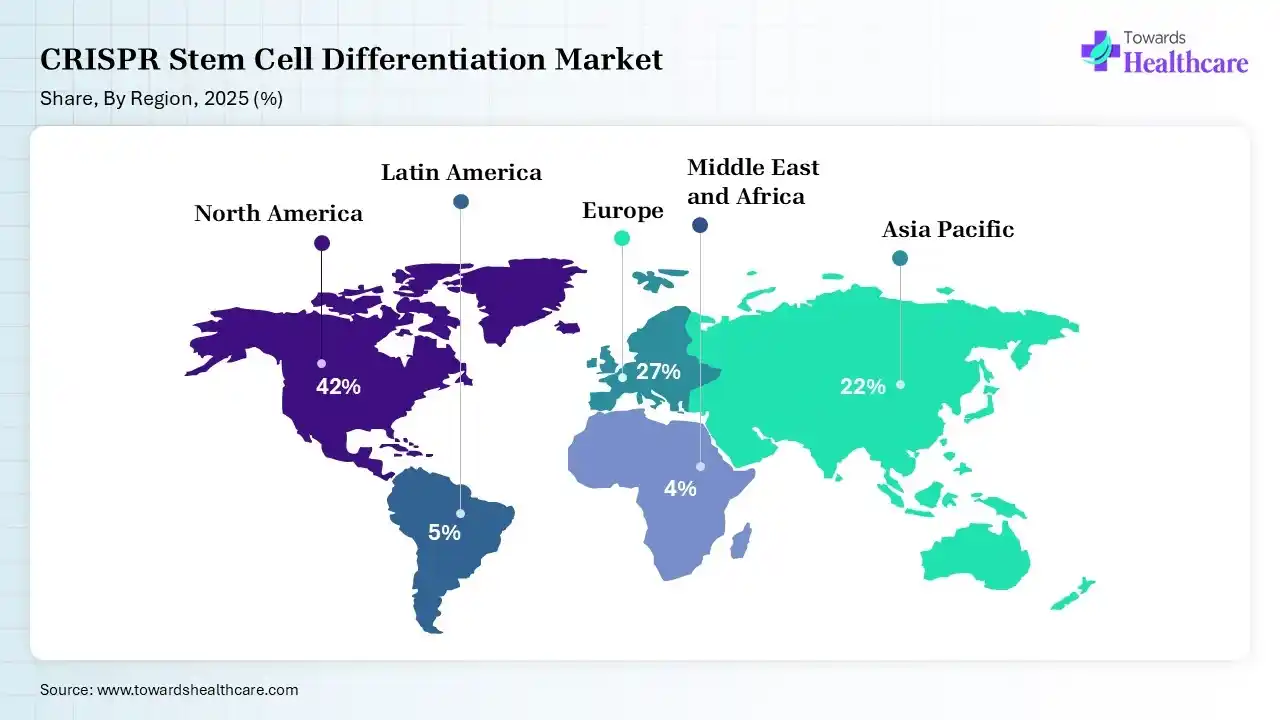
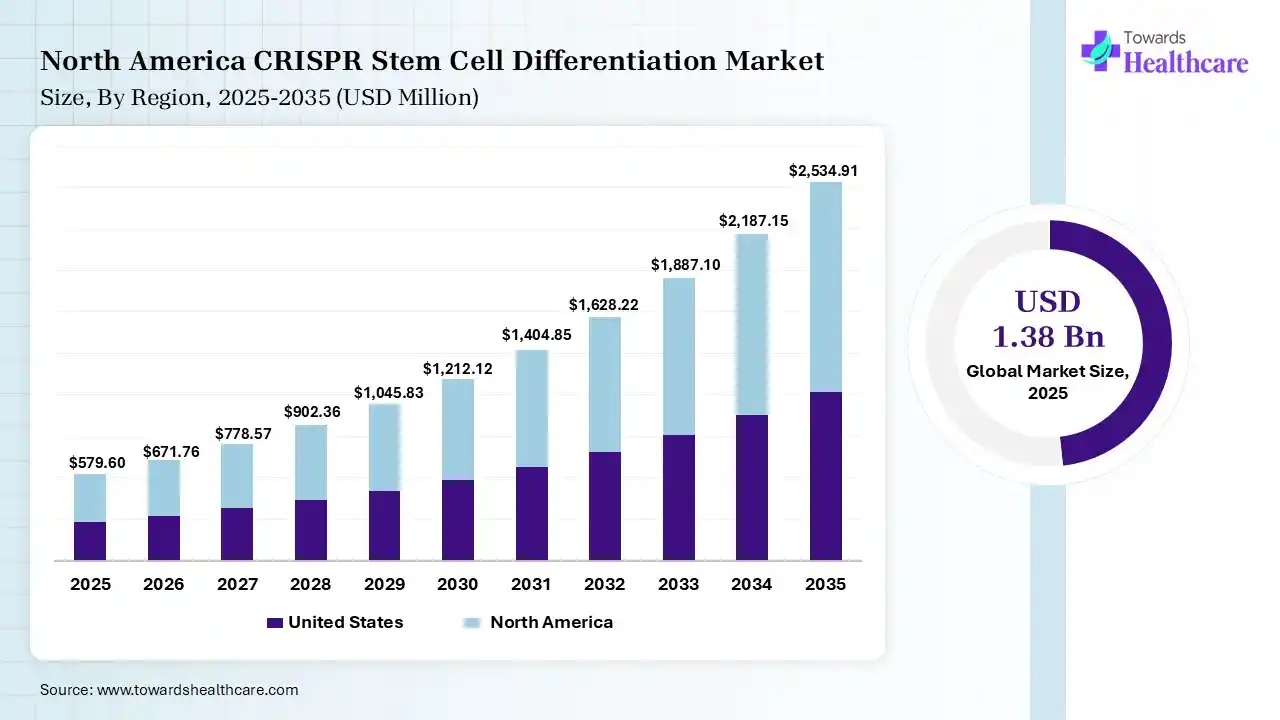
North America dominated the CRISPR stem cell differentiation market with 42% in 2025, due to strong research funding, which accelerates innovation. The presence of leading biotechnology companies expands commercialization of CRISPR stem cell differentiation platforms. Advanced regulatory pathways support development of new CRISPR technologies. Growth in investments and R&D activities also increased advancements in these technologies, where expansion of regenerative medicine ecosystems also increased their adoption, which contributed to the market growth.
US Market Growth
U.S. held a 34% share of the CRISPR stem cell differentiation market in 2025, driven by the largest research ecosystem. High venture investment and extensive clinical development also increased the demand for CRISPR stem cell differentiation. The growth in the cell and gene therapy platforms and rise in the demand for regenerative medicines also increased their innovations and use. According to the information gathered by Payal Rabde, the presence of advanced industries like Thermo Fisher Scientific, with second quarter revenue for 2026 of 10% to $11.99 billion, also supported the market expansion.
Mexico Market Growth
Mexico held a 3% share in the market in 2025 and is expected to grow with the highest CAGR during the studied years, due to expanding biomedical research. Improved laboratory infrastructure and increasing international collaborations are also enhancing CRISPR stem cell differentiation utilization. Increasing investments and clinical activities are also accelerating their innovations, where emerging biotechnology centres are also increasing their use. Growing demand for regenerative medicine are also increasing their adoption rates.
Europe held a 27% share of the CRISPR stem cell differentiation market and is expected to grow significantly during the forecast period, due to robust academic collaborations, which support innovation. EU funding strengthens genome editing research, which drives the demand for CRISPR stem cell differentiation technology. The presence of advanced healthcare infrastructure also boosts its adoption. The robust uses and initiatives are also increasing the advancements in CRISPR technology, which enhances market growth.
Germany Market Growth
Germany held an 8% share in the CRISPR stem cell differentiation market in 2025, driven by a strong biotechnology sector. Growth in advanced translational research and high public funding also increased the demand for CRISPR stem cell differentiation. The presence of well-established research institutes and industries also increased the development of regenerative therapies, which increased their adoption. A rise in the demand for precision medicine also increased the adoption as well as enhanced their innovations.
UK Market Growth
UK held a 6% share in the market in 2025 and is expected to witness the fastest growth over the forecast period, due to the presence of leading stem cell institutes. Expanding clinical research is also driving the demand for CRISPR stem cell differentiation platforms. A strong regulatory framework and well-established industries are also accelerating their innovations. Emerging startups and rising demand for advanced therapies are also encouraging their usage, where rising clinical studies are also fueling their demand.
Asia Pacific held a 22% share of the CRISPR stem cell differentiation market in 2025 and is expected to grow at the fastest CAGR during the forecast period, due to rapid biotechnology investment, which accelerates adoption. Government genomics initiatives expand research, promoting the adoption of CRISPR stem cell differentiation solutions. Growing pharmaceutical manufacturing also supports their demand, where a growing patient population is also increasing the demand for advanced therapies, which drives their adoption, promoting market growth.
China Market Growth
China held a 9% share of the CRISPR stem cell differentiation market in 2025, driven by significant genome editing investment. The presence of a large clinical pipeline also increased the demand for CRISPR stem cell differentiation products. Strong government support also accelerated their adoption as well as innovations, where expansion of industries also encouraged their adoption rates. Growth in collaborations also increased their advancements and applications, where the rise in chronic disease burden also increased their use.
India Market Growth
India held a 3% share in the market in 2025 and is expected to expand rapidly in the coming years, due to an expanding biotechnology sector. Increasing research funding is accelerating advancements in CRISPR stem cell differentiation technologies. Growing academic collaborations and government support are also driving their innovations and adoption rates. Growing demand for personalized medicine and advanced therapies are also increasing the use of their products, where emerging startups are also contributing to their advancements.
Latin America held a 5% share in the CRISPR stem cell differentiation market in 2025 and is expected to show lucrative growth during the forecast period, due to expanding biotechnology research. Increasing government support is also improving CRISPR stem cell differentiation innovations. Academic collaborations increase R&D activities, which accelerates the advancements, while growing interest in regenerative therapies is also increasing their use. A shift towards precision medicine is also encouraging their usage.
Brazil Market Growth
Brazil held a 3% share in the CRISPR stem cell differentiation market in 2025 and is expected to gain the highest market share during the forecast period, driven by the presence of the largest regional biotechnology market. Growth in regenerative medicine increased the use of CRISPR stem cell differentiation technologies. Improved research funding and investments also increased their adoption rates, where government support also encouraged their innovations. A rise in chronic disease and health awareness also increased their adoption rates to develop advanced therapies.
The rest of Latin America held a 1% share in the market in 2025, due to improving laboratory capacity. Growing regional partnerships are also increasing accessibility to CRISPR stem cell differentiation solutions. Expanding biotechnology developments are also increasing their demand, where improving healthcare infrastructure is also increasing their adoption rates. Rising demand for regenerative medicines are also increasing their use, while emerging biotechnology startups are also increasing their usage.
MEA held a 4% share in the CRISPR stem cell differentiation market in 2025 and is expected to show notable growth during the forecast period, due to healthcare modernization, which increases investment. Expanding genomics initiatives are also increasing the adoption and accessibility of CRISPR stem cell differentiation platforms. International collaborations strengthen capabilities, which increases their use, where the growing institutional R&D activities are also driving demand, which propels the market expansion.
Saudi Arabia Market Growth
Saudi Arabia held a 1.50% share in the CRISPR stem cell differentiation market in 2025, driven by growth in national biotechnology strategies, which supported innovation. Improved research infrastructure also increased the adoption of CRISPR stem cell differentiation technologies. rise in the demand for precision medicine also increased their usage, where new collaborations contributed to their increased advancements. Growth in investments and funding also accelerated the R&D activities and their adoption rates.
UAE Market Growth
United Arab Emirates (UAE) held a 1% share in the market in 2025 and is expected to show the fastest growth over the forecast period, due to strong life science investment. Depending on Payal Rabde’s survey, international partnerships are also increasing access to advanced CRISPR stem cell differentiation technologies. Expanding innovation hubs are also increasing the development of regenerative medicine and advanced therapies, which drives their demand. Increasing interest in personalized medicines and gene editing are also promoting their use.
In July 2026, after publishing the findings from the study highlighting improved response to prostate tumor with the use of CRISPR technology in mice, Professor of Biochemistry and Biophysics and co-director of the Center for RNA Biology, Wagner, expressed, "No one has ever done this before. It's an excellent preclinical model showing that mRNAs can be forced to re-lengthen and when they do, there's therapeutic benefit." "Cancer is super smart at evolving, but it's not a magician. If we can hit it with immunotherapy and another synergistic drug that pumps up the immune response, we could potentially cure it. It won't be able to evolve fast enough."
Competitive positioning matrix highlights product portfolio, R&D investments, collaborations, clinical capabilities, and regulatory compliance capabilities.
Market share analysis covers revenue share, product portfolio, geographical reach, collaborations, and clinical pipeline.
Based on strategic developments, Vertex Pharmaceuticals, CRISPR Therapeutics, and Synthego Corporation dominated the market.
Thermo Fisher Scientific, STEMCELL Technologies, and Merck KGaA led the market depending on product portfolio comparison.
Vertex Pharmaceuticals, CRISPR Therapeutics, and Sana Biotechnology held a dominant position by partnership and collaboration analysis.
As per acquisition and expansion strategies, Vertex Pharmaceuticals, Thermo Fisher Scientific, and Danaher Corporation held a major market share.
| Company Overview | Clinical-stage biopharmaceutical company offering programmed off-the-shelf cellular immunotherapies |
| Financial Performance | Revenue was $1.3 million for the first quarter of 2026 |
| Product Portfolio | Various cell therapy product candidates based on CAR targets and indications |
| CRISPR Stem Cell Differentiation Offerings | Provides induced pluripotent stem cells, T-cells, and natural killer cells |
| Geographical Presence | U.S., Canada, and Western Europe |
| Recent Developments | U.S. FDA cleared its Investigational New Drug (IND) application for FT839 |
| Growth Strategy | To develop better cell therapies with induced pluripotent stem cells (iPSCs) |
| SWOT Analysis |
Strengths:
Weakness:
Opportunities:
Threats:
|
| Company Overview | Developing platforms that can repair and control genes in cells or replace any cell in the body |
| Financial Performance | Cash position as of March 31, 2026, was $101.1 million. |
| Product Portfolio | Hypoimmune technology and Fusogen technology |
| CRISPR Stem Cell Differentiation Offerings | Ex vivo cell engineering and in vivo cell engineering |
| Geographical Presence | U.S. & UK |
| Recent Developments | Presented Preclinical Data for In Vivo CAR T Cell Therapy SG293 |
| Growth Strategy | Modifying genes and using cells as medicines to provide new tools for many human diseases |
| SWOT Analysis |
Strengths:
Weakness:
Opportunities:
Threats:
|
| Company Overview | Dedicated to advancing the frontiers of CRISPR cell and gene therapies through cutting-edge CRISPR technology and expertise |
| Product Portfolio | CRISPR gene editors, research gRNAs and gRNA controls |
| CRISPR Stem Cell Differentiation Offerings | CRISPR clinical solutions and CRISPR nucleases |
| Geographical Presence | UK and Germany |
| Recent Developments | Entered the molecular and clinical diagnostic reagent sector |
| Growth Strategy | To provide unparalleled access to best-in-class CRISPR solutions at scale |
| SWOT Analysis |
Strengths:
Weakness:
Opportunities:
Threats:
|
| Companies | Headquarters | Solutions |
| STEMCELL Technologies | Vancouver, Canada | ArciTect Cas9 & sgRNA, CloneR2, StemSpan |
| CRISPR Therapeutics | Zug, Switzerland | CASGEVY and CTX213 |
| Thermo Fisher Scientific | Waltham, U.S. | LipiTect & TrueCut Cas9 and Gibco PSC Differentiation Kits |
| Merck KGaA | Darmstadt, Germany | Cas9 RNPs and PluriPrime & PluriPRO |
| Vertex Pharmaceuticals | Boston, U.S. | VX-880 & VX-264 |
Based on Payal Rabde's analysis, a variety of factors are responsible for the CRISPR stem cell differentiation market expansion during the predicted time. The growing demand for regenerative medicines, cell therapies, personalized medicines, gene therapies, and precision medicine are increasing the adoption of CRISPR stem cell differentiation technologies. Expanding drug discovery, chronic disease burden, clinical trials, healthcare investment, and government initiatives are also increasing their demand. Segments such as CRISPR reagents & kits, prime editing, neural stem cells, cell therapy development, lipid nanoparticle delivery, and cell therapy & regenerative medicine centers are anticipated to see significant growth, which will attract new investments. Similarly, companies such as Vertex Pharmaceuticals, CRISPR Therapeutics, Thermo Fisher Scientific, STEMCELL Technologies, Merck KGaA, and Synthego Corporation are expected to expand considerably, leading to new investment and funding opportunities.
By Product
By CRISPR Technology
By Stem Cell Type
By Differentiation Application
By Delivery Method
By End User
By Region











Principal Consultant
Payal Rabde is a Healthcare Market Research Analyst at Towards Healthcare Research & Consulting with 4+ years of experience in pharmaceuticals, biotechnology, medical devices, and life sciences.
Learn more about Payal Rabde

Reviewed By
Aditi Shivarkar is a seasoned professional with over 14 years of experience in healthcare market research. As a content reviewer, Aditi ensures the quality and accuracy of all market insights and data presented by the research team.
Learn more about Aditi Shivarkar