Pipeline Programs

CGT Companies Tracked

Manufacturing Facilities


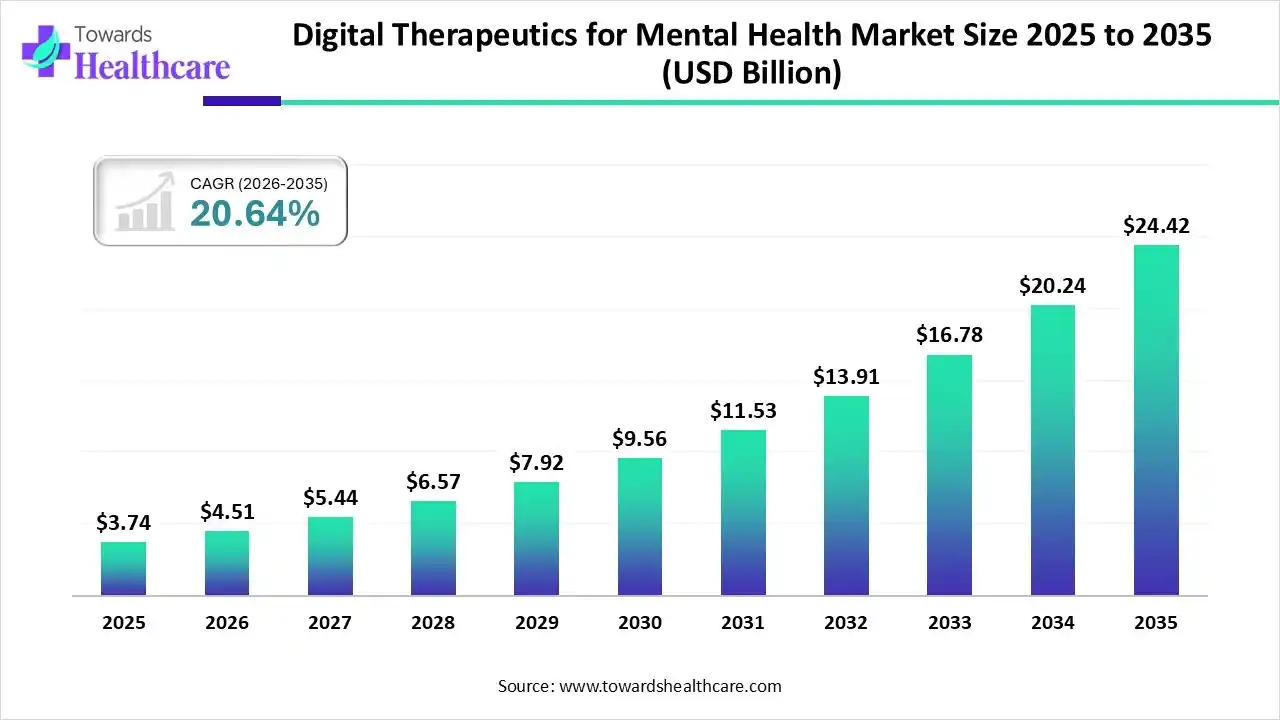
The global digital therapeutics for mental health market size was estimated at USD 3.74 billion in 2025 and is predicted to increase from USD 4.51 billion in 2026 to approximately USD 24.42 billion by 2035, expanding at a CAGR of 20.64% from 2026 to 2035. The digital therapeutics for mental health market is growing as it offers accessibility, convenience, and confidentiality, real-time monitoring and data, it reduces risk and side effects, and enhances outcomes.
The integration of AI-based technology into the market is growing as AI-driven technology has transformed this domain by allowing acceptable, data-based interventions that cater to patients' requirements, ranging from mood disorders to challenging conditions such as post-traumatic stress disorder (PTSD) and depression. AI-based solutions leverage machine learning models to analyse end-user data, like mood patterns, behavioural indicators, and physiological signals, to offer tailored recommendations and real-time responses.
Digital Companions: Digital companions provide the opportunity for more targeted and personalized strategies to medical care, leveraging data, analytics, and AI/ML algorithms to bring evidence-driven interventions tailored to the patient's particular needs.
Virtual Reality (VR): Virtual reality (VR) is a significantly powerful technology for improving assessment in mental health. It is an efficient process of rehabilitation for patients with different phobias, Parkinson's disease, anxiety disorders, Alzheimer's disease, multiple sclerosis, depression, PTSD, and insomnia.
Hybrid Models: Hybrid care models integrate traditional face-to-face or telehealth schedules with the use of digital tools, like smartphone applications, digital therapeutics, or wearable devices, to improve and target care delivery.
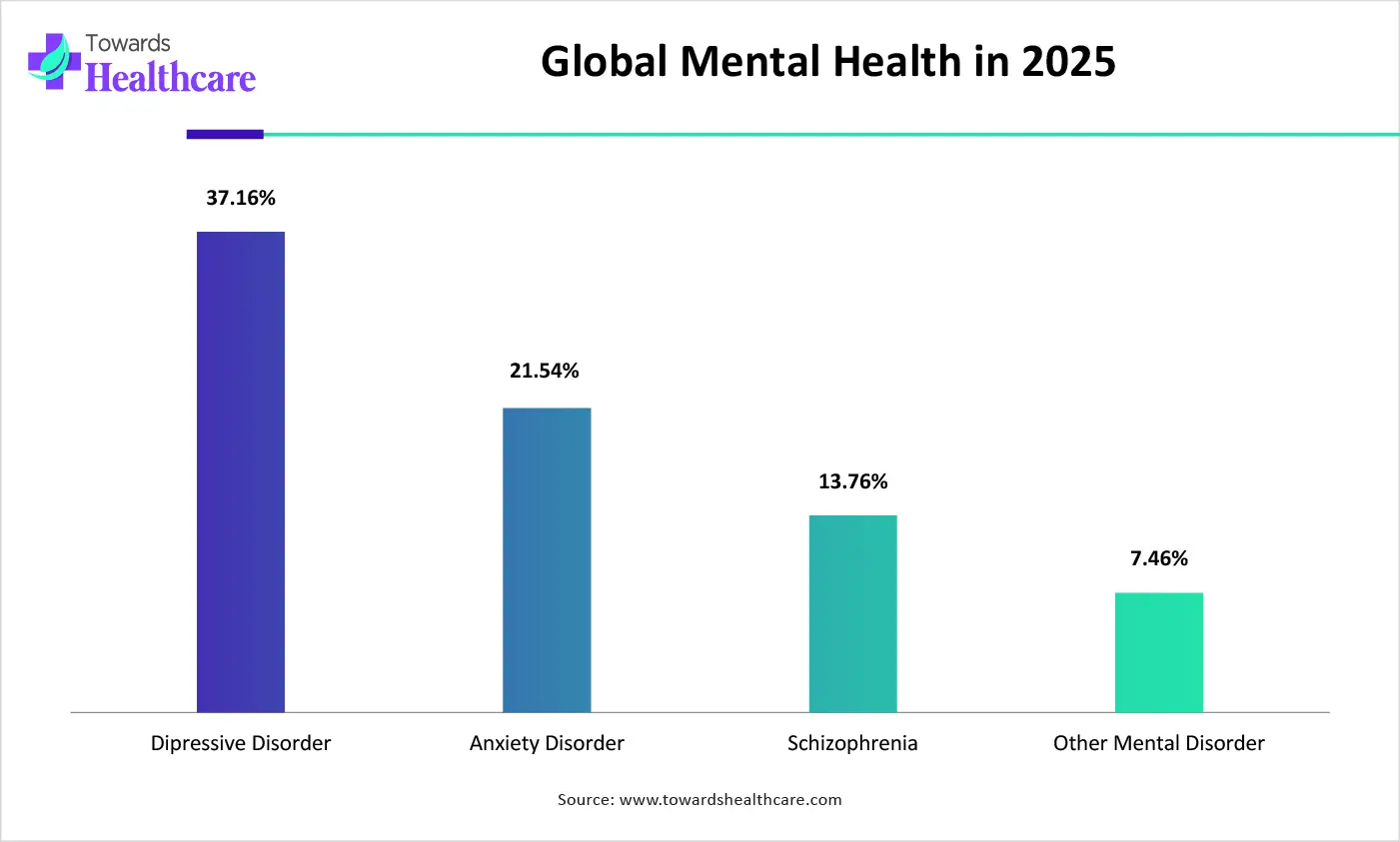
| Diseases | Percentages |
| Depressive disorder | 39% |
| Anxiety disorder | 22% |
| Schizophrenia | 14% |
| Other mental disorders | 8% |
| Idiopathic developmental intellectual disability | 6% |
| Conduct disorder | 5% |
| Autism spectrum disorders | 3% |
| Eating disorder | 2% |
| Attention-deficit hyperactivity disorder | 1% |
| Key Elements | Scope |
| Market Size in 2026 | USD 4.51 Billion |
| Projected Market Size in 2035 | USD 24.42 Billion |
| CAGR (2026 - 2035) | 20.64% |
| Leading Region | North America by 55% |
| Historical Data | 2020 - 2023 |
| Base Year | 2025 |
| Forecast Period | 2026 - 2035 |
| Measurable Values | USD Millions/Units/Volume |
| Market Segmentation | By Product Type, By Application, By End User, By Distribution Channel, By Regional Insight |
| Top Key Players | BigHealth, Akili Interactive Labs, Inc., Woebot Health, Inc., Mindstrong Health, Inc., Cognoa, Inc., SilverCloud Health Ltd., Livongo Health, Inc. |
| Segments | Shares % |
| Software-Based Digital Therapeutics | 70% |
| Hardware-Based Digital Therapeutics | 30% |
Which Product Type Led the Digital Therapeutics for Mental Health Market in 2025?
In 2025, the software-based digital therapeutics segment held the dominant market by 70% share, as digital treatments apply software to train or enhance symptoms in patients outside of cognitiveâ€driven therapies and conventional therapies; this also comprised the collection of information in a patient portal for the patient to access and receive guidance for the next step of their treatment plan. Digital therapeutics function by using software as an apparatus to directly influence patient behaviour and health outcomes.
Hardware-Based Digital Therapeutics
Whereas the hardware-based digital therapeutics segment is the fastest-growing in the market, as hardware-based digital strategies in cognitive behavioural therapy offer advantages similar to patient care with a positive effect on symptoms such as fatigue, depression, and anxiety. Digital therapeutics are progressively used to treat conditions such as anxiety, depression, PTSD, and substance use disorders.
| Segments | Shares % |
| Depression | 40% |
| Anxiety | 15% |
| Substance Use Disorders | 10% |
| Cognitive Disorders | 10% |
| Post-Traumatic Stress Disorder (PTSD) | 15% |
| Other Mental Health Disorders | 10% |
Why did the Depression Segment Dominate the Market in 2025?
The depression segment is dominant in the digital therapeutics for mental health market with share of 40% in 2025, as it is accessible via smartphones or computers and teaches patients novel skills and habits to support them in regulating depression. Digital therapeutics provides a gifted and ground-breaking strategy to managing anxiety and depression, with the potential to improve affordability, accessibility, and patient engagement in mental health care.
Post-Traumatic Stress Disorder (PTSD)
Whereas the post-traumatic stress disorder (PTSD) segment is the fastest growing in the market, as digital therapeutics apply software-based interventions, like mindfulness exercises, VR exposure therapy, and CBT modules, to tackle PTSD symptoms. These tools are often delivered through mobile apps or online platforms, making them convenient and consumer-friendly. Digital therapeutics provides numerous benefits, including accessibility, personalization, and evidence-driven interventions.
| Segments | Shares % |
| Individuals | 25% |
| Healthcare Providers | 50% |
| Corporations | 25% |
Why is the Healthcare Providers Segment Dominant in the Market
In 2025, the healthcare providers segment held the dominant digital therapeutics for mental health market share of 50%, as digital therapeutics are rising to a new level by adding flexibility in location, time, and reach to patients. Therapy is obtainable straight to patients, avoiding lengthy support processes and shortages of therapists. Therapy is delivered through smartphones or wearable devices, making it more accessible and mobile than traditional medication.
Corporations
Whereas the corporations segment is the fastest growing in the market, as digital therapeutics have wonderful potential to lower disease burdens, deliver advanced clinical results, support providers to make more informed treatment decisions, and enhance patients’ lives by providing better ways to manage chronic health situations. Digital therapeutics have the potential to show techniques in treatment that give amplified patient access, lower side effects, and reduced challenges of addiction.
| Segments | Shares % |
| Direct-to-Consumer | 55% |
| Healthcare Providers | 20% |
| Third-Party Platforms | 25% |
Why is the Adult Segment Dominant in the Market
In 2025, the direct-to-consumer segment held the dominant segment in the digital therapeutics for mental health market by 55%, as consumers manage chronic or stigmatized conditions such as sexual health, mental health, or addiction discreetly from a hub, bypassing the requirement for in-person hospital visits. DTC platforms allow pharma to set and communicate costs clearly, a strategic benefit as MFN rules drive for international price equality.
Third-Party Platforms
Whereas the third-party platforms segment is the fastest growing in the market, as digital therapeutics have wonderful potential to reduce disease challenges, deliver advanced clinical results, support providers in making more well-versed treatment decisions, and enhance patients’ lives by providing better ways to achieve chronic health conditions. Digital therapeutics provides incumbents access to novel sections of the healthcare value chain and a method to play in the much larger end-to-end medical care.
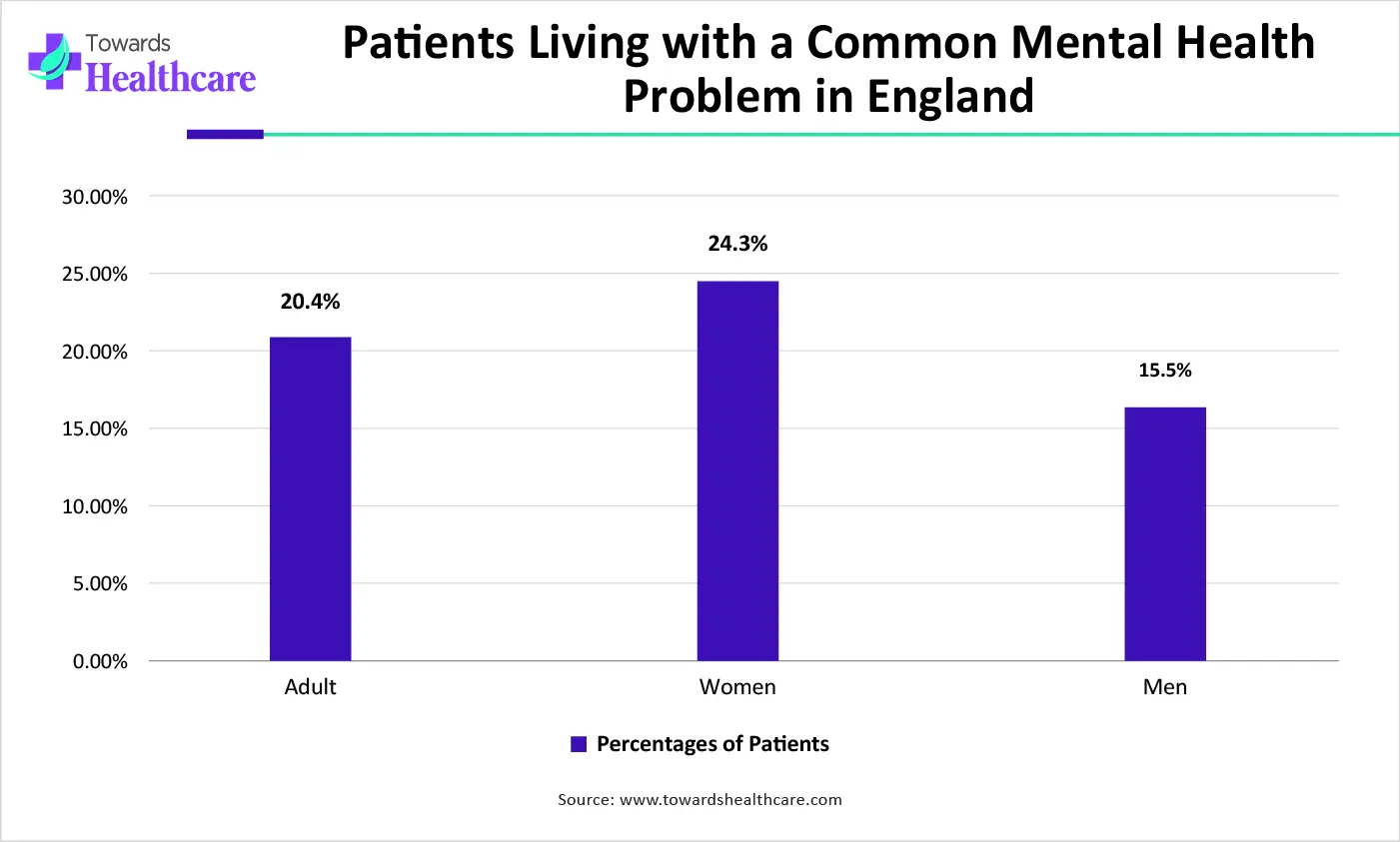
| Mental Health Challenges Patients | Percentages of Patients |
| Adult | 20.4% |
| Women | 24.3% |
| Men | 15.5% |
In 2025, North America led the digital therapeutics for mental health market by 55% share, with a progressive medical care infrastructure, strong government frameworks, and high digital acceptance. Approximately 1 in 5 American adults will have a diagnosable mental health situation in 2024. 46% of Americans meet the criteria for a diagnosable mental health condition sometime in their life, which raises the demand for digital therapeutics for mental health solutions.
For Instance,
Increasing acceptance of digital technology, for instance, in 2025, more than 93.1% of North Americans use the internet, that’s 332 million people. 92% of people have adopted a smartphone, and 9.9% use only that smartphone to connect to the internet, which increases the growth of digital therapeutics.
U.S. Market Trends
The increasing incidence of mental health disorders in the U.S. is increasing the demand for effective treatment options. The presence of advanced digital infrastructure is also increasing the adoption of digital therapy. Increasing telehealth adoption and expanding mental health technology startups are also driving their growth.
Canada Market Trends
Rising mental health concerns across Canada are increasing the demand for various mental health treatments. Increasing government support and improving digital connectivity are also increasing the use of digital therapeutics. The growing health awareness and demand for affordable care are also driving their adoption.
Asia Pacific is set to experience rapid growth in the digital therapeutics for mental health market by 15% share, as this region has massive potential to tailor production and commercial AI-driven technology applications to residents' requirements. Individual countries within the Asia-Pacific region have distinct AI-driven technology capabilities and strengths. AI-based development initiatives are quickly spreading in countries in the Asia Pacific because of the emergence of related infrastructure and supportive country-specific guidelines.
India Market Trends
India's quick development in artificial intelligence, underpinned by strategic government initiatives, has positioned the country as a global AI-driven powerhouse. By increasing AI-based compute infrastructure, fostering indigenous AI models, improving digital public infrastructure, and investing in talent development, India is making an inclusive and innovation-based ecosystem.
China Market Trends
China consists of strong government initiatives supporting healthcare digitalization and mental health services. This, in turn, is increasing the adoption of digital therapeutics for mental health disorder treatment. Expanding patient volume and AI technologies are also promoting their adoption.
Europe is experiencing substantial growth in its digital therapeutics for mental health market by 20% share, as Europe’s advancement is deeply intertwined with its rich history, starting with early civilizations such as Greece and Rome. Increasing government support and infrastructure that continues to influence modern societies. Europe's high-tech sectors avoid complete marginalization. The EU has accepted a geopolitical strategy of financial statecraft.
UK Market Trends
In the UK, over 3.7 million people accessed mental health support through England’s NHS in 2023-2024, representing nearly a 40% rise since before the pandemic. As demand for mental health services increases more rapidly than the available resources, the UK faces a pressing need for solutions that are effective, accessible, scalable, and cost-efficient. Mental health services nationwide are under considerable strain, with demand surpassing existing resources.
For Instance,
Germany Market Trends
The presence of advanced healthcare infrastructure in Germany facilitates the use of advanced mental health treatment options. The growing telehealth adoption and AI integration are also increasing their use for personalized care. Favorable reimbursement support is also driving the demand for digital therapeutics.
South America, particularly Brazil, Mexico, and Argentina, is at the forefront of the digital therapeutics (DTx) market for mental health, driven by high smartphone usage, growing awareness that reduces stigma, and a strong demand for accessible care. Young people increasingly use app-based tools to manage anxiety and depression, leading to a rise in demand for digital solutions perceived as more accessible than traditional care. The market mainly consists of affordable, scalable software, including AI-powered apps, addressing the need for mental health services. Organizations such as the Latin American Treatment and Innovation Network in Mental Health (LATIN-MH) leverage technology to address mental health comorbidities.
Brazil Market Trends
Brazil is a key player in the Digital Therapeutics for Mental Health market in Latin America, fueled by high demand, widespread smartphone adoption, significant health tech investments, and favorable regulations. Mental health services are often concentrated in urban psychiatric facilities, leaving many areas underserved and creating a need for low-cost alternatives. The pandemic accelerated the shift to online therapy and digital tools like meditation apps and chatbots, making these services more prevalent. Brazil's high smartphone usage and internet access support app-based interventions, with startups like Zenklub thriving by offering mental health services as employee benefits.
Argentina Market Trends
Increasing use of smartphones and telehealth platforms across Argentina is driving the use of virtual consultations for mental health disorders. The increasing development of new mental health apps and online therapy solutions is also promoting their use. A rise in mental health awareness is also driving the demand for digital therapeutics.
The Middle East and Africa (MEA), particularly Saudi Arabia and the UAE, lead the digital therapeutics market by 5% share for mental health due to rapid digital adoption, substantial government healthcare investments, high smartphone usage, and the need for private digital solutions to address mental health stigma. The swift growth of smart technology and smartphone usage has facilitated the rapid deployment of mental health apps, offering a private alternative to traditional in-person consultations, which are often stigmatized. The software solutions segment is crucial for this growth, as it is easily implemented and scalable to meet mental health demands.
Saudi Arabia Market Trends
Saudi Arabia's dominance in the mental health market is driven by Vision 2030, which invests over $1.5 billion in digital health infrastructure. High smartphone and internet penetration increased mental health awareness, and platforms like Labayh and Sehhaty contribute to this expansion. The Kingdom's digital-first healthcare strategy prioritizes DTx to enhance accessibility and efficiency. Awareness campaigns from the National Committee for Mental Health Promotion have helped reduce stigma, leading to greater use of apps like Labayh for counseling. Cities like Riyadh and Jeddah are key development centers with strong healthcare infrastructure and high user adoption. Saudi Arabia has also implemented data protection laws (PDPL) to ensure a secure digital health environment.
UAE Market Trends
Increasing government initiatives across the UAE are supporting the development of digital tools for mental healthcare applications. Rising mental health awareness and demand for convenient care options are also fueling the adoption of digital therapeutics. The growing medical tourism and telehealth adoption are also attracting patients.
| Company | Headquarters | Latest Update |
| BigHealth | United States | In March 2025, a New JAMA study showcases the clinical benefits of SleepioRx in patients with comorbid insomnia and depression symptoms. |
| Akili Interactive Labs, Inc. | United States | Akili Interactive, a leader in digital medicine, is to become publicly traded through a combination with social capital Surrey Holdings Corp. |
| Woebot Health, Inc. | United States | In June 2025, Woebot Health shut down its CBT-based therapy chatbot after informing users that conversation history would remain available for download through that date, and that personal data would be anonymized. |
| Mindstrong Health, Inc. | United States | In November 2025, Mindstrong raised $174M in funding from investors like General Catalyst, Bezos Expeditions, and Arch Venture Partners, with a last known valuation of $660M. |
| Cognoa, Inc. | Texas | Cognoa is an early childhood development and pediatric behavioral health company developing digital diagnostics and therapeutics. |
| SilverCloud Health Ltd. | Ireland | SilverCloud Health is the world’s leading digital mental health company, enabling healthcare organizations to deliver clinically validated digital therapeutic care. |
| Livongo Health, Inc. | United States | The Livongo brand name is being retired, and users are guided to transition their accounts to the Teladoc Health platform to access their existing programs and data. |
Strengths
Weaknesses
Opportunities
Threats
By Product Type
By Application
By End User
By Distribution Channel
By Regional Insight





Principal Consultant
Payal Rabde is a Healthcare Market Research Analyst at Towards Healthcare Research & Consulting with 4+ years of experience in pharmaceuticals, biotechnology, medical devices, and life sciences.
Learn more about Payal Rabde

Reviewed By
Aditi Shivarkar is a seasoned professional with over 14 years of experience in healthcare market research. As a content reviewer, Aditi ensures the quality and accuracy of all market insights and data presented by the research team.
Learn more about Aditi Shivarkar