Pipeline Programs

CGT Companies Tracked

Manufacturing Facilities


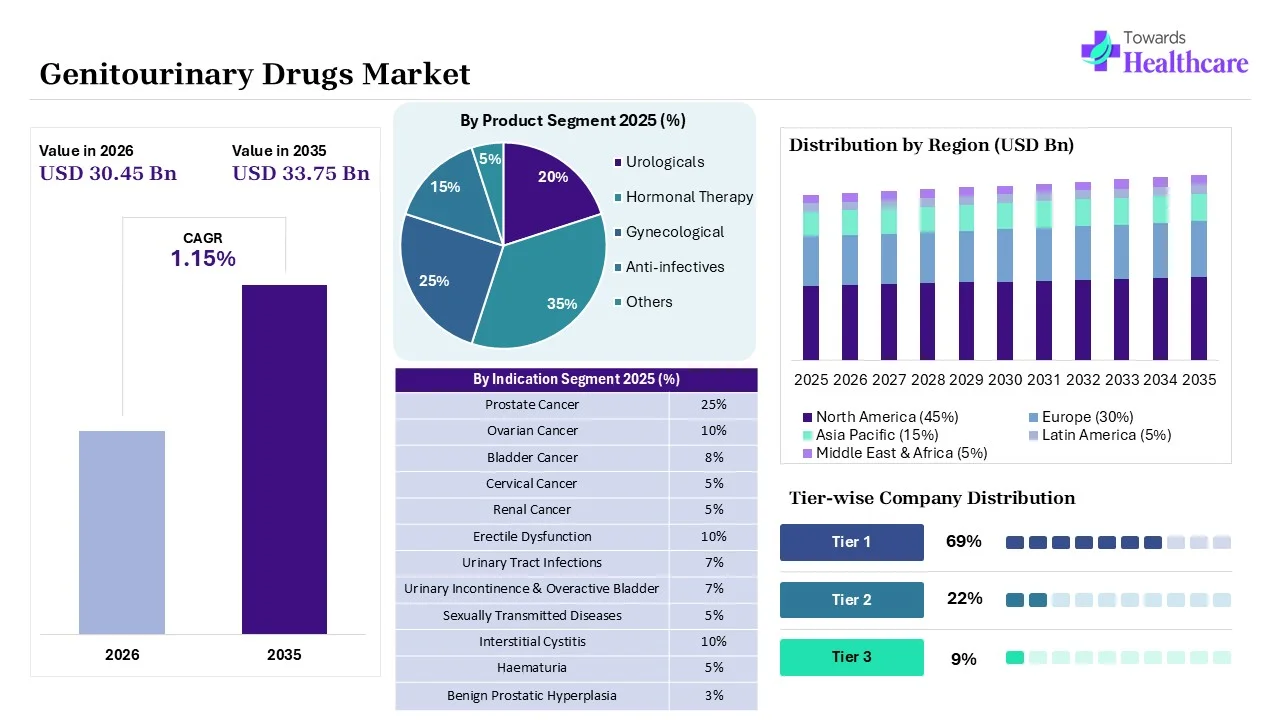
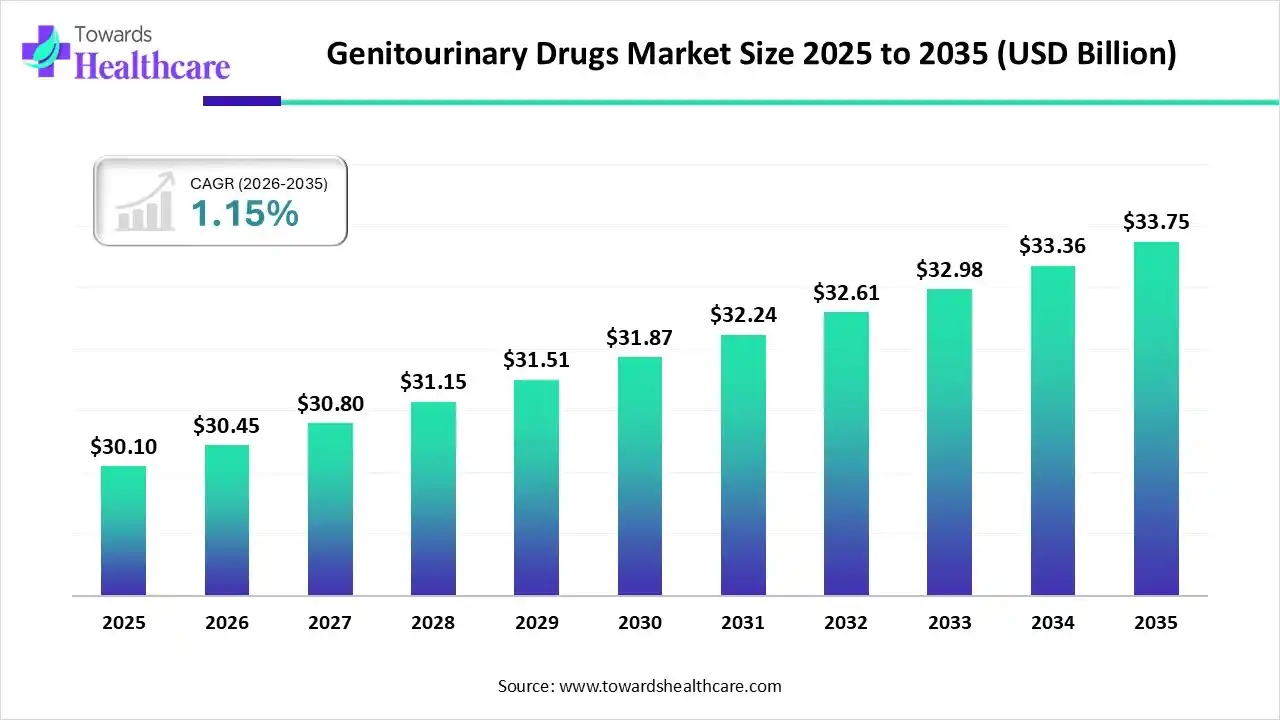
The global genitourinary drugs market size was estimated at USD 30.1 billion in 2025 and is predicted to increase from USD 30.45 billion in 2026 to approximately USD 33.75 billion by 2035, expanding at a CAGR of 1.15% from 2026 to 2035.
Across the world, increasing cancer cases, such as prostate cancer, bladder cancer, and other gynaecological conditions, are fueling demand for advanced therapies. Whereas the FDA is pushing major approvals for these candidates and other immersive treatments.
Specifically, the global genitourinary drugs market covers drugs used in treating the urinary tract and reproductive organs. However, the worldwide market is mainly driven by a rise in instances of GU disorders, including incontinence, BPH, and cancers, as well as ongoing major R&D investment yielding newer therapies, such as ADCs and biologics, and expanding awareness. At the same time, the key players have received approval for diverse therapies, particularly a combination of pembrolizumab (Keytruda) and enfortumab vedotin (Padcev) as neoadjuvant therapy for adults with muscle-invasive bladder cancer. As well as TAR-200 shown positive results in BCG-unresponsive bladder cancer.
Across the globe, many organizations are investing heavily in R&D and developing innovative new treatments such as antibody-drug conjugates (ADCs), biologics, targeted therapies, immunotherapies, gene therapies, and new methods for delivering those drugs to patients. The increased use of biomarkers and molecular diagnostics will accelerate the use of personalized treatment approaches for patients with complex genitourinary (GU) diseases or cancers.
As new regulations and advancements in clinical care continue to alter the GU disease treatment marketplace, pembrolizumab (Keytruda) and enfortumab vedotin (Padcev) have been shown to significantly advance treatment options for muscle-invasive bladder cancer. When combining these medications, it has been shown that patient outcomes will improve and increase the number of treatment options available to eligible patients. Given that healthcare systems will put increasing importance on finding ways to intervene earlier and improve patient outcomes, advanced therapies are likely to be an important component of transforming the worldwide management of GU diseases and will contribute to continued market growth for several more years.
AI algorithms are fostering innovations in diverse kinds of drugs, including genitourinary drugs, which encompass the latest FDA-authorized Paige Prostate Detect by Paige AI. This has major applications in detecting prostate cancer in core needle biopsies, which supports pathologists with optimized workflow effectiveness. Besides this, PROGRxN-BCa was established as an AI-driven model for non-muscle-invasive bladder cancer, which was demonstrated to outperform existing clinical risk calculators in estimating cancer growth.
Unveiling Targeted Oncology Treatments
A prominent trend in the market is the exploration of various targeted interventions in oncology, such as Antibody-Drug Conjugates, hormonal therapies, and different combination therapies for prostate cancer and other GU cancers.
Expanding Advanced Drug Delivery
Robust firms are promoting innovations in the sustained-release injectables and depot formulations, as well as intravesical and topical therapies, like nano-formulated creams and direct bladder instillation for localized treatment.
Extensive Telemedicine & Digital Health
The globe is leveraging integrated telemedicine platforms for remote patient monitoring, consultation, and direct-to-consumer prescription refills for accelerating treatment adherence for conditions, particularly erectile dysfunction and incontinence.
| Key Elements | Scope |
| Market Size in 2026 | USD 30.45 Billion |
| Projected Market Size in 2035 | USD 33.75 Billion |
| CAGR (2026 - 2035) | 1.15% |
| Leading Region | North America by 45% |
| Key Applications | Benign Prostatic Hyperplasia (BPH), Overactive Bladder (OAB), Urinary Incontinence, Prostate Cancer, Kidney Disorders, Erectile Dysfunction, Urinary Tract Infections, Endometriosis, Fertility Disorders |
| Primary End Users | Hospitals, Specialty Clinics, Urology Centers, Oncology Centers, Ambulatory Surgical Centers, Retail Pharmacies |
| Key Growth Drivers | Aging population, rising prevalence of urological disorders, increasing prostate cancer incidence, improved diagnostics, novel therapies, growing awareness of men's and women's health |
| Measurable Values | USD Millions/Units/Volume |
| Market Segmentation | By Indication, By Product, By Region |
| Top Key Players | Abbott, Bristol-Myers Squibb Co., Novartis AG, Genentech, Inc., Eli Lilly and Company, Merck & Co., Inc., Pfizer, Inc., AstraZeneca, GlaxoSmithKline, Bayer AG |
| Segments | Shares % |
| Prostate Cancer | 25% |
| Ovarian Cancer | 10% |
| Bladder Cancer | 8% |
| Cervical Cancer | 5% |
| Renal Cancer | 5% |
| Erectile Dysfunction | 10% |
| Urinary Tract Infections | 7% |
| Urinary Incontinence & Overactive Bladder | 7% |
| Sexually Transmitted Diseases | 5% |
| Interstitial Cystitis | 10% |
| Haematuria | 5% |
| Benign Prostatic Hyperplasia | 3% |
Which Indication Dominated the Genitourinary Drugs Market in 2025?
In 2025, the prostate cancer segment held the biggest share of 25% of the market. In this year, nearly 313,780 new cases of prostate cancer were reported in the United States, and it is anticipated to rise to approximately 2.9 million annually by 2040 across the globe. Recently approved Pasritamig (JNJ-78278343) is a first-in-class, bispecific T-cell engager that targets human kallikrein 2 for metastatic castration-resistant prostate cancer (mCRPC) in early-stage trials.
Interstitial Cystitis
The interstitial cystitis segment is predicted to register the fastest growth. According to a study, there are from 52 to 500 cases per 100,000 females and 8 to 41 cases per 100,000 males around the world. Recently, Sunobinop has shown positive results from a Phase 1b clinical study in patients with IC/BPS. Whereas Certolizumab pegol (Cimzia), a monoclonal antibody, is under Phase 3 development for the treatment of IC.
| Segments | Shares % |
| Urologicals | 20% |
| Hormonal Therapy | 35% |
| Gynecological | 25% |
| Anti-infectives | 15% |
| Others | 5% |
How did the Hormonal Therapy Segment Lead the Market in 2025?
The hormonal therapy segment held the biggest revenue share of the genitourinary drugs market share of 35% in 2025. Globally, accelerating cases of menopause, andropause (male hypogonadism), PCOS, and prostate cancer are bolstering demand for these therapies. However, Vaginal DHEA (Prasterone) is a locally applied therapy, which converts into both estrogen and androgen within vaginal cells, also facilitates a mechanism to recognize variations of GSM symptoms, like improved sexual function.
Gynecological
Moreover, the gynecological segment will expand rapidly. Nowadays, the population is increasingly demanding contraceptives, novel cancer treatments, like ADCs, PARP inhibitors, and better diagnostics is supporting the respective progressions. The recent developments include Blujepa (gepotidacin), a first-in-class oral antibiotic, which is used to treat uncomplicated UTIs in women and girls aged 12 and older. Alongside, injectable platelet-rich fibrin (i-PRF) or platelet-rich plasma (PRP) are implemented as non-hormonal treatment alternatives for GSM symptoms.
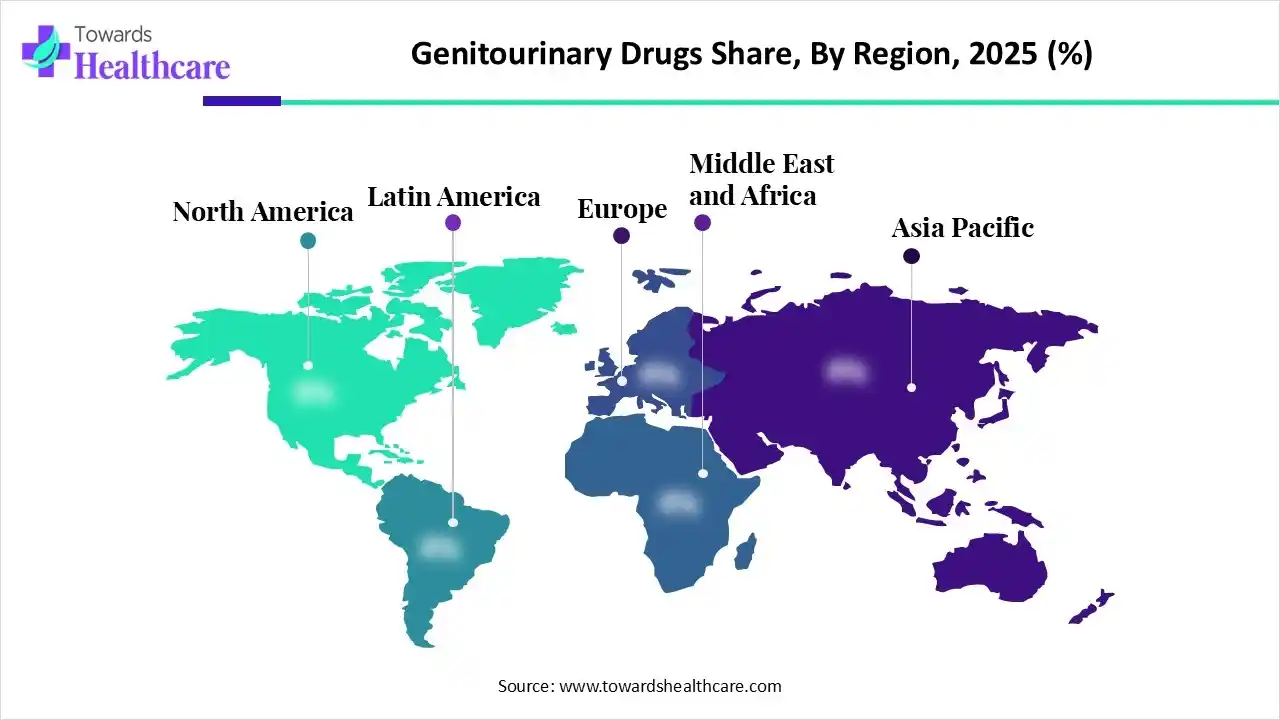
North America held a major revenue share of the genitourinary drugs market share by 45% in 2025, due to the rising prevalence of BPH, CKD, and incontinence, strengthening awareness of GU health & advancements in drug R&D for newer therapies. Also, the regional companies are encouraging innovations in novel cancer solutions and oral antibiotics.
U.S. Market Trends
Additionally, the U.S. market has been pushing novel FDA approvals for bladder cancer, prostate cancer, and uncomplicated urinary tract infections (UTIs). For example, UGN-102 was developed by UroGen Pharma & it received FDA approval of its NDA for this drug for low-grade, intermediate-risk NMIBC.
Canada Market Trends
Canada’s genitourinary drugs market is growing steadily as the number of people with urinary disorders, like benign prostatic hyperplasia (BPH), chronic kidney problems, and cancer in the genitourinary region continues to rise. There is easy access to quality healthcare, better awareness of different treatment options, and use of new therapies that have improved the demand for superior genitourinary drugs in Canada.
The highest growth of the genitourinary drugs market share by 15% in the Asia Pacific is driven by ongoing extensive developments in excellent diagnostics, treatment facilities, and healthcare access across APAC countries. Apart from this, the region is fostering investments in R&D of novel drugs, like next-generation anti-infectives for antibiotic-resistant UTIs and advanced cancer treatments.
India Market Trends
Furthermore, India will expand fastest, as the government is exploring incentives, like India's Jan Aushadhi Scheme, which emphasizes raising the accessibility and cost-effectiveness of generic drugs and biosimilars.
Japan Market Trends
The market for genitourinary medications in Japan is being aided by the rapidly aging population of Japan and the higher incidence of urinary incontinence, overactive bladder, and prostate disorders that occur with age. The high-quality healthcare system in Japan, the universal screening programs utilized there, and the high demand for targeted therapies have provided a major contribution to the continuous growth of this market.
Europe is predicted to witness notable growth in the genitourinary drugs market by 30% share. However, the European Association of Urology (EAU) recently revealed updated guidelines for urological infections and bladder cancer. This focuses on offering clear guidance on treatment solutions, such as a robust focus on non-antibiotic treatments, including ibuprofen for cystitis, where appropriate.
Germany Market Trends
The latest AWMF S2 guidelines focus on using symptomatic treatments for mild acute cystitis to lower overall antibiotic consumption. Alongside, Germany unveiled innovative reimbursement models, like for Hemgenix, which is anticipated to widen expensive GU oncology drugs.
Netherlands Market Trends
In the Netherlands, the rising awareness of urological health has created a steadily growing market for genitourinary medications. Other contributing factors include easy access to healthcare in general, high levels of treatment of urinary and reproductive disorders, and increased usage of advanced techniques in the management of these diseases. The use of newer therapies and emphasis on early intervention has given continuing support to the overall growth of this market.
The genitourinary (GU) drugs market in South America is expanding due to rising chronic conditions like prostate cancer and diabetes, increased demand for affordable generics, improved healthcare access, and private sector investments in Brazil and Mexico. Growing awareness of preventive care and patent expirations also drives this growth. The region faces higher rates of prostate cancer, bladder cancer, chronic kidney diseases, and urinary tract infections (UTIs), necessitating more treatment options. Increased awareness of preventive medicine and rising disposable incomes, especially among middle-income groups, are boosting pharmaceutical spending. South America is seeing a surge in demand for affordable generics, which are being included in public formularies to manage healthcare costs.
Brazil Market Trends
Brazil dominates the genitourinary drugs market and the broader Latin American pharmaceutical sector due to its large, government-supported, cost-effective generic drug market. This leadership stems from high demand for affordable treatments, significant local production investments, an aging population, and the government's Farmácia Popular program, which reduces medication costs. Initiatives like Saúde não tem preço provide free medicines for conditions such as hypertension and diabetes, further increasing demand. With over 200 million people and an aging demographic, Brazil has a growing need for chronic disease management and genitourinary treatments. The market is highly price-sensitive, making locally produced, often cheaper products very attractive.
Argentina Market Trends
Argentina's genitourinary drug market is seeing an increase in demand for innovative therapy due to the continuing rise in incidence of urinary tract disorders, kidney disease, and prostate-related conditions. The continuation of expanding access to healthcare, increasing knowledge concerning urological health, and increasing the availability of specialty prescription drugs will all assist in the continued growth of the innovative therapy market across both the public and private healthcare systems.
The MEA region is seeing steady growth in the genitourinary drugs market share by 5%, driven by high disease rates, rapid healthcare infrastructure development, and government health initiatives, particularly in Gulf countries. This growth is fueled by the high demand for treatments for urological and reproductive issues. The UAE and South Africa are becoming popular medical tourism destinations for affordable, high-quality urological procedures. Advanced drug formulations, like biologics and targeted therapies for prostate cancer and complex kidney diseases, are increasingly used. Digital health tools, such as AI diagnostics and tele-urology, are improving access to specialists and diagnosis rates in remote areas.
Saudi Arabia Market Trends
Saudi Arabia dominates the GU Drugs Market due to a high prevalence of chronic urological diseases, rapid healthcare facility expansion, and strong government investment under Vision 2030. The aging population and high pharmaceutical spending drive demand. Major cities like Riyadh, Jeddah, and Dammam feature modern hospitals and specialized clinics, enhancing medication access. The growing elderly demographic increases the need for long-term treatments for age-related conditions. The market also shows a high usage of affordable local generics, aligning with cost-containment strategies. The region faces a significant incidence of urological issues, including urinary incontinence, erectile dysfunction, urinary tract infections, and rising prostate cancer rates, which boosts the demand for therapeutics.
United Arab Emirates, the genitourinary drug market is continuing to grow based on the modernization of the healthcare system, increased rate of diagnosis for patients with urological disorders, and increasing numbers of people aged 65+. The market is also being supported by investments in advanced hospital facilities, increased utilization of targeted therapies, and increased availability of specialty healthcare RMS to meet the needs of this growing patient population.
| Ecosystem Segment | Key Participants | Role in Market |
| Technology Providers | Pfizer, Astellas Pharma, Bayer, Johnson & Johnson | Development of novel drug molecules and delivery technologies |
| Product Manufacturers | AbbVie, Pfizer, Bayer, Ferring Pharmaceuticals, Astellas Pharma | Manufacturing branded and specialty genitourinary therapeutics |
| Service Providers | IQVIA, Syneos Health, ICON plc | Commercialization, clinical development, market access support |
| Platform Providers | Bayer, Johnson & Johnson, Pfizer | Integrated pharmaceutical R&D and commercialization platforms |
| CROs/CDMOs | ICON plc, Charles River Laboratories, Labcorp Drug Development | Clinical research and outsourced development services |
| Software Vendors | IQVIA, Veeva Systems | Clinical data management and commercial analytics |
| Research Institutions | National Cancer Institute, Mayo Clinic, Cleveland Clinic, Memorial Sloan Kettering Cancer Center | Research and clinical studies in urology and oncology |
| End-User Industries | Hospitals, Urology Clinics, Oncology Centers, Academic Research Centers | Utilization of genitourinary therapeutics |
R&D
Clinical Trials & Regulatory Approvals
Patient Support & Services
| Tier 1 | Tier 2 | Tier 3 | |
| Typical Market Influence | 72% | 21% | 7% |
| Tier 1 | ||||
| Company Name | Headquarters | Country | Why Relevant to This Market | Key Products/Services |
| Pfizer | New York, New York, USA | USA | Strong presence in prostate cancer and men's health therapies | Xtandi alliance, oncology and urology portfolio |
| Astellas Pharma | Tokyo, Japan | Japan | Leading urology and prostate cancer company globally | Xtandi, Vesicare, urology therapies |
| Bayer AG | Leverkusen, North Rhine-Westphalia, Germany | Germany | Significant prostate cancer and kidney disease portfolio | Nubeqa, kidney and oncology therapies |
| Tier 2 | ||||
| Company Name | Headquarters | Country | Why Relevant to This Market | Key Products/Services |
| Ferring Pharmaceuticals | Saint-Prex, Vaud, Switzerland | Switzerland | Global leader in reproductive and urological medicine | Minirin, fertility and urology products |
| Sumitomo Pharma | Osaka, Japan | Japan | Active in overactive bladder and specialty urology | Gemtesa and urology therapeutics |
| Ipsen | Paris, France | France | Strong oncology portfolio including prostate cancer | Oncology and hormone-based therapies |
| Tier 3 | ||||
| Company Name | Headquarters | Country | Why Relevant to This Market | Key Products/Services |
| UroGen Pharma | Princeton, New Jersey, USA | USA | Focused exclusively on urologic cancers | Jelmyto and bladder cancer therapies |
| Photocure | Oslo, Norway | Norway | Specialized bladder cancer diagnostics and treatment support | Cysview platform |
| Nymox Pharmaceutical | Nassau, Bahamas | Bahamas | Focused on BPH therapeutics | NX-1207 development program |
In March 2026, UroGen announced that the launch of ZUSDURI™ remains on track, supported by growing physician adoption, expanding reimbursement coverage, and increasing treatment-site activation. Liz Barrett, President and CEO, stated, “2025 was a tremendously successful and transformative year for UroGen, highlighted by the FDA approval and commercial launch of ZUSDURI, the first and only approved medicine for adults with recurrent low-grade intermediate-risk non-muscle-invasive bladder cancer.”
By Indication
By Product
By Region





Principal Consultant
Rohan Patil is a seasoned market research professional with over 5+ years of focused experience in the healthcare sector, bringing deep domain expertise, strategic foresight, and analytical precision to every project he undertakes.
Learn more about Rohan Patil

Reviewed By
Aditi Shivarkar is a seasoned professional with over 14 years of experience in healthcare market research. As a content reviewer, Aditi ensures the quality and accuracy of all market insights and data presented by the research team.
Learn more about Aditi Shivarkar