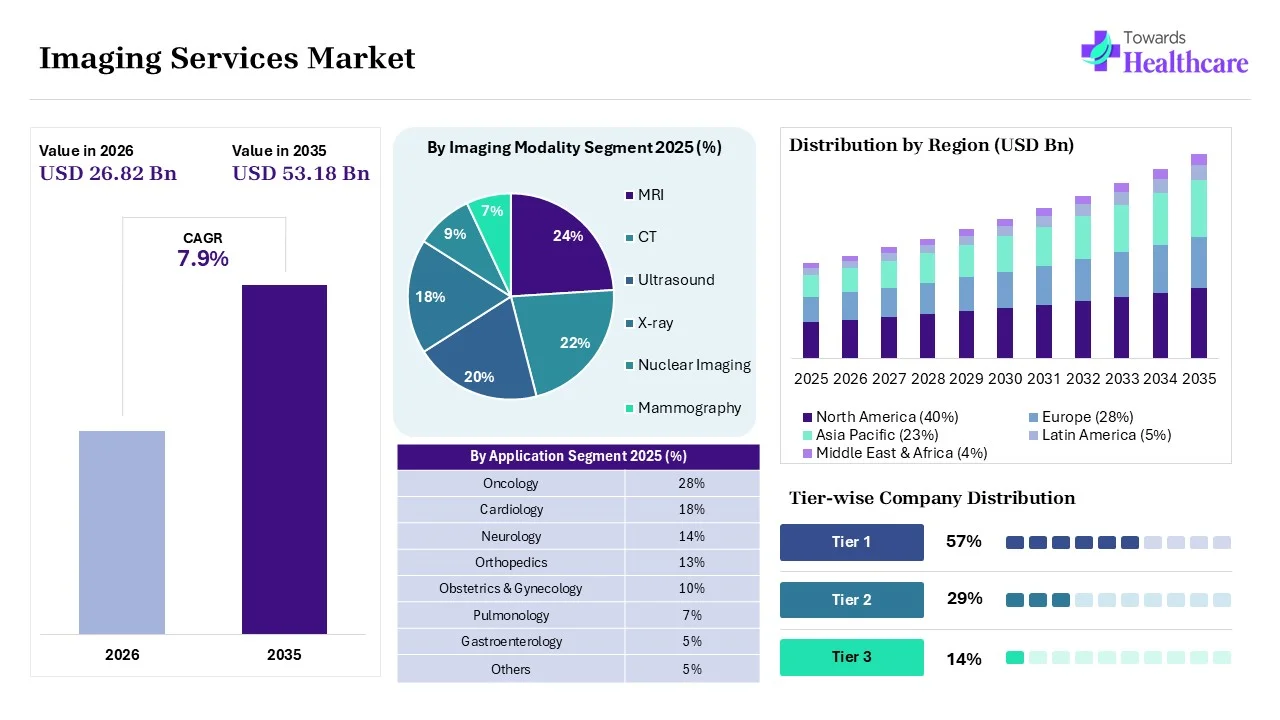
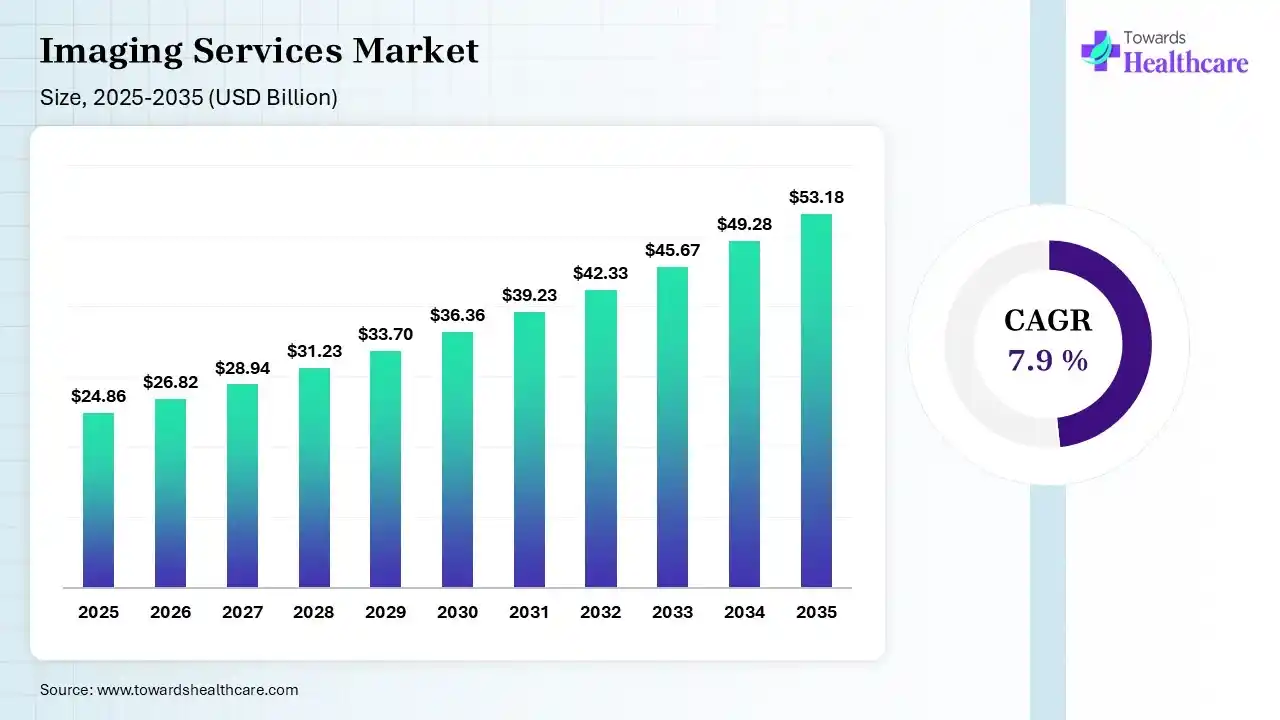
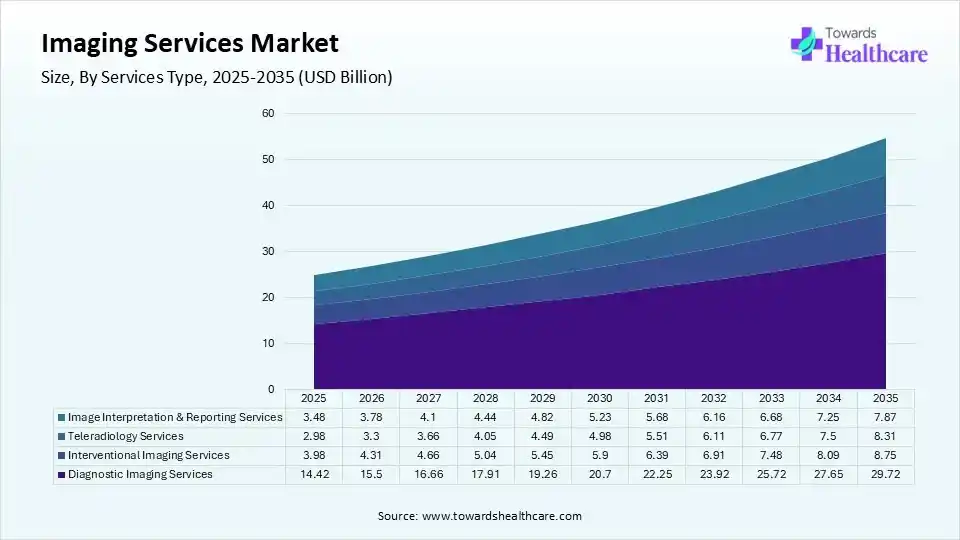
The global imaging services market size was estimated at USD 24.86 billion in 2025 and is predicted to increase from USD 26.82 billion in 2026 to approximately USD 53.18 billion by 2035, expanding at a CAGR of 7.9% from 2026 to 2035. The growing incidence of chronic diseases is increasing the demand for imaging services. Increasing applications, AI integration, portable imaging services, demand for precision medicine, technological innovations, and new product launches are also enhancing the market growth.
The imaging services market is driven by a growing chronic disease burden, geriatric population, and rapid technological advancements. The imaging services encompass healthcare services utilizing medical imaging technologies for diagnostics, monitoring, and treatment of various diseases and injuries. These services help the healthcare providers to visualize the body's internal organs, bones, and tissues, and also help in the acquisition, interpretation, and reporting of diagnostic images to offer enhanced clinical decisions. Additionally, the growing incidence of cancer, cardiovascular disease, neurological conditions, obesity, gastrointestinal disease, trauma, and orthopedic or musculoskeletal conditions is increasing the demand for various diagnostic solutions.
Thus, the increasing prevalence of these diseases is ultimately driving the demand for imaging services globally. The common type of imaging services available involves X-ray imaging, MRI, ultrasound imaging, CT scans, mammography, PET scans, nuclear medical imaging, and fluoroscopy. Additionally, these services help in early disease diagnosis, treatment planning, emergency assessment, preventive health care screening, image-guided procedures, and surgical planning. At the same time, increasing outpatient imaging centres, preventive healthcare, cloud-based imaging platform integration, portable imaging services, and teleradiology services are also contributing to the market expansion
Imaging services involve the use of diagnostic technologies suchas X-ray, magnetic imaging(MRI), computed tomography (CT), ultrasound, position emission tomography (PET), and mammography to detect, diagnose, monitor, and guide the treatment of various medical diseases, expanding demand for early and accurate diagnosis, and rising utilization of preventive health screening programs. The shift toward outpatient diagnostic centers and minimally invasive care is further supporting the adoption. Technological advancements, including AI-assisted image interpretation, cloud-based image management, hybrid imaging systems, and portable imaging devices, are enhancing diagnostic precision and workflow efficiency. Future opportunities lie in personalized diagnostics, teleradiology expansion, digital image integration, and predictive analytics, enabling faster clinical decisions, improved patient outcomes, and broader access to high-quality diagnostic services.
Political
Economic
Social
Technological
Environmental
Legal
AI is used in imaging services for automated image analysis and early disease detection. It also offers improved diagnostic accuracy with minimized interpretation errors, where its image enhancement, predictive analytics, faster scan interpretation, and remote imaging support also increase its adoption rates. AI also helps in qualitative measurement of tumors, lesions, and other abnormalities, which drives their use for personalized treatment planning, where it also helps in reducing administrative burden and improving productivity.
Expanding Cloud-Based Imaging Platforms
Growing healthcare digitalization is increasing the adoption of cloud-based imaging platforms for medical image access, storage, and sharing. The platforms also help in enhancing diagnostic efficiency and minimizing reporting delays by supporting collaboration among healthcare specialists, radiologists, and physicians, which in turn is driving the replacement of traditional on-site storage systems. Furthermore, expanding digital transformation initiatives, remote consultations, and teleradiology services are also encouraging their adoption and innovations.
Precision Medicine Advancements
A rise in health awareness is increasing the demand for precision and precision medicines, which is increasing the adoption of advanced imaging technologies. This, in turn, is driving the adoption of molecular imaging, CT imaging, functional MRI, and PET solutions for early disease detection and their characterization. They are also being used for the accurate diagnosis, treatment planning, identification of patients' genetic profiles, and therapy monitoring, which is encouraging their adoption across oncology, cardiology, and neurology sectors.
Technological Advancements
Increasing technological innovations are driving the development of advanced imaging solutions with improved accuracy, quality, and speed. The companies are also driving the development of new platforms with reduced scan time, increased diagnostic confidence, and enhanced patient comfort, where the investments are also driving the integration of software to handle increasing imaging volumes. Furthermore, high-resolution MRI, digital radiography, low-dose CT scanners, 3D/4D imaging, and hybrid imaging systems are also being developed.
| Table | Scope |
| Market Size in 2026 | USD 26.82 Billion |
| Projected Market Size in 2035 | USD 53.18 Billion |
| CAGR (2026 - 2035) | 7.9% |
| Leading Region | North America by 38% |
| Historical Data | 2020 - 2023 |
| Base Year | 2025 |
| Forecast Period | 2026 - 2035 |
| Measurable Values | USD Millions/Units/Volume |
| Market Segmentation | By Services, By Imaging Modality, By Application, By End User, By Delivery Mode, By Ownership Model, By Region |
| Top Key Players | Siemens Healthineers AG, FUJIFILM Holdings Corporation, GE Healthcare Technologies Inc., Shenzhen Mindray Bio-Medical Electronic Co., Ltd., Koninklijke Philips N.V., Hologic, Inc., Canon Medical Systems Corporation |
| Segments | Shares % |
| Diagnostic Imaging Services | 58% |
| Interventional Imaging Services | 16% |
| Teleradiology Services | 12% |
| Image Interpretation & Reporting Services | 14% |
The Diagnostic Imaging Services Segment Dominated the Market With 58% in 2025
The diagnostic imaging services segment led the imaging services market with a 58% share in 2025, due to the growth in chronic disease burden, which increased diagnostic volumes. Healthcare providers also expanded imaging utilization, where early disease detection remained a priority across care settings. Strong reimbursement coverage and advanced imaging technologies also attracted the patients.
The interventional imaging services segment held the second-largest share of 16% of the market in 2025, driven by the increasing acceptance rate of minimally invasive procedures. Physicians increasingly rely on real-time imaging guidance, which drives the demand for these services. Furthermore, hospitals seek reduced patient recovery times, which encourages their use.
The image interpretation & reporting services segment held 14% of the imaging services market share in 2025, driven by rising imaging procedure volume, which increases reporting requirements. AI-assisted workflows also improve productivity, increasing their adoption rates. Demand for specialist interpretation continues to grow, increasing the use of these services.
The teleradiology services segment held 12% of the market share in 2025 and is expected to witness the fastest growth with a CAGR of 10.8% during the forecast period, due to increasing radiologist shortages, which accelerate outsourcing demand. Remote reporting improves turnaround efficiency, increasing the use of teleradiology services. Cross-border image interpretation continues expanding, encouraging its use.
| Segments | Shares % |
| MRI | 24% |
| CT | 22% |
| Ultrasound | 20% |
| X-ray | 18% |
| Nuclear Imaging | 9% |
| Mammography | 7% |
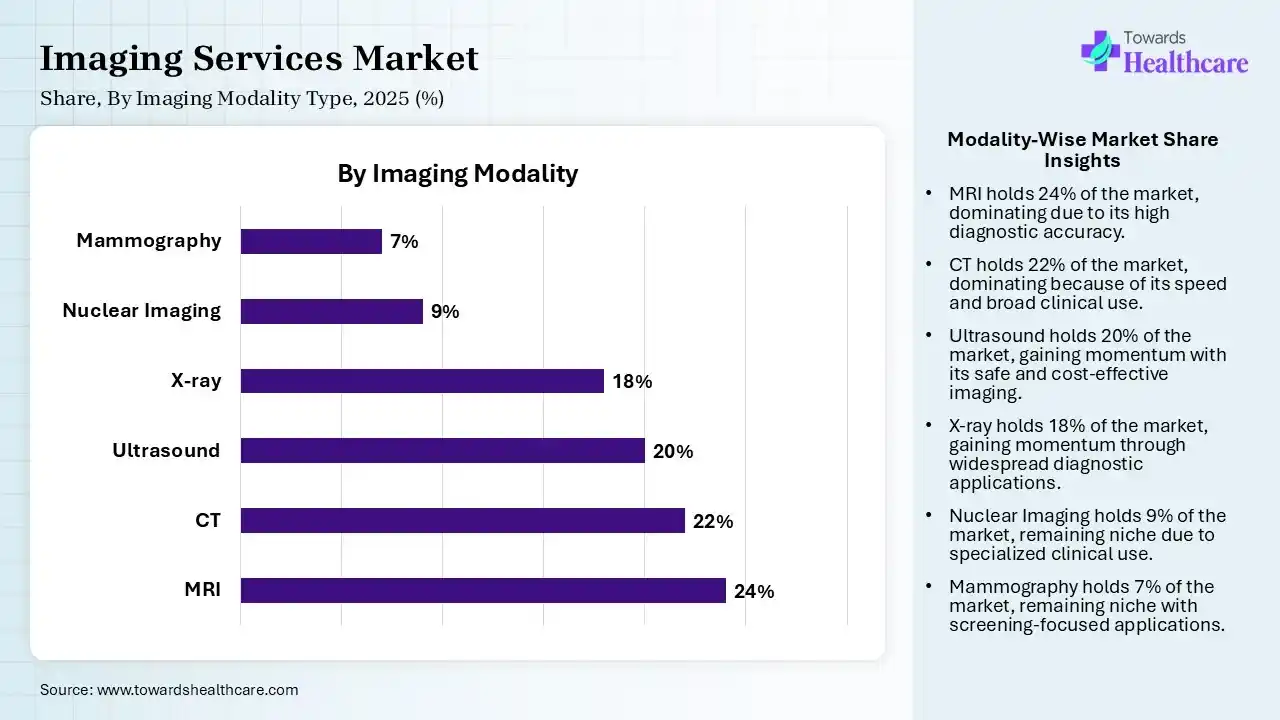
The MRI Segment Dominated the Market With 24% in 2025
The MRI segment accounted for the highest revenue share of 24% of the imaging services market in 2025, driven by superior soft-tissue visualization, which supported clinical adoption. Neurological and musculoskeletal applications also continued to expand, as no ionization radiations also increased their use. Advanced scanners improved image quality, which increased the adoption rates.
The CT segment held the second-largest share of 22% of the market in 2025, due to increasing emergency and trauma imaging, which sustains its demand. Faster scanning capabilities improve patient throughput, and the high accuracy also increases their use. Screening applications continue to increase, driving their adoption for orthopedics, oncology, cardiology, and neurology.
The ultrasound segment held 20% of the imaging services market share in 2025 and is expected to show the highest growth with a CAGR of 8.9% during the forecast period, as portable systems improve accessibility. Point-of-care diagnostics are also gaining momentum. Lower procedural costs are also supporting their wider utilization.
The X-ray segment held 18% of the market share in 2025, driven by high examination volume, which maintains market presence. Digital radiography upgrades improve workflow efficiency, where their broad availability also supports continued use. Their fast imaging procedures and lower operational costs also increase their adoption for the diagnosis of bone disorders and chest diseases.
| Segments | Shares % |
| Oncology | 28% |
| Cardiology | 18% |
| Neurology | 14% |
| Orthopedics | 13% |
| Obstetrics & Gynecology | 10% |
| Pulmonology | 7% |
| Gastroenterology | 5% |
| Others | 5% |
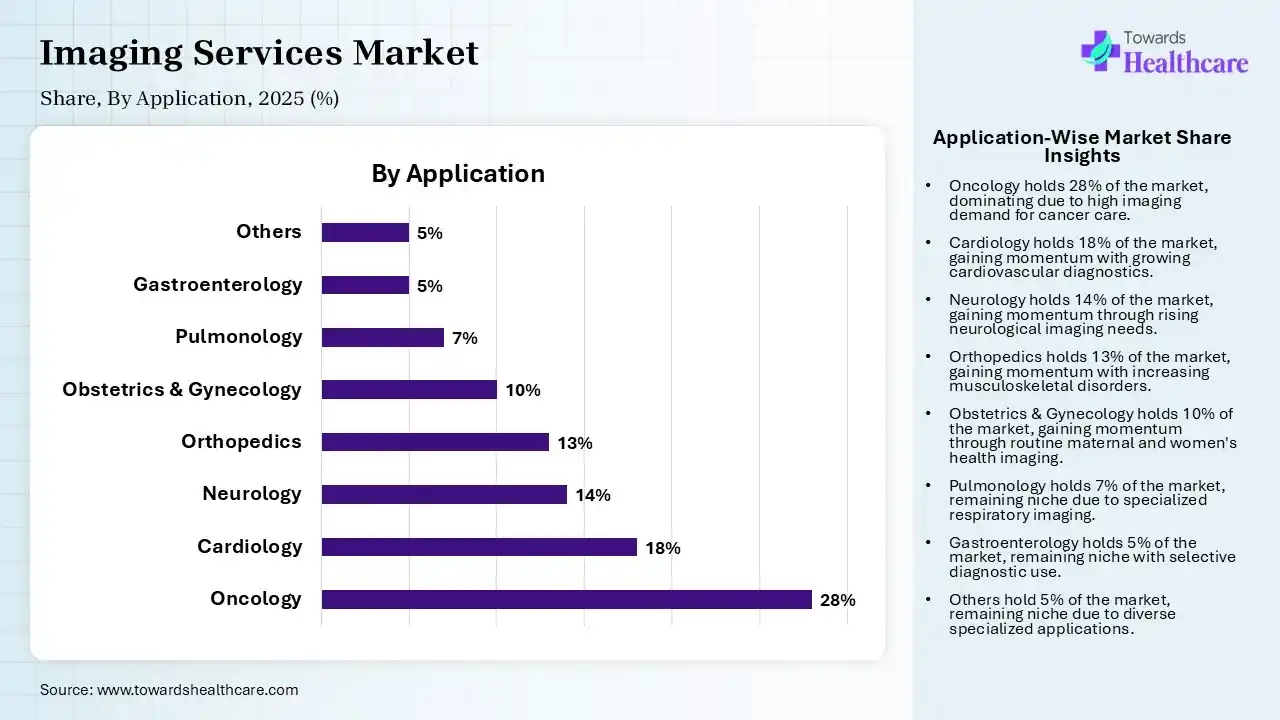
The Oncology Segment Dominated the Market With 28% in 2025
The oncology segment held a major revenue share of 28% of the imaging services market in 2025 and is expected to expand rapidly with a CAGR of 8.80% during the forecast period, due to a rise in cancer incidence, which increases imaging applications. Precision oncology required advanced diagnostic monitoring, which increased the demand for imaging services. Screening programs continued to expand worldwide, encouraging their use.
The cardiology segment held the second-largest share of 18% of the market in 2025, driven by the fact that the prevalence of cardiovascular disease remains high. Advanced cardiac imaging improves treatment planning and drives early disease detection. Increasing demand for minimally invasive procedures and preventive care initiatives also supports their adoption.
The neurology segment held 14% of the imaging services market share in 2025, driven by the growing incidence of neurological disorders, which drives demand. MRI-based diagnostics continue advancing due to their needed neurological assessments. Ageing populations support imaging volumes, where they are also being used for treatment planning and evaluating disease progression.
The orthopedics segment held 13% of the market share in 2025 due to an increase in sports injuries and musculoskeletal disorders, which drive frequent examinations. Imaging also supports surgical planning, where ageing populations require orthopedic assessments. At the same time, the growing demand for joint replacement is also increasing its use.
| Segments | Shares % |
| Hospitals | 48% |
| Diagnostic Imaging Centers | 29% |
| Ambulatory Surgical Centers | 8% |
| Specialty Clinics | 9% |
| Research & Academic Institutes | 6% |
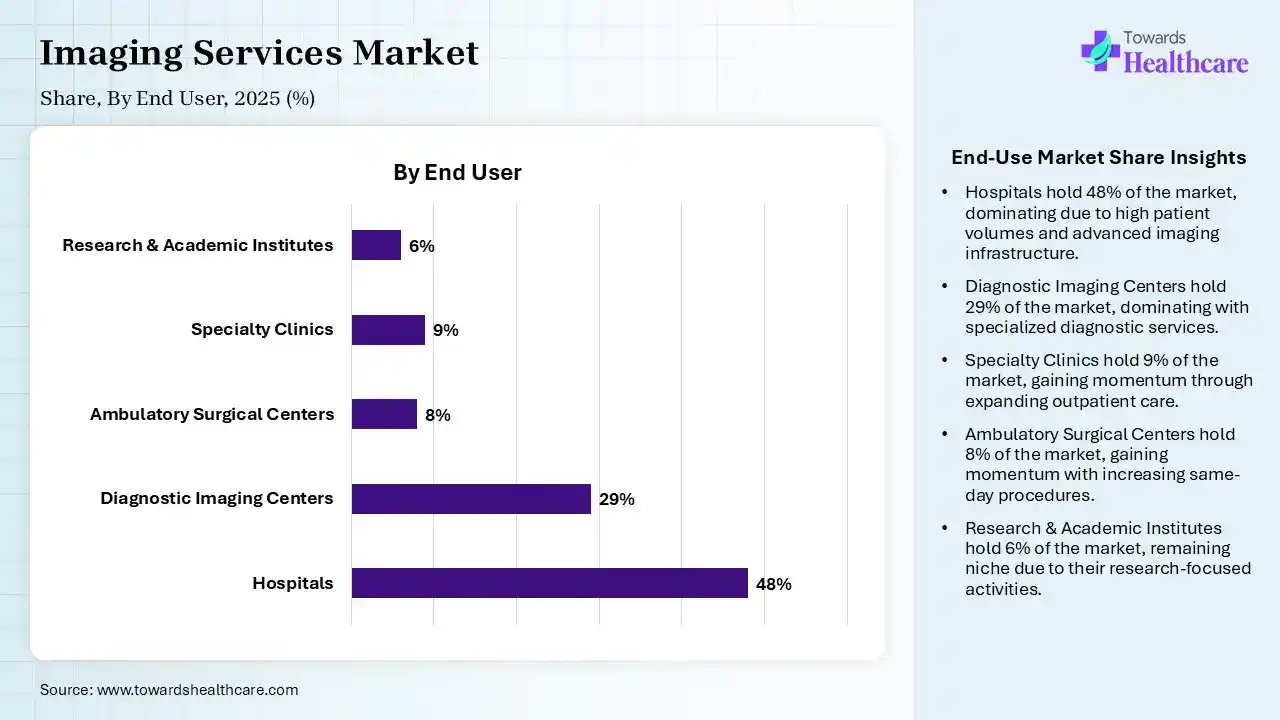
The Hospitals Segment Dominated the Market With 48% in 2025
The hospitals segment contributed the biggest revenue share of 48% of the imaging services market in 2025, driven by large patient volumes, which supported imaging investments. The presence of integrated care delivery also increased the imaging solutions utilization. At the same time, advanced equipment deployment remained concentrated in hospitals, which increased their preference.
The diagnostic imaging centers segment held the second-largest share of 29% of the market in 2025, due to cost-effective outpatient services, which attract patients. Dedicated imaging infrastructure and advanced imaging technologies also improve efficiency, which increases their preference. Network expansion and a wide range of imaging modalities are also supporting their growth.
The specialty clinics segment held 9% of the imaging services market share in 2025, due to specialized diagnostic pathways, which require imaging support. Clinical workflow integration improves accessibility, driving the adoption of imaging services. Disease-focused care models, personalized patient care, and expanding outpatient procedures are also increasing their use.
The research & academic institutes segment held 6% of the market share in 2025 and is expected to gain the highest share with a CAGR of 9.8% during the forecast period, driven by advanced imaging research, which attracts investment. Academic collaborations are also expanding technology adoption. A rise in clinical trial activity is also increasing imaging requirements.
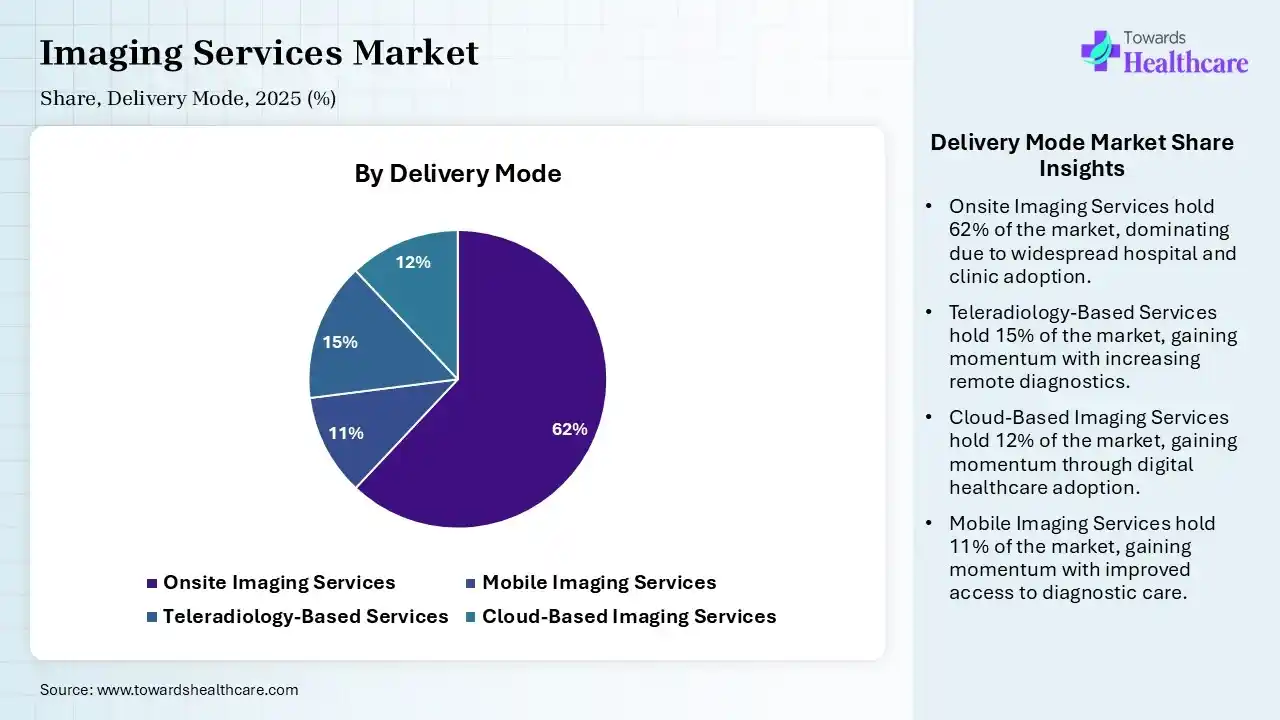
| Segments | Shares % |
| Onsite Imaging Services | 62% |
| Mobile Imaging Services | 11% |
| Teleradiology-Based Services | 15% |
| Cloud-Based Imaging Services | 12% |
The Onsite Imaging Services Segment Dominated the Market With 62% in 2025
The onsite imaging services segment held the largest revenue share of 62% of the imaging services market in 2025, as hospitals continued investing in imaging infrastructure. Immediate access improved patient management, and high examination volumes supported their growth. Additionally, comprehensive imaging services and established workflows also increased their use for complex imaging procedures.
The teleradiology-based services segment held the second-largest share of 15% of the market in 2025 and is expected to grow with the fastest CAGR of 10.6% during the forecast period, driven by remote interpretation, which addresses workforce shortages. Digital image transfer also improves efficiency, which drives its adoption rates. Around-the-clock reporting also supports healthcare providers.
The cloud-based imaging services segment held 12% of the imaging services market share in 2025, as healthcare organizations modernize data management. Cloud platforms improved scalability, ensured storage, and enabled seamless image sharing, which increases their adoption. Interoperability requirements are also supporting their adoption. Their improved workflow efficiency and remote diagnostic support also increase their use.
The mobile imaging services segment held 11% of the market share in 2025 due to enhanced access to rural healthcare, which increases its adoption. Providers seek flexible imaging solutions, which increases their use. At the same time, mobile units reduce infrastructure barriers as well as help in reducing patient travel time.
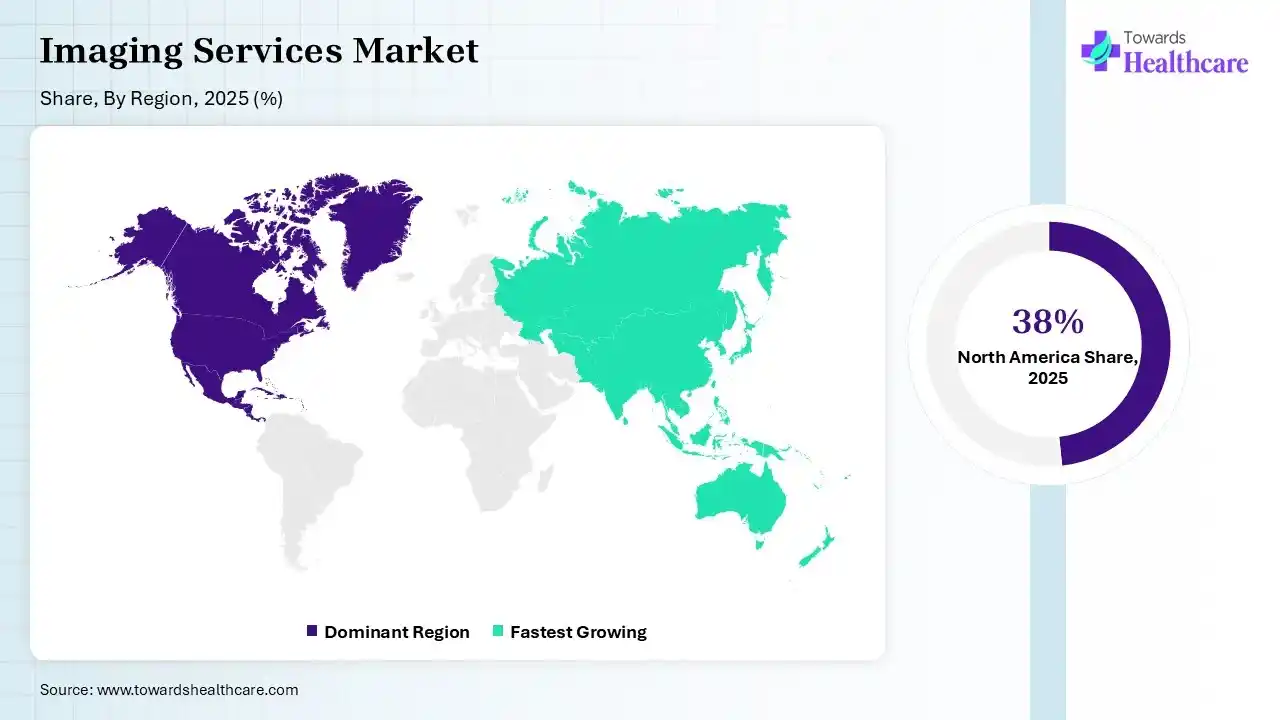
North America dominated the imaging services market with 38% in 2025, due to the presence of advanced healthcare infrastructure, which sustained the demand for imaging services. High imaging utilization supported revenues, where strong reimbursement frameworks also encouraged their adoption. The growth in the chronic disease burden, geriatric population, and healthcare spending also increased their use. Additionally, the presence of major imaging equipment manufacturers also increased the innovations, which contributed to the market growth.
The U.S. held a share of 82% of the imaging services market in 2025 due to high imaging procedure volume, which drives market expansion. Strong reimbursement systems and continuous technology upgrades also supported their adoption. Growth in chronic disease burden, geriatric populations, and investments also increased their use, where a rise in AI solutions and new collaborations among the companies also accelerated innovations.
Canada held a share of 11% of the market in 2025 and is expected to grow at the fastest CAGR of 7.1% during the forecast period, due to growing public healthcare investments, which are increasing imaging capacity. At the same time, the rising chronic disease burden is also supporting the utilization of various imaging services. Expansion of diagnostic infrastructure and shift towards preventive healthcare are also driving their growth.
Asia Pacific held a 23% share of the imaging services market in 2025 and is expected to grow at the fastest CAGR of 10.1% during the forecast period, due to a rise in healthcare spending. Expanding hospital networks increase imaging access, where the large patient populations are also supporting their rapid growth. Increasing health awareness and growing innovations are also encouraging their adoption, as expanding medical tourism is also enhancing the market growth.
China held a share of 33% of the market in 2025, due to a massive patient pool that supports imaging volumes. Healthcare infrastructure expansion also accelerates their adoption, where government investments also drive advanced imaging deployment. At the same time, growing preventive healthcare, advanced imaging technologies, and rapid integration of AI are also driving new opportunities.
India held a share of 16% of the imaging services market in 2025 and is expected to grow with the fastest CAGR of 12.1% during the forecast period, due to rapid healthcare expansion, which increases imaging access. Growing private diagnostic chains and rising chronic disease prevalence are supporting their utilization. An increase in the adoption of advanced imaging technologies is also attracting patients.
R&D
Clinical Trials and Regulatory Approvals
Patient Support and Services
| Companies | Headquarters | Imaging Services |
| Siemens Healthineers AG | Erlangen, Germany | Syngo, MAGNETOM, and SOMATOM |
| FUJIFILM Holdings Corporation | Tokyo, Japan | Aria, FDR, and Synapse |
| GE Healthcare Technologies Inc. | Chicago, U.S. | GE Healthcare imaging & ultrasound solutions |
| Shenzhen Mindray Bio-Medical Electronic Co., Ltd. | Shenzhen, China | MobiEye, Resona, and Nuewa |
| Koninklijke Philips N.V. | Amsterdam, Netherlands | Philips Vue PACS, EPIQ, and IntelliSpace |
| Hologic, Inc. | Massachusetts, U.S. | 3D Mammography, Horizon DXA, and 3Dimensions |
| Canon Medical Systems Corporation | Tokyo, Japan | Aquilion, Alphenix, and Vantage |
In November 2025, a super-premium, next-generation R20 ultrasound system for general imaging was launched by Samsung, where the Head of HME Business, Samsung India, Atantra Das Gupta, expressed, ‘The R20 embodies Samsung’s commitment to advancing healthcare through intelligent innovation. With AI at its core and a focus on both image excellence and clinician comfort, the R20 is a paradigm shift in ultrasound technology, helping doctors ensure detection of lesions during live scanning.’
By Service Type
By Imaging Modalit
By Application
By End User
By Delivery Mode
By Ownership Model
By Region










Principal Consultant
Rohan Patil is a seasoned market research professional with over 5+ years of focused experience in the healthcare sector, bringing deep domain expertise, strategic foresight, and analytical precision to every project he undertakes.
Learn more about Rohan Patil

Reviewed By
Aditi Shivarkar is a seasoned professional with over 14 years of experience in healthcare market research. As a content reviewer, Aditi ensures the quality and accuracy of all market insights and data presented by the research team.
Learn more about Aditi Shivarkar