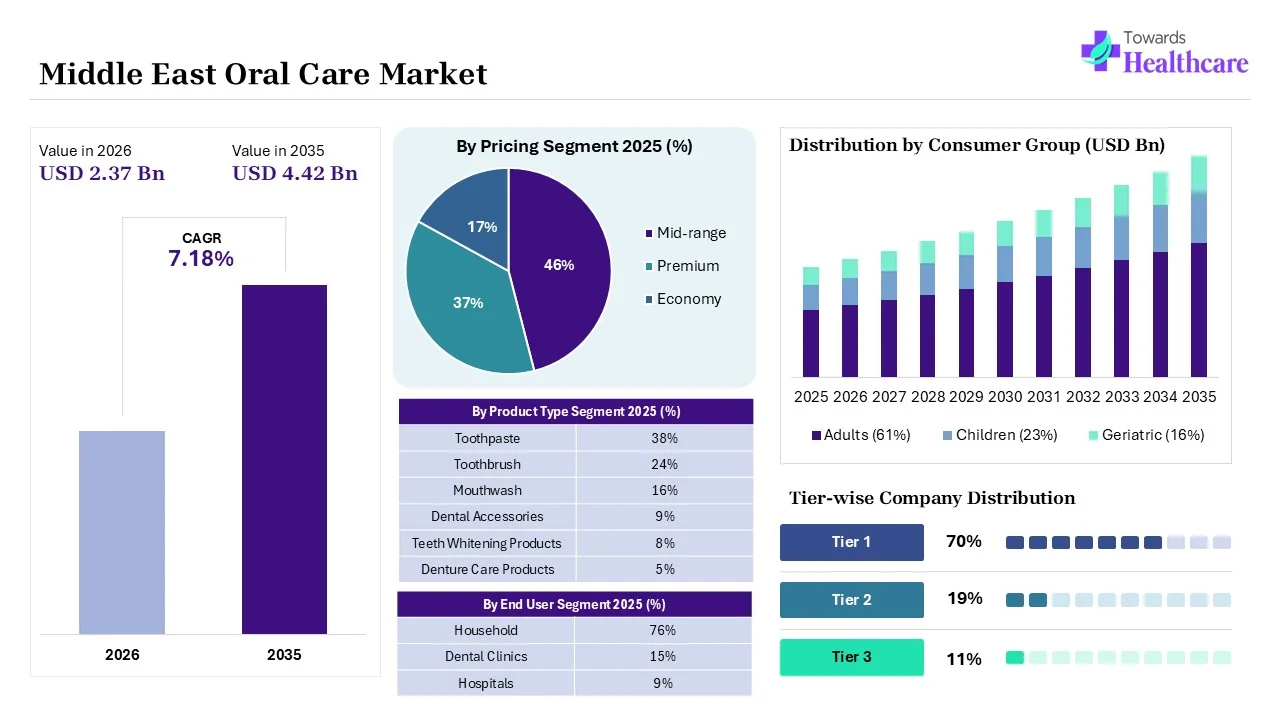
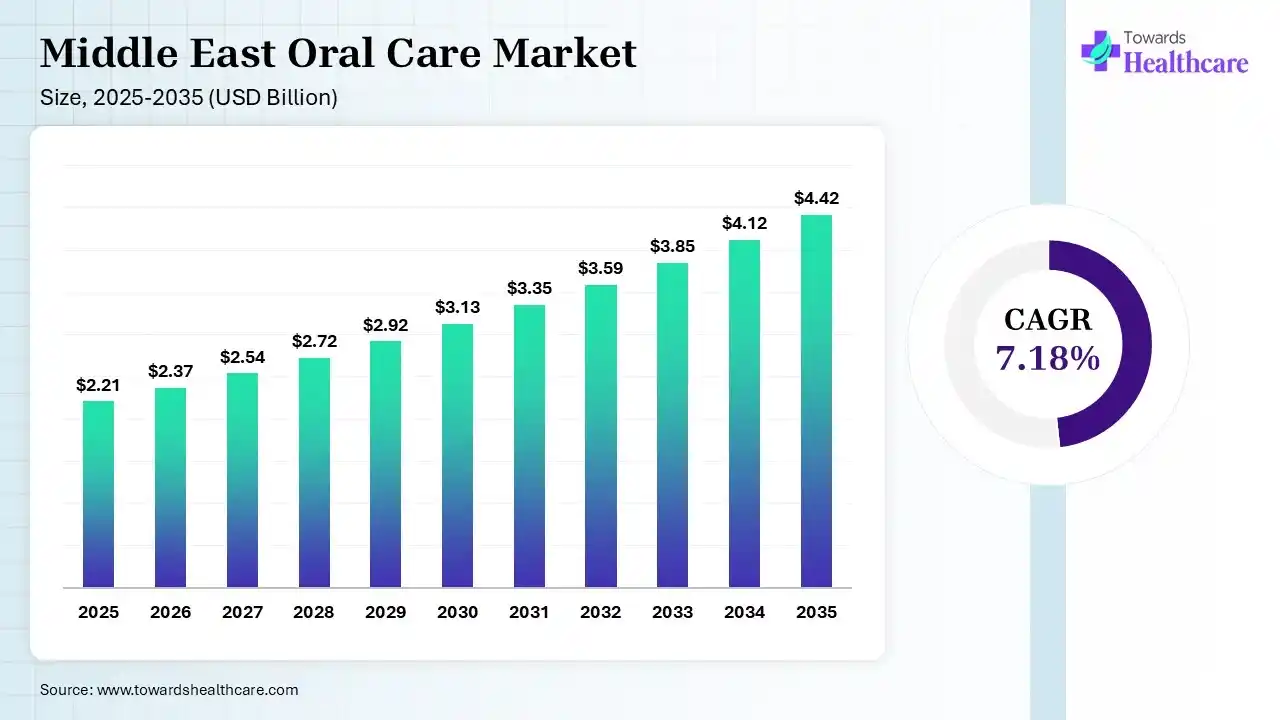
The Middle East oral care market size was reported at US$ 2.21 billion in 2025 and is expected to rise to US$ 2.37 billion in 2026 to reach US$ 4.42 billion by 2035. According to forecasts, it will grow at a CAGR of 7.18% .
The Middle East oral care market encompasses a wide range of products and services designed to maintain oral hygiene, prevent dental diseases, and improve overall dental health, including toothpaste, toothbrushes, mouthwashes, dental floss, whitening products, and professional dental care solutions. The market is experiencing steady growth due to increasing awareness of oral hygiene, rising incidences of dental caries, gum diseases, and lifestyle-related oral health conditions. Rapid urbanization, growing disposable incomes, and expanding access to modern healthcare facilities are encouraging consumers to adopt preventive oral care practices.
Trends such as the rising popularity of herbal and natural oral care products, premium toothpaste formulations, electric toothbrushes, and cosmetic dentistry solutions are reshaping consumer preferences across the region. Furthermore, digital marketing strategies, e-commerce expansion, and greater product availability through pharmacies, supermarkets, and online platforms are improving market penetration and consumer engagement. Growing demand for specialized products addressing sensitivity, whitening, and pediatric oral care is further contributing to market development.
Government initiatives promoting public health awareness and preventive healthcare are playing a significant role in strengthening the oral care landscape across Middle Eastern countries. National healthcare programs, school-based dental screening campaigns, and oral hygiene education initiatives are helping reduce the burden of dental diseases while encouraging routine dental checkups. Investments in healthcare infrastructure, coupled with the expansion of private dental clinics and advanced dental treatment facilities, are supporting market growth.
The increasing adoption of technologically advanced dental equipment and minimally invasive treatment procedures is enhancing patient outcomes and driving demand for complementary oral care products. Looking ahead, the market is expected to benefit from continued innovation in product formulations, growing consumer preference for personalized oral care solutions, and rising integration of digital health technologies. As awareness, affordability, and accessibility continue to improve, the Middle East oral care market is poised for sustained expansion, creating significant opportunities for manufacturers, healthcare providers, and industry stakeholders throughout the forecast period.
The use of AI in oral medicine has spurred the creation of innovative tools that greatly improve dental care. AI algorithms can analyze dental images to identify early decay signs that might go unnoticed by dentists. This technology also allows for continuous tracking of treatment progress, ensuring the best possible results for patients. Smart sensors and monitoring systems offer real-time data, enabling quick and effective adjustments to treatment plans. Additionally, AI-driven educational tools have transformed patient education and prevention strategies. These advanced systems offer interactive learning experiences, helping patients understand their oral health better and maintain good dental hygiene.
Connected Devices: Connected oral care devices are transforming daily dental hygiene by combining advanced cleaning technologies with real-time performance monitoring. Smart electric toothbrushes equipped with motion, pressure, and position sensors track brushing duration, coverage, technique, and force, helping users improve oral care habits. Mobile application integration provides personalized feedback, reminders, and progress reports. Growing consumer interest in preventive healthcare and digital wellness is accelerating adoption, making connected devices a significant trend within oral care.
At-Home Aesthetic Enhancements: At-home aesthetic oral care solutions are gaining popularity as consumers seek convenient and cost-effective methods to improve dental appearance. Whitening products containing carbamide peroxide, whitening strips, gels, and LED-assisted kits are increasingly used to enhance tooth brightness and confidence. Clinical findings indicate that at-home whitening can positively influence oral health-related quality of life, psychosocial well-being, and aesthetic satisfaction. Rising beauty consciousness, social media influence, and demand for self-care products continue to drive the Middle East oral care market growth.
Teledentistry: Teledentistry is reshaping oral healthcare delivery by enabling remote consultations, diagnosis, treatment planning, and patient monitoring through digital communication platforms. The technology helps overcome geographical barriers, particularly in underserved and rural communities, while reducing travel requirements and treatment delays. It also improves affordability by lowering consultation costs and increasing access to professional dental advice. As digital healthcare adoption expands, teledentistry is becoming an essential tool for improving patient engagement and continuity of care.
| Table | Scope |
| Market Size in 2026 | USD 2.37 Billion |
| Projected Market Size in 2035 | USD 4.42 Billion |
| CAGR (2026 - 2035) | 7.18% |
| Historical Data | 2020 - 2023 |
| Base Year | 2025 |
| Forecast Period | 2026 - 2035 |
| Measurable Values | USD Millions/Units/Volume |
| Market Segmentation | By Product Type, By Consumer Group, By Distribution Channel, By Ingredient Type, By End User, By Pricing, By Region |
| Top Key Players | Julphar, SPIMACO, Jamjoom Pharma, Avalon Pharma, Tabuk Pharmaceuticals, Hikma Pharmaceuticals, Gulf Pharmaceutical Industries, Pharco Pharmaceuticals |
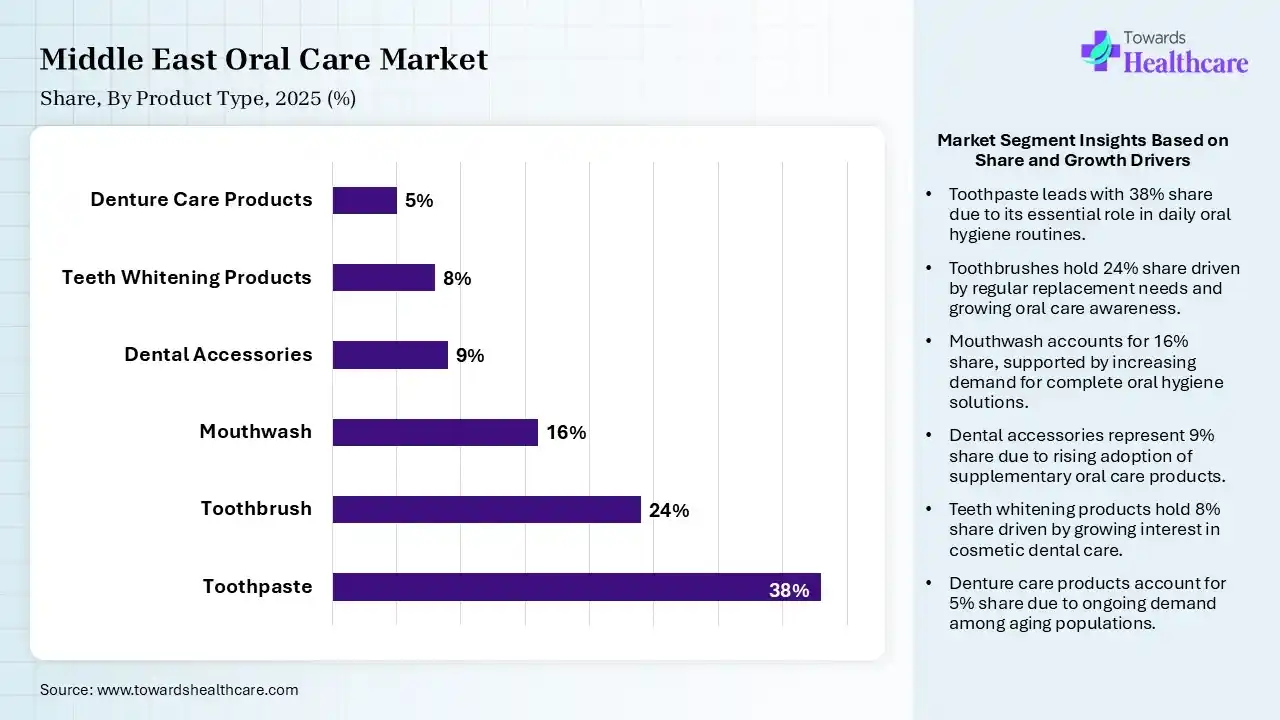
| Segment | Share 2025 (%) |
| Toothpaste | 38% |
| Toothbrush | 24% |
| Mouthwash | 16% |
| Dental Accessories | 9% |
| Teeth Whitening Products | 8% |
| Denture Care Products | 5% |
The Toothpaste Segment Led the Middle East Oral Care Market in 2025
The toothpaste segment contributed the largest market share of 38% in 2025, as toothpaste plays a significant role in preserving appropriate oral hygiene by eliminating plaque and surface stains from teeth, freshening breath, and fighting gum disease and tooth decay. Toothpaste also contains abrasives, like calcium carbonate or silica, that help scrub away plaque and surface stains from the teeth.
The toothbrush segment held a significant share of 24% in 2025. Major toothbrushes come equipped with pressure sensors. Major recent repetitions of electric toothbrushes involve a sensor that alerts if patients are placing too much pressure on their teeth. Brushing teeth helps remove food particles and plaque, a sticky film of bacteria that forms on teeth.
The mouthwash segment held a significant share of 16% in the Middle East oral care market, as it provides that sense of freshness while reducing bad breath odour. It not only freshens breath but also works to destroy the bacteria that cause it. Mouthwash does more than simply freshen breath. Mouthwash helps to lower the chance of getting gingivitis, which causes inflammation of the gums, the soft tissue around the teeth.
The dental accessories segment held a significant share of 9% and is expected to grow at the fastest CAGR of 8.1% during the forecast period, as dental accessories stand out for their increasing manufacturing quality. They are made with medical-grade materials, such as stainless steel, which checks resistance and durability to corrosion. Dental accessories span clinical devices such as loupes, ultrasonic scalers, and diagnostic cameras to household items.
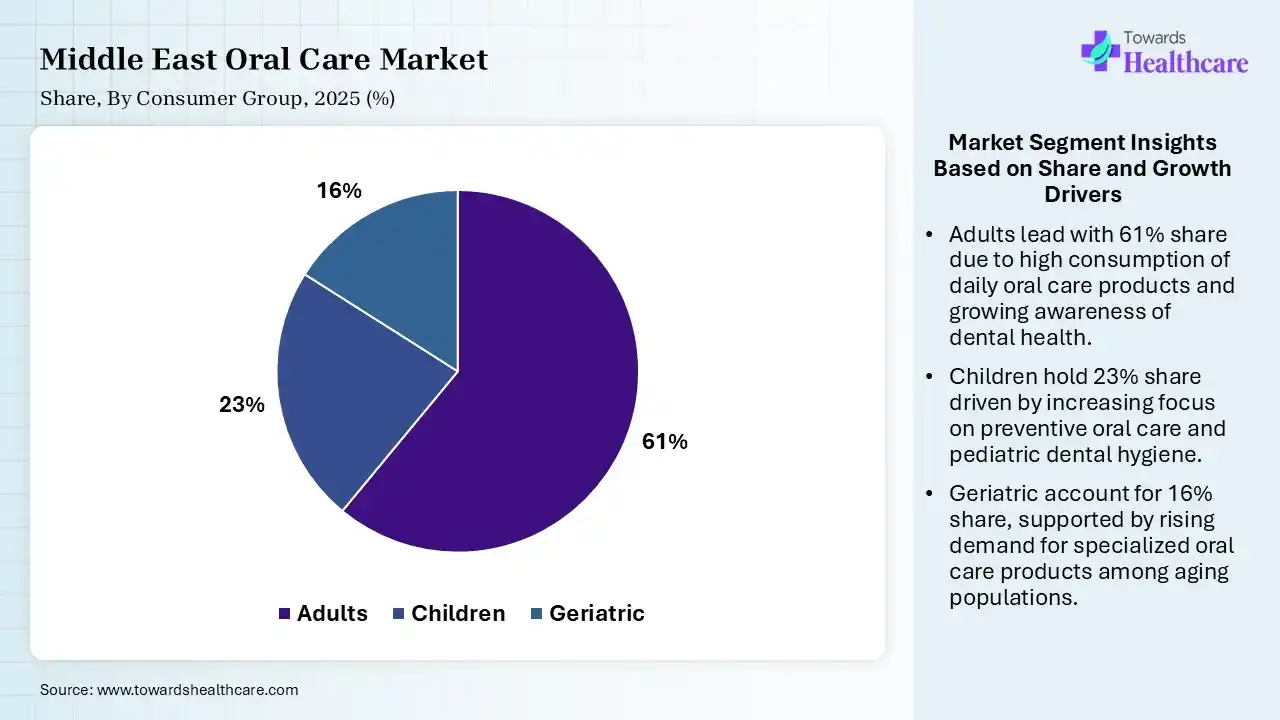
| Segment | Share 2025 (%) |
| Adults | 61% |
| Children | 23% |
| Geriatric | 16% |
The Adults Segment Led the Middle East Oral Care Market in 2025
The adults segment contributed the largest market share of 61%, as good oral hygiene includes preventing gum disease, tooth decay, and bad breath, supporting the maintenance of the condition of the teeth, and enhancing general health. Oral disease is recognised early with regular dental check-up appointments. Advanced treatment eliminates plaque, avoiding cavities and periodontitis.
The children segment held a significant share of 23% of the market, as children's dental care confirms child's primary teeth stay well and free of decay and various dental diseases. Preventive dental care for kids supports care for primary and new permanent teeth.
The geriatric segment held a significant share of 16% of the market and is expected to grow at the fastest CAGR of 8.0% during the forecast period. Geriatric dentistry highlights the significance of steady dental check-ups and cleanings to prevent gum disease and catch it early. Geriatric dentistry is the delivery of dental care to older adults, including the diagnosis, prevention, and treatment of challenges associated with normal aging and age-associated diseases
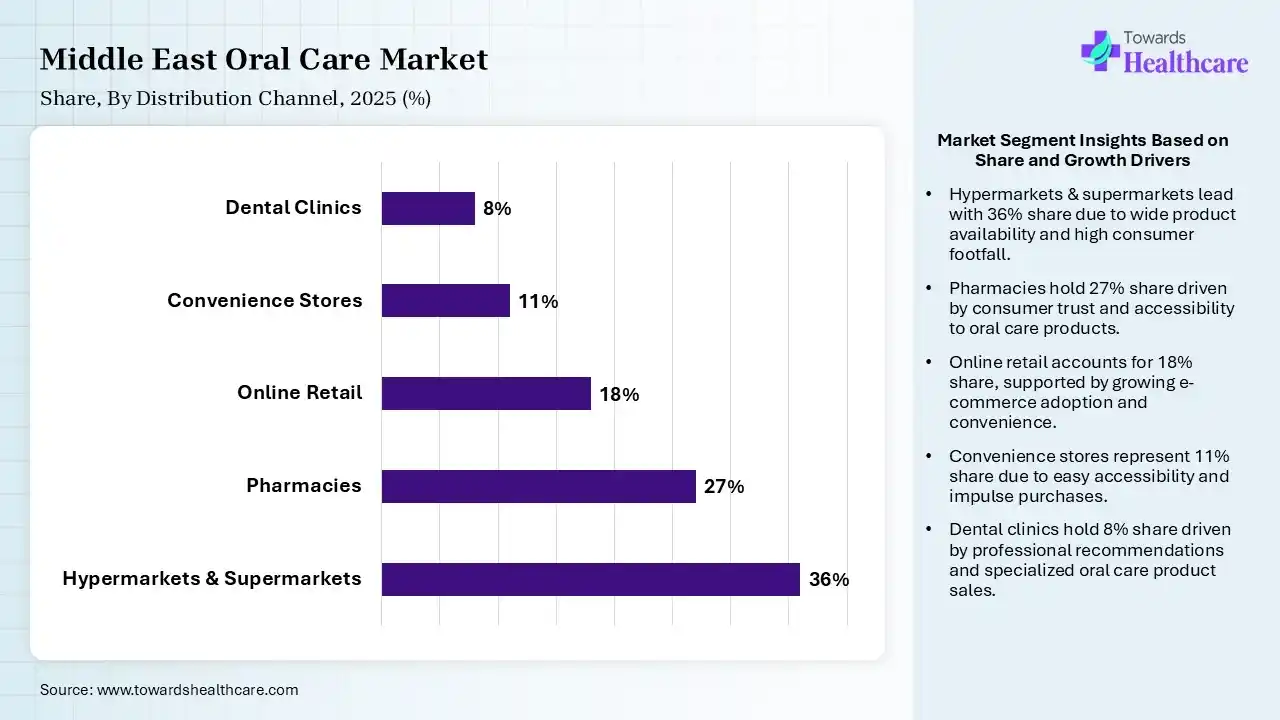
| Segment | Share 2025 (%) |
| Hypermarkets & Supermarkets | 36% |
| Pharmacies | 27% |
| Online Retail | 18% |
| Convenience Stores | 11% |
| Dental Clinics | 8% |
The Hypermarkets & Supermarkets Segment led the Middle East Oral Care Market in 2025
The hypermarkets & supermarkets segment held a significant share of 36% in the market. These markets are traditional and also significant distribution channels for preventive oral care products. These enormous retail outlets offer an extensive view of competing brands. Customers simply compare active ingredients.
The pharmacies segment contributed the largest market share of 27%, as pharmacists are a good source of data, and they enable the offering of advice about caring for oral health. Pharmacies are relevant to oral health in the sense that they provide many products for tooth and gum care: toothbrushes, floss, toothpaste, and mouthwash.
The online retail segment held a significant 18% share of the Middle East oral care market and is expected to grow at the fastest CAGR of 9.1% during the forecast period, as online dental product shopping provides potentially greater variety and convenience as compared to traditional retail, with access to electric toothbrushes, water flossers, and natural toothpaste options which are not available in local pharmacy stores.
The convenience stores segment held a significant share of 11% in the market, as these stores have access to online patient forms, and a diversity of solutions are all significant parts of a patient-driven strategy. Convenience stores are lifesavers for oral care because of their instant accessibility, lengthy operating hours, and extensive locations.
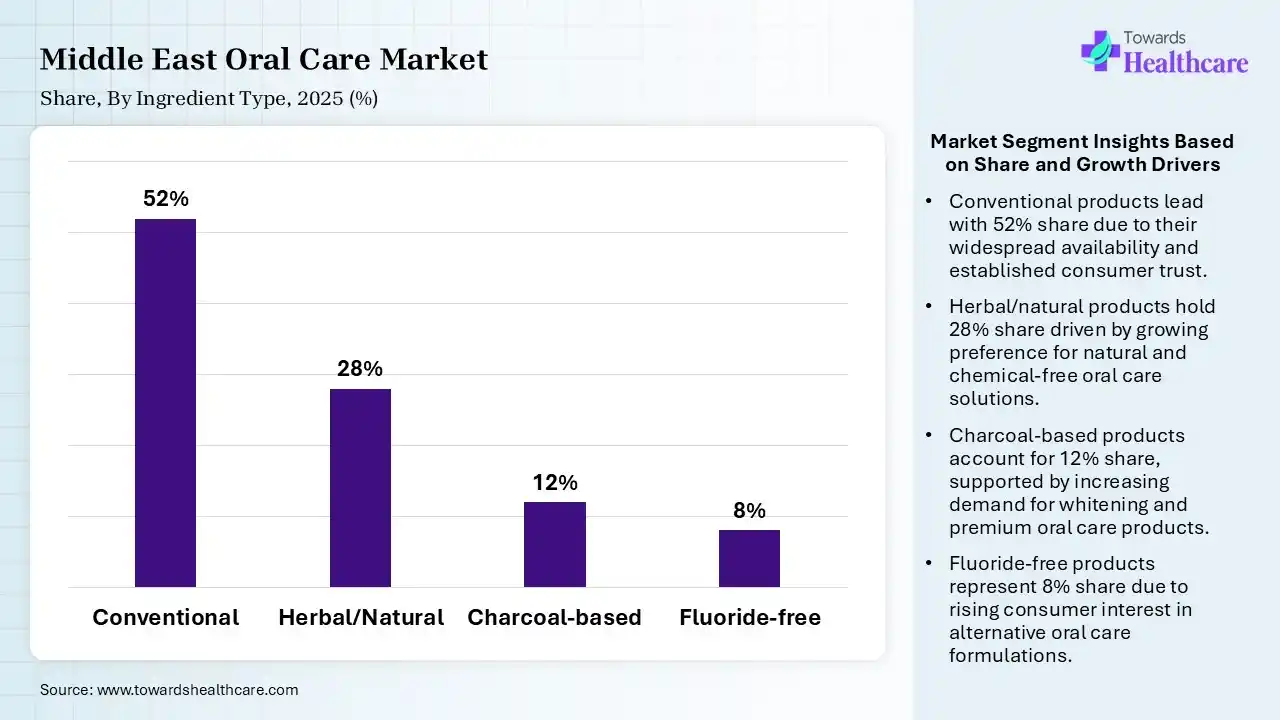
| Segment | Share 2025 (%) |
| Conventional | 52% |
| Herbal/Natural | 28% |
| Charcoal-based | 12% |
| Fluoride-free | 8% |
The Conventional Segment led the Middle East Oral Care Market in 2025
The conventional segment contributed the largest market share of 52%. Conventional dentistry covers significant treatments that protect oral health, restore damaged teeth, and help long-term dental wellness for each patient.
The herbal/natural segment held a significant share of 28% in the market and is expected to grow at the fastest CAGR of 8.5% during the forecast period, as herbal products are progressively used as sedatives, agents for lowering plaque, and for supporting healthy gums. These natural remedies show a promising way to help oral health while lowering the challenges linked to conventional treatments.
The charcoal-based segment held a significant share of 12% in the Middle East oral care market, as charcoal toothpaste comprises activated charcoal, which has an enlarged surface area compared to plain charcoal. Charcoal-driven whitening toothpastes are supposed to whiten teeth by adsorbing pigments, chromophores, and stains from the surfaces. Charcoal offers a gentle exfoliation for the teeth, helping in the removal of plaque and tartar build-up.
The fluoride-free segment held a significant share of 8% in the market, as this formula physically cleans the teeth, eliminating any build-up. Fluoride-free toothpaste provides a safe, natural, and efficient service for oral care. It lowers chemical exposure or holds a holistic existence; it’s an excellent choice for a daily routine.

| Segment | Share 2025 (%) |
| Household | 76% |
| Dental Clinics | 15% |
| Hospitals | 9% |
The Household Segment led the Middle East Oral Care Market in 2025
The household segment contributed the largest market share of 76%, as household oral hygiene promotes consistent dental care habits in the household members, lowering bacterial transmission. By offering dental care in a familiar environment, patients feel more relaxed and relaxed, which creates the entire experience less stressful for both the patient and the dentist.
The dental clinics segment held a significant share of 15% in the market and is expected to grow at the fastest CAGR of 8.2% during the forecast period. Dental clinics provide fillings for cavities and crowns to restore damaged teeth, enhancing both function and appearance. Dental clinics offer complete oral care by integrating preventive management, advanced diagnostics, and specialist solutions under dental clinics.
The hospitals segment held a significant share of 9% in the market, as hospitals have advanced diagnostic devices like dedicated X-rays (CBCT), consistent operating rooms, and tools for high-risk technology, allowing precise diagnosis and lowering management risks, particularly in problematic wisdom tooth extractions or treatments near significant nerves.
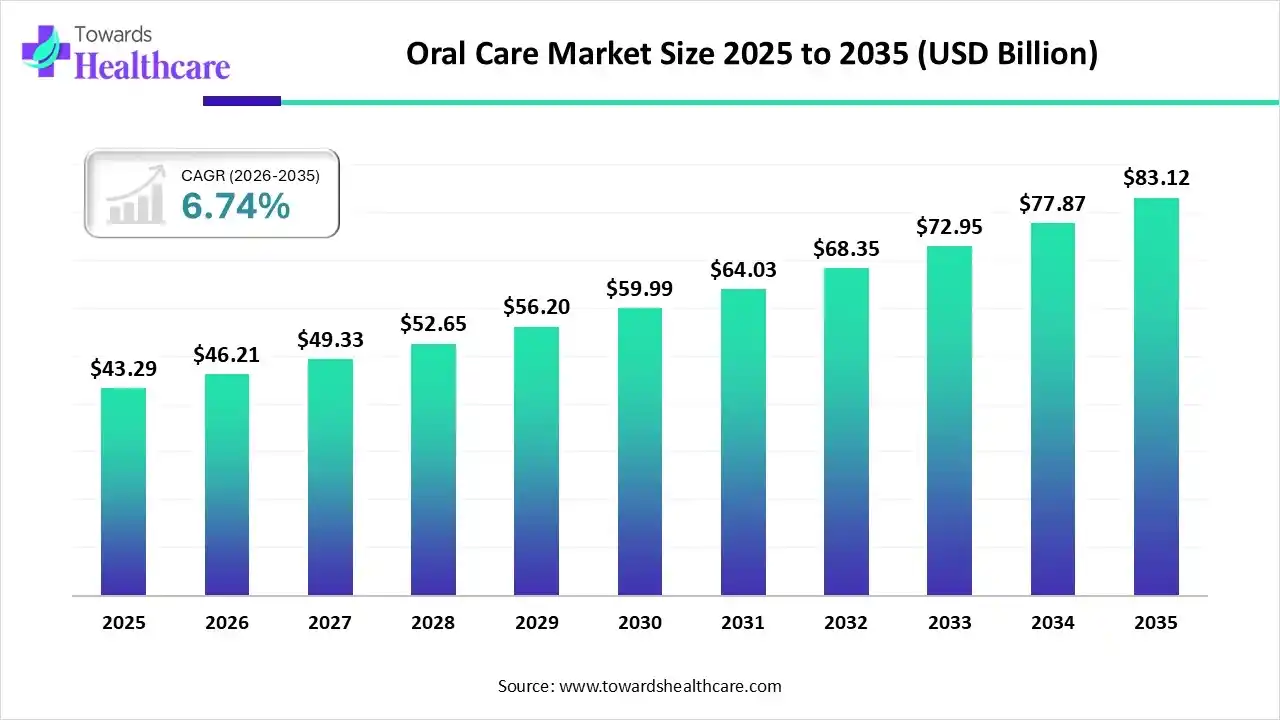
The oral care market was estimated at US$ 46.21 billion in 2026 and is projected to grow to US$ 83.12 billion by 2035, rising at a compound annual growth rate (CAGR) of 6.74% from 2026 to 2035.
The Middle East oral care market is expanding due to increasing awareness of oral hygiene, preventive dental care, and growing incidences of dental disorders. Consumers are adopting daily oral care routines, while educational campaigns and healthcare initiatives encourage regular dental checkups, supporting demand for toothpaste, mouthwash, and advanced oral health products.
Saudi Arabia represents a major growth market, driven by rising disposable incomes, urbanization, and healthcare investments. Consumers increasingly prefer premium oral care products, including whitening toothpaste, sensitivity treatments, and electric toothbrushes. Government health programs promoting preventive care and expanding dental services further strengthen market growth across the kingdom.
The UAE oral care market benefits from high consumer spending, advanced healthcare infrastructure, and strong adoption of innovative products. The growing popularity of smart toothbrushes, cosmetic dentistry, and premium oral hygiene solutions drives demand. Expanding e-commerce channels and increasing interest in wellness-focused lifestyles continue to support sustained market development and expansion.
Qatar’s oral care market is growing through government-backed health awareness campaigns, expanding dental facilities, and increasing focus on preventive healthcare. Rising healthcare expenditure and greater access to professional dental services encourage oral hygiene product adoption. Educational programs targeting children and older adults further contribute to long-term market development nationwide.
| Company | Headquarters | Key Oral Care Products/Services | Strategic Initiatives | Role in the Middle East Oral Care Market |
| Julphar | Ras Al Khaimah, UAE | Medicated oral care formulations, mouth rinses, pharmaceutical dental products | Expanding consumer healthcare portfolio and regional distribution networks | Supports oral disease management and improves accessibility of oral healthcare products across GCC markets. |
| SPIMACO | Qassim, Saudi Arabia | Therapeutic oral preparations, antiseptic solutions, and healthcare products | Investment in local pharmaceutical manufacturing and healthcare innovation | Strengthens domestic production capabilities and reduces dependence on imported healthcare products. |
| Jamjoom Pharma | Jeddah, Saudi Arabia | Oral hygiene solutions, healthcare, and consumer wellness products | Expansion of the consumer health segment and regional partnerships | Enhances availability of oral care products through extensive retail and pharmacy channels. |
| Avalon Pharma | Riyadh, Saudi Arabia | Oral ulcer treatments, antiseptic oral formulations, and healthcare products | Focus on specialty healthcare products and product diversification | Addresses therapeutic oral care needs and supports preventive dental health initiatives. |
| Tabuk Pharmaceuticals | Tabuk, Saudi Arabia | Prescription and OTC healthcare products supporting oral health | Strengthening manufacturing capacity and regional market reach | Contributes to broader oral healthcare access across Middle Eastern countries |
| Hikma Pharmaceuticals | Amman, Jordan | Oral health medications, antiseptic formulations, and healthcare solutions | Expanding regional healthcare portfolio and distribution footprint | Supports treatment and management of oral health conditions throughout the region |
| Gulf Pharmaceutical Industries (GulfPhar) | Dubai, UAE | Oral healthcare formulations, mouthwashes, therapeutic products | Investment in product development and healthcare partnerships | Enhances local supply of oral healthcare products and strengthens regional market resilience |
| Pharco Pharmaceuticals | Alexandria, Egypt | Oral care therapeutics, antiseptic products, healthcare solutions | Expanding production facilities and export capabilities | Serves growing demand for affordable oral healthcare products across the Middle East |
In January 2026. “We are proud to launch this landmark event in Dubai, which represents a transformative step for the global dental industry. Dubai Dental Week is set to unite the entire dental ecosystem, professionals, educators, innovators, and the public through a citywide platform that promotes knowledge sharing, advanced education, and innovation-driven practices,” Dr Abdulsalam AlMadani, chairman of AEEDC Dubai and the Global Scientific Dental Alliance, said.
By Product Type
By Consumer Group
By Distribution Channel
By Ingredient Type
By End User
By Pricing
By Region











Principal Consultant
Shivani Zoting is a dedicated research analyst specializing in the healthcare industry. With a strong academic foundation, a B.Sc. in Biotechnology and an MBA in Pharmabiotechnology, she brings a unique blend of scientific understanding and strategy.
Learn more about Shivani Zoting
Reviewed By
Aditi Shivarkar is a seasoned professional with over 14 years of experience in healthcare market research. As a content reviewer, Aditi ensures the quality and accuracy of all market insights and data presented by the research team.
Learn more about Aditi Shivarkar