

Pipeline Programs

CGT Companies Tracked

Manufacturing Facilities


The global NEAA cell culture supplements market size was estimated at USD 1.25 billion in 2025 and is predicted to increase from USD 1.36 billion in 2026 to approximately USD 2.93 billion by 2035, expanding at a CAGR of 8.9% from 2026 to 2035. The NEAA cell culture supplements market is growing because it provides a more comprehensive amino acid composition, promotes cell growth and propagation, and improves cell culture conditions.
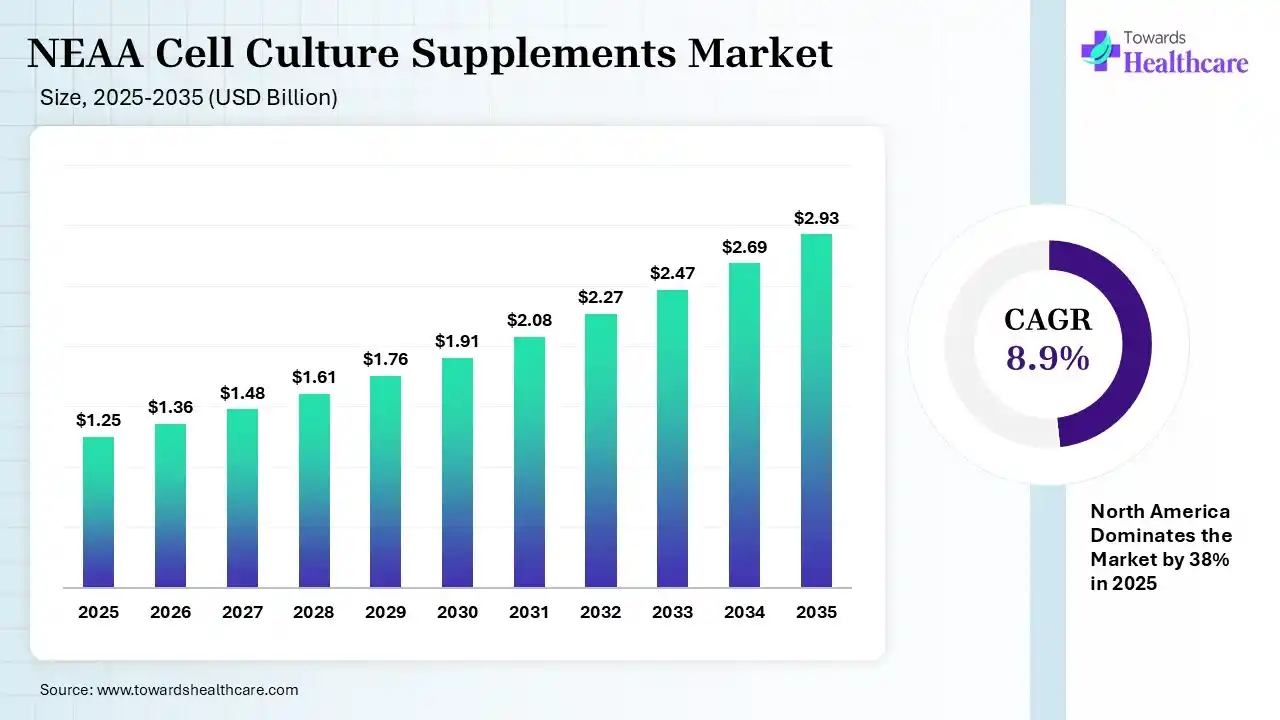
The NEAA cell culture supplements market is growing as it is used as a supplement for cell culture medium, in order to increase cell viability and growth. It improves research in cell function, metabolic pathways, and protein interactions. These various functions involve offering precursors for the biosynthesis of macromolecules, controlling redox status and antioxidant systems, and helping as substrates for post-translational and epigenetic alterations.
AI-driven technology allows automated, real-time, and quantitative monitoring of cell cultures, lowering operator-dependent variability and helping standardize workflows. AI-based technology platforms, such as Media Assist, analyze databases of media components involving amino acids to expect optimal concentrations based on stability, solubility, and particular uptake rates, lowering the requirement for extensive experimental trials. AI-driven and mechanistic modeling are redesigning cell line development to help with more reliable protein manufacturing. AI-driven technology allows the rapid design of serum-free, chemically defined media by simulating the effects of various component combinations, speeding up the creation of effective and sustainable cell culture protocols. An AI-based technology application that performs precise, unbiased, label and reagent-free cell analyses from basic cell culture images.
Shift Toward Chemically Defined and Serum-Free Media:
The regenerative medicine sector is shifting towards serum- and animal component-free media. This is significantly due to the increased consistency, enhanced safety profiles, and simplified regulatory pathways for chemically clear media culture technology.
Rapid Growth in Cell and Gene Therapy:
The rapid growth of cell & gene therapy is exposing a significant skills gap in the industry. CGTs made a paradigm shift in drug advancement, with rapid growth and emerging technologies. It shows a transformative advance in modern medicine.
Advancements in 3D Cell Culture:
3D culture models are evolving as a significant research device that recapitulates in vivo characteristics. Technological development in this sector shows promising applications in enhancing drug discovery, pre-clinical validation, and precision medicine.
| Table | Scope |
| Market Size in 2026 | USD 1.36 Billion |
| Projected Market Size in 2035 | USD 2.93 Billion |
| CAGR (2026 - 2035) | 8.9% |
| Leading Region | North America by 38% |
| Historical Data | 2020 - 2023 |
| Base Year | 2025 |
| Forecast Period | 2026 - 2035 |
| Measurable Values | USD Millions/Units/Volume |
| Market Segmentation | By Product Type, By Application, By Technique, By End User, By Cell Type, By Distribution Channel, By Region |
| Top Key Players | Corning Incorporated, HiMedia Laboratories, Capricorn Scientific, Captivate Bio, PAN-Biotech |
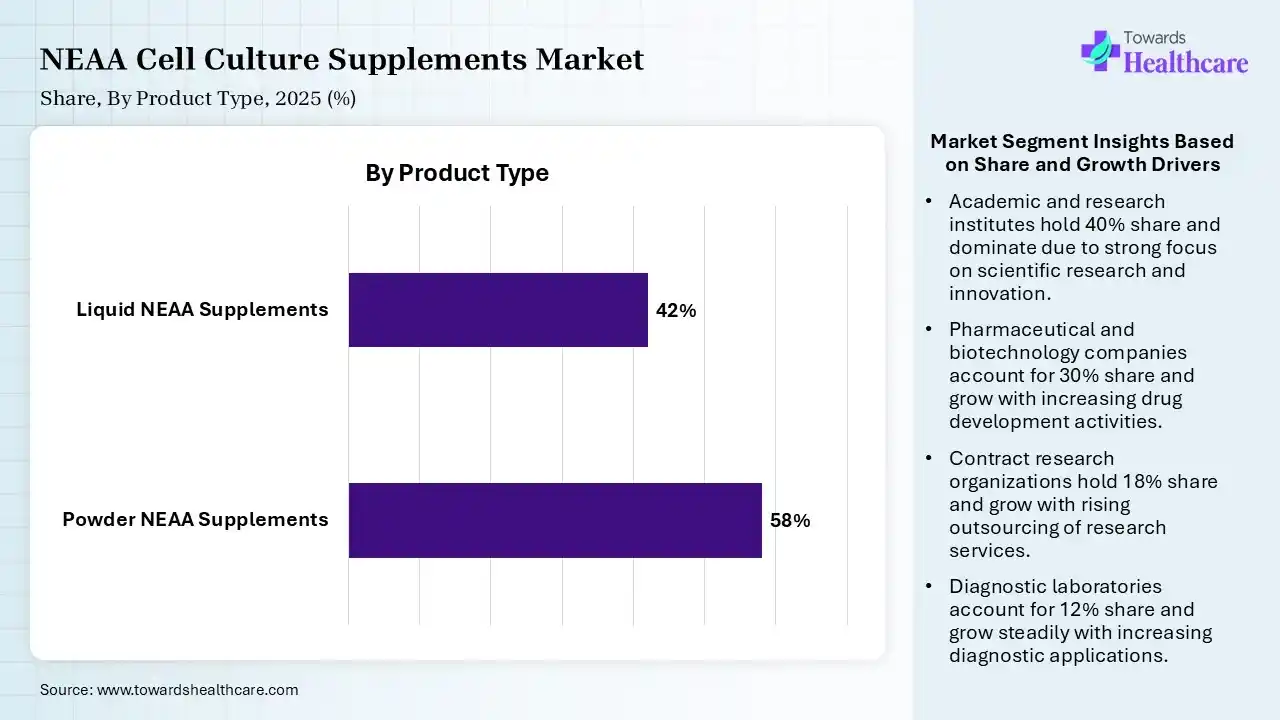
| Segment | Share 2025 (%) |
| Powder NEAA Supplements | 58% |
| Liquid NEAA Supplements | 42% |
The Powder NEAA Supplements Segment Led the NEAA Cell Culture Supplements Market in 2025
The powder NEAA supplements segment contributed the largest market share of 58% in 2025, as this specific powder form of NEAAs, such as proline and glycine, is central to collagen deposition and connective tissue repair. They are significant for mucosal healing in the gut, lowering intestinal atrophy during illness. NEAA enhances the activity of antioxidants and maintains a balance of cells in the plant. The stabilization of the metabolic process of producing enables continued growth and the advancement of crops under a variety of environmental conditions.
The liquid NEAA supplements segment held a significant share of 42% in the market, and is expected to grow at the fastest CAGR if 10.30% during the forecast period, as liquid NEAA supplements make a significant substitute for traditional therapy. It increases the effectiveness of nutrient utilization, which is significant for preventing metabolic syndrome in humans and animals and for sustaining animal agriculture. Liquid amino acids also play a significant role in regulating cellular energy and improving lipid metabolism.
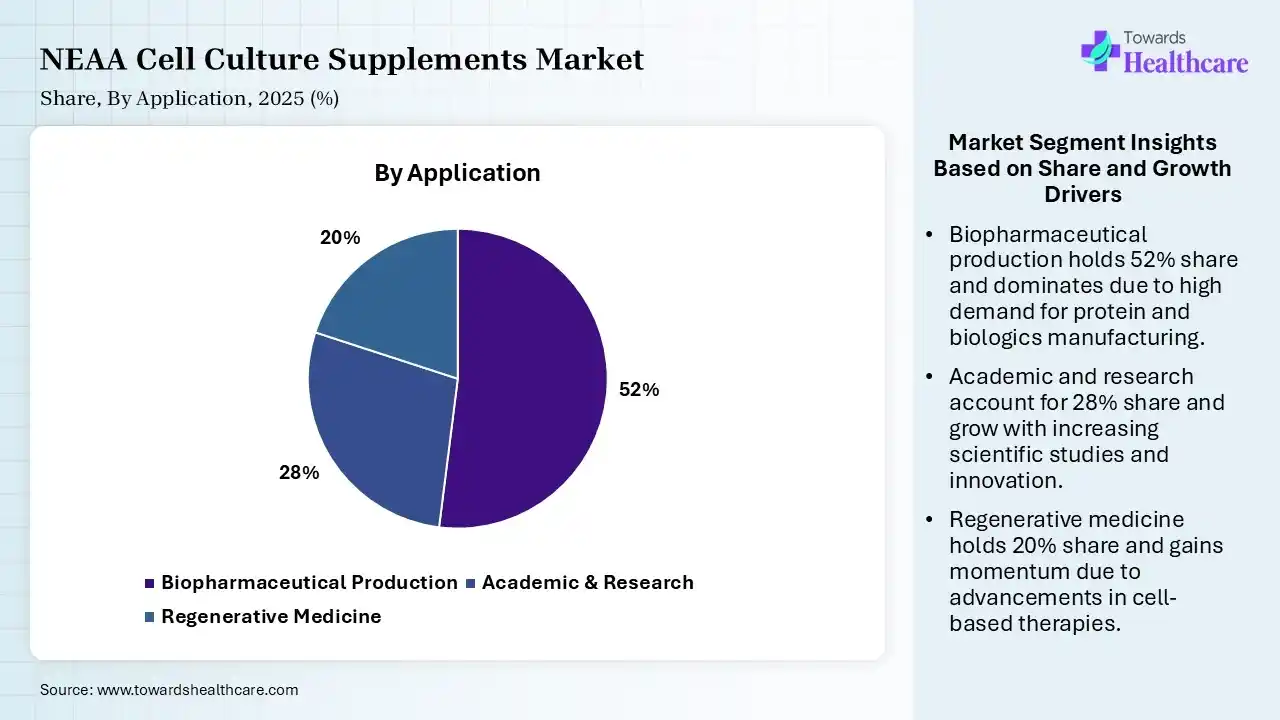
| Segment | Share 2025 (%) |
| Biopharmaceutical Production | 52% |
| Academic & Research | 28% |
| Regenerative Medicine | 20% |
Biopharmaceutical Production Segment Led the NEAA Cell Culture Supplements Market in 2025
The biopharmaceutical production segment contributed the largest market share of 52%, as it offers precursors for the biosynthesis of macromolecules, regulatory redox status and antioxidant systems, and serves as substrates for post-translational and epigenetic modifications. It plays a significant role in biopharmaceutical advancement, regenerative medicine, and cell biology research. It offering non-essential amino acids (NEAAs) has a positive effect on CHO cell biomass manufacturing.
The academic & research segment held a significant share of 28% of the NEAA cell culture supplements market. NEAA enhanced the effectiveness of nutrient utilization, which is significant for preventing metabolic syndrome in humans and animals and for sustaining animal agriculture to offer high-quality food protein for the increasing population.
The regenerative medicine segment held a significant share of 20% of the market, and is expected to grow at the fastest CAGR of 11.40% during the forecast period, as regenerative medicine is its capability to improve the body's natural healing process. Those therapies repair damaged tissues more efficiently, resulting in faster recovery and lower pain. Regenerative medicine holds significant potential in the realm of anti-aging.
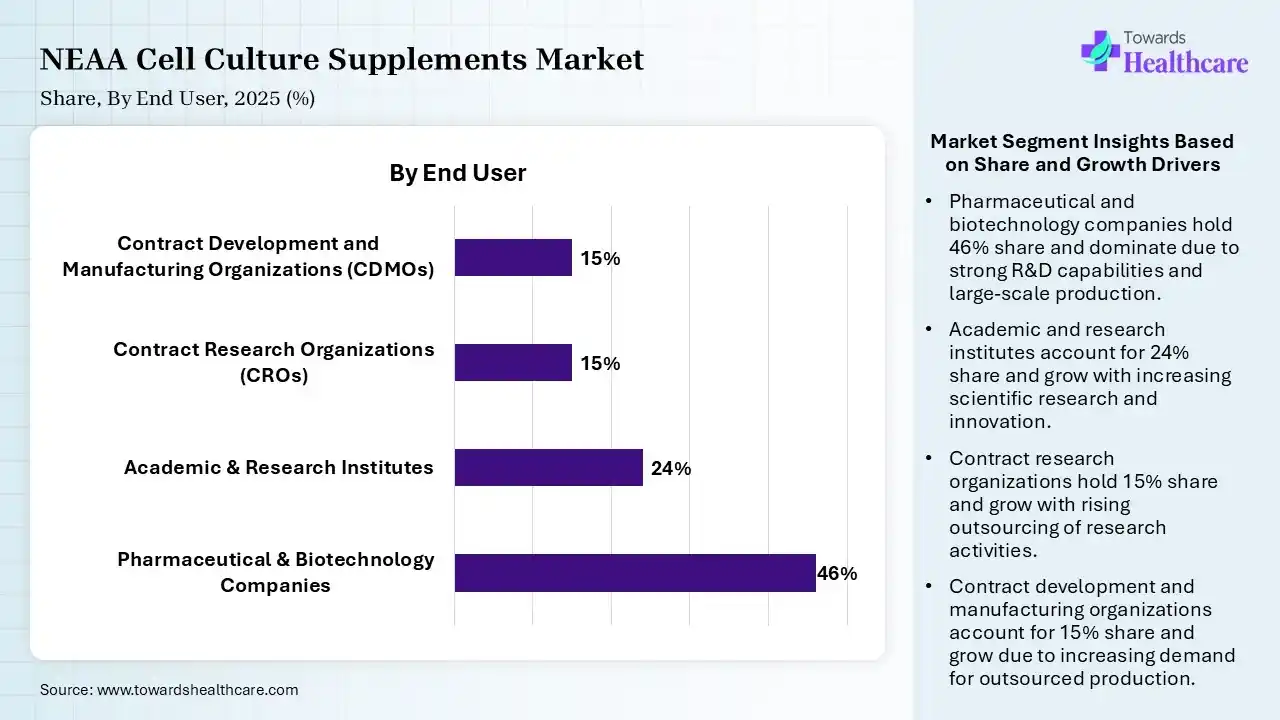
| Segment | Share 2025 (%) |
| Pharmaceutical & Biotechnology Companies | 46% |
| Academic & Research Institutes | 24% |
| Contract Research Organizations (CROs) | 15% |
| Contract Development and Manufacturing Organizations (CDMOs) | 15% |
Pharmaceutical & Biotechnology Companies Segment Led the NEAA Cell Culture Supplements Market in 2025
The pharmaceutical & biotechnology companies segment contributed the largest market share of 46%, as various types of amino acids and their derivatives form a significant part of biochemistry and molecular biology, playing significant roles in almost entirely biological technology. The non-essential amino acid (NEAA) cell culture supplements sector plays a significant role in biopharmaceutical advancement, regenerative medicine, and cell biology research. NEAAs are significant for helping the growth and maintenance of cultured cells, thereby improving experimental results.
The academic & research institutes segment held a significant share of 24% in the market, as NEAA enhances the effectiveness of nutrient utilization, which is significant for preventing metabolic disease in humans and animals and for supporting animal agriculture to offer high-quality food protein for the increasing population. NEAA reactions provide high levels of amplification effectiveness and exponentially increase a target nucleic acid over a short period of time.
The contract research organizations (CROs) segment held a significant share of 15% in the NEAA cell culture supplements market, as CROs play a significant role in confirming clinical trials (CTs) are performed in line with ethical and government requirements, eventually to support the advancement of novel drugs that are advantageous to patients worldwide. CROs are to drive the drug development process by managing different features of clinical trials.
The contract development and manufacturing organizations (CDMOs) segment held a significant share of 15% in the market, and is expected to grow at the fastest CAGR of 10.60%% during the forecast period, as contract manufacturing organizations excessive option for healthcare and biotech organizations looking to outsource their manufacturing requirement. Outsourcing CDMOs helps to save around 30-35% of the overall expenses of the medicine development to the manufacturing process.
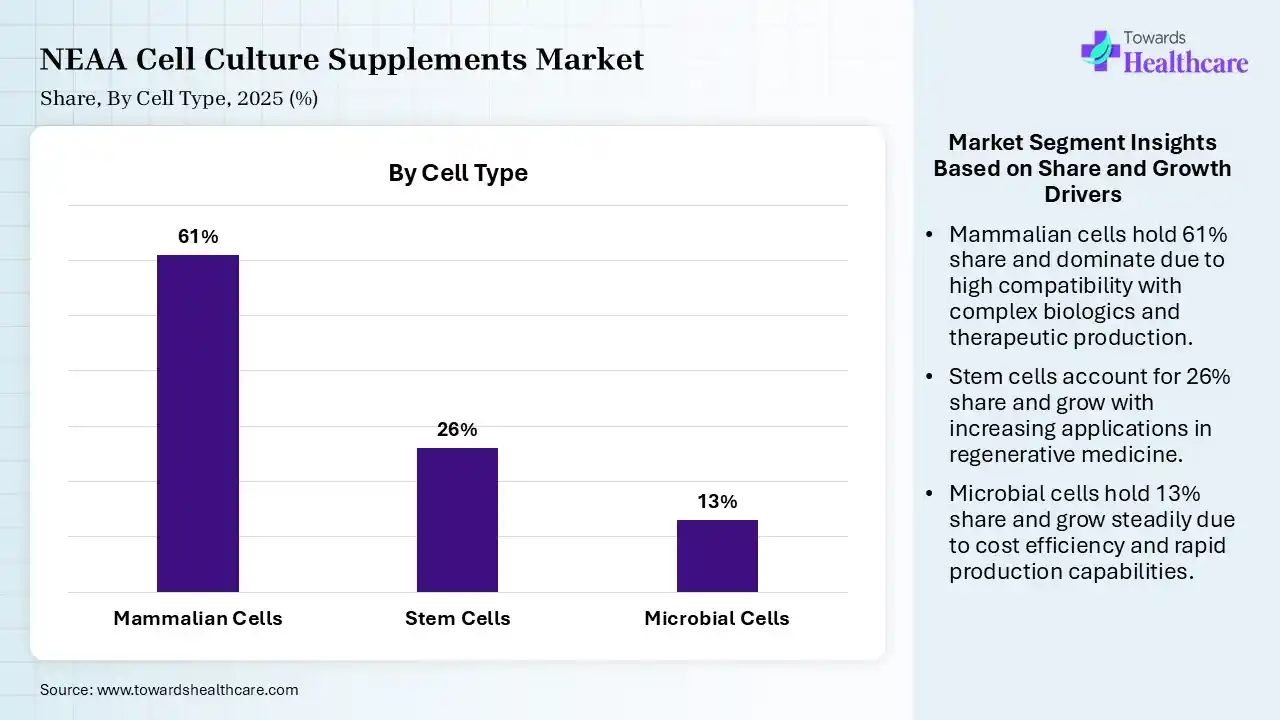
| Segment | Share 2025 (%) |
| Mammalian Cells | 61% |
| Stem Cells | 26% |
| Microbial Cells | 13% |
Mammalian Cells Segment Led the NEAA Cell Culture Supplements Market in 2025
The mammalian cells segment contributed the largest market share of 61%, as mammalian cells offer the post-translational alterations; so, mammalian cell lines are recently preferred for the production of recombinant urokinase. Mammalian cell systems are significant tools for understanding protein expression, gene function, and cell physiology.
The stem cells segment held a significant share of 26% in the NEAA cell culture supplements market, and is expected to grow at the fastest CAGR of 11.20% during the forecast period, as stem cell technology is exclusive in that it possesses both diagnostic and therapeutic strength. Stem cells involve their capability to lower inflammation, modulate immune responses, and encourage tissue repair.
The microbial cells segment held a significant share of 13% in the market, as it is useful in producing efficient antibodies and other medical products. Microbiological culture serves as a significant research process in molecular biology for multiplying and researching microbial organisms. It is significant for education and microbiology research. Microbial processes typically grow rapidly, tolerate stronger combinations, and demand high oxygen transfer.
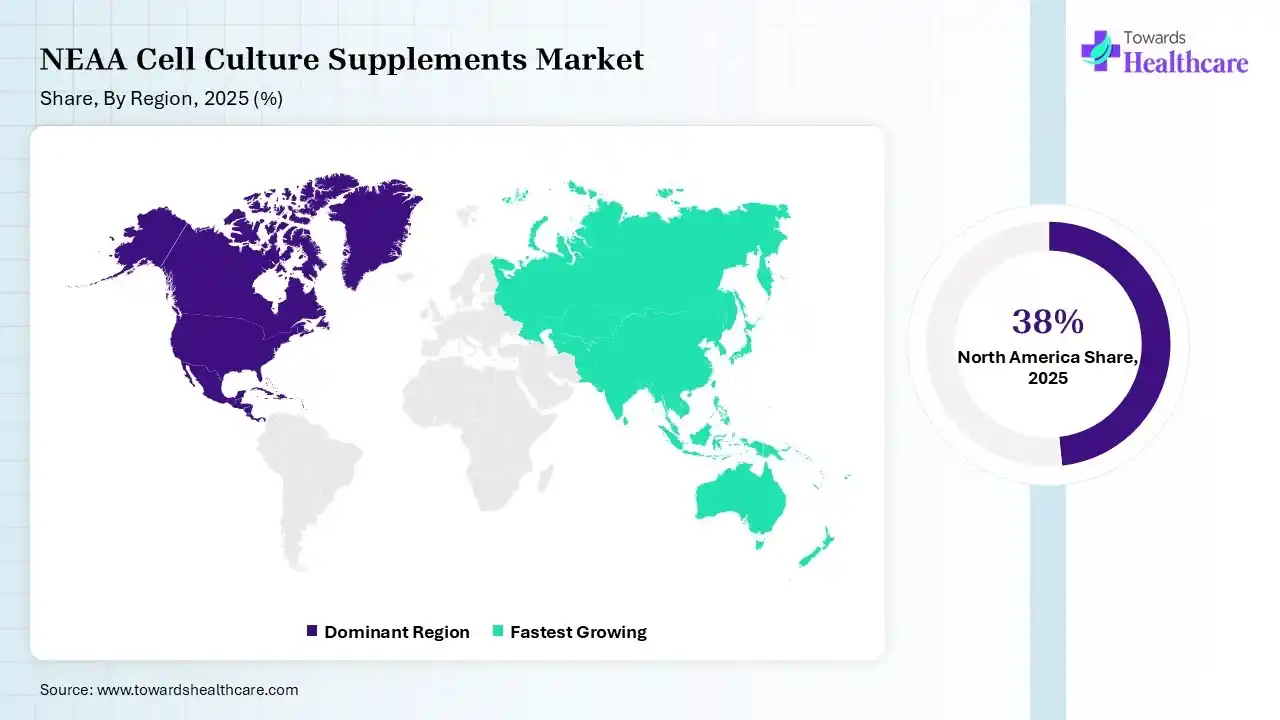
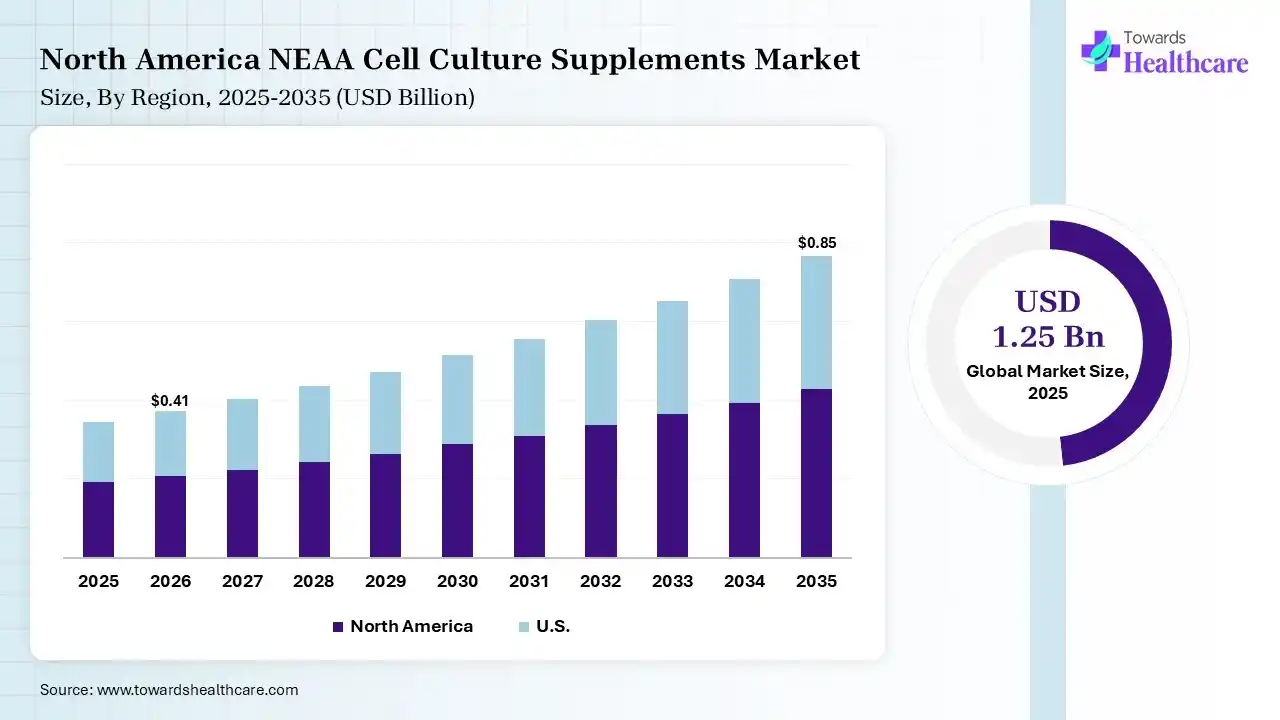
In 2025, North America dominated the NEAA cell culture supplements market with a share of 38% in 2025, as advanced framework for research and development, a strong presence of massive biopharmaceutical organizations, and substantial spending in novelties. Growing North America's production and R&D capabilities to progress the next generation of treatments. Noteworthy venture capital, public spending for basic research, and high R&D investment from major organizations drive the development of novel treatments, which drives the growth of the market.
For Instance,
U.S. Market Trends
The U.S. biopharmaceutical sector is a varied and interconnected novelty system that is brought together with sustained funding for basic research at universities and national laboratories, also via collaboration in innovative start-ups and large pharmaceutical companies. The U.S. is one of the largest sectors for biopharmaceuticals and is the biosphere leader in biopharmaceutical R&D.
Asia Pacific held 24% share of the NEAA cell culture supplements market, and is expected to have the fastest growth with 10.50% CAGR during the forecast period, as this region has become a preferred destination for worldwide biopharma organizations to relocate production and research activities, taking advantage of cheaper operational expenses and robust contract development and manufacturing organization (CDMO) abilities. The Government of India has newly launched the $12 billion Research, Development, and Innovation Fund (RDI) to hasten private sector participation in the Indian deep science tech ecosystem, which contributes to the growth of the market.
India Market Trends
India has recognized itself as a worldwide leader in the production of affordable biotech products, specifically vaccines and biosimilars. India’s biotechnology field vastly advantages from its large pool of highly skilled researchers, engineers, and investigators specializing in different biotech sectors, involving molecular biology, bioinformatics, and genetics. India is a recognized leader in vaccine manufacturing, with organizations such as Serum Institute of India and Bharat Biotech playing significant roles in worldwide immunization programs.
R&D:
Manufacturing Processes:
| Company | Headquarters | Latest Update |
| Corning Incorporated | United States | Corning Incorporated is a leading manufacturer of cell culture supplements and lab consumables, involving Non-Essential Amino Acids (NEAA), as part of its life sciences division. |
| HiMedia Laboratories | India | HiMedia Laboratories announced its dual triumph in the Special Recognition category at the BioSpectrum India. |
| Capricorn Scientific | Germany | Capricorn Scientific and Florabio announced a partnership to advance cell culture media innovation. |
| Captivate Bio | Massachusetts | Captivate Bio, a systematic services provider, announced that it has expanded its portfolio of cell culture services to include novel classical media. |
| PAN-Biotech | Germany | PAN-Biotech focuses on offering high-quality cell culture supplements and reagents that foster excellence in research standards. |
Strengths
Weaknesses
Opportunities
Threats
By Product Type
By Application
By Technique
By End User
By Cell Type
By Distribution Channel
By Region










Principal Consultant
Shivani Zoting is a dedicated research analyst specializing in the healthcare industry. With a strong academic foundation, a B.Sc. in Biotechnology and an MBA in Pharmabiotechnology, she brings a unique blend of scientific understanding and strategy.
Learn more about Shivani Zoting
Reviewed By
Aditi Shivarkar is a seasoned professional with over 14 years of experience in healthcare market research. As a content reviewer, Aditi ensures the quality and accuracy of all market insights and data presented by the research team.
Learn more about Aditi Shivarkar









