Pipeline Programs

CGT Companies Tracked

Manufacturing Facilities


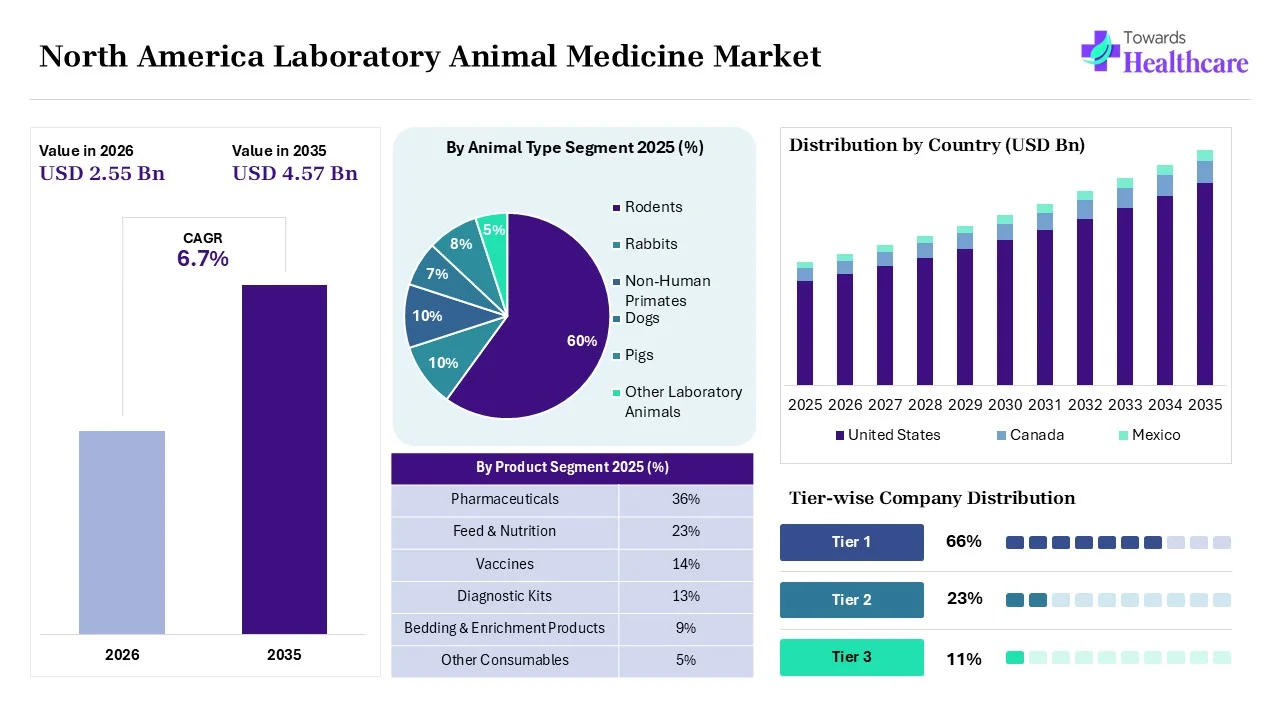
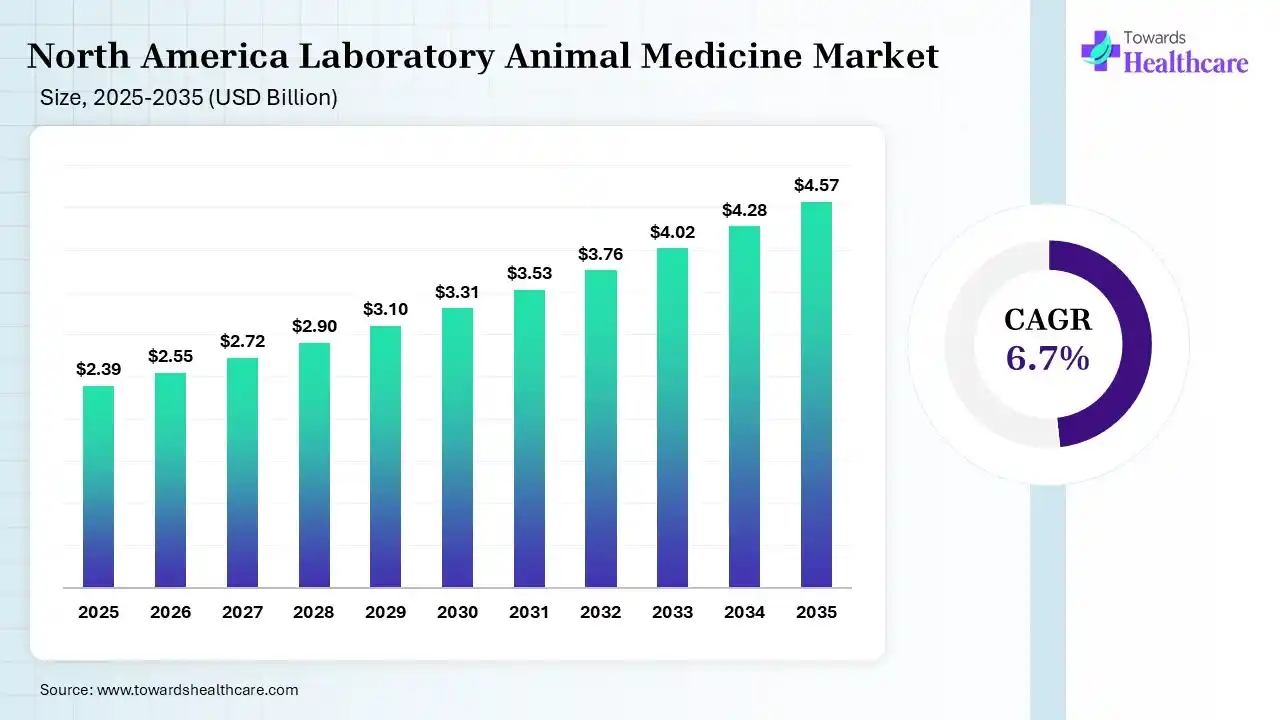
The North America laboratory animal medicine market size was estimated at USD 2.39 billion in 2025 and is predicted to increase from USD 2.55 billion in 2026 to approximately USD 4.57 billion by 2035, expanding at a CAGR of 6.7% from 2026 to 2035. The market grew in 2025 due to expanding biomedical research, increasing preclinical studies, and rising investments in laboratory animal healthcare. In 2026, growing pharmaceutical innovation and higher demand for translational research will continue accelerating laboratory animal medicine adoption across North America. Over the coming years, sustained R&D investments, biologics development, and technological advancements are expected to drive steady market expansion. The U.S. dominated with an 85% market share because of its robust research infrastructure, significant funding, and leading pharmaceutical industry.
The sector of laboratory animal medicine, which highlights the use, care, and welfare of animals in research significantly for human, animal, and environmental health goals, is an important component of translational science. Laboratory animals are significant for research in different disciplines such as toxicology, pharmacology, physiology, and more. They are used to test therapeutics and vaccines before human trials because they're like biology to humans. Significantly, laboratory animals include mice, rats, rabbits, guinea pigs, and hamsters.
Animal testing in biomedical research supports investigators' response to questions of biological doubt and is significant to the development of both humans and animals. Animal models have been significant in biomedical research for a long time. They offer vital insights into human disease mechanisms, preventative and therapeutic targets, and treatment approaches, creating them indispensable equipment for translational research. Laboratory animals involve the capability to mimic human disease, limited investigation times, and ethical regulations, helping in humane treatment.
Laboratory animal medicine is a specialized veterinary field focused on the healthcare, welfare, disease prevention, diagnosis, and ethical management of animals used in biomedical, pharmaceutical, and preclinical research. Growth is driven by increasing investment sin drug discovery, expanding preclinical research activities, and the rising use of animal models for studying complex diseases and evaluating novel models for studying complex diseases and evaluating novel therapies. Greater emphasis on animal welfare, regulatory compliance, and standardized research practices is further supporting adoption. Technological advancements, including AI-enabled health monitoring, automated vivarium management systems, digital pathology, advanced diagnostic tools, and environmental monitoring technologies, are improving research quality and animal care. Future opportunities lie in precision veterinary medicine, genetically engineered animal models, data-driven colony management, and integration of smart laboratory technologies, enabling more reliable research outcomes while enhancing animal welfare and operational efficiency.
Political
Economic
Social
Technological
Environmental
Legal
The incorporation of AI-based technology in veterinary medicine is a game-changer, providing significant potential in treatment, diagnostics, education, and complete animal care. This technology has made an immense contribution to veterinary and allied sciences and has made the treatment, diagnosis, and prognosis rapid, affordable, and efficient. AI-driven equipment is supporting veterinary teams to improve precision, lower burnout, and make more informed decisions. AI-based technology has significant potential to help busy veterinary physicians, enhance diagnostic precision, and improve patient care. AI-based symptom checkers, such as those incorporated in the practice websites or pet health applications, support guiding owners on whether their pet requires emergency care or not. This improves client education and lowers needless out-of-hours calls.
Organ-on-a-Chip & Organoids:
Organ-on-a-chip tools offer a dynamic, perfused environment that mimics organ functions, providing insights into the drug effectiveness and toxicity. By tackling the shortage of each technology and discovering its applications, investigators unlock new opportunities for understanding human biology and developing more efficient therapies.
Non-Invasive Wearables:
Non-invasive wearable technologies not only enhance long-term disease management but also allow early discovery of zoonotic and evolving diseases. These devices, when used precisely, provide timely diagnosis of diseases in animals, ultimately reducing economic losses. Wearables technology detects potential health challenges before they become severe by tracking elusive variations in a pet's activity or behavior.
Hyper-Precise Animal Models:
Hyper-precise animal models such as CRISPR-engineered large animals or patient-derived avatars offer unparalleled translatability. Animal models have long been crucial for clarifying the pathophysiology of neurodevelopmental diseases, including attention-deficit/hyperactivity disorder.
| Table | Scope |
| Market Size in 2026 | USD 2.55 Billion |
| Projected Market Size in 2035 | USD 4.57 Billion |
| CAGR (2026 - 2035) | 6.7% |
| Historical Data | 2020 - 2023 |
| Base Year | 2025 |
| Forecast Period | 2026 - 2035 |
| Measurable Values | USD Millions/Units/Volume |
| Market Segmentation | By Animal Type, By Product, By Service, By Application, By End User, By Region |
| Top Key Players | Zoetis, Boehringer Ingelheim, Merck & Co., Elanco, Charles River Laboratories |
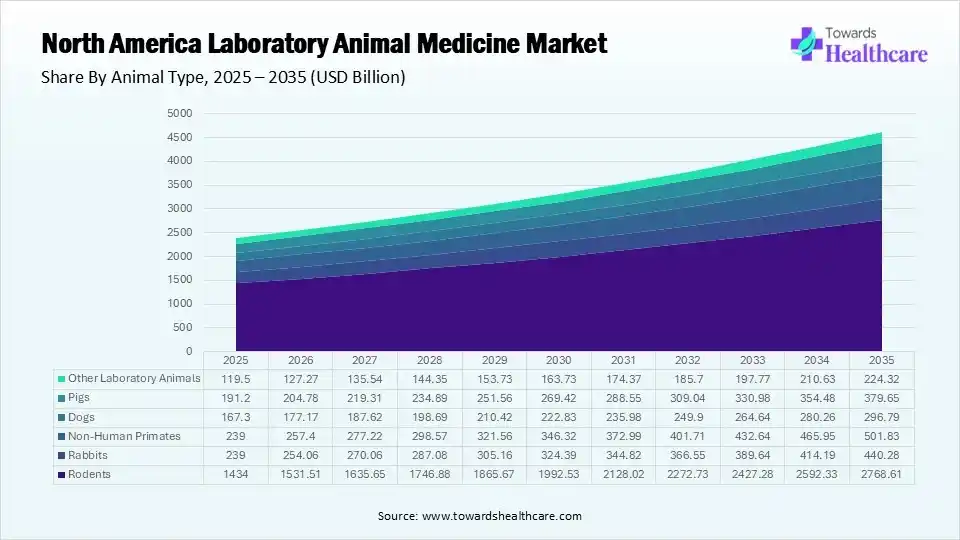
| Segment | Share 2025 (%) |
| Rodents | 60% |
| Rabbits | 10% |
| Non-Human Primates | 10% |
| Dogs | 7% |
| Pigs | 8% |
| Other Laboratory Animals | 5% |
The Rodents Segment Led the North America Laboratory Animal Medicine Market in 2025
The rodents segment contributed the largest market share of 60% in 2025, as it is widely utilized in diverse sectors like endocrinology, neuroscience, cardiovascular research, and toxicology, owing to their adaptability, rapid reproductive cycles, and affordability. Rodents are crucial in biomedical research because of their physiological and genetic resemblances to humans, allowing advancements in understanding diseases, advancing therapies, and ensuring safety in therapeutic testing.
The non-human primates segment held a significant share of 10% in 2025 and is expected to grow at the fastest CAGR of 7.7% during the forecast period in the market, as NHPs are the only species that allow a correct assessment of challenges for humans. They are widely used for research and nonclinical development because they are close to humans in terms of genetics, anatomy, physiology, and immunology.
The rabbits segment held a significant share of the North America laboratory animal medicine market of 10% in 2025, as Rabbits are most often used in the production and research of antibodies. The animals are genetically altered in order to produce antibodies that are used in humans or to study human disease. The rabbit immune technology is allowing to recognise a much wider diversity of antigens as compared to rodents like mice and rats.
The dogs segment held a significant share of 7% in 2025, as dogs in particular have proven to lower stress, anxiety, and depression, ease loneliness, improve exercise, and enhance overall health. Dogs are used to support understanding human and animal health and disease, and to progress novel medicines, which advantages both humans and animals.
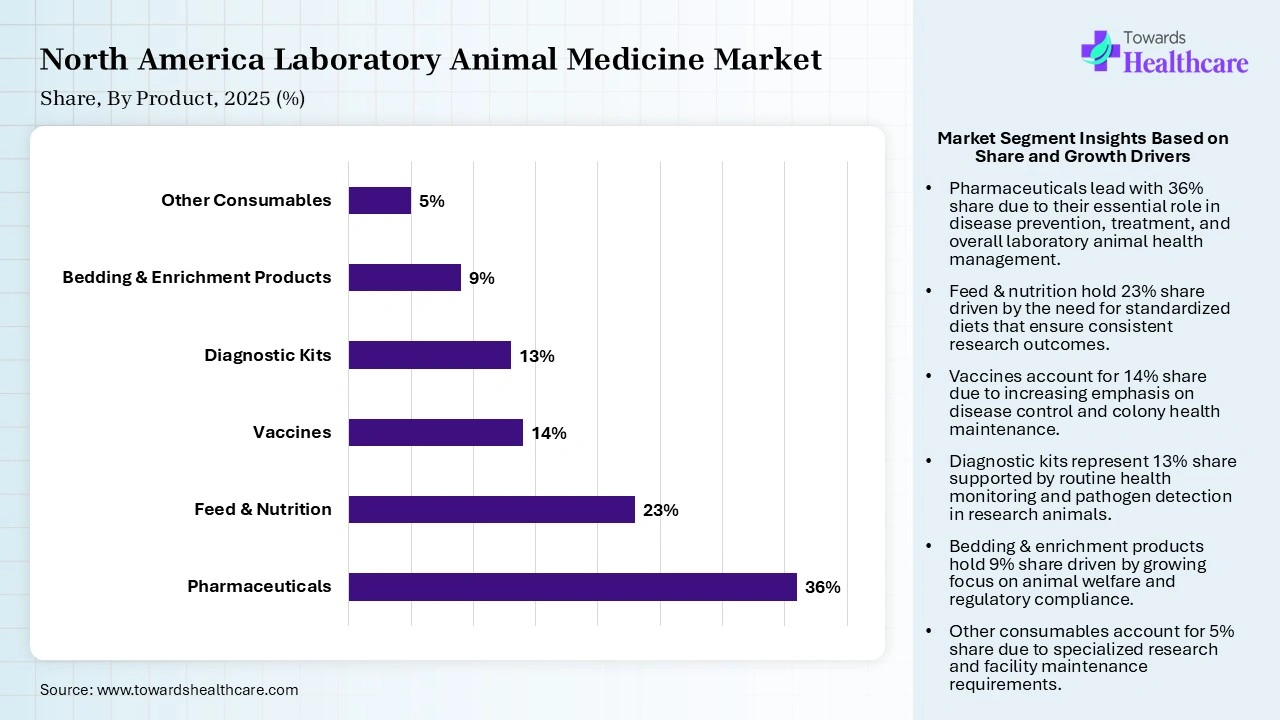
| Segment | Share 2025 (%) |
| Pharmaceuticals | 36% |
| Feed & Nutrition | 23% |
| Vaccines | 14% |
| Diagnostic Kits | 13% |
| Bedding & Enrichment Products | 9% |
| Other Consumables | 5% |
The pharmaceuticals segment led the North America Laboratory Animal Medicine Market in 2025
The pharmaceuticals segment contributed the largest market share of 36% in 2025. Medicines for veterinary medicine aid in the protection of public health, food security, and animal welfare. Animal pharmaceuticals are medications that are intended to prevent, diagnose, or manage disease in animals to encourage overall well-being.
The feed & nutrition segment held a significant share of 23% of the market. Animal feed supplements are dedicated nutritional additions intended to enhance livestock health, growth, and performance. Nutrition is significant in animal feed as it helps the health and well-being of the animals, also ensuring the quality of the produce derived from them. Feed additives play a significant role in current animal nutrition, offering various advantages that improve both animal health and farm efficiency.
The vaccines segment held a significant share of 14% of the North America laboratory animal medicine market as vaccines are a safe and simple way to trigger an animal's natural defence system to prevent disease, safeguard their health, and protect their welfare. A vaccine is an affordable process used in preventing animal diseases; they are usually safe, effective, and are associated with minimal severe adverse effects.
The diagnostic kits segment held a significant share of 13% of the market, and is expected to grow at the fastest CAGR of 8.0% during the forecast period, as diagnostic kits help animal health management. Identifying and monitoring epidemiological challenges, supporting vaccines and treatment advancement. Regulating the quality of produced meat and enhancing animal welfare.
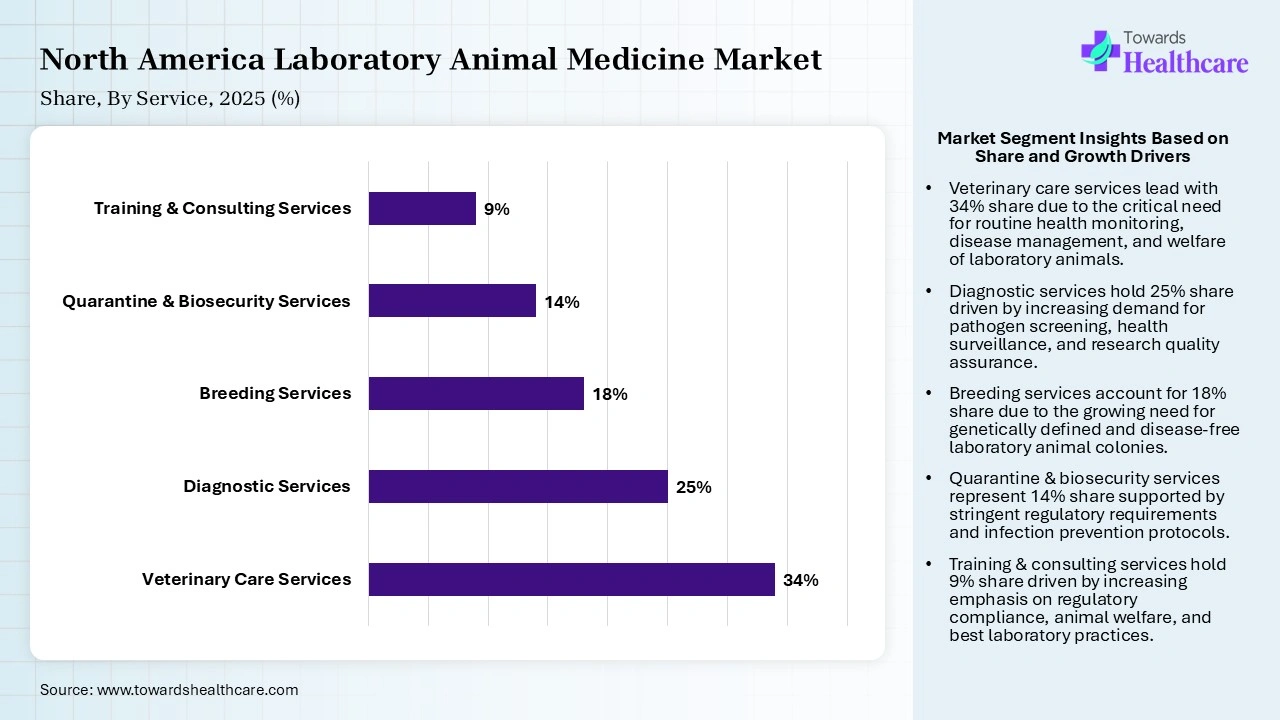
| Segment | Share 2025 (%) |
| Veterinary Care Services | 34% |
| Diagnostic Services | 25% |
| Breeding Services | 18% |
| Quarantine & Biosecurity Services | 14% |
| Training & Consulting Services | 9% |
The Veterinary Care Services Segment led the North America Laboratory Animal Medicine Market in 2025
The veterinary care services segment held a major share of 34% in the market. Increasing access to diagnostic laboratory solutions facilitates veterinary health care and involves gross and microscopic pathology, microbiology, hematology, parasitology, clinical chemistry, molecular diagnostics, and serology. Pets rely on steady veterinary care to stay healthy, comfortable, and active throughout their lives.
The diagnostic services segment contributed the largest market share of 25% in 2025, and is expected to grow at the fastest CAGR of 7.9% during the forecast period, as diagnostic lab testing tracks pets' developments over time, supporting assessing the efficiency of treatments and making required adjustments. Veterinary diagnostics ensures suspected challenges and supports rapid decisions.
The breeding services segment held a significant 18% share of the North America laboratory animal medicine market, as breeders' services are based on veterinarians for significant services that confirm both reproductive success and the well-being of each animal involved. Practices that prioritize the health and well-being of breeding animals and their offspring increase the rewards for all involved and endorse breed excellence.
The quarantine & biosecurity services segment held a significant share of 14% in the market in 2025, as biosecurity programs involve enhanced animal health and welfare and, in the case of food animal medication, enhanced efficiency and end product worth, lower economic losses, enhanced food security, maintainable animal agriculture technology, safe regional or international trade, and protection of public health.
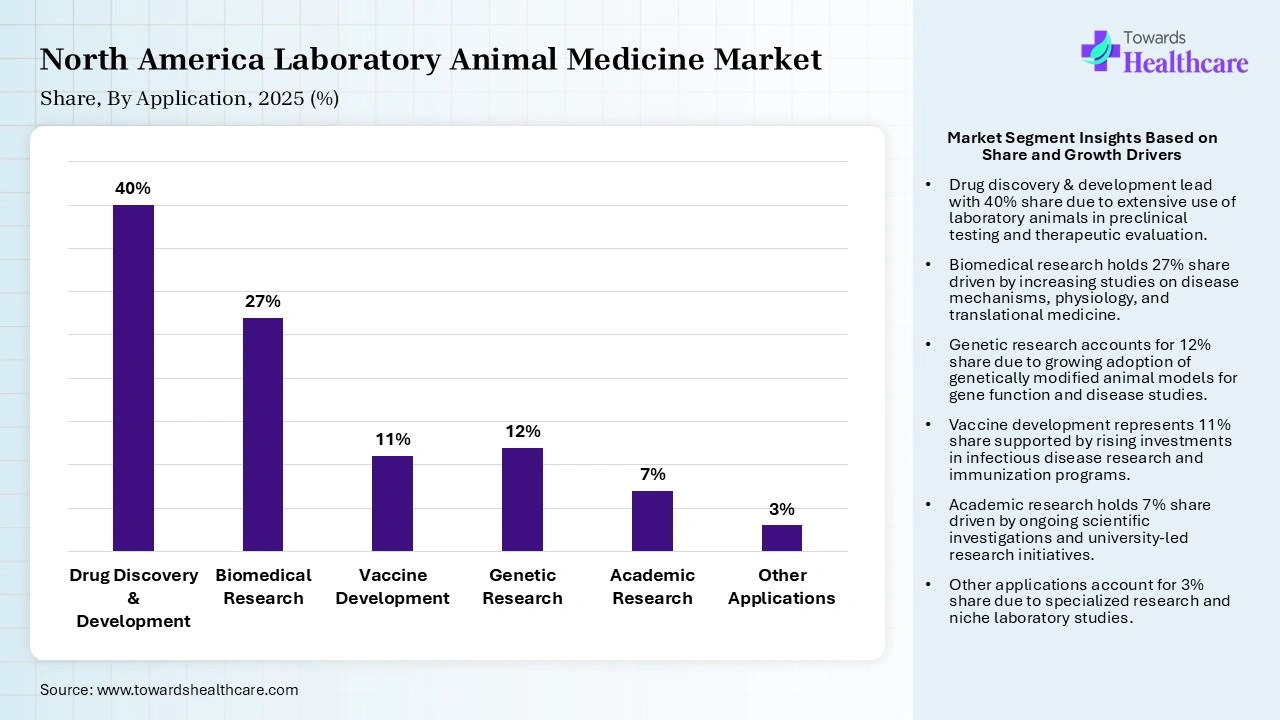
| Segment | Share 2025 (%) |
| Drug Discovery & Development | 40% |
| Biomedical Research | 27% |
| Vaccine Development | 11% |
| Genetic Research | 12% |
| Academic Research | 7% |
| Other Applications | 3% |
The Drug Discovery & Development Segment led the North America Laboratory Animal Medicine Market in 2025
The drug discovery & development segment contributed the largest market share of 40%, as animal models for drug discovery and development play an imperative role in the characterization of the pathophysiology of diseases and related mechanisms of damage, drug target detections, and assessment of new beneficial agents for toxicity and safety, pharmacodynamics, pharmacokinetics, and efficiency.
The biomedical research segment held a significant share of 27% in the market. They offer significant insights into human disease devices, preventative and therapeutic targets, and management approaches, making them a significant device for translational research. They allow the advancement and testing of drugs, vaccines, and surgical technology applicable to human and veterinary medicine.
The vaccine development segment held a significant share of 11% in the North America laboratory animal medicine market, as vaccination provides an efficient, affordable way to stop a deadly disease from harming the animals in their care. Animal vaccines support protecting human health by lowering the transmission of zoonotic diseases from animals to humans.
The genetic research segment held a significant share of 12% in the market, and is expected to grow at the fastest CAGR of 8.3% during the forecast period, as genetic research has been used in veterinary healthcare to diagnose, prevent, and manage diseases, breed various species, and create transgenic animals for beneficial proteins or xenografting.
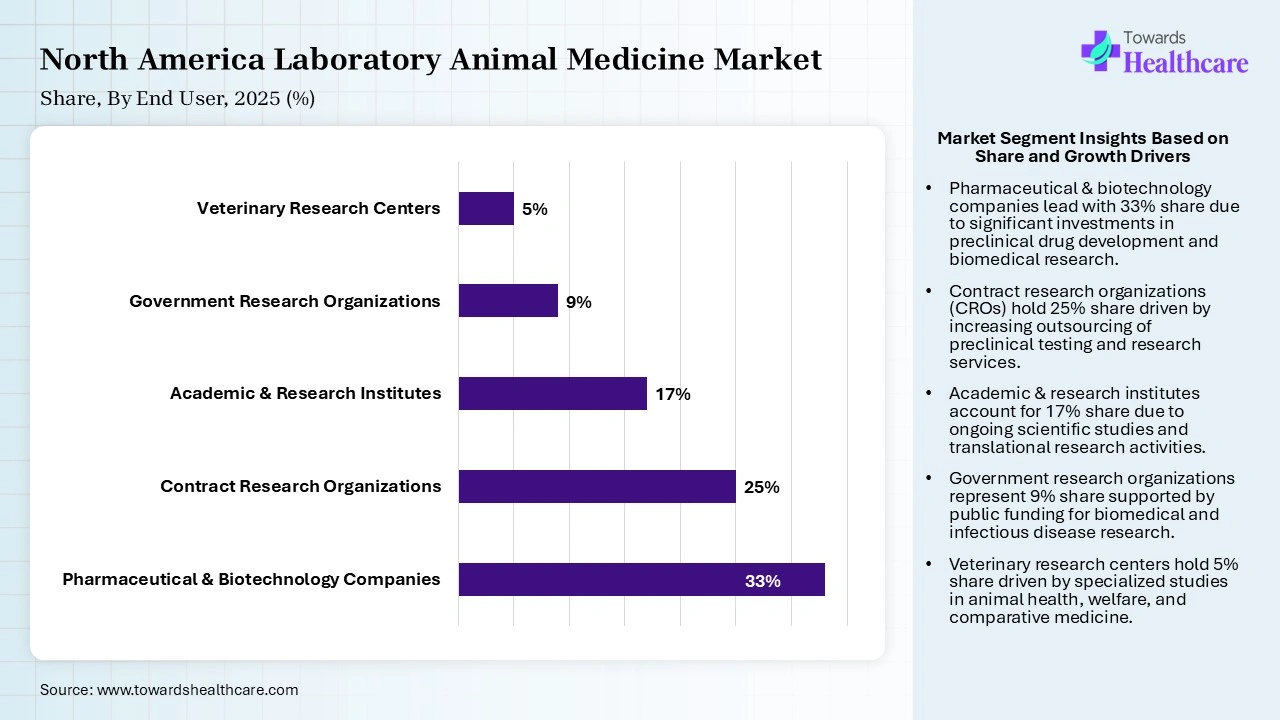
| Segment | Share 2025 (%) |
| Pharmaceutical & Biotechnology Companies | 33% |
| Contract Research Organizations | 25% |
| Academic & Research Institutes | 17% |
| Government Research Organizations | 9% |
| Veterinary Research Centers | 5% |
The Pharmaceutical & Biotechnology Companies Segment led the North America Laboratory Animal Medicine Market in 2025
The pharmaceutical & biotechnology companies segment contributed the largest market share of 44% in 2025, as animal pharmaceutical companies are important the way with this advancement by spending in the recent technologies and services. As animal pharmaceutical organizations keep spending in R&D and advanced manufacturing technology, improves quality of therapeutics and medicinal output.
The contract research organizations segment held a significant share of 25% in the market, and is expected to grow at the fastest CAGR of 8.1% during the forecast period. CROs are to enable effective, affordable, and compliant research, which eventually aids in bringing novel drugs and therapies contract research organization (CRO) is a dedicated organization that offers comprehensive support to the healthcare and biotechnology sectors.
The academic & research institutes segment held a significant share of 17% in the North America laboratory animal medicine market, as research in animal models has made it possible to contain and treat serious diseases and eradicate diseases such as smallpox and polio. Researchers made many significant human and animal life-saving discoveries via their work.
The government research organizations segment held a significant share of 9% in the market. Animal studies an essential component of each sector of healthcare research and have been significant for the acquisition of rudimentary knowledge in biology. Animal research is used to keep patients, animals, and the environment safe from novel medicines and chemicals.
The laboratory animal medicine market size was estimated at USD 5.84 billion in 2025 and is predicted to increase from USD 6.24 billion in 2026 to approximately USD 11.38 billion by 2035, expanding at a CAGR of 5.14% from 2026 to 2035.
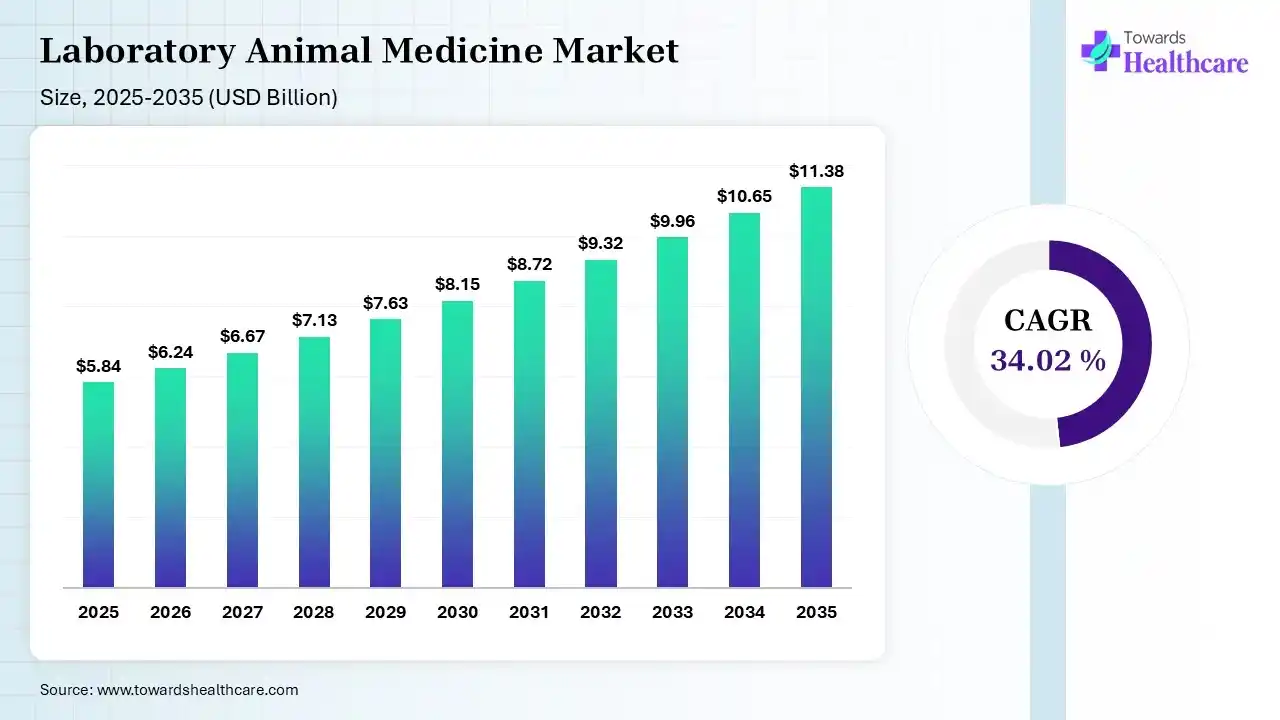
North America's increasing spending accounted for 27% spending in research and development (R&D). Government law controls the management of animals in teaching, research, testing, exhibition, transport, and by traders. The region hosts a massive concentration of leading pharmaceutical organizations and Contract Research Organizations (CROs), driving continuous revolution in animal-driven preclinical trials and targeted medicine.
US Market Trends
The US laboratory animal medicine market size was valued at US$ 2.03 billion in 2025 and is projected to grow to 2.17 billion in 2026. Forecasts suggest it will reach approximately US$ 3.92 billion by 2035, registering a CAGR of 6.8% during the period. The U.S. accounted for a dominant 85% market share in 2025, supported by its extensive network of leading academic research institutions, advanced healthcare organizations, and Contract Research Organizations (CROs). Strong federal research funding, robust pharmaceutical and biotechnology industries, and widespread preclinical testing activities further reinforced the country's leadership. Continuous investments in biomedical innovation and laboratory animal welfare also strengthened its position across the regional laboratory animal medicine marke
Canada Market Trends
The Canada laboratory animal medicinemarket size stood at US$ 0.24 billion in 2025, grew to US$ 0.25 billion in 2026, and is forecast to reach US$ 0.44 billion by 2035, expanding at a CAGR of 6.2% from 2026 to 2035. Canada held a significant share of 10% in the North America laboratory animal medicine market in 2025, as experts use animals to learn about health challenges that affect both animals and humans, to ensure the safety of novel healthcare treatments and strategies, and to enhance animal welfare in many other ways. Canada was a significant example of meeting international veterinary solutions with no significant weaknesses, while providing the majority of veterinary solutions.
Mexico Market Trends
The Mexico laboratory animal medicine market size was valued at US$ 0.12 billion in 2025 and is projected to grow to 0.13 billion in 2026. Forecasts suggest it will reach approximately US$ 0.21 billion by 2035, registering a CAGR of 6% during the period. Mexico held a significant share of 5% in the market, as this region is a leading manufacturer and exporter of animal protein, owing much to veterinarians’ excellence in animal detection, assessment, selection, and genetic enhancement. Mexico has legitimately become the first country in North America to prohibit cosmetic animal testing, a noteworthy landmark in the fight for animal rights.
R&D:
Manufacturing Processes:
Patient Services:
| Company | Headquarters | Latest Update |
| Zoetis | United States | Zoetis is the largest worldwide animal health company committed to developing the world and humankind by providing well-developed care for animals. |
| Boehringer Ingelheim | United States | Boehringer Ingelheim's cooperative strategy to animal medical care innovation, areas of collaborating interest, and how to connect with the team |
| Merck & Co. | United States | Merck Animal Health provides information on veterinary products, technologies, and veterinary solutions that truly advance animal medical care. |
| Elanco | United States | Elanco offers novel products and solutions to support veterinarians, pet owners, and farmers in enhancing the lives of the animals in their care. |
| Charles River Laboratories | United States | Charles River conducts routine health surveillance on animal colonies in North America for a wide list of infectious agents. |
In March 2026, the Department of Health and Human Services announced several initiatives to try to lower reliance on animal testing in drug advancement. “A balanced approach that integrates new tools without prematurely sidelining established models will be critical to maintaining both scientific rigor and patient safety,” said Naomi Charalambakis, director of communications and science policy at AMP.
By Animal Type
By Product
By Service
By Application
By End User
By Region










Principal Consultant
Payal Rabde is a Healthcare Market Research Analyst at Towards Healthcare Research & Consulting with 4+ years of experience in pharmaceuticals, biotechnology, medical devices, and life sciences.
Learn more about Payal Rabde

Reviewed By
Aditi Shivarkar is a seasoned professional with over 14 years of experience in healthcare market research. As a content reviewer, Aditi ensures the quality and accuracy of all market insights and data presented by the research team.
Learn more about Aditi Shivarkar