Pipeline Programs

CGT Companies Tracked

Manufacturing Facilities


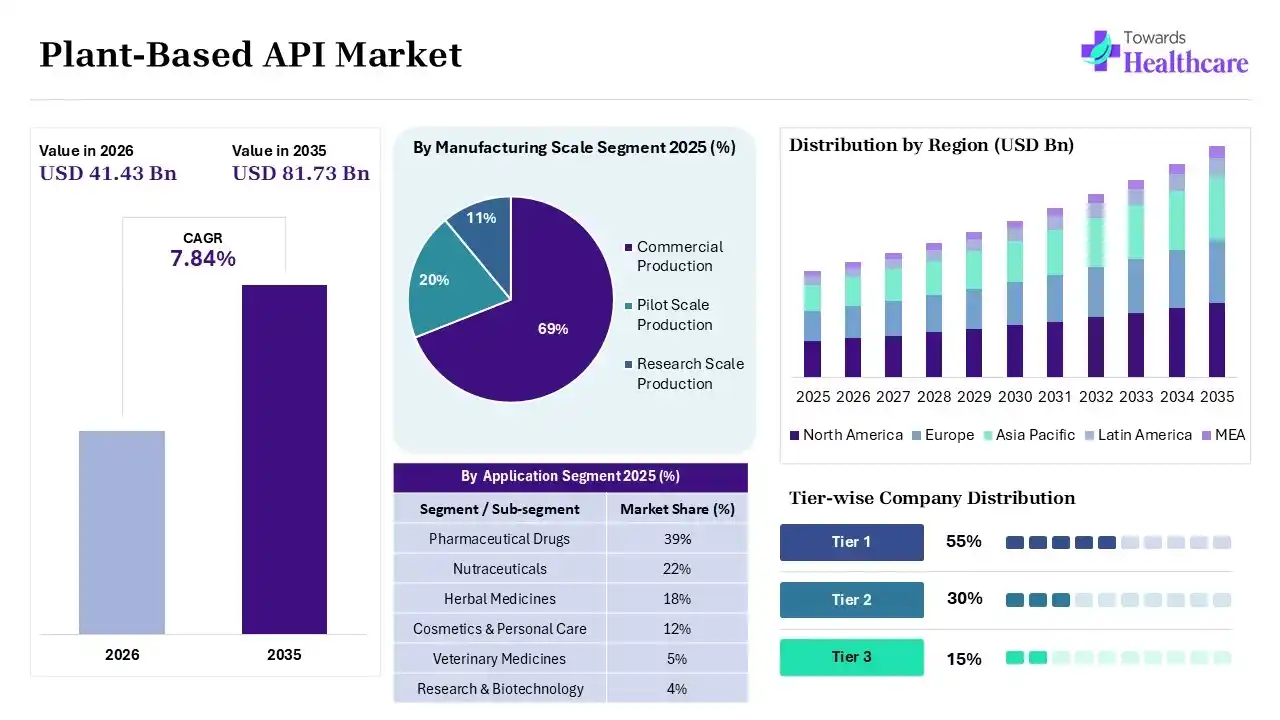
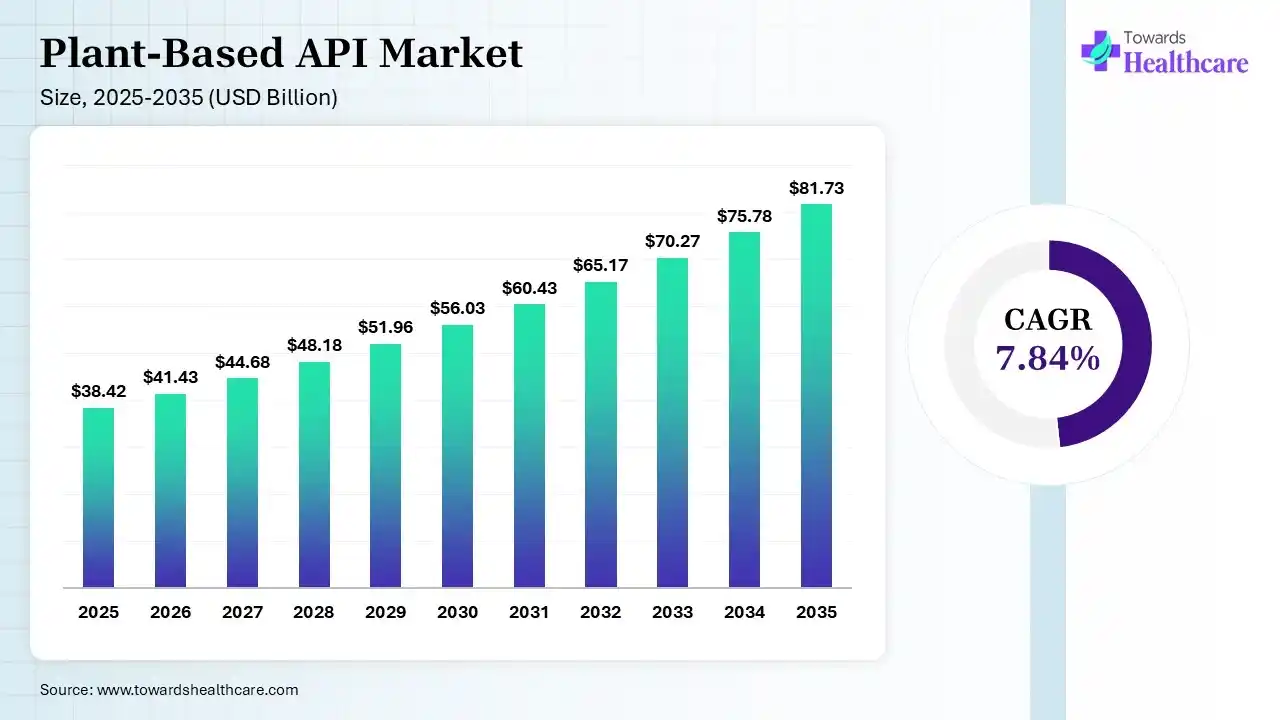
The global plant-based API market size is calculated at USD 38.42 billion in 2025, driven by an increased shift towards herbal products. The market continues to grow in 2026 at USD 41.43 billion due to the rising demand for botanical drug ingredients, growing molecular farming technologies, and increasing AI integration. It is expected to reach USD 81.73 billion by 2035, CAGR of 7.84% expected in between 2026 to 2035 as a continued rise in chronic disease burden, high investments, and focus on sustainable manufacturing practices accelerate market expansion. North America accounted for 34% of the market in 2025 due to its strong pharmaceutical industries, advanced extraction technologies, and robust regulatory support.
A plant-based API refers to the active pharmaceutical substances derived from plants or their materials. They can be extracted from seeds, roots, bark, leaves, and flowers to develop traditional herbal medicines as well as modern pharmaceutical products.
Ayurveda and traditional Chinese medicines were the core areas that utilized medicinal plants for herbal remedies. The growing interest in extraction increased the adoption of plant-based APIs for the development of new pharmaceutical products. Expansion in analytical techniques, phytopharmaceuticals, and natural products increased their advancements and applications.
Based on the survey of Payal Rabde, a rise in the demand for sustainable and naturally derived pharmaceuticals are driving the market expansion. Additionally, the growing demand for natural products, herbal medicines, and nutraceuticals, along with expansion of cultivation technologies, sustainable manufacturing, and government initiatives, are also increasing their advancement.
Growing Preference for Botanical Drug Ingredients
Growing acceptance of botanical ingredients and rising demand for natural medicines are increasing the demand for botanical drug ingredients.
Expansion of Sustainable API Manufacturing
A rise in the shift towards ecologically friendly cultivation and extraction processes are encouraging sustainable API manufacturing practices.
Integration of Biotechnology in Botanical API Production
Growing advancements in plant cell culture, bioprocessing technologies, and metabolic engineering are improving the scalability and yield of plant derived API, increasing their integration.
Rising Demand for Standardized Herbal Pharmaceuticals
Stringent regulations and focus on improving the quality, consistency, and purity of plant derived API are promoting the development of standardized herbal pharmaceuticals.
Digitalization and AI in Botanical Drug Discovery
To accelerate drug discovery and development, different types of digital tools and AI solutions are being utilized for botanical drug discovery.
Macro factors
Micro factors
Market Drivers
The major market drivers include a rise in the demand for plant-based products, nutraceuticals, botanical pharmaceuticals, expansion of phytopharmaceutical industries, and technological advancements.
Market Restraints
High cost, batch-to-batch consistency, and limited clinical evidence act as the major market restraints.
Market Opportunities
Advancements in botanical drug development, plant cell culture, molecular framing technologies, increasing investments, and expanding applications are driving the market opportunities.
Market Challenges
Supply chain disruptions, risk of adulteration, regulatory requirements, and limited medicinal plant availability are the key market challenges.
Key Stakeholders
Key stakeholders encompass medicinal plant cultivators, raw material suppliers, API manufacturers, and extract producers.
Industry Relationships
The industry relationships are driven by long-term sourcing partnerships, research collaborations, and contract manufacturing partnerships.
Strategic Value Creation Across the Ecosystem
Strategic value creation across the ecosystem focuses on sustainable supply chains, improving API quality, and accelerating drug discovery and development.
Medicinal Plant Cultivation
Raw Material Collection
Botanical Extraction
API Purification
Quality Testing
Pharmaceutical Manufacturing
Distribution and Commercialization
Raw Material Supply Landscape
The raw material supply landscape encompasses the medical plant cultivators, botanical extract suppliers, plant propagation networks, and export channels.
Processing Infrastructure
Processing infrastructure includes API manufacturers, botanical extract producers, pharma companies, and CDMOs.
Distribution Network
The distribution network involves the use of logistics networks, wholesalers, and exporters.
Supply Chain Risks and Mitigation Strategies
Supply chain risks and mitigation strategies focus on raw materials shortages, overharvesting, quality variability, contamination, and authenticity challenges.
The raw material and botanical resource analysis encompasses major medicinal plant sources, cultivation regions, sustainability practices, and availability of botanical feedstocks.
Conventional Extraction Technologies
Conventional extraction technologies encompass methods used for the isolation and recovery of plant-based API with the use of steam, solvents, heat, or water.
Advanced Green Extraction Technologies
Advanced green extraction technologies are eco-friendly extraction methods used for the isolation and recovery of plant-based API with lower environmental impact and toxic solvents.
Continuous Manufacturing
Continuous manufacturing refers to the production process offering continuous production, manufacturing, processing, and collection.
Process Optimization
Process optimization focuses on enhancing manufacturing and production efficiency, quality, yield, and affordability.
Innovation Landscape
Innovation landscape encompasses recent scientific innovations, product development, extraction techniques, biotechnology integration, and patent activity.
Historical Demand Trends
Historical demand trends are driven by expansion of traditional medicine systems, natural healthcare products, and herbal remedies.
Current Market Demand
Current market demand is influenced by growing chronic disease burden, expanding applications, and preventive healthcare growth.
Future Demand Forecast
Future demand forecast highlights advancements in plant cell fermentation, manufacturing technologies, and synthetic biology applications.
Quality Requirements
Quality requirements encompass plant-based API purity, safety, efficacy, potency, and the presence of contaminants.
Regulatory Compliance
Regulatory compliance focuses on the safety, efficacy, and quality of the plant-based APIs.
Cost Competitiveness
Cost competitiveness depends on processes such as cultivation, extraction, and manufacturing of plant-based API.
Supply Reliability
Supply reliability of plant-based API is driven by availability of diversified raw materials.
Sustainability Considerations
Sustainability considerations highlight harvesting practices, conservation of medicinal plants, and reduced environmental impact.
End-user Behavior and Buying Patterns
End-user behavior and buying patterns depend on purchasing behavior, sourcing preferences, long-term contracts, supplier selection, and procurement strategies.
| Table | Scope |
| Market Size in 2026 | USD 41.43 Billion |
| Projected Market Size in 2035 | USD 81.73 Billion |
| CAGR (2026 - 2035) | 7.84% |
| Historical Data | 2020 - 2023 |
| Base Year | 2025 |
| Forecast Period | 2026 - 2035 |
| Measurable Values | USD Millions/Units/Volume |
| Market Segmentation | By Source, By API Type, By Extraction Technology, By Application, By Therapeutic Area, By Manufacturing Scale, By End User, By Region |
| Top Key Players | Indena S.p.A., Alchem International, Phyton Biotech, Smai-Sabinsa Group, Roquette Freres |
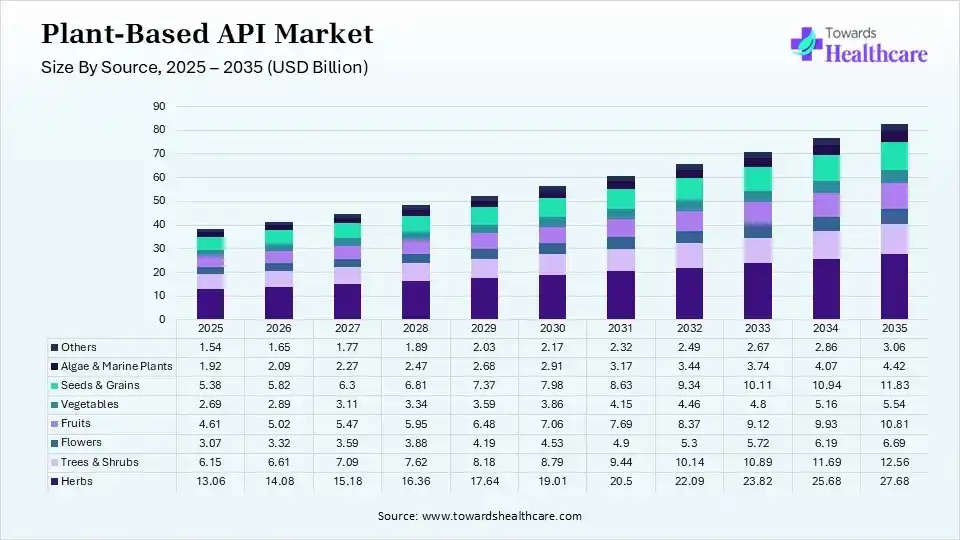
| Segment | Share 2025 (%) |
| Herbs | 34% |
| Trees & Shrubs | 16% |
| Flowers | 8% |
| Fruits | 12% |
| Vegetables | 7% |
| Seeds & Grains | 14% |
| Algae & Marine Plants | 5% |
| Others | 4% |
The Herbs Segment Dominated the Plant-based API Market With 34% in 2025
The herbs segment led the market with a 34% share in 2025, due to the presence of rich phytochemical content, which supported pharmaceutical development. High cultivation availability also lowered procurement costs. Based on the Payal Rabde survey, the expansion of herbal medicine adoption also strengthened their demand.
The fruits segment held the second-largest share of 12% of the plant-based API market in 2025 and is expected to witness the fastest growth with a CAGR of 8.90% during the forecast period, due to the presence of polyphenol-rich extracts, which support chronic disease therapies. Functional ingredient demand continues rising, increasing their use. Advanced extraction also improves their yield efficiency.
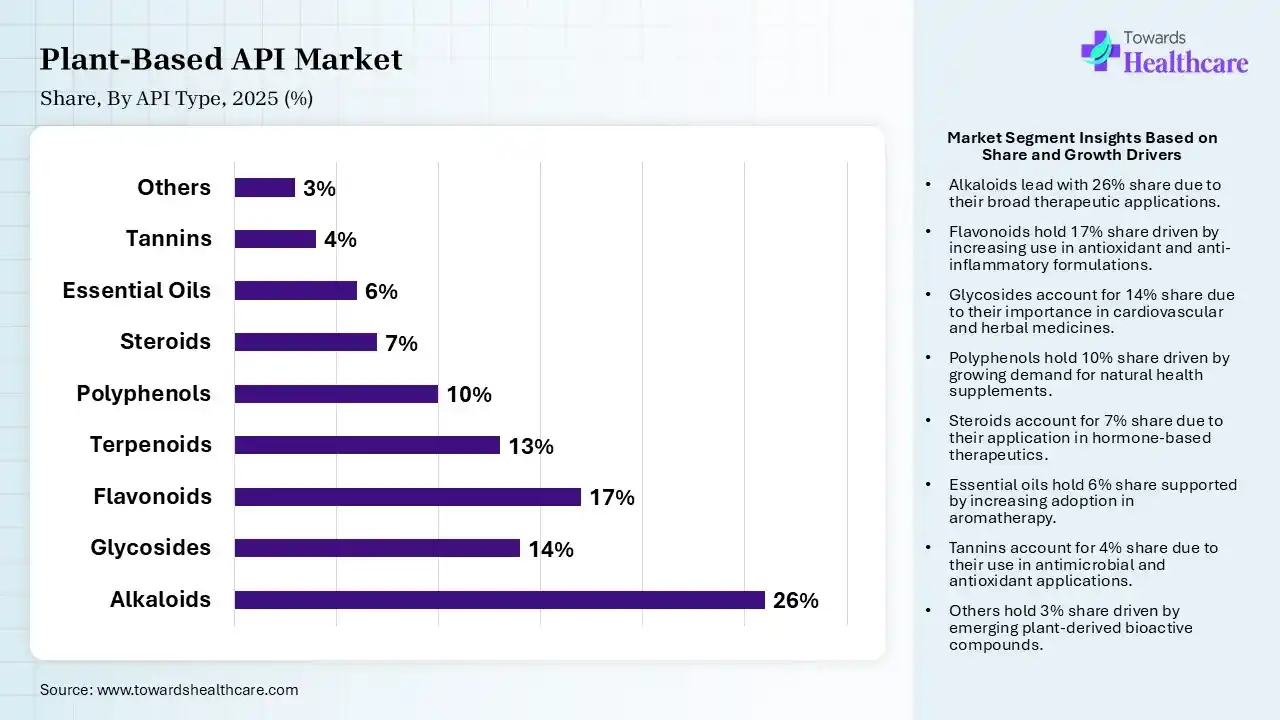
| Segment | Share 2025 (%) |
| Alkaloids | 26% |
| Glycosides | 14% |
| Flavonoids | 17% |
| Terpenoids | 13% |
| Polyphenols | 10% |
| Steroids | 7% |
| Essential Oils | 6% |
| Tannins | 4% |
| Others | 3% |
The Alkaloids Segment Dominated the Plant-based API Market With 26% in 2025
The alkaloids segment accounted for the highest revenue share of 26% of the market in 2025, driven by their strong use in pain management and oncology. Established pharmaceutical manufacturing capabilities also supported demand. Continuous innovation also expanded their therapeutic use.
The flavonoids segment held the second-largest share of 17% of the plant-based API market in 2025 and is expected to show the highest growth with a CAGR of 8.90% during the forecast period, due to rising antioxidant-based drug development driving growth. Chronic disease prevention also expands their applications. Consumer preference for natural therapeutics also increases investment.
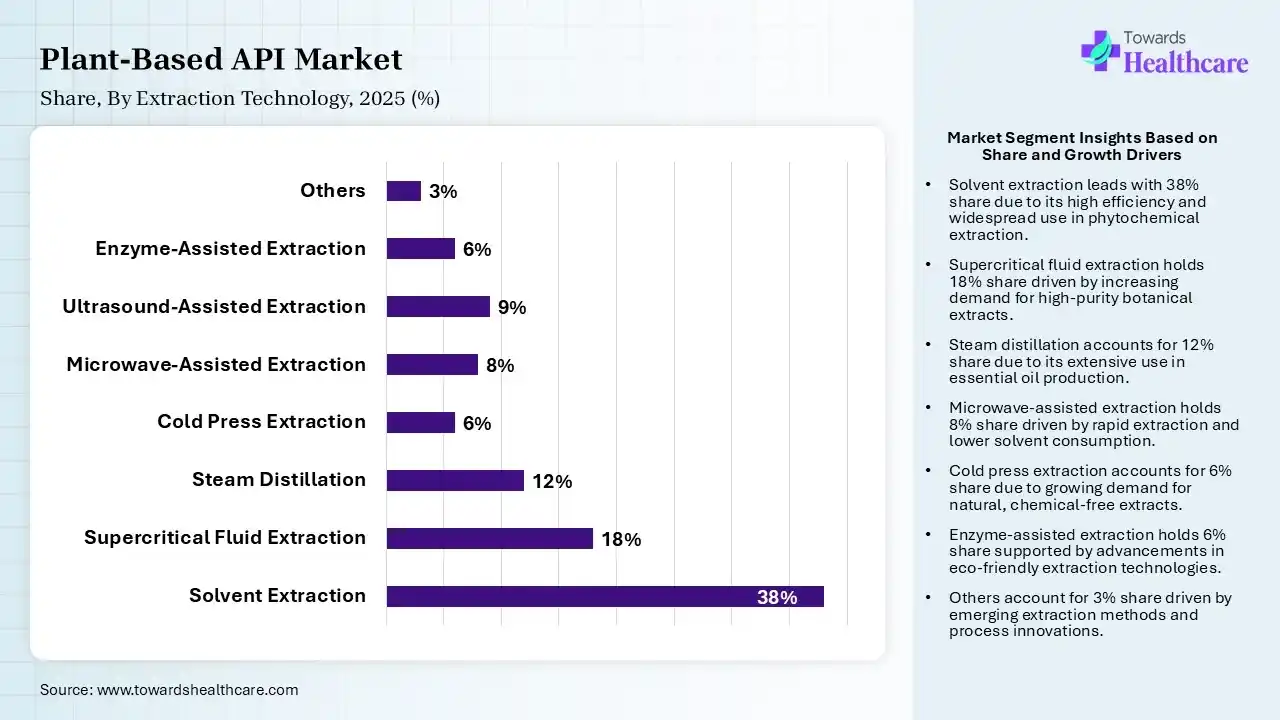
| Segment | Share 2025 (%) |
| Solvent Extraction | 38% |
| Supercritical Fluid Extraction | 18% |
| Steam Distillation | 12% |
| Cold Press Extraction | 6% |
| Microwave-Assisted Extraction | 8% |
| Ultrasound-Assisted Extraction | 9% |
| Enzyme-Assisted Extraction | 6% |
| Others | 3% |
The Solvent Extraction Segment Dominated the Plant-based API Market With 38% in 2025
The solvent extraction segment held a major revenue share of 38% of the market in 2025, driven by mature technology, which supported large-scale production. Cost efficiency also favored commercial manufacturing. Its broad compatibility also maintained leadership.
The supercritical fluid extraction segment held the second-largest share of 18% of the plant-based API market in 2025 and is expected to expand rapidly with a CAGR of 9.30% during the forecast period, as high-purity extraction improves API quality. Green processing meets sustainability goals. Pharmaceutical manufacturers are increasingly adopting advanced systems.
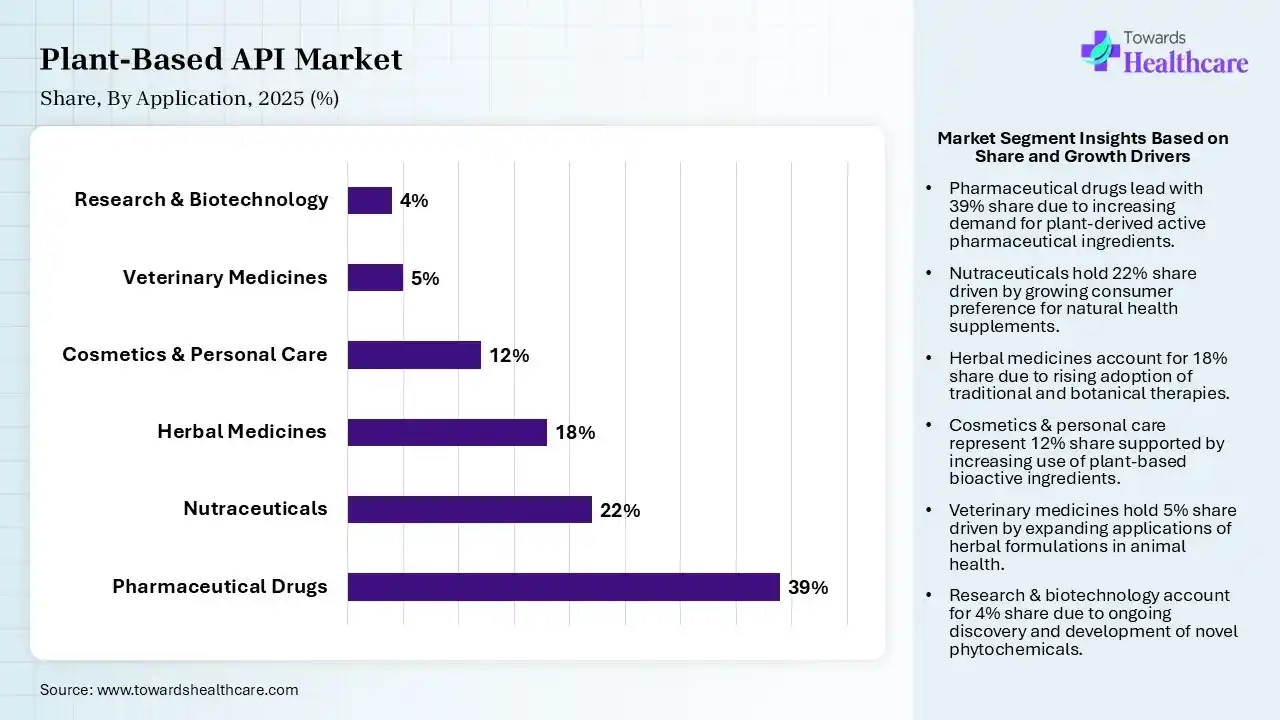
| Segment | Share 2025 (%) |
| Pharmaceutical Drugs | 39% |
| Nutraceuticals | 22% |
| Herbal Medicines | 18% |
| Cosmetics & Personal Care | 12% |
| Veterinary Medicines | 5% |
| Research & Biotechnology | 4% |
The Pharmaceutical Drugs Segment Dominated the Plant-based API Market With 39% in 2025
The pharmaceutical drugs segment contributed the biggest revenue share of 39% of the market in 2025, driven by growth in botanical APIs regulatory acceptance. A rise in chronic disease burden also supported their demand. Growth in pharmaceutical innovations also expanded product pipelines.
The nutraceuticals segment held the second-largest share of 22% of the plant-based API market in 2025 and is expected to gain the highest share with a CAGR of 9.10% during the forecast period, due to increasing preventive healthcare trends accelerating adoption. Functional ingredient demand increases globally. Consumer preference for natural wellness also drives investment.
| Segment | Share 2025 (%) |
| Oncology | 24% |
| Cardiovascular Diseases | 16% |
| Neurology | 10% |
| Respiratory Disorders | 9% |
| Gastrointestinal Disorders | 10% |
| Infectious Diseases | 8% |
| Metabolic Disorders | 11% |
| Dermatology | 6% |
| Pain Management | 4% |
| Others | 2% |
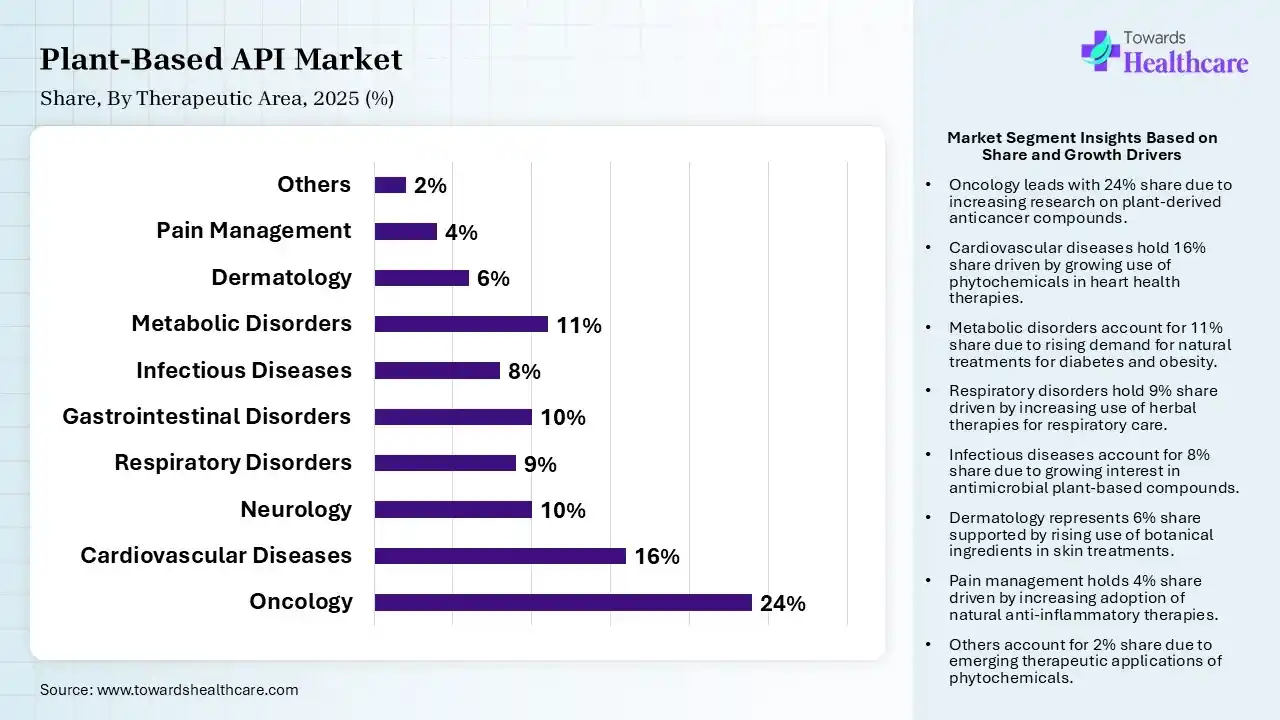
The Oncology Segment Dominated the Plant-based API Market With 24% in 2025
The oncology segment held the largest revenue share of 24% of the market in 2025, driven by growth in plant-derived anticancer compounds, which remained highly valuable. Clinical research expansion enhanced their therapeutic applications. Pipeline activity also continued growing.
The metabolic disorders segment held the second-largest share of 11% of the plant-based API market in 2025 and is expected to grow with the fastest CAGR of 9% during the forecast period, due to rising diabetes and obesity prevalence worldwide. Natural metabolic therapies attract investment. Preventive healthcare also drives their demand.
| Segment | Share 2025 (%) |
| Commercial Production | 69% |
| Pilot Scale Production | 20% |
| Research Scale Production | 11% |
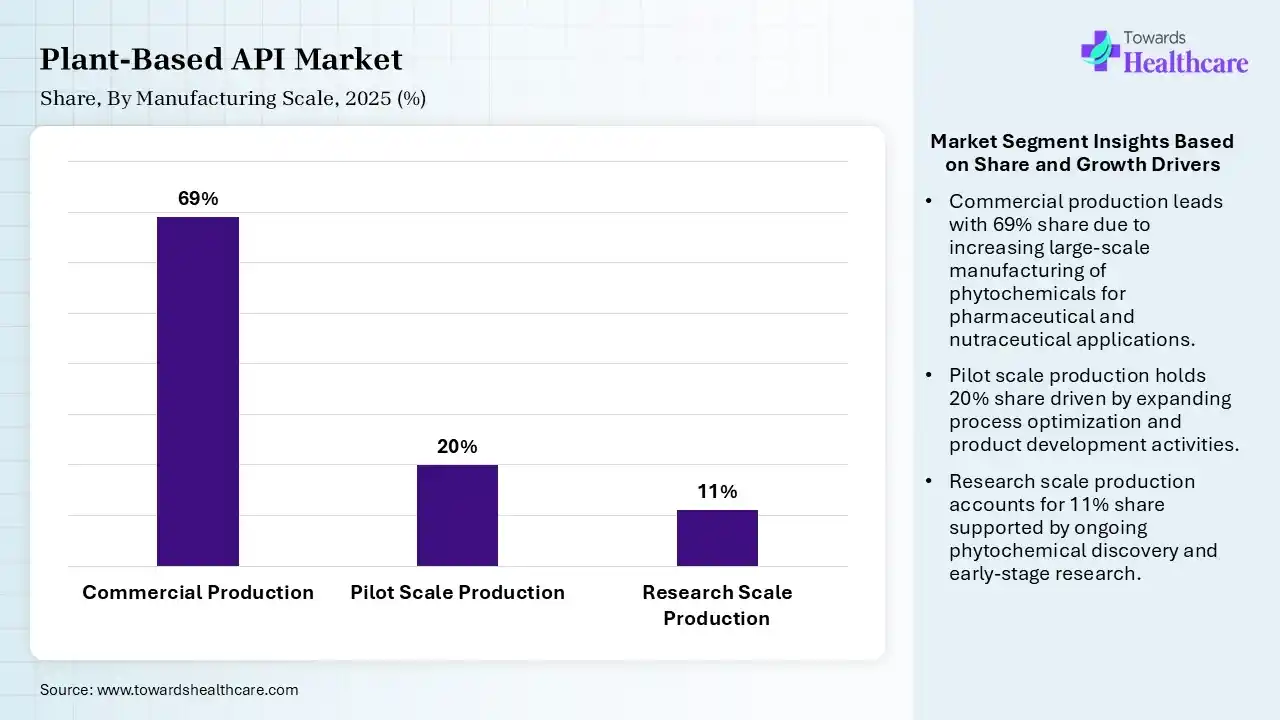
The Commercial Production Segment Dominated the Plant-based API Market With 69% in 2025
The commercial production segment held a major revenue share of 69% of the market in 2025, due to high-volume pharmaceutical manufacturing, which supported leadership. Based on Payal Rabde's analysis, growth in API demand also expanded their capacity. Process optimization also improved profitability.
The pilot scale production segment held the second-largest share of 20% of the plant-based API market in 2025 and is expected to expand rapidly with a CAGR of 8.80% during the forecast period, driven by clinical pipeline expansion increasing pilot manufacturing. Flexible production also supports innovation. Technology validation also drives investment.
| Segment | Share 2025 (%) |
| Pharmaceutical Companies | 44% |
| Nutraceutical Manufacturers | 21% |
| CDMOs | 15% |
| Research Institutes | 8% |
| Cosmetic Manufacturers | 8% |
| Others | 4% |
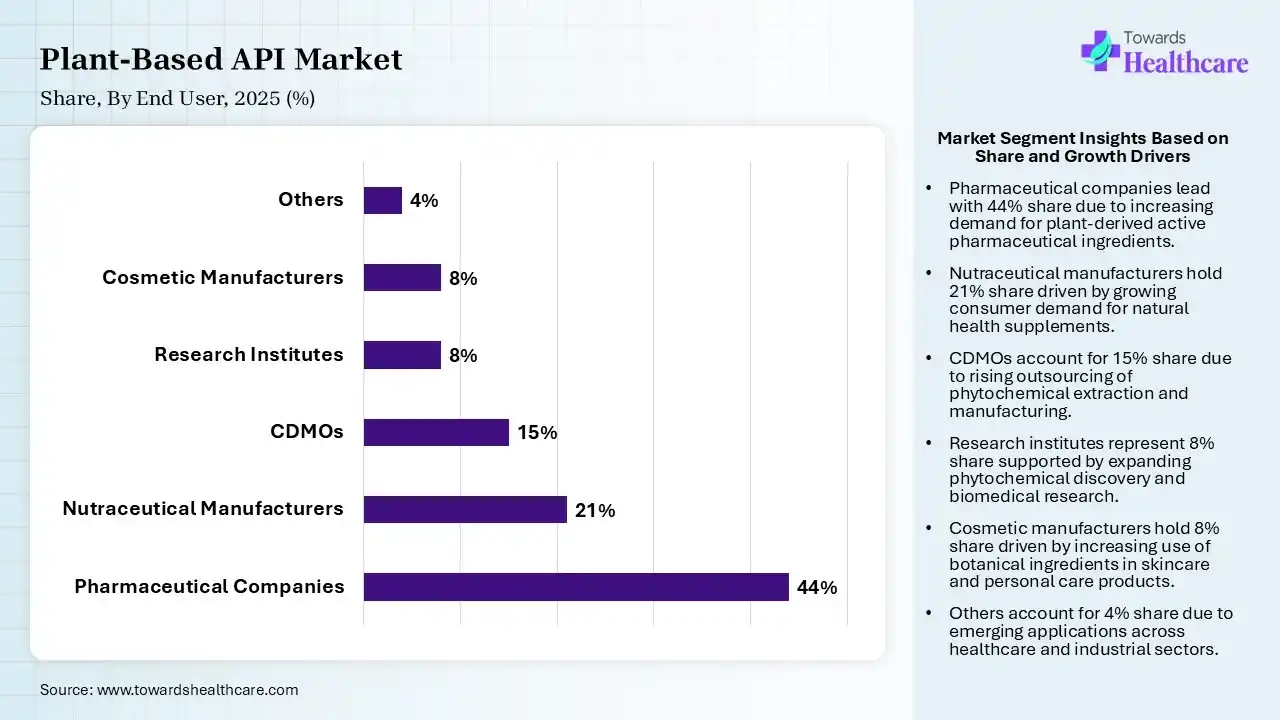
The Pharmaceutical Companies Segment Dominated the Plant-based API Market With 44% in 2025
The pharmaceutical companies segment contributed the biggest revenue share of 44% of the market in 2025, due to a rise in botanical drug approvals, which increased procurement. Strong R&D investment also supported their demand. Manufacturing expansion strengthened supply chains.
The nutraceutical manufacturers segment held the second-largest share of 21% of the plant-based API market in 2025 and is expected to gain the highest share with a CAGR of 8.90% during the forecast period, due to consumer wellness trends accelerating ingredient demand. Functional supplement innovation also expands their use. Premium natural products are gaining popularity.
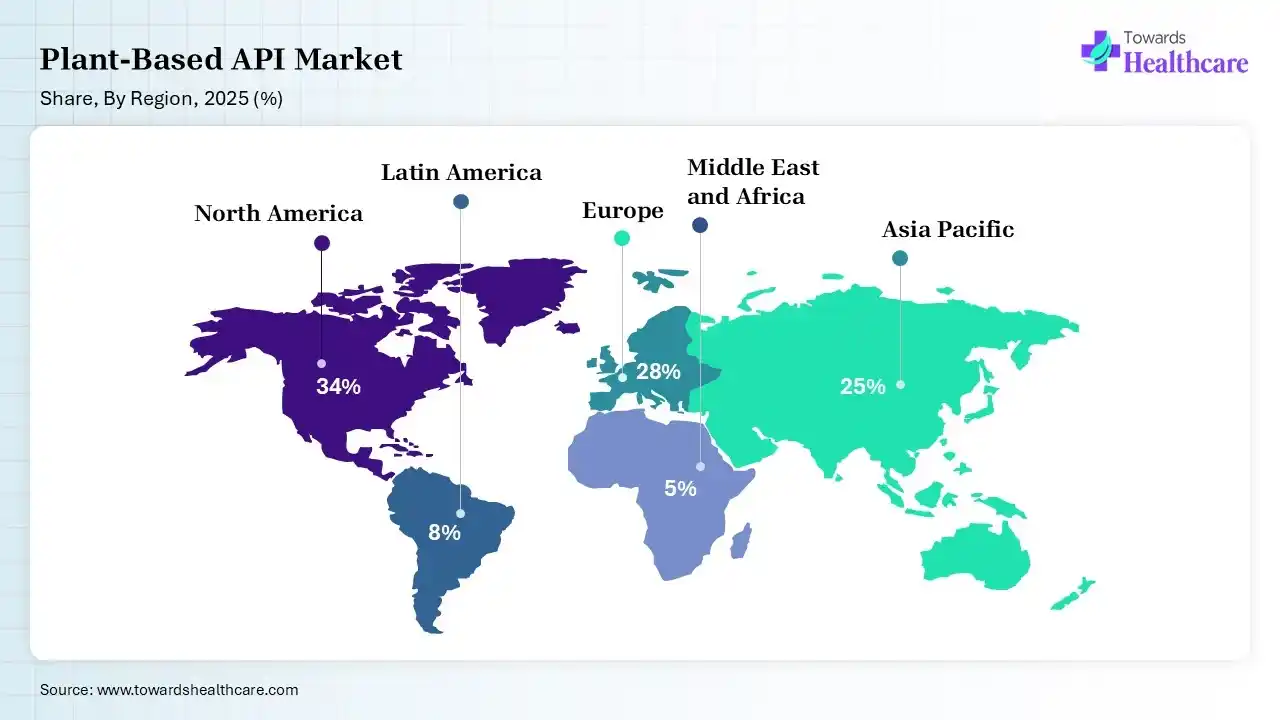
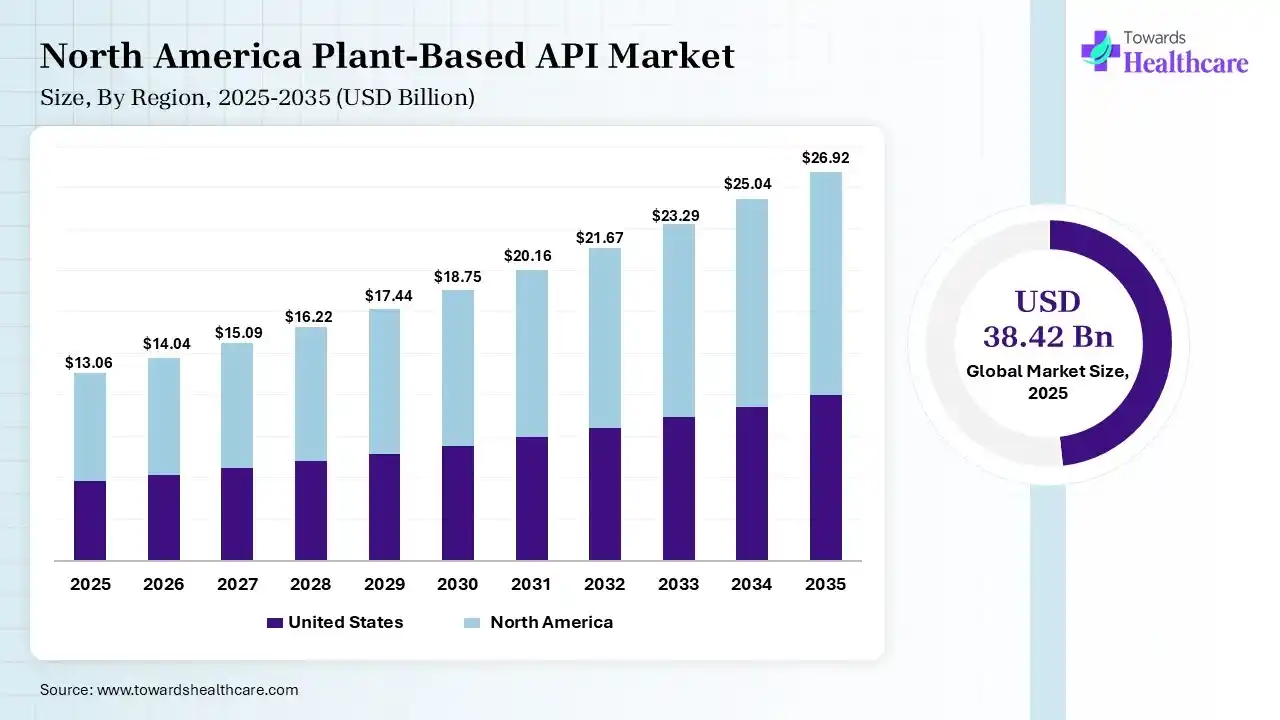
North America dominated the market with 34% in 2025, due to the presence of a strong pharmaceutical industry, which supported botanical API demand. Advanced extraction technologies improved competitiveness, which increased the use of plant-based APIs. Favourable regulatory support also encouraged their commercialization, where growth in drug discovery and development investments also increased their use. A rise in the demand for sustainable pharmaceutical ingredients also increased their use, which contributed to the market growth.
US Market Growth
U.S. held a 25% share of the plant-based API market in 2025, driven by a large pharmaceutical manufacturing base, which drives their demand. Significant R&D investment accelerated innovations, while a strong regulatory framework also supported their expansion. Growth in the shift towards plant-based medicines and natural products also increased their demand. According to the Payal Rabde analysis, the presence of advanced extraction and purification technologies also increased their use, where the expansion of the Sami Sabinsa Group, offering more than 120 products and 8 manufacturing units, also contributed to their market growth.
Canada Market Trends
Canada is a mature opportunity for the plant-based API market, supported by strong pharmaceutical and nutraceutical demand. Health Canada’s updated natural health product GMP guidance took effect in March 2026, raising attention on quality systems, testing, records, and supplier controls. Standardized botanical extracts are gaining interest, especially for wellness and chronic-care products. Competition includes established ingredient suppliers, API makers, and contract manufacturers. Growth opportunities lie in traceable sourcing, high-purity extracts, and customized formulations. Local firms can also serve North American customers seeking reliable supply chains. Research partnerships may further support novel plant-derived compounds, cleaner production methods, and scalable manufacturing.
Mexico Market Growth
Mexico held a 3% share in the plant-based API market in 2025 and is expected to grow with the highest CAGR of 7.8% during the studied years, due to growing pharmaceutical manufacturing expansion supporting production. Growing botanical cultivation also strengthens their supply, where a rise in export opportunities also increases their demand. Presence of abundant medical plants and affordable agricultural practices also increases their advancements, where growing investments in phytopharmaceuticals are also promoting their growth.
Europe held a 28% share of the market and is expected to grow significantly during the forecast period, due to botanical medicine acceptance remaining strong. Sustainable pharmaceutical production gains momentum, which is driving the advancements in plant-based APIs, where regulatory harmonization also supports their innovations. High botanical research investments and a shift towards suitable API production also increase their use. At the same time, growing consumer preference for natural products also enhances the market growth.
Germany Market Growth
Germany held an 8% share in the plant-based API market in 2025, driven by the presence of a strong herbal medicine industry, which supported growth. Advanced pharmaceutical manufacturing also expanded its adoption rates, where growth in research investment accelerated innovation. Favourable regulatory frameworks and advanced technologies also supported the advancements, where a rise in the demand for plant-based products also increased their adoption. Additionally, new collaborations also encouraged their innovations.
UK Market Growth
UK held a 5% share in the plant-based API market in 2025 and is expected to witness the fastest growth with a CAGR of 7.9% over the forecast period, due to biotechnology investment supporting botanical APIs. Academic research is strengthening pipeline development, while pharmaceutical innovations are expanding plant-based API applications. Increasing health awareness is also drveing the demand for natural healthcare products, where advancements in biotechnology are leading to new innovations, expanding future opportunities.
Argentina Market Trends
Argentina offers a different path for the plant-based API market, with local agriculture providing a useful base for botanical sourcing. Demand is linked to pharmaceutical manufacturing, herbal products, and interest in natural therapies. Domestic producers compete with imported ingredients, making cost and supply reliability important. Economic volatility can pressure investment and purchasing decisions. Still, opportunities exist in locally processed extracts, value-added botanical ingredients, and export-focused production. Partnerships between laboratories, universities, and manufacturers could strengthen formulation capabilities. Companies that improve standardization, quality testing, and traceability may gain an edge. Native plant resources also create room for differentiated products for regional buyers.
Asia Pacific held a 25% share of the market in 2025 and is expected to grow at the fastest CAGR of 9.10% during the forecast period, due to large medicinal plant resources supporting production. Rapid pharmaceutical expansion boosts the demand for plant-based APIs, where growing government investment accelerates botanical innovation. Abundant availability of medicinal plants and strong demand for traditional medicine systems are also increasing demand and promoting market expansion.
China Market Growth
China held a 9% share of the plant-based API market in 2025, driven by growth in traditional medicine leadership that drives production. Continued expansion of manufacturing capacity and growth in export revenues also encouraged the use of plant-based APIs. Strong government support and a rise in research investments also accelerated R&D activities. The rise in the adoption of advanced manufacturing and extraction technology led to new collaborations, which increased the development of new herbal medicines.
India Market Growth
India held a 6% share in the plant-based API market in 2025 and is expected to expand rapidly with a CAGR of 9.4% in the coming years, due to the Ayurvedic industry fueling botanical API demand. Increasing government initiatives are also strengthening cultivation practices, where growing pharmaceutical exports globally are also supporting their expansion. The presence of versatile medicinal plants and affordable services is leading to new partnerships, where growing demand for herbal pharmaceuticals is also increasing their use.
Latin America held an 8% share in the market in 2025 and is expected to show lucrative growth during the forecast period, due to biodiversity supporting botanical API production. Export opportunities are also strengthening the market, where growing local pharmaceutical investments are also expanding plant-based API manufacturing. Growing demand for natural therapeutics and herbal medicines are also increasing their use. At the same time, increasing government initiatives are also supporting market expansion.
Brazil Market Growth
Brazil held a 4% share in the plant-based API market in 2025 and is expected to gain the highest market share with a CAGR of 8.3% during the forecast period, driven by the presence of rich biodiversity, which supported novel API discovery. A rise in government research also encouraged commercialization, where pharmaceutical expansion also increased their demand. Growth in biotechnology capabilities also increased plant-based API innovations, and high investments in suitable manufacturing also increased their advancements.
The rest of Latin America held a 2% share in the plant-based API market in 2025, due to natural resource availability encouraging cultivation. Regional pharmaceutical development continues to drive the demand for plant-based APIs for the development of nutraceuticals as well as herbal remedies. Growing export rates also increase their demand, where expanding governments' investments also support various botanical R&D activities. Additionally, a rise in collaborations are also increasing the development of new plant-based pharmaceutical products.
MEA held a 5% share in the market in 2025 and is expected to show notable growth during the forecast period, due to growing healthcare investments expanding pharmaceutical manufacturing. Medicinal plant cultivation increases, which accelerates the development of various plant-based APIs. Import substitution strategies also support their growth, where diverse medical plants also promote traditional practices. Increasing health awareness also drives the demand for herbal and natural therapeutics, where the expansion of phytopharmaceutical products is also driving market growth.
Suadi Arabia Market Growth
Saudi Arabia held a 2% share in the plant-based API market in 2025, driven by healthcare diversification, which increased pharmaceutical investment. Botanical ingredient demand increased, which contributed to a rise in the use of plant-based APIs. Local production expansion also increased the adoption of cultivation, extraction, and manufacturing technologies, which accelerated their development. Furthermore, a shift towards preventive healthcare also increased the use of nutraceutical and other herbal remedies, which increased their demand.
UAE Market Growth
United Arab Emirates (UAE) held a 1% share in the plant-based API market in 2025 and is expected to show the fastest growth with a CAGR of 8.3% over the forecast period, due to growing pharmaceutical innovation supporting botanical APIs. New research collaborations are strengthening capabilities, expanding the development of various herbal products. Healthcare infrastructure expansion is also increasing their adoption rates, ultimately driving the demand for plant-based APIs. Based on the information gathered by Payal Rabde, expansion of pharmaceutical industries and healthcare investments are also increasing their innovations and adoption rates.
In July 2025, after announcing the launch of the latest wellness-focused brand, ‘Pranah’, marking its entry into the aromatherapy space by ITC Limited, Chairman Sanjiv Puri highlighted that “Today, consumers are also seeking new therapeutic experiences, as part of their holistic wellness pursuits. To address this, ITC launched ‘Pranah’, a range of incense sticks, cones and scented candles, built on the core promise of ‘Earth Inspired Aromatherapy’ that harmonises the planet’s natural elements with scientific wellness."
Competitive Benchmarking
Indena S.p.A., Phyton Biotech, and Roquette Freres were the market leaders in competitive benchmarking.
Market Share Analysis
Market share analysis was led by Roquette Freres, Indena S.p.A., and Alchem International.
Strategic Initiatives
Willow Biosciences, Herbalife International, and Protalix BioTherapeutics were the top players in strategic initiatives.
Product Portfolio Comparison
Sami-Sabinsa Group, Shaanxi Jiahe Phytochem, and Sichuan Xieli Pharmaceutical dominated the market in product portfolio comparison.
Geographic Presence Analysis
Based on geographical presence, Veranova, Indena S.p.A., and Alchem International dominated the market.
| Company Overview | Development and manufacturing of active pharmaceutical ingredients for niche areas |
| Product Portfolio | Offers products for oncology, addiction, CNS therapies, psychiatric disorders, and pain management |
| Manufacturing Facilities | Custom API manufacturing, analytical development, solid form and particle engineering |
| Strategic Initiatives | Strategic investment to establish state-of-the-art bioconjugation development and cGMP manufacturing capacity at its Devens, Massachusetts campus |
| Recent Developments | Bronze medal for one of the world’s most trusted providers of business sustainability ratings |
| SWOT Analysis |
Strengths: Expertise in API manufacturing Presence of advanced scale-up capabilities Weakness: High operational cost Opportunities: Growing demand for plant-based APIs Expanding collaborations Threats: Regulatory barriers |
| Company Overview | Focuses on healthier lives by providing access to quality nutrition and the resources to achieve total wellness |
| Product Portfolio | Shakes, Tea & beverages, vitamins & supplements, skin and body products |
| Strategic Initiatives | Landmark agreement with IIT Madras to establish India’s first Centre of Excellence on plant cell fermentation, driving sustainable innovation, research, and entrepreneurship in herbal biomass and phytochemical production. |
| Recent Developments | Launched Dates Caramel variant to its Formula 1 Nutritional Shake Mix range |
| SWOT Analysis |
Strengths: Strong nutrition and wellness recognition Wide range of plant-based nutritional products Weakness: Limited manufacturing focus Opportunities: Shift towards botanical formulations Demand for preventive healthcare Threats: High market competition |
| Company Overview | Innovator of sustainable solutions |
| Product Portfolio | Paclitaxel, Docetaxel, and SDS |
| Manufacturing Facilities | Specialty fermentation and commercial downstream processing |
| Strategic Initiatives | Acquisition of Controlled Substances Dealer License from Health Canada |
| Recent Developments | Successfully transferred the manufacturing process for the microbial production of Corallopyronin A (CorA) |
| SWOT Analysis |
Strengths: Expertise in plant cell fermentation technology Strong sustainable production practices Weakness: Complex manufacturing process Opportunities: Expanding plant cell culture applications Growing collaborations Threats: Presence of synthetic alternatives |
Short-Term Opportunities
The short-term opportunities are driven by a rise in demand for natural products, nutraceuticals, and growth in standardized herbal API production.
Medium-Term Opportunities
Medium-term opportunities highlight advancements in plant-based therapeutics, integration of biotechnology platforms, AI integration, and sustainability.
Long-Term Growth Opportunities
Expanding plant-based API applications, adoption of automated manufacturing processes, growing molecular farming technologies, and rising demand for personalized medicines are the long-term opportunities for the market.
Risk Assessment
The risk assessment for plant-based API focuses on operational, regulatory, geopolitical, environmental, supply chain, and commercial risks impacting market participants.
Strategic Recommendations
Based on the information gathered by Payal Rabde's analysis, the growing advancements in sustainable cultivation, green extraction technologies, and biotechnology collaborations are likely to strengthen market expansion.
Future Growth Scenario
Rising demand for natural pharmaceuticals, advancements in biotechnology production platforms, and expanding applications are the future growth scenarios.
Technology Roadmap
Technology roadmap encompasses advancements in extraction technologies, plant cell culture platforms, molecular farming technologies, manufacturing technologies, and digital tools.
Commercial Outlook
Commercial outlook highlights growing shift towards standardized plant-based API, specialty APIs, and their expanding applications.
Investment Outlook
Investment outlook focuses on growing botanical therapeutics, increasing funding, and strategic collaborations.
Strategic Priorities for Industry Participants
Strategic priorities for industry participants are driven by strengthening product portfolio, manufacturing capacities, extraction technologies, and regulatory compliance.
| Companies | Headquarters | Solutions |
| Indena S.p.A. | Milan, Italy | Paclitaxel, Bilberry Anthocyanins, And Colchicine |
| Alchem International | New Delhi, India | Digoxin, Calcium Sennosides, and Hyoscine N-Butylbromide |
| Phyton Biotech | Vancouver, Canada | Paclitaxel And Docetaxel |
| Smai-Sabinsa Group | Bangalore, India | Curcuminoids, Guggulsterones, And Forskolin |
| Roquette Freres | Lestrem, France | Mannitol And Sorbitol |
As per Payal Rabde's analysis, the plant-based API market is anticipated to show significant growth during the forecast period, which is anticipated to be driven by a wide range of factors. The growing demand for naturally derived pharmaceuticals, herbal medicines, and nutraceuticals are driving the adoption of plant-based APIs. The advancements in extraction technologies, cultivation technologies, plant cell culture, sustainable manufacturing, and government initiatives are also increasing their demand. Segments such as herb, flavonoids, nutraceuticals, and oncology are expected to show significant growth, attracting new investments. Additionally, Indena S.p.A., Phyton Biotech, Herbalife International, and Alchem International are anticipated to lead the market growth, increasing investment opportunities.
By Source
By API Type
By Extraction Technology
By Application
By Therapeutic Area
By Manufacturing Scale
By End User
By Region












Principal Consultant
Payal Rabde is a Healthcare Market Research Analyst at Towards Healthcare Research & Consulting with 4+ years of experience in pharmaceuticals, biotechnology, medical devices, and life sciences.
Learn more about Payal Rabde

Reviewed By
Aditi Shivarkar is a seasoned professional with over 14 years of experience in healthcare market research. As a content reviewer, Aditi ensures the quality and accuracy of all market insights and data presented by the research team.
Learn more about Aditi Shivarkar