


The U.S. AI-driven diabetic retinopathy screening market size was estimated at USD 191.05 million in 2025 and is predicted to increase from USD 231.59 million in 2026 to approximately USD 1308.85 million by 2035, expanding at a CAGR of 21.22% from 2026 to 2035.
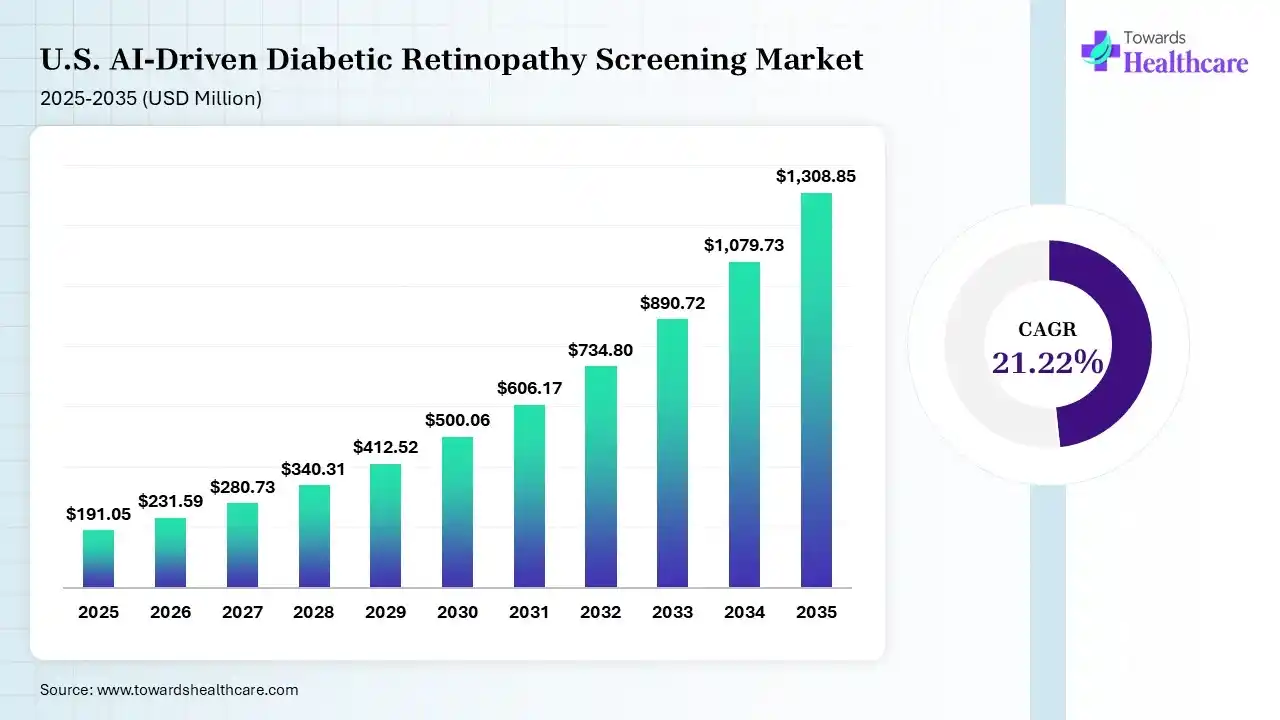
The market is expanding as more healthcare providers adopt automated retinal analysis tools to detect vision-threatening complications earlier, improve efficiency, and reach underserved patients amid rising diabetes prevalence and technological advances.
U.S. AI-driven diabetic retinopathy screening is the use of artificial intelligence technology to automatically detect and analyze retinal changes in diabetic patients, enabling early diagnosis and timely treatment of vision-threatening eye complications. The U.S. market for AI-driven diabetic retinopathy screening is expanding as high diabetes rates increase demand for efficient eye care. AI tools help detect retinal damage early, reduce reliance on specialists, speed diagnosis, and lower costs. Supportive FDA approvals and reimbursement trends are encouraging adoption in clinics, hospitals, and telehealth improving access and outcomes for patients at risk of vision loss.
| Disease | Cases in the U.S. |
| Diabetic Retinopathy | 9.6 million |
| Vision-Threatening Diabetic Retinopathy (VTDR) | 1.84 million |
| Table | Scope |
| Market Size in 2026 | USD 231.59 Million |
| Projected Market Size in 2035 | USD 1308.85 Million |
| CAGR (2026 - 2035) | 21.22% |
| Historical Data | 2020 - 2023 |
| Base Year | 2025 |
| Forecast Period | 2026 - 2035 |
| Measurable Values | USD Millions/Units/Volume |
| Market Segmentation | By Component Outlook, By Deployment Mode, By Screening, By End Use |
| Top Key Players | Eyenuk, Inc., Digital Diagnostics Inc., AEYE Health, Optomed, Intelligent Retinal Imaging Systems (IRIS), RETINAAI Health, Inc. |
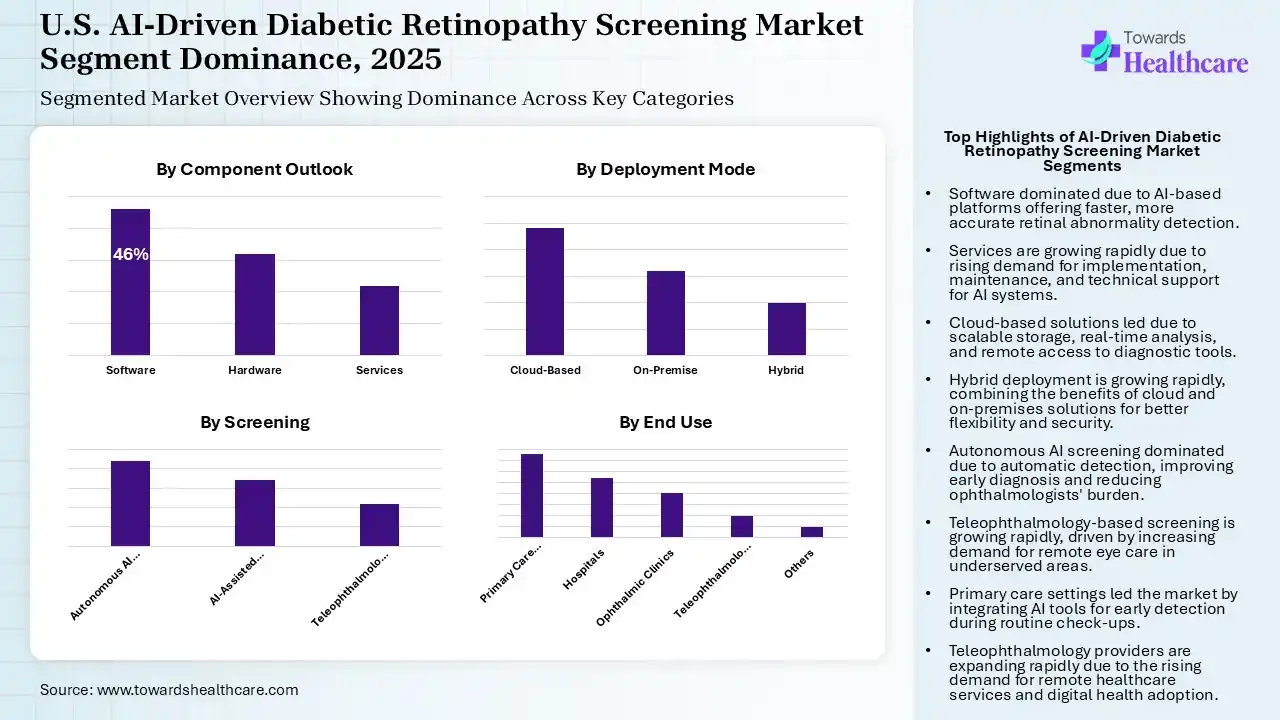
Why Did the Software Segment Dominate in the Market in 2025?
The software segment dominated the U.S. AI-driven diabetic retinopathy screening market in 2025 due to the increasing adoption of AI-based diagnostic platforms that enable faster and more accurate detection of retinal abnormalities. Healthcare providers prefer software solutions because they integrate easily with existing imaging systems and electronic health records. Additionally, continuous advancements in AI algorithms and cloud-based screening tools improved efficiency, scalability, and accessibility in ophthalmology practices and clinics.
Services
The services segment is expected to grow at the fastest CAGR during the forecast period due to the increasing demand for implementation, maintenance, training, and technical support for AI-driven screening systems. Healthcare providers require specialized services to effectively integrate AI software with existing diagnostic infrastructure. Additionally, the rising adoption of AI-based healthcare solutions and the need for continuous systems upgrades and data management are driving the growth of services-based offerings in the market.
What Made the Cloud-Based Segment Dominant in the Market in 2025?
The cloud-based segment dominated the U.S. AI-driven diabetic retinopathy screening market in 2025 due to its ability to support scalable data storage, real-time image analysis, and remote access to diagnostic tools. Healthcare providers increasingly prefer cloud platforms, as they enable seamless integration with teleophthalmology systems and electronic health records. Additionally, cloud deployment reduces infrastructure costs and supports faster updates of AI algorithms, improving screening efficiency and accessibility across healthcare facilities.
Hybrid
The hybrid segment is expected to grow at the fastest CAGR during the forecast period due to its ability to combine the benefits of both cloud and on-premises deployment. Hybrid solutions offer greater flexibility, enhanced data security, and improved control over sensitive patient information. Additionally, healthcare organizations are increasingly adopting hybrid models to balance scalability, compliance requirements, and efficiency in AI-driven screening operations across multiple healthcare facilities.
How did the Autonomous AI Screening Segment Dominate the Market in 2025?
The autonomous AI screening segment dominated the U.S. AI-driven diabetic retinopathy screening market in 2025 due to its ability to automatically detect diabetic retinopathy without requiring immediate specialist involvement. These systems provide rapid, accurate analysis of retinal images, improving early diagnosis and reducing the burden on ophthalmologists. Increasing EDA approvals, growing adoption in primary care settings, and the rising need for efficient large-scale diabetes screening programs further support the dominance of autonomous AI screening solutions.
Teleophthalmology-based Screening
The teleophthalmology-based screening segment is expected to grow at the fastest CAGR during the forecast period due to the increasing demand for remote healthcare services and improved access to eye care in underserved and rural areas. Teleophthalmology enables retinal images to be captured at local clinics and analyzed remotely by specialized or AI systems. Additionally, the rising adoption of digital health technologies and telemedicine platforms is accelerating the expansion of remote diabetic retinopathy screening programs.
How Did the Primary Care Settings Segment Dominate the Market in 2025?
The primary care settings segment dominated the U.S. AI-driven diabetic retinopathy screening market in 2025 due to the growing integration of AI screening tools in primary healthcare facilities. These settings allow early detection of diabetic retinopathy during routine diabetes check-ups, improving patient access to timely diagnosis. Additionally, AI-enabled systems reduce the need for specialist involvement, enabling faster screening and increasing adoption among primary care providers and clinics.
Teleophthalmology providers
The teleophthalmology providers segment is expected to grow at the fastest CAGR during the forecast period due to the rising demand for remote eye care services and improved access to screening in rural and underserved regions. Teleophthalmology allows retinal images to be captured locally and evaluated remotely by specialized or AI systems. Additionally, increasing adoption of telemedicine platforms and digital health technologies is accelerating the expansion of remote diabetic retinopathy screening services.
| Companies | Headquarters | Offerings |
| Eyenuk, Inc. | California, U.S. | Develops AI-powered retinal screening technology that evaluates fundus images and helps identify diabetic retinopathy quickly, supporting early diagnosis in primary care and eye clinics |
| Digital Diagnostics Inc. | Iowa, U.S. | Provides autonomous AI diagnostic software designed to detect diabetic retinopathy directly at the point of care without requiring a specialist’s immediate interpretation. |
| AEYE Health | California, U.S. | Offers AI-based medical imaging software that nalyses retinal scans and assists healthcare providers in identifying signs of diabetic retinopathy efficiently. |
| Optomed | Oulu, Finland | Produces portable retinal imaging devices integrated with artificial intelligence that enable rapid eye screening in clinics and remote healthcare environments |
| Intelligent Retinal Imaging Systems (IRIS) | Florida, U.S. | Provides a digital retinal screening platform that combines imaging devices, workflow management, and analytics tools to support diabetic retinopathy detection programs. |
| RETINAAI Health, Inc. | California, U.S. | Focuses on AI-driven retinal image analysis solutions designed to assist clinicians in identifying diabetic retinopathy and related eye conditions earlier. |
By Component Outlook
By Deployment Mode
By Screening
By End Use





Principal Consultant
Shivani Zoting is a dedicated research analyst specializing in the healthcare industry. With a strong academic foundation, a B.Sc. in Biotechnology and an MBA in Pharmabiotechnology, she brings a unique blend of scientific understanding and strategy.
Learn more about Shivani Zoting
Reviewed By
Aditi Shivarkar is a seasoned professional with over 14 years of experience in healthcare market research. As a content reviewer, Aditi ensures the quality and accuracy of all market insights and data presented by the research team.
Learn more about Aditi Shivarkar










