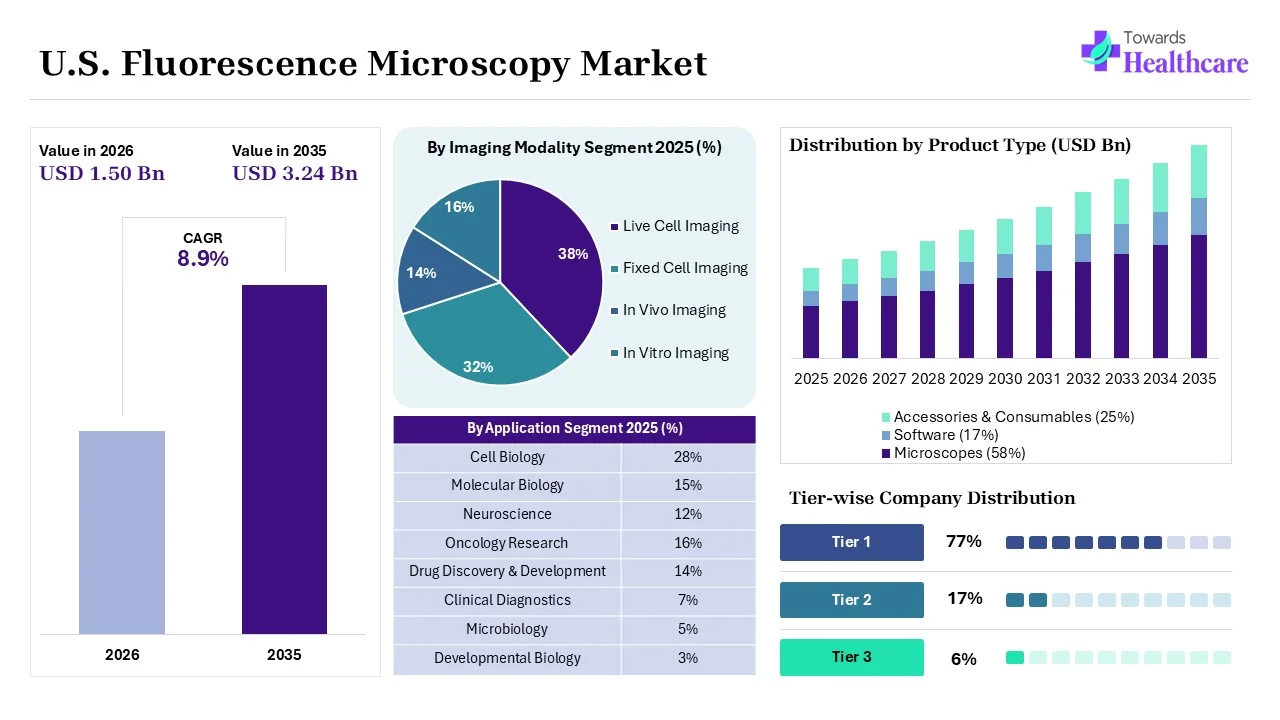
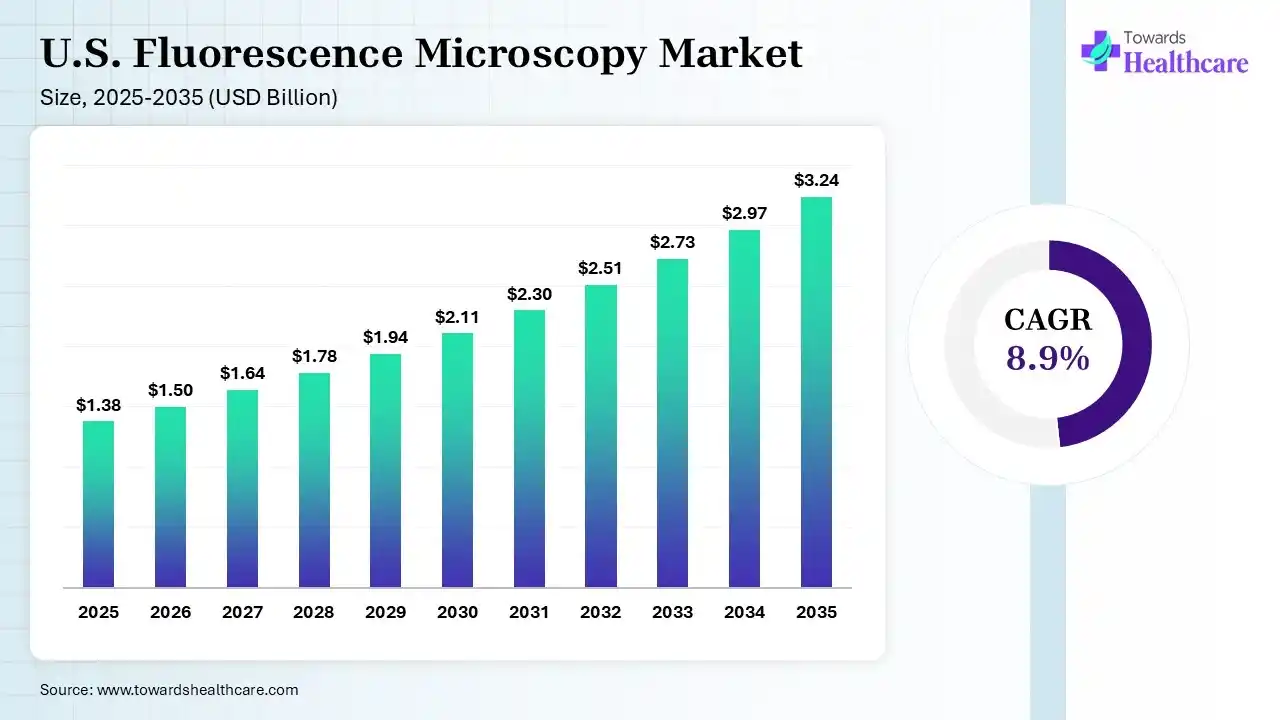
The U.S. fluorescence microscopy market size stood at US$ 1.38 billion in 2025, grew to US$ 1.5 billion in 2026, and is forecast to reach US$ 3.24 billion by 2035, expanding at a CAGR of 8.9% from 2026 to 2035. Increasing R&D activities across the U.S. are driving the demand for fluorescence microscopy. Additionally, growing disease burden, innovations, collaborations, and new product launches are also enhancing the market growth.
The U.S. fluorescence microscopy market is driven by a rise in R&D funding and increasing integration of AI into high-throughput cell imaging. The U.S. fluorescence microscopy encompasses reagents, instruments, software, and other related services across the U.S., which are used for visualization and analysis of various biological processes with the use of fluorescent substances. Increasing incidence of chronic diseases like cancer, infectious, and neurological diseases is increasing the use of fluorescence microscopy across the U.S. At the same time, rising R&D investments and funding are also increasing their adoption, where their high-resolution visualization is also increasing their demand in molecular biology research.
The fluorescence microscopy also offers deeper insights and improved research productivity, which increases its use as well as expands its applications. The common types of fluorescence microscopy used across the U.S. encompass widefield fluorescence microscopy, confocal fluorescence microscopy, multiphoton microscopy, super-resolution fluorescence microscopy, light sheet fluorescence microscopy, total internal reflection fluorescence microscopy, digital fluorescence microscopy, spinning disk confocal microscopy, etc. Furthermore, growing biomarker research, real-time biological studies, increasing demand for precision medicines, growing collaborations, and advancements in fluorescence microscopy solutions are also driving the market expansion.
The U.S. fluorescence microscopy focuses on advanced imaging systems that use fluorescent dyes and probes to visualize cells, tissue, and biomolecules with exceptional sensitivity and resolution. The market is expanding due to the rising adoption of fluorescence microscopy in biomedical research, cancer diagnostics, drug discovery, and precision medicine. Growing investment in life science research, increasing demand for high-resolution cellular imaging, and expanding biotechnology and pharmaceutical activities are key growth drivers. Technological advancements,, including AI-powered image analysis, super-resolution microscopy, fluorescence imaging, and automated digital imaging platforms, are enhancing research efficiency and diagnostic accuracy. Future opportunities are emerging from spatial biology, single-cell analysis, personalized medicine, and translational research, positioning fluorescence microscopy as a critical technology for next-generation biomedical innovation.
The use of AI in fluorescence microscopy across the U.S. is increasing as it offers automated image analysis with faster interpretation. It also offered high accuracy in cell detection and classification, improved image quality, and high content screening, which also helps in accelerating the drug discovery and development process. AI also helps in real-time monitoring, image enhancement, pattern recognition, and supports super-resolution imaging, ultimately reducing the chances of human errors and promoting automated workflow optimization.
Increasing Drug Discovery and Development
The rising drug discovery and development across U.S. companies is increasing the use of fluorescence microscopy. They are being used for drug efficacy assessment, high-content screening, target validation, and toxicity studies, where they are also being used for visualization of molecular and cellular interactions supporting the development of new therapies. At the same time, growing investments in oncology, neurosciences, rare disease, and immunology are also driving their adoption.
Expanding Multiplex Imaging
The expanding application of fluorescence microscopy for multiplex imaging, driving validation and analysis of multiple biomarkers, is increasing its demand for biomedical research. Their simultaneous validation of multiple biological targets is driving their use for the detection of various complex biological processes, as well as tissue microenvironments and disease mechanism understanding. Additionally, expanding advancements in fluorescent probes, data analysis tools, and imaging software are driving the multiplex imaging application and adoption rates.
Escalating Applications
The growing use of fluorescence microscopy is expanding its applications beyond traditional cell biology towards cancer, infectious disease, neuroscience, and immunology research. Fluorescence microscopy is also being used for clinical diagnostics, regenerative medicine, genomics, and proteomics, which is increasing its adoption across academic institutions, biotechnology firms, and pharmaceutical companies, as well as healthcare organizations. At the same time, their high-resolution imaging and accurate molecular analysis are also expanding their growth opportunities.
| Table | Scope |
| Market Size in 2026 | USD 1.5 Billion |
| Projected Market Size in 2035 | USD 3.24 Billion |
| CAGR (2026 - 2035) | 8.9% |
| Historical Data | 2020 - 2023 |
| Base Year | 2025 |
| Forecast Period | 2026 - 2035 |
| Measurable Values | USD Millions/Units/Volume |
| Market Segmentation | Carl Zeiss AG, Thermo Fisher Scientific Inc., Nikon Corporation, Bruker Corporation, Leica Microsystems, Keyence Corporation, Evident Corporation |
| Top Key Players | By Product Type, By Technology, By Application, By End User, By Fluorophore Type, By Imaging Modality |
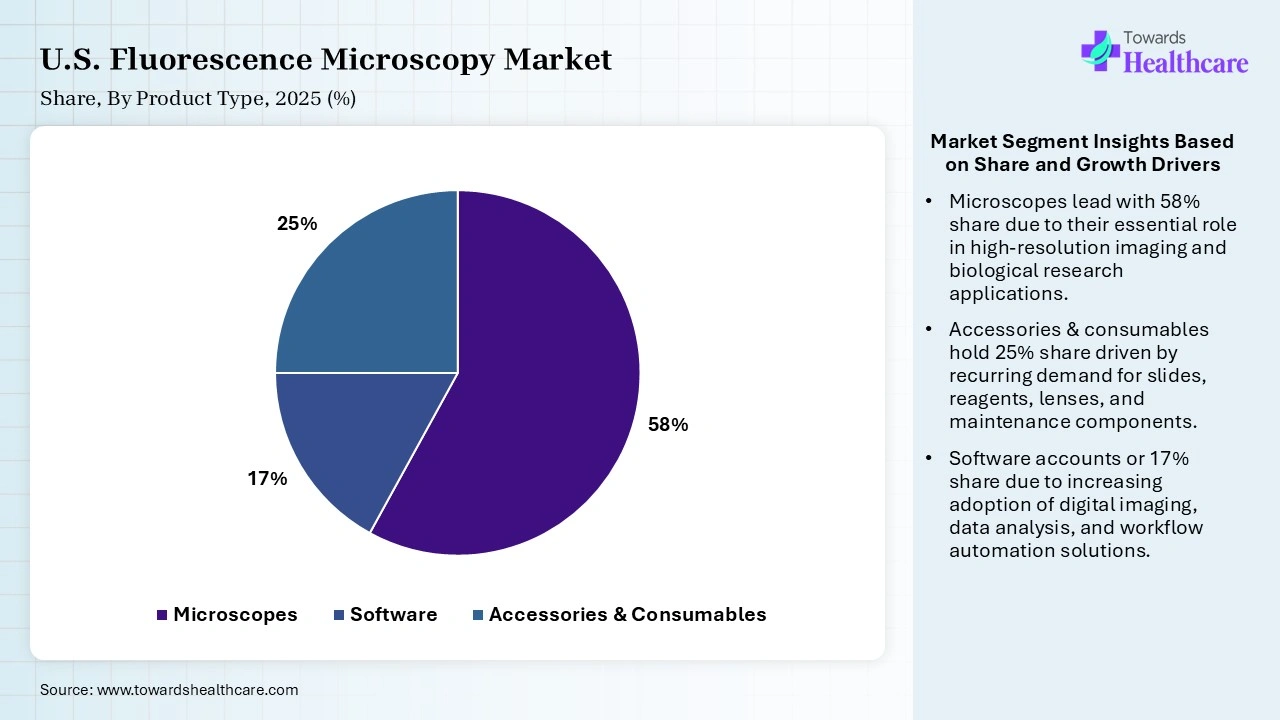
| Segment | Share 2025 (%) |
| Microscopes | 58% |
| Software | 17% |
| Accessories & Consumables | 25% |
The Microscopes Segment Dominated the Market With 58% in 2025
The microscopes segment led the U.S. fluorescence microscopy market with a 58% share in 2025, driven by high adoption in advanced life science research. Continuous upgrades in imaging performance and integration with advanced technologies have also increased the adoption of various microscopes. Increased investment in precision cellular analysis also promoted their adoption.
The accessories & consumables segment held the second-largest share of 25% of the market in 2025, due to recurring purchases that support revenue growth. Expansion of fluorescence assays is also increasing their usage. Demand rises with the installed microscope base. Additionally, growing applications of fluorescence microscopy are also driving their recurring demand.
The software segment held 17% of the U.S. fluorescence microscopy market share in 2025 and is expected to witness the fastest growth with a CAGR of 10.8% during the forecast period, driven by AI-enabled image processing, which accelerates workflows. Growing data complexity is also driving analytics demand. Cloud-based platforms improve collaboration, which is increasing their adoption rates.
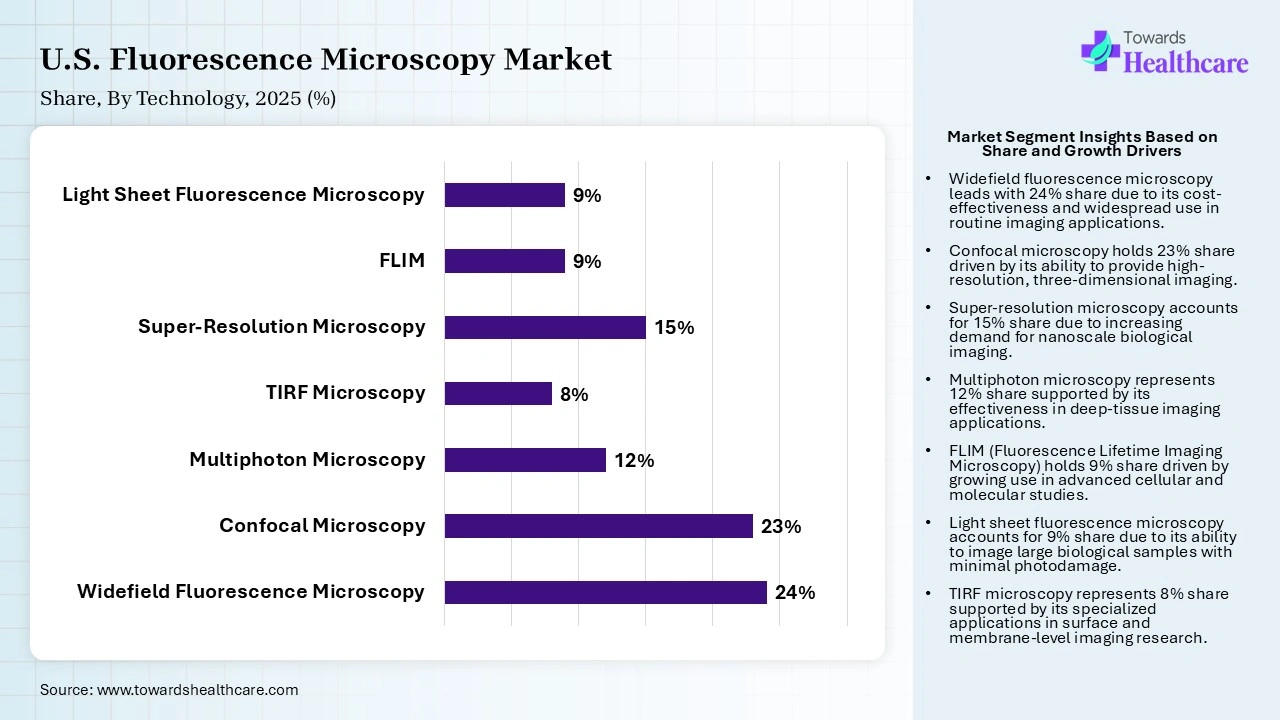
| Segment | Share 2025 (%) |
| Widefield Fluorescence Microscopy | 24% |
| Confocal Microscopy | 23% |
| Multiphoton Microscopy | 12% |
| TIRF Microscopy | 8% |
| Super-Resolution Microscopy | 15% |
| FLIM | 9% |
| Light Sheet Fluorescence Microscopy | 9% |
The Widefield Fluorescence Microscopy Segment Dominated the Market With 24% in 2025
The widefield fluorescence microscopy segment accounted for the highest revenue share of 24% of the U.S. fluorescence microscopy market in 2025, due to its cost-effective imaging, which supported its broad adoption. They were suitable for routine laboratory applications, which contributed to their continuous usage. Strong presence in academic facilities also supported their growth.
The confocal microscopy segment held the second-largest share of 23% of the market in 2025, driven by higher image resolution, which attracts researchers. Expanding biomedical research also drives their purchases. Furthermore, improved optical sectioning, 3D imaging, and live cell imaging are also enhancing analysis, which in turn drives their demand.
The super-resolution microscopy segment held 15% of the U.S. fluorescence microscopy market share in 2025 and is expected to show the highest growth with a CAGR of 11.4% during the forecast period, driven by a rise in demand from researchers requiring nanoscale visualization. Technology advancements also improve accessibility. Funding for advanced imaging continues to rise, increasing its adoption.
The multiphoton microscopy segment held 12% of the market share in 2025 due to its deep tissue imaging, which expands neuroscience studies. Reduced phototoxicity supports live imaging, where the growing translational research also drives their adoption. Their high-resolution imaging and expanding in vivo imaging applications are also increasing their use.
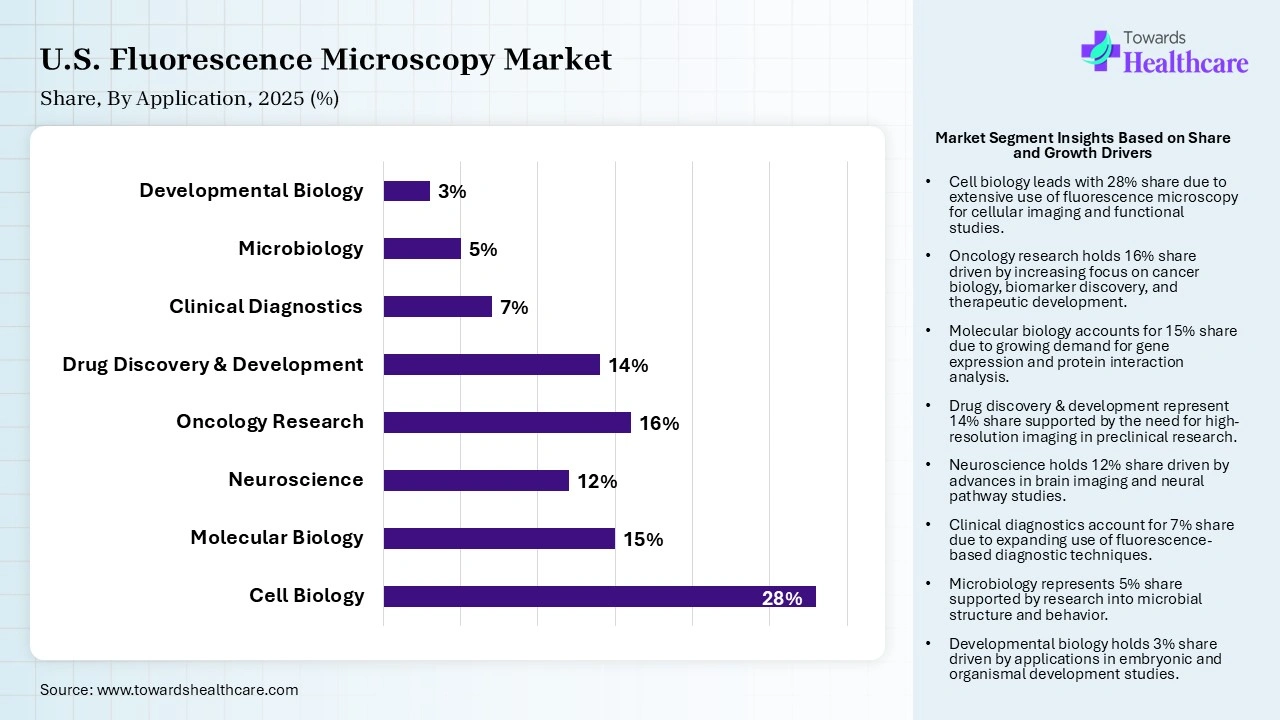
| Segment | Share 2025 (%) |
| Cell Biology | 28% |
| Molecular Biology | 15% |
| Neuroscience | 12% |
| Oncology Research | 16% |
| Drug Discovery & Development | 14% |
| Clinical Diagnostics | 7% |
| Microbiology | 5% |
| Developmental Biology | 3% |
The Cell Biology Segment Dominated the Market With 28% in 2025
The cell biology segment held a major revenue share of 28% of the U.S. fluorescence microscopy market in 2025, as cell-based studies remained a core research activity. The fluorescence microscopy offered advanced imaging, which supported mechanistic discoveries, promoting its use. Funding continued to expand globally, which increased their adoption rates.
The oncology research segment held the second-largest share of 16% of the market in 2025, due to increasing cancer biomarker discoveries, which drive fluorescence microscopy adoption. A rise in the demand for precision medicine is also increasing the imaging requirements. Drug target validation also relies on microscopy, promoting its adoption rates.
The molecular biology segment held 15% of the U.S. fluorescence microscopy market share in 2025, due to expanding gene expression studies requiring fluorescence tools. Increased genomics research activities are also driving the demand for fluorescence microscopy solutions. Multiplex imaging gains traction, promoting its use. They are also being used for the identification of molecular interactions.
The drug discovery & development segment held 14% of the market share in 2025 and is expected to expand rapidly with a CAGR of 10.7% during the forecast period, driven by increasing pharmaceutical screening activities. Growing demand for high-content imaging to accelerate drug development also drives the demand for fluorescence microscopy. AI-enabled analysis is also improving their efficiency.
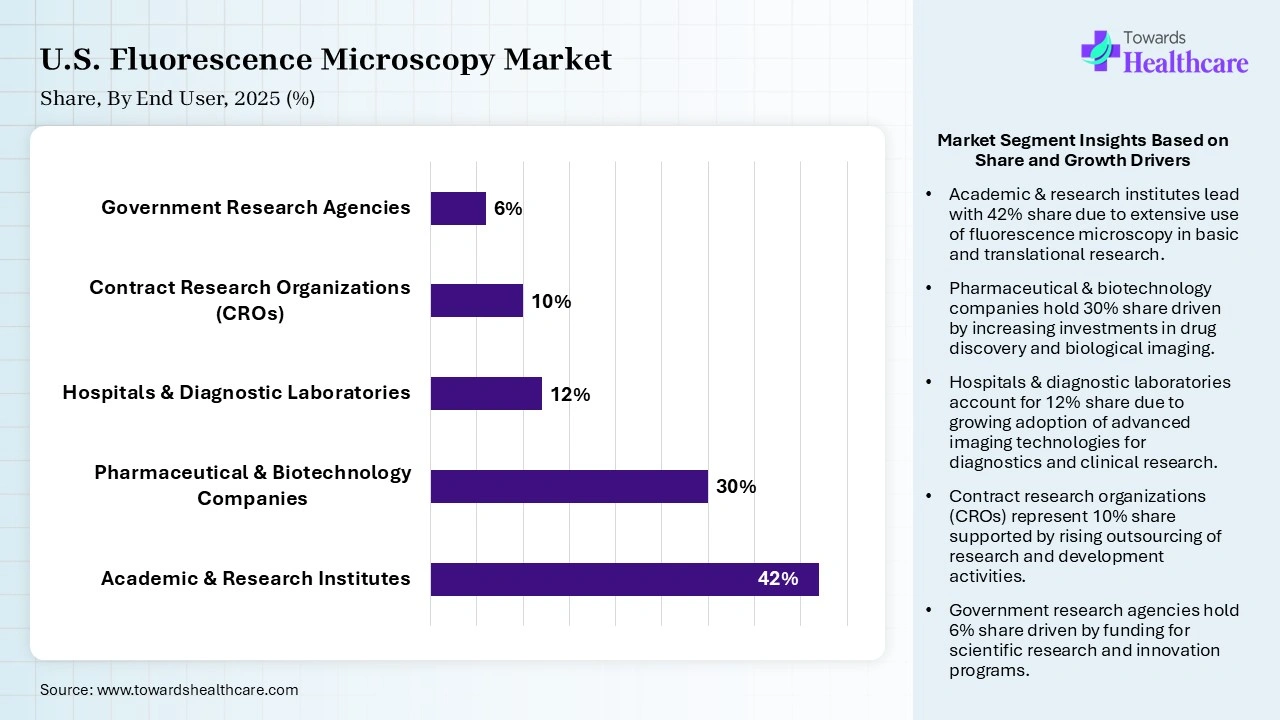
| Segment | Share 2025 (%) |
| Academic & Research Institutes | 42% |
| Pharmaceutical & Biotechnology Companies | 30% |
| Hospitals & Diagnostic Laboratories | 12% |
| Contract Research Organizations (CROs) | 10% |
| Government Research Agencies | 6% |
The Academic & Research Institutes Segment Dominated the Market With 42% in 2025
The academic & research institutes segment contributed the biggest revenue share of 42% of the U.S. fluorescence microscopy market in 2025, due to the large research infrastructure, which supported the fluorescence microscopy purchases. Federal grants fund equipment upgrades, which increased their adoption rates. Their diverse applications also helped in maintaining their continuous demand.
The pharmaceutical & biotechnology companies segment held the second-largest share of 30% of the market in 2025 and is expected to gain the highest share with a CAGR of 10.5% during the forecast period, driven by a continuous rise in drug discovery investments. High-content screening requires advanced imaging, which increases the use of fluorescence microscopes. Growing demand for precision medicine is also driving technology adoption.
The hospitals & diagnostic laboratories segment held 12% of the U.S. fluorescence microscopy market share in 2025, driven by expanding clinical research activities. Improving diagnostic imaging capabilities is also increasing their preference for accurate detection of growing chronic diseases. Rising demand for advanced pathology is also prompting the use of fluorescence microscopy techniques.
The contract research organizations (CROs) segment held 10% of the market share in 2025, due to continuous growth in outsourced research services. Imaging-intensive studies are also boosting equipment utilization. Growing pharmaceutical partnerships are also increasing their demand. The growing demand for affordable and high-throughput imaging services is also driving their acceptance rates.
| Segment | Share 2025 (%) |
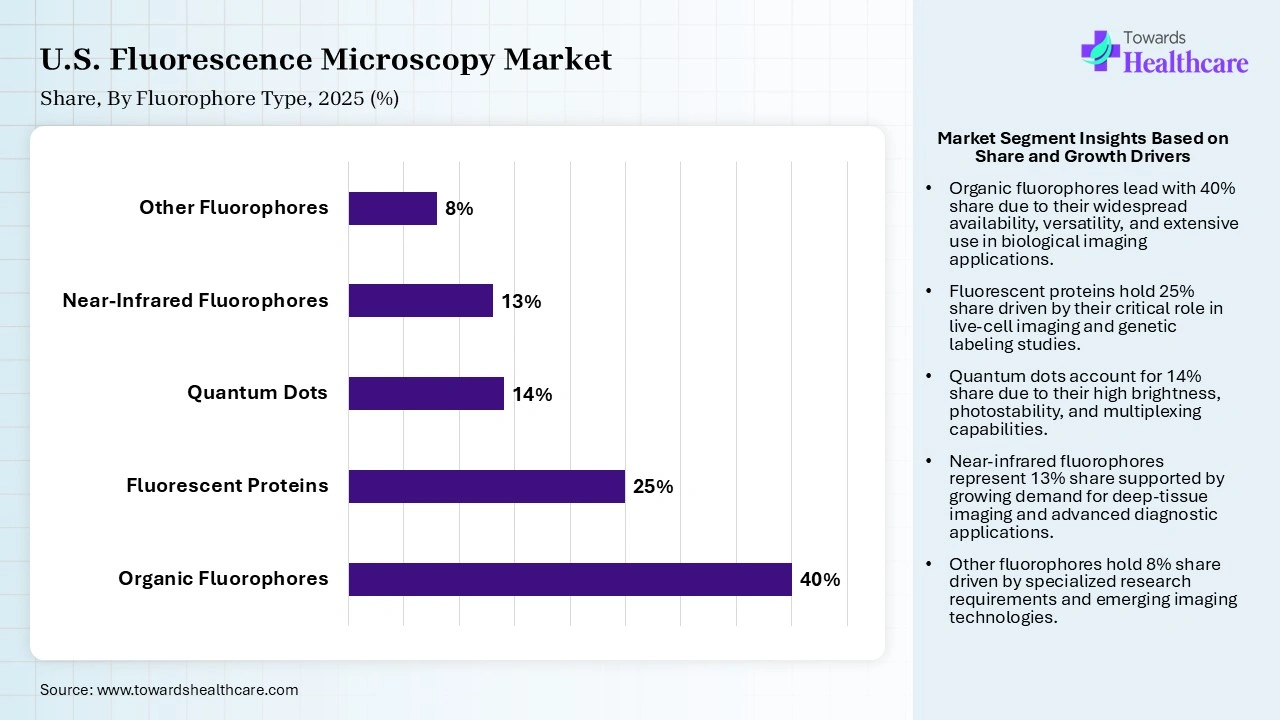
| Organic Fluorophores | 40% |
| Fluorescent Proteins | 25% |
| Quantum Dots | 14% |
| Near-Infrared Fluorophores | 13% |
| Other Fluorophores | 8% |
The Organic Fluorophores Segment Dominated the Market With 40% in 2025
The organic fluorophores segment held the largest revenue share of 40% of the U.S. fluorescence microscopy market in 2025, driven by their broad availability, which supported their widespread use. Established protocols also encouraged their adoption rates. At the same time, cost advantages also remained an attractive factor, which increased their usage volume.
The fluorescent proteins segment held the second-largest share of 25% of the market in 2025, due to the expansion of live-cell imaging applications. Genetic labelling, high specificity, and minimal disruption improve research accuracy, which promotes its adoption. At the same time, a rise in cell biology studies also drives their demand.
The quantum dots segment held 14% of the U.S. fluorescence microscopy market share in 2025 and is expected to grow with the fastest CAGR of 11.2% during the forecast period, as their superior brightness improves detection. Long-term imaging benefits researchers, which drives their demand. Nanotechnology advancements are also supporting their adoption.
The near-infrared fluorophores segment held 13% of the market share in 2025, driven by an increase in deep tissue imaging applications. Expanding clinical translation opportunities have also increased the adoption of these fluorophores. Their signal penetration advantages, along with more sensitive detection and multiplex imaging, are also driving their demand.
The U.S. fluorescence microscopy market held a notable share in 2025 and is expected to show lucrative growth during the forecast period, due to well-established biotechnology and pharmaceutical industries. The growing prevalence of various chronic diseases is also increasing the demand for advanced diagnostics, which is driving the adoption of these fluorescence microscopy techniques. Increasing advancements in cell biology and molecular biology are also encouraging their use, and the growing technological innovations are also driving the development of next-generation fluorescence microscopes. Furthermore, their growing applications in cancer, neurosciences, and immunology research are also increasing their adoption, where the growing collaborations and investments are also supporting their innovations, contributing to the market growth.
R&D
Clinical Trials and Regulatory Approvals
Patient Support and Services
| Companies | Headquarters | Fluorescence Microscopy Techniques in the U.S. |
| Carl Zeiss AG | Oberkochen, Germany | LSM 980, Zeiss Axio Observer, and Axio Imager |
| Thermo Fisher Scientific Inc. | Waltham, U.S. | EVOS M5000, EVOS M7000 and CellInsight CX7 |
| Nikon Corporation | Tokyo, Japan | AX/AX R, Nikon ECLIPSE Ji, and ELIPSE Ti2 |
| Bruker Corporation | Billerica, U.S. | Bruker Ultima Investigator, Luxendo, and Opterra |
| Leica Microsystems | Wetzlar, Germany | Lecia Mateo FL, Stellaris, and THUNDER Imager |
| Keyence Corporation | Osaka, Japan | Keyence BZ-X800 |
| Evident Corporation | Tokyo, Japan | Evident FLUOVIEW FV4000, BX53, and IXplore |
In January 2025, after the U.S. commercialization of LumiSystem™ by the Lumicell, Inc., Irene Wapnir, MD, Professor of Surgery at Stanford University School of Medicine, and Director of Breast Cancer Surgical Clinical Research at the Stanford Cancer Institute stated that "We breast surgeons know all too well the limitations of lumpectomy and the difficult conversations we have with patients about the possibility of a second surgery due to positive margins," "Stanford is excited to adopt LumiSystem because, with its real-time fluorescence guidance, we are now able to detect and remove more cancerous tissue during surgery while still sparing as much healthy breast tissue as possible."
By Product Type
By Technology
By Application
By End User
By Fluorophore Type
By Imaging Modality









Principal Consultant
Payal Rabde is a Healthcare Market Research Analyst at Towards Healthcare Research & Consulting with 4+ years of experience in pharmaceuticals, biotechnology, medical devices, and life sciences.
Learn more about Payal Rabde

Reviewed By
Aditi Shivarkar is a seasoned professional with over 14 years of experience in healthcare market research. As a content reviewer, Aditi ensures the quality and accuracy of all market insights and data presented by the research team.
Learn more about Aditi Shivarkar