


The research team at Indian Institute of Technology Madras (IIT Madras) and Christian Medical College (CMC), Vellore, has devised three innovative tools that employ artificial intelligence (AI) algorithms to help in early identification and evaluation of renal disorders. In the process of their research, the scientists have come up with three different technologies that range from predicting chronic kidney disease, automating CT-scan examination, to 3D visualization of an individual's kidney.
Renal diseases may not show any symptoms in their initial stages of development, and hence the diagnosis of such diseases might be made only when there is considerable damage to the kidneys. To solve this problem, the researchers from IIT Madras and CMC Vellore have come up with an AI technology that can help in all phases of renal evaluation.
The first technology employs a machine learning algorithm using clinical and laboratory data for predicting the occurrence of chronic kidney disease. The second technology employs a deep learning algorithm for analyzing CT images and dividing kidneys into four classes such as normal kidney, kidney cyst, kidney stone, and kidney tumor. The third technology involves the use of CT images to develop 3D models of kidneys.
"The group tried to come up with smart solutions that will help the doctors to make faster and smarter decisions. "We combined machine learning with medical knowledge and created devices that will help in the early diagnosis of kidney disease and also provide patient-specific data," said Prof. G.L. Samuel, Department of Mechanical Engineering, IIT Madras.
The CT image classification algorithm was trained with more than 12,000 images, and it can classify healthy kidneys and differentiate them from the presence of cysts, stones, and tumors. On the other hand, the 3D imaging approach utilizes CT scans to rebuild the patient's own kidney anatomy and calculate the tumor burden.
The CKD predictive model has also been developed into a prototype user interface in an attempt to translate the results into clinical practice. Further research is still ongoing to refine the performance and interpretability of the model outputs.
Ms. Jennifer Delighta, Research Scholar at IIT Madras, said that early diagnosis of kidney disease is an important consideration, and the artificial intelligence techniques developed in this research would help achieve it by early identification of patients and treatment planning. Ms. Delighta further stressed the potential of personalized images in the better understanding of the disease's spread and progression.
This research marks one step towards the development of a kidney Digital Twin, where AI-assisted image analysis can be coupled with personalized three-dimensional anatomical models. Such a platform may help in monitoring and forecasting the spread and progression of diseases as well as personalized treatment planning in the future.
The research was supported institutionally by IIT Madras and SPARC (Scheme for Promotion of Academic and Research Collaboration). The team plans to verify the accuracy of the developed models through validation with more patient datasets and establishment of collaborations with healthcare organizations for implementation of the models in practical applications.
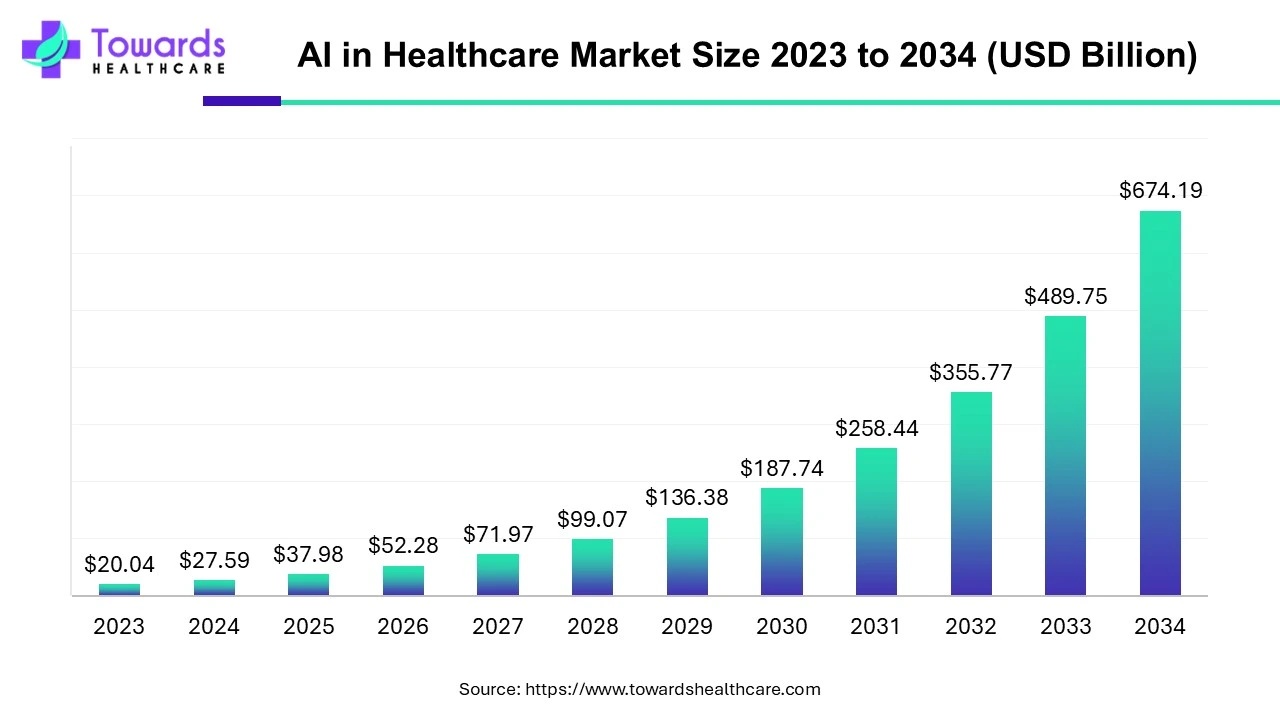
According to Towards Healthcare, the AI in healthcare market is projected to grow significantly, with estimates indicating the market size will increase from USD 52.28 billion in 2026 to approximately USD 928.18 billion by 2035. AI in the field of healthcare includes such areas as machine learning, deep learning, computer vision, natural language processing, medical imaging, and diagnostics, clinical decision support, interconnected medical devices, and personalized medicine. The development of AI-based medical imaging and diagnostic systems is becoming more widespread with the aim of helping healthcare professionals analyze complicated clinical data.
The Indian Institute of Technology Madras (IIT Madras) is one of the premier institutes for higher education and research in India, where research is carried out across various domains such as engineering, science, technology, health care, artificial intelligence, and other multidisciplinary areas. The institute collaborates with many different organizations in the above areas of research, including many AI-focused initiatives.
Christian Medical College (CMC), Vellore, India, is a healthcare, educational, and research organization. The association between Christian Medical College and IIT Madras in research on kidney diseases is through a partnership between medical skills in nephrology and engineering, artificial intelligence, and image processing for kidney disease diagnosis.


