


The procedure, performed by the complex's heart catheterization team, marks the launch of a leadless pacemaker solution into the EHA's specialized cardiology facilities.
The expert said launching well-developed healthcare technologies and investing in qualified healthcare professionals were significant to its efforts to increase specialized management and offer insurance beneficiaries the latest healthcare solutions.
A leadless pacemaker is a small device implanted directly in the heart's right ventricle through a catheter inserted through the femoral vein. Unlike conventional pacemakers, it does not require a surgical pocket beneath the skin or leads that extend to the heart muscle.
Based on the EHA, the solution reduces some challenges related to conventional pacemakers in medically eligible patients and offers a more recent treatment choice for certain cardiac rhythm disorders.
The authority said the limited patient influence demonstrates the UHIS's capability to create high-cost management available based on beneficiaries' healthcare requirements.
Launching the recent technology also forms part of Egypt's efforts to localize well-developed healthcare treatments, benefit from scientific and technological advancement, and bring particular solutions closer to patients' places of residence, it added.
The EHA stressed that developed tools must be supported by qualified healthcare, nursing, and technical personnel capable of operating them effectively, confirming the continued provision of particular solutions in its facilities.
The technology was carried out under the supervision of Gamila Nasr, head of the Cardiology Department at Ismailia Medical Complex, and with the oversight of the complex's director, Ahmed Abdel-Latif.
The healthcare team involves cardiology and cardiac-pacing specialists Ahmed Tag El-Din Abdallah, Mohamed El-Maghawry, Mohamed Soliman, Aya Dawoud, Mohamed Hamed, and Alaa Selim, alongside the complex's nursing and catheterization specialists.
The technology forms part of a broader drive by the EHA to offer high-cost, specialized management solutions outside Cairo while reducing patients' out-of-pocket costs.
Ismailia is among the six governorates covered by the first phase of the UHIS, alongside Port Said, Luxor, South Sinai, Suez, and Aswan.
In July, the EHA said the technology had delivered 68 million healthcare and management solutions via 157 solutions in the Canal Region governorates of Port Said, Ismailia, South Sinai, and Suez.
Around three million patients had registered in the areas, where more than 358,000 surgeries and healthcare technology had been performed. The technology operating spending in the region exceeded EGP 25.5 billion.
The EGP 482 contribution for the leadless pacemaker is the fixed medical co-payment used by the system, involving accommodation, regardless of the procedure's total expenses, according to the authority.
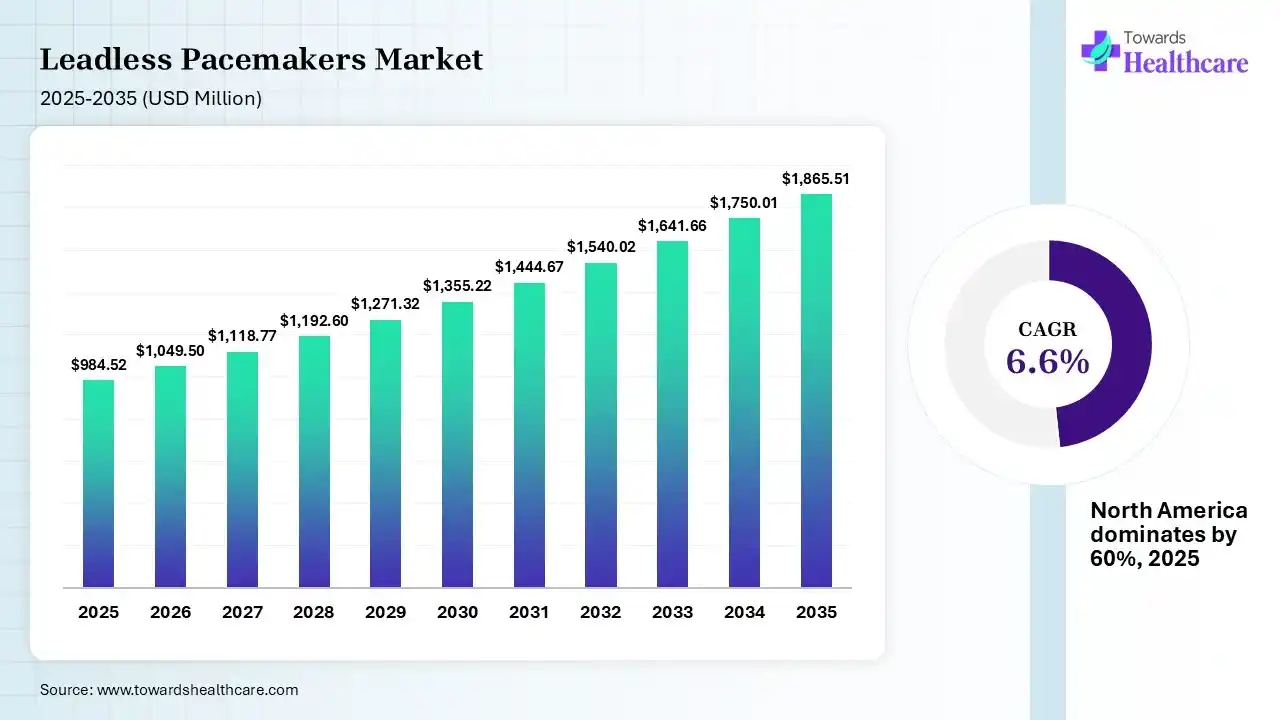
According to Towards Healthcare, the Leadless Pacemakers Market is projected to grow significantly, with estimates indicating the market size will increase from USD 1049.50 million in 2026 to approximately USD 1865.51 million by 2035, expanding at a CAGR of 6.6% from 2026 to 2035. A leadless pacemaker is a minor, one-piece device that a healthcare provider inserts into the heart to avoid slow heart rates. A leadless pacemaker senses the heart's own electrical signals. It also provides additional electrical impulses when natural ones aren't frequent enough. Significant advantages of leadless pacemakers involve decreased infection challenges, overcoming limited vascular access, and avoidance of interaction with the tricuspid valve device. Leadless pacemakers (LP) hold the promise to lower many short- and long-term challenges of transvenous pacemaker placement in specifically selected patients.
Healthcare in Egypt is based on a pluralistic system comprising a variety of healthcare providers from both the public and private sectors. The government ensures basic universal health coverage, although private services are also available for those able to pay. For several decades, the government has provided a subsidized healthcare system meant to ensure care for those who cannot afford it. The system relies on four distinct financial agents, including the government and the public sector, private organizations, and out-of-pocket payments made by individuals and families.
A recent report by Towards Healthcare highlights that the leadless pacemakers market is growing. A leadless pacemaker is an entirely self-contained device capable of pacing the heart. The leadless pacemaker is particularly well suited to people with weakened immune systems or a history of infections related to implanted devices. The leadless dual pacemaker is shielded against interference from technologies such as MRIs and metal detectors at airport security or major sporting events.


