


Rayence Breaks the Boundaries of Point-of-Care Imaging with the Launch of Integrated Portable X-ray Diagnostic Solutions 'Anywhere-M' and 'Anywhere-V'
Rayence, a worldwide leader in digital X-ray imaging and healthcare imaging services, announced the launch of its next-generation portable X-ray diagnostic services, intended to increase diagnostic imaging beyond the traditional hospital environment and bring advanced-quality care directly to the point of need. The new lineup includes 'Anywhere-M', a mobile imaging solution for human medical care, and 'Anywhere-V', a portable diagnostic service optimized for veterinary and sector animal care.
Unlike conventional portable technology that simply bundles patients' tools together, the 'Anywhere' series is a fully integrated all-in-one diagnostic service that seamlessly combines a portable X-ray generator, a high-resolution digital detector, and Rayence's intended imaging software platforms, 'Xmaru Pro' for human medical care and 'VetView Pro' for veterinary applications, into a unified imaging workflow.
Intended for effortless interoperability, the technology reduces setup complexity and removes time-consuming calibration, allowing healthcare professionals to acquire diagnostic-quality images almost immediately. The service is expected to significantly improve diagnostic effectiveness in evolving departments, trauma centers, disaster relief operations, military medical units, and home healthcare settings, where rapid decision-making is critical and access to conventional imaging is restricted.
The Anywhere-M service overcomes one of the most significant restrictions of portable X-ray technology, lowered results effectiveness, via Rayence's proprietary 'SHINE technology.
SHINE is a well-developed image processing algorithm that dramatically enhances the signal-to-noise ratio (SNR) of low-dose X-ray images, producing exceptionally clear, high-resolution diagnostic images without needing additional hardware. This allows physicians to obtain hospital-grade image quality in complex environments while reducing patient radiation exposure.
The technology enables real-time, high-resolution imaging across a broad range of anatomical areas, including the chest, shoulder, knee, skull, and hand, empowering healthcare professionals to make confident diagnostic decisions wherever care is carried out.
To increase reliability in demanding environments, the hardware has been engineered with toughness as a top priority. The wireless digital detector has successfully passed a 1.2-meter drop test in agreement with U.S. military standards (MIL-STD-810H). This confirms dependable performance in evolving response and field operations where accidental drops are common.
Furhermore charecteristics involves an anti-slip protective bumper, hot-swappable batteries that allow uninterrupted operation without powering down the detector, and a patient load capacity of up to 140 kg. These characteristics allow safe imaging from the extremities to the abdomen.
The novel Anywhere-V package introduced a practical, high-performance imaging service tailored to the specific demands of veterinary therapeutics, involving equine hospitals, livestock farms, wildlife rescue centers, and large-animal field solutions.
By providing a cost-effective substitute for expensive fixed imaging technology, Anywhere-V reduces the challenges to adopting progressive diagnostic technology and allows veterinary professionals to establish high-quality imaging capabilities at a potentially lower cost.
The package includes multiple mobile generator choices, including X-Lite, PXP-40HF, and VET-20BT, available in both battery-powered and AC-powered configurations to accommodate various healthcare environments.
Its wireless detector provides an optional battery capable of operating for up to 16 hours, increasing mobility during extended sector operations.
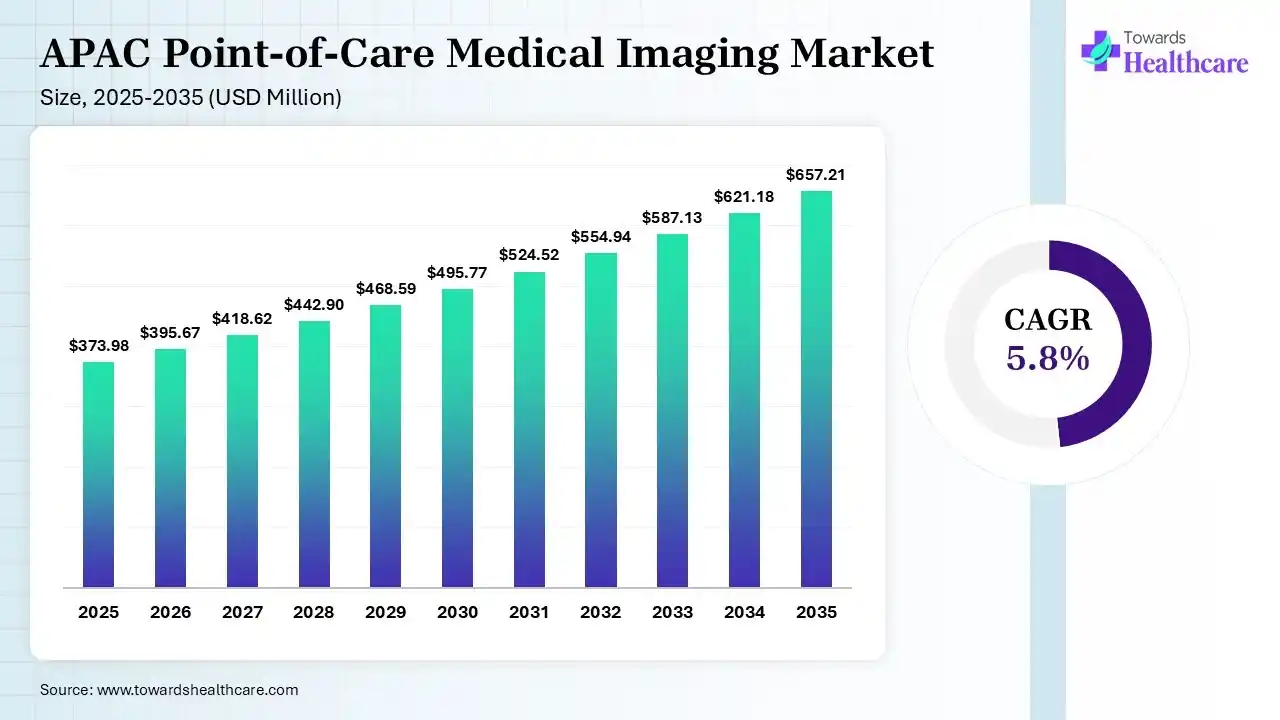
According to Towards Healthcare, the APAC point-of-care medical imaging market is projected to grow significantly, with estimates indicating the market size will increase from USD 395.67 million in 2026 to approximately USD 657.21 million by 2035, expanding at a CAGR of 5.8% from 2026 to 2035. Point-of-care imaging enhances results in both acute and chronic disease management, specifically in underserved settings where diagnostic delays lead to avoidable mortality. Point-of-care imaging is giving radiology departments the capability to tackle challenges head-on with increased service choice and enhanced patient care. Innovations around point-of-care imaging are causing increased volume and increased patient satisfaction.
Rayence is a worldwide leader in the advancement and production of high-performance digital X-ray detectors and well-developed healthcare imaging services. Built upon proprietary core solutions and a strong commitment to research and advancement, Rayence continues to deliver novel imaging services that empower medical care professionals globally and strengthen its position as a trusted collaborator in the global healthcare imaging sector.
A recent report by Towards Healthcare highlights that the APAC point-of-care medical imaging market is growing, as POCT offers rapid care with reduced waiting time, prevents unnecessary inquiries, aids in triage, and offers decision-makers a clear understanding of the patient's condition to create up-to-date decisions. POCT is applied in emergency departments (EDs), intensive care units (ICUs), acute care settings, primary medical care, pre-hospital settings, rural hospitals, mobile healthcare units, field medical care during disasters, military camps, and overcrowded or mass-gathering regions. It is used at the front line for triage and patient administration.


