


A shift towards asset-light business models, expanding R&D pipeline, growing adoption of advanced therapies, increasing outsourcing trends, expanding clinical trials, growing R&D investments, and increasing technological advancements are promoting the market growth.
The pharmaceutical CXO encompasses organizations offering outsourced R&D, manufacturing, and other services to the pharmaceutical, biotechnology, and other healthcare companies. They help in accelerating drug discovery and development, drug manufacturing, and clinical trials. They also support preclinical research, formulation development, API manufacturing, bioequivalence studies, pharmacovigilance, quality control, and quality assurance.
The global pharmaceutical CXO market size was estimated at USD 382.6 billion in 2025 and is predicted to increase from USD 416.65 billion in 2026 to approximately USD 897.48 billion by 2035, expanding at a CAGR of 8.9% from 2026 to 2035.
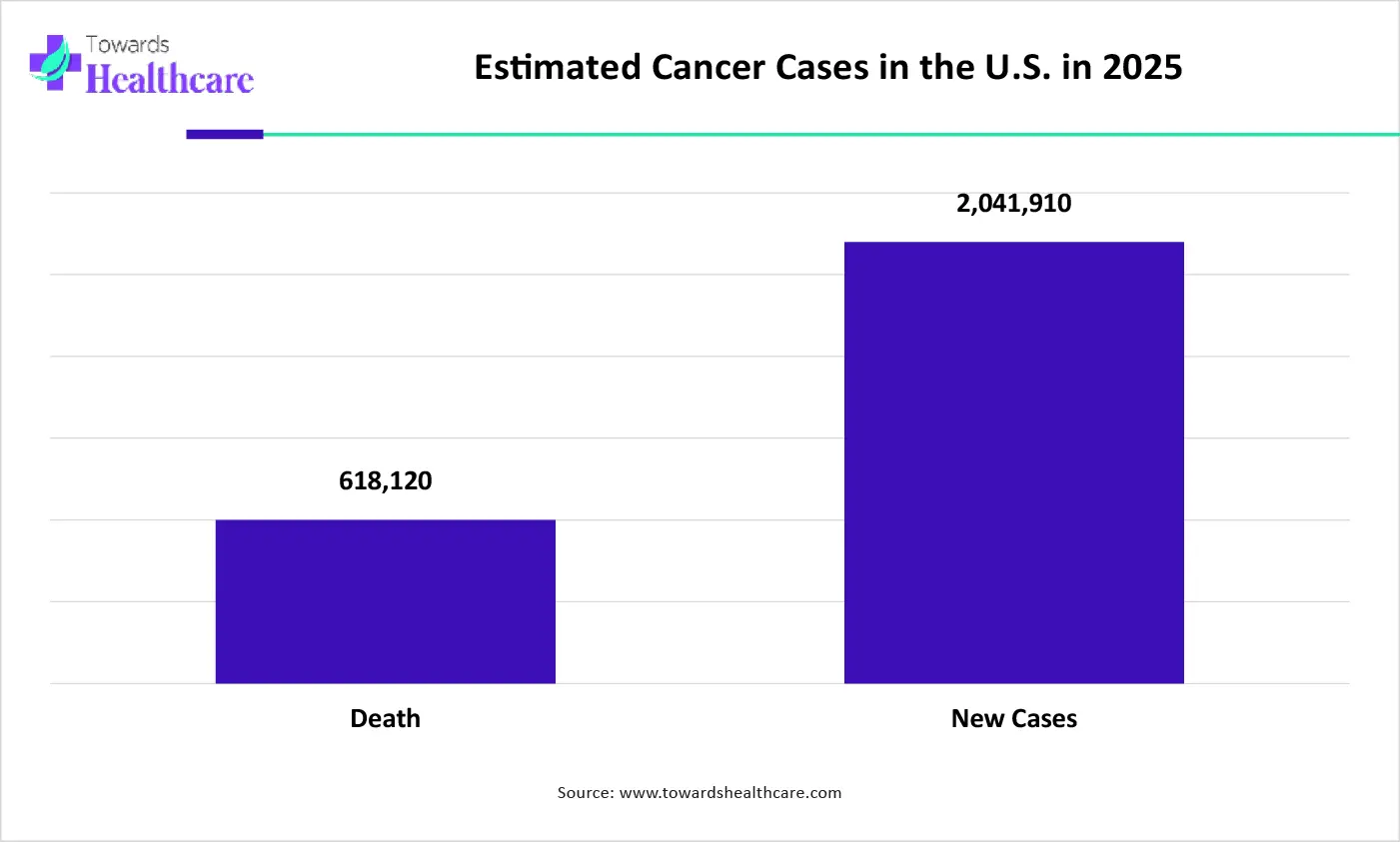
The graph represents the estimated number of U.S. cancer deaths and new cases in the year 2026. It indicates that there will be a growth in the cancer burden in the U.S., which will drive the demand for its effective treatment options. This, in turn, will increase the adoption of pharmaceutical CXO services for the development of new targeted treatment options for multiple cancer types, which will ultimately promote market growth.
By service type, the contract development and manufacturing organization (CDMO) segment accounted for the highest revenue share of 38% of the U.S. pharmaceutical CXO market in 2025, driven by its end-to-end service availability. Growth in the outsourcing trends and demand for affordable services has also increased their use. Their enhanced scalability, regulatory compliance, and advanced technologies also increased their use.
By molecule type, the small molecules segment held a major revenue share of 52% of the U.S. pharmaceutical CXO market in 2025, due to growth in their production rates. The growth in the demand for generic products also increased the use of pharmaceutical CXO services. They were also preferred for their faster development timelines.
By drug development stage type, the clinical stage segment contributed the biggest revenue share of 37% of the U.S. pharmaceutical CXO market in 2025, driven by growth in the outsourcing trends due to high clinical trial complexity. Need for specialized expertise and regulatory compliance also increased the demand for pharmaceutical CXO services. Their affordable services also attracted the clients.
By therapeutic area type, the oncology segment held the largest revenue share of 28% of the U.S. pharmaceutical CXO market in 2025 and is expected to gain the highest share with a CAGR of 11.5% during the forecast period, due to growth in its incidence rates. The high R&D investments and complex drug development have increased the demand for pharmaceutical CXO services. The rise in the demand for personalized therapies has also increased their use.
By end user, the pharmaceutical companies segment led the U.S. pharmaceutical CXO market with 54% share in 2025, due to high drug development. A rise in the R&D activities also increased the use of pharmaceutical CXO services. The lack of in-house capacity also increased their use.
The U.S. pharmaceutical CXO market held 82% share in 2025 and is expected to show lucrative growth during the forecast period due to the presence of robust pharmaceutical companies. The growth in R&D spending and biologics development has also enhanced the outsourcing trends. Expanding startups and biotech innovations also increased their collaborations, which contributed to the market growth.
IQVIA dominated the market with its clinical trial services, where Thermo Fisher Scientific was its closest contender, which offered end-to-end services. Labcorp also sustained its position by offering preclinical and clinical trial support, where Catalent also contributed to the market growth by providing drug manufacturing and fill-finish services.
By Service Type
By Molecule Type
By Drug Development Stage
By Therapeutic Area
By End User
By Scale of Operation


