


Recently, Atlantic Health Overlook Medical Center launched GE HealthCare’s StarGuide SPECT/CT, an innovative tool that offers radiologists and surgeons the ability of precise detection of lesions in the body and do it rapidly. The hospital is the first in New Jersey to utilize this system.
The respective system showcases a breakthrough in nuclear medicine imaging and tailored medicine that facilitates scanning of patients in 3D with precise, high-quality images that can determine the size, shape, and position of lesions in the body with a high degree of accuracy & reduced scan times.
Diagnostic and nuclear radiologist James Cassuto, MD, the Associate System Medical Director of Nuclear Medicine for Atlantic Medical Group and Section Chief of Nuclear Medicine at Atlantic Health Overlook Medical Center, commented that the StarGuide system supporting them is just a step up in imaging; with this comprehensive new tool, it enables them to navigate decision-making and foster procedures that have not been done earlier.
It is at the leading edge of medicine, setting standards for quality health care in New Jersey, Pennsylvania and the New York metropolitan area. Atlantic Health is supported by a workforce of 25,000 team members & more than 5,667 affiliated physicians devoted to developing healthier communities. Atlantic Health serves more than half of the state of New Jersey, such as 14 counties and 7.5 million people.
According to Towards Healthcare, the SPECT and SPECT-CT market is projected to experience significant growth, with estimates suggesting the market size will increase from USD 2.97 billion in 2026 to approximately USD 5.42 billion by 2035, representing a compound annual growth rate (CAGR) of 6.9% from 2026 to 2035. The global market growth is mainly fueled by a rising ageing population and the affordability of SPECT relative to PET, with faster technological advancements, like digital CZT detectors and AI-powered image reconstruction.
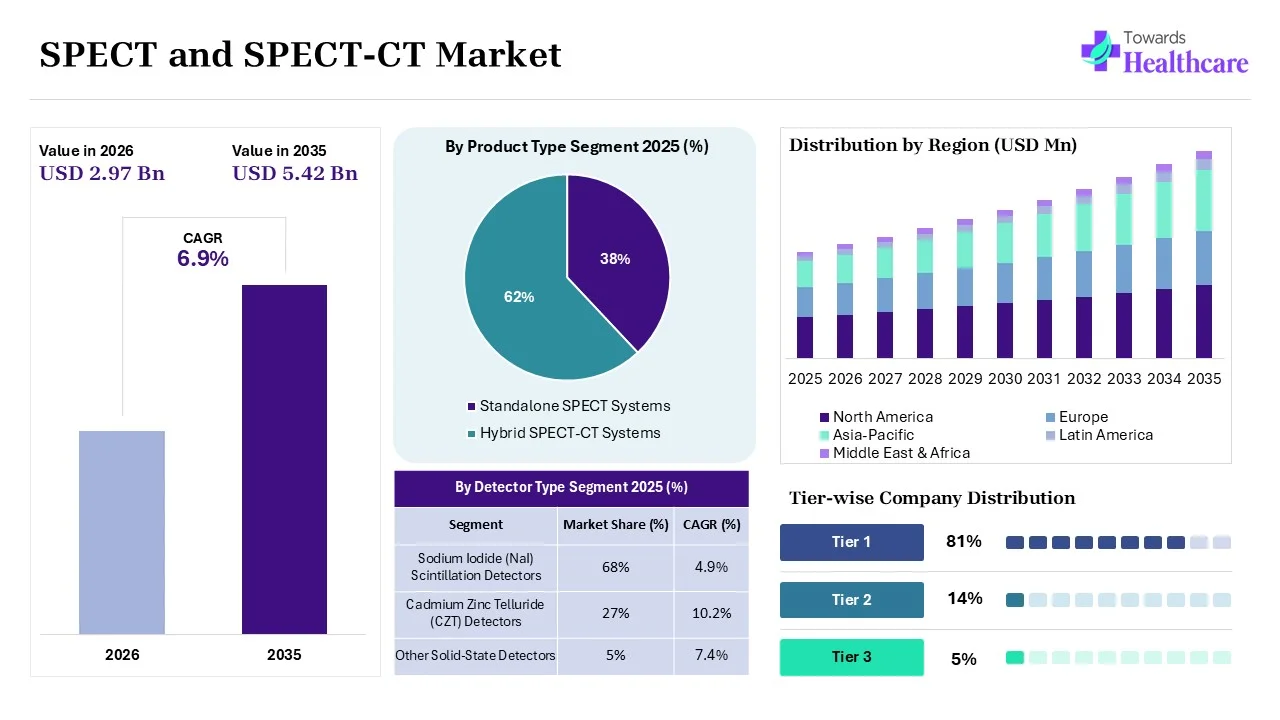
According to Towards Healthcare, the SPECT and SPECT-CT market is focusing on the use of SPECT-CT to visualize the accurate biodistribution of isotopes of targeted radiopharmaceuticals. This further supports oncologists in calculating precise patient-specific radiation doses, boosting tumor kill while sparing healthy tissue. Moreover, AI algorithms are assisting in the resolution of traditional SPECT challenges & further expedite image acquisition, enhance scatter & attenuation corrections, along with clearer image overlays with CT or MRI scans in a fraction of the time.


