




 Request Consultation
At a Glance
So far in 8 months of 2026, the FDA has cleared a group of innovative medicines significant less for their sheer number than for how several show genuine scientific firsts. Very firstly, Veppanu was approved as the first PROTAC (proteolysis-targeting chimera) therapy for any condition, which rolls out a completely novel approach to remove disease-causing proteins instead of only blocking them. However, Foundayo launched as the first oral, small-molecule GLP-1 receptor agonist, specifically for obesity. Meanwhile, Icotyde led as the first oral IL-23 receptor antagonist for psoriasis, and Baxfendy unveiled the first aldosterone synthase inhibitor for hypertension in many years.
The respective description is mainly directed at FDA.gov's official novel drug approval listing, cross-referenced against Nature Reviews Drug Discovery's quarterly approval analysis & independent industry trackers, with data discrepancies between sources fixed in support of the FDA's own listing wherever clashes developed. In the first half of 2026 only, there were 22 new drugs approved; this acceleration would provide the full year close to 2025's total of 46, reversing a decrease that has continued since 2023's 55 approvals. Exceeding the highly attractive obesity & oncology approvals the overall briefing also reflects a reserved but equally notable pattern, i.e. three ultra-rare genetic conditions, each affecting only a small population of patients across the globe, achieved new or improved treatments within six weeks in February 2026. This reminds the FDA’s consistent approval pipeline to serve patient populations more than the classes that lead pharmaceutical industry targets.
FDA’s Approvals Highlight An Exceptionally High Volume of Pioneering Innovations in 2026
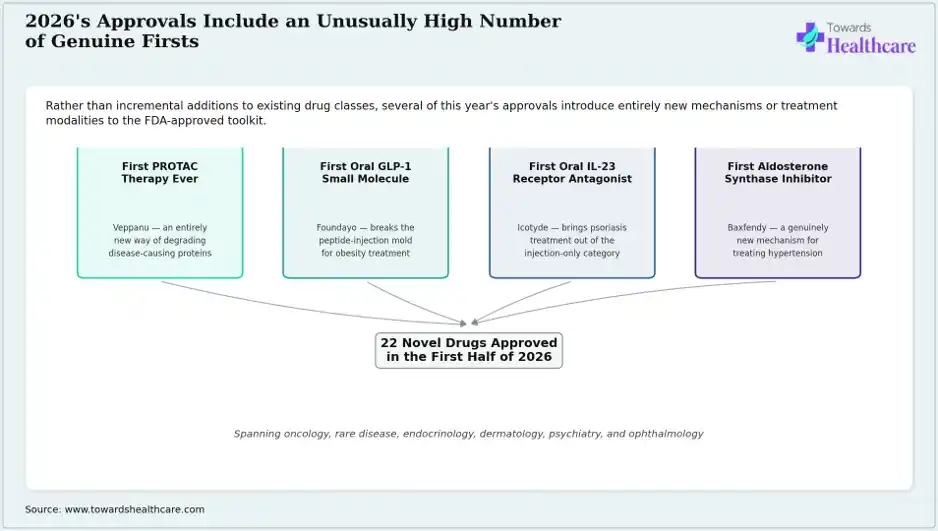
This representation covers four approvals that each introduce a genuinely new drug mechanism or modality to the FDA-approved toolkit, particularly the first PROTAC therapy, the first oral small-molecule GLP-1, the first oral IL-23 receptor antagonist, & the first aldosterone synthase inhibitor.
Key Insight: First launches of all four categories span oncology, endocrinology, dermatology, and cardiology, and a substantially higher volume of novel mechanisms compared with most recent years has been developed. This suggests that approvals in 2026 have aggregated pipeline investment aligning at the same time.
Source: FDA.gov, “Novel Drug Approvals for 2026”; Novapharmanews, “Novel Drug Approvals for 2026: FDA Insights,” 2026.
Since 2023, Approval Concentration Has Decreased, While 2026's First-Half Pace Directs a Probable Sustainability
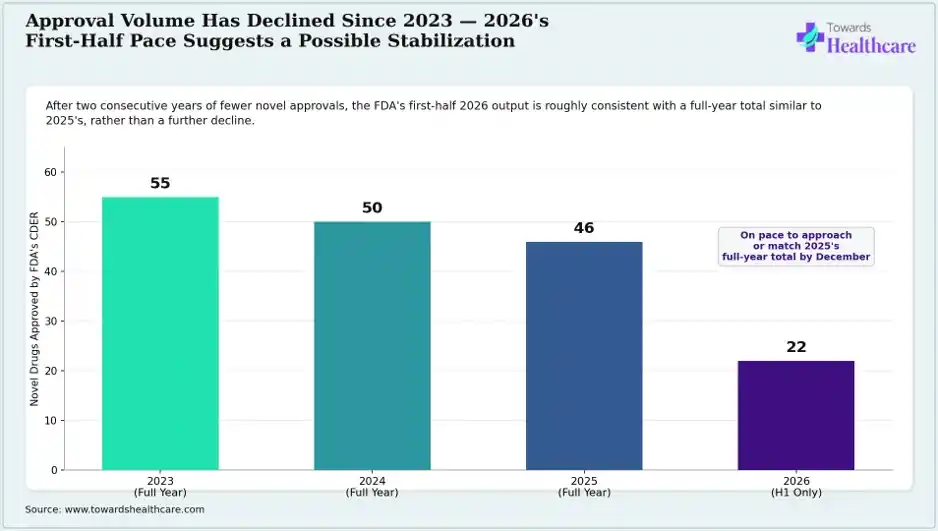
The graph shows a comparison of full-year novel drug approval totals for 2023, 2024, & 2025 with the first-half 2026 total, which represents a declining trend from 55 in 2023 to 46 in 2025, with 22 approvals already reported across the first six months of 2026.
Key Insight: Even though 22 approvals in six months of 2026 will not ensure that it will surpass 2025’s full-year total of 46. It does showcase a pace approximately consistent with the last few years instead of an upcoming decline; thus, it indicates a significant signal after two consecutive years of lowering approval numbers.
Source: C&EN, “FDA's new drug approvals dipped in 2025,” January 2026; Nature Reviews Drug Discovery, “FDA new drug approvals in Q1/Q2 2026”; HCPLive, “FDA News Recap: Novel Drug Approvals in First Half of 2026.”
To Destroy Disease-Causing Proteins, A Recently Developed Basic New Approach Reached Patients.
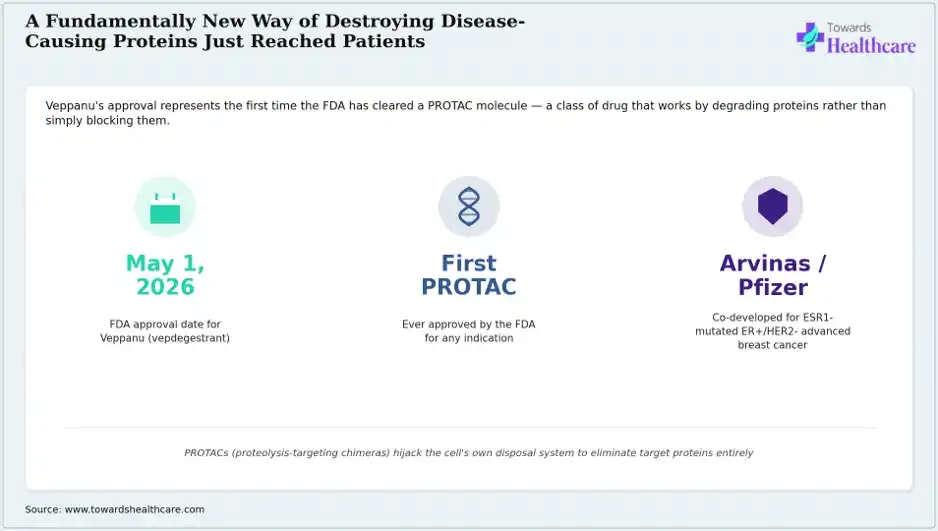
This representation shows Veppanu's approval date, its status as the first-ever FDA-approved PROTAC therapy, and its co-development by Arvinas & Pfizer for ESR1-mutated breast cancer.
Key Insight: Regardless of any other drug category, PROTAC molecules function via a really diverse mechanism instead of only blocking a target protein’s activity. They seize the cell’s own protein-disposal system to remove the target protein completely. This also has a hidden suggestion ranging well beyond the particular breast cancer application.
Source: Novapharmanews, “Novel Drug Approvals for 2026: FDA Insights,” 2026.
Within Six Weeks, The Industry Uncovered Three First Or Best Treatments for Three Ultra-Rare Genetic Concerns
A global, massive patient population is going through the management of ultra-rare genetic conditions; this bunch of approvals reflects years of robust small-population drug development ultimately settling.
- On January 12, Zycubo (copper histidinate) received FDA approval for Menkes disease, a fatal pediatric copper metabolism disorder.
- On February 23, Loargys (pegzilarginase-nbln) was approved for Arginase 1 Deficiency (ARG1-D), a rare inherited urea cycle disorder
- On February 27, Yuviwel (navepegritide) received FDA approval for achondroplasia to increase linear growth in affected children.
From these three conditions, each one can affect a tiny patient population that commercial incentives alone would rarely justify drug development by skipping dedicated orphan drug pathways. Approval of these measures within such a rigorous area presents continued institutional & regulatory commitment to small-population diseases, despite only a commercial boom.
Source: FDA.gov, “Novel Drug Approvals for 2026”; FDCELL, “FDA Novel Drug Therapy Approvals for 2026,” 2026.
Five Cancer Drugs Positioned at the Approval Stage By Leveraging Five Genuinely Distinct Mechanisms
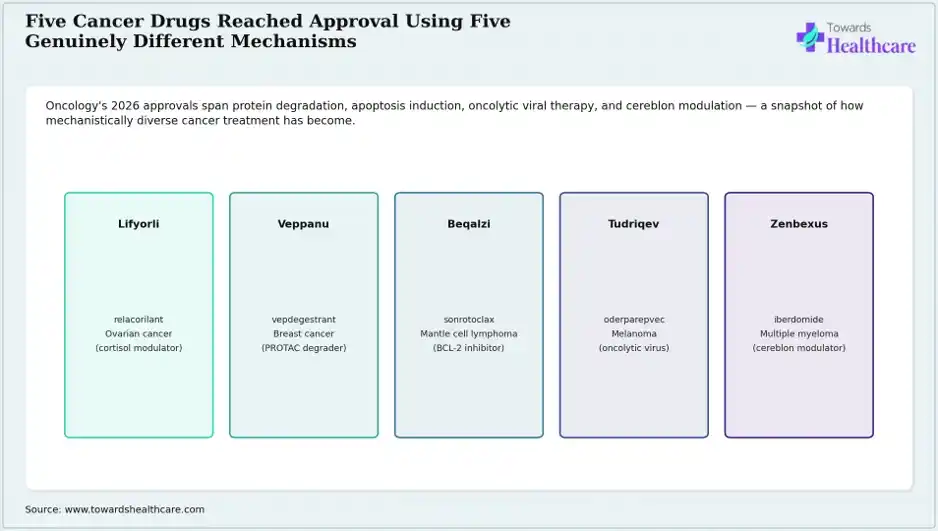
These are the major cancer drug approvals in 2026, which cover Lifyorli, Veppanu, Beqalzi, Tudriqev, and Zenbexus. This is further executed through their distinct mechanisms, ranging from cortisol modulation, protein degradation, apoptosis induction, oncolytic viral therapy, & cereblon modulation.
Key Insight: This variety across oncology drugs' mechanisms in 2026 approvals significantly showcases how cancer drug development has stepped beyond conventional chemotherapy & even extends beyond first-generation cancer therapy. An exploration of five diverse basic solutions employed to treat cancer & also reached patients within the respective several-month window.
Source: Pharmadossier, “Novel FDA drug approvals Q1-Q2 2026,” 2026; Drugs.com, “New FDA Drug Approvals for 2026.”
By Avoiding the Intake of an Injection for the First Time, Currently Psoriasis Patients Can Administer a Pill
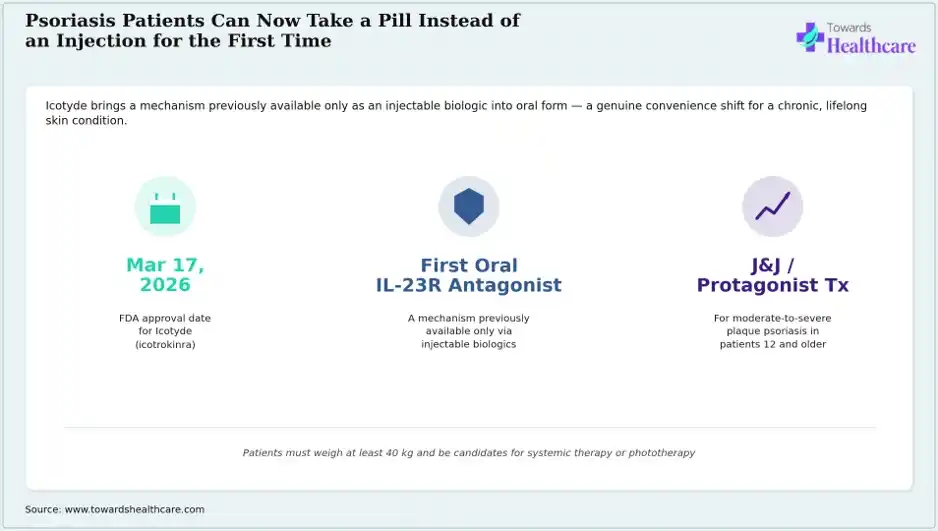
This presentation shows Icotyde's approval date, its status as the first oral IL-23 receptor antagonist, and its evolution by Johnson & Johnson and Protagonist Therapeutics for moderate-to-severe plaque psoriasis.
Key Insight: A perfect transition was underlined across the wider 2026 pattern: a shift of IL-23 receptor antagonism from an injectable-only biologic mechanism into oral small-molecule form. This approach has also been observed in obesity treatment with Foundayo, which includes reformulation for oral delivery by skipping injectable mechanisms to lower treatment pressure for chronic issues.
Source: FDA.gov, “Novel Drug Approvals for 2026.”
In the Last Few Years, Hypertension Treatment Very Firstly Received Its Novel Mechanism
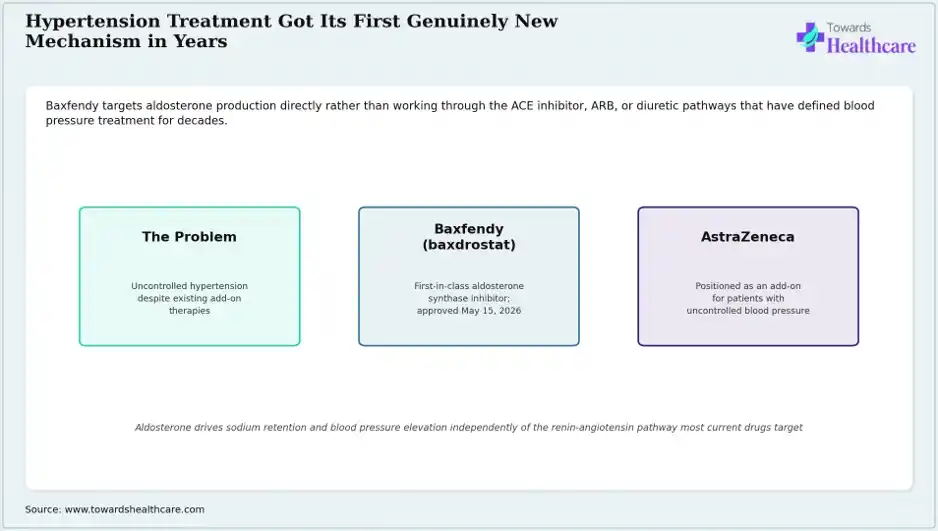
The above diagram illustrates Baxfendy's development as a first-in-class aldosterone synthase inhibitor from AstraZeneca, which was approved on May 15, 2026 & it mainly targets a biological pathway that differs from the ACE inhibitor, ARB, and diuretic classes that have led hypertension treatment.
Key Insight: Despite already existing, mature & congested antihypertensive drug classes, the globe unveiled a genuinely new hypertension drug mechanism, which is a considerably rare approach. The development of Baxfendy's approval particularly targets patients whose blood pressure remains uncontrolled regardless of existing therapies. This addresses a real difference instead of only adding another alternative to an already fully penetrated category.
Source: Pharmadossier, “Novel FDA drug approvals Q1-Q2 2026,” 2026.
Rather Than Seven, Several Type 2 Patients Are Currently Administering One Insulin Injection A Week
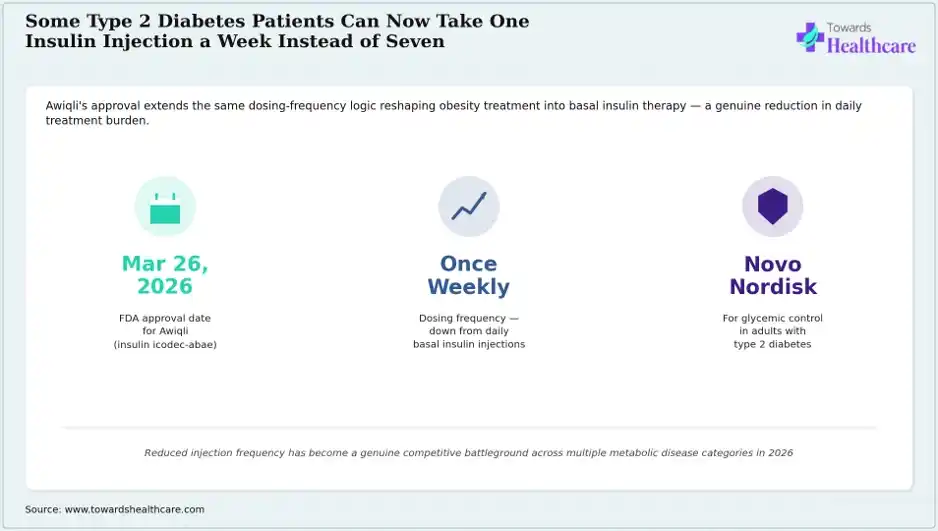
This panel reflects Awiqli's approval date, its once-weekly dosing frequency, and its development by Novo Nordisk as a basal insulin option for type 2 diabetes.
Key Insight: Specifically, approval of Awiqli drastically spans the same dosing-frequency competitive logic that transforms the obesity drug market into basal insulin therapy. This especially lowers the burden of chronic disease’s daily treatment by roughly 86% in injection frequency, illustrating a genuine quality-of-life enhancement independent of any modification in glycemic efficacy.
Source: Pharmadossier, “Novel FDA drug approvals Q1-Q2 2026,” 2026.
In 2026, the FDA Approvals are Moving Highly Beyond Conventional Small Molecules & Antibodies
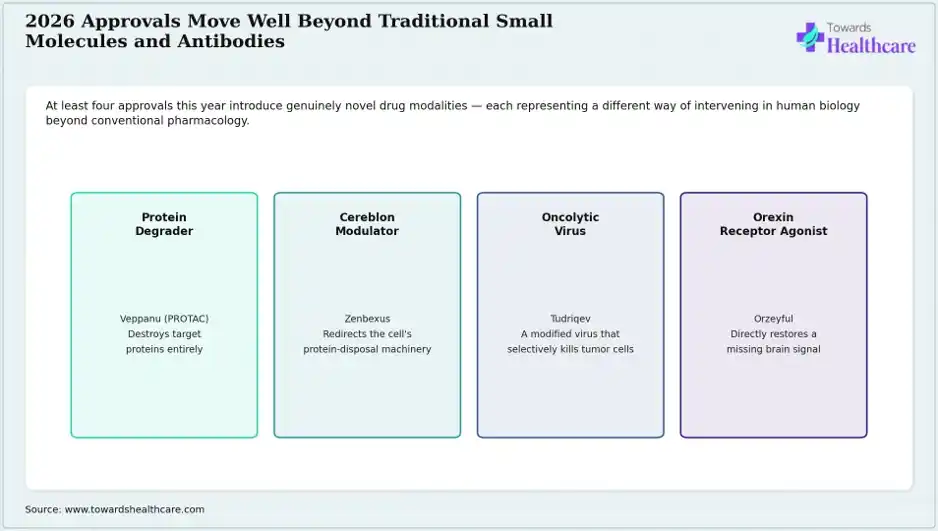
This landscape displays four genuinely novel drug modalities approved in 2026, i.e. Veppanu's protein-degrading PROTAC technology, Zenbexus's cereblon modulation, Tudriqev's oncolytic virus platform, & Orzeyful's orexin receptor agonism.
Key Insight: Globally uncovering four diverse non-traditional drug modalities in the same year reflects the pharmaceutical industry's pivotal investment in platform technologies rather than conventional small molecules & monoclonal antibodies from the last few years. This is currently pushing a conversion into a substantial stream of regulatory approvals.
Source: Drugs.com, “New FDA Drug Approvals for 2026.”
Every Single Month From January Through August, Prominent Approvals Emerged
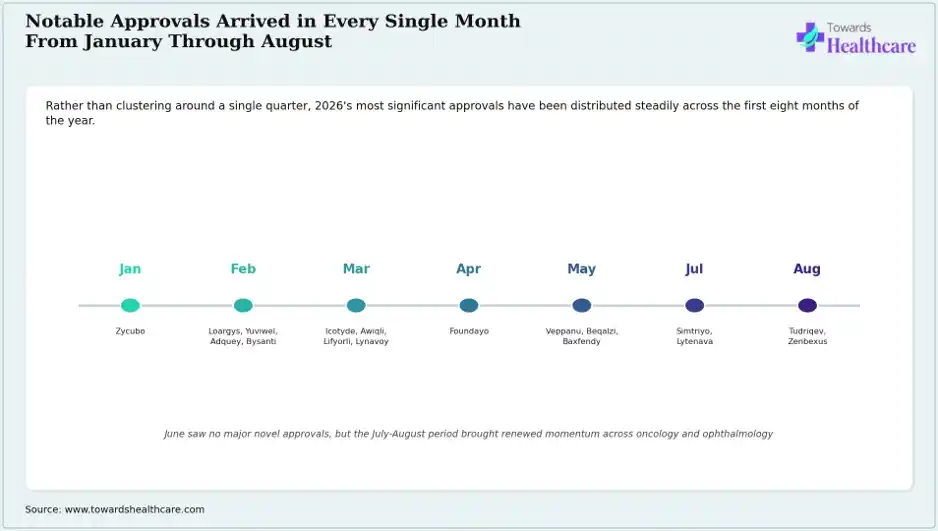
This periodic discussion represents notable 2026 FDA approvals, specifically spanning seven months, which excludes June, & also observed no major novel approvals. This showcases at least one significant approval in every other month from January through August.
Key Insight: This timeline has covered sustainable monthly distribution of substantial approvals, instead of focusing on a single FDA review cycle or quarter. This suggests that 2026’s approval shift shows a truly advancing expansive pipeline across numerous leaders & therapeutic areas at once, rather than a single robust review period fueling the year's complete statistics.
Source: Synthesis of approval dates presented in Sections 1-9 of this briefing, sourced from FDA.gov and cross-referenced trackers.
Unlocking the Year’s Premier Approval Driven by a Class That Now Under Rigorous Review
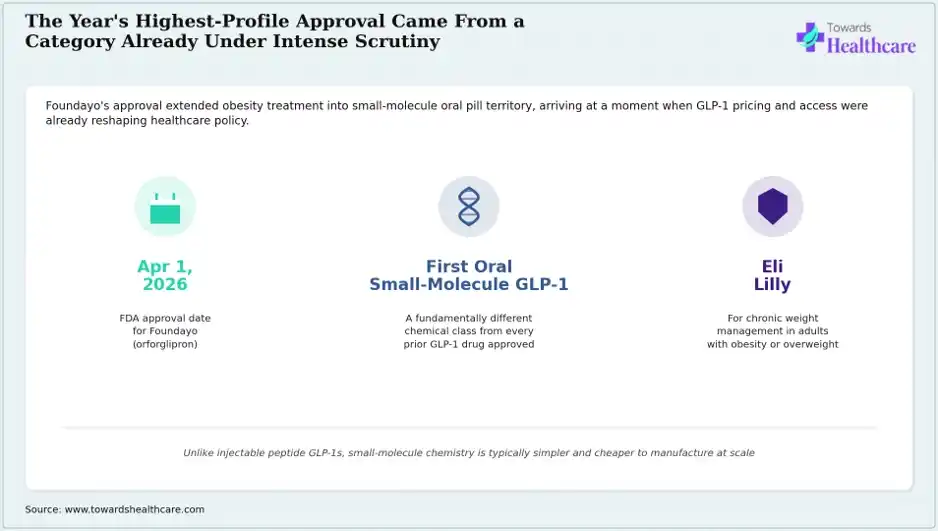
This framework describes Foundayo's approval date, its status as the first oral small-molecule GLP-1 receptor agonist, and its development by Eli Lilly for chronic weight management.
Key Insight: Primarily, the approval of Foundayo on April 1, 2026, within an obesity drug class has been transforming healthcare pricing & access policy throughout 2026. Thus, the emergence of its small-molecule chemistry facilitates a genuinely diverse manufacturing and cost profile compared with injectable peptide GLP-1s, making it a potential access lever independent of its clinical efficacy alone.
Source: Novapharmanews, “Novel Drug Approvals for 2026: FDA Insights,” 2026.
Expedited Approval Solutions Held a Major Share of 2026’s Most Notable Drugs
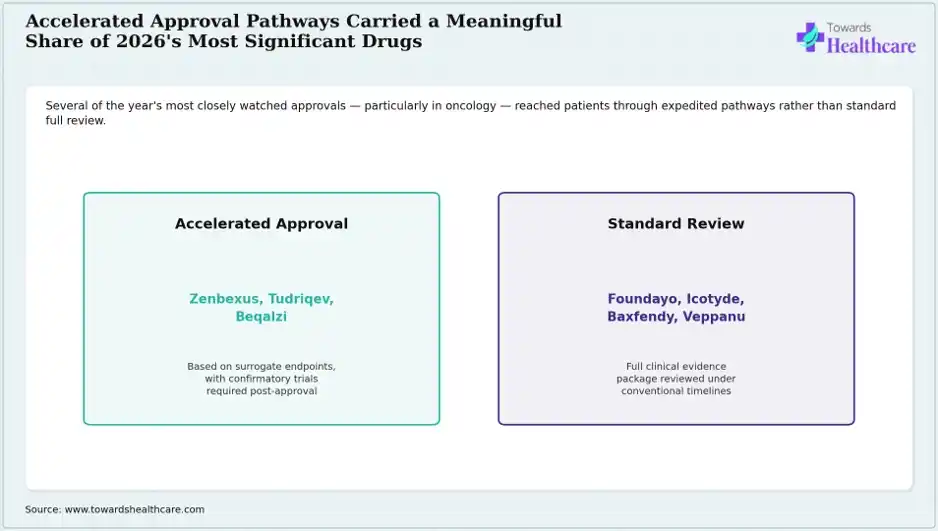
This panel represents a comparison of drugs that reached patients through rapid approval based on surrogate endpoints, like Zenbexus, Tudriqev, and Beqalzi, & drugs assessed through standard full-evidence pathways, including Foundayo, Icotyde, Baxfendy, & Veppanu.
Key Insight: An emphasis on faster approvals, especially among oncology drugs, shows the trajectory’s original design intent. This enables truly encouraging cancer therapies to reach patients rapidly, depending on early efficacy signals. Alongside this, the tradeoff includes confirmatory trials that are developing extensive clinical benefit and remain ongoing after approval.
Source: Synthesis based on standard FDA accelerated approval criteria applied to the drugs profiled in this briefing.
Three Forces Will Determine the FDA Approval Framework Through Year-End 2026
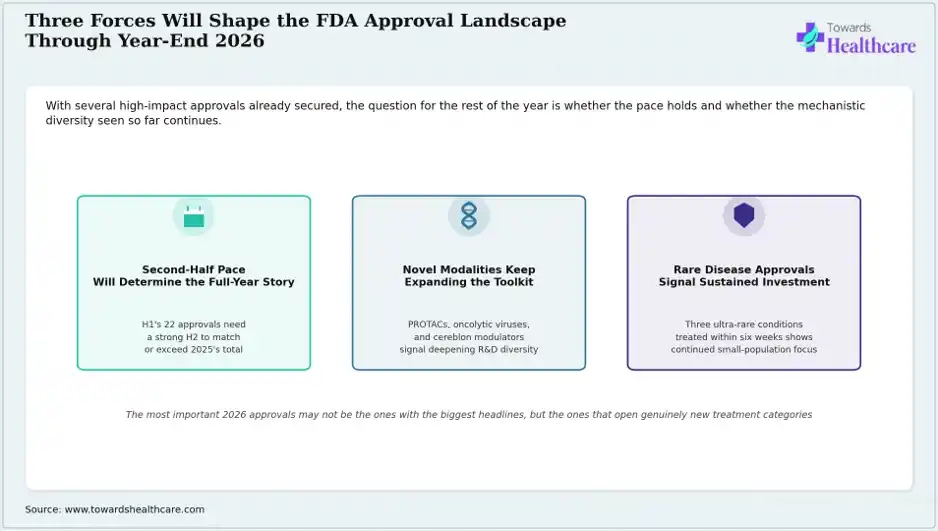
A well-defined landscape creates a short description of evidence into three forces anticipated to conclude the remainder of 2026's approval framework, i.e. whether second-half approval pace matches or exceeds prior years, consistent expansion of novel drug modalities, and continued investment in rare disease treatments.
Key Insight: Judgment of the most pivotal 2026 approvals may finally not be done by which received the most media attention, but by which opened genuinely new treatment classes that other players currently have a validated regulatory pathway to follow. An execution of a legacy that will only result in full clarity well after this year's headlines have diminished.
Source: Synthesis of evidence presented in Sections 1-12 of this briefing.
Recently Approved Drugs by the FDA in September 2026
- On September 9, 2026, Sevabertinib (Hyrnuo) received FDA approval for adults with locally advanced or metastatic non-squamous non-small cell lung cancer with HER2 mutations.
- On September 4, 2026, Etcamah (camizestrant) was granted approval in combination with a CDK4/6 inhibitor for ESR1-mutated advanced or metastatic breast cancer
- On September 3, 2026, the FDA approved Zanvastro (zilganersen) as the first treatment for Alexander disease in pediatric & adult patients.
2026 Approval Reference Table
| Drug | Generic Name | Approval Date | Indication/Key Feature |
| Zycubo | copper histidinate | Jan 12, 2026 | Menkes disease (Cyprium Therapeutics) |
| Adquey | difamilast | Feb 12, 2026 | Mild-to-moderate atopic dermatitis |
| Bysanti | milsaperidone | Feb 20, 2026 | Schizophrenia; bipolar I manic/mixed episodes |
| Loargys | pegzilarginase-nbln | Feb 23, 2026 | Arginase 1 Deficiency (hyperargininemia) |
| Yuviwel | navepegritide | Feb 27, 2026 | Achondroplasia, pediatric linear growth |
| Lynavoy | linerixibat | Mar 17, 2026 | Cholestatic pruritus in primary biliary cholangitis |
| Icotyde | icotrokinra | Mar 17, 2026 | First oral IL-23 receptor antagonist; plaque psoriasis |
| Lifyorli | relacorilant | Mar 25, 2026 | Platinum-resistant ovarian/fallopian/peritoneal cancer |
| Awiqli | insulin icodec-abae | Mar 26, 2026 | Once-weekly basal insulin, type 2 diabetes |
| Foundayo | orforglipron | Apr 1, 2026 | First oral small-molecule GLP-1; obesity/overweight |
| Veppanu | vepdegestrant | May 1, 2026 | First FDA-approved PROTAC; ER+/HER2- breast cancer |
| Beqalzi | sonrotoclax | May 13, 2026 | Relapsed/refractory mantle cell lymphoma (BCL-2 inhibitor) |
| Baxfendy | baxdrostat | May 15, 2026 | First aldosterone synthase inhibitor; hypertension |
| Simtriyo | centanafadine | Jul 24, 2026 | Attention-deficit hyperactivity disorder (ADHD) |
| Lytenava | bevacizumab-vikg | Jul 24, 2026 | Wet age-related macular degeneration |
| Tudriqev | vusolimogene oderparepvec-wtpg | Aug 6, 2026 | Oncolytic virus; unresectable advanced cutaneous melanoma |
| Zenbexus | iberdomide | Aug 13, 2026 | Cereblon modulator; multiple myeloma (with daratumumab) |
Projected FDA Roadmap of October 2026
| Drug Name & Expected Date | Intended Use | Regulatory Stage |
|
Atezolizumab/Tecentriq & Tecentriq Hybreza by Genentech October 9, 2026. |
Stage III dMMR/MSI-H colon cancer in combination with chemotherapy. | Supplemental BLA; Priority Review |
|
Ifinatamab Deruxtecan by Daiichi Sankyo/Merck October 10, 2026 |
For adult patients with extensive-stage small cell lung cancer (ES-SCLC) who progressed after platinum-based chemotherapy. | New BLA |
|
Satralizumab/Enspryng by Genentech October 15, 2026 |
Used for moderate-to-severe Thyroid Eye Disease (TED). | Supplemental BLA; Priority Review |
|
Bepirovirsen by GSK October 26, 2026 |
Intended for Chronic Hepatitis B. | NDA (New Drug Application) |
|
INO-3107 by Inovio Pharmaceuticals October 30, 2026 |
Used for Recurrent Respiratory Papillomatosis (RRP). | BLA |
Strategic Business & Research Questions
- Which specific companies beyond Arvinas & Pfizer have the most advanced PROTAC candidates in their pipelines, and how might Veppanu's approval accelerate their own regulatory timelines?
- How does the actual real-world adoption rate for Icotyde compare to injectable IL-23 antagonists among psoriasis patients who previously avoided systemic therapy due to injection aversion?
- What is the realistic probability that Foundayo's small-molecule manufacturing cost advantage translates into meaningfully lower list pricing compared to injectable GLP-1 competitors?
- Which specific confirmatory trials are required for Zenbexus, Tudriqev, and Beqalzi's continued accelerated approval status, and what is the realistic timeline for those results?
- How does patient treatment persistence for Awiqli's once-weekly insulin compare to daily basal insulin formulations in early real-world data?
- What proportion of the FDA's 2026 approval pace increase is attributable to a genuine pipeline maturation versus potential regulatory or administrative factors affecting review timelines?
- Which specific companies are best positioned to bring the next wave of oncolytic virus therapies to market following Tudriqev's approval precedent?
- How does Baxfendy's aldosterone synthase inhibition mechanism compare in cardiovascular outcome data to existing add-on hypertension therapies over multi-year follow-up?
- What is the realistic addressable patient population for each of the three rare disease approvals (Zycubo, Loargys, Yuviwel), and how does that affect their long-term commercial sustainability?
- Which specific companies have the deepest late-stage pipeline of cereblon-modulating protein degraders following Zenbexus's approval for multiple myeloma?
- How does Orzeyful's orexin receptor agonist mechanism for narcolepsy compare to existing stimulant-based and anti-cataplexy treatments in reducing daytime sleepiness specifically?
- What is the probability-adjusted scenario in which second-half 2026 approvals bring the full-year total above or below 2025's 46 novel drug approvals?
- Which specific therapeutic areas beyond the ones profiled in this briefing (infectious disease, neurology, rare pediatric conditions) show the strongest late-stage pipeline for approval before year-end 2026?
- How does the actual commercial performance of 2026's approval cohort compare to consensus analyst forecasts made at the time of each drug's approval?
- What is the realistic timeline for additional oral reformulations of currently injectable-only biologic mechanisms, following the Icotyde and Foundayo precedents?
- Which specific manufacturing capacity constraints might limit the commercial rollout speed for Veppanu, given PROTAC synthesis complexity relative to conventional small molecules?
- How does FDA review timeline efficiency in 2026 compare across different therapeutic review divisions (oncology, rare disease, cardiovascular, dermatology)?
- What is the realistic scenario in which accelerated approval pathway usage increases or decreases for the remainder of 2026, given current agency priorities?
- Which specific companies with drugs currently in Phase 3 trials are most likely to secure the next “first-in-class” approval before year-end 2026?
- How do patient access and insurance coverage differ meaningfully across the 18 approvals profiled in this briefing, specifically between rare disease & mainstream chronic disease treatments?
Data & Intelligence Pointers
- The FDA approved 22 novel drugs in the first half of 2026, comprising 10 approvals in Q1 and 13 in Q2, following full-year totals of 55 in 2023, 50 in 2024, and 46 in 2025.
- Veppanu (vepdegestrant), approved May 1, 2026, is the first FDA-approved PROTAC (proteolysis-targeting chimera) therapy for any indication, developed by Arvinas and Pfizer for ER-positive, HER2-negative advanced breast cancer.
- Foundayo (orforglipron), approved April 1, 2026, is the first oral, small-molecule GLP-1 receptor agonist approved for chronic weight management, developed by Eli Lilly.
- Icotyde (icotrokinra), approved March 17, 2026, is the first oral IL-23 receptor antagonist for plaque psoriasis, developed by Johnson & Johnson and Protagonist Therapeutics.
- Baxfendy (baxdrostat), approved May 15, 2026, is a first-in-class aldosterone synthase inhibitor developed by AstraZeneca for add-on treatment of uncontrolled hypertension.
- Awiqli (insulin icodec-abae), approved March 26, 2026, is a once-weekly basal insulin developed by Novo Nordisk for type 2 diabetes, reducing injection frequency from daily to weekly.
- Three rare disease treatments were approved within a six-week window in early 2026: Zycubo (Menkes disease, January 12), Loargys (Arginase 1 Deficiency, February 23), and Yuviwel (achondroplasia, February 27).
- 2026 oncology approvals span five distinct mechanisms: cortisol modulation (Lifyorli), protein degradation (Veppanu), BCL-2 inhibition (Beqalzi), oncolytic viral therapy (Tudriqev), and cereblon modulation (Zenbexus).
- Zenbexus (iberdomide), approved August 13, 2026, received accelerated approval in combination with daratumumab, hyaluronidase-fihj, and dexamethasone for multiple myeloma.
- Tudriqev (vusolimogene oderparepvec-wtpg), approved August 6, 2026, received accelerated approval in combination with nivolumab for unresectable advanced cutaneous melanoma as an oncolytic virus therapy.
- Notable 2026 approvals occurred in every month from January through August except June, reflecting a steady rather than concentrated approval pattern.
- Small-molecule therapies continued to dominate FDA approvals in recent years, capturing 65% of 2025's 46 novel molecular entities, up from 56% in both 2023 & 2024.
References
- U.S. Food and Drug Administration. “Novel Drug Approvals for 2026.” FDA.gov. Official primary source used for: approval dates, drug names, and indications for Zycubo, Adquey, Bysanti, Loargys, Yuviwel, Lynavoy, and Icotyde. https://www.fda.gov/drugs/novel-drug-approvals-fda/novel-drug-approvals-2026
- FDCELL. “FDA Novel Drug Therapy Approvals for 2026.” 2026. Used for: cross-referenced approval dates and indications; Foundayo and Awiqli approval details. https://www.fdcell.com/news/fda-novel-drug-therapy-approvals-for-2026.html
- Pharmadossier. “Novel FDA drug approvals Q1-Q2 2026: the fifteen drugs and their formulary implications.” 2026. Used for: mid-year approval review, Baxfendy and Beqalzi details, formulary impact analysis. https://pharmadossier.com/blog/fda-novel-approvals-q1-q2-2026-review
- Novapharmanews. “Novel Drug Approvals for 2026: FDA Insights.” 2026. Used for: Veppanu PROTAC designation, Beqalzi mechanism details, selected approval table. https://novapharmanews.com/us/news/novel-drug-approvals-2026-fda
- Drugs.com. “New FDA Drug Approvals for 2026.” Used for: Zenbexus, Tudriqev, Orzeyful, Lytenava, and Simtriyo approval details. https://www.drugs.com/newdrugs.html
- C&EN (Chemical & Engineering News). “FDA's new drug approvals dipped in 2025.” January 2026. Used for: 2025 full-year approval total, small-molecule share of approvals, historical comparison. https://cen.acs.org/pharmaceuticals/FDAs-new-drug-approvals-dipped/104/web/2026/01
- Nature Reviews Drug Discovery. “FDA new drug approvals in Q1 2026” and “FDA new drug approvals in Q2 2026.” 2026. Used for: quarterly approval counts and pace comparison to 2025
- HCPLive. “FDA News Recap: Novel Drug Approvals in First Half of 2026.” 2026. Used for: first-half 2026 total approval count. https://www.hcplive.com/view/fda-news-recap-novel-drug-approvals-in-first-half-of-2026
- Citeline / Pink Sheet. “US FDA Holds Steady With 58 Novel Approvals In 2025 Despite Upheaval.” January 2026. Used for: alternative 2025 approval count context and 10-year average comparison.