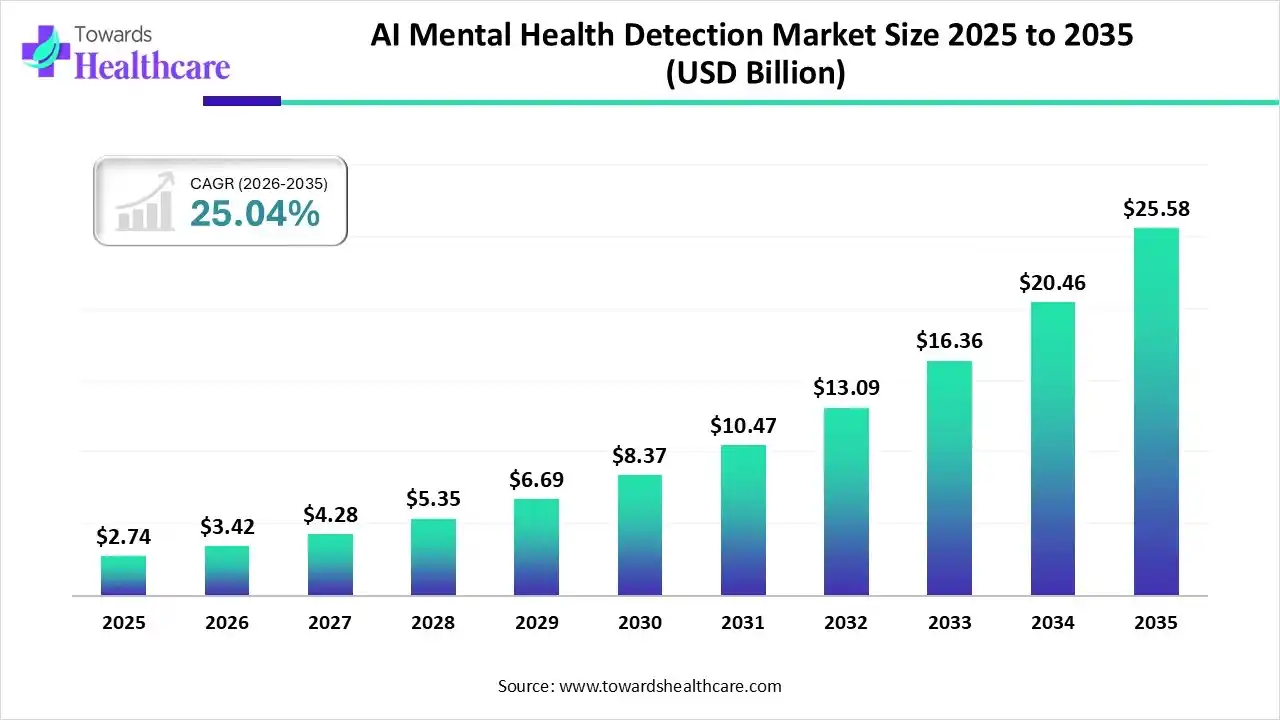
The global AI mental health detection market size is expected to be worth around USD 25.58 Billion by 2035, from USD 2.74 billion in 2025, growing at a CAGR of 25.04% during the forecast period from 2026 to 2035.
The AI mental health detection market is experiencing robust growth, driven by the rising burden of mental health illnesses, growing awareness of telehealth, and the increasing use of smartphones. The market is expected to observe positive growth in emerging economies in the next decade. Artificial intelligence (AI) is a promising tool that provides personalized recommendations based on human needs. Government and private organizations provide funding to develop proprietary software tools for the effective detection of mental health disorders.
The AI mental health detection market refers to providing software tools and services to detect mental health illnesses. AI-powered apps and programs can identify early signs of mental illness through patient data, speech, and behavioral patterns, which are difficult to detect by human experts. They can also identify depressive symptoms through facial expression and EEG analysis. AI tools are often developed with machine learning (ML), natural language processing (NLP), and large language models (LLMs) to enhance accuracy and efficiency.
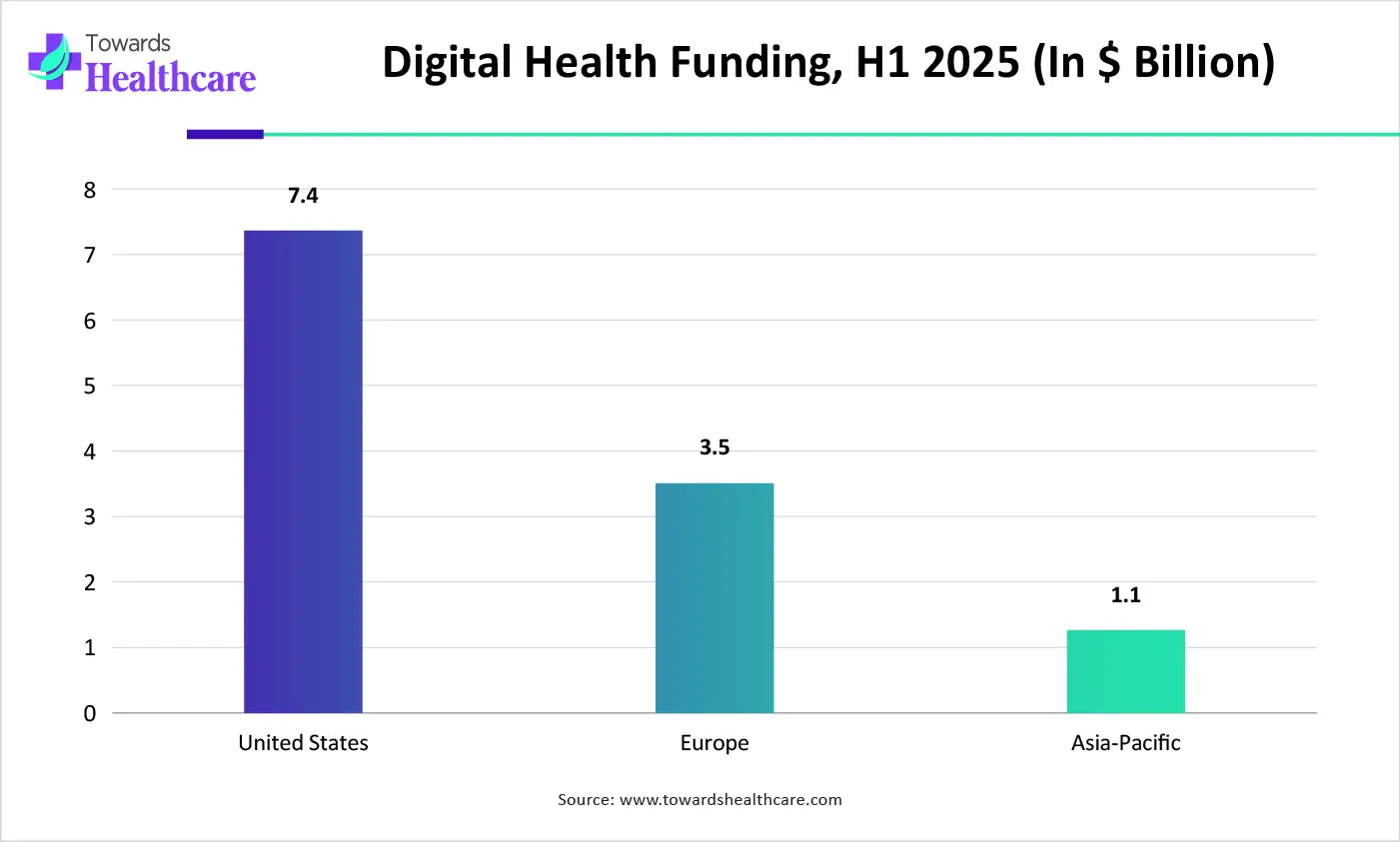
| Regions | Digital Health Funding in H1 2025 (in $ billion) |
| United States | 7.4 |
| Europe | 3.5 |
| Asia-Pacific | 1.1 |
| Key Elements | Scope |
| Market Size in 2026 | USD 3.42 Billion |
| Projected Market Size in 2035 | USD 25.58 Billion |
| CAGR (2026 - 2035) | 25.04% |
| Leading Region | North America |
| Market Segmentation | By Application, By Technology, By End-User, By Deployment Mode, By Region |
| Top Key Players | Wysa, Omdena, Numalis, Woebot Health, AtliQ Technologies, Onix Systems, Alberry Ltd, Beetroot, Kintsugi Health, Deliberate AI, Trayt Health |
Which Application Segment Dominated the AI Mental Health Detection Market?
The detection of depression segment held a dominant position in the market in 2025, due to the rising prevalence of depression. The World Health Organization (WHO) reported that over 5.7% of the total global population suffers from depression. Government bodies have launched several initiatives to screen for and diagnose depression at an early stage. Automatic depression diagnosis based on speech can complement mental health treatment methods in the future.
Behavioral Analysis
The behavioral analysis segment is expected to grow at the fastest CAGR in the market during the forecast period. AI-based behavioral analysis can understand, predict, and respond to human actions and patterns in real-time. Apart from interpersonal relations, behavioral analysis enhances workplace productivity by analyzing employee behavior using data to understand patterns, preferences, and actions. According to a survey, happy employees are 13% more productive.
How the Natural Language Processing (NLP) Segment Dominated the AI Mental Health Detection Market?
The natural language processing (NLP) segment held the largest revenue share of the market in 2025, due to its ability to monitor mental illnesses in real-time and analyze patient patterns. NLP is increasingly deployed in mental health tools to enable remote monitoring and facilitate interactions between patients and providers. Numerous NLP techniques, such as sentiment analysis, text classification, and chatbots to detect emotional distress and provide timely interventions.
Machine Learning
The machine learning segment is expected to grow with the highest CAGR in the market during the studied years. Machine learning (ML) algorithms analyze large, multimodal datasets and detect mental illnesses using behavioral and voice data analysis, enhancing the accuracy and precision of diagnosis. They can also generate more individualized predictions of future treatment designs for providers. They offer numerous advantages, including automated analysis of complex data and high scalability for continuous monitoring.
Which End-User Segment Led the AI Mental Health Detection Market?
The healthcare providers segment led the market in 2025, due to the growing need to serve a larger patient population and detect minute changes in patients’ behavior. AI-based detection can enable faster diagnosis of mental health illnesses in patients with higher accuracy, allowing data-driven decision-making. It can augment human capabilities and increase accessibility to care.
Research Institutions
The research institutions segment is expected to expand rapidly in the market in the coming years. The growing research and development activities and favorable government support augment the segment’s growth. Numerous research institutions conduct research activities to develop novel and innovative mental health detection platforms. They receive funding from the government and private institutions for their research activities. They also assess the accuracy, precision, and safety of AI tools in human subjects through clinical trials.
Why Did the Cloud-based Segment Dominate the AI Mental Health Detection Market?
The cloud-based segment contributed the biggest revenue share of the market in 2025, due to high scalability and the increasing use of the internet. Cloud-based tools enable providers and patients to store and access vast amounts of patient data from anywhere and at any time. Thus, they save a lot of time for providers and patients. They eliminate the need for a suitable infrastructure to install hardware components, reducing upfront installation and maintenance costs.
Hybrid
The hybrid segment is expected to witness the fastest growth in the market over the forecast period. Hybrid models offer the combined benefits of both on-premise and cloud-based tools, such as high scalability without the need for hardware and software licenses. They are comparatively cost-effective and offer enhanced security and control from an on-premise environment. Hybrid solutions enable customization options for organizations to meet patient needs.
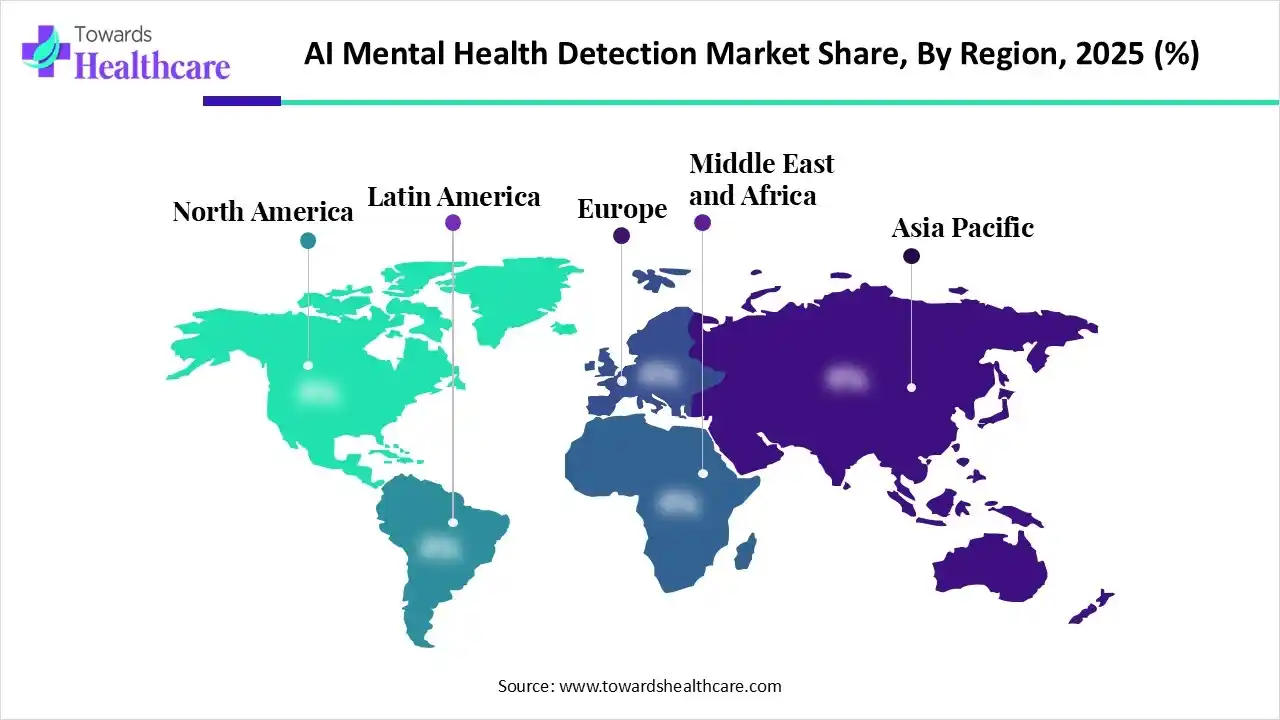
North America dominated the global market in 2025. The presence of key players, a robust healthcare infrastructure, and the growing burden of mental illnesses are major factors driving market growth in North America. The growing demand for generative AI and evolving regulatory landscapes boost the market. People are becoming aware of digital mental health technologies to address general health, wellness, and emotional needs, enhancing care delivery. This attracts private investors to provide funding for digital mental health startups.
U.S. Market Trends
Approximately 57.8 million adults are diagnosed with mental illnesses in the U.S. The percentage of patients with mental health diagnoses increased by 39.8% between 2019 and 2023. The Food and Drug Administration (FDA) regulates digital mental health devices and imposes stringent regulations on generative AI-based mental health diagnosis. The U.S. is also home to numerous companies, such as Wysa, Omdena, and Kintsugi Health, that provide AI mental health detection tools.
Canada Market Trends
Growing telehealth adoption and rising mental health awareness across Canada are increasing the shift towards AI-based detection tools. The presence of advanced healthcare infrastructure and strong government support also increases their use. The shortage of mental health care specialists is also promoting their use.
Asia-Pacific is expected to host the fastest-growing market in the coming years. The rising prevalence of mental health disorders due to sedentary lifestyles and societal pressures potentiates the demand for mental health detection. Government bodies conduct campaigns to raise awareness about mental health screening and diagnosis. The region faces a shortage of healthcare professionals to diagnose and treat mental health conditions of the rapidly growing population, necessitating the use of AI-based tools.
According to a recent research by YouGov for Campaign Asia-Pacific, about 24% of people in Indonesia and 22% in Hong Kong have tried AI-based mental health tools.
Australia Market Trends
The Australian Institute of Health and Welfare reported that approximately 22%, or 4.3 million people, experienced a mental disorder. 17% of the total Australian population suffers from anxiety disorders. Australia’s Therapeutic Goods Administration (TGA) recently launched a call for information on Digital Mental Health Tools (DMHTs) to screen, diagnose, monitor, and/or treat people with mental health disorders.
China Market Trends
The presence of large population bases in China increases the demand for more accessible mental healthcare services, driving the adoption of AI solutions. Increasing digital health initiatives and telehealth adoption are also increasing the demand for AI-based technologies.
Europe is expected to grow at a considerable CAGR in the upcoming period. The increasing R&D investments, favorable government support, and the rising adoption of advanced technologies propel the market. European nations collaborate with private players to streamline the development of AI-based tools for mental health diagnosis. The growing research activities and favorable regulatory policies contribute to market growth. The Mental Health Europe organization launched a study to observe the impact of AI in mental healthcare.
Germany Market Trends
The development of AI mental health detection tools in Germany is supported by the German government’s Digital Health Applications initiative. This may benefit 40.9% of Germans who were diagnosed with mental health disorders in 2024. In addition, the German government invested €1.6 billion in AI in 2025. Private players are also taking an interest in funding digital startups.
UK Market Trends
UK consists of NHS digital health initiatives, which support the adoption of AI tools for mental health detection. Expanding AI research ecosystems and mental health awareness are also increasing their demand. The shift towards remote healthcare monitoring is also increasing the use of AI screening tools.
South America is anticipated to show significant growth during the predicted period due to increasing telehealth adoption. The growing smartphone penetration and increasing mental health awareness are also promoting the use of AI-powered mental health detection tools, which is driving the market expansion.
Brazil Market Trends
Brazil is experiencing a rapid expansion in the digital health sector, which is promoting the adoption of various AI tools. The growing mental health awareness is also increasing the use of AI solutions, where rising telehealth adoption is also supporting their growth. The shortage of healthcare professionals also encourages their use.
Argentina Market Trends
Increasing digital connectivity and telehealth adoption rates across Argentina drive the growth of AI mental health detection tools. Rapid health digitalization and increasing demand for more accessible mental health care solutions are also promoting the use of these platforms.
MEA is expected to show lucrative growth during the upcoming years due to rising mental health awareness. The growing smartphone penetration is also supporting the adoption of telehealth and AI platforms for mental health disorder detection. The growing government support and investment are also encouraging their use.
United Arab Emirates (UAE) Market Trends
UAE consists of advanced digital infrastructure, which offers strong internet connectivity, promoting the use of AI solutions for healthcare applications. Increasing mental health awareness, government initiatives, and remote monitoring trends are also increasing the demand for AI and telehealth platforms. Growing focus on personalized healthcare is also encouraging the use of these solutions.
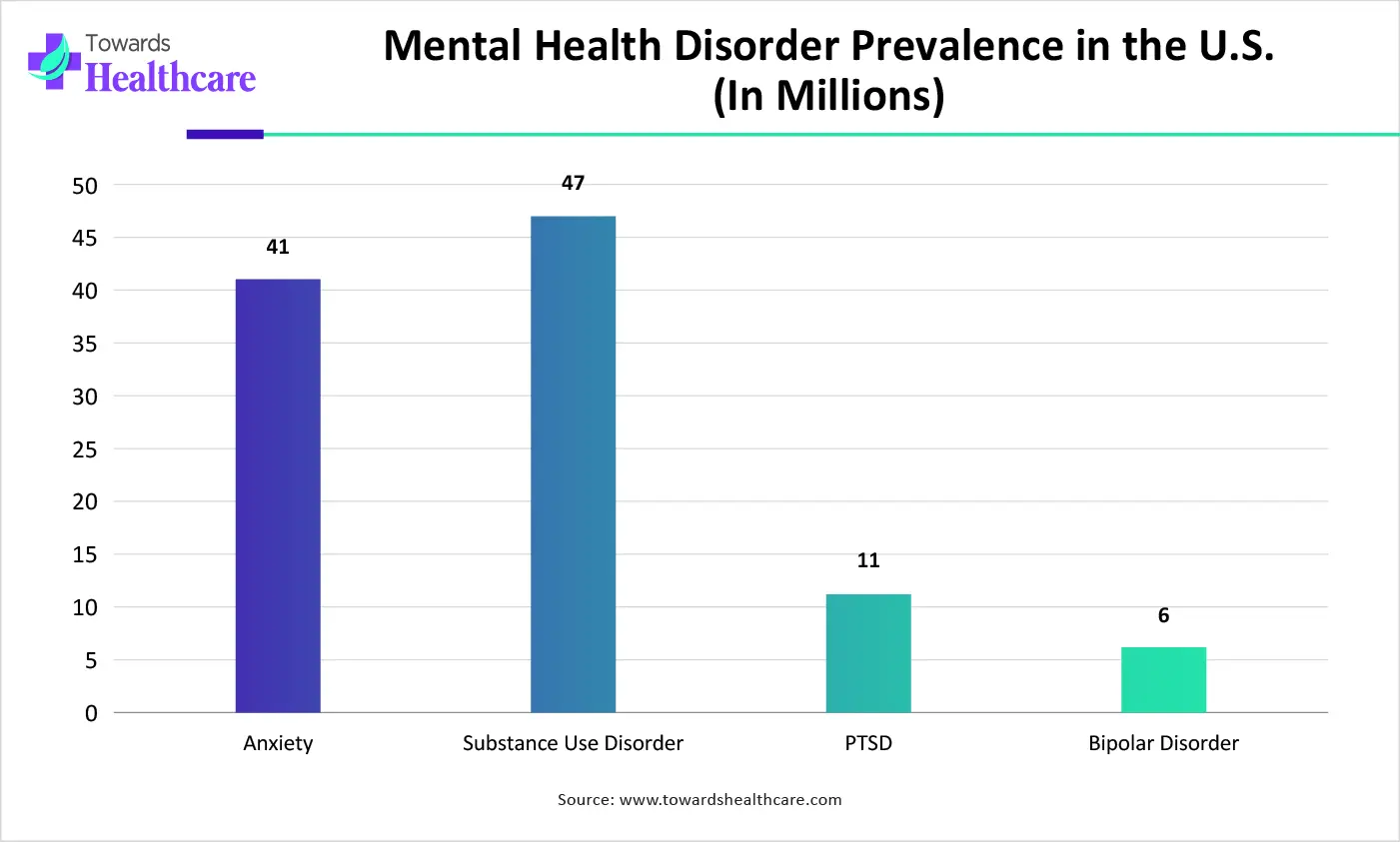
| Mental Health Disorders | Prevalence in the U.S. (in millions) |
| Anxiety | 41 |
| Substance Use Disorder | 47 |
| PTSD | 11 |
| Bipolar Disorder | 6ss |
| Companies | Headquarters | Offerings |
| Wysa | Massachusetts, United States | Wysa is an AI-powered wellbeing chatbot that is a safe and evidence-based tool that helps reflect and grow through structured conversations. |
| Omdena | California, United States | It is a human-centered AI product development platform for mid-sized companies and NGO to build real-world AI products. |
| Numalis | Montpellier, France | It helps industries to confidently adopt AI by providing state-of-the-art methods and tools to develop trustworthy AI systems. |
| Woebot Health | California, United States | The company aims to make mental health support radically accessible by building the future of chat-based AI wellness tools. |
| AtliQ Technologies | Gujarat, India | It offers an AI-based app to enhance suicide risk detection, offering real-time alerts and improved emotional tracking for at-risk patients |
| Onix Systems | Ukraine | Onix’s AI-powered Assistant enables real-time, cost-effective mental health monitoring on a large-scale, helping healthcare professionals detect early signs of mental illness. |
| Alberry Ltd | Bangkok, Thailand | Alberry is an AI-powered digital health platform that offers mental health screening and assessments using video, text, and audio. |
| Beetroot | Stockholm, Sweden | AI-powered systems can analyze patient conversations, written texts, and verbal communications to detect symptoms of mental health disorders. |
| Kintsugi Health | California, United States | Kintsugi Voice is an API-first platform that uses novel voice biomarkers in speech to identify, prioritize, and care for mental health in real-time. |
| Deliberate AI | New York, United States | It leverages multimodal AI and behavioral sign processing to understand the signs of mental and neurological health. |
| Trayt Health | California, United States | Its end-to-end platform streamlines care coordination by delivering personalized, evidence-based behavioral health care to enable whole-patient, early-intervention services. |
By Application
By Technology
By End-User
By Deployment Mode
By Region






Principal Consultant
Rohan Patil is a seasoned market research professional with over 5+ years of focused experience in the healthcare sector, bringing deep domain expertise, strategic foresight, and analytical precision to every project he undertakes.
Learn more about Rohan Patil

Reviewed By
Aditi Shivarkar is a seasoned professional with over 14 years of experience in healthcare market research. As a content reviewer, Aditi ensures the quality and accuracy of all market insights and data presented by the research team.
Learn more about Aditi Shivarkar