

Pipeline Programs

CGT Companies Tracked

Manufacturing Facilities


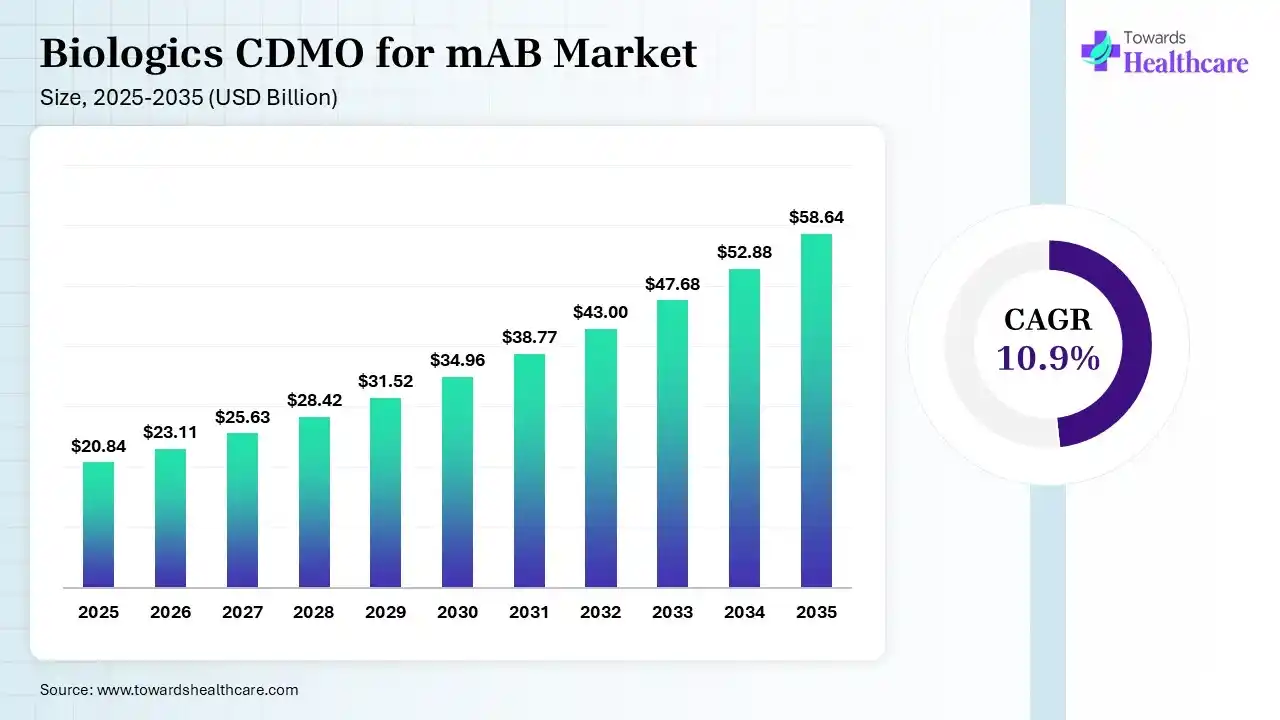
The global biologics CDMO for mAB market size is calculated at USD 20.84 billion in 2025, driven by increasing demand for targeted therapies. The market continues to grow in 2026 at USD 23.11 billion due to the expanding manufacturing capabilities, high healthcare investments, and expanding advanced therapies. It is expected to reach USD 58.64 billion by 2035 as a rise in demand for end-to-end services, expanding manufacturing networks, and growing ADC advancements accelerate market expansion. The market is expected to grow at a CAGR of 10.9% during the forecasted year 2026-2035. North America accounted for 43% of the market in 2025 due to a robust biologics innovation ecosystem, large CDMOs, and high R&D spending.
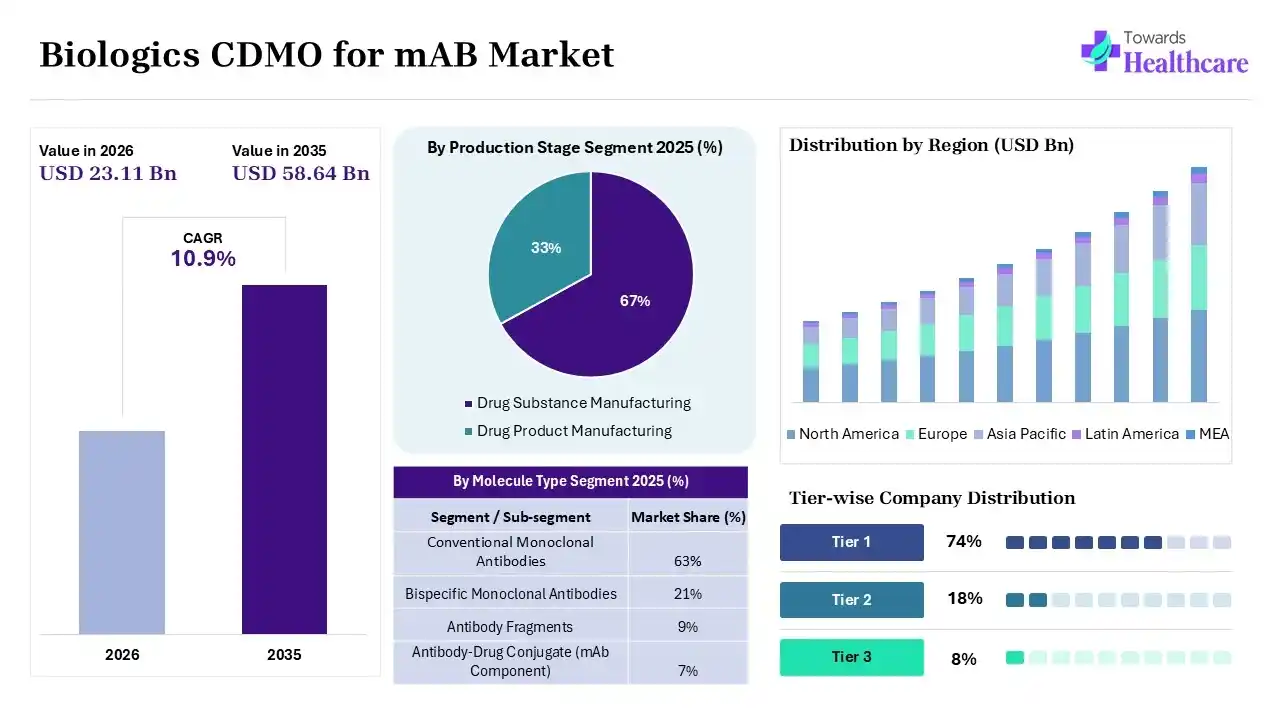
The biologics CDMO for mAB refers to the contract development and manufacturing organizations offering outsourcing services for the development and production of monoclonal antibodies. It offers a wide range of services and models such as end-to-end, one-stop shop, development-to-commercialization, and platform-based manufacturing, which support services like cell line development, process development, clinical manufacturing, analytical testing, and commercial production.
These organizations also provide upstream and downstream manufacturing support. Upstream work includes cell culture, media optimization, and bioreactor operations. Downstream work covers purification, filtration, and formulation. They may also support fill-finish, packaging, storage, and distribution. Their services can cover preclinical programs, clinical trials, and commercial supply. CDMOs help pharmaceutical and biotechnology companies reduce capital spending and access specialized manufacturing facilities and expertise. They also provide technology transfer and scale-up services when production moves from laboratory batches to larger commercial batches.
Key capabilities include GMP-compliant facilities, single-use technologies, quality control laboratories, and advanced analytical methods. Regulatory support is also important. CDMOs help prepare documentation and maintain quality standards required by health authorities. Demand is supported by the growing number of antibody therapies, increasing outsourcing, complex manufacturing requirements, and limited internal capacity among smaller biotechnology companies.
The growth in technical complexity, scale-up challenges, lack of expertise, and regulatory barriers among companies increased the dependence on biologics CDMOs, increasing new collaborations. At the same time, their limited global reach and integrated clinical services hampered their use, which fueled their advancement. According to the report by Payl Rabde, this increased their interest in enhancing manufacturing capability and integration, which promoted their rapid expansion.
Importance of mAb Manufacturing Outsourcing
Molecule complexity, need for flexible manufacturing services, and changing regulatory requirements are increasing the demand for comprehensive manufacturing services. Additionally, cost constraints and evolving patient demand are also increasing the shift towards outsourced services.
Current Industry Landscape
Growing strategic importance of contract manufacturing, capacity utilization, and industry transformation are increasing the use of biologics CDMO for mAB. The growing demand for targeted therapies, expanding outsourcing services, and growing complex biologic pipelines are also driving the market expansion.
Growth of End-to-End CDMO Service Models
Integrated development and manufacturing services are becoming preferred, as they help in reducing development timelines. They also enhance project management and cost efficiency, which drives their demand.
Expansion of High-Capacity Manufacturing Facilities
Increasing investments in large-scale biologics production plants are expanding high-capacity manufacturing facilities. This promotes mAB production, large-scale manufacturing, and operational efficiency, driving their use.
Increasing Demand for Flexible Manufacturing Platforms
Growing adoption of modular facilities and multi-product manufacturing are expanding flexible manufacturing platforms, encouraging their use. They support varying products, commercial manufacturing, and reduce turnover time as well.
Rising Adoption of Digital Manufacturing Technologies
A rise in the use of automation, AI-assisted process monitoring, and smart manufacturing are attracting clients. They help in improving manufacturing efficiency, reducing production errors, and offers data drive decision which drives their adoption rates.
Expansion of Global Manufacturing Networks
Increasing regional diversification strategies among major CDMOs are expanding global manufacturing networks. They help in enhancing access to biologics CDMO services and strategic supply chain networks.
Macro Factors
Micro Factors
Competitive Rivalry
Competition is high. Many CDMOs offer antibody development and manufacturing services. Companies compete on price, quality, capacity, technology, and delivery speed. Strong regulatory records help firms win customers.
Threat of New Entrants
The threat is low. New companies need large investments, skilled workers, advanced facilities, and regulatory approvals. Building customer trust also takes time. These barriers protect established providers.
Bargaining Power of Buyers
Buyer power is moderate to high. Pharmaceutical companies can compare several CDMOs. Large customers have stronger negotiating power. However, switching providers can be costly and time-consuming.
Bargaining Power of Suppliers
Supplier power is moderate. CDMOs depend on specialized raw materials, equipment, technologies, and skilled workers. Limited suppliers for some inputs can increase costs. Larger CDMOs can negotiate better terms.
Threat of Substitutes
The threat is moderate. Pharmaceutical companies can develop and manufacture antibodies internally. However, outsourcing provides specialized expertise, flexible capacity, and lower infrastructure needs. This limits substitute pressure.
Market Drivers
The growing biologics approvals and advanced therapeutics pipeline are increasing the dependence on biologics CDMOs for mAB. The rise in outsourcing demand and growing manufacturing complexities are also some of the major market drivers.
Market Restraints
High capital investment, regulatory complexity, skilled workforce shortages, and production risks are the key market restraints.
Market Opportunities
A rise in ADC manufacturing and bispecific antibody advancements are creating new opportunities for market expansion, based on the survey conducted by Payal Rabde. Similarly, growing integrated service offerings and emerging markets are also opening new doors.
Market Challenges
The major market challenges encompass capacity balancing, supply chain disruptions, quality compliance, and cost pressures.
Interest Rates and Capital Availability
High interest rates limit capacity expansion, while lower intertest promotes their expansion. Strong capital availability leads to CDMO expansion, whereas reduced capital availably slow down the process.
Inflation Impact on Manufacturing Costs
It increases the cost associated with raw materials, equipment, and production, reducing CDMO profit margins.
Geopolitical Risks and Supply Chain Diversification
Geopolitical tension drives supply chain uncertainty, encouraging dependence on localized supply chain networks and driving new investments.
Global Healthcare Spending Trends
Growing healthcare expenditure supports the adoption of various biologic therapies, promoting the use of biologics CDMOs for mAB development.
Raw Material Suppliers
Raw material suppliers for biologics CDMOs for mAB involve suppliers offering cell culture media, purification resins, sterile filtration systems, feeds, and single-use bioreactor bags.
Cell Line Technology Providers
Cell line technology providers of biologics CDMOs for mAB encompass stable mammalian host cell platforms, optimization tools, and advanced expression vectors.
Equipment Manufacturers
Equipment manufacturers of biologics CDMOs for mAB offer software systems and automated, cGMP-compliant bioprocessing hardware.
Single-Use Technology Suppliers
Single-use technology suppliers of biologics CDMOs for mAB provide tubing assemblies, plastic bioreactor bags, filtration modules, and connectors.
Analytical Service Providers
Analytical service providers of biologics CDMOs for mAB support molecular characterization, stability profile, and purity testing.
CDMOs
CDMOs drive end-to-end process development, cGMP-compliant manufacturing, and scale-up services, which increases their use.
Pharmaceutical & Biotechnology Clients
Pharmaceutical & biotechnology clients require manufacturing facilities along with technical and regulatory support for mAB production, which increases their reliance on biologics CDMOs.
Regulatory Agencies
Regulatory agencies promote the use of biologics CDMOs for mAB due to their standardized facilities, expertise, and strong quality control systems.
Upstream Manufacturing Technologies
Upstream manufacturing technologies in biologics CDMOs for mAB encompass mammalian cell culture platforms, bioreactor systems, process analytical technologies, and continuous perfusion systems.
Downstream Purification Technologies
Downstream purification technologies in biologics CDMOs for mAB include protein A affinity chromatography, ion exchange chromatography, viral clearance technologies, and tangential flow filtration systems.
Fill-Finish Manufacturing Workflow
Fill-finish manufacturing workflow in biologics CDMOs for mAB offer services for aseptic formulation, syringe encapsulation, and leak detection.
Analytical Testing and Quality Assurance
Analytical testing and quality assurance services such as molecular characterization, purity profiling, stability testing, and batch releases are provided in biologics CDMOs for mAB.
Technology Transfer Process
The technology transfer process in biologics CDMOs for mAB focuses on risk assessment, analytical method validation, scale-up protocols, and validation batches.
Current Manufacturing Capacity
Current manufacturing capacity in biologics CDMOs for mAB is expanding due to a surge in the biologics pipeline, high demand for antibody drug conjugates, and a shift towards sterile fill-finish operations.
Capacity Expansion Projects
Capacity expansion projects in biologics CDMOs for mAB market are driven by growing demand for agile facilities, expanding commercial industries, and increasing investments.
Regional Capacity Distribution
Regional capacity distribution in biologics CDMOs for mAB is expanding due to growing demand for enhanced supply chain security and increasing manufacturing hubs.
Capacity Constraints and Bottlenecks
Capacity constraints and bottlenecks in biologics CDMOs for mAB encompass a shortage of sterile fill-finish lines and single-use assemblies.
Cell Line Development Pricing
Cell line development pricing depends on cell line complexity, development timeline, analytical testing needs, technology platforms, and regulatory requirements.
Process Development Costs
Process development costs are influenced by process complexity, analytical testing, development timelines, optimization requirements, and scale activities.
GMP Manufacturing Pricing
GMP manufacturing pricing is driven by production scale, facility utilization, batch size, raw materials, labor requirements, cell culture technology, and regulatory requirements.
Fill-Finish Pricing
Fill-finish pricing is determined by batch size, quality control testing, filling volume, sterility requirements, and packaging needs.
Factors Affecting CDMO Pricing
Factors affecting CDMO pricing are project complexities, production scale, manufacturing capacity, contract duration, technologies, and regulatory compliance.
Clinical Pipeline Demand
Expanding mAB clinical trials and increasing demand for biologics are increasing the outsourcing trends, driving the dependence on biologics CDMO services.
Commercial Manufacturing Demand
A rise in mAB therapies approvals and adoption of various biologic products are also fueling the outsourcing to CDMOs for large-scale manufacturing facilities.
Demand by Therapeutic Area
Growing chronic disease burden, demand for targeted therapies, and expanding applications are increasing the demand for biologics CDMO for mAB.
Demand by Company Size
The small and emerging biotech firms are relying on biologics CDMOs for faster product development, while large industries support their use for manufacturing flexibility and reduced overall cost.
Regional Demand Comparison
Increasing demand for targeted therapies, growing biologics pipelines, and healthcare investments are increasing the dependence on biologics CDMO services.
Vendor Selection Criteria
Vendor selection criteria depend on manufacturing capacity, scalability, GMP compliance, quality assurance, and cost-effectiveness.
Outsourcing Decision Factors
Outsourcing decision factors encompass faster development timelines, limited in-house manufacturing capabilities, specialized technologies, and regulatory expertise.
Contract Duration Trends
Contract duration trends are driven by development timelines, manufacturing capacity, product commercialization success, technology transfer complexity, pricing agreements, and regulatory approvals.
Long-Term Strategic Partnerships
Consistent product quality, manufacturing capacity expansion, advanced technologies, supply chain support, and regulatory compliance drive long-term strategic partnerships.
Client Expectations from CDMOs
Client expectations from CDMOs include high-quality manufacturing, technical expertise, end-to-end services, flexible manufacturing, and transparency.
Venture Capital Investments
The venture capital investments support outsourcing trends and accelerate R&D and clinical pipeline growth.
Private Equity Activity
Private equity activity supports new collaborations and acquisitions, promoting manufacturing and operational capabilities.
Manufacturing Facility Investments
Manufacturing facility investments promote the expansion of mAb manufacturing and biologics production, increasing their dependence on biologics CDMOs.
Government Incentives
Growing government incentives drive R&D activities, innovations, technology adoption, and facility expansion.
Strategic Expansion Funding
Strategic expansion funding propels the development of new facilities, technology upgrades, and solidifies end-to-end services.
Major Acquisitions
The major acquisitions in the biologics CDMO for mAB market encompass acquisitions of specialized biologics, fill-finish manufacturing facilities, advanced technologies, and biologics manufacturing facilities.
Capacity Expansion Partnerships
Capacity expansion partnerships in the market are driven by collaboration between biopharmaceutical companies and CDMOs, investments in new facilities, and demand for large-scale mAB production.
Technology Licensing Agreements
The technology licensing agreements help in enhancing access to advanced technology such as proprietary manufacturing platforms, bioprocessing technologies, and cell line technologies.
Long-Term Manufacturing Agreements
Collaboration between companies and CDMOs to leverage stable manufacturing capabilities, commercial-scale production, and supply chain security drives long-term manufacturing agreements.
Manufacturing Capacity Comparison
Samsung Biologics, Lonza Group, and Wuxi Biologics dominated the biologics CDMO for mAB market depending on their manufacturing capacity.
Geographic Presence
Based on geographical presence, Lonza Group, Thermo Fisher Scientific, and Wuxi Biologics led the market.
Technology Capabilities
According to Payal Rabde's analysis, Wuxi Biologics, Fujifilm Diosynth Biotechnologies, and Samsung Biologics were the leaders in technology capabilities.
Service Portfolio Comparison
Lonza Group, Catalent, and Boehringer Ingelheim majorly contributed to the market expansion depending on their service portfolio.
Client Portfolio Analysis
By client portfolio analysis, Samsung Biologics, Lonza Group, and Wuxi Biologics were the top market players.
| Table | Scope |
| Market Size in 2026 | USD 23.11 Billion |
| Projected Market Size in 2035 | USD 58.64 Billion |
| CAGR (2026 - 2035) | 10.9% |
| Historical Data | 2020 - 2023 |
| Base Year | 2025 |
| Forecast Period | 2026 - 2035 |
| Measurable Values | USD Millions/Units/Volume |
| Market Segmentation | By Service Type, By Molecule Type, By Expression System, By Manufacturing Scale, By Production Stage, By End User, By Indication, By Region |
| Top Key Players | Lonza Group, Wuxi Biologics, Samsung Biologics, Fujifilm Biotechnologies, Thermo Fisher Scientific |
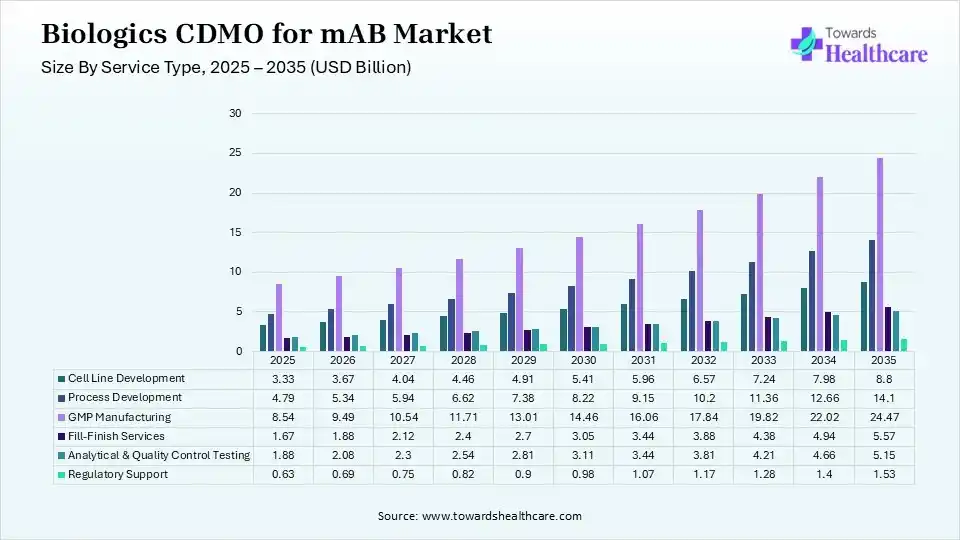
| Segment | Share 2025 (%) |
| Cell Line Development | 16% |
| Process Development | 23% |
| GMP Manufacturing | 41% |
| Fill-Finish Services | 8% |
| Analytical & Quality Control Testing | 9% |
| Regulatory Support | 3% |
The GMP Manufacturing Segment Dominated the Market With 41% in 2025
The GMP manufacturing segment led the biologics CDMO for mAB market with 41% share in 2025, as clinical and commercial mAb production required specialized GMP infrastructure. Additionally, as per the analysis by Payal Rabde, capacity shortages also encouraged outsourcing, which increased their use. Large-scale biologics investments also sustained their demand.
The fill-finish services segment held a share of 8% of the market in 2025 and is expected to witness the fastest growth during the forecast period, due to rising commercialization of injectable biologics boosting aseptic filling demand. Prefilled formats are gaining popularity. Regulatory expectations are also increasing outsourcing.
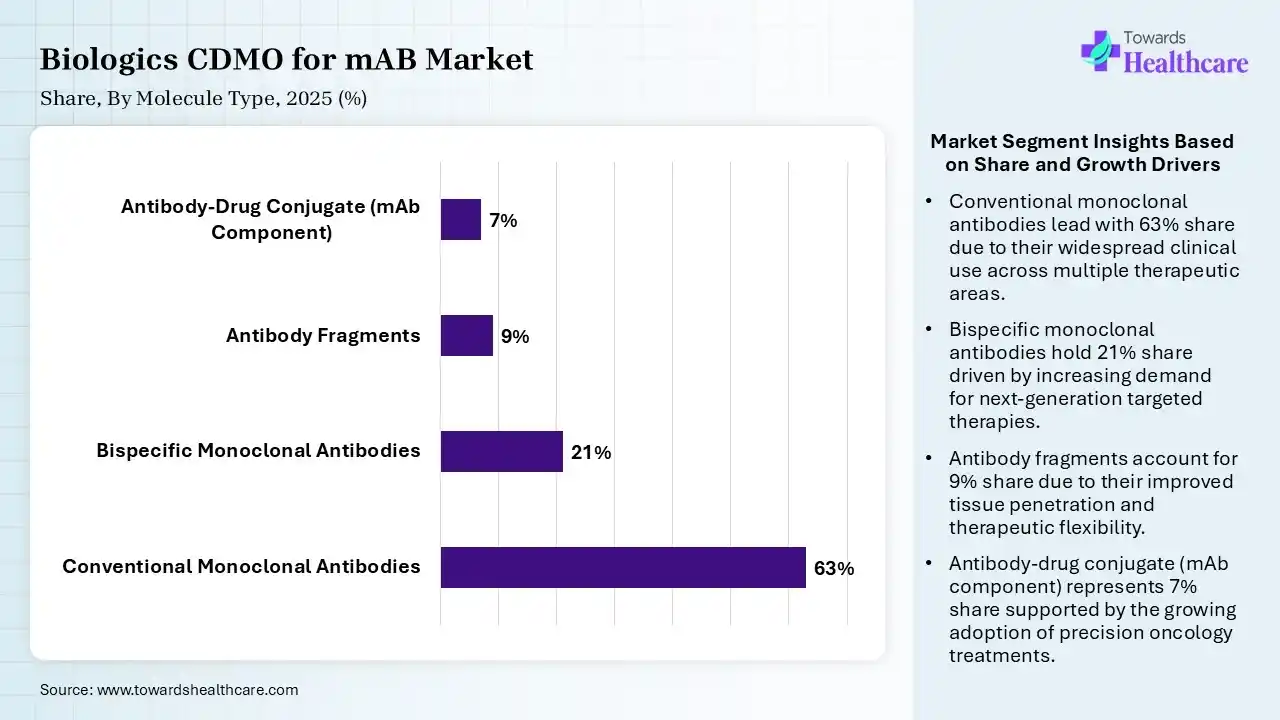
| Segment | Share 2025 (%) |
| Conventional Monoclonal Antibodies | 63% |
| Bispecific Monoclonal Antibodies | 21% |
| Antibody Fragments | 9% |
| Antibody-Drug Conjugate (mAb Component) | 7% |
The Conventional Monoclonal Antibodies Segment Dominated the Market With 63% in 2025
The conventional monoclonal antibodies segment accounted for the highest revenue share of 63% of the biologics CDMO for mAB market in 2025, driven by numerous approved blockbuster antibodies, which required continuous manufacturing. Biosimilar expansion also supported production demand. Established manufacturing platforms also reduced risk.
The bispecific monoclonal antibodies segment held the second-largest share of 21% of the market in 2025 and is expected to show the highest growth during the forecast period, due to rapid clinical pipeline expansion accelerating outsourcing. Manufacturing complexity also favors experienced CDMOs. Oncology innovations also fuel investments.
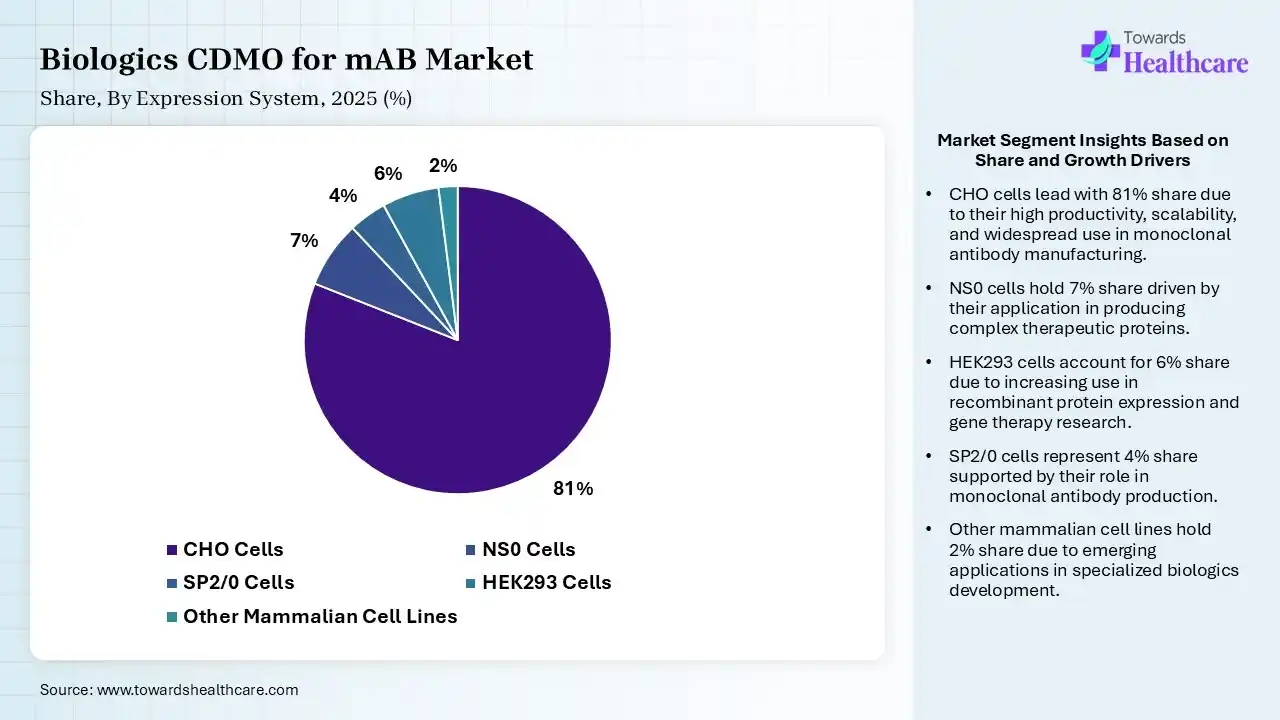
| Segment | Share 2025 (%) |
| CHO Cells | 81% |
| NS0 Cells | 7% |
| SP2/0 Cells | 4% |
| HEK293 Cells | 6% |
| Other Mammalian Cell Lines | 2% |
The CHO Cells Segment Dominated the Market With 81% in 2025
The CHO cells segment held a major revenue share of 81% of the biologics CDMO for mAB market in 2025, as CHO remained the preferred platform for therapeutic antibodies. High productivity and regulatory familiarity also supported their adoption. Continuous process improvements also enhanced efficiency.
The HEK293 cells segment held a share of 6% of the market in 2025 and is expected to expand rapidly during the forecast period, driven by the rising development of complex biologics, which expands HEK293 utilization. Improved transient expression technologies also accelerate research. Flexible production also supports their innovations.
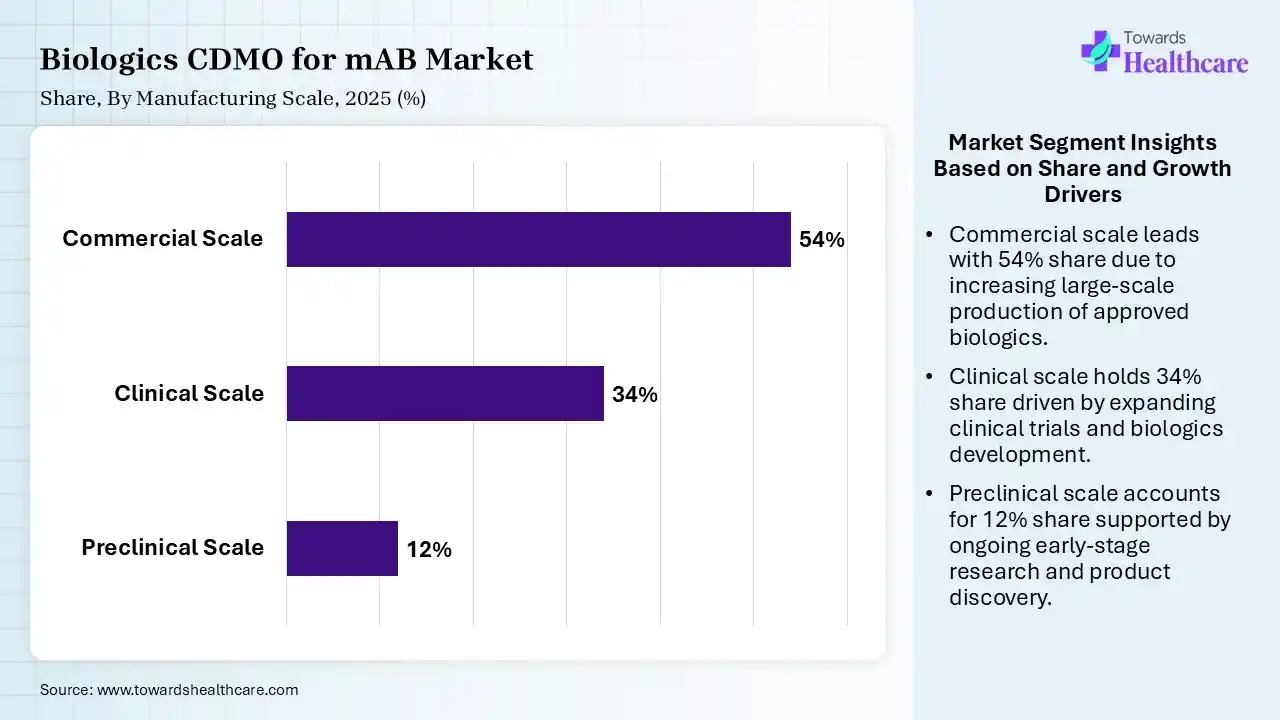
| Segment | Share 2026 (%) |
| Preclinical Scale | 12% |
| Clinical Scale | 34% |
| Commercial Scale | 54% |
The Commercial Scale Segment Dominated the Market With 54% in 2025
The commercial scale segment contributed the biggest revenue share of 54% of the biologics CDMO for mAB market in 2025, driven by growth in approved antibodies, which required consistent large-volume production. Capacity expansion by CDMOs also attracted major pharmaceutical companies. Long-term supply agreements also stabilized their demand.
The clinical scale segment held the second-largest share of 34% of the market in 2025 and is expected to gain the highest share with a CAGR of 11.8% during the forecast period, due to growing clinical trial activity, which increases GMP manufacturing requirements. More biologics enter Phase II and III studies, driving their demand. Flexible production capacity also supports sponsors.
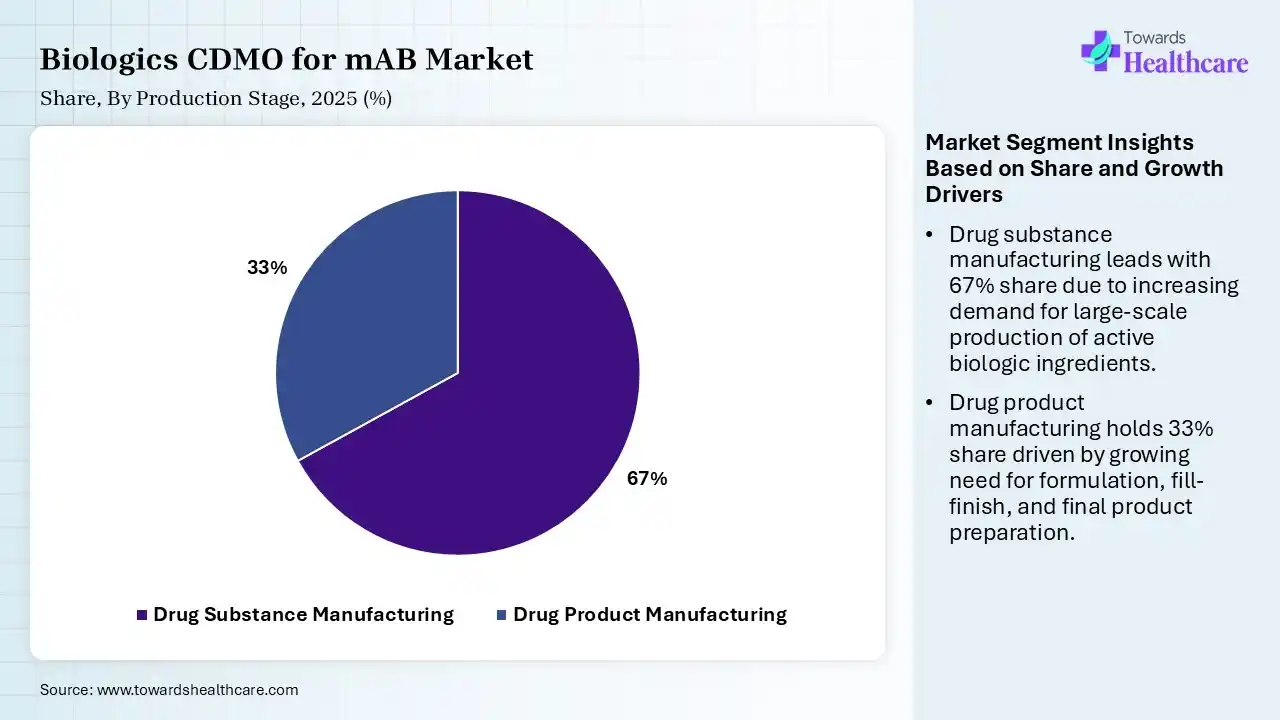
| Segment | Share 2025 (%) |
| Drug Substance Manufacturing | 67% |
| Drug Product Manufacturing | 33% |
The Drug Substance Manufacturing Segment Dominated the Market With 67% in 2025
The drug substance manufacturing segment held the largest revenue share of 67% of the biologics CDMO for mAB market in 2025, as large-scale cell culture and purification remained core outsourcing activities. Process optimization improved productivity. Additionally, according to the survey conducted by Payal Rabde, increased biologics approvals also sustained investments.
The drug product manufacturing segment held the second-largest share of 33% of the market in 2025 and is expected to grow with the fastest CAGR of 11.6% during the forecast period, as injectable formulation complexity increases outsourcing. Growth of ready-to-use delivery systems also supports their expansion. Integrated CDMO services also improve efficiency.
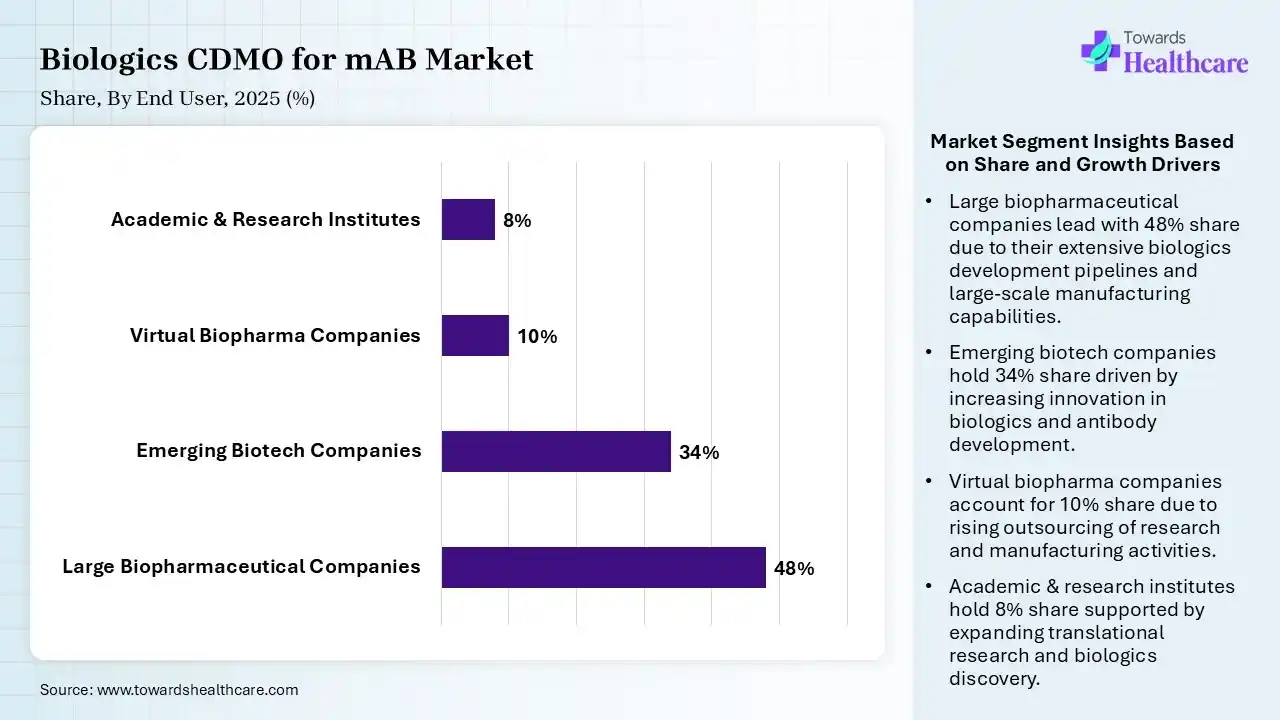
| Segment | Share 2025 (%) |
| Large Biopharmaceutical Companies | 48% |
| Emerging Biotech Companies | 34% |
| Virtual Biopharma Companies | 10% |
| Academic & Research Institutes | 8% |
The Large Biopharmaceutical Companies Segment Dominated the Market With 48% in 2025
The biopharmaceutical companies segment held a major revenue share of 48% of the biologics CDMO for mAB market in 2025 and was driven by large manufacturers outsourcing to expand capacity and reduce capital expenditure. Global commercialization required reliable supply chains, which increased their use. Strategic partnerships also remained strong.
The emerging biotech companies segment held the second-largest share of 34% of the market in 2025 and is expected to expand rapidly during the forecast period, due to venture funding accelerating biologics development. Small companies rely on CDMOs for manufacturing expertise. Asset-light operating models also encourage outsourcing.
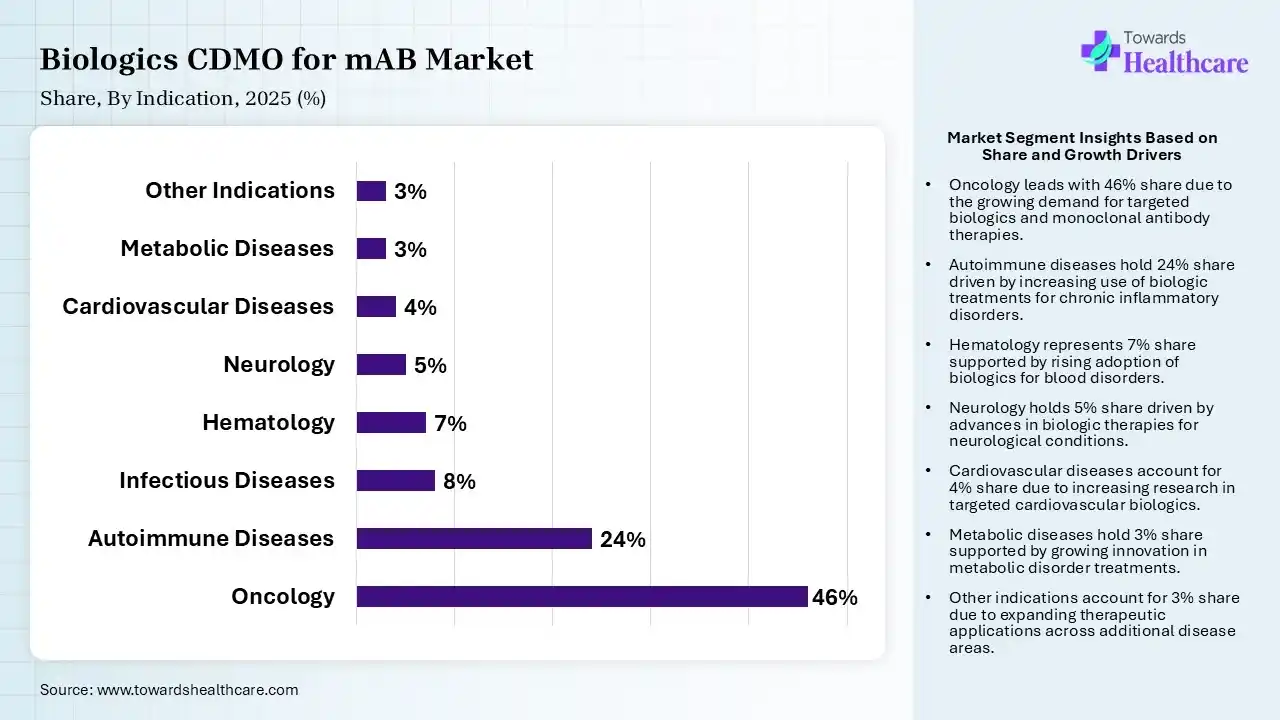
| Segment | Share 2025 (%) |
| Oncology | 46% |
| Autoimmune Diseases | 24% |
| Infectious Diseases | 8% |
| Hematology | 7% |
| Neurology | 5% |
| Cardiovascular Diseases | 4% |
| Metabolic Diseases | 3% |
| Other Indications | 3% |
The Oncology Segment Dominated the Market With 46% in 2025
The oncology segment contributed the biggest revenue share of 46% of the biologics CDMO for mAB market in 2025, as it remained the largest antibody development area. Continuous approvals also increased commercial manufacturing needs. Precision medicine also supported their innovation.
The infectious diseases segment held a share of 8% of the market in 2025 and is expected to gain the highest share during the forecast period, driven by emerging infectious threats stimulating antibody development. Government preparedness initiatives also increase investment. Rapid-response manufacturing is also gaining importance.
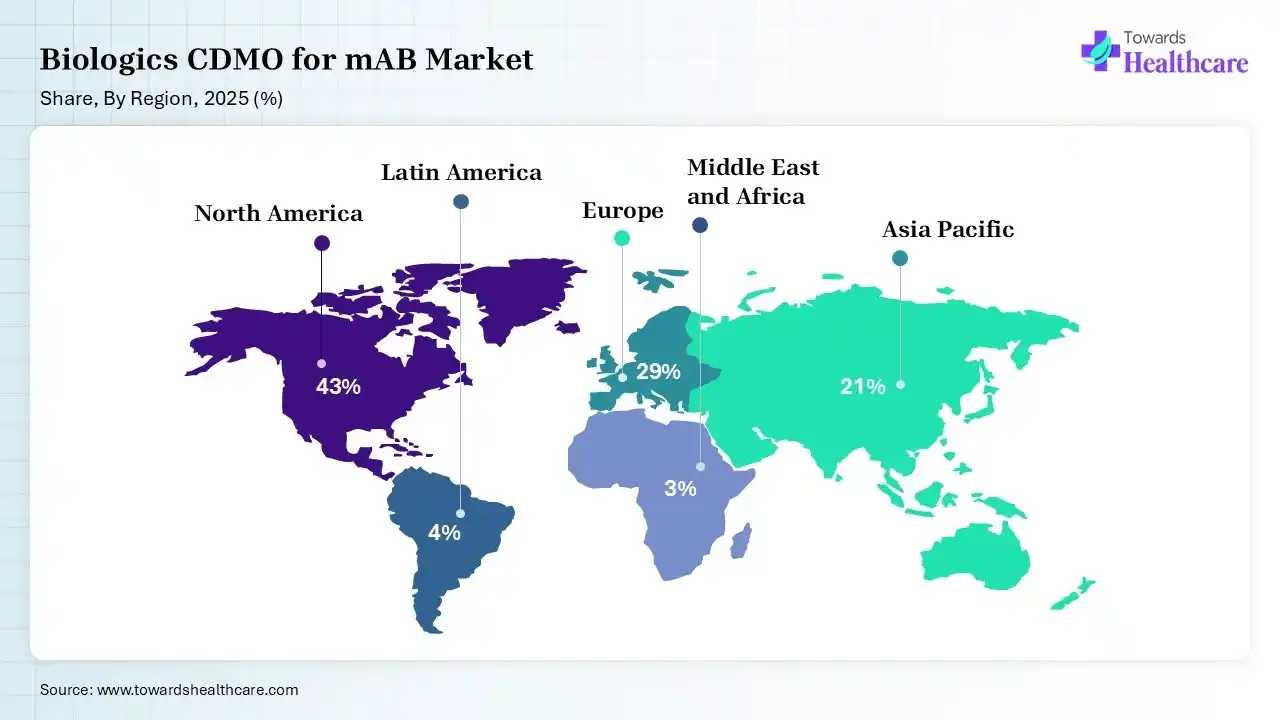
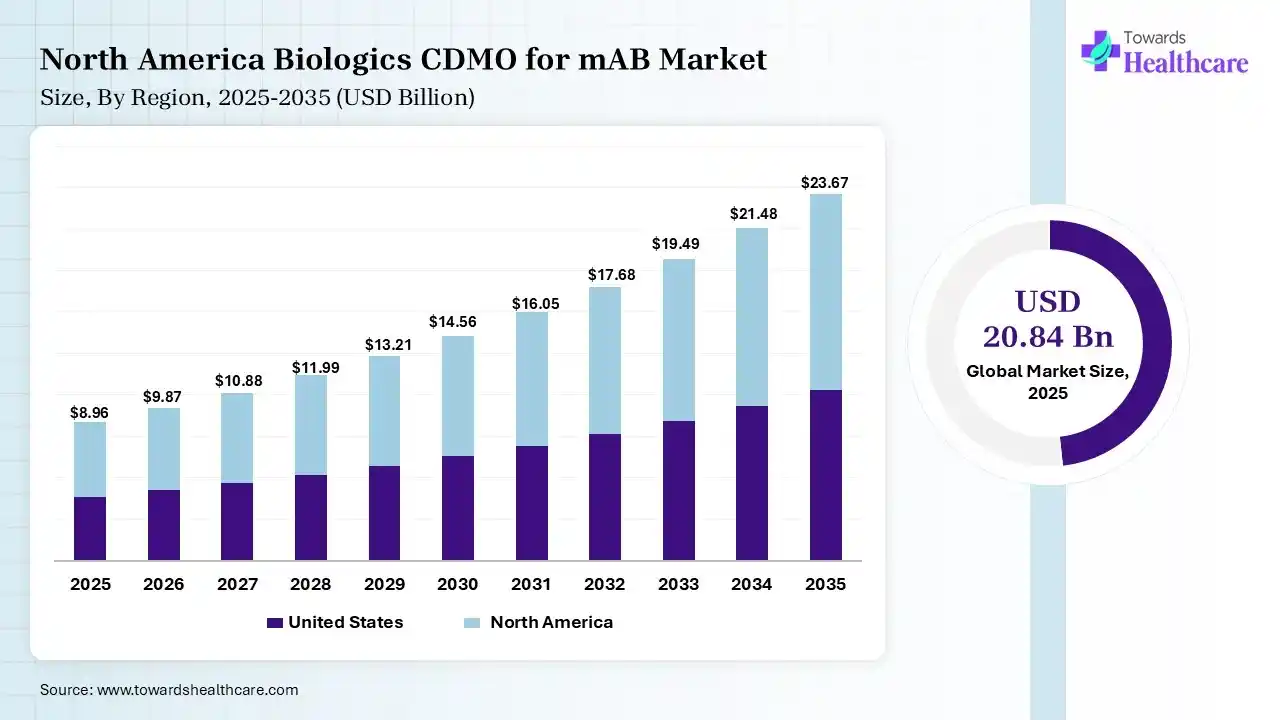
North America dominated the biologics CDMO for mAB market with 43% in 2025, due to a strong biologics innovation ecosystem, which supported outsourcing. Large CDMO presence also expanded manufacturing capacity, which increased their acceptance rate. High R&D spending also contributed to their sustained demand. Presence of advanced biomanufacturing infrastructure and favourable regulatory support also encouraged the use of biologics CDMOs. Growth in antibody-based drugs and biologics also increased their demand, which contributed to the market growth.
US Market Growth
U.S. held a 37% share of the biologics CDMO for mAB market in 2025, driven by the largest biologics manufacturing base. Extensive clinical development activity and continuous investments also expanded commercial production. Expansion in the mAb pipeline and bioprocessing technologies also increased the reliance on biologics CDMO services. Additionally, based on the information gathered by Payal Radbe, the presence of major companies such as Thermo Fisher Scientific Inc., with annual revenue over $45 billion, recently announced a quarterly cash dividend of $0.47 per common share, also enhanced the market expansion.
Canada Market Growth
Canada held a 4% share in the market in 2025 and is expected to grow with the highest CAGR of 10.80% during the studied years, due to government support strengthening biologics manufacturing. CDMO investments continue growing, which drives their expansion, where innovation clusters also expand their capacity. Strong government support and new collaborations are also increasing the use of biologics CDMO services for mAB production. Favorable regulatory support and an expanding biopharmaceutical sector also support their use.
Europe held a 29% share of the biologics CDMO for mAB market and is expected to grow significantly during the forecast period, due to the presence of a mature pharmaceutical industry that drives outsourcing. Strong regulatory expertise also supports biologics production, where expansion of commercial facilities continues. Expanding biologic and biosimilar pipelines also fuels the demand for biologics CDMOs, where increasing demand for personalized medicine is also promoting their use, enhancing the market growth.
Germany Market Growth
Germany held a 7% share in the biologics CDMO for mAB market in 2025, driven by the presence of leading biologics manufacturing infrastructure. Strong pharmaceutical investment and advanced process technologies also accelerated production, which increased the use of biologics CDMOs. Growth in strategic collaborations among the institutes and industries also increased their use, where advancements in next-generation antivirals also increased their use. Additionally, demand for advanced manufacturing technologies and personalized medicines also increased the dependence on CDMO services.
Switzerland Market Growth
Switzerland held a 4% share in the market in 2025 and is expected to witness the fastest growth with a CAGR of 10.90% over the forecast period, due to global pharmaceutical headquarters sustaining outsourcing demand. Advanced manufacturing technologies are also improving efficiency, where premium biologics production also expands the use of biologics CDMOs for mAB manufacturing and commercialization. Strong regulatory support and growing R&D activities across institutes are also leading to a rise in their collaboration to leverage various advanced technologies.
Asia Pacific held a 21% share of the biologics CDMO for mAB market in 2025 and is expected to grow at the fastest CAGR during the forecast period, due to cost competitiveness and expanding CDMO capabilities, which are attracting global outsourcing. Growing government incentives also stimulate investments, where rapid biotechnology growth accelerates their demand. Increasing number of clinical trials and outsourcing trends are also increasing their use, where a rise in monoclonal antibody-based therapies is also promoting the market growth.
China Market Growth
China held a 9% share of the biologics CDMO for mAB market in 2025, driven by massive CDMO expansion, which strengthened global competitiveness. Domestic biologics innovations also increased their use, where commercial manufacturing capacity growth also increased the shift towards biologics CDMOs. Presence of affordable services, skilled personnel, and regulatory expertise also attracted companies. Growth in targeted therapies and complex biologics pipeline also increased their use.
India Market Growth
India held a 3% share in the market in 2025 and is expected to expand rapidly in the coming years, due to rapid CDMO expansion and a skilled workforce attracting international clients. Growing government support is also encouraging biologics manufacturing, where lower production costs also improve competitiveness. At the same time, the increasing chronic disease burden is also driving the demand for mAb therapies and biologics, which is increasing their production rates, promoting the reliance on CDMO services.
Latin America held a 4% share in the biologics CDMO for mAB market in 2025 and is expected to show lucrative growth during the forecast period, due to local biologics manufacturing developing steadily. Government healthcare investments are increasing, which supports the reliance on biologics CDMOs, where regional outsourcing opportunities are also expanding, promoting their use. Expanding healthcare infrastructure is also driving the adoption of various biologics and biosimilars, increasing the use of mAbs, leading to new CDMO collaborations. Additionally, growing adoption of advanced technologies is also increasing their operational efficiency, promoting market growth.
Brazil Market Growth
Brazil held a 2% share in the biologics CDMO for mAB market in 2025 and is expected to gain the highest market share with a CAGR of 10.20% during the forecast period, driven by the largest regional pharmaceutical market. Growth in public investments also supported biologics production, where local manufacturing capabilities also improved, which encouraged the use of biologics CDMOs. Based on Payal Rabde's analysis, the growing chronic disease burden is also driving the demand for mAB therapies, fueling the outsourcing trends and use of CDMO services.
The rest of Latin America held a 1% share in the market in 2025, due to healthcare modernization supporting biologics production. Increasing regional partnerships are also strengthening manufacturing capabilities, where growing outsourcing opportunities are also promoting the use of biologics CDMOs. A rise in government initiatives is also strengthening their use, where expanding healthcare infrastructure is also attracting companies. Growing investments in targeted therapies are also propelling their acceptance rates.
MEA held a 3% share in the biologics CDMO for mAB market in 2025 and is expected to show notable growth during the forecast period, due to increasing government diversification strategies, which support biotechnology investments. Healthcare infrastructure is improving steadily, where growing international partnerships are also expanding manufacturing capabilities, attracting companies. A favourable regulatory framework and growing healthcare expenditures are also supporting biologics and mAB innovation, leading to a rise in reliance on CDMOs, enhancing market growth.
GCC Market Growth
GCC held a 1% share in the biologics CDMO for mAB market in 2025 and is expected to show the fastest growth with a CAGR of 11.20% over the forecast period, driven by growth in national biotechnology strategies, which encouraged investment. Local manufacturing capacity also increased, where healthcare spending remained strong, which increased the use of biologics CDMO for mAB. A rise in collaborations and healthcare investments also increased the use of CDMOs for advanced manufacturing technologies.
The rest of the Middle East & Africa held a 1% share in the market in 2025, due to emerging biotechnology initiatives attracting investment. Regional manufacturing infrastructure development and increasing demand for biologics also continue the use of CDMO services. According to the analysis of Payal Rabde, growing investment and favorable regulatory support also promote their use, where affordable services and expertise also increased their demand. A rise in patient population and outsourcing trends are also driving their expansion.
| Companies | Headquarters | Solutions |
| Lonza Group | Basel, Switzerland | mAbs DNA-to-IND Program, OptiALTO, and Ibex Solutions |
| Wuxi Biologics | Shanghai, China | WuXia Cell Line Development, WuXiBody, and WuXian Transient |
| Samsung Biologics | Incheon, South Korea | S-CHOice and S-DUAL |
| Fujifilm Biotechnologies | Teesside, UK | ApolloX, MaruX, and Saturn mAb Platform |
| Thermo Fisher Scientific | Waltham, U.S | Freedom CHO-S Kit and Quick to Clinic for Biologics |
In January 2026, after announcing the successful closure of the Asset Purchase Agreement, Share Purchase Agreement Zydus Lifesciences Limited offering advanced manufacturing facilities in the global biologics contract development and manufacturing organization ("CDMO") business, Dr. Garo Armen, Chairman and CEO of Agenus, Inc., stated that, "This collaboration unites Agenus' pioneering immunotherapy pipeline and U.S.-based clinical development capabilities with Zydus' global manufacturing, operational scale, and commercial infrastructure. The transaction allows Agenus to monetize manufacturing assets while securing dedicated, high-quality U.S. biologics capacity to support botensilimab and balstilimab. Importantly, it sharpens our focus on advancing BOT and BAL through late-stage development and expanding paid access to patients globally who have limited treatment options."
Strengths
Weaknesses
Opportunities
Threats
Competitive Positioning Matrix
Lonza Group, Samsung Biologics, and Wuxi Biologics led the market based on the competitive positioning matrix.
Market Share Analysis of Leading Companies
As per the market share analysis, Lonza Group, Samsung Biologics, and Wuxi Biologics were the leading companies.
Business Performance
Lonza Group, Samsung Biologics, and Wuxi Biologics registered their dominance over the market based on business performance.
| Pointers | Factors |
| Company Overview | Supports the development, manufacture, and delivery of products |
| Product Portfolio | Biologics, gene therapies, cell therapies, specialty products, and advanced technologies |
| Manufacturing Facilities | Drug product, drug substance, cell line development, etc. |
| Strategic Initiatives | Strategic collaboration with Galapagos NV |
| Recent Developments | Collaboration with Silexion Therapeutics Corp |
| SWOT Analysis |
Strengths:
Weakness:
Opportunities:
Threats:
|
| Pointers | Factors |
| Company Overview | Provides process development through to commercial supply of life-impacting medicines for patients |
| Product Portfolio | Biologics, gene therapies, and vaccines |
| Manufacturing Facilities | Wide range of services for biologics and advanced therapies along with CMC services |
| Strategic Initiatives | Partnership with Argenx SE, a global immunology company |
| Recent Developments | Launch of New Quality Control Laboratory in Denmark |
| SWOT Analysis |
Strengths:
Weakness:
Opportunities:
Threats:
|
| Pointers | Factors |
| Company Overview | Focus on improving the health of humans and animals |
| Product Portfolio | Products for cancer, lung disease, mental health, and eye health |
| Manufacturing Facilities | Mammalian and microbial expertise |
| Strategic Initiatives | Social Engagement Fund has invested in Zuri Health |
| Recent Developments | More than 80 active preclinical and clinical projects |
| Financial Highlights | Group net sales increased by 16.2%* to EUR 15.8 billion |
| SWOT Analysis |
Strengths:
Weakness:
Opportunities:
Threats:
|
Future Manufacturing Trends
The future manufacturing trends in biologics CDMO for the mAB market are driven by increasing use of single-use bioprocessing systems, implementation of continuous biomanufacturing, adoption of digital manufacturing technologies, and expanding global manufacturing networks.
Emerging Business Models
The emerging business models such as end-to-end, one-stop shop, platform technology, flexible manufacturing, and digital manufacturing technologies are expected to drive further opportunities.
Future Technology Adoption
Growing demand for high manufacturing efficiency, large-scale mAB manufacturing, real-time monitoring, faster development timelines, flexible manufacturing platforms, and sustainable manufacturing practices will fuel advanced technology adoption.
Expected Investment Hotspots
Areas with large-scale biologics manufacturing facilities, digital manufacturing platforms, high strategic partnerships, and a rise in next-generation mAB production are the expected investment hotspots.
Long-Term Commercial Opportunities
Expanding mAB pipeline, rise in next-generation antibodies R&D activities, demand for personalized medicines, advancements in biologics, and digital manufacturing technologies are some of the long-term commercial opportunities.
Strategic Recommendations for Industry Participants
Focus on next-generation biologics, digital manufacturing capabilities, continuous bioprocessing technologies, and sustainability are some of the key strategic recommendations for industry participants.
As per Payal Rabde's analysis, the biologics CDMO for mAb market is anticipated to show significant growth during the forecast period, which will be driven by a wide range of factors. The growing outsourcing trends, chronic disease burden, rising demand for targeted therapies, advancements in cell & gene therapies, and expanding biologics pipelines will drive the demand for biologics CDMO for mAB production. Additionally, rapid healthcare digitization will support the adoption of advanced technologies, which will drive the expansion and advancements of CDMO facilities, leading to new collaborations. Moreover, segments such as bispecific monoclonal antibodies, clinical scale, and oncology are expected to show rapid growth, making them ideal for investments. Major industries like Lonza Group, Samsung Biologics, and Wuxi Biologics are expected to contribute actively to the market expansion, which will attract new investments.
By Service Type
By Molecule Type
By Expression System
By Manufacturing Scale
By Production Stage
By End User
By Indication
By Region












Principal Consultant
Payal Rabde is a Healthcare Market Research Analyst at Towards Healthcare Research & Consulting with 4+ years of experience in pharmaceuticals, biotechnology, medical devices, and life sciences.
Learn more about Payal Rabde

Reviewed By
Aditi Shivarkar is a seasoned professional with over 14 years of experience in healthcare market research. As a content reviewer, Aditi ensures the quality and accuracy of all market insights and data presented by the research team.
Learn more about Aditi Shivarkar









