Pipeline Programs

CGT Companies Tracked

Manufacturing Facilities


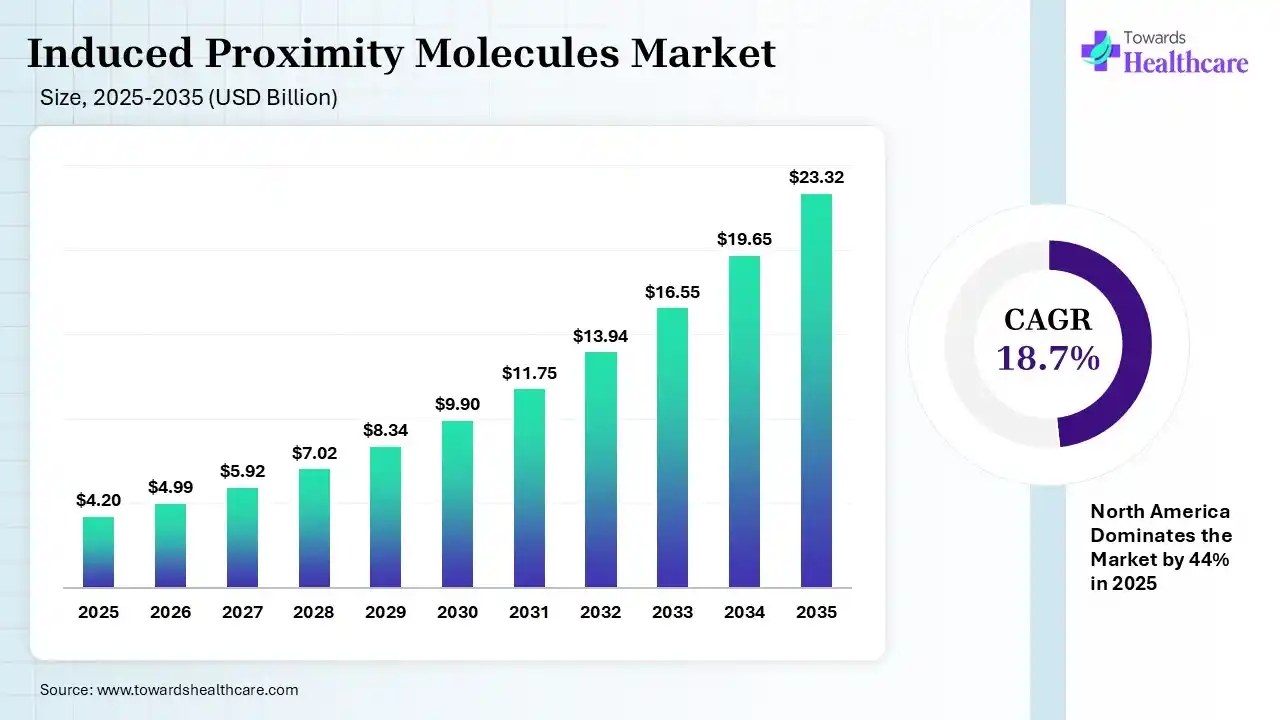
The global induced proximity molecules market size was estimated at USD 4.2 billion in 2025 and is predicted to increase from USD 4.99 billion in 2026 to approximately USD 23.32 billion by 2035, expanding at a CAGR of 18.7% from 2026 to 2035. The induced proximity molecules market is growing because these molecules have the strength to unlock a wide portion of the disease targets that were once thought inaccessible.
The induced proximity molecules market is growing, as induced proximity is a significant approach for regulating proteins through loss or gain of function. This innovative mechanism employs proximity-inducing molecules to bring proteins or nucleic acids together to modulate the function of a target and the related cellular processes. Many biotech companies have leveraged the therapeutic potential of the induced proximity approach to develop drugs against a myriad of diseases. The wide range of applicability of this stratergies has expanded to disease areas beyond cancer, such as neurodegenerative diseases. With some proximity-inducing drugs in healthcare development, it is an exciting time for the encouraged proximity research field.
An AI-based drug discovery platform particularly tailored for designing proximity-inducing small molecules and peptides. An AI-based platform allows the design of bifunctional compounds using a dedicated workflow. The platform uses the paradigm of an iterative design-test-modify advanced loop, where experimental feedback is combined into the design workflow on each iteration. AI-based technology to ensure that the designed chimeras are amphiphilic molecules with a high tendency for membrane crossing. This technology is transforming drug discovery; its tangible impact varies greatly across modalities. Induced-proximity therapeutics have been developed as a powerful modality in drug discovery, allowing the selective removal of disease-causing biomolecules by harnessing endogenous degradation pathways.
| Table | Scope |
| Market Size in 2026 | USD 4.99 Billion |
| Projected Market Size in 2035 | USD 23.32 Billion |
| CAGR (2026 - 2035) | 18.7% |
| Leading Region | North America by 44% |
| Historical Data | 2020 - 2023 |
| Base Year | 2025 |
| Forecast Period | 2026 - 2035 |
| Measurable Values | USD Millions/Units/Volume |
| Market Segmentation | By Molecule Type, By Target Protein Class, By Therapeutic Area, By End User, By Stage of Development, By Region |
| Top Key Players | Kymera Therapeutics, Nurix Therapeutics, Monte Rosa Therapeutics, C4 Therapeutics, Bristol Myers Squibb |
| Segment | Share 2025 (%) |
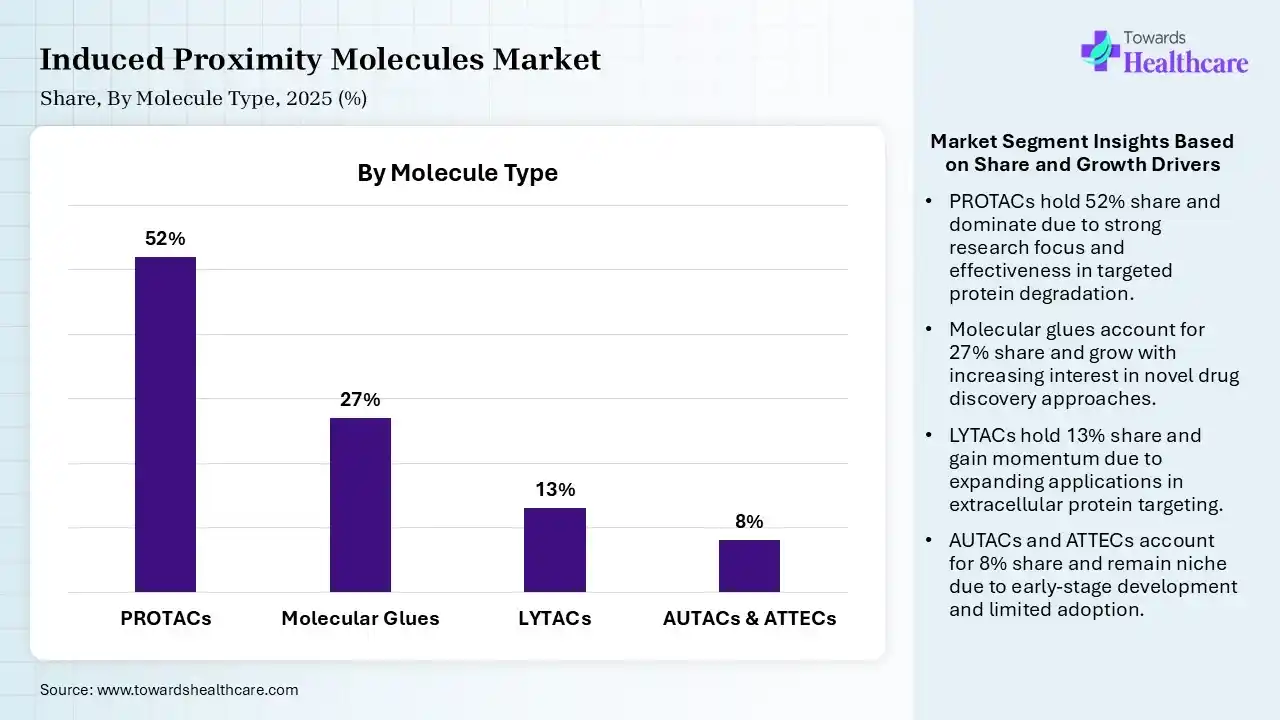
| PROTACs | 52% |
| Molecular Glues | 27% |
| LYTACs | 13% |
| AUTACs & ATTECs | 8% |
The PROTACs Segment Led the Induced Proximity Molecules Market in 2025
The PROTACs segment contributed the largest market share of 52% in 2025, as PROTACs afford advanced selectivity compared with traditional inhibitors. PROTACs overcome most of the restraints of the small-molecule inhibitors, and they provide significant advantages over the traditional concepts of drug discovery by besieging protein degradation. PROTACs have the potential to target the undruggable targets that limit conventional drugs, as the warheads need only a slight binding affinity to recruit the POI, rather than high inhibitory activity.
The molecular glues segment held a significant share of 27% in the market and is expected to grow at the fastest CAGR during the forecast period, as molecular glues have evolved as powerful synthetic devices to control biological interactions, manipulate intractable proteins, or target proteins without noticeable binding pockets available to a drug.
The LYTACs segment held a significant share of 13% in the market, as these molecules use the cation-independent mannose-6-phosphate receptor, a well-characterized recycling membrane protein. LYTACs remove circulating pathogenic proteins, involving antibodies or hormones, and modulate cell-surface receptors implicated in metabolic or cardiovascular diseases.
The AUTACs & ATTECs segment held a significant share of 8% in the market, as AUTACs, ATTECs, and related autophagy-based degraders. AUTACs and ATTECs apply small-molecule tags to involve autophagy receptors or LC3, allowing clearance of aggregates, injured organelles, and lipids. ATTEC molecules have significant potential in degrading multiple targets such as pathogenic proteins, lipids, and organelles, and their structural characteristics make them good candidates for drug development.
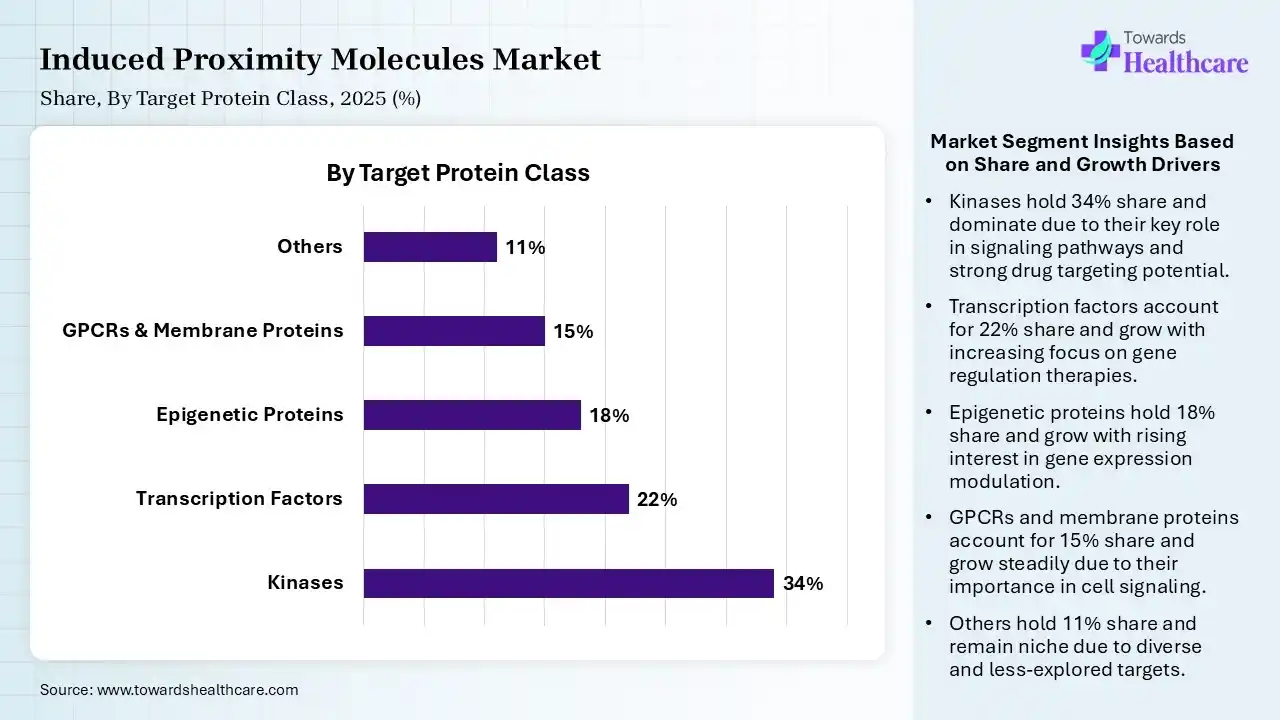
| Segment | Share 2025 (%) |
| Kinases | 34% |
| Transcription Factors | 22% |
| Epigenetic Proteins | 18% |
| GPCRs & Membrane Proteins | 15% |
| Others | 11% |
Kinases Segment Led the Induced Proximity Molecules Market in 2025
The kinases segment contributed the largest market share of 34% in 2025, as a significant advancement in oncology therapy, announcing a novel framework for utilizing kinase-targeting molecules to activate therapeutic gene expression. By converting traditional kinase inhibitors into context-specific activators, CDK-TCIPs provide a versatile and potentially safer approach for targeting transcriptional dysregulation in tumours.
The transcription factors segment held a significant share of 22% of the market, and is expected to grow at the fastest CAGR during the forecast period, as adaptable transcription factors, scaffolding proteins, and signalling adaptors, where partial and context-driven modulation is preferred over complete protein loss. Transcription factors (TFs) are a class of proteins that play a significant role in controlling gene expression by directly binding to specific DNA sequences.
The epigenetic proteins segment held a significant share of 18% of the induced proximity molecules market, as epigenetic mechanisms involve gene regulation by changing chromatin accessibility via changes in transcription factor (TF). Epigenetics regulates gene expression and has been confirmed to play a significant role in a diversity of metabolic diseases.
The GPCRs & membrane proteins segment held a significant share of 18% the market, as G protein-coupled receptors (GPCRs) are extremely sophisticated detection molecules that respond to signals as varied as a photon or a hormone. They are as old as the first multicellular organisms. GPCRs involvrs to many important functions in the human body and play a significant role in health and disease.
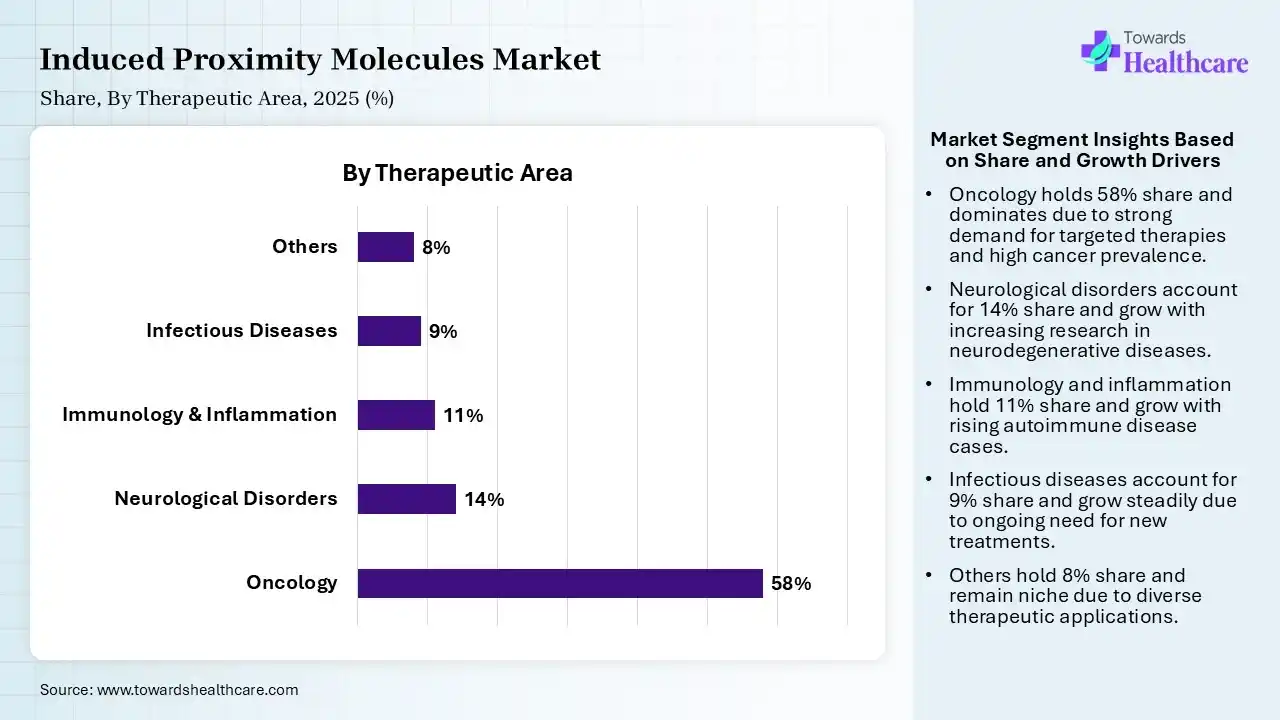
| Segment | Share 2025 (%) |
| Oncology | 58% |
| Neurological Disorders | 14% |
| Immunology & Inflammation | 11% |
| Infectious Diseases | 9% |
| Others | 8% |
Oncology Segment Led the Induced Proximity Molecules Market in 2025
The oncology segment contributed the largest market share of 58%, as cancer therapeutics, the major application of proximity-inducing molecules, is the targeted degradation of oncogenic proteins. Effective against cancer drivers such as the androgen receptor (AR) and estrogen receptor (ER) in prostate and breast cancers.
The neurological disorders segment held a significant share of 14% in the market, and is expected to grow at the fastest CAGR during the forecast period, as induced-proximity therapeutics evolve as a transformative model in chemical biology and medicinal discovery, allowing selective control of cellular technology. They remove pathogenic proteins that lack active enzymatic sites, like transcription factors and scaffolding proteins.
The immunology & inflammation segment held a significant share of 11% in the market, as proximity-driven agents offer major benefits compared to occupancy-driven agents, like theoretically lower doses, lowering toxicities, and striking selectivity because of enhanced specificity of molecular recognition in the ternary complex formed.
The infectious diseases segment held a significant share of 9% in the market, as induced proximity destroys mutated pathogens that are resistant to conservative inhibitors, which offered the degrader to bind the target. It enables the targeting of proteins that lack outmoded binding pockets, which are typically inaccessible to conventional occupancy-driven drugs.
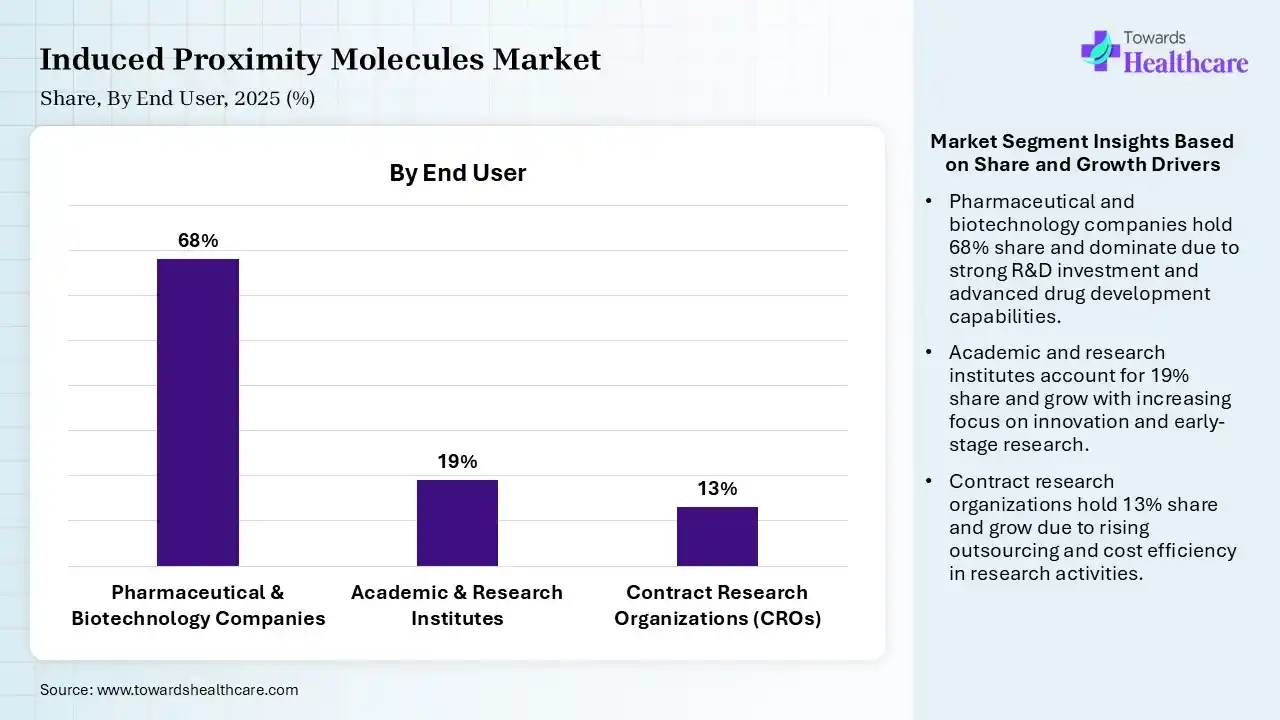
| Segment | Share 2025 (%) |
| Pharmaceutical & Biotechnology Companies | 68% |
| Academic & Research Institutes | 19% |
| Contract Research Organizations (CROs) | 13% |
Pharmaceutical & Biotechnology Companies Segment Led the Induced Proximity Molecules Market in 2025
The pharmaceutical & biotechnology companies segment contributed the largest market share of 68%, as proximity-based agents are leading to a renaissance of induced molecular recognition for biology and medicine, which could usher in a drug detection paradigm with untapped strength in pharmaceutical and biotechnology organizations.
The academic & research institutes segment held a significant share of 19% in the market, as using chemically induced proximity (CIP) systems in academic & research institutes, researchers initiate or stop protein degradation in minutes. This enables studying the instantaneous consequences of protein depletion, distinguishing direct effects from indirect compensation, and discovering cellular memory.
The contract research organizations (CROs) segment held a significant share of 13% in the market, and is expected to grow at the fastest CAGR during the forecast period, as these molecules reduce the entire protein rather than simply inhibiting its action, they bypass resistance mechanisms such as target overexpression or mutation, providing significant benefits in cancer research programs.
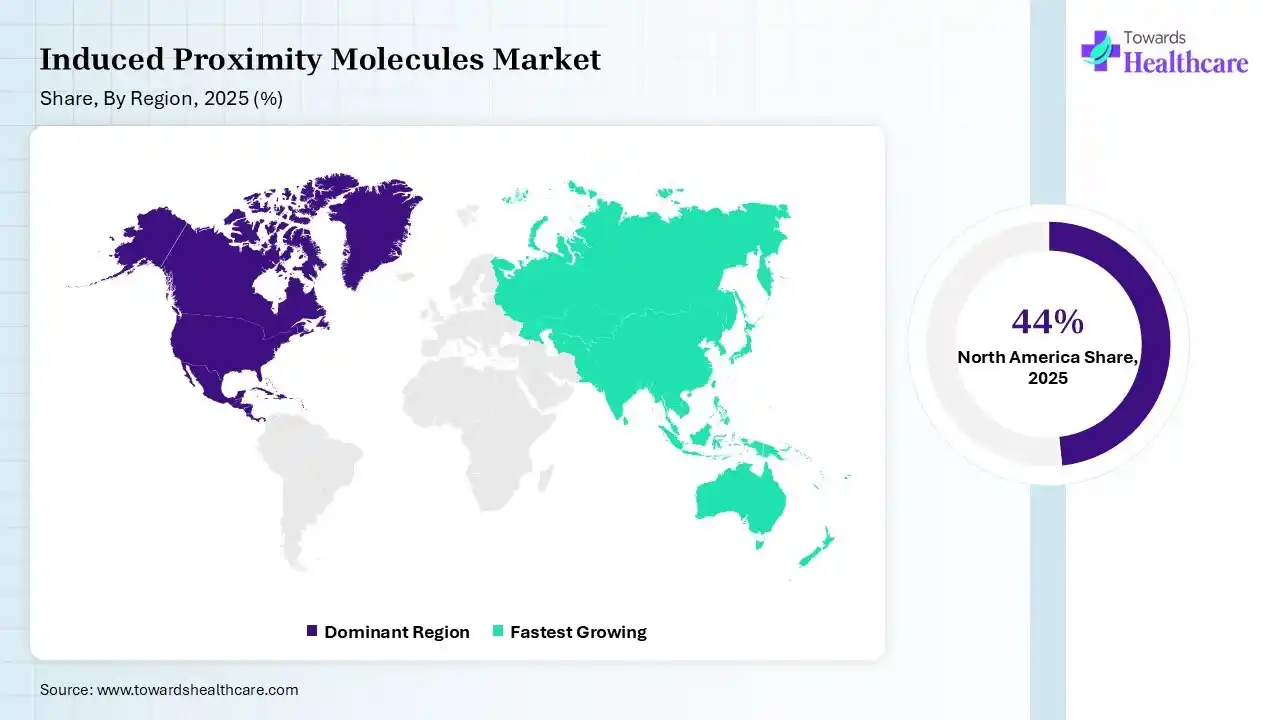
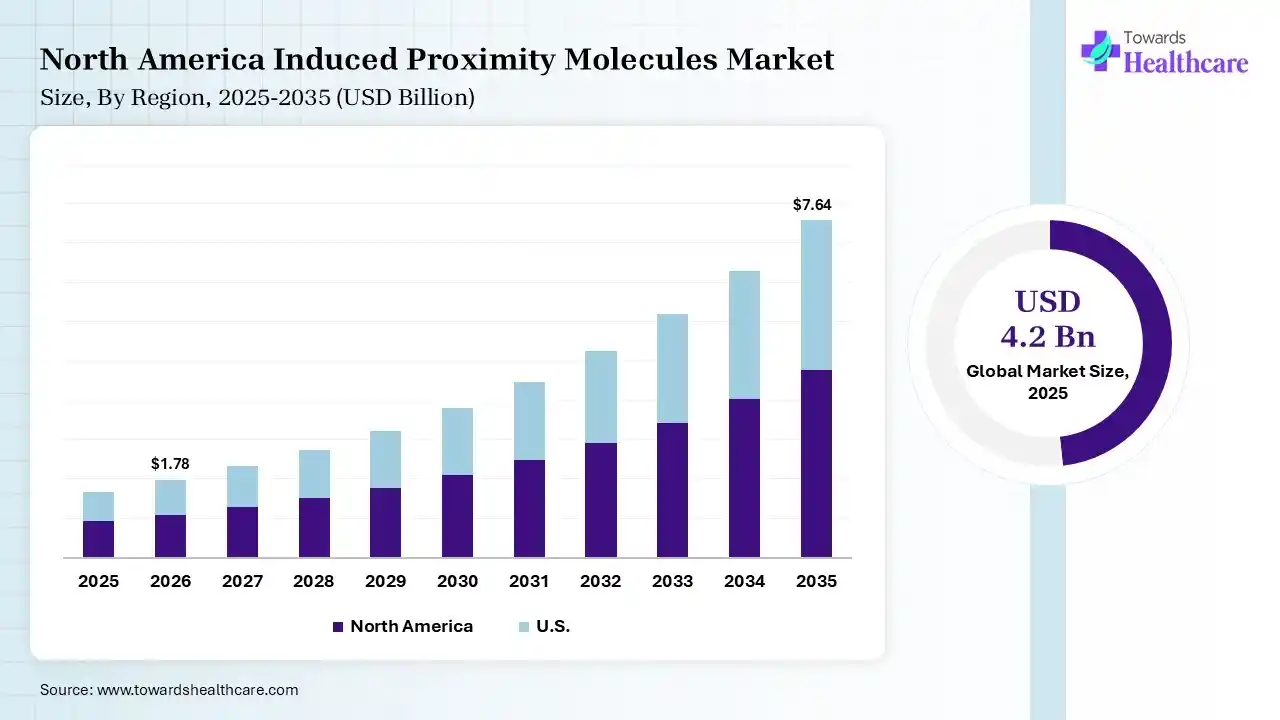
In 2025, North America dominated the induced proximity molecules market with a share of 44% in 2025, as increasing scientific expertise has helped make the U.S. a prosperous nation in the world and led to longer and simpler lives. Major academic institutions are playing an increasingly significant role in drug discovery. Advances in research devices and techniques have greatly improved, which drives the growth of the market.
U.S. Market Trends
In the U.S., advances in research tools and technology have significantly increased the ability to view how DNA, RNA, and proteins shift and interact. Targeted protein degradation (TPD) is a new protein modulation approach distinct from traditional inhibitors. The U.S. government is the main single funder of biomedical research in the biosphere.
Asia Pacific held 20% share of the induced proximity molecules market, and is expected to have the fastest growth during the forecast period, as increasing demand for rapid and precise diagnostic devices has led to amplified partnerships between international organizations and local companies. The largest population is suffering from lifestyle diseases and oncology. This increasing demand for specific oncology treatments drives heavy spending in induced proximity molecules, which contributes to the growth of the market.
India Market Trends
India is evolving from generic synthesis to progressive, targeted protein degradation technology to tackle challenging diseases. Increasing healthcare novelty in India, discovering transformative trends, breakthrough technologies, and approaches shaping the future of the field. The presence of the largest supplier of generic medicines worldwide, supplying one in five generic drugs sold, India has received the title “pharmacy of the world.”
R&D:
Manufacturing Processes:
Patient Services:
| Company | Headquarters | Latest Update |
| Kymera Therapeutics | United States | In April 2026, Kymera Therapeutics, Inc. announced that Gilead Sciences, Inc. had exercised its option to exclusively license KT-200, a first-in-class, oral CDK2 molecular glue degrader development candidate discovered and characterized by Kymera, under their strategic collaboration agreement. |
| Nurix Therapeutics | United States | In January 2025, Nurix Therapeutics, Inc., a clinical-stage biopharmaceutical company focused on the discovery, advancement, and commercialization of targeted protein degradation medicines, the next frontier in innovative drug design aimed at improving treatment choice for patients with cancer and inflammatory diseases, outlined significant objectives and anticipated milestones. |
| Monte Rosa Therapeutics | United States | In March 2026, Monte Rosa Therapeutics, Inc., a clinical-stage biotechnology company developing new molecular glue degrader (MGD)-based medicines, reported business highlights. |
| C4 Therapeutics | United States | In March 2026, C4 Therapeutics announced a partnership with Merck KGaA to develop targeted protein degraders for oncogenic proteins. |
| Bristol Myers Squibb | New Jersey | In March 2026, Evotec received a $10 million milestone payment from Bristol Myers Squibb following the initiation of a Phase 1 clinical study evaluating BMS. |
Strengths
Weakness
Opportunities
Threat
By Molecule Type
By Target Protein Class
By Therapeutic Area
By End User
By Stage of Development
By Region










Principal Consultant
Shivani Zoting is a dedicated research analyst specializing in the healthcare industry. With a strong academic foundation, a B.Sc. in Biotechnology and an MBA in Pharmabiotechnology, she brings a unique blend of scientific understanding and strategy.
Learn more about Shivani Zoting
Reviewed By
Aditi Shivarkar is a seasoned professional with over 14 years of experience in healthcare market research. As a content reviewer, Aditi ensures the quality and accuracy of all market insights and data presented by the research team.
Learn more about Aditi Shivarkar