Pipeline Programs

CGT Companies Tracked

Manufacturing Facilities


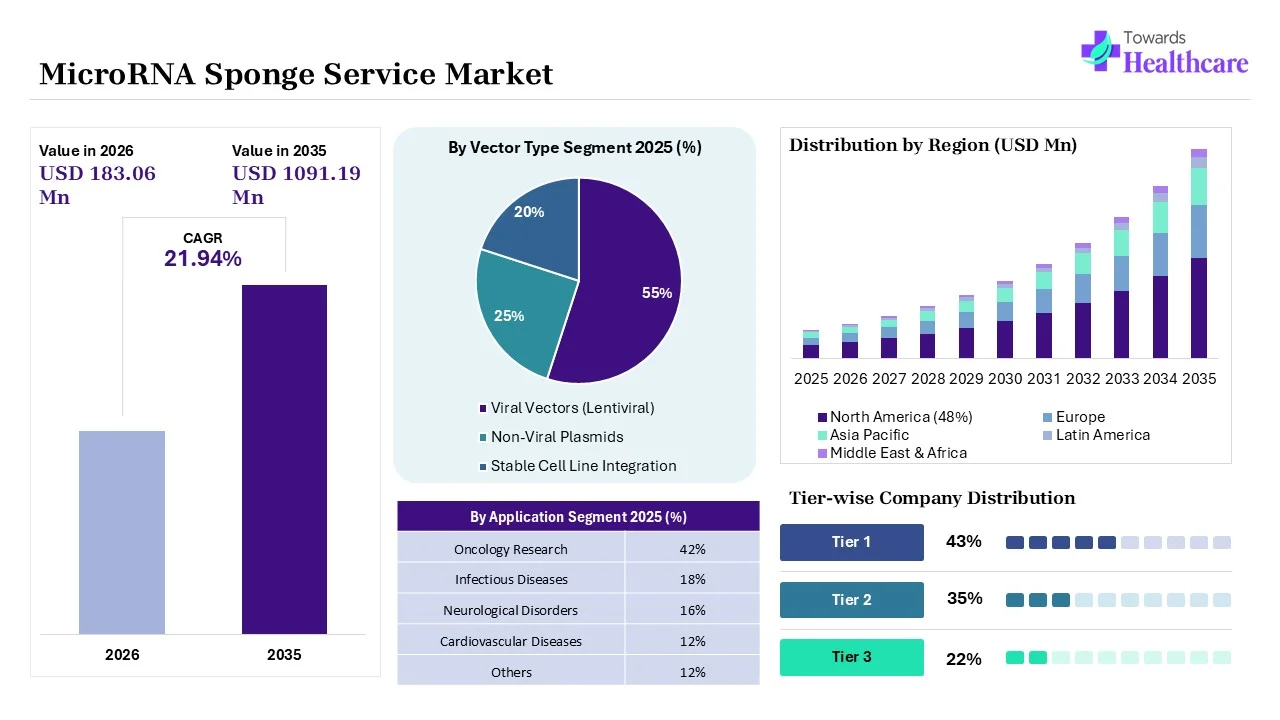
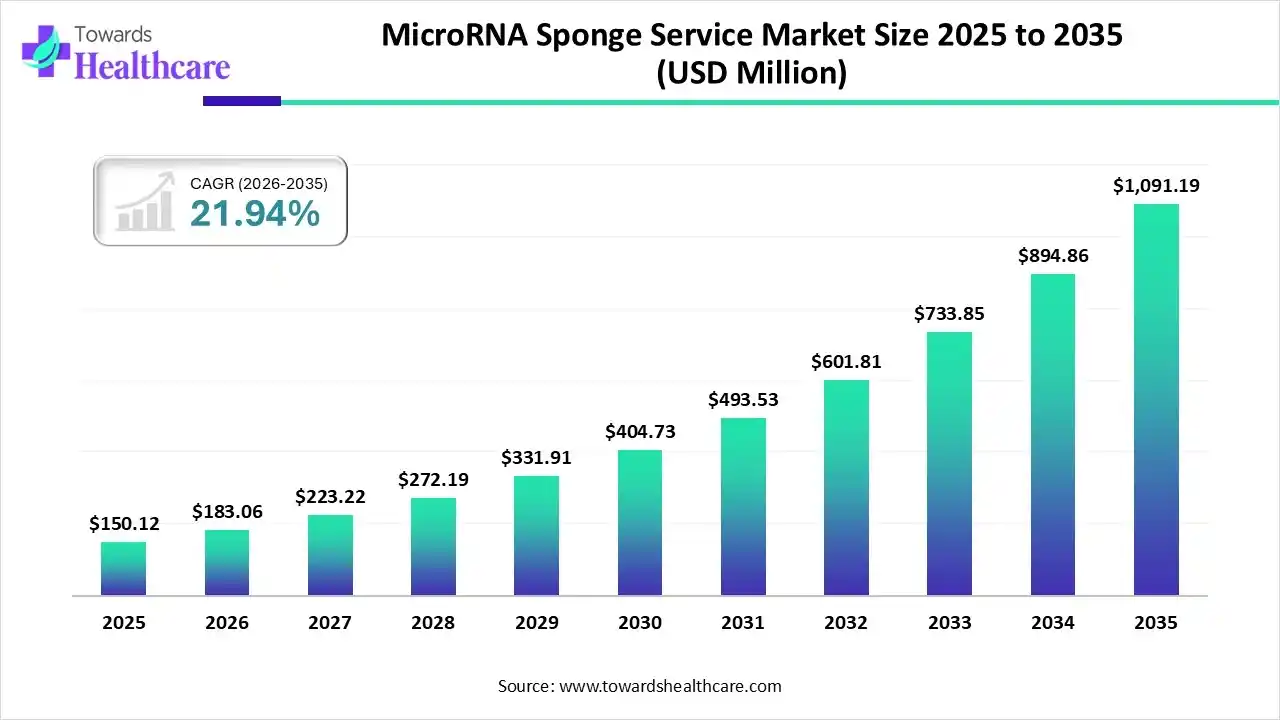
The global microRNA sponge service market size was estimated at USD 150.12 million in 2025 and is predicted to increase from USD 183.06 million in 2026 to approximately USD 1091.19 million by 2035, expanding at a CAGR of 21.94% from 2026 to 2035.
The globally accelerating demand for advanced cancer diagnostics, increasing investment in genetic research, and the need for personalized medicine are impacting the overall market progression. Alongside, firms are promoting novelty in nanoparticle-based and exosome-based delivery systems to deliver sponges.
MicroRNA sponge services involve the design and construction of synthetic RNA transcripts containing multiple tandem binding sites that competitively sequester specific miRNAs. This "sponging" effect prevents miRNAs from binding to their natural mRNA targets, serving as a powerful loss-of-function tool for research in gene regulation, oncology, and drug development. The market is emphasizing boosting in vivo stability and targeting of miRNA sponges utilising nanoparticles, lipid-polymer hybrids, and virus-like particles (VLPs) to reduce off-target effects.
Various AI models are increasingly using multi-head attention mechanisms to capture long-range interactions in RNA structure, thereby enabling the design of synthetic sponges with numerous binding sites. Alongside, AI-assisted services are facilitating custom-designed sponge vectors personalized to combat entire miRNA families or particular oncogenic miRNAs. Recently, AI-powered miRNA signature discovery, such as ESGCmiRD, was rolled out to identify miRNA signatures in oesophageal cancer.
Innovations in Delivery Systems
To raise in vivo effectiveness, services are highly aiming at the development of novel nanoparticle-based and exosome-based delivery systems to transport sponges.
Fostering Circular RNA (circRNA) Sponges
Prospective research activities are transforming synthetic, circular nucleic acids into more stable, long-lasting substitutes to traditional linear sponge constructs for oncomiR inhibition.
Spurring WPRE-Linked Solutions
Researchers are focusing on the integration of RNA elements, including the Woodchuck hepatitis virus (WHV) post-transcriptional regulatory element (WPRE), to raise the suppression potency of tough decoy (TuD) sponges.
| Key Elements | Scope |
| Market Size in 2026 | USD 183.06 Million |
| Projected Market Size in 2035 | USD 1091.19 Million |
| CAGR (2026 - 2035) | 21.94% |
| Leading Region | North America by 48% |
| Key Applications | Gene function studies, cancer research, neurological disorder research, target validation, pathway analysis, functional genomics screening, therapeutic target discovery |
| Primary End Users | Pharmaceutical companies, biotechnology firms, academic research institutes, CROs, gene therapy developers |
| Key Growth Drivers | Rising adoption of functional genomics, expansion of RNA-based therapeutics, increased demand for gene regulation tools, growth in CRISPR/RNAi research, rising oncology research funding |
| Measurable Values | USD Millions/Units/Volume |
| Market Segmentation | By Service Type, By Vector Type, By Application, By End-User, By Region |
| Top Key Players | Thermo Fisher Scientific Inc., QIAGEN N.V., GenScript Biotech Corporation, System Biosciences (SBI), AcceGen Biotech, GeneCopoeia, Inc., Merck KGaA (Sigma-Aldrich), Horizon Discovery (Revvity), Takara Bio Inc. |
| Segments | Shares % |
| Functional Analysis | 48% |
| Profiling & Localization | 22% |
| Library Construction | 18% |
| miRNA Sponge Construction | 12% |
Which Service Type Led the Global MicroRNA Sponge Service Market in 2025?
In 2025, the functional analysis segment captured approximately 48% share of the market. This primarily covers designing and validating sponge sequences, assessing delivery efficacy, and identifying off-target effects. This analysis is increasingly exploring long non-coding RNAs (lncRNAs) & circular RNAs (circRNAs) as natural competing endogenous RNAs (ceRNAs) to sequester oncomiRs. Also, large language models are united into miRTarBase 2025 to quickly curate and estimate novel miRNA-target interactions (MTIs).
Library Construction
The library construction segment will expand rapidly. More sophisticated services are enabling the construction of multi-targeted sponges in a single vector by employing linking 4-copy building blocks of sponge sequences to target multiple miRNAs simultaneously. The latest breakthroughs include modified-SMOTE bagging techniques, which confirm that synthetic miRNA sponges are maintaining realistic secondary structures and thermodynamic properties, with optimized accuracy of the knockdown in libraries.
| Segments | Shares % |
| Viral Vectors (Lentiviral) | 55% |
| Non-Viral Plasmids | 25% |
| Stable Cell Line Integration | 20% |
How did the Viral Vectors (Lentiviral) Segment Dominate the Market in 2025?
The viral vectors (lentiviral) segment held nearly 55% share of the global microRNA sponge service market in 2025. Significant benefits are its greater effectiveness in delivering miRNA sponges to specialised cell types and in vivo. Also offers long-term loss-of-function studies. It has a vital role in suppressing oncogenic miRNA-21 in melanoma and breast cancer & to transfer sponges targeting miR-33a/b to handle cholesterol homeostasis and targeting miR-21 to treat diabetic nephropathy.
Stable Cell Line Integration
Moreover, the stable cell line integration segment is predicted to grow fastest. This approach immensely facilitates sustained, long-term inhibition of specific miRNAs, making it unique for assessing chronic disease growth, differentiation, & complex, long-term cellular processes. More specific applications of stable, engineered cell lines are in boosting the production of recombinant therapeutic proteins in Chinese Hamster Ovary (CHO) cells. Recently evolved libraries of stable, barcoded sponge cell lines are enabling screening hundreds of miRNAs to determine those regulating specific cellular processes, including proliferation or migration.
| Segments | Shares % |
| Oncology Research | 42% |
| Infectious Diseases | 18% |
| Neurological Disorders | 16% |
| Cardiovascular Diseases | 12% |
| Others | 12% |
Which Application Led the Global MicroRNA Sponge Service Market in 2025?
In 2025, the oncology research segment accounted for an approximate 42% share of the market. Its prominent driver is a rise in the need for precise, non-invasive cancer diagnostics, therapeutics, and biomarker identification. Researchers are employing sponges to inhibit miRNAs that are involved in tumour progression, like those found in hepatocellular carcinoma (HCC). Recently, DNA origami-based nanorobots were evolved in breast cancer models to carry miRNA sponges & remain inert until exposed to the acidic, tumor-specific microenvironment.
Infectious Diseases
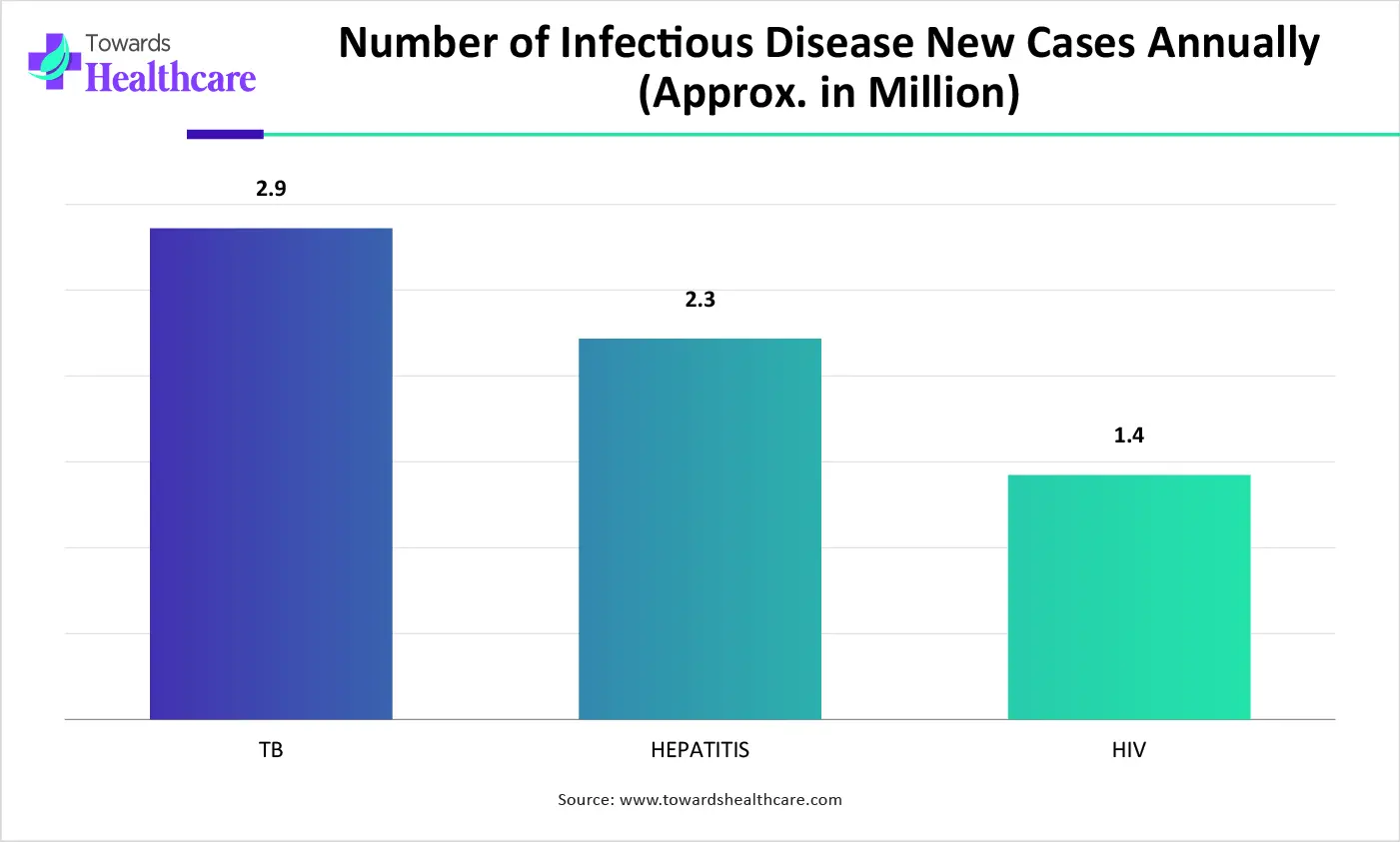
In the coming era, the infectious diseases segment will expand rapidly. The globe is highly demanding modern diagnostics for COVID-19, TB, HIV, and hepatitis. The market has explored new exosomal miRNA signatures for earlier detection of Malaria, Chagas, and Japanese Encephalitis, to offer a base for targeted sponge therapies to mitigate disease progression.
| Segments | Shares % |
| Academic & Research Institutes | 52% |
| Pharma & Biotech Companies | 33% |
| CROs | 15% |
Why did the Academic & Research Institutes Segment Dominate the Market in 2025?
In 2025, the academic & research institutes segment led with nearly 52% share of the global microRNA sponge service market. Massachusetts Institute of Technology (MIT), Koch Institute for Integrative Cancer Research, University Medical Center Groningen, etc., are significantly bolstering the creation of miRNA sponges. Several institutions have developed their own commercial and hybrid providers to provide specialized synthesis & validation services, like IntegrateRNA, AcceGen, System Biosciences, etc.
Pharma & Biotech Companies
Whereas the pharma & biotech companies segment is estimated to witness rapid expansion. This covers Thermo Fisher Scientific, QIAGEN, Eurofins Scientific, and GeneCopoeia, which offer services, especially in silico design, synthesis, and validation, with biotech/pharma companies. Additionally, the market is promoting alliances among pharmaceutical companies and research institutions, which speed up miRNA innovation and scalable project development. Recently, NeuroSense Therapeutics revealed Phase 2b PARADIGM trial results, which showed its drug candidate PrimeC modulates ALS-associated microRNAs.
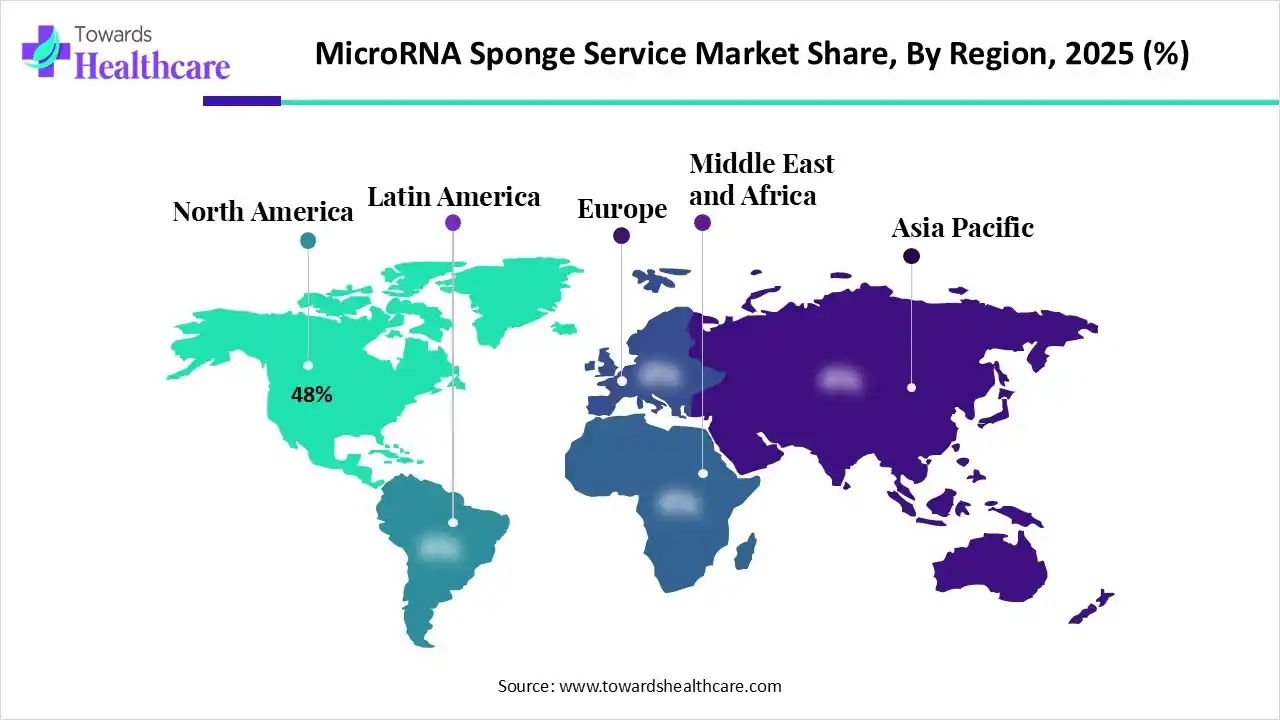
In the global microRNA sponge service market, North America held approximately 48% share in 2025. This dominance is propelled by extensive funding from the NIH, a high concentration of biotech firms, and advanced genomic research infrastructure. The region is focusing on the evolution of sponges for targeting miR-21 in cancer, miR-155 in hematological malignancies, and miR-29/146a in Alzheimer's to alter gene expression.
U.S. Market Trends
The U.S. was a major contributor to the market, which has been widely using AI to design custom sponges for efficient neutralisation of specific pathogenic miRNAs, primarily in oncology and neurodegenerative diseases. Advanced miRTarBase 2025 was leveraged by U.S. researchers to find novel, experimentally verified miRNA-target interactions to build more effective sponges.
Asia Pacific is predicted to expand at the fastest CAGR in the microRNA sponge service market during 2026-2035. APAC is highly adopting miRNA-based diagnostic panels and liquid biopsies in regional hospitals and clinics, which is fueled by the rising tailored medicine solutions. Besides this, certain countries are emphasizing optimized, high-throughput screening technologies and the revolution of miRNA sponge systems for rigorous, targeted gene regulation.
China Market Trends
However, Chinese researchers are exploring bioinformatics to reconstruct complex lncRNA-miRNA-mRNA networks, specifically in disease-specific contexts such as burns and keloids. Moreover, companies are promoting integrated non-viral, biomimetic delivery, like exosomes and lipid nanoparticles, with raised the efficiency and stability of sponge delivery in vivo.
| Category | Key Participants | Role in Market |
| Technology Providers | Thermo Fisher Scientific, GenScript, Takara Bio | Provide cloning tools, vectors, and miRNA sponge constructs |
| Product Manufacturers | Qiagen, Integrated DNA Technologies (IDT), Promega | Supply oligonucleotides, plasmids, reagents for sponge construction |
| Service Providers | GeneCopoeia, VectorBuilder, OriGene Technologies | Offer custom miRNA sponge design, cloning, validation services |
| Platform Providers | Revvity (Horizon Discovery), System Biosciences (SBI) | Provide functional genomics platforms and RNA modulation systems |
| CROs/CDMOs | Azenta Life Sciences (GENEWIZ), WuXi AppTec | Deliver gene synthesis, vector construction, and functional validation services |
| Software Vendors | Benchling, SnapGene (Dotmatics) | Support vector design, sequence modeling, and construct optimization |
| Research Institutions | Academic molecular biology labs, cancer genomics centers | Develop novel miRNA sponge applications and validation models |
| End-User Industries | Pharma, biotech, academic research, gene therapy developers | Use sponge systems for gene regulation and target validation |
| Tier 1 | Tier 2 | Tier 3 | |
| Typical Market Influence | 68% | 24% | 8% |
| Tier 1 | ||||
| Company Name | Headquarters | Country | Why Relevant to This Market | Key Products/Services |
| Thermo Fisher Scientific | Waltham, Massachusetts | USA | Global leader in gene expression tools and molecular biology reagents used in miRNA sponge construction | Cloning vectors, gene expression systems, RNA interference tools |
| GenScript Biotech Corporation | Piscataway, New Jersey | USA | Major provider of custom gene synthesis and vector engineering services for miRNA sponge constructs | Custom plasmid design, gene synthesis, functional gene modulation services |
| Integrated DNA Technologies (IDT) | Coralville, Iowa | USA | Leading oligo and gene synthesis provider enabling miRNA binding site design and sponge development | Custom DNA/RNA oligos, gene fragments, synthetic biology tools |
| Tier 2 | ||||
| Company Name | Headquarters | Country | Why Relevant to This Market | Key Products/Services |
| Takara Bio | Shiga | Japan | Strong molecular biology and gene expression tools widely used in miRNA functional studies | Viral vectors, gene expression systems, RNA research kits |
| VectorBuilder | Chicago, Illinois | USA | Specialized custom vector design company heavily used for miRNA sponge construct generation | Custom vector construction, gene delivery systems |
| OriGene Technologies | Rockville, Maryland | USA | Provider of gene expression clones and RNA tools for functional genomics | Expression vectors, gene knockdown/overexpression tools |
| Tier 3 | ||||
| Company Name | Headquarters | Country | Why Relevant to This Market | Key Products/Services |
| GeneCopoeia | Rockville, Maryland | USA | Niche provider of miRNA sponge vectors and functional gene regulation tools | miRNA sponge plasmids, reporter assays |
| Creative Biogene | Shirley, New York | USA | Provides custom molecular biology and gene construct services for research applications | Custom cloning, gene expression constructs |
| Addgene | Cambridge, Massachusetts | USA | Nonprofit plasmid repository widely used for sourcing miRNA sponge backbone vectors | Plasmid sharing platform, vector repository |
Strengths
Weaknesses
Opportunities
Threats
By Service Type
By Vector Type
By Application
By End-User
By Region







Principal Consultant
Shivani Zoting is a dedicated research analyst specializing in the healthcare industry. With a strong academic foundation, a B.Sc. in Biotechnology and an MBA in Pharmabiotechnology, she brings a unique blend of scientific understanding and strategy.
Learn more about Shivani Zoting
Reviewed By
Aditi Shivarkar is a seasoned professional with over 14 years of experience in healthcare market research. As a content reviewer, Aditi ensures the quality and accuracy of all market insights and data presented by the research team.
Learn more about Aditi Shivarkar