

Pipeline Programs

CGT Companies Tracked

Manufacturing Facilities


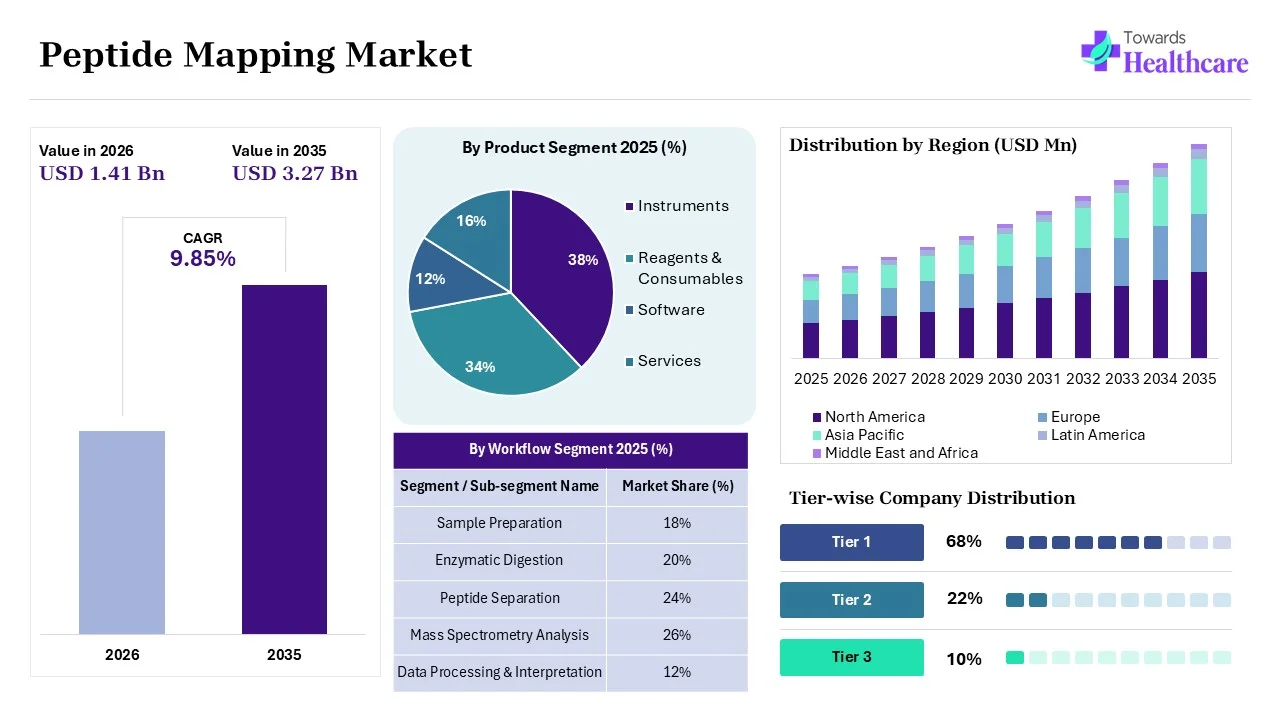
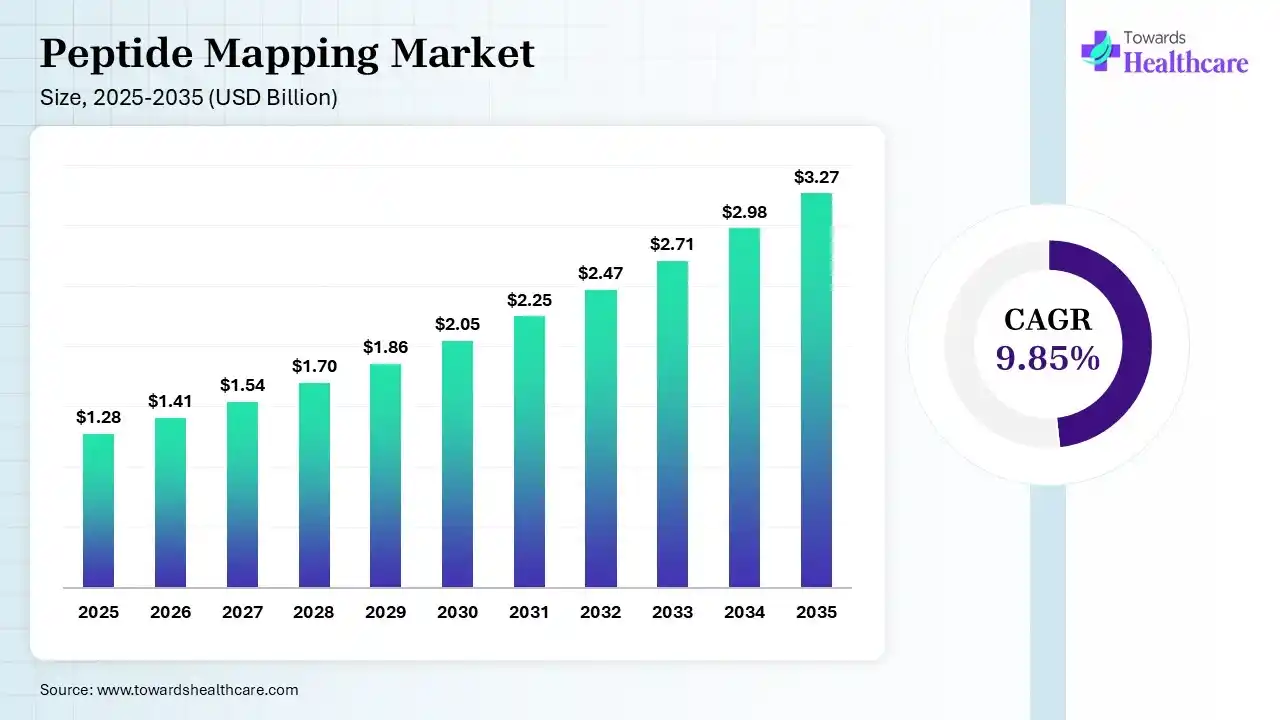
The global peptide mapping market is estimated at USD 1.28 billion in 2025, driven by the growing demand for biopharmaceutical characterization, increasing biologics and biosimilar development, and stringent regulatory requirements for protein analysis. The market is expected to witness steady growth USD 1.41 Bn in 2026 as pharmaceutical and biotechnology companies expand investments in advanced analytical technologies and quality assurance. It is projected to reach USD 3.27 billion by 2035, expanding at a CAGR of 9.85% from 2026 to 2035. Supported by continuous advancements in LC-MS platforms, automation of analytical workflows, and the rising adoption of peptide mapping for therapeutic protein characterization and regulatory compliance.
Peptide mapping is an analytical technique used to identify and characterize proteins by enzymatically breaking them into smaller peptide fragments and analyzing them using liquid chromatography and mass spectrometry (LC-MS). It is widely used to confirm protein identity, detect structural modifications, and ensure the quality and consistency of biopharmaceutical products.
The peptide mapping market is driven by the growing development of biologics and biosimilars, increasing proteomics research, and stringent regulatory requirements for protein characterization. Key trends include the adoption of automated workflows, high-resolution LC-MS systems, and AI-powered data analysis. Technological advancements in mass spectrometry and bioinformatics, along with expanding applications in personalized medicine and biologics manufacturing, are creating stringent growth opportunities for the market.
The peptide mapping market is growing as pharmaceutical and biotechnology companies increasingly rely on advanced analytical methods to support drug discovery, process optimization, and manufacturing consistency. The rising number of biologic drug approvals, greater outsourcing of analytical testing to specialized laboratories, and continuous improvements in laboratory automation are boosting demand. In addition, the need for faster analytical workflows and reliable protein characterization is supporting sustained market expansion.
Artificial intelligence is transforming the market by enabling faster interpretation of complex mass spectrometry data, reducing manual analysis, and improving peptide identification accuracy. AI-powered algorithms enhance workflow automation, detect subtle protein variations, and support predictive analytics for quality assessment. These capabilities increase laboratory efficiency, accelerate biopharmaceutical development, and help researchers generate more reliable and reproducible analytical results.
Increasing Automation of Analytical Workflows
Laboratories are increasingly adopting automated sample preparation, data processing, and reporting systems to improve productivity and reduce turnaround time. Automation minimizes human error, enhances result consistency, and enables high-throughput peptide mapping, making analytical workflows more efficient for pharmaceutical and biotechnology companies.
Growing Adoption of High-Resolution Mass Spectrometry
The use of advanced high-resolution mass spectrometry platforms is increasing due to their ability to provide greater sensitivity, accuracy, and detailed protein characterization. These technologies support the analysis of complex biologics, helping manufacturers meet stringent quality standards and accelerate drug development.
Expansion of Biologics and Precision Medicine Applications
The future of the peptide mapping market is closely linked to the expanding biologics pipeline and personalized medicine. As demand for targeted therapies and complex protein-based drugs grows, peptide mapping will play an increasingly important role in ensuring product quality, consistency, and regulatory compliance throughout development and manufacturing.
| Table | Scope |
| Market Size in 2026 | USD 1.41 Billion |
| Projected Market Size in 2035 | USD 3.27 Billion |
| CAGR (2026 - 2035) | 9.85% |
| Historical Data | 2020 - 2023 |
| Base Year | 2025 |
| Forecast Period | 2026 - 2035 |
| Measurable Values | USD Millions/Units/Volume |
| Market Segmentation | By Product, By Workflow, By Application, By End User, By Technology, By Region |
| Top Key Players | Thermo Fisher Scientific, Agilent Technologies, Waters Corporation, Danaher Corporation, Shimadzu Corporation, Bruker Corporation, Merck KGaA |
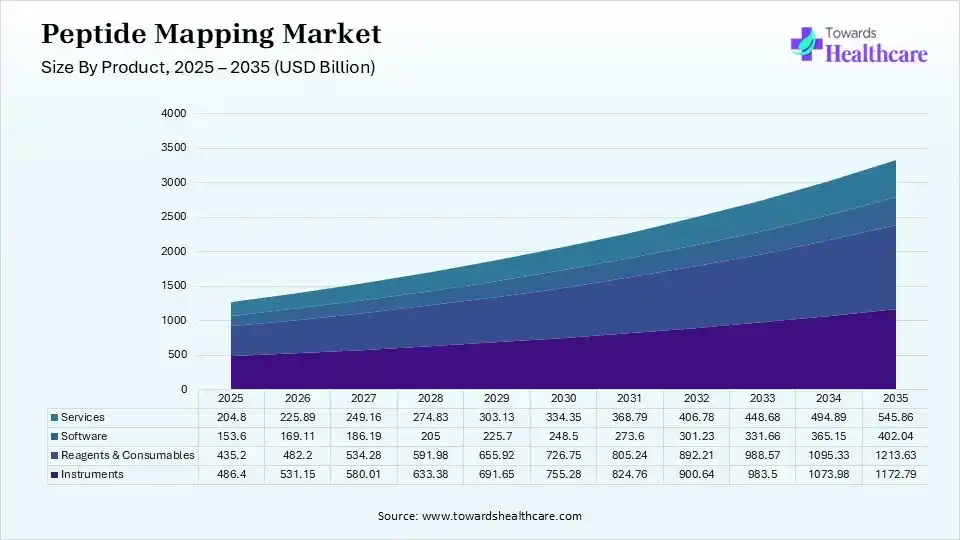
| Segment | Share 2025 (%) |
| Instruments | 38% |
| Reagents & Consumables | 34% |
| Software | 12% |
| Services | 16% |
The Instruments Segment Dominated the Peptide Mapping Market in 2025
The instruments segment held a dominant share of 38% in 2025 because advanced analytical platforms, particularly liquid chromatography and mass spectrometry (LC-MS) systems, are essential for accurate protein characterization and peptide analysis. Growing investments by pharmaceutical and biotechnology companies in high-performance laboratory infrastructure, along with the increasing need for precise, reproducible, and regulatory-compliant analytical results, continue to drive demand for these instruments.
The reagents & consumables segment held the second-largest share of 34% in 2025 and is expected to grow at the fastest CAGR of 10.80% in the market during the forecast period due to their repeated use in every peptide mapping workflow, creating consistent demand across research and testing laboratories. Rising biopharmaceutical production, increasing analytical testing volumes, and the growing need for high-quality enzymes, solvents, columns, and sample preparation kits are further driving the segment’s rapid growth.
The services segment held 16% of the peptide mapping market share as pharmaceutical and biotechnology companies increasingly outsourced peptide mapping and protein characterization to specialized contract research organizations (CROs) and analytical testing laboratories. Their approach helps reduce operational costs, access advanced expertise and instruments, and accelerate project timelines. Growing demand for regulatory-compliant analytical services and flexible testing solutions is further driving the expansion of this segment.
The software segment held a 16% market share in 2025 due to the increasing complexities of peptide mapping data generated by high-resolution mass spectrometry. Advanced bioinformatics and data analysis software enable faster peptide identification, automated data processing enable faster peptide identification, automate data processing, and improve results accuracy. The growing adoption of AI-enabled analytics, cloud-based platforms, and integrated laboratory informatics solutions is further supporting demand for software across pharmaceutical and biotechnology research.
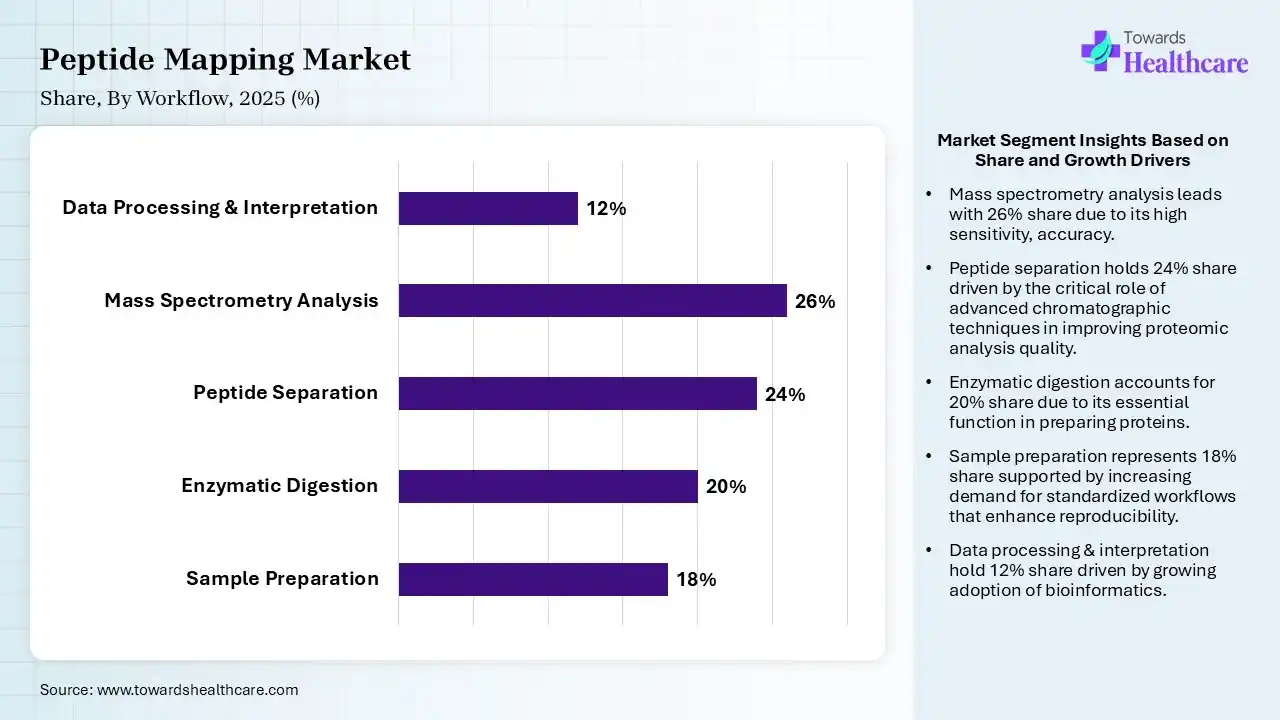
| Segment | Share 2025 (%) |
| Sample Preparation | 18% |
| Enzymatic Digestion | 20% |
| Peptide Separation | 24% |
| Mass Spectrometry Analysis | 26% |
| Data Processing & Interpretation | 12% |
The Mass Spectroscopy Analysis Segment Led the Peptide Mapping Market in 2025 with the Largest Share
The mass spectroscopy analysis segment dominated the market with a share of 26% in 2025 and is expected to grow at the fastest CAGR of 10.40% in the market during the forecast period due to its exceptional sensitivity, accuracy, and ability to characterize complex proteins and post-translational modifications. Increasing adoption in biologics development, biosimilar characterization, and regulatory testing, coupled with continuous advancements in high-resolution MS technology, is further accelerating the segment’s growth.
The peptide separation segment held the second-largest share of 24% in 2025 due to its essential role in isolating peptide fragments before downstream analysis, ensuring accurate and reproducible results. Increasing demand for high-purity peptide separation in biologics research, biosimilar development, and proteomics studies, along with continuous advancements in chromatography technologies, is driving the segment’s steady growth across pharmaceutical and biotechnology laboratories.
The enzymatic digestion segment held a 20% of the peptide mapping market share due to its critical role in generating reproducible peptide fragments for accurate protein characterization. Increasing use of enzymes such as trypsin in biologics development, biosimilar comparability studies, and proteomics research is driving demand. Additionally, advancements in digestion protocols, reagent quality, and automated sample preparation are improving workflow efficiency and supporting broader adoption across analytical laboratories.
The sample preparation segment held an 18% market share due to the rising demand for accurate, reproducible, and contamination-free peptide mapping results. Efficient sample preparation improves protein digestion, peptide recovery, and overall analytical performance, making it essential for high-quality protein characterization. Increasing adoption of automated preparation systems and standardized workflows in pharmaceutical and biotechnology laboratories is further driving the growth of this segment.
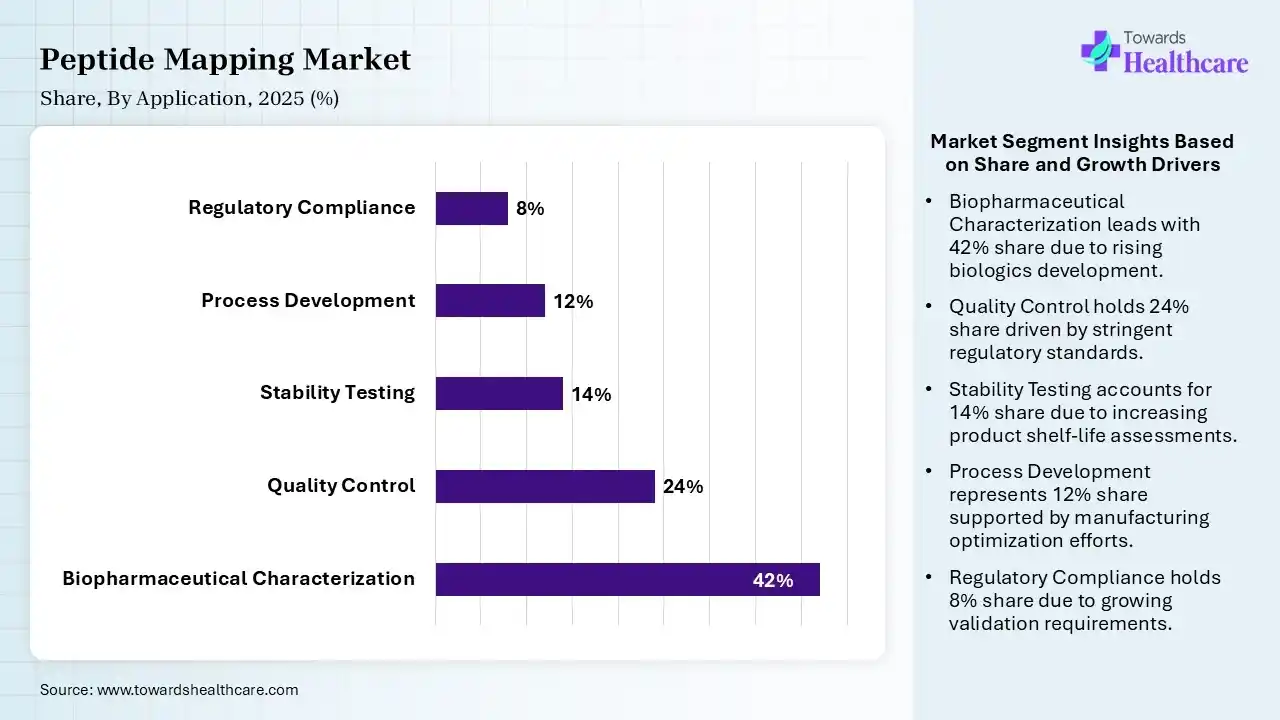
| Segment | Share 2025 (%) |
| Biopharmaceutical Characterization | 42% |
| Quality Control | 24% |
| Stability Testing | 14% |
| Process Development | 12% |
| Regulatory Compliance | 8% |
The Biopharmaceutical Characterization Segment Dominated the Peptide Mapping Market in 2025
The biopharmaceutical characterization segment led the market with a share of 42% in 2025 and is expected to grow at the fastest CAGR of 10.70% in the market during the forecast period the increasing development of biologics, biosimilars, and next-generation protein therapeutics. Peptide mapping is essential for confirming protein identity, structural integrity, and product consistency throughout development and manufacturing. Rising regulatory expectations and expanding biologics production continue to accelerate demand for advanced characterization solutions.
The quality control segment held the second-largest share of 24% in 2025 due to the increasing need to ensure the identity, purity, and consistency of biologics throughout manufacturing. Peptide mapping plays a vital role in detecting structural variations and batch-to-batch differences, helping manufacturers meet stringent regulatory standards. Growing commercial production of biopharmaceuticals and emphasis on product quality continue to support the segment’s growth.
The stability testing segment held a 14% of the peptide mapping market share due to the rising need to evaluate the structural integrity and long-term performance of biologics under different storage and handling conditions. Peptide mapping helps detect protein degradation, chemical modifications, and stability-related changes throughout a product’s lifecycle. Increasing regulatory emphasis on stability data and expanding biologics development are further driving demand for this application.
The process development segment held a 12% market share due to biopharmaceutical manufacturers increasingly using peptide mapping to optimize production processes and maintain product consistency. It enables early detection of process-related variation, supports manufacturing scale-up, and improves process robustness. Growing investments in biologics manufacturing, continuous process improvements, and quality-by-design approaches are further driving demand for peptide mapping in process development.
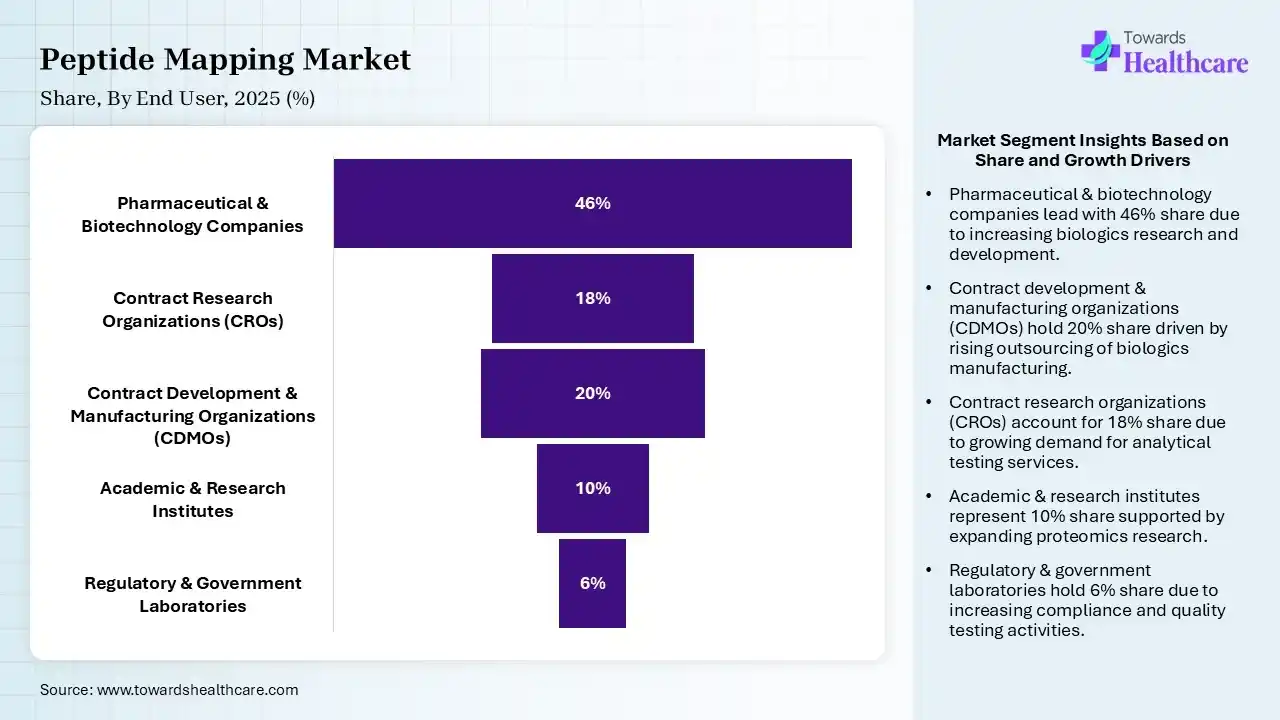
| Segment | Share 2025 (%) |
| Pharmaceutical & Biotechnology Companies | 46% |
| Contract Research Organizations (CROs) | 18% |
| Contract Development & Manufacturing Organizations (CDMOs) | 20% |
| Academic & Research Institutes | 10% |
| Regulatory & Government Laboratories | 6% |
The Pharmaceutical & Biotechnology Companies Segment Led the Peptide Mapping Market in 2025 with the Largest Share
The pharmaceutical & biotechnology companies segment dominated the market with a share of 46% in 2025 due to extensive investment in biologics, biosimilars, and protein-based therapeutics. These companies rely on peptide mapping for protein characterization, process optimization, quality assurance, and regulatory compliance throughout drug development and manufacturing. Increasing R&D expenditure, expanding biologics pipelines, and the need for reliable analytical methods further strengthened the segment’s market leadership.
The contract development & manufacturing organizations (CDMOs) segment held the second-largest share of 20% in 2025 and is expected to grow at the fastest CAGR of 10.90% in the market during the forecast period as pharmaceutical and biotechnology companies increasingly outsource analytical testing and manufacturing activities. CDMOs provide specialized peptide mapping expertise, advanced analytical infrastructure, and regulatory support while reducing operational costs and accelerating development timelines, making them essential partners in biological and biosimilar production.
The contract research organization (CROs) segment held an 18% of the peptide mapping market share as pharmaceutical and biotechnology companies increasingly outsource protein characterization and analytical research to accelerate drug development. CROs offer specialized expertise, advanced instruments, and flexible research capabilities without requiring significant capital investments. Rising clinical research activities, growing biologics pipelines, and the need for cost-effective, high-quality analytical services are further driving the growth of this segment.
The academic & research institutes segment held a 10% market share due to increasing investments in proteomics, structural biology, and life science research. Universities and research centers are adopting peptide mapping to study protein structure, function, and disease mechanisms. Rising government funding, collaborations with pharmaceutical and biotechnology companies, and the growing focus on biomarker discovery and translational research are further supporting the segment’s growth.
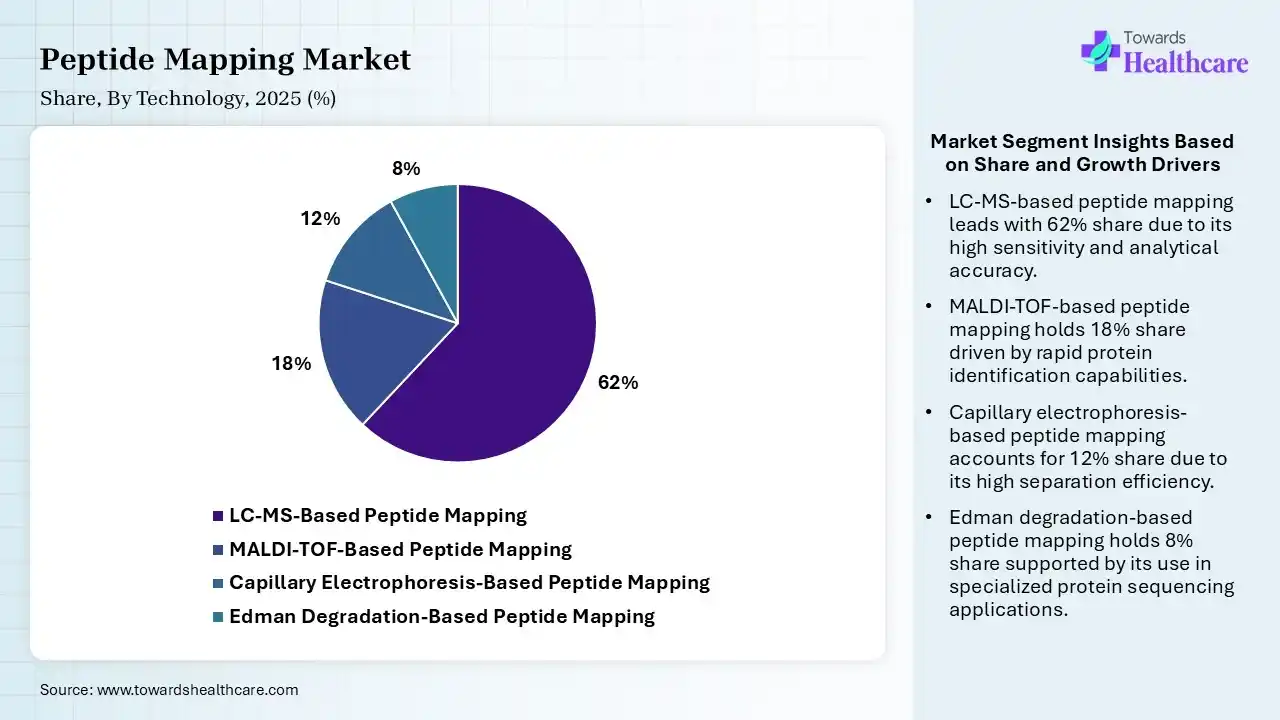
| Segment | Share 2025 (%) |
| LC-MS-Based Peptide Mapping | 62% |
| MALDI-TOF-Based Peptide Mapping | 18% |
| Capillary Electrophoresis-Based Peptide Mapping | 12% |
| Edman Degradation-Based Peptide Mapping | 8% |
The LC-MS-Based Peptide Mapping Segment Dominated the Peptide Mapping Market in 2025
The LC-MS-based peptide mapping segment dominated the market with a share of 62% in 2025 and is expected to grow at the fastest CAGR of 10.50% in the market during the forecast period due to its high sensitivity, accuracy, and ability to provide comprehensive protein characterization. It enables precise identification of peptide sequences, post-translational modifications, and structural variation, making it indispensable for biological development and quality control. Continuous advancements in high-resolution LC-MS instruments and increasing regulatory requirements for detailed protein analysis further strengthened the segment’s leadership.
The MALDI-TOF-based peptide mapping segment held the second-largest share of 18% in 2025 due to its rapid analysis speed, high throughput, and cost-effective protein identification capabilities. It is widely used in proteomics research, biomarker discovery, and routine laboratory applications where fast peptide profiling is required. Continuous improvements in MALDI-TOF instrumentation and expanding research activities further supported the segment’s strong market position.
The capillary electrophoresis-based peptide mapping segment held a 12% of peptide mapping peptide mapping market share due to its high separation efficiency, rapid analysis, and minimal sample complex peptide mixtures, and detecting subtle protein variations with excellent resolution. Rising demand for complementary analytical techniques in biopharmaceutical research, coupled with advancements in capillary electrophoresis instruments and automation, is driving the segment’s steady growth.
The edam degradation-based peptide mapping segment held an 8% market share due to its ability to provide detailed sequence information and improve the characterization of complex proteins. It is increasingly used in biologics research to verify protein structure and identify sequence variation with high accuracy. Growing demand for advanced analytical techniques, coupled with expanding biopharmaceutical R7D and regulatory requirements, is supporting the segment’s growth.
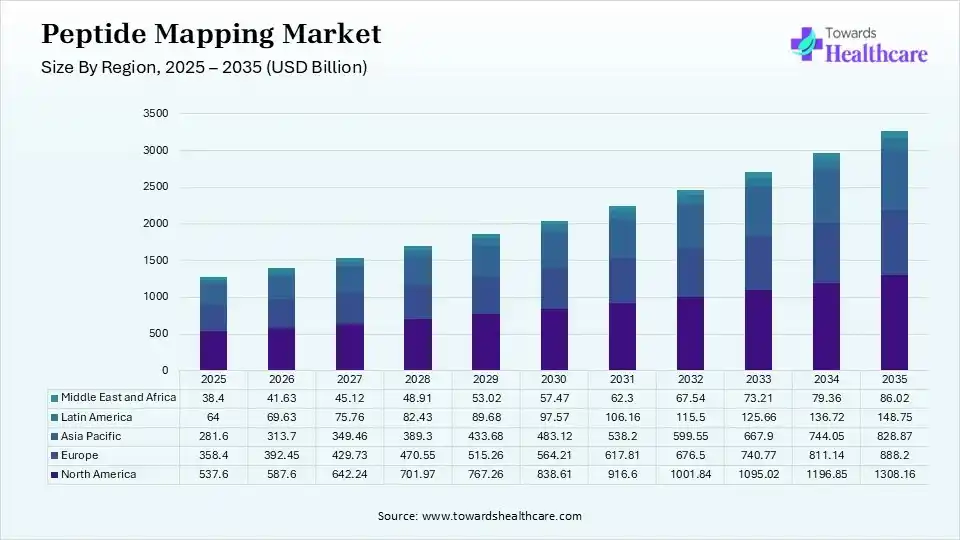
The North America peptide mapping market size was valued at US$ 537.6 million in 2025 and is projected to grow to 587.6 million in 2026. Forecasts suggest it will reach approximately US$ 1308.16 million by 2035, registering a CAGR of 9.3% during the period. North America dominated the market with a share of 42% in 2025 due to its well-established biopharmaceutical industry, advanced analytical infrastructure, and significant investments in proteomics and biologics research. The region benefits from the strong presence of leading pharmaceutical and biotechnology companies, increasing biologics development, and strengthening regulatory standards for protein characterization. High adoption of advanced LC-MS technologies further strengthens North America’s market leadership.
Why did the U.S. Dominate the Peptide Mapping Market in 2025?
The U.S. dominated the market in 2025 due to its robust biopharmaceutical industry, extensive biologics and biosimilars pipelines, and widespread adoption of advanced analytical technologies. Strong investment in pharmaceutical R&D, the presence of leading biotechnology companies, and stringent regulatory requirements for protein characterization have accelerated the use of peptide mapping in drug development, quality control, and regulatory compliance.
Why is Canada Emerging as a High-Growth Market for Peptide Mapping?
Canada is growing significantly in the peptide mapping market due to increasing investment in biopharmaceutical research, expanding biotechnology startups, and rising collaboration between academic institutions and industry. Government support for life science innovation, growing adoption of advanced analytical technologies, and increasing biologics and biosimilars development are accelerating demand for peptide mapping solutions across research, development, and quality control applications.
The Asia Pacific peptide mapping market size was valued at US$ 281.6 million in 2025 and is projected to grow to 313.7 million in 2026. Forecasts suggest it will reach approximately US$ 828.87 million by 2035. Asia Pacific held 22% share of the market in 2025 and is expected to grow at the fastest CAGR of 11.40% in the market during the forecast period due to the rapid expansion of the biopharmaceutical industry, increasing investments in life sciences research, and rising biologics manufacturing across countries such as China, India, Japan, and South Korea. Growing contract research activities, improving analytical infrastructure, and supportive government initiatives are further accelerating regional market growth.
What Factors Are Driving China’s Leadership in the Asia Pacific Peptide Mapping Market?
China dominated the market due to its rapidly expanding biopharmaceutical manufacturing sectors, increasing investments in biologics and biosimilars, and strong government support for life sciences innovation. The presence of a large number of pharmaceutical companies, growing adoption of advanced analytical technologies, and expanding contract research and manufacturing activities continue to drive demand for peptide mapping solutions across the country.
Why is the emerging Peptide Mapping Market a high-growth market?
India is growing in the market due to expanding biosimilars and biologics development, and a rapidly growing contract research and manufacturing sector. Rising adoption of advanced analytical technologies, strengthening pharmaceutical R&D capabilities, and supportive government initiatives for life science innovation are further driving demand for peptide mapping across research, quality control, and drug development applications.
R&D
Regulatory Approvals
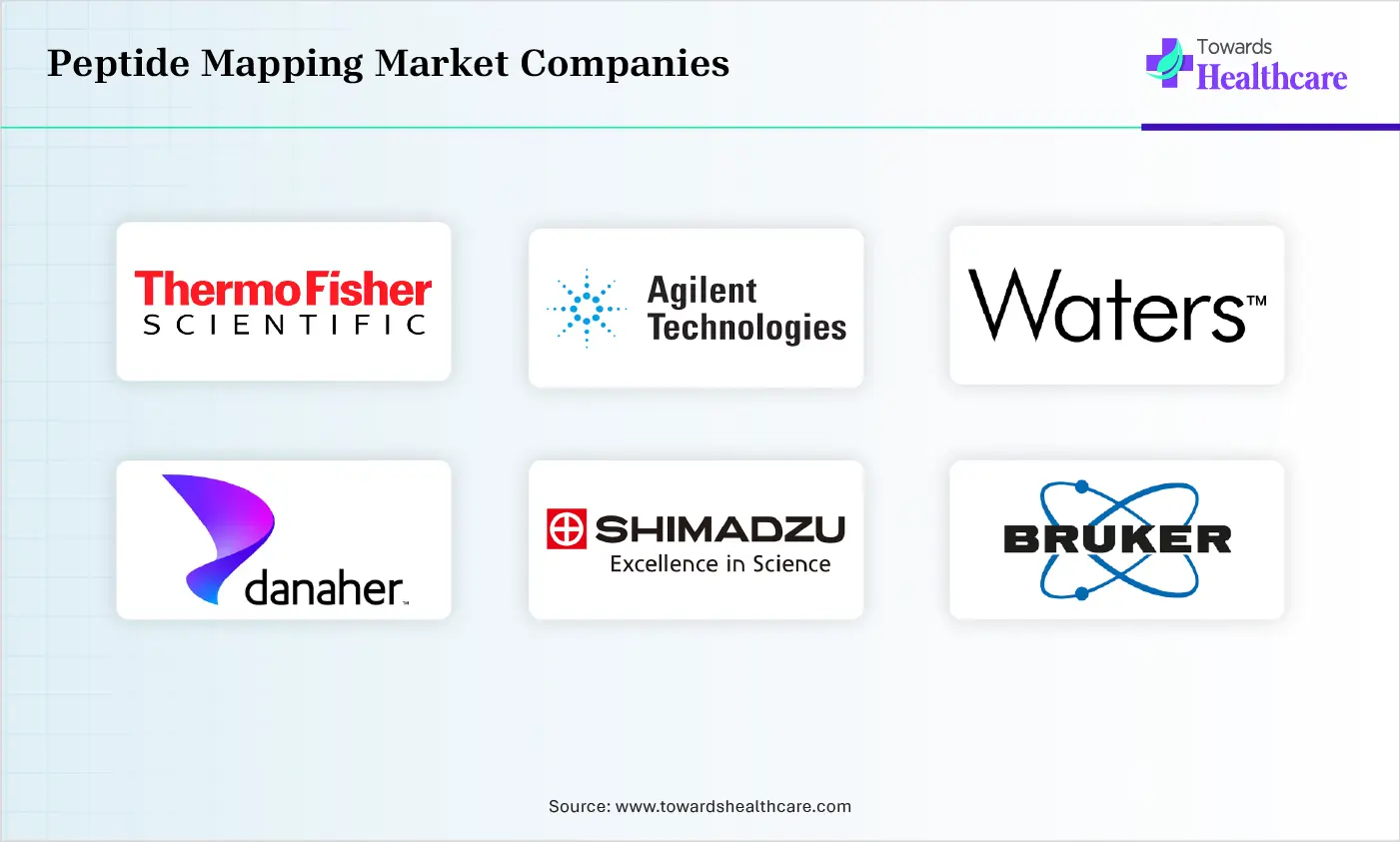
| Companies | Headquarters | Offerings |
| Thermo Fisher Scientific | Waltham, Massachusetts, U.S. | LC-MS systems, mass spectrometers, chromatography solutions, peptide mapping software, and sample preparation tools |
| Agilent Technologies | Santa Clara, California, U.S. | LC-MS instruments, HPLC/UHPLC systems, chromatography columns, peptide analysis solutions |
| Waters Corporation | Milford, Massachusetts, U.S. | UPLC systems, mass spectrometry platforms, peptide mapping workflows, and bioinformatics software |
| Danaher Corporation | Washington, D.C., U.S. | SCIEX mass spectrometry systems, capillary electrophoresis, and biopharmaceutical analytical solutions |
| Shimadzu Corporation | Kyoto, Japan | LC-MS instruments, MALDI-TOF systems, chromatography platforms, protein analysis solutions |
| Bruker Corporation | Billerica, Massachusetts, U.S. | MALDI-TOF/TOF systems, timsTOF mass spectrometers, proteomics, and peptide mapping solutions |
| Merck KGaA | Darmstadt, Germany | Proteomics reagents, enzymes, chromatography consumables, and sample preparation products |
In April 2026, “The results we presented today mark an encouraging step forward for Biomea. The magnitude and durability observed are not typically seen in type 1 diabetes, which makes these findings particularly compelling. These data further validate targeting menin as a potential approach across both type 1 and type 2 diabetes,” said Mick Hitchcock, Ph.D., Interim CEO and Board Member of Biomea Fusion.
By Product
By Workflow
By Application
By End User
By Technology
By Region










Principal Consultant
Rohan Patil is a seasoned market research professional with over 5+ years of focused experience in the healthcare sector, bringing deep domain expertise, strategic foresight, and analytical precision to every project he undertakes.
Learn more about Rohan Patil

Reviewed By
Aditi Shivarkar is a seasoned professional with over 14 years of experience in healthcare market research. As a content reviewer, Aditi ensures the quality and accuracy of all market insights and data presented by the research team.
Learn more about Aditi Shivarkar









