

Pipeline Programs

CGT Companies Tracked

Manufacturing Facilities


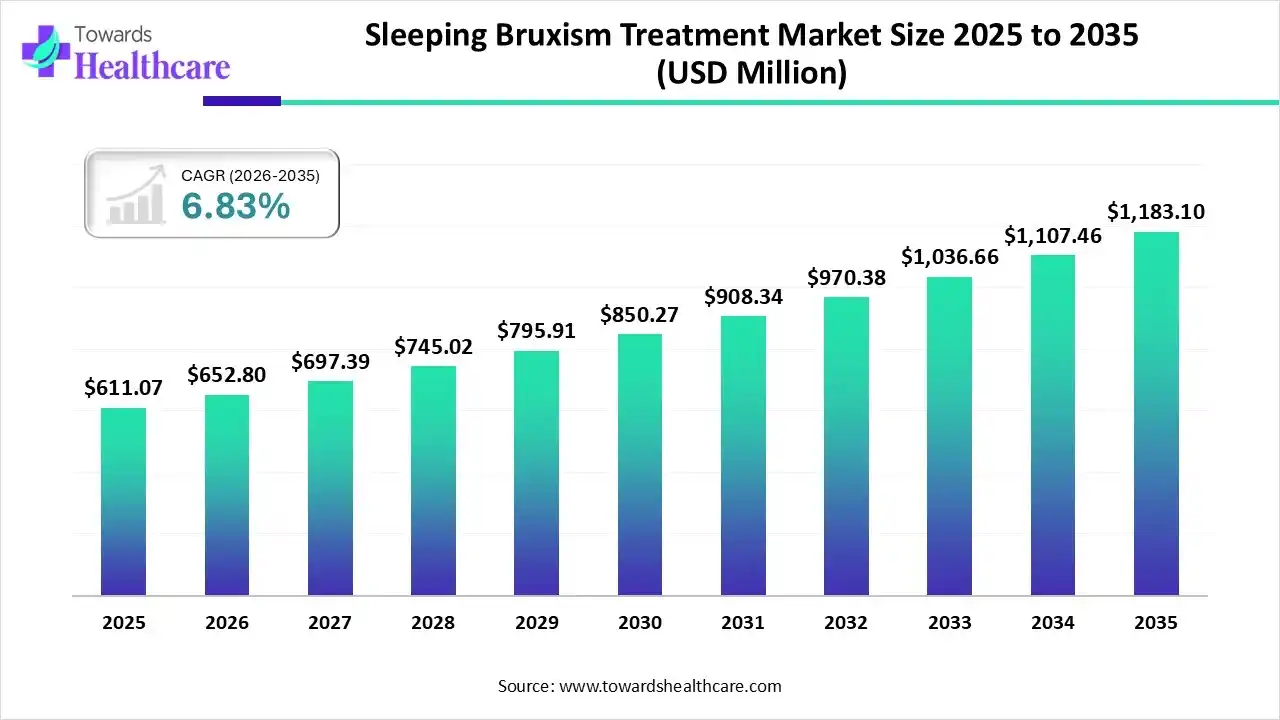
The global sleeping bruxism treatment market size was estimated at USD 611.07 million in 2025 and is predicted to increase from USD 652.8 million in 2026 to approximately USD 1183.1 million by 2035, expanding at a CAGR of 6.83% from 2026 to 2035.
| Key Elements | Scope |
| Market Size in 2026 | USD 652.8 Million |
| Projected Market Size in 2035 | USD 1183.1 Million |
| CAGR (2026 - 2035) | 6.83% |
| Leading Region | North America |
| Market Segmentation | By Product Type, By Patient Type, By End-User, By Region |
| Top Key Players | F. Hoffmann-La Roche AG, Procter & Gamble, Dentsply Sirona, Smile Brilliant, Ivoclar Vivadent, SomnoMed, Henry Schein, Inc. |
The sleeping bruxism treatment refers to a sleep-related movement disorder considered by rhythmic or non-rhythmic (EMG bursts of more than 2.0 seconds in duration) masticatory muscle activities while sleep, and which lead to tooth wear, temporomandibular disorders, muscle fatigue, and orofacial pain.
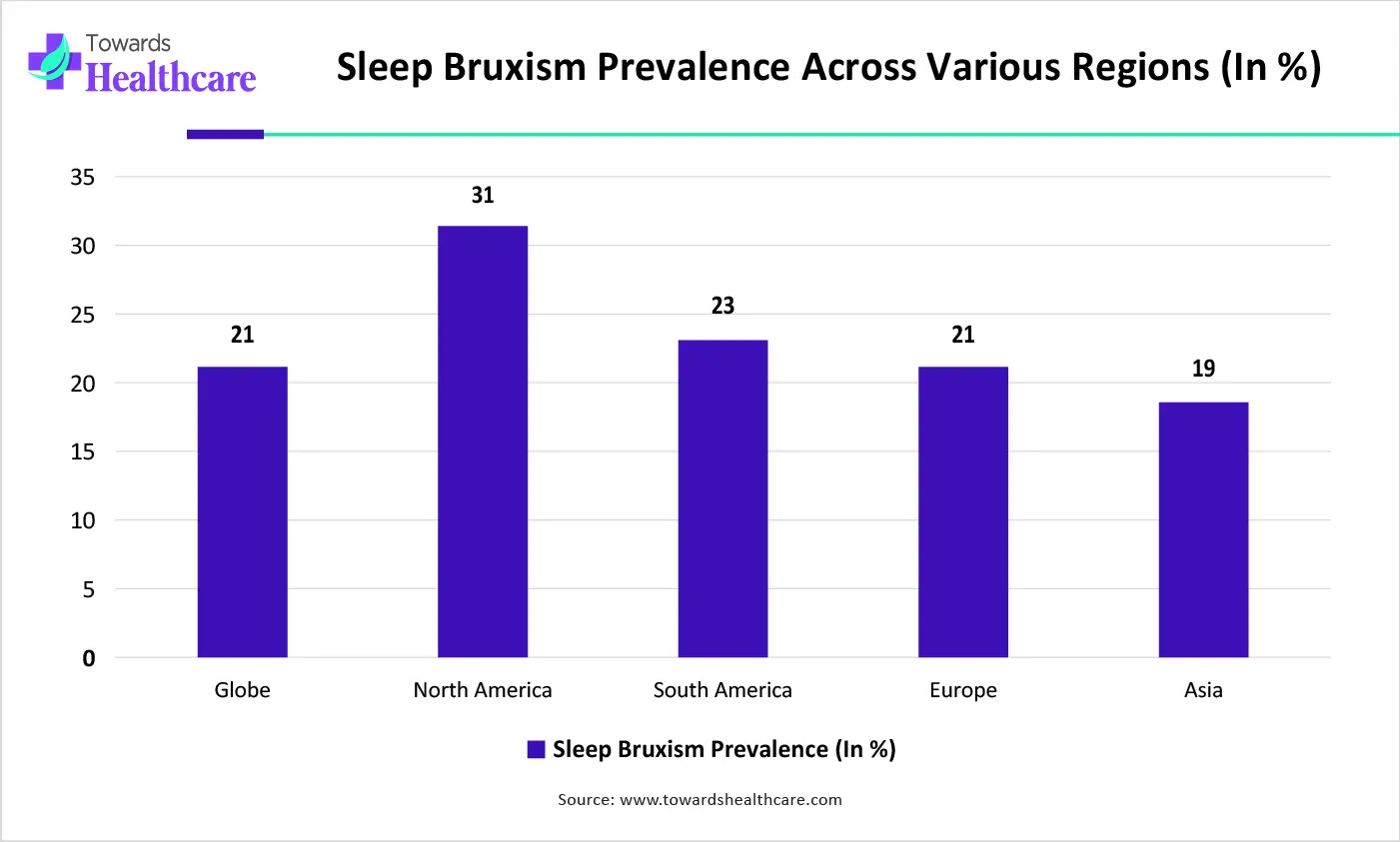
Sleeping bruxism occurs in around 8% of adults and 14% to 20% of children, and its high prevalence has an important impact on public health. Obstructive sleep apnea is among the significant reasons leading to bruxism in adults. Presently, the diagnosis of SB relies mainly on the patient's self-report, polysomnographic (PSG) recordings, and dental examination.
Integration of AI-driven technology in sleeping bruxism treatment drives the growth of the market as AI-powered apps connected with wearable devices identify grinding sounds and muscle activity, generating detailed reports for both doctors and patients. AI-driven technology identifies the severity and cause of bruxism, allowing tailored solutions such as stress management or orthodontic interventions. Regular applications of AI tools allow patients to track their progress and manage treatments as required.
Smart mouthguards show a glimpse into the future of dental health, providing a non-invasive way to monitor oral health and sleep patterns.
Advanced 3D printing services allow the creation of comfortable, custom-fitted, and patient-centric health care devices, significantly enhancing patient adherence and outcomes in the treatment of OSA and bruxism.
The intramuscular application of botulinum toxin type A in patients with bruxism has proved to be an effective method for the hyperactivity of the masseter muscle in individuals with bruxism.
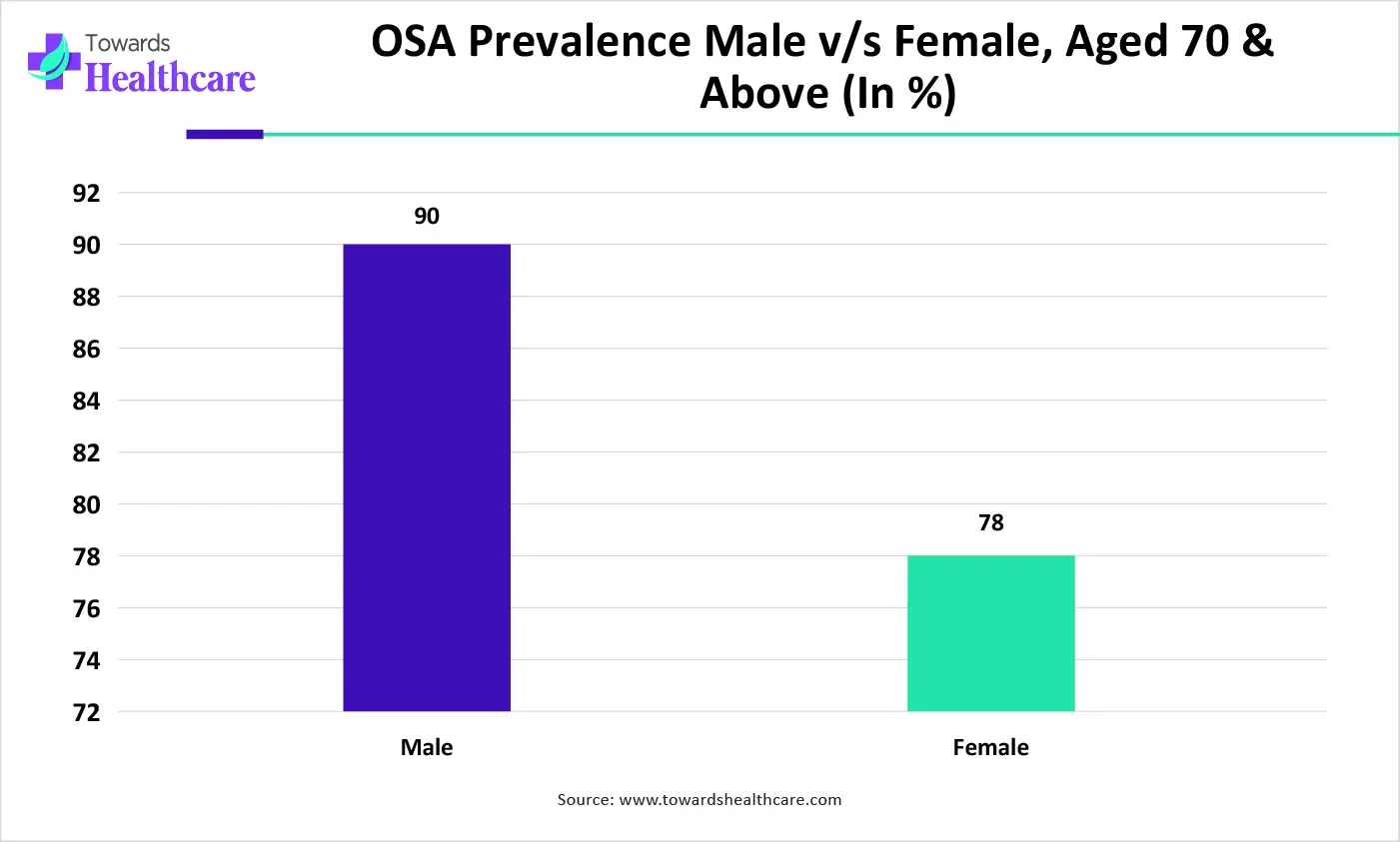
Sleeping bruxism occurrence can be highly seen in people who have obstructive sleep apnea (OSA). A majority of the geriatric population has OSA, which increases the occurrence of sleeping bruxism in them.
In November 2025, the world's leading company in treating sleep apnea using oral devices announced today that they are making a major investment in their insurance and administrative systems. This move is aimed at continuing to provide top-tier support for their partnerships with health plans, doctor networks, and large care programs across the U.S.
In August 2025, the Ontario Dental Association (ODA) formally requested a C$50 million investment from the provincial government to improve the Healthy Smiles Ontario (HSO) program, which offers dental care to low-income children under 17. The association made a formal request to the provincial government to fix its dental program for children with a $50 million investment.
Which Product Led the Sleeping Bruxism Treatment Market in 2025?
In 2025, the mouth guard segment held the dominant market, as custom-made mouth guards offer efficient protection against bruxism and sports-related trauma. Customized to fit discrete dental anatomy, they are a synthesis of scientific principles and practical services for safeguarding dental health and patient comfort. By efficiently managing bruxism with a night guard, alleviate these adverse emotional effects and endorse a sense of calm and relaxation.
Splints
Whereas the splints segment is the fastest growing in the market, as splint therapy offers efficient relief from pain by appropriately aligning the jaw and lowering pressure on the temporomandibular joint. Splint therapy is a non-surgical strategy for managing pain, making it a conservative treatment choice that prevents invasive procedures. Splints are generally custom-made to fit the patient’s bite and jaw alignment exactly, ensuring ideal comfort and efficiency.
Why did the Adult Segment Dominate the Market in 2025?
The adult segment captured the biggest revenue share of the sleeping bruxism treatment market in 2025, as treating sleep bruxism in adults provides noteworthy advantages, significantly focused on preventing long-term dental challenges, alleviating chronic pain, and enhancing overall quality of life and sleep quality. Treatments for adult bruxism involve wearing a mouth guard or splint at night to protect teeth, and addressing underlying causes such as stress through relaxation movements.
Paediatrics
Whereas the paediatrics segment is the fastest growing in the market, as Treatment methods commonly used for treating SB in pediatric patients are kinesiotherapy, massage, infrared therapy, and low-level laser therapy (LLLT). Dental treatment of bruxism involves the use of occlusal appliances during sleep in order to protect the teeth against pathological abrasion.
Why is the Dental Clinics Segment Dominant in the Market in 2025?
In 2025, the dental clinics segment held the dominating share of the sleeping bruxism treatment, as they offer noteworthy advantages, including preventing dental damage, improving sleep quality, and potentially lowering jaw discomfort related to bruxism. A dental professional can exactly diagnose the severity of bruxism and classify the underlying causes, like poor bite alignment.
Homecare
Whereas the home care segment is the fastest growing in the market, as home care treatments, particularly custom-fitted bruxism guards, are intended for comfortable wear in a patient's bed, which encourages consistent use. Management of bruxism at home significantly reduces associated symptoms, including morning headaches, facial soreness, jaw muscle pain, and neck and shoulder discomfort, which contribute to the growth of the market.
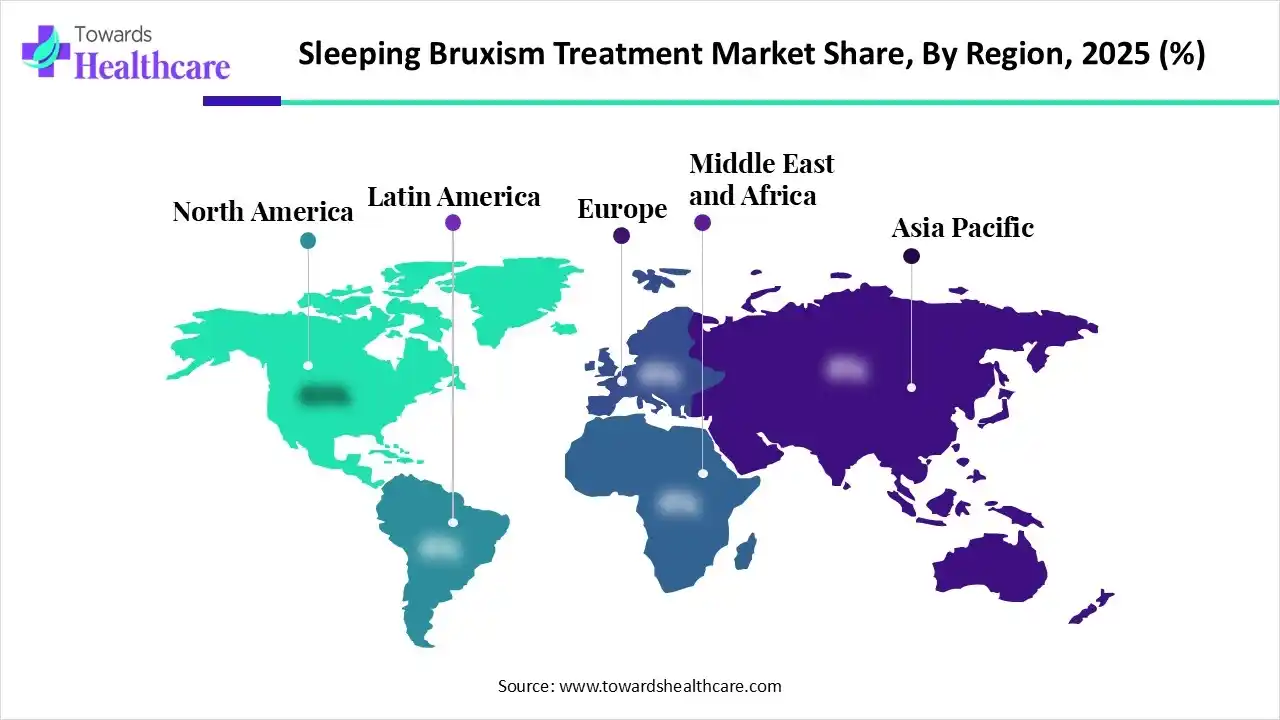
In 2025, North America led the sleeping bruxism treatment market, driven by the well-developed dental and sleep diagnostic infrastructure with an increasing density of dentists per capita. Extensive access to specialized care and diagnostic services simplifies inclusive treatment, which contributes to the growth of the market.
In the U.S., increasing prevalence of conditions related to sleep bruxism, like stress, anxiety, and obstructive sleep apnoea (OSA). The high incidence of these underlying causes drives demand for efficient bruxism management services. According to the Sleep Foundation, around 50-70 million adults in the United States alone suffer from a sleep disorder, which drives the growth of the market.
Asia Pacific is set to experience rapid growth in the Sleeping Bruxism Treatment Market, driven by rapid urbanization and modern lifestyles in countries such as China, India, and Japan led to amplified workplace anxiety, stress, and sleep disorders which are major contributors to bruxism. Public health campaigns and educational creativities by dental associations are increasing awareness of bruxism and its related health challenges, which contribute to the growth of the market.
In India, rising disposable incomes and increased healthcare spending are expanding access to dental care solutions and modern diagnostic equipment in the region. The region is rapidly accepting novel technologies like AI-driven dental services, portable sleep monitors, 3D printing for custom-fitted oral appliances, and telehealth services, which enhance diagnostic accuracy and treatment effectiveness.
Europe's sleeping bruxism treatment is growing significantly, supported by government initiatives and public health programs. For instance, the UK's NHS now covers certain bruxism treatments, making therapies like custom-fitted mouthguards more affordable and accessible.
The UK is quickly adopting digital dental technologies and telehealth services, which broaden access to behavioral therapies and advanced diagnostics. A variety of treatment options, including oral appliances, physical therapy, cognitive behavioral therapy (CBT), and botulinum toxin injections for severe cases, are now commonly available and integrated into clinical practice.
| Company | Headquarters | Latest Update |
| F. Hoffmann-La Roche AG | Switzerland | In April 2025, Roche announced that novel data were presented at the AD/PD 2025 International Conference on Alzheimer’s and Parkinson’s Diseases in Vienna, Austria. |
| Procter & Gamble | United states | Procter & Gamble (P&G), by its Oral-B brand, offers an over-the-counter nighttime dental guard for sleeping bruxism. |
| Dentsply Sirona | United states | In November 2024, Dentsply Sirona and Panthera Dental announced a collaboration on a fully digital workflow for custom-made sleep tools. |
| Smile Brilliant | United states | SMILE Brilliant offers lab-direct, custom-fit night guards for teeth grinding and clenching. |
| Ivoclar Vivadent | Liechtenstein | In 2024, Ivoclar Vivadent launched Bruxir Advanced, a next-generation, custom-fitted night guard for managing sleep bruxism |
| SomnoMed | Australia | SomnoMed has developed the SomnoDent family of oral tools, a collection of clinically proven oral tools leveraging the most novel technology. |
| Henry Schein, Inc. | Germany | Henry Schein supplies sleep medicine to consumers at the best possible value. |
By Product Type
By Patient Type
By End-User
Regional Outlook






Principal Consultant
Rohan Patil is a seasoned market research professional with over 5+ years of focused experience in the healthcare sector, bringing deep domain expertise, strategic foresight, and analytical precision to every project he undertakes.
Learn more about Rohan Patil

Reviewed By
Aditi Shivarkar is a seasoned professional with over 14 years of experience in healthcare market research. As a content reviewer, Aditi ensures the quality and accuracy of all market insights and data presented by the research team.
Learn more about Aditi Shivarkar










