Pipeline Programs

CGT Companies Tracked

Manufacturing Facilities


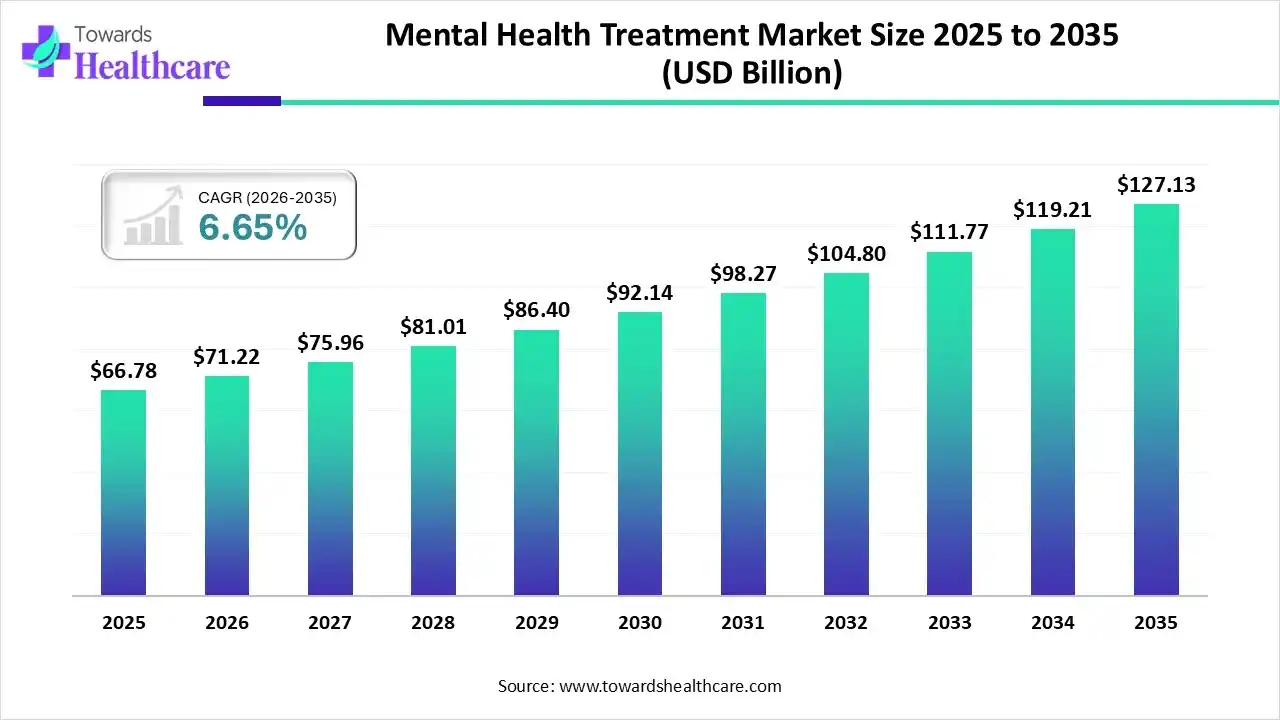
The global mental health treatment market size was estimated at USD 66.78 billion in 2025 and is predicted to increase from USD 71.22 billion in 2026 to approximately USD 127.13 billion by 2035, expanding at a CAGR of 6.65% from 2026 to 2035. The mental health treatment market is growing as it transforms the environments that affect mental health, with homes, communities, workplaces, schools, medical care services, and natural environments.
The mental health treatment market focuses on therapies, medication, psychological interventions, digital therapeutics, and supportive care designed to diagnose, manage, and treat mental health disorders such as depression, anxiety, bipolar disorder, schizophrenia, and post-traumatic stress disorder (PTSD). The market is expanding due to the rising global burden of mental illness, increasing awareness, reduced social stigma, and improved access to mental health services. Growing adoption of telepsychiatry, digital therapeutics, AI-powered mental health assessment, wearable monitoring devices, and personalized treatment, wearable monitoring devices, and personalized treatment approaches is transforming patient care. Technological advancements in virtual therapy platforms, predictive analytics, and neuromodulation are enhancing treatment effectiveness and accessibility. Future opportunities lie in precision psychiatry, remote behavioral healthcare, integrating mental wellness programs, and digital care ecosystems, supported by government initiatives expanding healthcare investments and continuous innovation in mental health technologies.
The mental health treatment market is driven by a combination of internal and external factors. Internal factors include advancements in digital therapeutics, AI-powered mental health assessment, telepsychiatry, personalized treatment approaches, innovative psychiatric drug development, and the increasing availability of trained mental health professionals. External factors include the rising prevalence of mental health disorders, growing public awareness and reduced stigma, supportive government policies and funding, expanding insurance coverage for mental healthcare, increasing healthcare expenditure, and the adoption of workplace mental wellness programs. Together, these factors are accelerating innovation, improving access to care, and driving the long-term growth of the mental health treatment market.
The integration of AI-driven technology into the mental health treatment market is growing through AI-driven therapy delivery, which is redesigning the mental healthcare field, giving novel strategies that enhance the effectiveness of therapy sessions and intensify the strength of therapists. The partnership between AI and therapists enhanced treatment results and improved the overall quality of mental health care. AI-driven technology potentially enhances the quality of teletherapy sessions by analysing patient emotions in real-time. An AI-driven teletherapy stage that utilizes facial and voice analysis to offer real-time emotional feedback to psychotherapists.
Self-management:
Self-management apps include people putting information in the app to receive feedback. Some software uses additional equipment to track heart rate, blood pressure, and breathing patterns.
Emotion Recognition Technology:
Progressive software recently identified emotional states from a patient's face, voice, and how they speak.
Biofeedback Tools:
These tools enable patients to see and control some body responses such as heart rate and muscle tension, particularly in stressful situations, making them more aware of their emotions and inner self.
| Key Elements | Scope |
| Market Size in 2026 | USD 71.22 Billion |
| Projected Market Size in 2035 | USD 127.13 Billion |
| CAGR (2026 - 2035) | 6.65% |
| Leading Region | North America by 51.2% |
| Historical Data | 2020 - 2023 |
| Base Year | 2025 |
| Forecast Period | 2026 - 2035 |
| Measurable Values | USD Millions/Units/Volume |
| Market Segmentation | By Disorder Type, By Treatment Technique, By Service Type / Care Setting, By Age Group / Patient Group, By Delivery Mode, Regional Outlook |
| Top Key Players | UnitedHealth Group, Anthem, Inc., Cigna Healthcare, Kaiser Permanente, McKesson Corporation, Mayo Clinic, CVS Health / Aetna, Teladoc Health, Acadia Healthcare, Sevita (The Mentor Network), Universal Health Services, Inc., Behavioral Health Network, Inc., CareTech Holdings plc, Strategic Behavioral Health, LLC, Cerebral, Inc. |
| Segments | Shares % |
| Mood Disorders | 20% |
| Anxiety Disorders | 14% |
| Personality Disorders | 5% |
| Psychotic Disorders | 5% |
| Eating Disorders | 5% |
| Trauma-Related Disorders | 10% |
| Substance Abuse Disorders | 25% |
| Others | 16% |
Which Disorder Type Led the Mental Health Treatment Market in 2025?
In 2025, the mood & anxiety disorders segment held the dominant market with a 34.4% share, as the treatment of mood and anxiety disorders is more efficient because it teaches patients effective self-management strategies and coping skills. People who suffer from depression have advanced rates of ulcers and heart disease, as well as neurological disorders from long-term stress. This enhances an individual’s emotional state. Treatment supports persons to develop healthy coping skills that they use when suffering challenging emotions.
Substance Abuse Disorders
Whereas the substance abuse disorders segment is the fastest-growing, with a CAGR of 7.1% in the market, as treatment of substance abuse disorders tackles these challenges alongside addiction, helping to build a more stable emotional and mental foundation. Through therapy and counselling, patients gain vital skills to support and rebuild those influences. It suggestively boosts confidence and self-esteem.
| Segments | Shares % |
| Psychotherapy / Counseling | 28.90% |
| Cognitive Behavioral Therapy (CBT) | 20% |
| Dialectical Behavior Therapy (DBT) | 8% |
| Family Counseling | 7% |
| Individualized Therapy | 7% |
| Psychopharmacology / Medication Management | 10% |
| Trauma Therapy | 10% |
| Others | 9% |
Why did the Psychotherapy / Counseling Segment Dominate the Market in 2025?
The psychotherapy/counseling segment is dominant in the mental health treatment market in 2025 with 28.9% share, as this is a treatment technique that aims to support identity and change unhealthy feelings, thoughts, and behaviors through having conversations with a mental health specialist. It helps with several different challenges, ranging from stress and relationship trials to mental health circumstances.
Cognitive Behavioral Therapy (CBT)
Whereas the cognitive behavioral therapy (CBT) segment is the fastest growing, with a CAGR of 6.7% in the market, as it reduces symptoms of anxiety, depression, and post-traumatic stress disorder (PTSD). It supports people in understanding and challenging thoughts that negatively impact their behaviour. It usually takes place over a fixed number of sessions and is a solution-focused type of therapy. Computerised versions of CBT have also been developed to support people with depression in treating themselves at home.
| Segments | Shares % |
| Outpatient Services | 35.70% |
| Inpatient Hospital Treatment | 20% |
| Home-Based Treatment Services | 10% |
| Emergency Mental Health Services | 5% |
| Tele-Mental Health / Teletherapy Services | 29.30% |
Why is the Outpatient Services Segment Dominant in the Market
In 2025, the outpatient services segment held the dominant market share with 35.7%, as outpatient mental health programs offer the convenience and flexibility they provide. They can continue working, attending school, and fulfilling other responsibilities while still receiving therapy. Outpatient mental health programs focus on integrating therapy into the person’s daily life. This approach enables individuals to apply the skills and strategies they learn in therapy to their real-life situations.
Tele-Mental Health/Teletherapy Services
Whereas the tele-mental health/teletherapy services segment is the fastest growing, with a CAGR of 6.9% in the market, as this ground-breaking counseling model removes a client's requirements for transportation and any travel-related expenses. Telehealth makes it simple for patients to work appointments into their schedules without having to take time off from work. Telehealth places mental health solutions within the reach of adults and children who live in rural or remote areas where counsellors are scarce.
| Segments | Shares % |
| Pediatric | 12% |
| Adult | 58.80% |
| Geriatric | 9% |
Why is the Adult Segment Dominant in the Market
In 2025, the adult segment held the dominant segment in the market with a 58.8% share, as significant treatment in adults lowers symptoms of depression, anxiety, and trauma. Having good mental health helps develop positive and meaningful relations with others. Mental health counseling provides tools and guidance to support living a more balanced and fulfilling life. Through regular sessions with a licensed therapist, patients gain insight into their unique communication style.
Paediatric
Whereas the pediatric segment is the fastest growing in the market, with a CAGR of 6.8% as therapy for children plays its role in supporting them to develop emotional guidelines and coping services. Children who receive appropriate support and treatment for mental health problems are more likely to develop healthy coping mechanisms, resilience, and positive self-esteem. Counselling for children is valuable in promoting positive variations. Children need to navigate challenging emotions and develop positive coping skills.
| Segments | Shares % |
| In-Person Clinical Treatment | 54.80% |
| Digital / Online Treatment | 25% |
| Hybrid Models | 20% |
Why is the In-Person Clinical Treatment Segment Dominant in the Market?
In 2025, the in-person clinical treatment segment held the dominant market share with 58.8%, as in-person therapy is one of the most significant strategies in mental health treatment, as it allows for building a rapport with the therapist and developing trust. Mental health treatment supports people to learn coping mechanisms, manage symptoms, and enhance their overall well-being.
Digital / Online Treatment
Whereas the digital/online treatment segment is the fastest growing in the market, with a CAGR of 7.0%, as online therapy is as effective as in-person therapy for major mental health situations. The internet makes mental health treatment more amicable and supports overcoming challenges. Digital therapy enables patients to connect with a licensed therapist or counselor from the comfort of their own home using any device that has a cyberspace connection, like a computer, tablet, or smartphone.
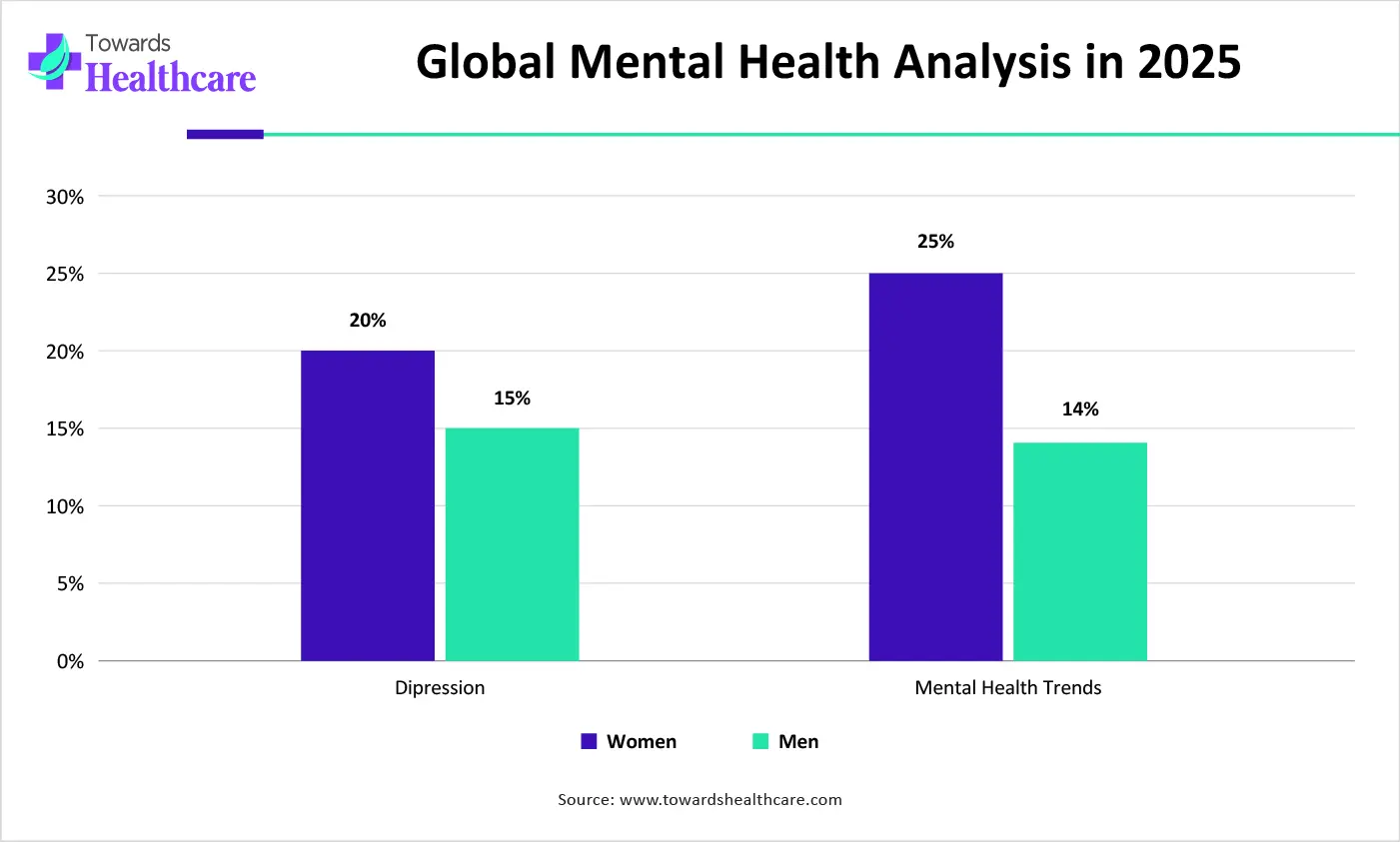
| Mental Health Challenges | Women | Men |
| Depression | 20% | 15% |
| Mental health trends | 25% | 14% |
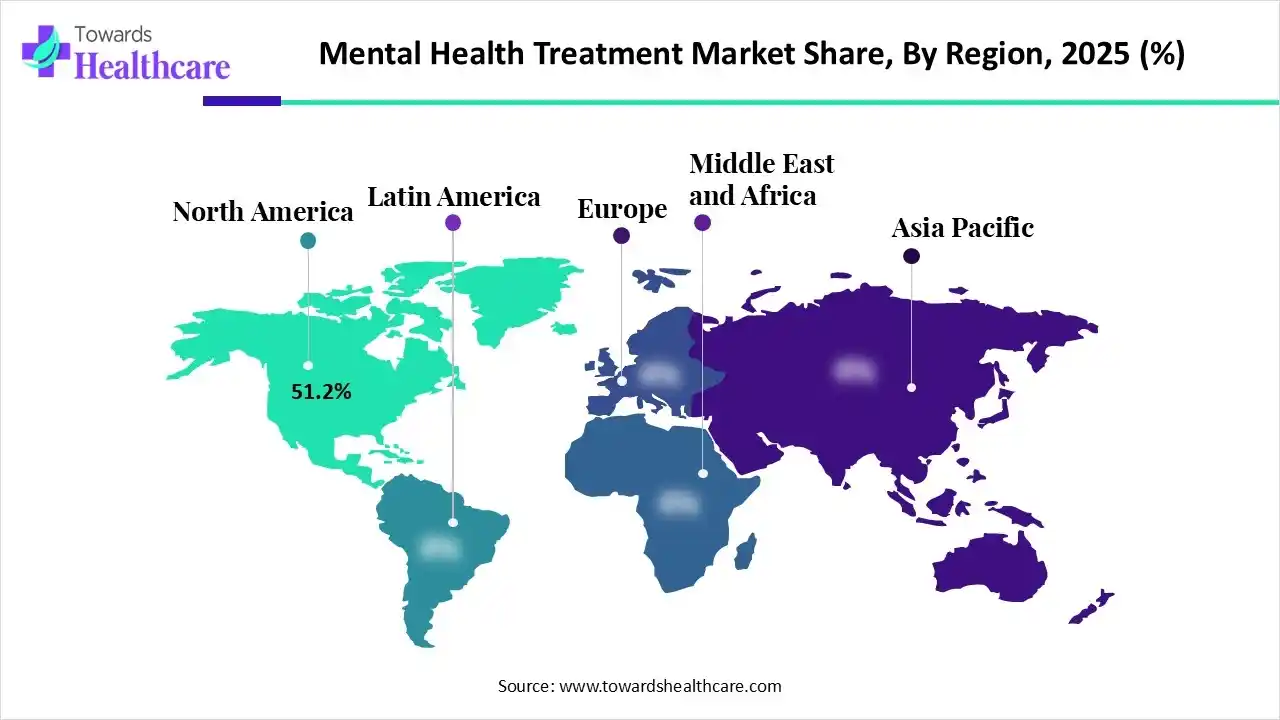
In 2025, North America led the mental health treatment market by 51.20% share, as this region is sophisticated with specialized staff and technological developments. This region has the highest mental health disease problems in high-income countries. Growing funding, digital novelties, and the increasing cases of mental health challenges. Millions of adults and youth experience mental health problems, with noteworthy rates of anxiety, depression, and substance use disorders.
U.S.: Strong Biotechnology and Pharmaceutical Sector
The United States has some of the worst mental health–related outcomes, including the highest suicide rate and second-highest drug-related death rate. The U.S. has a relatively low supply of mental health workers, particularly psychologists and psychiatrists.
The growing incidence of mental health conditions across the U.S. increases the demand for their early diagnosis and effective treatment options. Increasing healthcare expenditure and the presence of strong insurance coverage are also increasing their use. Additionally, growing demand for personalized care also increases their use.
Canada Market Trends
Growing mental health awareness and government support are increasing mental health treatment services across Canada. Rising incidence of mental health disorders is also increasing their demand. At the same time, growing adoption of telehealth platforms is promoting virtual consultations.
Asia Pacific is set to experience rapid growth with the highest CAGR of 8.0% in the mental health treatment market with share of 15%, as over 60 % world’s population exists in APAC. Novelty in mental health in the ordinary course of care, from prevention, diagnosis, monitoring, and treatment. Increasing regulations in the region, such as India, have documented this trend and launched initiatives such as the National Tele Mental Health Programme (Tele MANAS) to address the growing requirement for mental healthcare services.
India: Growing government initiative
A large Indian population is complicated in its own mental health; the way forward is through improving mental health awareness. The Government of India has presented three initiatives recently to improve the reach, cost-effectiveness, and engagement of the mental health solutions in the community. The Ayushman Bharat initiative transforms significant healthcare services into health and wellness centres (HWCs) with provisions to screen mental ailments.
China Market Trends
The growing mental health concerns across China are driving the development of new mental health treatment options. Additionally, increasing government initiatives and expansion of digital healthcare are also improving access to advanced mental health services and psychiatric care.
Europe is experiencing substantial growth in its mental health treatment market by 20% share, helping around 84 million people in the EU. Highlighting prevention and early identification, including initiatives for depression and suicide prevention in Europe. 1 in 6 people in the region lives with a mental health situation. Yearly, over 120,000 people die by suicide, more than 300 per day, highlighting the rising demand for mental health treatment.
UK: Increasing government support
The UK government intends to enhance the nation’s mental health and wellbeing, specifically for people who experience worse outcomes than the general population. The government is investing at least £2.3 billion of additional funding a year by March 2024 to enlarge and transform mental health NHS solutions, so two million people can get mental health care. Mental health services in the UK received a record 5.2 million referrals during 2024, which drives the growth of the market.
Germany Market Trends
A significant rise in mental health disorders in Germany is increasing the demand for various psychotherapies and other treatments. The presence of advanced healthcare systems is also increasing access to various psychiatric facilities. Increasing mental health awareness through wellness programs is also encouraging their use.
The region is facing a worsening mental health crisis, with rising rates of depression, anxiety, and severe mental illness, increasing the need for therapeutic services and medication management. Awareness campaigns, such as Brazil's 'White January,' have improved early diagnosis and encouraged more people to seek treatment. Increased government and private funding for mental health initiatives is necessitating better workforce development and infrastructure. Social inequalities, political instability, and violence have intensified the demand for services, while specialized approaches, like Argentina's strong psychoanalysis culture, contribute to high therapy usage rates.
Brazil Market Trends
Brazil excels in mental health treatment due to high disorder rates, government deinstitutionalization reforms, and rapid digital technology adoption. The Sistema Único de Saúde (SUS) emphasizes community care over hospitalization, while popular apps address anxiety and related issues. With the highest global anxiety rates and the fifth highest for depression, demand for treatment services is significant. Increased smartphone use and mental health app popularity have spurred market growth. Public awareness campaigns and education have lessened stigma, encouraging more people to seek care. The government prioritizes integrating mental health into the primary public health system to enhance access nationwide. Growing consumer interest in proactive mental wellness is driving the market for mindfulness and self-care products.
Argentina Market Trends
Increasing mental health awareness and government initiatives are driving the adoption of various mental health treatment options. Expansion of telehealth platforms is also increasing the use of virtual therapy. Furthermore, the growing shift towards remote care is also increasing the demand for online consultations.
The Mental Health Treatment Market in the Middle East & Africa (MEA) is rapidly expanding by 8.80% share due to high demand from regional stressors, substantial government funding, and the swift adoption of digital technology. The region is transitioning from traditional, stigmatized views to modern mental health care. Factors like wars and political instability contribute to high rates of PTSD, anxiety, and depression, particularly in crisis-affected countries. Governments, especially in the Arab Gulf (UAE, Saudi Arabia, Qatar), are investing heavily to improve mental health services as part of broader health reforms and to encourage private-sector participation to increase mental health facilities.
There is growing demand for mental health apps, AI chatbots like 'Thiqa' in Dubai, and online counseling tools, attracting significant investment and user interest. Companies are also enhancing mental health programs for employees, recognizing the impact of mental well-being on productivity. MEA is predicted to expand considerably in the mental health treatment market during the forecast period due to increasing mental health disorders. The rise in awareness is also increasing the adoption of digital solutions. The growing government initiatives and collaborations are also driving the development of new treatment options.
UAE Market Trends
The UAE has emerged as a leader in mental health treatment in the MEA region due to substantial government investment, destigmatization efforts, and advanced digital health integration. The UAE government prioritizes mental well-being through initiatives like the National Mental Health Strategy, aimed at improving service access and decriminalizing suicide attempts. The 2023 Federal Law No. 10 on Mental Health strengthens patient rights and aligns the legal framework with international standards. Dubai and Abu Dhabi are key centers, investing in specialized psychiatric hospitals and clinics. The 'Sakina' mental health network in Abu Dhabi provides a centralized and comprehensive care approach. The fast-paced urban lifestyle and high-pressure corporate environment have heightened the demand for employee wellness programs and counseling services. The diverse expatriate community has created a need for specialized services that address various cultures and languages.
South Africa
South Africa is experiencing a rise in mental health disorders, which is increasing the demand for specialized treatment options. Increasing government initiatives and NGO support are also improving access to mental health services. Growing adoption of digital health tools is also improving treatment adherence rates.
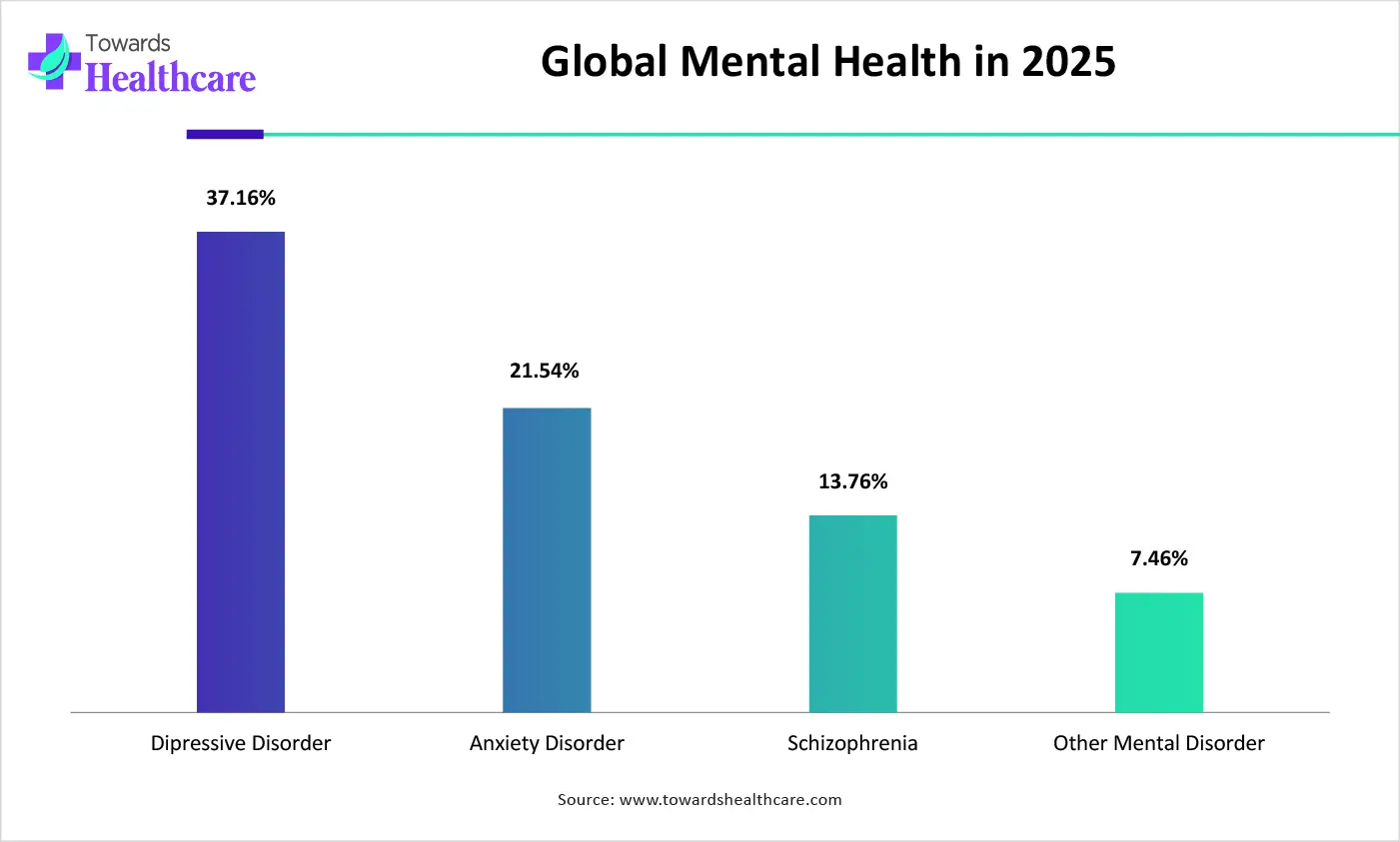
| Diseases | Percentages |
| Depressive disorder | 37.16% |
| Anxiety disorder | 21.54% |
| Schizophrenia | 13.76% |
| Other mental disorders | 7.46% |
| Idiopathic developmental intellectual disability | 4.99% |
| Conduct disorder | 3.79% |
| Autism spectrum disorders | 3.33% |
| Eating disorder | 2.03% |
| Attention-deficit hyperactivity disorder | 0.87% |
R&D:
Clinical Trials:
Patient services:
| Company | Headquarters | Latest Update |
| UnitedHealth Group | United States | UnitedHealthcare has expanded its behavioral health network in recent years, totaling over 453,600 providers and 234,600 computer-generated providers |
| Anthem, Inc. | Indiana | Anthem has not admitted any wrongdoing but agreed to a $12.875 million class action settlement to resolve the allegations. |
| Cigna Healthcare | United States | In December 2025, New research from The Cigna Group finds that people who have a strong sense of purpose experience far greater vitality, better health, stronger relationships, and greater engagement at work. |
| Kaiser Permanente | California | In February 2025, Kaiser Permanente is back in the hot seat as mental health workers in Southern California wage a strike that's in its fourth month. |
| McKesson Corporation | Texas | In May 2025, McKesson Corporation announced its purpose to separate its Medical-Surgical Solutions segment into an independent company. |
| Mayo Clinic | United States | In December 2024, Mayo Clinic researchers will work on a federally funded project to advance research in mental health using big data and machine learning to ultimately enhance patient outcomes and targeted treatments. |
| CVS Health / Aetna | United States | In November 2025, Aetna, a CVS Health company, announced the launch of an inclusive neurodiversity navigation database available to select Aetna Commercial clients for employer-sponsored member populations. |
In February 2026, “Reaffirming our commitment to mental health and trauma care. There are no national institutes for mental healthcare in north India. We will therefore set up a NIMHANS-2 and also upgrade National Mental Health Institutes in Ranchi and Tezpur as regional apex institutions”, said, presenting the Budget in Parliament on Sunday, Sitharaman
Strengths
Weaknesses
Opportunities
Threats
By Disorder Type
By Treatment Technique
By Service Type / Care Setting
By Age Group / Patient Group
By Delivery Mode
Regional Outlook






Principal Consultant
Payal Rabde is a Healthcare Market Research Analyst at Towards Healthcare Research & Consulting with 4+ years of experience in pharmaceuticals, biotechnology, medical devices, and life sciences.
Learn more about Payal Rabde

Reviewed By
Aditi Shivarkar is a seasoned professional with over 14 years of experience in healthcare market research. As a content reviewer, Aditi ensures the quality and accuracy of all market insights and data presented by the research team.
Learn more about Aditi Shivarkar