

Pipeline Programs

CGT Companies Tracked

Manufacturing Facilities


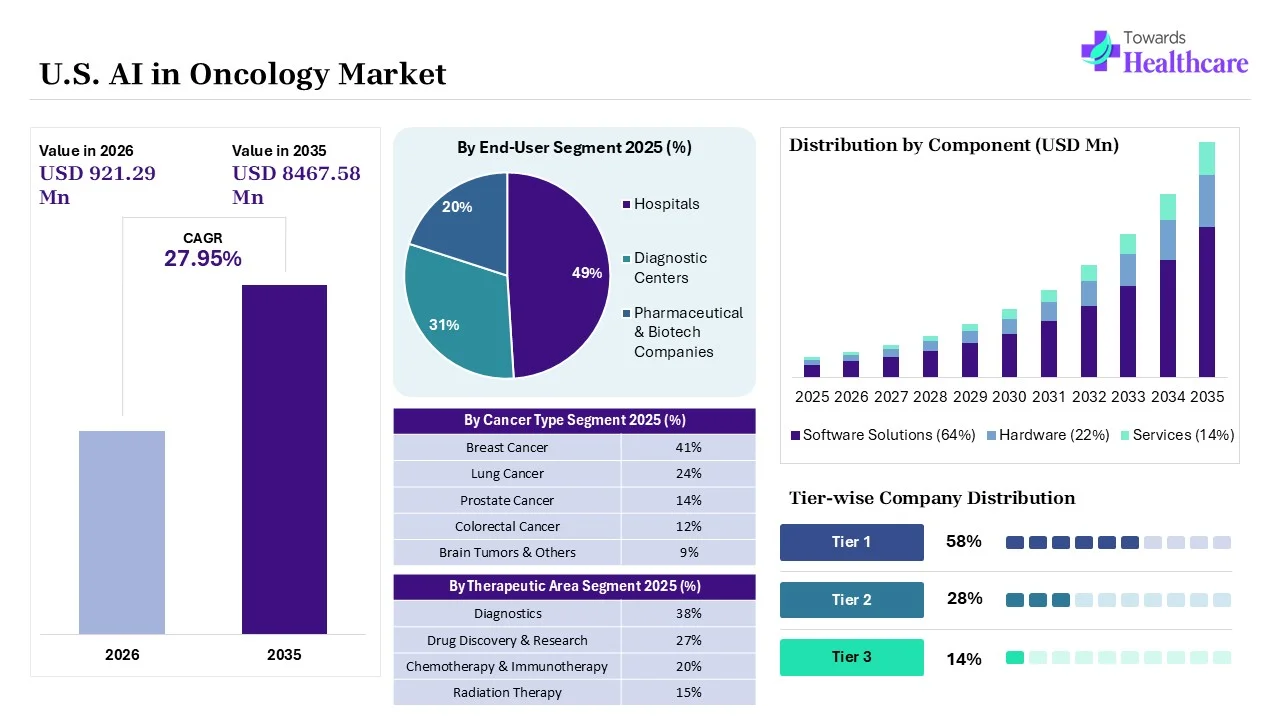
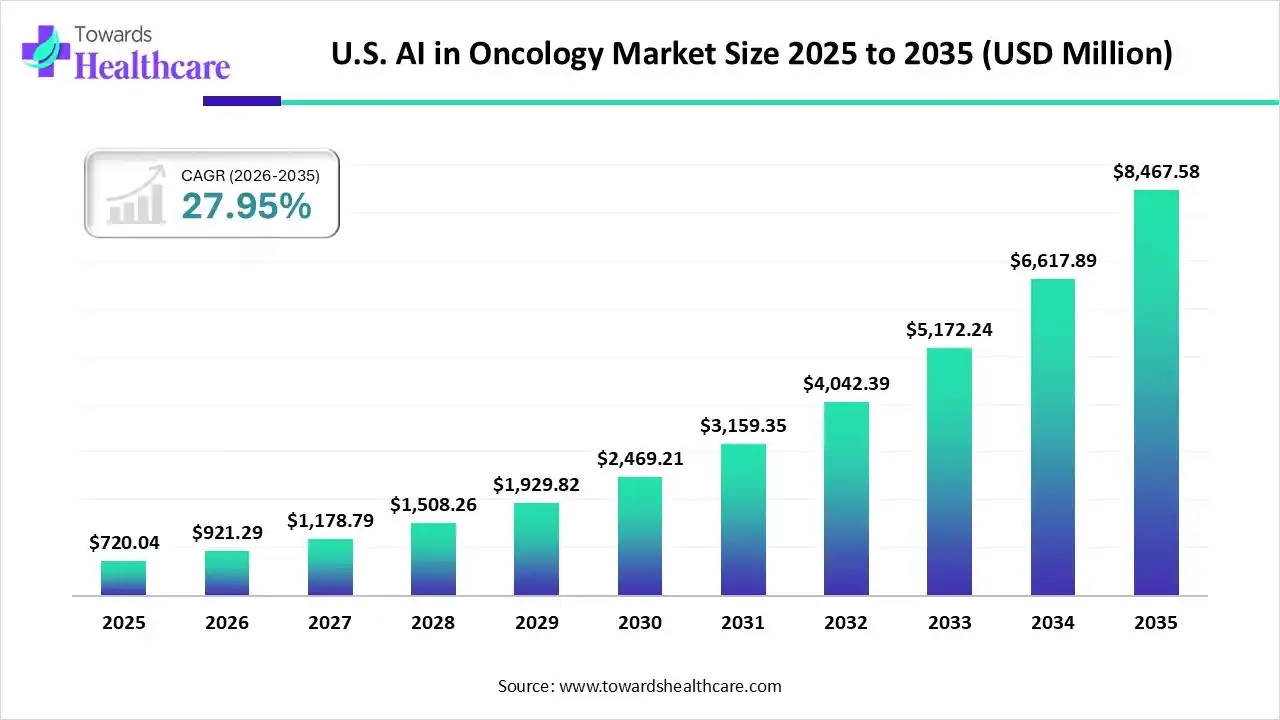
The U.S. AI in oncology market size was estimated at USD 720.04 million in 2025 and is predicted to increase from USD 921.29 million in 2026 to approximately USD 8467.58 billion by 2035, expanding at a CAGR of 27.95% from 2026 to 2035. The U.S. AI in oncology market is increasing as AI-driven technology supports doctors in making precise treatment decisions, lowers unnecessary surgeries, and helps oncologists enhance patients' cancer treatment plans.
The U.S. AI in oncology market is growing because AI-based technology rapidly understands how cancer cells become resistant to anticancer drugs, which helps enhance drug development and adjust drug applications. AI-based technology improves the identification of cancer neoantigens and the effectiveness of tumor immunotherapy. AI-based technology manages the use of chemotherapy medicines and predicts the tolerance of chemotherapy drugs to optimize the chemotherapy regimen. AI-driven technology focuses more on the response between drugs and patients. The use of AI in cancer radiotherapy majorly includes the cancer target region, the delineation of organs at risk, and the automatic formulation of a radiotherapy plan. AI-based technology could speed up the discovery of novel materials, a shift that could dramatically accelerate the advancement of anticancer drugs.
Gradual developments in AI solutions in the United States are aiming at a shift towards in silico (computer-simulated) modeling, which spurs the expansion of biologics, monoclonal antibodies, & therapies like Antibody-Drug Conjugates (ADCs). Many leaders, such as Friends of Cancer Research, are actively coordinating digital pathology tools to ensure clinical consistency across emerging platforms. Existing key companies, including Moderna and Merck, are in late-stage clinical trials leveraging AI algorithms to map and develop tailored mRNA cancer vaccines personalized to an individual’s unique tumor mutations.
U.S. AI in oncology refers to the application of artificial intelligence technologies, including machine learning, deep learning, and predictive analytics, to improve cancer detection, diagnosis, treatment planning, drug discovery, and patient monitoring. The market is expanding due to the increasing cancer burden, growing adoption of precision medicine, and rising demand for data-driven clinical decision support. Technological advancements such as AI-powered medical imaging, digital pathology, genomic analysis, and cloud-based oncology platforms are transforming cancer care. Key trends include integration of AI with electronic health records, real-world evidence, and multi-omics data to enhance personalized treatment strategies. Future opportunities are driven by AI-enabled clinical trials, predictive oncology, and autonomous diagnostic solutions. Strong investments in healthcare AI, supportive regulatory initiatives, and collaborations between technology companies and cancer centers continue to accelerate market growth.
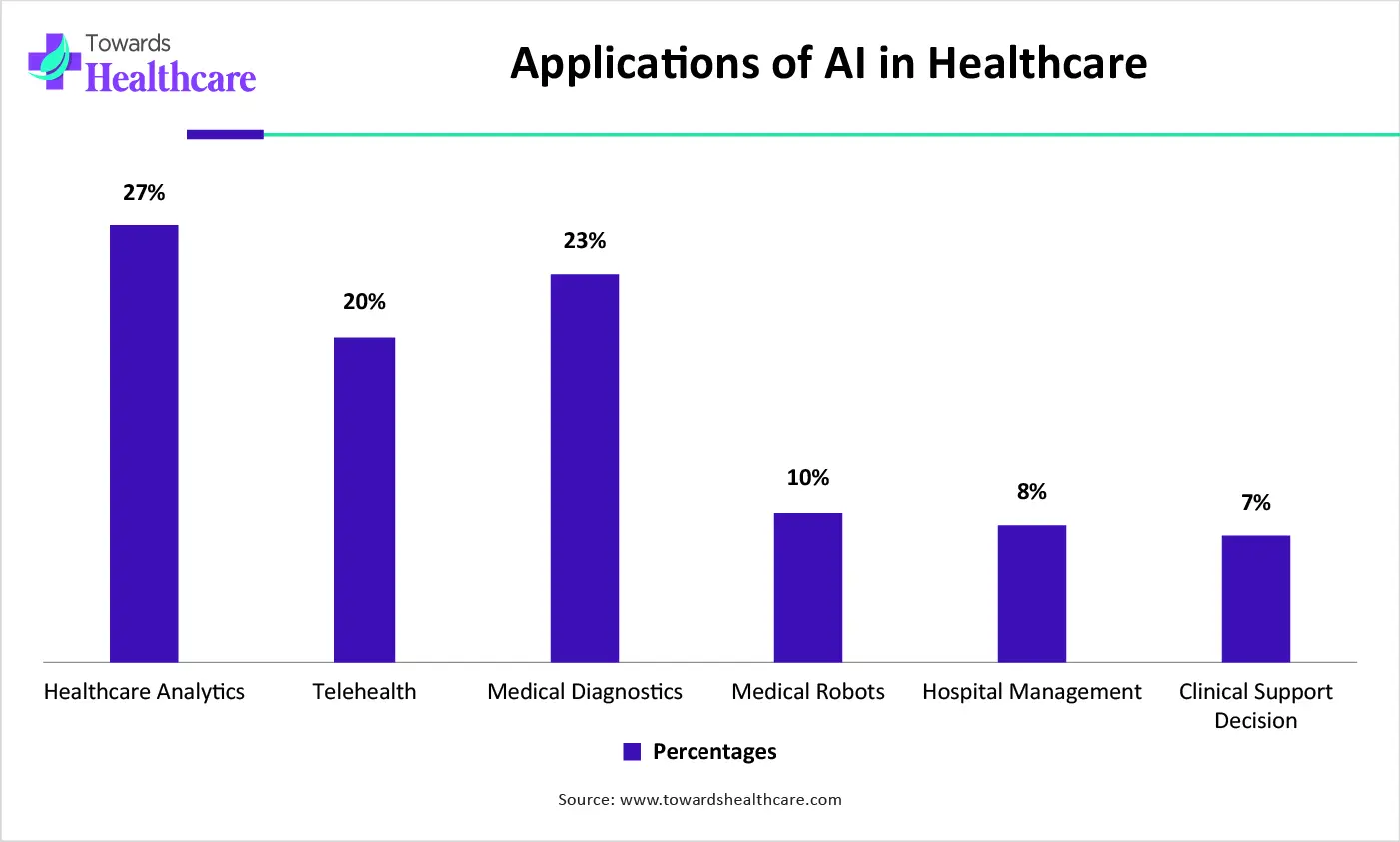
| Major Applications | Percentages |
| Healthcare Analytics | 26% |
| Telehealth | 19% |
| Medical Diagnostics | 22% |
| Medical Robots | 8% |
| Hospital Management | 7% |
| Clinical Support Decision | 6% |
| Other | 12% |
Advanced Diagnostics:
AI-based imaging diagnostics using a range of modalities like computed tomography, positron emission tomography, magnetic resonance imaging, ultrasound, and digital pathology, highlighting the growing role of advanced technology in identifying early-stage cancers.
Precision Medicine:
Precision medicine is a new strategy for tailoring disease prevention and treatment. It makes it possible for doctors and researchers to more accurately predict which treatments are more likely to work for a patient, considering the patient's genetic and molecular make-up, lifestyle, and environment.
Digital Twins in Oncology:
Digital twin technology holds considerable promise for advancing precision oncology via predictive, personalised, and adaptive care policies. It improves and elevates research and discovery of novel drugs and treatments while deepening the understanding of diseases.
The U.S. leads the AI in oncology market due to its advanced healthcare infrastructure, strong presence of leading AI and biotechnology companies, and substantial investments in cancer research. Widespread adoption of precision medicine, extensive electronic health record (EHR) integration, supportive FDA regulatory pathways for AI-enabled medical technologies, and increasing collaborations between healthcare providers and technology firms are accelerating innovation. High cancer prevalence and robust R&D funding further strengthens the country’s market leadership.
| Table | Scope |
| Market Size in 2026 | USD 921.29 Million |
| Projected Market Size in 2035 | USD 8467.58 Million |
| CAGR (2026 - 2035) | 27.95% |
| Key Applications | AI-powered cancer diagnostics, digital pathology, radiology analysis, precision oncology, drug discovery, clinical trials optimization, radiation therapy planning, treatment prediction |
| Primary End Users | Hospitals, cancer centers, diagnostic laboratories, pharmaceutical companies, biotechnology companies, research institutions |
| Key Growth Drivers | Increasing cancer burden, demand for early diagnosis, adoption of precision medicine, AI-enabled imaging, oncology data analytics, personalized treatment approaches, drug discovery acceleration |
| Measurable Values | USD Millions/Units/Volume |
| Market Segmentation | By Component, By Cancer Type, By Therapeutic Area, By End-User |
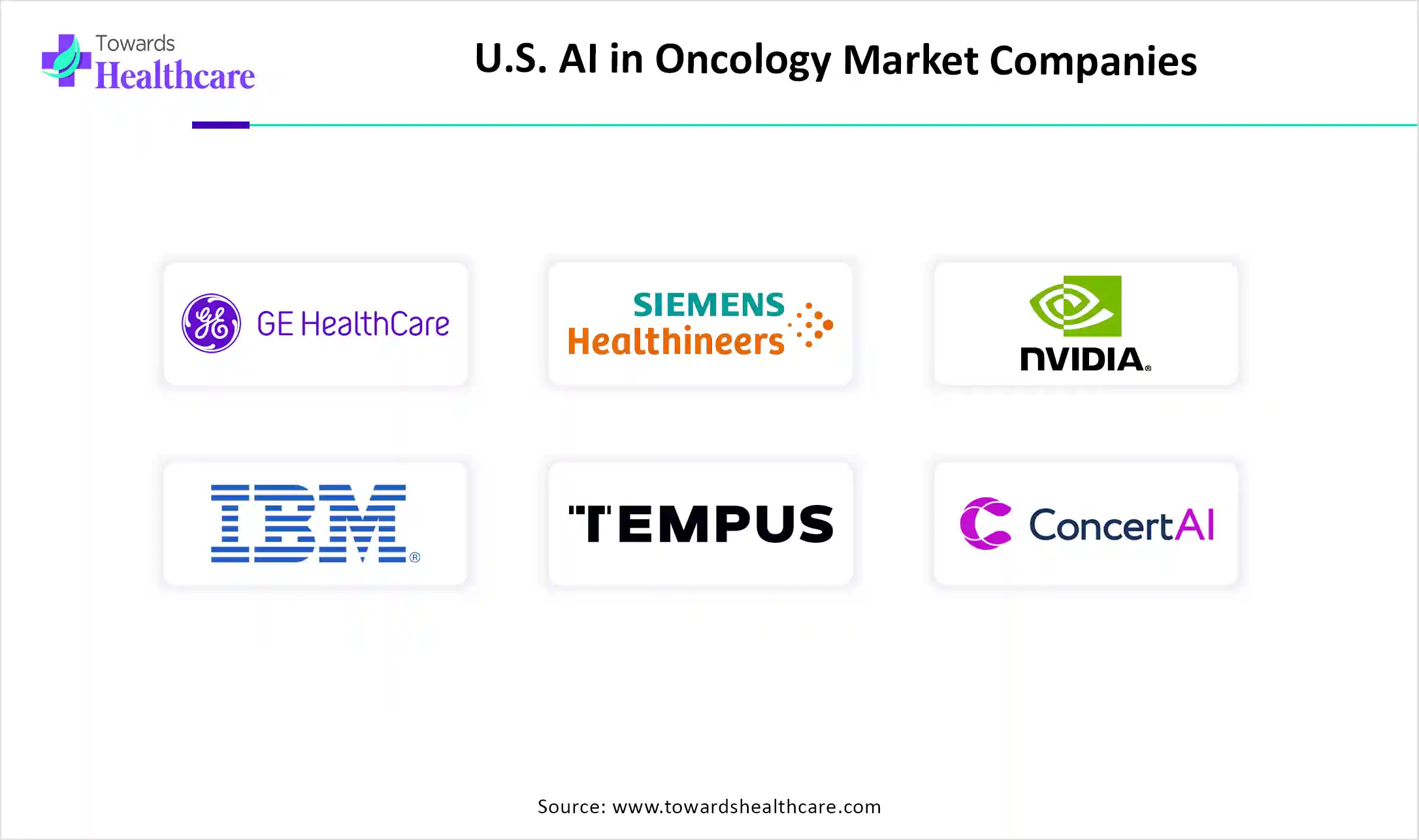
| Top Key Players | GE HealthCare, Siemens Healthineers AG, NVIDIA Corporation, IBM, Tempus Labs, Inc., Concert AI, PathAI, Inc. |
| Segments | Shares % |
| Software Solutions | 64% |
| Hardware | 22% |
| Services | 14% |
Which Component Led the U.S. AI in the Oncology Market in 2025?
In 2025, the software solutions segment held the dominant U.S. AI in oncology market share with approximately 64.0% share in 2025, due to software solutions such as the major software-based oncology platform, offering significant advantages in providing documented and effective. Advanced patient engagement software transforms oncology care by connecting the gaps between appointments, improving the patient experience, and streamlining medical care workflows.
Services
Whereas the services segment is the fastest-growing in the market, as AI-based technology allows earlier and more precise diagnosis by identifying subtle irregularities in radiology, pathology, and liquid biopsy data that elude conventional valuation. Integrating multi-omics, healthcare, and imaging datasets, AI-based technology supports highly targeted treatment planning, expects therapeutic responses, and guides the selection of specific agents and immunotherapies.
| Segments | Shares % |
| Breast Cancer | 41% |
| Lung Cancer | 24% |
| Prostate Cancer | 14% |
| Colorectal Cancer | 12% |
| Brain Tumors & Others | 9% |
Why did Breast Cancer, the Pharmaceutical Companies Segment Dominate the Market in 2025?
The breast cancer segment is dominant in the U.S. AI in oncology market in 2025, with approximately 41% share in 2025, as AI-based technology has the potential to enhance breast cancer screening by increasing precision and lowering radiologist workload. Significant AI-based technology has effectively identified breast cancer that physicians missed and tissue features that predict future cancers. AI-based software systematizes the interpretation of breast mammograms, ultrasounds, and MRI scans to get patients their outputs faster.
Lung Cancer
Whereas the lung cancer segment is estimated to be the fastest-growing in the market, as AI-based technology applications in lung cancer significantly focus on lung nodule identification, diagnosis, and radiotherapy planning, with all these algorithms being imaging-based. AI-based research in lung cancer offers promising prospects for automated and precise management. AI-based technology is emerging rapidly, with the definitive objective being the advancement of a comprehensive model, called generalist AI-base capable of analyzing multi-modal data and tackling a wide range of tasks.
| Segments | Shares % |
| Diagnostics | 38% |
| Drug Discovery & Research | 27% |
| Chemotherapy & Immunotherapy | 20% |
| Radiation Therapy | 15% |
Why did the Diagnostics Segment Dominate the Market in 2025?
The diagnostics segment is dominant in the U.S. AI in oncology market with approximately 38.0% share in 2025, as diagnostic technology in oncology provides early identification with high precision, increase effectiveness of care, and is scalable in the health care systems. With the promise of rapid, more precise diagnoses, AI-based technology is transforming how clinicians detect, diagnose, and manage cancer. AI-based technology has become a significant tool in revolutionising cancer diagnosis and treatment because of its capacity to spot minute patterns and irregularities in healthcare data.
Drug Discovery & Research
Whereas the drug discovery & research segment is the fastest-growing in the market, as AI-based technology in drug discovery speeds up target identification, enhances clinical trials, lowers expenses, and allows targeted medicine. AI has allowed groundbreaking developments in molecular modeling, simulation processes, and the identification of new compounds. AI-driven drug discovery lowers research and development expenses by up to 40%.
| Segments | Shares % |
| Hospitals | 49% |
| Diagnostic Centers | 31% |
| Pharmaceutical & Biotech Companies | 20% |
Why did the Hospitals Segment Dominate the Market in 2025?
The hospitals segment is dominant in the U.S. AI in oncology market with approximately 49% share in 2025, as AI-based technology in oncology provides early identifications with high precision, rise effectiveness of care, and is scalable in the healthcare systems. Two cancer types that have helped from automated diagnosis with AI-based technology are skin and breast cancers. AI's capacity to identify patterns and aberrations that escape human care in the hospital.
Diagnostic Centers
Whereas the diagnostic centers segment is the fastest-growing in the market, as AI-based technology becomes a significant tool in revolutionising cancer diagnosis and treatment due to its capacity to spot minute patterns and irregularities in medical data. AI-based tools that are integrated into diagnostic center workflows in oncology clinics analyse medical records and supports physician make more up-to-date decisions.
California is a key contributor to the US AI in oncology market. The established immunology firms and the rise in cell therapy optimization increase adoption of AI in oncology. Increasing product deployment and the integration of cloud-based AI in pathology help with expansion. The strong presence of medical institutions and increased cell therapy screening helps with expansion. The development of medical device software drives the overall growth.
New York is rapidly expanding in the market. The world-class medical base and real-world precision diagnostics increase adoption of AI in oncology. The high number of cancer patients and the rise in AI innovation help with expansion. The large amounts of imaging datasets and the focus on enhancing clinical trial matching help with expansion. Surging applied AI boosts the overall growth.
Texas is growing at a notable rate in the market. Increasing CPRIT investments in research and the rise in treatment planning are increasing the use of AI in oncology. Surging biotech funding and the incorporation of telemedicine platforms help with expansion. The large institutional investments and presence of UT MD Anderson Cancer Center increase the use of AI in oncology. The focus on enhancing patient engagement drives the growth.
Illinois is growing at a significant rate in the market. The strong CCIL innovation and BEAT Cancer Initiative increase the development of AI in oncology. The increased trials of experimental treatments and robust chemical-AI infrastructure help with expansion. The rise in multi-omic data analysis and the expansion of OSF healthcare boost the overall market growth.
New Jersey is growing in the market. The strong biopharma density and extensive lab ecosystem increase adoption of AI in oncology. The investments in health sciences and the requirements for tumor mutation identification increase adoption of AI in oncology. Increasing AI video assessment and demand for oncology therapies boost the overall growth.
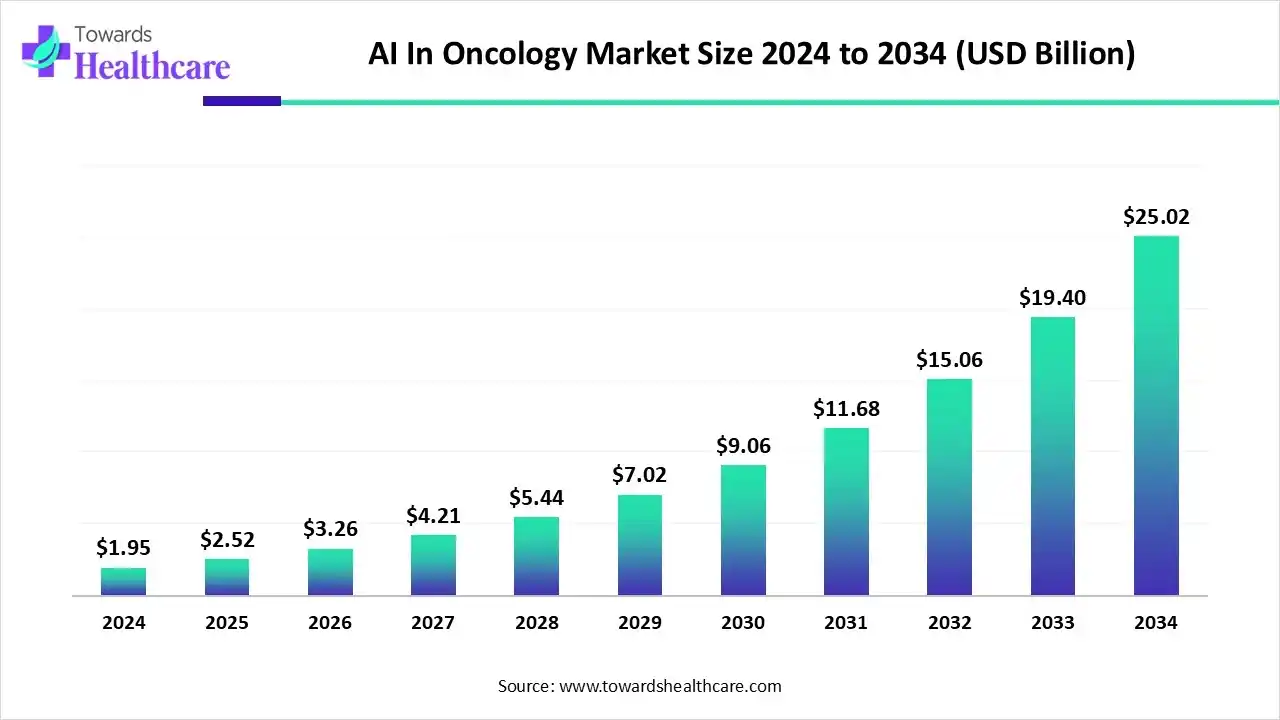
The global AI in oncology market size is estimated at US$ 1.95 billion in 2024 and is projected to grow to US$ 2.52 billion in 2025, reaching around US$ 25.02 billion by 2034. The market is projected to expand at a CAGR of 29.36% between 2025 and 2034.
| Category | Market Participants & Role |
| Technology Providers | AI infrastructure and computing companies providing machine learning platforms, GPUs, cloud AI capabilities, and healthcare AI development tools. |
| Product Manufacturers | Medical imaging and healthcare technology companies integrating AI into oncology diagnostics, radiation therapy, and clinical systems. |
| Service Providers | Companies offering AI-based oncology analytics, clinical decision support, workflow optimization, and implementation services. |
| Platform Providers | Oncology-focused AI platforms supporting precision medicine, clinical trials, pathology analysis, and patient data interpretation. |
| CROs / Clinical Research Technology Providers | AI-enabled clinical trial platforms supporting patient matching, trial acceleration, and oncology research analytics. |
| Software Vendors | Companies developing AI software for pathology, imaging, genomic analysis, and oncology decision support. |
| Research Institutions | Cancer research centers, academic hospitals, and biotechnology research organizations using AI for oncology innovation. |
| End-User Industries | Hospitals, diagnostic centers, pharmaceutical companies, biotechnology firms, and healthcare providers. |
| Tier 1 | Tier 2 | Tier 3 | |
| Typical Market Influence | 55% | 30% | 15% |
| Tier 1 | ||||
| Company Name | Headquarters | Country | Why Relevant to This Market | Key Products/Services |
| GE HealthCare | Chicago, Illinois, United States | USA | Global healthcare technology leader with significant AI adoption in oncology imaging and clinical workflows. | AI-enabled imaging solutions, oncology workflow optimization, radiation therapy AI solutions |
| Siemens Healthineers AG | Erlangen, Germany | Germany | Major medical technology company providing AI-driven imaging and oncology solutions globally. | AI-Rad Companion, imaging AI, cancer diagnosis support, radiation oncology solutions |
| NVIDIA Corporation | Santa Clara, California, United States | USA | Key AI infrastructure provider powering healthcare AI applications, including oncology research and medical imaging. | NVIDIA Clara healthcare AI platform, AI computing infrastructure, medical AI development tools |
| Tier 2 | ||||
| Company Name | Headquarters | Country | Why Relevant to This Market | Key Products/Services |
| PathAI, Inc. | Boston, Massachusetts, United States | USA | Specialized AI pathology company supporting cancer diagnosis and research workflows. | AISight platform, AI pathology solutions, biomarker analysis |
| ConcertAI | Cambridge, Massachusetts, United States | USA | Oncology-focused technology company using AI and real-world data for clinical research acceleration. | CARAai platform, clinical trial analytics, oncology data solutions |
| Paige AI | New York, New York, United States | USA | Digital pathology AI company focused on cancer detection and pathology decision support. | Paige Platform, AI-powered pathology diagnostics |
| Tier 3 | ||||
| Company Name | Headquarters | Country | Why Relevant to This Market | Key Products/Services |
| Viz.ai | San Francisco, California, United States | USA | AI healthcare company expanding clinical decision support applications including oncology-related workflows. | AI clinical workflow platform, disease detection algorithms |
| Owkin | Paris, France | France | AI biotechnology company applying machine learning to drug discovery and oncology research. | AI drug discovery, oncology research models, precision medicine |
| Insilico Medicine | New York, New York, United States | USA | AI-driven drug discovery company with oncology research applications. | AI drug discovery platform, generative AI for therapeutics |
Strengths
Weaknesses
Opportunities
Threat
By Component
By Cancer Type
By Therapeutic Area
By End-User






Principal Consultant
Payal Rabde is a Healthcare Market Research Analyst at Towards Healthcare Research & Consulting with 4+ years of experience in pharmaceuticals, biotechnology, medical devices, and life sciences.
Learn more about Payal Rabde

Reviewed By
Aditi Shivarkar is a seasoned professional with over 14 years of experience in healthcare market research. As a content reviewer, Aditi ensures the quality and accuracy of all market insights and data presented by the research team.
Learn more about Aditi Shivarkar









