


The U.S. emergency department market size was estimated at USD 216.17 billion in 2025 and is predicted to increase from USD 229.25 billion in 2026 to approximately USD 388.96 billion by 2035, expanding at a CAGR of 6.05% from 2026 to 2035.
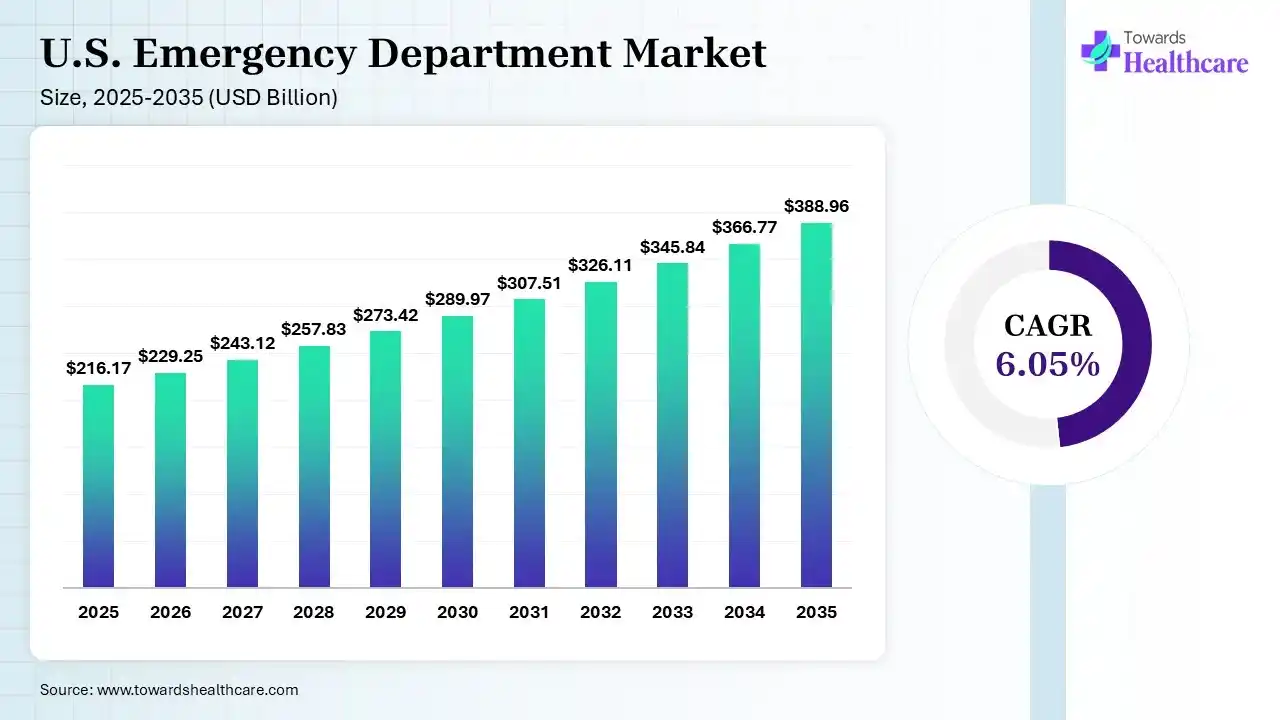
The growth in the chronic disease burden and accident cases is increasing the use of U.S. emergency departments, where the growing AI integration, expanding telehealth platforms, technological advancements, and partnerships are promoting the market growth.
The U.S. emergency department refers to the hospital-based medical unit offering immediate care to patients. They offer a wide range of services such as life-saving care, acute illness management, trauma and injury care, diagnostic services, etc., which are accessible to all patients. The U.S. emergency department is driven by shifting demographics and increasing integration of advanced medical technologies. The market in the U.S. is expanding, driven by an aging population, rising chronic disease complications, and increasing traumatic injury volumes. Key trends include the rapid adoption of freestanding emergency departments for convenience, AI-enhanced triage for efficiency, and telemedicine, alongside investments in point-of-care diagnostics to reduce overcrowding, improve throughput, and enhance patient outcomes.
Competitive Rivalry: Rivalry is moderate to high. Hospital systems, physician groups, and freestanding emergency departments compete for patients, clinicians, and contracts. Service speed and care quality matter. Recent contracting changes also show competition among emergency medicine groups.
Supplier Power: Supplier power is moderate. Emergency departments need physicians, nurses, medicines, devices, imaging, and software. Skilled emergency physicians remain important. In 2026, 3,058 emergency medicine residency positions were filled, showing stronger physician supply.
Buyer Power: Buyer power is moderate. Patients usually cannot compare providers during emergencies. Insurers have greater influence through reimbursement and network decisions. Hospitals must also meet patient expectations for timely care and better outcomes. CMS continues updating emergency care quality measures.
Threat of Substitutes: The threat is moderate. Urgent care, telehealth, primary care, and retail clinics can treat some less serious conditions. However, serious trauma and acute illness still require emergency departments. These alternatives mainly affect lower-acuity visits and patient choices.
Threat of New Entrants: The threat is low to moderate. New facilities need capital, trained staff, equipment, licenses, and payer relationships. CMS is strengthening emergency care quality reporting, which can raise operating requirements. Physician staffing also remains essential for emergency care delivery.
Driver
Growing Traumatic Conditions
The growing incidence of traumatic conditions due to increasing car accidents, violence, workplace incidents, and sports activities across the U.S. is increasing the demand for emergency department services. Moreover, their growing complexities are also increasing their demand for effective diagnostic and treatment options, which is enhancing the U.S. emergency department market growth.
Restraint
High Operational Costs
The U.S. emergency departments offer 24/7 emergency services, specialized staff, and advanced diagnostic technologies. This, in turn, increases the cost associated with these services, limiting their use and acceptance rates.
Opportunity
Increasing Focus on Disaster Preparedness
The growing health emergencies and natural disasters are increasing the use of emergency departments across the U.S. At the same time, growing healthcare investments, increasing focus on patient safety, and technological advancements are also increasing their expansion, which in turn is enhancing their capacity, accessibility to their services, and strengthening their position, where the growing government collaboration are also promoting the market growth.
Expanding Telemedicine Use
The growing use of telemedicine platforms is increasing access to the U.S. emergency department, as well as offering faster decisions, affordable solutions, and reducing unnecessary visits and overcrowding.
Increased Focus on Mental Health
The growing cases of depression, anxiety, suicidal behaviour, and substance abuse are increasing the rates of psychiatric emergencies, driving the demand for U.S. emergency department services, where the growing investment is encouraging the adoption of advanced mental health resources.
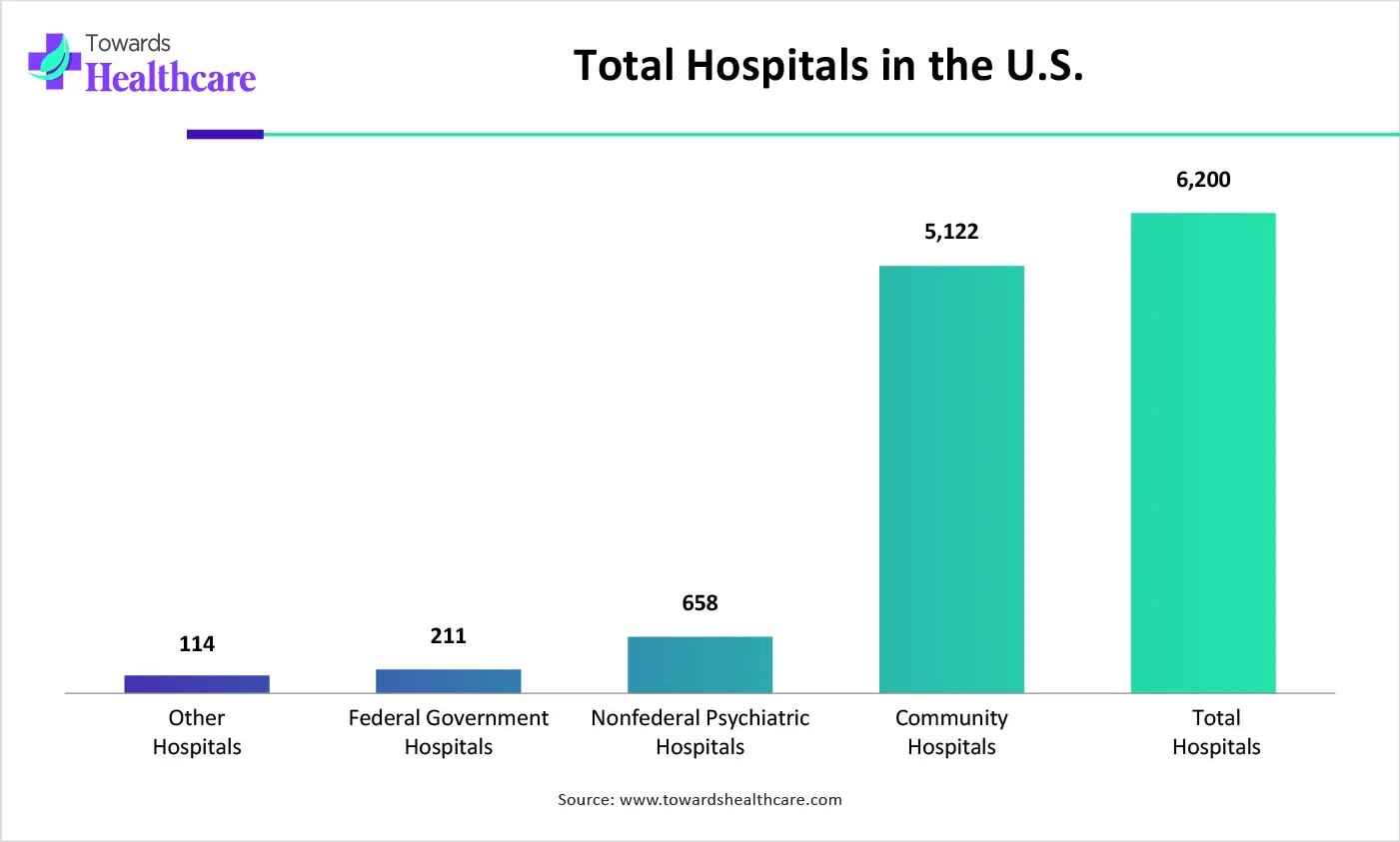
A rise in the R&D activities and technological advancements is driving the development of new point-of-care ultrasound, rapid lab tests, along with new care models, which are enhancing the operational efficiency, emergency capacity, and patient outcomes, promoting the U.S. emergency department advancements.
| Table | Scope |
| Market Size in 2026 | USD 229.25 Billion |
| Projected Market Size in 2035 | USD 388.96 Billion |
| CAGR (2026 - 2035) | 6.05% |
| Key Applications | Trauma care, acute illness management, cardiac emergencies, stroke treatment, urgent diagnostics, emergency surgery coordination, patient stabilization |
| Primary End Users | Hospitals, Integrated Delivery Networks (IDNs), Academic Medical Centers, Community Hospitals, Government Hospitals, Emergency Physicians |
| Key Growth Drivers | Rising ED visits, aging population, chronic disease burden, physician staffing demand, digital triage adoption, tele-emergency services, value-based care initiatives |
| Measurable Values | USD Millions/Units/Volume |
| Market Segmentation | By Type, By Service, By Condition, By Regional |
| Top Key Players | HCA Healthcare, Tenet Healthcare Corporation, Universal Health Services (UHS), Envision Healthcare, Oracle health, Epic Systems, Styker Corporation, ZOLL Medical Corporation, Global Medical Response, Vituity |
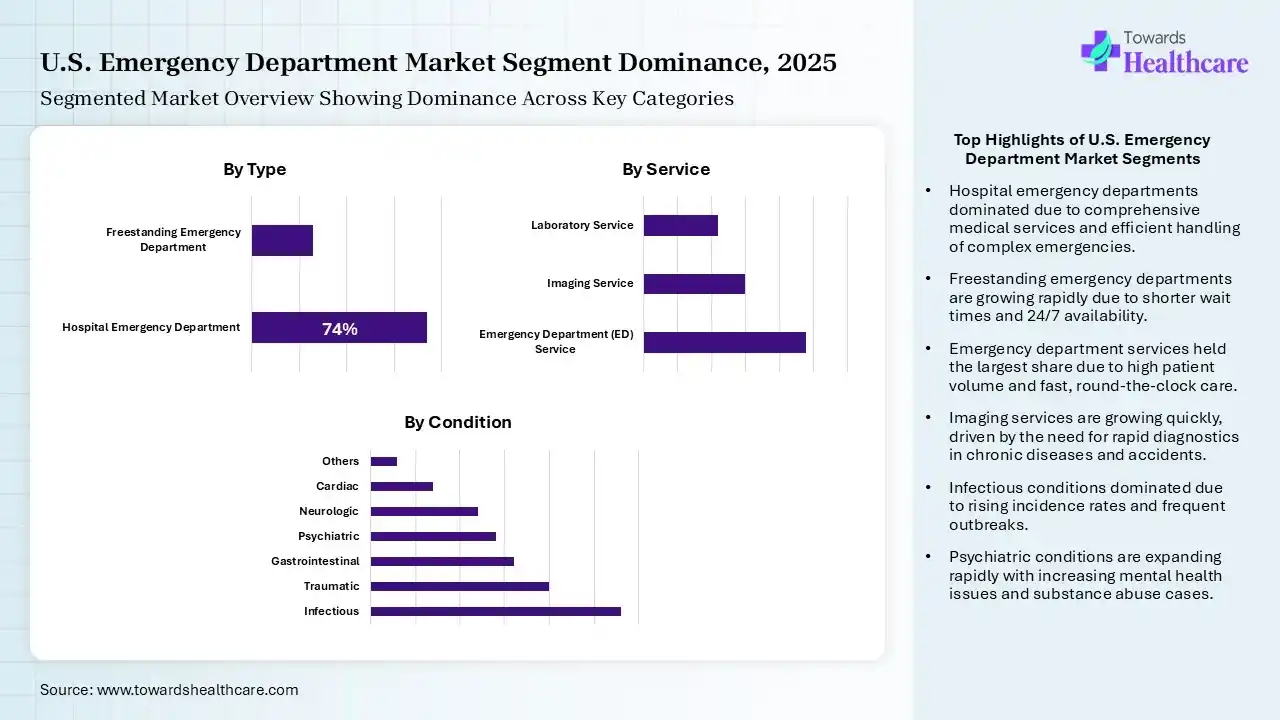
Why Did the Hospital Emergency Department Segment Dominate in the U.S. Emergency Department Market in 2025?
The hospital emergency department segment contributed the biggest revenue share of the market by 74% in 2025, due to the presence of comprehensive medical services. They also offered integrated inpatient care, where their efficient handling of complex emergencies also increased their acceptance rates and patient trust.
Freestanding Emergency Department
The freestanding emergency department segment is expected to witness the fastest growth rate during the predicted year, due to less overcrowding leading to shorter waiting times and a shift towards outpatient services. Additionally, their 24/7 availability and faster patient triage and treatment are also increasing their use.
Which Service Type Segment Held the Dominating Share of the U.S. Emergency Department Market in 2025?
The emergency department (ED) service segment held the dominating share of the market by 48% in 2025, due to growth in the patient volume. Their 24/7 availability and faster services also increased their preference, where the presence of a wide range of services and advanced facilities also increased their use.
Imaging Service
The imaging service segment is expected to grow with the highest CAGR of the market during the predicted year, due to growing chronic diseases and accident cases. The growing demand for rapid diagnostics is also increasing the adoption of advanced imaging technologies, which are further attracting patients.
What Made Infectious the Dominant Segment in the U.S. Emergency Department Market in 2025?
The infectious segment accounted for the highest revenue share of the market by 28% in 2025, due to growth in its incidence rates. Moreover, their frequent outbreaks and faster progression increased the use of U.S. emergency departments for their accurate diagnoses and effective treatment planning.
Psychiatric
The psychiatric segment is expected to expand rapidly during the upcoming years, due to growing mental health disorders and increasing cases of substance abuse. Additionally, limited access to mental health services, a shortage of psychiatric facilities, and growing awareness are also increasing the use of U.S. emergency departments.
The Southeast U.S. held the major revenue share in the global U.S. emergency department market in 2025, due to the presence of a high population, which increased the incidence of chronic diseases, driving the use of U.S. emergency departments. Additionally, expansion of the healthcare infrastructure and robust hospital networks also increased their use of various emergency department services, which contributed to the market growth.
What Factor Boosts West U.S.?
The West U.S. is expected to host the fastest-growing U.S. emergency department market during the forecast period, due to the presence of a high number of freestanding emergency departments. At the same time, expanding urban hospitals, medical tourism, and the adoption of telemedicine platforms are also increasing the accessibility of the U.S. emergency departments, enhancing the market growth.
Does Robust Hospital Network Propel the Midwest U.S.?
The Midwest U.S. is expected to grow significantly in the U.S. emergency department market during the forecast period, due to robust hospital networks and the presence of large urban centres. The growth in freestanding emergency departments and chronic disease is also increasing the use of emergency department services, where expanding telemedicine platforms are also projecting the market growth.
How is the Market Influenced in the Northeast Region in the U.S.
The Northeast region's market growth is strongly influenced by the need to manage severe overcrowding in existing traditional hospital EDs, leading to a rise in boarding times and, consequently, investments in improved patient flow and operational efficiency. Hospitals in this region are heavily adopting AI-driven diagnostics and digital health tools to manage high patient volumes and complex diagnostic workups.
| Ecosystem Segment | Key Participants | Role in Market |
| Technology Providers | Philips, GE HealthCare, Medtronic, Stryker, Baxter | Provide monitoring, imaging, emergency equipment, and clinical technologies used in EDs |
| Product Manufacturers | Stryker, Zoll Medical, BD, Abbott, Baxter | Manufacture emergency care devices, resuscitation equipment, diagnostics, and infusion systems |
| Service Providers | TeamHealth, Envision Healthcare, SCP Health, US Acute Care Solutions | Deliver physician staffing, operational management, and clinical services |
| Platform Providers | Epic Systems, Oracle Health (Cerner), MEDITECH | Provide EHR, patient flow, triage, and ED workflow management platforms |
| CROs/CDMOs (Limited Relevance) | IQVIA, ICON, Medpace | Support emergency medicine clinical research and hospital-based trials |
| Software Vendors | Epic Systems, Oracle Health, TeleTracking, LeanTaaS, Qventus | Offer patient throughput, capacity management, and emergency workflow solutions |
| Research Institutions | Mayo Clinic, Cleveland Clinic, Johns Hopkins Medicine, Harvard Medical School | Conduct emergency medicine research, clinical trials, and care innovation |
| End-User Industries | Hospitals, Trauma Centers, Academic Medical Centers, Veterans Affairs Facilities, Government Healthcare Systems | Direct users of emergency department services and technologies |
| Tier 1 | Tier 2 | Tier 3 | |
| Typical Market Influence | 68% | 24% | 8% |
| Tier 1 | ||||
| Company Name | Headquarters | Country | Why Relevant to This Market | Key Products/Services |
| HCA Healthcare | Nashville, Tennessee, USA | USA | Largest hospital operator in the U.S. with extensive ED network | Emergency departments, trauma centers, acute care services |
| TeamHealth | Knoxville, Tennessee, USA | USA | One of the largest emergency physician staffing organizations | Emergency physician management, ED operations |
| Envision Healthcare | Nashville, Tennessee, USA | USA | Major provider of emergency medicine staffing and services | Emergency medicine services, physician staffing |
| Tier 2 | ||||
| Company Name | Headquarters | Country | Why Relevant to This Market | Key Products/Services |
| SCP Health | Lafayette, Louisiana, USA | USA | Major provider of emergency medicine management services | ED staffing, hospital operations management |
| Emergency Care Partners | Brentwood, Tennessee, USA | USA | Fast-growing emergency physician management platform | Emergency medicine practice management |
| Sound Physicians | Tacoma, Washington, USA | USA | Strong acute care and emergency medicine presence | Emergency medicine and hospitalist services |
| Tier 3 | ||||
| Company Name | Headquarters | Country | Why Relevant to This Market | Key Products/Services |
| TeleTracking Technologies | Pittsburgh, Pennsylvania, USA | USA | Specialized ED throughput and patient flow software provider | Capacity management, patient flow solutions |
| LeanTaaS | Santa Clara, California, USA | USA | AI-driven hospital operations optimization company | Emergency department capacity optimization |
| Qventus | Mountain View, California, USA | USA | AI-based operational workflow platform | ED workflow automation and patient throughput |
Strengths
Weaknesses
Opportunities
Threats
In March 2026, “Just as we saw in our ambulatory settings, we’re now seeing that same impact in the emergency department, which is one of the most demanding clinical environments we have,” said Jordan Ruch, Chief Information Officer, AtlantiCare. “When documentation becomes lighter and more intuitive, it changes the dynamic of a shift. Our providers can stay present with patients instead of thinking about the screen.”
By Type
By Service
By Condition
By Regional





Principal Consultant
Payal Rabde is a Healthcare Market Research Analyst at Towards Healthcare Research & Consulting with 4+ years of experience in pharmaceuticals, biotechnology, medical devices, and life sciences.
Learn more about Payal Rabde

Reviewed By
Aditi Shivarkar is a seasoned professional with over 14 years of experience in healthcare market research. As a content reviewer, Aditi ensures the quality and accuracy of all market insights and data presented by the research team.
Learn more about Aditi Shivarkar










