Pipeline Programs

CGT Companies Tracked

Manufacturing Facilities


The U.S. sex reassignment hormone therapy market size was estimated at USD 1.3 billion in 2025 and is predicted to increase from USD 1.39 billion in 2026 to approximately USD 2.61 billion by 2035, expanding at a CAGR of 7.2% from 2026 to 2035. The U.S. sex reassignment hormone therapy market is growing because this therapy improves both gender incongruence and dysphoria by permitting individuals to express their gender identity and supportive changes in primary and secondary sex physiognomies
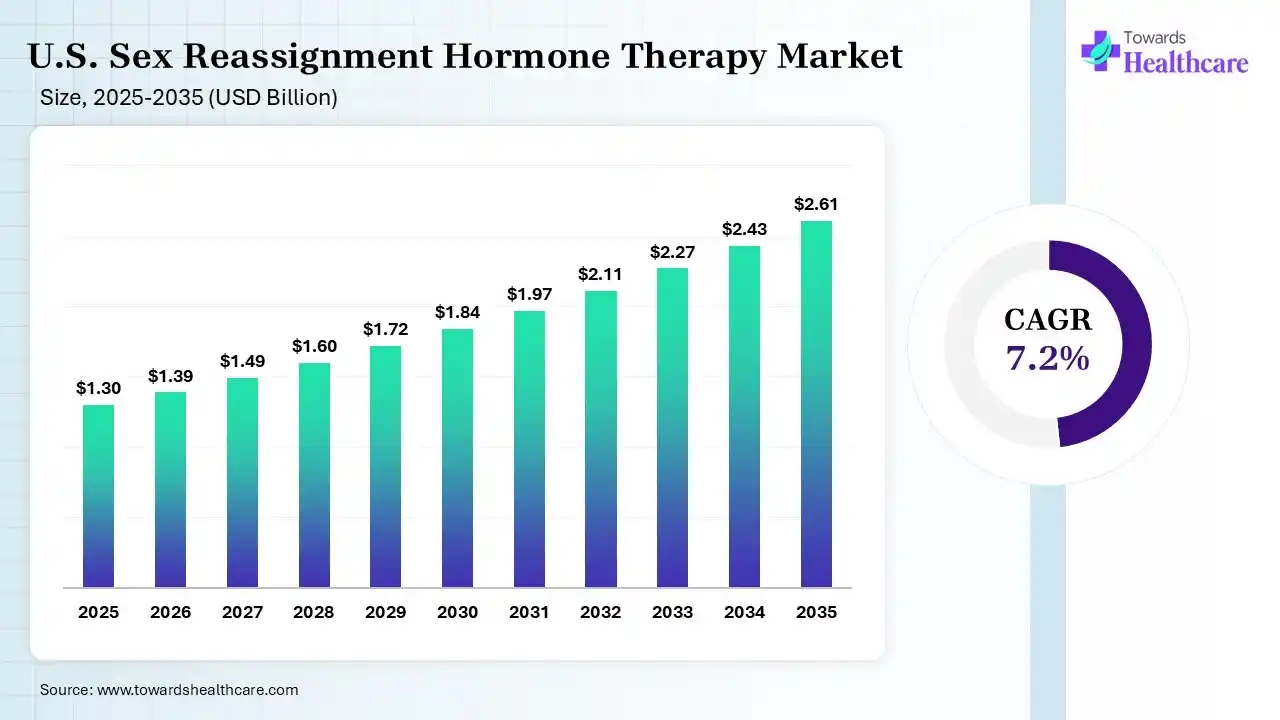
The U.S. sex reassignment hormone therapy market is growing, as this type of gender-affirming hormone therapy alleviates distress associated with gender identity, lowers suicidal ideation, raises body positivity, and enhances well-being overall. It supports improving sexual function by lessening symptoms like low libido, vaginal dryness, and erectile dysfunction, which are related to hormonal imbalances. Hormone replacement therapy should be tailored to the person's particular requirements and healthcare history. Hormone replacement therapy should be tailored to the individual's specific needs and medical history. Sex hormone replacement therapy advantageous intervention for persons with hormonal imbalances, such as menopause-related symptoms, gender dysphoria, or various healthcare conditions.
Sex reassignment hormone therapy is a gender-affirming medical treatment that uses estrogen, testosterone, and other hormone-modulating medications to help align an individual’s physical characteristics with their gender identity. It is administered under medical supervision as part of comprehensive transgender healthcare.
The U.S. sex reassignment hormone therapy market is expanding due to increasing awareness of gender-affirming healthcare, growing access to specialized endocrinology services, and rising demand for personalized treatment plans. Technological advancements in long-acting hormone formulation, AI-assisted treatment monitoring, telehealth platforms, and digital patient management systems are improving treatment accessibility and continuity of care. Emerging trends include multidisciplinary care models, precision hormone dosing, and remote clinical follow-up. Future opportunities lie in innovative hormone delivery technologies, biomarker-guided therapy optimization, and integrated digital health solutions. Supportive clinical guidelines, expanding healthcare infrastructure, and continuous research into hormone therapy, safety, and effectiveness are further driving sustained market growth.
AI-driven technology has huge potential to transform hormone therapy and women's wellness by creating care more precise, tailored, and responsive. AI-based tools enable early intervention, which is significant in preventing long-term challenges from hormonal imbalances such as infertility, osteoporosis, and metabolic disorders. AI-based diagnostic platforms support healthcare professionals in identifying hormone imbalances more accurately by analysing multifaceted data sets, including lab outputs, genetic data, and wearable device inputs. AI-driven devices are increasingly integrated with wearable devices and biosensors.
Rise of Telehealth:
Telehealth providing gender-affirming care via secure computer-generated platforms, this type of healthcare is supporting making medical care more accessible, more contented, and less isolated for trans and non-binary people.
Technological Advancements:
Hormone therapy for transgender and gender-fluid individuals improves mental well-being and quality of life by closely aligning someone’s outer appearance with their gender identity.
Trans-Masculine Care:
Trans-inclusive healthcare training and ongoing education are significant to improving access to high-quality transition-associated care. It mainly focuses on optimizing testosterone therapy to attain masculinizing changes like increased muscle mass, facial hair, and voice deepening.
| Table | Scope |
| Market Size in 2026 | USD 1.39 Billion |
| Projected Market Size in 2035 | USD 2.61 Billion |
| CAGR (2026 - 2035) | 7.2% |
| Key Applications | Feminizing hormone therapy, masculinizing hormone therapy, hormone monitoring, endocrinology consultation, prescription management, telehealth-based hormone care |
| Primary End Users | Transgender individuals, gender-diverse populations, endocrinologists, primary care providers, specialty clinics, telehealth healthcare platforms |
| Key Growth Drivers | Increasing access to gender-affirming healthcare, telemedicine expansion, broader insurance coverage, growing provider networks, improved clinical guidelines |
| Measurable Values | USD Millions/Units/Volume |
| Market Segmentation | By Hormone Type, By Gender Category, By Route of Administration, By Distribution Channel, By End User |
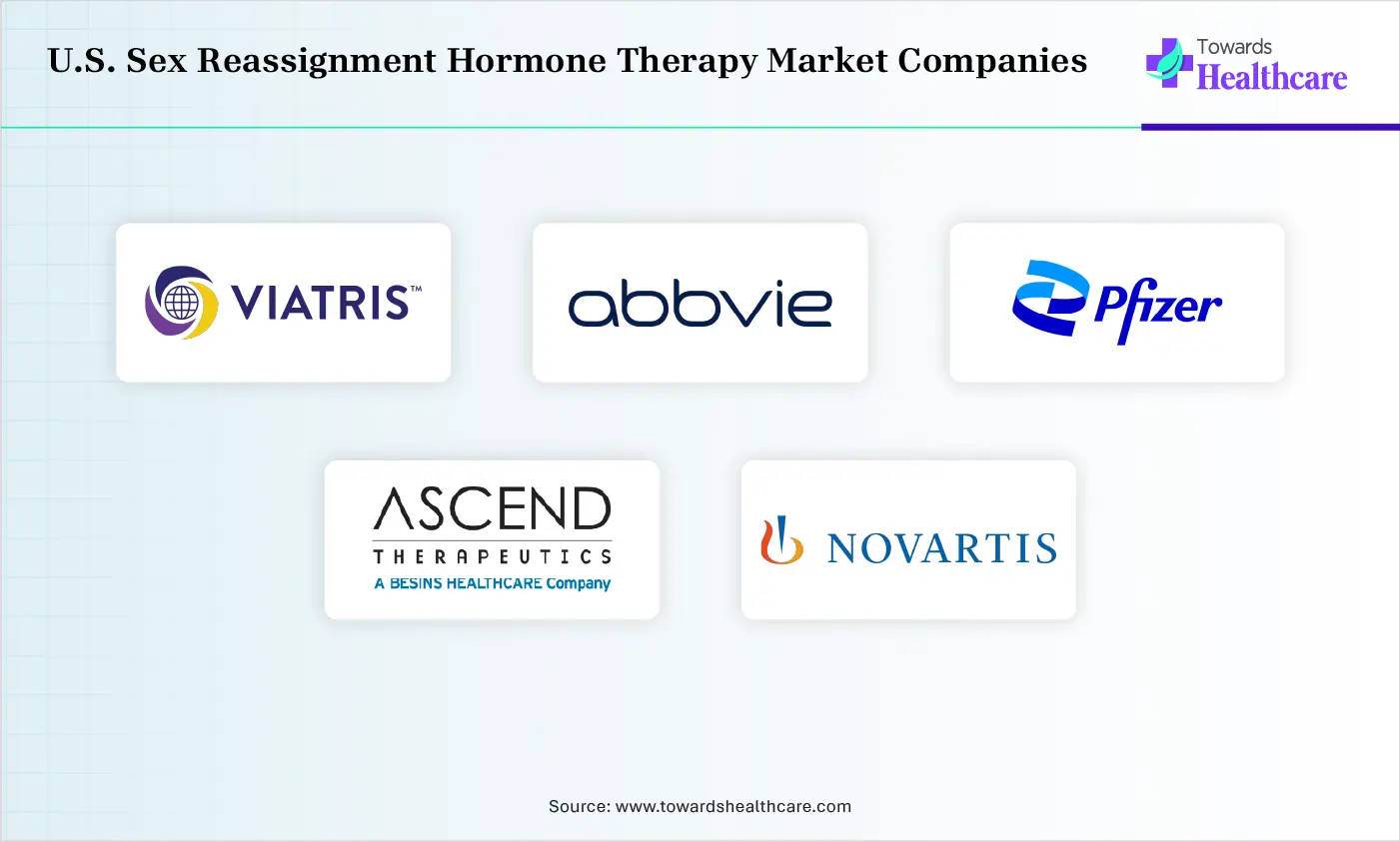
| Top Key Players | Viatris Inc. AbbVie Inc., Pfizer Inc., ASCEND Therapeutics US, LLC., Novartis AG |
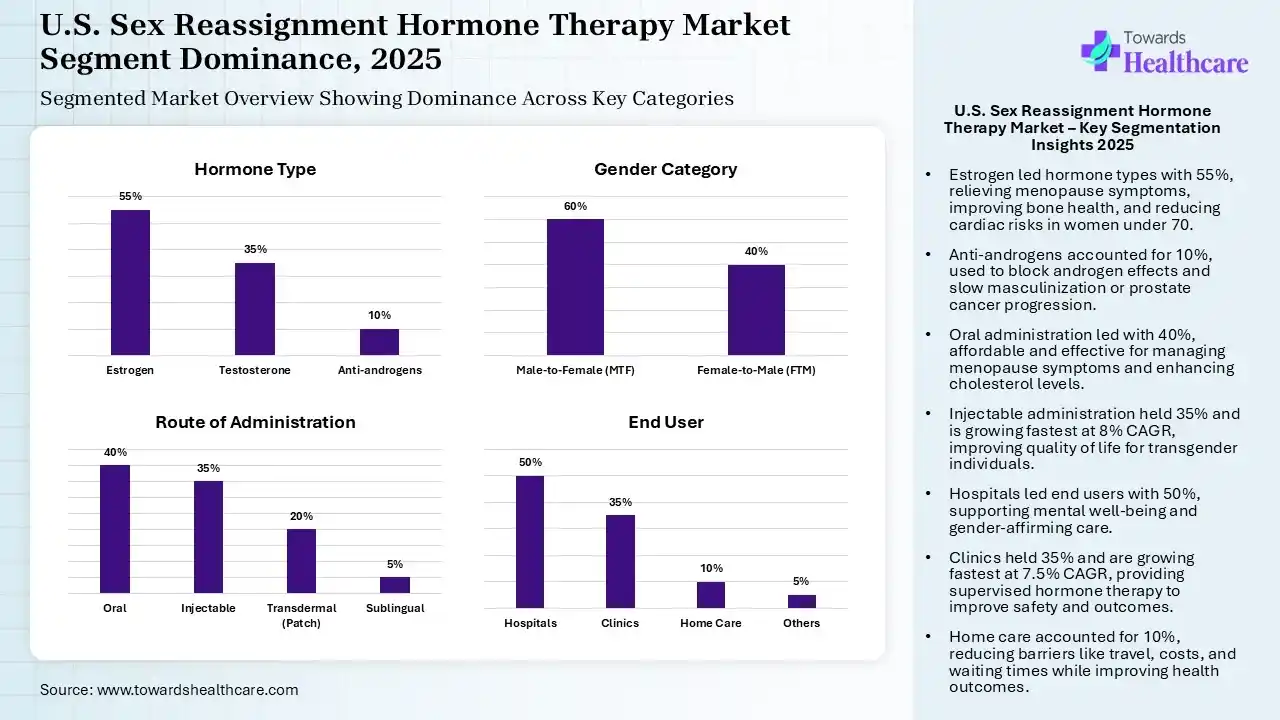
| Segment | Share 2025 (%) |
| Estrogen | 55% |
| Testosterone | 35% |
| Anti-androgens | 10% |
Estrogen Segment Led the U.S. Sex Reassignment Hormone Therapy Market in 2025
The estrogen segment contributed the largest market share of 55% in the market, as Estrogen hormone therapy efficiently relieves menopause symptoms such as hot flashes and vaginal dryness, avoids osteoporosis, and enhances bone health of the bone. It retains vaginal walls thick, lubricated, and elastic, lowering pain related to penetrative sex. Estrogen therapy lowers the risks of cardiac disease and mortality in women in their 50s, but significantly increases these risks for women in their 70s.
The testosterone segment held the second largest share of approximately 35%, expected to grow at the fastest CAGR of 8.5% of the U.S. sex reassignment hormone therapy market in 2025, as testosterone replacement therapy (TRT) increases strength, muscle mass, and physical function in hypogonadal men. It also provides slight advances to sexual and erectile function.
The anti-androgens segment held a notable share of 10% in the market in 2025, as many patients use them for various purposes, such as slowing prostate cancer and minimizing the masculinizing effects of certain hormones. Antiandrogen therapy blocks or lowers the effects of androgens in the body.
| Segment | Share 2025 (%) |
| Male-to-Female (MTF) | 60% |
| Female-to-Male (FTM) | 40% |
Male-to-Female (MTF) Segment Led the U.S. Sex Reassignment Hormone Therapy Market in 2025
The male-to-female (MTF) segment contributed the largest market share of 60% in 2025, as this transformation involves estrogen to induce feminine features and sometimes anti-androgens to block testosterone. It causes the development of breasts, softer skin texture, and redistribution of fat to the hips and thighs. This also reduces muscle mass. Facial and body hair growth decelerates.
The female-to-male (FTM) segment held the second largest share of 40%, expected to grow at the fastest CAGR of 8.5% of the U.S. sex reassignment hormone therapy market in 2025, as in this type of transformation, masculinizing hormone therapy includes taking the male hormone testosterone. It prevents menstrual cycles and depresses the ovaries' capability to make estrogen. This hormone therapy is done alone or along with masculinizing surgery.
| Segment | Share 2025 (%) |
| Oral | 40% |
| Injectable | 35% |
| Transdermal (Patch) | 20% |
| Sublingual | 5% |
The Oral Segment held the Largest Share in the Market in 2025
The oral segment contributed the largest market share of 40% in 2025, as oral hormone replacement therapy (HRT) supports managing symptoms of menopause, such as vaginal dryness and hot flashes. Oral HRT is more affordable. Oral estrogen is highly efficient at enhancing cholesterol levels. It passes through the liver.
The injectable segment held the second largest share of 35% and is expected to grow at the fastest CAGR of 8.0% of the U.S. sex reassignment hormone therapy market in 2025, as injectable hormone therapy is a significant part of gender-affirming medical care, and it is related to increased quality of life for transgender and gender-diverse (TGD) individuals.
The transdermal segment held a notable share of 20% of the market in 2025, as transdermal HRT effectively manages symptoms of menopause and has a bone-sparing effect. Transdermal estradiol (estrogen) patches are a significant way for transgender, non-binary, and gender-fluid patients to take estrogen for gender-affirming or feminizing hormone treatment.
The sublingual segment held a notable share of 5% of the market in 2025, as sublingual estradiol provides several apparent advantages over combined oral estradiol and cyproterone acetate for gender-affirming hormone therapy of treatment-naive trans women.
| Segment | Share 2025 (%) |
| Hospitals | 50% |
| Clinics | 35% |
| Home Care | 10% |
| Others | 5% |
The Hospitals Segment held the Largest Share of the Market in 2025
The hospitals segment contributed the largest market share of 50% in 2025, as hormone therapy for transgender and gender-fluid individuals enhances mental well-being and quality of life. Gender-sustaining hormone management alleviates distress associated with gender identity, lowers suicidal ideation, and increases body positivity.
The clinics segment held the second largest share of 35% and is expected to grow at the fastest CAGR of 7.5% of the U.S. sex reassignment hormone therapy market in 2025. Access to hormone replacement therapy (HRT) involves positively to the mental health and quality of life of transgender individuals. Clinical supervision is significant for lowering risks.
Whereas the home care segment held a notable share of approximately 10% in the market in 2025, as home care services remove barriers like geographical distance to particular clinics, transportation expenses, and long waiting times. Home care cuts the costs, enhances health results, and lowers hospital stays.
The U.S. sex reassignment hormone therapy market is growing due to expanding access to specialized gender-affirming healthcare services, increasing availability of experienced endocrinologists, and continuous advancements in hormone therapy protocols. Rising adoption of telehealth consultations, personalized treatment approaches, and innovative long-acting hormone formulations is improving patient care. Ongoing clinical research, digital health integration, and expanding healthcare infrastructure continue to support sustained market growth.
| Ecosystem Category | Key Participants / Explanation |
| Technology Providers | Electronic health record systems, patient monitoring platforms, healthcare communication platforms supporting hormone therapy management |
| Product Manufacturers | Pharmaceutical companies producing estrogen, testosterone, anti-androgens, hormone delivery products |
| Service Providers | Gender-affirming clinics, endocrinology practices, telehealth hormone therapy providers |
| Platform Providers | Digital healthcare platforms providing remote consultations, prescriptions, and hormone management |
| CROs/CDMOs | Support clinical development and manufacturing of hormone-related pharmaceutical products |
| Software Vendors | Healthcare IT providers enabling patient records, virtual care, and clinical workflows |
| Research Institutions | Academic medical centers conducting transgender health research and clinical studies |
| End-User Industries | Healthcare systems, hospitals, specialty clinics, pharmacies, insurance providers |
R&D:
Manufacturing Processes:
Patient Services:
| Tier 1 | Tier 2 | Tier 3 | |
| Typical Market Influence | 55% | 30% | 15% |
| Tier 1 | ||||
| Company Name | Headquarters | Country | Why Relevant to This Market | Key Products/Services |
| AbbVie | North Chicago, Illinois, USA | USA | Major pharmaceutical company with hormone-related products and significant U.S. healthcare presence | Testosterone therapies including AndroGel and related hormone products |
| Pfizer | New York City, New York, USA | USA | Large-scale pharmaceutical supplier involved in hormone-related medicines | Hormonal therapies and pharmaceutical manufacturing capabilities |
| Eli Lilly and Company | Indianapolis, Indiana, USA | USA | Major endocrinology-focused pharmaceutical company with hormone therapy expertise | Testosterone-related therapies and endocrine products |
| Tier 2 | ||||
| Company Name | Headquarters | Country | Why Relevant to This Market | Key Products/Services |
| Ro | New York City, New York, USA | USA | Telehealth infrastructure provider offering hormone-related healthcare services | Online medical consultations and prescription fulfillment |
| Plume | Denver, Colorado, USA | USA | Specialized gender-affirming telehealth provider | Gender-affirming hormone therapy management |
| CVS Health | Woonsocket, Rhode Island, USA | USA | Major pharmacy and healthcare network supporting hormone medication access | Pharmacy services, prescription fulfillment |
| Tier 3 | ||||
| Company Name | Headquarters | Country | Why Relevant to This Market | Key Products/Services |
| Folx Health Pharmacy | New York City, New York, USA | USA | Specialized medication support within gender-affirming healthcare ecosystem | Hormone medication fulfillment |
| Planned Parenthood of Greater New York | New York, New York, USA | USA | Regional provider delivering transgender healthcare services | Hormone therapy services |
| Fenway Health | Boston, Massachusetts, USA | USA | Specialized LGBTQ+ healthcare provider with transgender medicine expertise | Hormone therapy and clinical support |
Strengths
Weakness
Opportunities
Threat
By Hormone Type
By Gender Category
By Route of Administration
By Distribution Channel
By End User




Principal Consultant
Payal Rabde is a Healthcare Market Research Analyst at Towards Healthcare Research & Consulting with 4+ years of experience in pharmaceuticals, biotechnology, medical devices, and life sciences.
Learn more about Payal Rabde

Reviewed By
Aditi Shivarkar is a seasoned professional with over 14 years of experience in healthcare market research. As a content reviewer, Aditi ensures the quality and accuracy of all market insights and data presented by the research team.
Learn more about Aditi Shivarkar