Towards Healthcare
U.S. Tuberculosis (TB) Diagnostics Market
Updated Date: 02 January 2026   |   Report Code: 6562

U.S. Tuberculosis (TB) Diagnostics Market Diagnostic Advances

Market insights predict, the U.S. Tuberculosis (TB) Diagnostics Market was valued at USD 650.8 million in 2025 and is projected to reach USD 687.51 million in 2026, further expanding to USD 1,126.5 million by 2035 at a CAGR of 5.64% (2026–2035). This report provides in-depth coverage of market size, growth trends, test type, disease type, end-user, and sample-based segmentation

Last Updated : 02 January 2026 Category: Diagnostics Insight Code: 6562 Format: PDF / PPT / Excel
Revenue, 2025
USD 650.8 Million
Forecast, 2035
USD 1126.5 Million
CAGR, 2026-2035
5.64%
Report Coverage
United States

The U.S. tuberculosis (TB) diagnostics market size was estimated at USD 650.8 million in 2025 and is predicted to increase from USD 687.51 million in 2026 to approximately USD 1126.5 million by 2035, expanding at a CAGR of 5.64% from 2026 to 2035.
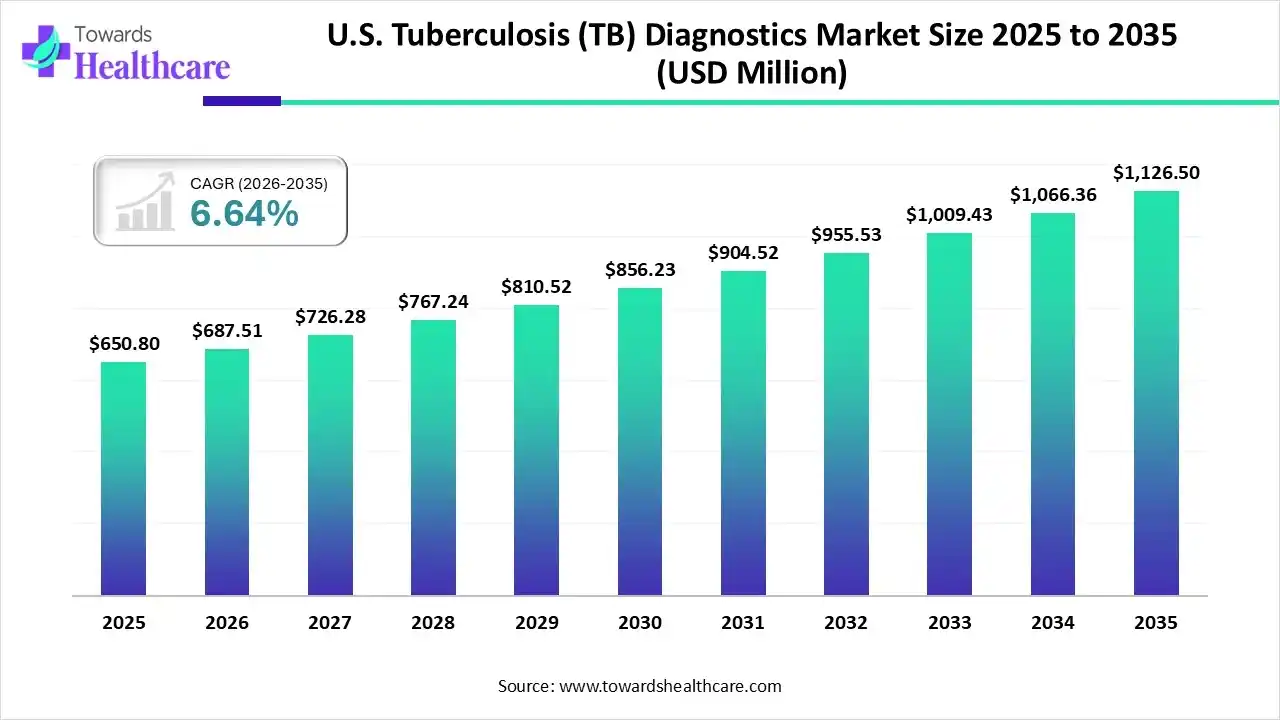
U.S. Tuberculosis (TB) Diagnostics Market Trends and Growth (2026)

The U.S. tuberculosis diagnostics market is shaped by strong public health surveillance systems, early screening programs, and the growing use of molecular and rapid diagnostic technologies. Rising focus on latent TB detection, government funding initiatives, and hospital-based testing drives adoption. Continuous innovation, AI integration, and expanded access through reference laboratories further strengthen diagnostic accuracy, speed, and nationwide disease monitoring efforts.

Key Takeaways

  • U.S. tuberculosis diagnostics industry poised to reach USD 687.51 million by 2026.
  • Forecasted to grow to USD 1126.5 million by 2035.
  • Expected to maintain a CAGR of 5.64% from 2026 to 2035.
  • By test type, the immunological tests segment registered its dominance over the market in 2025.
  • By test type, the molecular diagnostics segment is expected to grow at the fastest CAGR in the market during the studied years.
  • By disease type, the Latent Tuberculosis Infection (LTBI) segment held the largest revenue in the market in 2025.
  • By disease type, the active tuberculosis segment is expected to show the fastest growth over the forecast period.
  • By end-user, the public health laboratories segment held a dominant presence in the U.S. tuberculosis (TB) diagnostics market in 2025.
  • By end-user, the reference & independent diagnostic laboratories segment is expected to witness the fastest growth over the forecast period.
  • By sample type, the sputum samples segment registered its dominance over the global market in 2025.
  • By sample type, the blood samples segment is expected to grow at the fastest CAGR in the market during the studied years.

Executive Summary Table

Key Elements Scope
Market Size in 2026 USD 687.51 Million
Projected Market Size in 2035 USD 1126.5 Million
CAGR (2026 - 2035) 5.64%
Market Segmentation By Test Type, By Disease Type, By End-User, By Sample Type
Top Key Players F. Hoffmann-La Roche Ltd., QIAGEN, Abbott Laboratories, Danaher (Cepheid), Thermo Fisher Scientific Inc., Becton Dickinson & Co (BD), Hologic Inc., BioRad Laboratories, bioMérieux SA, Oxford Immunotec

On the Frontline of Detection: The Evolving U.S. Market    

The U.S. tuberculosis (TB) diagnostics market is driven by increasing TB screening programs, rising awareness of early disease detection, government-led public health initiatives, technological advancements in molecular testing, and the growing need for rapid, accurate diagnosis to control transmission and improve treatment outcomes. Tuberculosis diagnostics refers to the range of laboratory tests, tools, and technologies used to detect Mycobacterium tuberculosis infection in individuals. Common methods include sputum smear microscopy, culture tests, nucleic acid amplification tests, molecular assays, chest imaging, and immunological tests such as interferon-gamma release assays.

How can AI Integration Transform the Future of Tuberculosis Detection?

  • Artificial intelligence is revolutionizing the U.S. tuberculosis (TB) diagnostics market by enhancing the accuracy, speed, and accessibility of detection methods. AI-powered algorithms analyze chest X-rays, CT scans, and digital microscopy images to identify TB-related abnormalities with high precision, even in early stages. Machine learning models support rapid molecular test interpretation, reduce human error, and improve workflow efficiency in laboratories.
  • AI-driven platforms also enable remote screening in underserved regions, optimize case triaging, and support real-time disease surveillance. By integrating clinical data and imaging insights, AI strengthens early diagnosis, treatment decision-making, and overall tuberculosis control efforts.

Shift Toward Molecular and Rapid Diagnostics

The U.S. market is increasingly adopting molecular diagnostics such as nucleic acid amplification tests due to their high accuracy and faster turnaround times. These technologies support early detection, drug-resistance identification, and improved clinical decision-making across hospitals and public health laboratories.

Increased Focus on Latent TB Screening

Growing emphasis on identifying latent tuberculosis infection among high-risk populations, including immigrants, healthcare workers, and immunocompromised individuals, is driving demand for advanced immunological tests such as interferon-gamma release assays across the U.S. healthcare system.  

Public Health Support and Strong Government

Federal and state-level TB control programs continue to fund screening, surveillance, and diagnostic infrastructure. Sustained policy support and funding initiatives strengthen laboratory networks and ensure widespread access to advanced tuberculosis diagnostic solutions nationwide.
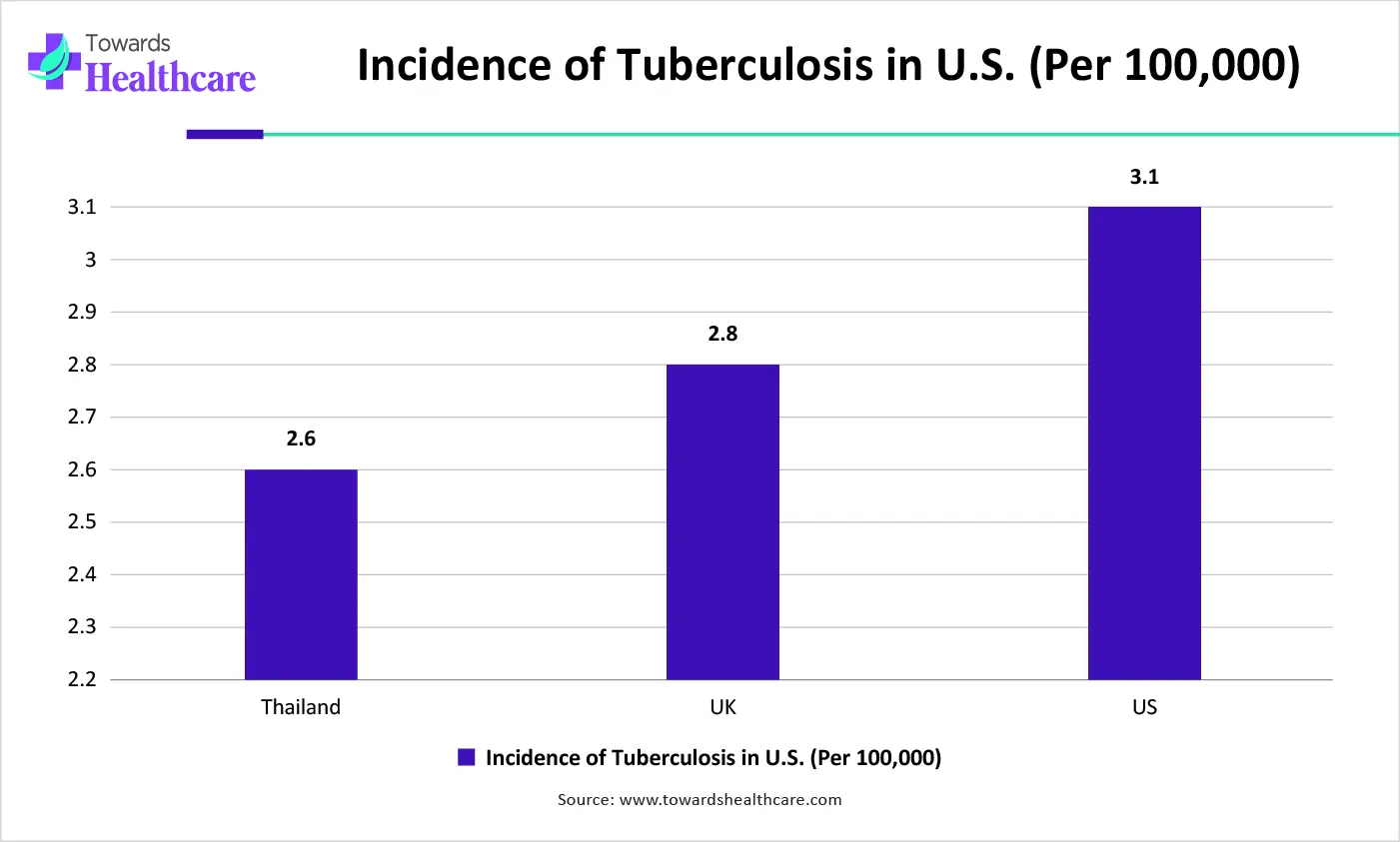
Incidence of Tuberculosis in U.S. (Per 100,000)

Year U.S. Tuberculosis Cases (Incidence Rate per 100,00)
2022 2.5 cases per 100,000
2023 2.9 cases per 100,000
2024 3.0 cases per 100,000

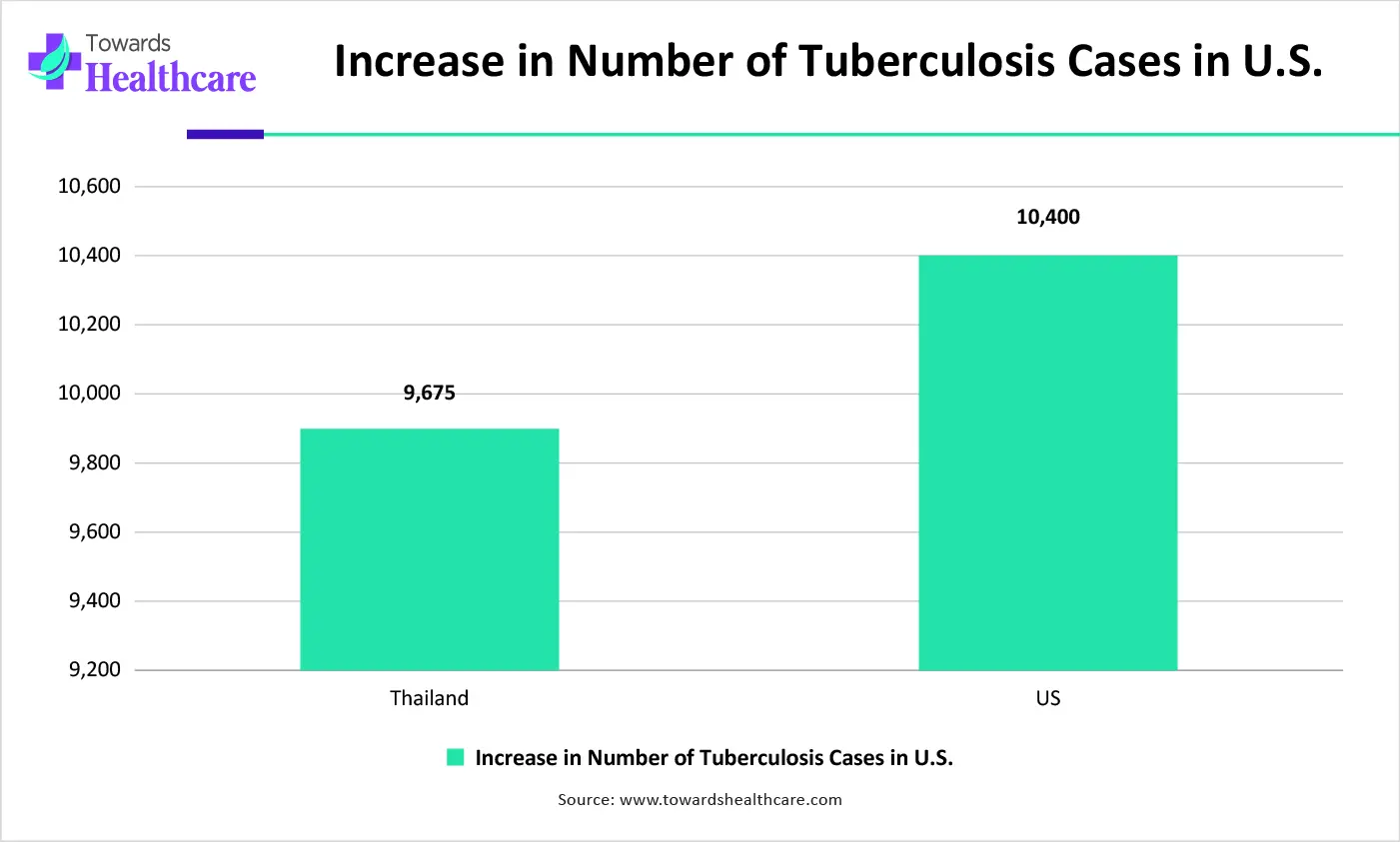
Increase in Number of Tuberculosis Cases in U.S.

Year No. of Tuberculosis Cases
2023 9,622
2024 10,347

Major Investments and/or Government Data in the U.S. Tuberculosis (TB) Diagnostics Market

  • In September 2025, the Bill & Melinda Gates Foundation continued large, targeted grantmaking and commitments in 2025 to accelerate TB diagnostics R&D and scale-up (including grant streams routed via partners such as the Global Fund of US$ 912 million and targeted diagnostics grants). 
  • In January 2025, the CDC announced Notice of Funding Opportunity (NOFO) CD-25-0019 to strengthen U.S. public health laboratory systems by enhancing capacity, leadership, workforce development, surveillance, and response capabilities. The cooperative agreement invites applications through March 7, 2025, to support laboratory testing and preparedness against emerging and existing health threats.

Segmental Insights

Test Type Insights

Which Test Type Segment Dominated the U.S. Tuberculosis (TB) Diagnostics Market?

The immunological tests segment is the dominant segment in the market due to its high diagnostic specificity and sensitivity, strong CDC and clinical guideline support, absence of BCG-vaccine cross-reactivity, single-visit blood-based testing convenience, rapid turnaround times, automation compatibility, and widespread adoption across hospitals, public health labs, and screening programs.

Molecular Diagnostics (NAATs / PCR)

The molecular diagnostics segment is estimated to be the fastest-growing segment in the market due to rapid adoption of NAAT/PCR tests that deliver highly sensitive, specific results far quicker than traditional methods, strong preference for rapid drug-resistance detection, ongoing technological innovation, and increased use in clinical settings for early, accurate tuberculosis diagnosis.

Disease Type Insights

Why Did the Latent Tuberculosis Infection (LTBI) Segment Dominate the Market?

The Latent Tuberculosis Infection (LTBI) segment is the dominant segment in the U.S. tuberculosis (TB) diagnostics market due to widespread screening needs driven by a large population with latent infection, strong public-health emphasis on early detection to prevent active disease, routine use of skin tests and IGRAs in high-risk groups, and established clinical protocols prioritizing LTBI detection.

Active Tuberculosis

The active tuberculosis segment is anticipated to be the fastest-growing segment in the U.S. tuberculosis diagnostics market during the forecast period due to increasing focus on early and accurate detection of symptomatic disease, rising awareness and screening initiatives, broad use of rapid molecular and culture-based tests in clinical settings, and expanded public health efforts to identify and treat active TB infections promptly.

End-User Insights

Which End User Segment Led the U.S. Tuberculosis (TB) Diagnostics Market?

The public health laboratories segment is the dominant segment in the market due to its role as the primary reference and specialized testing hubs for TB control, handling complex culture, drug-susceptibility and confirmatory testing, supporting state and federal surveillance programs, and partnering with health departments to ensure standardized, quality diagnostics nationwide.

Reference & Independent Diagnostic Laboratories

The reference & independent diagnostic laboratories segment is estimated to be the fastest-growing in the U.S. TB diagnostics market due to rising outsourcing of TB testing, expansion of centralized high-throughput lab networks, growing demand for advanced molecular and specialized assays, and increased partnerships with public health agencies to manage larger test volumes efficiently.

Sample Type Insights

Why Did the Sputum Samples Segment Dominate the U.S. Tuberculosis (TB) Diagnostics Market?

The sputum samples segment is dominant in the U.S. market in 2025 because sputum specimens provide the highest diagnostic yield and remain the mainstay for detecting pulmonary Mycobacterium tuberculosis, are routinely collected for microscopy, culture, and molecular tests, and are widely accepted clinically for accurate active TB diagnosis.

Blood Samples

The blood samples segment is anticipated to be the fastest‑growing in the U.S. tuberculosis diagnostics market due to increased adoption of less invasive blood tests like IGRAs, quicker result availability, strong clinical preference for single‑visit testing, reduced cross‑reactivity with BCG vaccination, and expanding use in both latent and active TB screening settings.

Regional Insights

The U.S. is considered a dominant country in the tuberculosis (TB) diagnostics market, not because of high TB prevalence, but due to several strategic and systemic factors:

  • Advanced Healthcare Infrastructure: Widespread availability of modern hospitals, laboratories, and diagnostic equipment supports rapid adoption of molecular, immunological, and culture-based TB tests.
  • Government Initiatives: CDC-led programs like the TB Elimination Strategic Plan 2022–2026 promote early detection, standardized testing, and quality-assured diagnostics nationwide.
  • Regulatory Support: Efficient FDA approvals for advanced diagnostics, including molecular assays and rapid tests, allow quick commercialization and adoption.
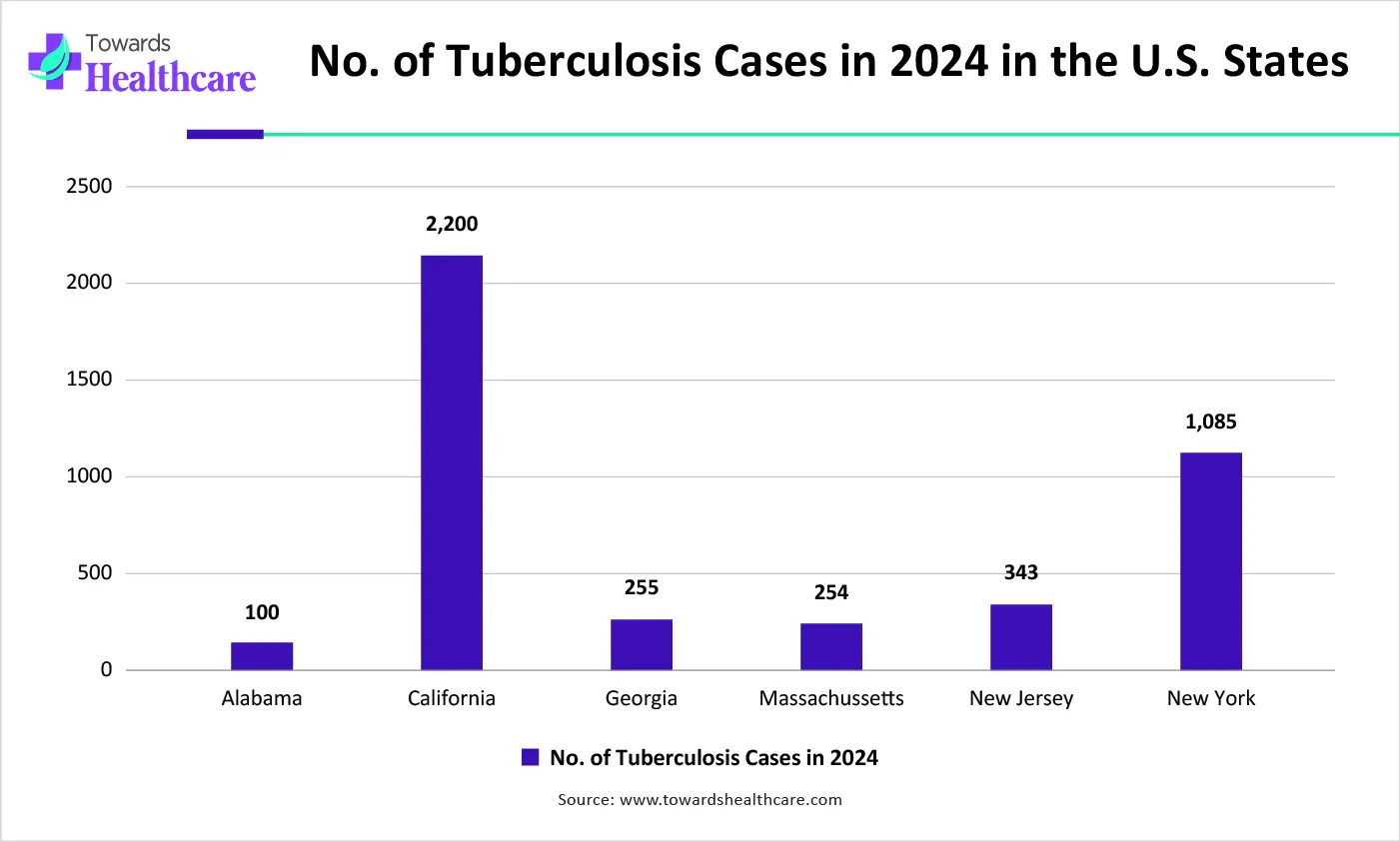
Cities Cases in 2024
Alabama 90
California 2,100
Georgia 253
Massachusetts 252
New Jersey 342
New York 1,083

No. of Tuberculosis Cases in 2024 in the U.S. States

U.S. Tuberculosis (TB) Diagnostics Market Value Chain Analysis

Research and Development (R&D)

  • R&D begins with target identification, assay development, and prototype design for TB diagnostics. This includes optimizing sensitivity, specificity, and assay stability before laboratory validation.
  • Organizations: Major contributors include Cepheid, Qiagen, and public institutions like the National Institute of Allergy and Infectious Diseases (NIAID), focusing on innovative molecular and immunological tests.

Clinical Trials and Regulatory Approval

  • Diagnostic candidates undergo multi-phase clinical validation to assess safety, accuracy, and performance in patient populations. Successful trials lead to submissions for FDA approval or clearance.
  • Organizations: The U.S. Food and Drug Administration (FDA) governs approvals, while clinical trials are often conducted by contract research organizations (CROs) like PRA Health Sciences and hospital-based research centers.

Patient Support and Services

  • After market launch, patient support programs ensure proper test administration, counseling, follow-up, and reporting of results to public health authorities. Educational initiatives and outreach facilitate TB awareness and compliance.
  • Organizations: Support is provided by CDC TB programs, local public health departments, and non-profits such as The American Lung Association, focusing on patient education, screening, and linkage to care.

Top Vendors in the U.S. Tuberculosis (TB) Diagnostics Market & Their Offerings

U.S. Tuberculosis (TB) Diagnostics Market Key Players

Company Key TB Diagnostics Offerings
F. Hoffmann-La Roche Ltd. COBAS MTB and COBAS MTBRIF molecular assays for rapid TB and drug resistance detection.
Abbott Laboratories NAAT and immunoassay solutions, including Determine TB LAM and RealTime MTB assays.
QIAGEN QuantiFERONTB Gold Plus IGRA for latent TB and molecular assay panels.
Danaher (Cepheid) GeneXpert MTB/RIF and related cartridge-based molecular tests.
Thermo Fisher Scientific Inc. TaqMan TB panels and high-throughput PCR platforms for TB detection.
Becton Dickinson & Co (BD) BD MGIT/BACTEC culture systems and supporting immuno/molecular tools.
Hologic Inc. Panther Fusion and related molecular TB assays.
BioRad Laboratories Droplet digital PCR TB assays and mutation panels.
bioMérieux SA VIDAS TBIGRA immunoassays and BacT/ALERT culture systems.
Oxford Immunotec TSPOT.TB: Tcell-based latent TB diagnostic test.

SWOT Analysis

Strengths

  • Advanced healthcare infrastructure supporting high adoption of molecular and immunological tests.
  • Strong government backing through CDC programs and TB elimination initiatives.
  • Availability of rapid and highly accurate diagnostics (NAAT, IGRAs).
  • Well-established public health and reference laboratory networks.

Weaknesses

  • Relatively low TB prevalence limits routine testing demand in the general population.
  • The high cost of advanced molecular tests can restrict access in smaller clinics.
  • Dependence on centralized laboratories for complex assays delays results in some areas.

Opportunities

  • Rising demand for rapid, point-of-care, and minimally invasive diagnostics (blood-based, NAAT).
  • Expansion of screening programs among high-risk populations (immigrants, immunocompromised).
  • Technological innovations in AI-assisted diagnostics and multiplex assays.
  • Growing partnerships between public and private laboratories to improve TB detection.

Threats

  • Competition from global diagnostic players with cheaper alternatives.
  • Regulatory hurdles for new diagnostic technologies.
  • Risk of antimicrobial resistance and evolving TB strains requiring constant test updates.
  • Possible reduction in public health funding impacting TB programs.

Recent Developments in the U.S. Tuberculosis (TB) Diagnostics Market

  • In April 2025, Revvity, Inc. life science company, secured FDA approval for its Auto‑Pure 2400 automated liquid handling platform combined with the T‑SPOT.TB test, enhancing high‑throughput latent TB detection in clinical laboratories and improving workflow efficiency.
  • In January 2025, IntelliGenome, a biotechnology company, received U.S. Food and Drug Administration (FDA) Breakthrough Device Designation for its CRISPR‑based TB blood test, a novel molecular assay designed to detect Mycobacterium tuberculosis cell‑free DNA in blood samples, potentially enabling rapid, non‑sputum TB diagnosis. 

Segments Covered in the Report

By Test Type

  • Molecular Diagnostics
    • Nucleic Acid Amplification Tests (NAATs)
    • PCR-Based TB Detection
  • Immunological Tests
    • Interferon-Gamma Release Assays (IGRAs)
    • Tuberculin Skin Test (TST)
  • Microbiological Tests
    • Acid-Fast Bacilli (AFB) Smear
    • Culture-Based Testing
  • Drug Resistance Testing
    • Phenotypic Drug Susceptibility Testing
    • Molecular Resistance Assays

By Disease Type

  • Latent Tuberculosis Infection (LTBI)
  • Active Tuberculosis

By End-User

  • Public Health Laboratories
  • Hospitals & Medical Centers
  • Reference & Independent Diagnostic Laboratories
  • Clinics & Community Health Centers
  • Academic & Research Institutions

By Sample Type

  • Sputum Samples
  • Blood Samples
  • Bronchoalveolar Lavage (BAL)
  • Tissue & Biopsy Samples

FAQ's

Answer : The U.S. tuberculosis (TB) diagnostics market stands at USD 687.51 million in 2026 and is expected to reach USD 1126.5 million by 2035, growing at a CAGR of 5.64% from 2026 to 2035.

Answer : The U.S. tuberculosis (TB) diagnostics market includes 4 segments by test type, by disease type, by end-user, and by sample type.

Answer : Some key players include F. Hoffmann-La Roche Ltd., Revvity, QIAGEN, BD, Cepheid (Danaher), Thermo Fisher Scientific Inc., Abbott, Hologic Inc., Quest Diagnostics, and IntelliGenome among others.

Answer : Key trends include a shift toward molecular and rapid diagnostics, Increased Focus on Latent TB Screening and, public health support, and strong government, among others.

Answer : American Diagnostic Corporation, Ministry of Health and Family Welfare, American Medical Association, Government of India, National Institutes of Health, Association for Diagnostics & Laboratory Medicine (ADLM), FDA, Association of Medical Diagnostics, WHO, PIB, CDC.

Tags

Meet the Team

Rohan Patil is a seasoned market research professional with over 5+ years of focused experience in the healthcare sector, bringing deep domain expertise, strategic foresight, and analytical precision to every project he undertakes.

Learn more about Rohan Patil


Aditi Shivarkar is a seasoned professional with over 14 years of experience in healthcare market research. As a content reviewer, Aditi ensures the quality and accuracy of all market insights and data presented by the research team.

Learn more about Aditi Shivarkar

Related Reports