




 Request Consultation
Inside the Regulatory, Genomic, and Data-Governance Shifts Redefining Individualized Care
The arrival of personalized medicine in 2027 as a turning point is largely driven by the FDA's issuance of its first-ever formal roadmap for approving tailored therapies based on individual patients’ genetic mutations in February 2026. This has resulted in directly regulatory response to the world's first precision CRISPR gene-editing therapy, transferred to an infant patient in barely six months from diagnosis to dosing. Simultaneously, genomic newborn screening is expanding from a single-city pilot into a federally funded, multistate public health initiative, & companion diagnostics, which are mandatory and part of how novel targeted therapies reach patients.
According to Towards Healthcare, the global personalized medicine market was valued at approximately $620.14 billion in 2025 and is projected to reach around $1,368.89 billion by 2035, growing at a CAGR of 8.24% from 2026 to 2035, propelled by continued advances in genomic diagnostics, targeted therapeutics, & precision-guided care.
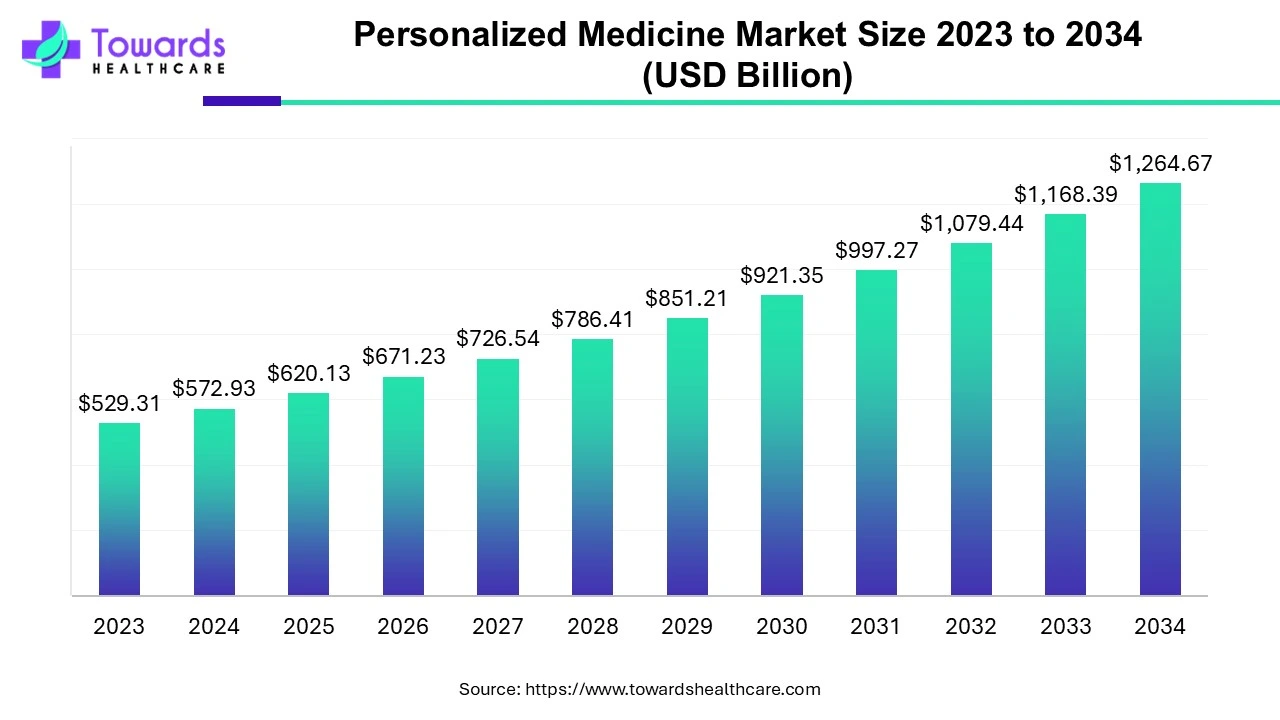
As per evidence, there is real & expediting clinical progress on the science and regulatory side, coupled with constant adoption gaps in reimbursement and lab standardization, with an actual governance failure revealed by 23andMe's bankruptcy.
Four Prominent Drivers of Personalized Medicine are Consolidating in 2027
- Genomic Diagnostics: Newborn screening, liquid biopsy, and tumor profiling.
- AI-Powered Biomarker Matching: Treatment selection and prior-auth automation.
- Regulatory Pathway Maturation: FDA Plausible Mechanisms Framework (Feb 2026)
- Companion Diagnostics: Biomarker-drug pairing at point of prescribing.
Convergence of these four major blocks across personalized medicine stream offers one patient, one coordinated treatment plan.
Along with this, in 2023, each of these four blocks performed hugely as an individual, but now the healthcare system is seeking their structurally direct interaction, i.e. a regulatory pathway developed especially to support genomic diagnostics feeding AI-matched treatment decisions. This leads to 2026-2027 showcasing a genuine transition point instead of incremental expansion.
Source: Framework analysis based on FDA, NEJM, and industry sources cited throughout this briefing.
Six Months Transformative Approaches Cover Inclination of Custom Gene-Editing Therapy From Diagnosis to Dosing
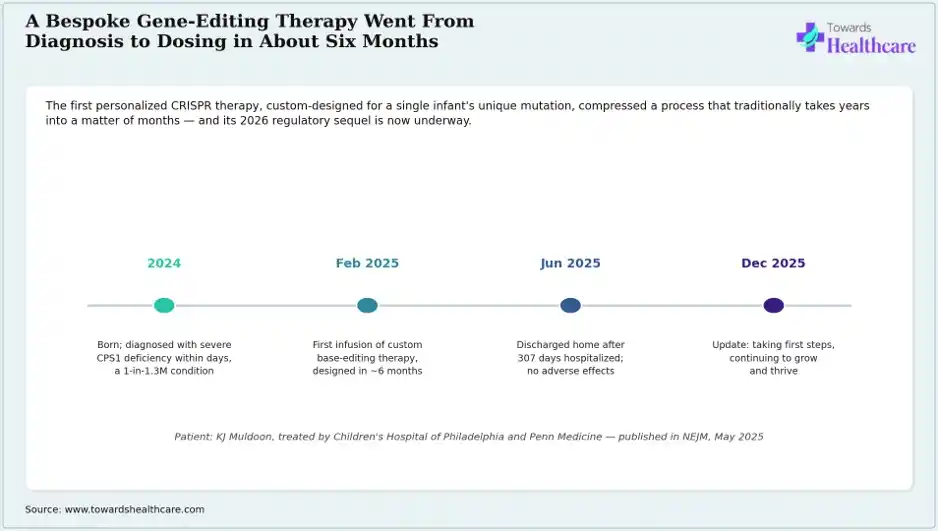
The above timeline indicates the case of KJ Muldoon, the first patient in the world to receive a tailored CRISPR gene-editing therapy bespoke-designed for his ideal genetic mutation, including from diagnosis through his first year of recovery.
Key Insight: A specific step known as a six-month period that encompassed from diagnosis to a tailor-manufactured, patient-specific gene editing therapy vs. the years generally necessary for traditional drug development. This explored for the first time that truly personalized genetic medicine is operationally feasible, & directly spurred the FDA’s consequent regulatory response.
Source: Children's Hospital of Philadelphia, press release, 2025; New England Journal of Medicine, DOI: 10.1056/NEJMoa2504747, May 15, 2025; NBC Philadelphia, December 18, 2025 update.
On February 23, 2026, the FDA Developed its First-Ever Approval Pathway Specifically for Individualized Therapies
In February 2026, the U.S. Food and Drug Administration issued draft guidance for sponsors looking for approval for targeted individualized therapies by developing significant evidence of effectiveness and safety when randomized controlled trials are not feasible due to small patient populations. This draft was issued by the Center for Biologics Evaluation and Research and the Center for Drug Evaluation and Research, which mainly includes genome editing & RNA-based therapies, like antisense oligonucleotides, but also shows that this draft may appliable for additional customized therapeutics provided they directly underline the foundational specific cause of the disease.
The respective FDA framework primarily emphasizes therapies specifically targeting particular genetic, cellular or molecular abnormality & are designed to correct or alter the underlying cause of disease. Major criteria are:
- Identifying the disease-causing abnormality.
- Demonstrating the therapy targets the root cause or proximate biological pathway.
- Relying on well-characterized natural history data in untreated patients.
- Confirming successful target drugging or editing.
- For traditional approval, therapies should demonstrate improvement in clinical outcomes, disease course, or biomarkers if they are established to predict clinical benefit.
Source: FDA/HHS.gov, press release, February 23, 2026; Arnold & Porter advisory, February 25, 2026; STAT News, February 23, 2026.
By 2035, the U.S. Liquid Biopsy Market Will Grow More Than Triple
According to Towards Healthcare, the U.S. liquid biopsy market size was estimated at USD 2.44 billion in 2025 and is predicted to increase from USD 2.78 billion in 2026 to approximately USD 8.90 billion by 2035, expanding at a CAGR of 13.82% from 2026 to 2035.
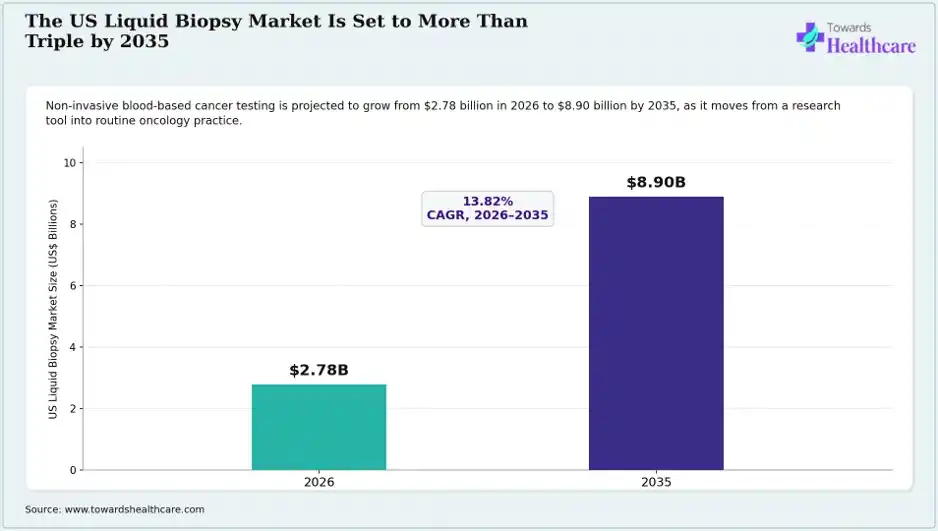
The graph reflects a comparison of the current (2026) & predicted size of the U.S. liquid biopsy market in 2035, a key allowing technology for non-invasive, blood-based companion diagnostics in oncology.
Key Insight: From the bar graph, an expansion of liquid biopsy from $2.78 billion in 2026 to $8.90 billion by 2035 shows its transition from a research tool into routine clinical infrastructure. However, the diagnostic backbone is making biomarker-matched, precision cancer treatment functionally possible at scale.
Source: Towards Healthcare Database.
Tripled Approvals of Pharmacogenomic-Labeled Drug Spanning Over Past Two Decades
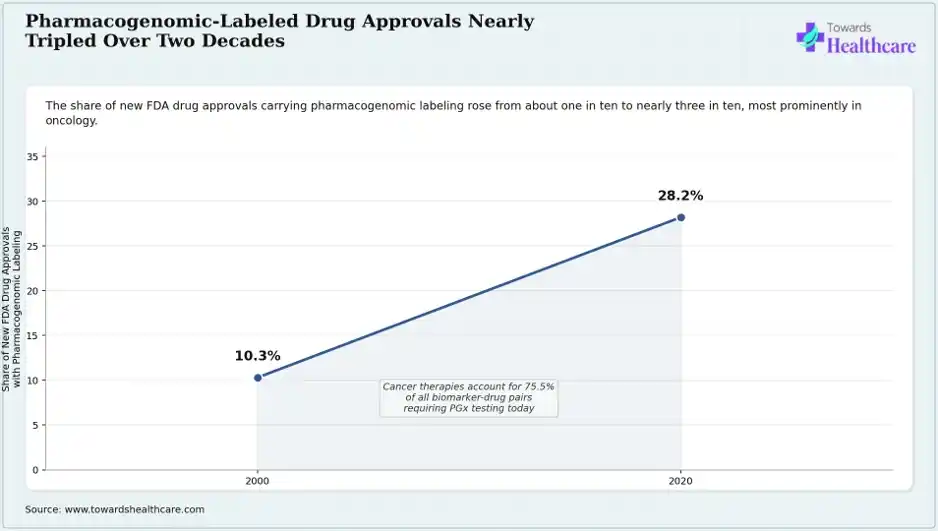
The chart focuses on the share of new FDA drug approvals covering pharmacogenomic labelling, & comparison across the years 2000 to 2020, i.e. the most recent year with published extensive data.
The respective data, i.e. 10.3% in 2000 & 28.2% in 2020, showcase a surge of pharmacogenomic labeling from nearly one in ten new drug approvals to approximately three in ten. Meanwhile, cancer therapies now hold over three-quarters of all biomarker-drug pairs requiring genetic testing, whereas genomically informed prescribing has stepped from a niche practice to a structural feature of modern drug development.
Source: PMC/NCBI, “Pharmacogenomic Biomarkers in US FDA-Approved Drug Labels (2000–2020),” peer-reviewed.
With Certain Underperformance of Access, Companion Diagnostics is Rolling out as Mandatory for Innovative Therapies
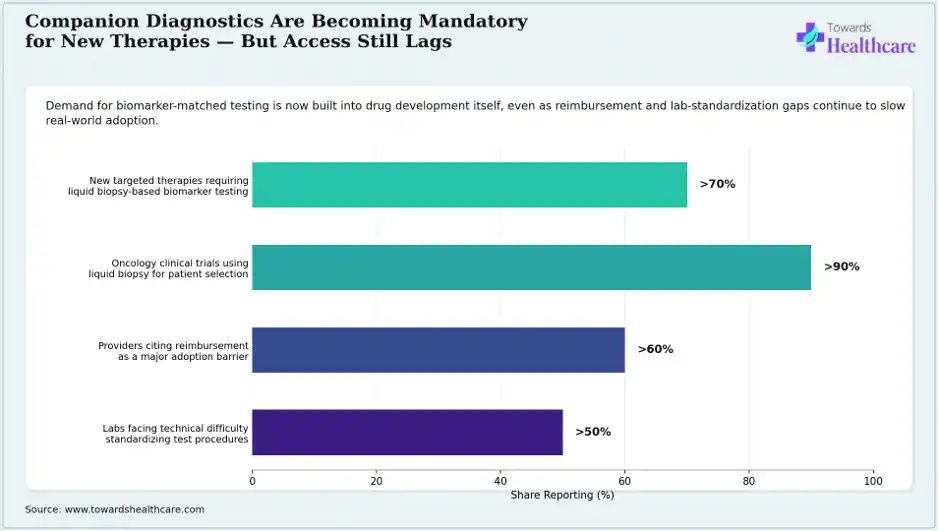
This graph displays the contrast between the rising clinical & pharmaceutical-industry reliance on liquid biopsy-based testing against the consistent operational obstacle. Including reimbursement & lab standardization is restricting real-world adoption.
Key Insight: From the graph, the gap between demand-side statistics, which cover 70%+ of new targeted therapies now necessitating biomarker testing, & 90%+ of oncology trials employing liquid biopsy, while supply-side constraints, i.e. 60%+ of providers cite reimbursement barriers, & 50%+ of labs struggle with standardization, is the central adoption challenge personalized medicine must resolve before 2027.
Genomic Newborn Screening Shifting from a Single-City Pilot to Massive Scaling
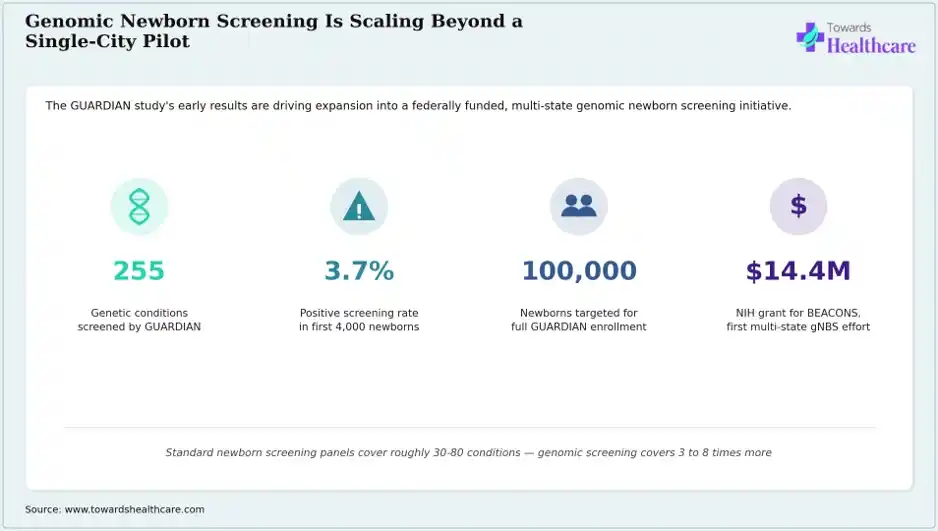
These statistics indicate the scale of the GUARDIAN newborn genomic screening study and its federally funded expansion into a multi-state initiative.
The panel is describing a 3.7% positive screening rate in the first 4,000 newborns, which is more than nearly 0.1% researchers initially predicted & a $14.4 million NIH grant provides funding for the first multi-state genomic newborn screening approach. This evidence base for universal genomic newborn screening is moving from hypothetical to operational within a single research generation.
Source: NewYork-Presbyterian/Columbia, GUARDIAN study; JAMA, “Expanded Newborn Screening Using Genome Sequencing for Early Actionable Conditions,” January 21, 2025; Fast Company, October 15, 2025.
23andMe's Bankruptcy Uncovered a Governance Gap at the Center of Consumer Genomics
| March 2025 | 23andMe files for Chapter 11 bankruptcy protection |
| July 2025 | TTAM Research Institute (founded by 23andMe’s ex-CEO) win $305M bid |
| February 2026 | Class-action settlement claims deadline passes ($46.75M consumer fund) |
| July 2026 | 42-state settlement over the 2023 breach; “Don’t Sell My DNA Act” still pending. |
This timeline represents 23andMe’s way from Chapter 11 bankruptcy filing through the $305 million sale of its genetic databases to a nonprofit founded by its own former CEO, and the continuous legal & legislative backlash.
Key Insight: A specific effort, i.e. the sale of above 15 million people’s genetic data through a reference bankruptcy asset process, alongside no legal requirement for affirmative consumer consent, dictated that US law treats genetic data no differently than a consumer mailing list. However, a governance gap is directly causing risk to public trust in every consumer-facing genomic screening & testing initiative developed on similar data models.
Source: Science/AAAS, August 2026; Public Citizen, “House Must Update Bankruptcy Code in Wake of 23andMe DNA Data Sale,” November 2025; Delaware Attorney General press release, July 14, 2026.
Oncology: Broadening as a Key Focus for Personalized Medicine
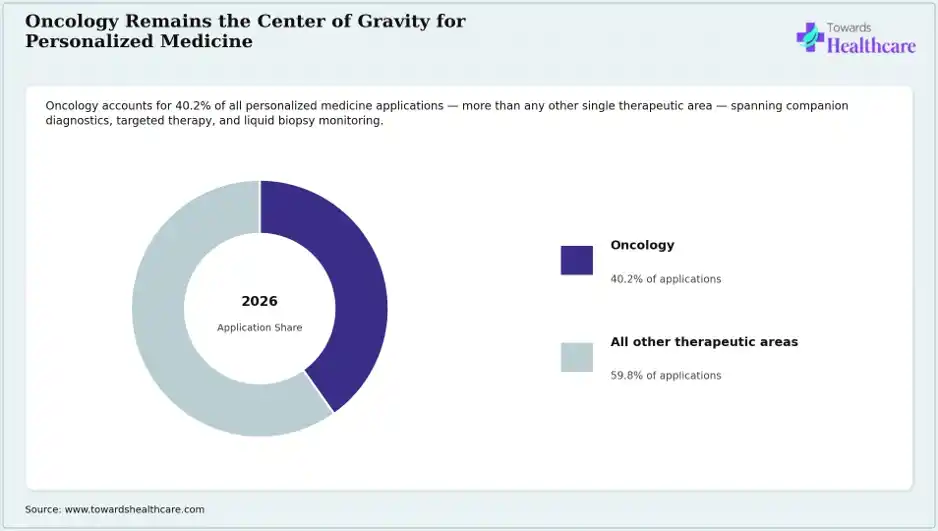
The chart reflects oncology’s share of overall personalized medicine applications (40.2%) relative to combined all other therapeutic areas (59.8%).
The respective dominance of oncology’s comprehensive tailored medicine over other therapeutic areas is driven by ideal unification of well-described actionable mutations, an advanced liquid biopsy testing building, & the coherent regulatory & reimbursement pathways of any disease category.
Source: Personalized Medicine Trends 2026: Genome to Treatment, Top Doctor Magazine, March 17, 2026.
Exploration of a Tumor Mutation As a Companion Diagnostic & Aiming at Prescribing
Let’s have a look at four sequential steps to get a biomarker from discovery to routine clinical use.
- Step 1: Biomarker Discovery: This covers the identification of an actionable mutation or protein marker.
- Step 2: Co-Development with Drug: A step focusing on diagnostic & therapy advances through trials collaboratively.
- Step 3: FDA Co-Approval: The matching of a CDx approved with the therapy.
- Step 4: Clinical Adoption: This encompasses reimbursement & lab capacity to find real-world use.
This value chain of discovery, co-development, FDA co-approval, & clinical adoption shows a discrete limiter with diverse owners, such as academic researchers, biopharma or diagnostics companies, regulators, & payers, respectively; expediting at any single step will not by itself accelerate the complete pipeline without growth at each stage.
Source: PharmiWeb, “Companion Diagnostics Market Advancing Precision Medicine Through Targeted Testing,” February 27, 2026.
Modern Genomic Newborn Screen Consists of Up to 8 Times More Conditions Than Standard Panels
| Standard Newborn Screening | Genomic Newborn Screening (GUARDIAN) | |
| Biochemical or blood biomarker analysis | Method | Whole genome sequencing |
| Nearly 30 to 80 conditions | Conditions covered | 255 conditions (156 with established treatment) |
| Established baseline | Positive rate observed | 3.7% in first 4,000 newborns screened |
| Universal, mandated in all 50 states. | Current status | Multi-site pilot, scaling via NIH-funded BEACONS |
This comparison reflects both traditional & genome-sequencing-based screening, including method, condition coverage, observed positive rate, & current execution status.
Key Insight: Specifically, genomic newborn screening is being displayed as a complement to, not a substitute for, standard screening, and both are now running in parallel. This not only covers how genomic screening adds value but also explicitly how rapidly it can achieve the universal, all-50-state mandate status traditional screening has accounted for the last few decades.
Source: Illumina, “Programs around the globe bring newborn screening into the Genome Era”; NewYork-Presbyterian, GUARDIAN Study overview.
Implementation of AI at Each Step of the Customized Medicine Pathway
AI is demonstrating itself as a connective part, especially across diagnosis, treatment matching, & the administrative processes that show whether patients genuinely receive care.
- Tumor Profiling: AI-assisted variant interpretation from genomic or liquid biopsy data.
- Treatment Matching: Biomarker-therapy pairing assists clinician decision-making.
- Prior Authorization: Agentic AI automates approval requests, shrinking weeks to minutes.
- Remote Monitoring: Advanced wearables & AI virtual assistants track adherence & outcomes at home.
This landscape showcases the strengthening role of AI throughout four stages of personalized medicine patient journey, like tumor profiling, treatment matching, prior authorization, & remote monitoring.
AI’s most instant clinical influence in precision medicine in 2026 is not diagnostic advancement but administrative throughput. This further fosters automation of prior authorization from weeks to minutes and also resolves risk related to basic science, also suggesting the fastest near-term gains deriving from workflow automation instead of discovery. Source: eclipsewellness.net, “7 Emerging Trends in Personalized Healthcare for 2026,” January 26, 2026; North American Community Hub, “Emerging Health Innovations In 2026,” March 3, 2026.
By 2027, Three Key Forces Will Conclude Whether Personalized Medicine Reaches Scale
|
Regulatory Pathway Maturation The Plausible Mechanism Framework must move from draft guidance to routine use. |
|
Reimbursement & Access Over 60% of providers still cite reimbursement as the largest adoption barrier. |
|
Data Governance Trust 23andMe showed genetic data can change hands in bankruptcy without consumer consent. |
These brief insights of three forces show that will decide whether precision medicine becomes the clinical default instead of the exception. Besides this, the science of tailored medicine has now provably exceeded the systems evolved to convey it, where a custom gene-editing therapy can be created in six months, but reimbursement barriers still hinder over 60% of providers. Meanwhile, the 23andMe case demonstrates consumer trust in genetic data remains legally unprotected; thus, in 2027 this gap either shrinks through synchronized regulatory, payer, & legislative action, or broadens further.
Source: Synthesis of evidence presented in Sections 1-12 of this briefing.
What are the Latest Developments Across the Personalized Medicine Trends?
In February 2026, the FDA issued draft guidance for the Plausible Mechanism Framework, the first formal pathway for approving individualized genetic therapies overcoming traditional randomized controlled trials. This supports sponsors of bespoke genome-editing & RNA-based therapies to have a well-structured regulatory pathway for full approval. The draft directly allows boosting of the approach leveraged for the first precision CRISPR therapy beyond a single-patient case.
Source: FDA/HHS.gov, February 23, 2026.
In February 2026, 23andMe’s class-action settlement claims deadline passed, part of a $46.75 million consumer relief fund paired to the 2023 data breach. This facilitated a partial financial remedy for the approximately 6.9 million customers impacted by the original breach. For the coming era, this explores one step in a continuous, multi-year legal & regulatory reckoning over consumer genetic data protection.
Source: State of Delaware press release, July 14, 2026.
In January 2026, the FDA advanced multiple precision oncology designations alone, such as breakthrough therapy designations for RAS inhibitors & new cell therapies for rare blood cancers. This further encouraged a sustained regulatory focus on precision, biomarker-driven oncology therapeutics. This also ensures oncology’s continued position as the leading edge of tailored medicine regulatory activity.
Source: Targeted Oncology, “FDA Oncology Update January 2026,” January 2026.
In October 2025, the NIH Common Fund awarded $14.4 million for BEACONS, the first multi-state initiative to unify whole-genome sequencing into public health newborn screening, planning to enrol up to 30,000 newborns across up to 10 states. This executed that genomic newborn screening shifted from single-site academic pilots, i.e. GUARDIAN, toward coordinated multi-site public health infrastructure. Also, this reflects the first federally coordinated move toward potentially universal genomic newborn screening in the U.S.
Source: Fast Company, October 15, 2025.
In July 2025, TTAM Research Institute, a nonprofit founded by 23andMe’s former CEO, secured its $305 million acquisition of 23andMe’s genetic database that comprises more than 15million customers. This consumer genetic data modified ownership through a standard bankruptcy asset sale process. Alongside, it unveiled that US bankruptcy law does not expressly categorize genetic data as protected personal information, pushing proposed federal legislation.
Source: HIPAA Journal, July 14, 2025; Public Citizen, November 2025.
In May 2025, researchers at Children’s Hospital of Philadelphia/Penn Medicine published results in the New England Journal of Medicine describing the first personalized CRISPR gene-editing therapy, established and administered to infant patient KJ Muldoon in nearly six months. This conducted for the first time that truly customized, N-of-1 gene-editing therapy is clinically and operationally feasible. These results are resulting in the direct clinical catalyst for the FDA’s subsequent Plausible Mechanism Framework.
Source: New England Journal of Medicine, DOI: 10.1056/NEJMoa2504747, May 15, 2025.
Recent Rollouts Across Precision Medicine Sector
In August 2026, Intellia Therapeutics, Inc. announced that they targeting a U.S. commercial launch for its lead in vivo CRISPR candidate, lonvoguran ziclumeran (lonvo-z), in the first half of 2027.
Source- https://www.precisionmedicineonline.com/business-news/intellia-prepares-anticipated-2027-commercial-launch-first-vivo-gene-editor
In August 2026, 4baseCare unveiled TARGT Indiegene V2, the next generation of its comprehensive genomic profiling (CGP) test for cancer biomarker testing.
Source- https://vohnetwork.com/news/precision-medicine/-164
In August 2026, the California Initiative to Advance Precision Medicine (CIAPM) at the California Health and Human Services Agency introduced its Representative Research Partnerships Program, which awards $6.2 million to foster a cohort of research teams performing precision medicine research with a dedicated academic or community partner.
Source- https://www.einpresswire.com/article/934280509/california-grants-6-2-million-to-support-community-focused-representative-precision-medicine-research
In July 2026, Tempus AI, Inc. nationally launched its OneOme pharmacogenomics (PGx) testing solution, which provides advanced genetic insights to enhance medication safety, dosing and toxicity risk assessment.
Source- https://www.businesswire.com/news/home/20260722336487/en/Tempus-Announces-National-Launch-of-OneOme-Pharmacogenomics-Testing-Advancing-Patient-Safety-and-Precision-Medicine
In April 2026, BioAegis Therapeutics entered into a strategic collaboration with Prenosis to examine biomarkers and patient subpopulations that may present optimized response to BioAegis’ gelsolin therapy.
Source- https://www.globenewswire.com/news-release/2026/04/21/3277902/0/en/bioaegis-therapeutics-announces-collaboration-with-prenosis-to-advance-ai-driven-precision-medicine-in-inflammatory-disease.html
Specifying Regional Prospective Pipelines in Personalized Medicine in 2027
North America:
Alto Neuroscience is demonstrating phase IIb/III pipelines for biomarker-defined mental health treatments, projecting pivotal readouts for ALTO-300, i.e. major depressive disorder & ALTO-100, i.e. bipolar depression, by mid-2027.
Alongside, Compass Pathways is tracking a potential first-half 2027 U.S. unveil for COMP360, i.e. psilocybin therapy for treatment-resistant depression, after finalizing its FDA application rolling submission.
Europe:
Under the final Horizon Europe Work Programme, vast public procurement pipelines are heavily inaugurated in 2026-2027, such as the development of Virtual Human Twins (VHTs) for integrated clinical decision support & AI-powered predictive biomarkers for chronic non-communicable diseases.
Source: https://www.eppermed.eu/news-events/news/horizon-europe-work-programme-2026-2027-drafts-available/
In 2027, the In Vitro Diagnostic Regulation (IVDR) approach will crucially restrict legacy, non-targeted diagnostics, refining the clinical commercial landscape to support highly verified companion diagnostics.
Source: https://www.decibio.com/insights/2026-precision-medicine-from-exploration-to-execution
However, Denmark’s Third National Strategy for Personalised Medicine (2025–2027) is providing DKK 90 million to seamlessly unify genomic sequencing and centralized electronic health records directly into point-of-care environments.
Source- https://investindk.com/insights/denmarks-new-strategy-for-personalised-medicine/
Additionally, the PM4Onco initiative, funded by the German Federal Ministry of Education and Research (BMBF) to consolidate personalized oncology data platforms across the nation, runs its active development cycle through 2027.
Source: https://www.eppermed.eu/publications-resources/additional-resources/projects-and-initiatives-on-personalised-medicine/
Asia-Pacific:
China’s long-term National Precision Medicine Strategy powered by a projected $9.2 billion allocation running to 2030 is systematically stepping more native, AI-discovered assets into international clinical trial pathways by 2027.
Singapore’s National Precision Medicine (NPM) program emphasizes population stratification based on localized disease mechanisms and developing regional clinical validation metrics. The country will also conduct the World Congress on Precision Medicine and Genomic Healthcare in March 2027 to launch localized clinical translation models.
Source: https://kindcongress.com/event/precision-med-2027/
Key Companies & Organizations
| Company | Category | Related to 2027 Personalized Medicine Trends |
| Children's Hospital of Philadelphia/Penn Medicine | Academic Medical Center | They provided the first personalized CRISPR gene-editing therapy (Baby KJ), created & closed within roughly 6 months. |
| FDA (CBER + CDER) | Federal Regulator | This issued the Plausible Mechanism Framework as the foremost formal pathway for precision genetic therapy approval. |
| NewYork-Presbyterian/Columbia University | Academic Medical Center | An entity that conducts the GUARDIAN study, the largest US genomic newborn screening program that targets 100,000 newborns. |
| Illumina | Genomics Technology | They operate as a sequencing partner across GUARDIAN, the UK’s Generation Study, Australia’s BabyScreen+, and Belgium’s BabyDetect. |
| GeneDx | Genomics/Diagnostics | This firm offers whole-genome sequencing for the GUARDIAN newborn screening study. |
| Guardant Health | Liquid Biopsy/CDx | It is a holder of Guardant360 CDx, an FDA-authorized liquid biopsy companion diagnostic for breast cancer. |
| 23andMe/TTAM Research Institute | Consumer Genomics | 23andMe’s 2025 bankruptcy & $305M data sale to founder-led TTAM led to a case study in genetic data governance. |
| Innovative Genomics Institute (UC Berkeley) | Academic Research | It is a co-led the CRISPR gene-editing platform utilized in the first tailored in vivo gene therapy. |
| NIH Common Fund | Federal Funder | This platform was awarded $14.4 million for BEACONS, the first multi-state initiative that integrates genome sequencing into public health newborn screening. |
| PharmGKB | Data & Intelligence Provider | This firm maintains the reference guidelines employed to evaluate pharmacogenomic actionability in FDA drug labels. |
Strategic Business & Research Questions
- Which specific ultra-rare disease patient populations are most likely to be the next beneficiaries of Plausible Mechanism Framework approvals, based on current gene-editing platform readiness?
- What is the realistic timeline for the Plausible Mechanism Framework to move from draft to final guidance, and how might public comment shape its scope beyond genome editing and RNA therapies?
- How does the cost of developing a bespoke N-of-1 gene-editing therapy compare across academic medical centers versus commercial biotech platforms, and what does that imply for future reimbursement models?
- Which US states are most likely to adopt genomic newborn screening as a mandated public health program in the next 24 months, based on current legislative and BEACONS pilot activity?
- What is the long-term cost-effectiveness case for genomic newborn screening compared to standard screening, registering downstream costs of both false positives and missed diagnoses?
- How many of the 15 million-plus 23andMe genetic profiles have been deleted versus retained under TTAM's new ownership, and what does that retention rate reveal about consumer trust post-bankruptcy?
- Which pending state or federal legislation, like the Don't Sell My DNA Act, has the highest probability of passage, and how would it restructure future consumer genomics bankruptcy proceedings?
- What proportion of FDA-approved targeted oncology therapies in 2026 have companion diagnostics with reimbursement coverage gaps, and which payers are the most restrictive?
- How does the actual clinical turnaround time for liquid biopsy-based companion diagnostics compare across the major providers (Guardant Health, Foundation Medicine, Tempus), and what does that mean for time-to-treatment?
- Which non-oncology therapeutic areas, including cardiovascular, neurology, rare metabolic disease, have the strongest evidence base to become the “next oncology” in personalized medicine adoption by 2027?
- What is the realistic probability that agentic AI-enabled prior authorization becomes standard payer infrastructure by 2027, and which insurers are furthest along in deployment?
- How does the pharmacogenomic labeling growth rate (10.3% to 28.2% of approvals) compare across therapeutic areas beyond oncology, and where are the largest remaining gaps?
- Which academic medical centers beyond CHOP/Penn have the institutional gene-editing manufacturing capability to replicate the Baby KJ treatment model for other ultra-rare diseases?
- What is the realistic 5-year cost trajectory for whole-genome sequencing at scale, and at what price point does universal genomic newborn screening become economically viable for state Medicaid programs?
- How concentrated is the companion diagnostics market among a small number of providers, and what are the switching costs for pharma companies choosing a CDx development partner?
- Which specific CYP2C19, CYP2D6, and SLCO1B1 pharmacogenomic findings have the strongest evidence for mandatory pre-prescription testing, based on real-world adverse drug reaction data?
- What is the realistic timeline for AI-assisted variant interpretation tools to receive FDA clearance as standalone diagnostic aids, versus remaining physician decision-support tools?
- How does the genetic data governance framework differ across major DTC genomics companies, like Ancestry and MyHeritage, compared to 23andMe's now-resolved bankruptcy precedent?
- Which private equity or strategic acquirers are most likely to consolidate the liquid biopsy and companion diagnostics market given the sector's projected 13.82% CAGR through 2035?
- What is the realistic probability that the FDA extends the Plausible Mechanism Framework beyond genome editing and RNA therapies to other individualized treatment modalities by 2028?
Data & Intelligence Pointers
- The global personalized medicine market was valued at nearly $620.14 billion in 2025 and is anticipated to reach $1,368.89 billion by 2035, surging at an 8.24% CAGR from 2026 to 2035.
- The first personalized CRISPR gene-editing therapy went from patient diagnosis to first dose in roughly six months, compressing a process that traditionally takes years.
- The FDA's Plausible Mechanism Framework, released February 23, 2026, is the first formal approval pathway for individualized genetic therapies in the agency's history.
- The US liquid biopsy market is estimated to grow from $2.78 billion in 2026 to $8.90 billion by 2035, a 13.82% CAGR, according to Towards Healthcare.
- The share of new FDA drug approvals accounting for pharmacogenomic labeling rose from 10.3% in 2000 to 28.2% in 2020, with cancer therapies carrying 75.5% of all biomarker-drug pairs requiring PGx testing.
- More than 70% of new targeted therapies now require liquid biopsy-based biomarker testing, and over 90% of oncology clinical trials use liquid biopsy for patient selection and monitoring.
- Over 60% of healthcare providers cite reimbursement challenges as a significant limitation on liquid biopsy and companion diagnostic adoption; over 50% of labs report technical standardization difficulties.
- The GUARDIAN newborn genomic screening study recorded a 3.7% positive rate in its first 4,000 participants, far above the approximately 0.1% researchers initially projected, screening for 255 genetic conditions.
- The NIH awarded $14.4 million for BEACONS, the first multi-state initiative integrating whole-genome sequencing into public health newborn screening, planned across up to 10 states.
- 23andMe's genetic database, covering more than 15 million customers, was sold for $305 million to TTAM Research Institute, a nonprofit founded by the company's former CEO, following a March 2025 bankruptcy filing.
- 23andMe's bankruptcy triggered a $46.75 million consumer class-action settlement and a 42-state attorneys general settlement over its 2023 data breach affecting 6.9 million users.
- Oncology holds 40.2% of all personalized medicine applications, more than any other single therapeutic area, spanning companion diagnostics, targeted therapy, and liquid biopsy monitoring.
References
- Towards Healthcare. “Personalized Medicine Market Sizing.” Used for: global personalized medicine market size and CAGR figures (2025–2035). https://www.towardshealthcare.com/insights/personalized-medicine-market-sizing
- Towards Healthcare. “U.S. Liquid Biopsy Market to Rise at 13.82% CAGR till 2035.” January 7, 2026. Used for: US liquid biopsy market size and CAGR figures.
- Children's Hospital of Philadelphia. “World's First Patient Treated with Personalized CRISPR Gene Editing Therapy.” Press release, 2025. Used for: Baby KJ treatment timeline.
- Musunuru K, Ahrens-Nicklas RC, et al. New England Journal of Medicine. DOI: 10.1056/NEJMoa2504747. May 15, 2025. Used for: clinical details of the personalized CRISPR therapy.
- NBC Philadelphia. “Baby who received personalized gene editing therapy at CHOP takes first steps.” December 18, 2025. Used for: patient follow-up milestone.
- Innovative Genomics Institute, UC Berkeley. “First Patient Treated with Personalized CRISPR Therapy, Developed in Just Six Months.” Used for: development timeline and research team details.
- US Food and Drug Administration/HHS.gov. “FDA Launches Framework for Accelerating Development of Individualized Therapies for Ultra-Rare Diseases.” Press release. February 23, 2026. Used for: Plausible Mechanism Framework details.
- Arnold & Porter. “FDA Advances a ‘Plausible Mechanism’ Framework for Rare Disease Drug Development.” Advisory. February 25, 2026. Used for: regulatory analysis of the framework.
- STAT News. “FDA unveils rules for bespoke gene therapies, predicting flood of rare disease applications.” February 23, 2026. Used for: regulatory context and industry reaction.
- PMC/NCBI. “Pharmacogenomic Biomarkers in US FDA-Approved Drug Labels (2000–2020).” Peer-reviewed. Used for: pharmacogenomic drug labeling growth trend.
- PharmiWeb. “Companion Diagnostics Market Advancing Precision Medicine Through Targeted Testing.” February 27, 2026. Used for: companion diagnostics value-chain description.
- NewYork-Presbyterian/Columbia University Irving Medical Center. “The GUARDIAN Study: Transforming Newborn Health Through Expanded Genetic Screening.” Used for: GUARDIAN study scale and results.
- JAMA. “Expanded Newborn Screening Using Genome Sequencing for Early Actionable Conditions.” January 21, 2025. Used for: GUARDIAN interim analysis results.
- Illumina. “Programs around the globe bring newborn screening into the Genome Era.” Used for: international genomic newborn screening program comparisons.
- Fast Company. “Genomic newborn screening delivers early answers.” October 15, 2025. Used for: BEACONS multi-state initiative details.
- Science/AAAS. “23andMe bankruptcy filing leaves future of genetic data trove uncertain.” Used for: 23andMe bankruptcy and data sale timeline.
- Public Citizen. “House Must Update Bankruptcy Code in Wake of 23andMe DNA Data Sale.” November 1, 2025. Used for: bankruptcy law gap analysis and proposed legislation.
- State of Delaware. “AG Jennings announces multistate settlement of bankruptcy claims against 23andMe.” Press release. July 14, 2026. Used for: settlement terms and figures.
- Top Doctor Magazine. “Personalized Medicine Trends 2026: Genome to Treatment.” March 17, 2026. Used for: oncology's share of personalized medicine applications, market size context.
- eclipsewellness.net. “7 Emerging Trends in Personalized Healthcare for 2026.” January 26, 2026. Used for: AI integration trends in personalized medicine workflows.
- North American Community Hub. “Emerging Health Innovations In 2026 Personalized Medicine And Precision Care.” March 3, 2026. Used for: companion diagnostics operational maturity context.
- Targeted Oncology. “FDA Oncology Update January 2026: New Horizons in Precision Medicine.” January 2026. Used for: recent FDA precision oncology regulatory activity.