


Revolution Medicines, Inc., a worldwide commercial-stage oncology organization intended to discover, develop, and deliver novel medicines for patients with RAS-driven cancers, announced that the U.S. Food and Drug Administration (FDA) has approved RASONQUE (daraxonrasib) once-daily oral tablets for the management of adults with metastatic pancreatic adenocarcinoma (PDAC) who have received at least one prior systemic therapy or who are not candidates for multiagent systemic therapy. RASONQUE is the first targeted cancer therapeutic to be approved from an advancing novel class of RAS(ON) multi-selective and mutant-selective inhibitors.
Pancreatic cancer is one of the most stimulating malignancies, regularly showing with a late diagnosis, aggressive biology, and limited responsiveness to conventional management. RAS, a significant growth control switch in human cells, is a significant cause of pancreatic cancer, which is considered to be driven by excessive RAS signaling. The approval of RASONQUE is for adults with metastatic PDAC with or without an identified RAS cancer mutation and does not need application of a companion diagnostic test.
"Today's landmark approval is the most significant advance we have seen in the fight against pancreatic cancer, a devastating disease. I believe this drug will transform how pancreatic cancer is treated, giving people the opportunity for more time with loved ones, the possibility of a better quality of life and optimism that continued research may lead to even greater advances," said Anna Berkenblit, M.D., chief scientific and medical officer of the Pancreatic Cancer Action Network. "In addition, an oral pill can offer a less burdensome treatment experience than standard intravenous chemotherapy. PanCAN will continue to empower patients and caregivers with the resources and knowledge they need to advocate for the care they deserve now that RASONQUE is available for doctors to prescribe."
"I believe daraxonrasib is well positioned to become a new standard of care for adults with metastatic pancreatic cancer who have already received at least one systemic therapy or who are not candidates for multiagent systemic therapy. For decades, despite RAS being the main driver and potential drug target for pancreatic cancer, physicians have largely relied on intravenous cytotoxic chemotherapy to treat this aggressive disease. This approval gives physicians the confidence that directly inhibiting RAS can make a striking difference for patients and provides a critically needed new approach to treating patients with metastatic pancreatic cancer," added Brian M. Wolpin, M.D., M.P.H., director of the Hale Family Center for Pancreatic Cancer Research at Dana-Farber Cancer Institute, professor of medicine at Harvard Medical School, and principal investigator for the RASolute 302 trial.
The FDA approval of RASONQUE is based on data from RASolute 302, a worldwide, randomized Phase 3 trial assessing RASONQUE versus investigator's choice of cytotoxic chemotherapy in patients with previously managed metastatic PDAC. The trial met all primary and significant secondary endpoints in both the RAS G12 mutant population and the overall intent-to-treat (ITT) population, which involved patients with or without a recognized tumor RAS mutation.
RASONQUE, approved as a 300 mg once-daily oral medicine, is now available in the U.S. for physicians to prescribe. The organization also announced the launch of (ON)Path, a significant program available to patients who have been prescribed RASONQUE. The program supports patients in navigating insurance, financial assistance, and medication management education to ensure that patients start and stay on their therapeutics.
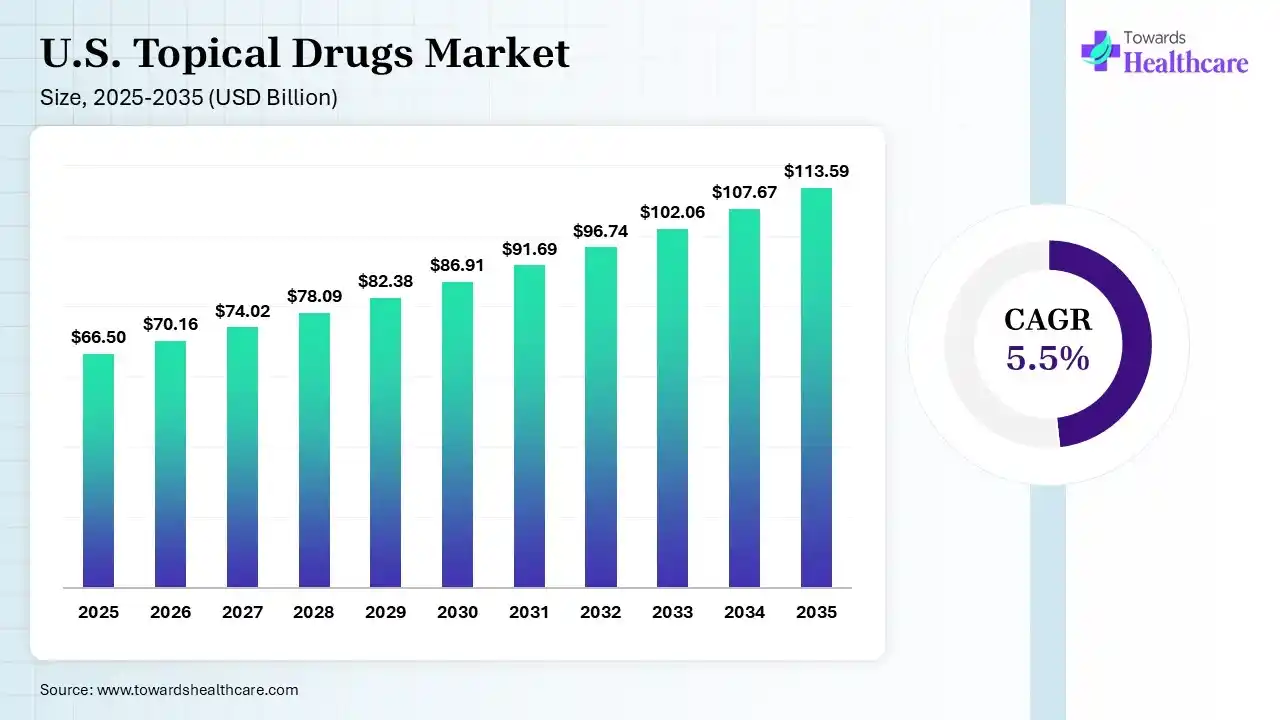
According to Towards Healthcare, the US Topical Drugs Market is projected to grow significantly, with estimates indicating the market size will increase from USD 70.16 billion in 2026 to approximately USD 113.59 billion by 2035, Growth is expected at a steady CAGR of 5.5% in between 2026 to 2035. Topical therapeutics provide the significant advantage that the products are applied directly to the diseased skin, resulting in local, direct contact between the product and the affected skin. Topical therapies provide the unique benefit that the product is applied directly to the diseased skin. This leads to local, distinctly direct contact between the product and the affected skin.
Revolution Medicines is a worldwide, commercial-stage oncology organization dedicated to discovering, advancing, and delivering new therapeutics for patients with RAS-addicted cancers. Leveraging its differentiated RAS(ON) tri-complex inhibitor platform, the organization is developing a wide, integrated portfolio of oral RAS(ON) inhibitors intended to directly target the active, cancer-driving state of RAS. Founded on rigorous scientific inquiry and a willingness to break barriers and challenge long-held assumptions, Revolution Medicines is committed to transforming the trajectory of disease for patients with RAS-driven cancers globally.
A recent report by Towards Healthcare highlights that the US topical drugs market is growing, as topical drugs rapidly reach the target site of skin diseases, shorten the time for the medicine to create therapeutic effects, and prevent the adverse effects of drug hoarding in various tissues. The skin is a complex and delicate tissue composed of microorganisms that inhabit the surface layer, cells that make up the structure of the skin, immune cells and their metabolites that are included in innate immunity, adaptive immunity, and that support protecting the organism against external aggressions, guaranteeing the organism's capability to survive in a harsh and dry external environment.


