


Less than eight months into its introduction into India, Mounjaro (tirzepatide) by Eli Lilly has become India's best-selling pharmaceutical product, outperforming existing drugs like Augmentin. The drug was introduced in India in March at a time when there was high demand for medical products for weight loss because of an increase in the number of cases of obesity and diabetes. Its quick adoption by the industry has been credited to the positioning of the drug as a weight loss and obesity drug, weight loss effectiveness, pricing, and marketing efforts by Eli Lilly.
The emergence of Mounjaro has been possible due to the growing consumer willingness to utilize medical products for weight management. According to the article, the drug had an estimated total sale of Rs 450 crore until October, while PharmaTrac data through September revealed total cumulative sales of Rs 235 crore. The competitor drug Wegovy, which is also a semaglutide drug launched in India in June, had total sales of Rs 28 crore in the same period.
As per the article, there are some reasons behind the success of Mounjaro, including the right timing of its launch, physician involvement, brand positioning, patient experience, and the efforts to broaden access. Mounjaro entered the Indian market about three months before Wegovy and became one of the first drugs in the country's newly emerged obesity treatment sector.
"We are working very closely with governments, healthcare providers, and organizations to further the acceptance of obesity as a chronic disease," mentioned Winselow Tucker, president and general manager of Eli Lilly and Company (India). Furthermore, according to him, the incretin strategy of the company includes such aspects as access expansion, next-generation therapy development, manufacturing and collaboration for broader access, oral formulation development, and convenience and affordability improvement.
One of the crucial considerations mentioned by experts of the industry was the choice of Mounjaro to come in vial format, which allowed Eli Lilly to wait for the increased availability of its KwikPen format. With the vial format, the patient was able to buy one or two units of the drug and decide on tolerability before opting for the costlier monthly pack KwikPen.
As per Rajiv Kovil, a diabetologist, this approach helped Eli Lilly to reduce the initial cost barrier for the patients and gave Mounjaro a leg-up in the Indian market. Mounjaro in the vial format was available for Rs 3,500 and Rs 4,375 for 2.5 mg and 5 mg, respectively, whereas the KwikPen pack, which was available in four weekly doses, ranged from Rs 14,000 to Rs 27,500.
Physicians would be able to prescribe one or two vials to the patient initially and then prescribe the KwikPen.
Mounjaro has also been cited as being supplied through sources other than retail stores, including direct distribution to cosmetologists, bariatric surgeons, and obesity centers. As per Kovil, some weight loss management centers include anti-obesity medications in their service packages, which implies that the prescriptions will not necessarily go through the regular retail routes.
The other aspect pointed out by experts relates to the efficacy of Mounjaro weight loss. It is stated in the article that, according to experts, the efficacy of Mounjaro weight loss is 20% to 22%, while Wegovy can provide 16% to 18%. Although both drugs were developed as diabetes medications, Mounjaro was positioned in India as the drug for weight loss and obesity.
Specifically, it is believed that positioning in this way is very important because some patients hesitate to take a medication that is used for diabetes treatment for their weight problems. Thus, according to Tulara, Mounjaro created a brand perception for the patients as a weight loss and obesity medication rather than one for diabetes. Furthermore, Vyankatesh Shivane, a diabetology consultant at Jaslok Hospital, said that Mounjaro helped raise awareness about obesity and weight management.
Eli Lilly aimed to increase accessibility to its medications in smaller cities of India, as it did not focus only on the bigger ones. Thus, the partnership was built with Cipla for the launch of another tirzepatide brand, Yurpeak. Tucker stressed the importance of expanded accessibility.
The paper observes that the rapid rise in the popularity of Mounjaro may experience some changes due to the presence of cheap versions of semaglutide in the Indian market. According to industry experts, the arrival of lower-cost versions of drugs was one of the elements that might lead to increased competition on pricing.
According to Kovil, the current rate of prescriptions for Mounjaro is associated with the initial stage of increasing interest in treating obesity, and further changes in the market dynamics might occur when low-cost variants of drugs appear. Doctors pointed out that semaglutide had better cardiovascular and renal outcomes.
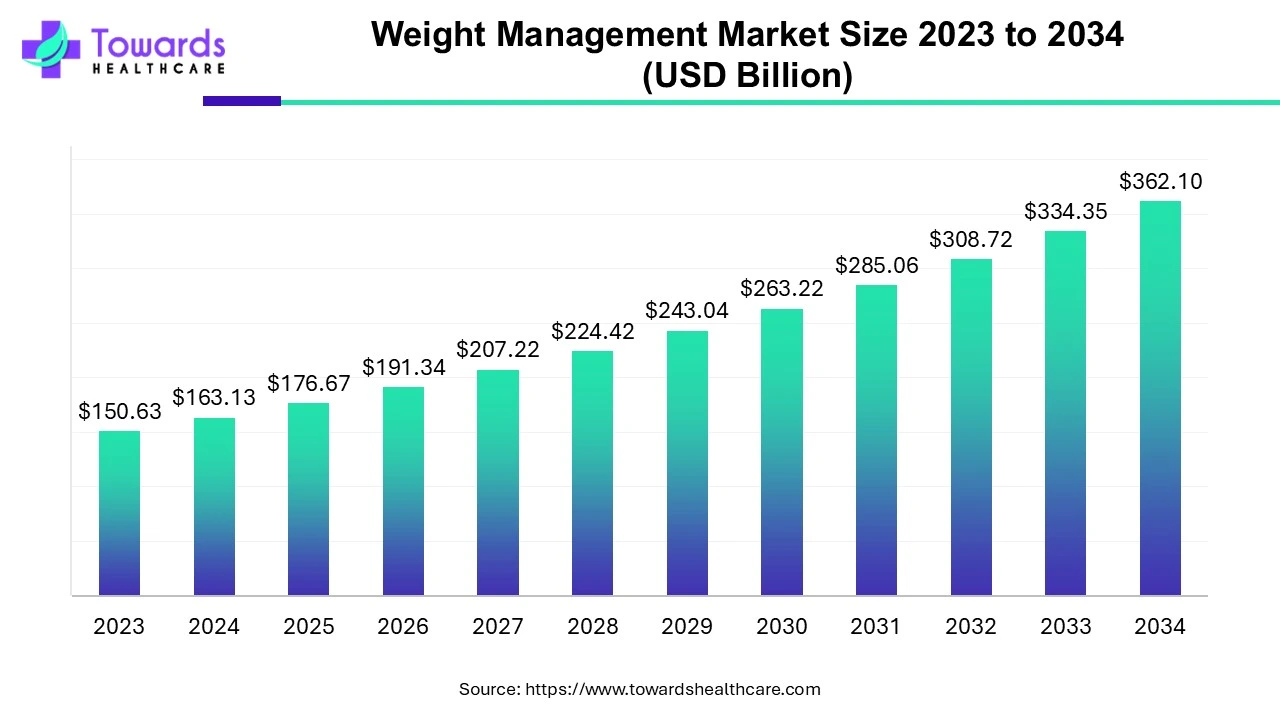
According to Towards Healthcare, the weight management market is projected to grow significantly, with estimates indicating the market size will increase from USD 191.33 billion in 2026 to approximately USD 392.15 billion by 2035, expanding at a CAGR of 8.3% from 2026 to 2035.
It is being propelled by rising demand for pharmacological interventions to manage obesity and weight issues. The industry comprises medicines that help in the reduction of body weight while simultaneously managing the conditions of obesity and other metabolic disorders. The swift adoption of Mounjaro in India underscores the rising demand for injectable treatment options for metabolic health as well as weight loss issues.
The increasing availability of tirzepatide in various forms of medication and distribution alliances is another factor driving market growth. Simultaneously, the advent of competing drugs and their availability at lower prices is anticipated to influence the weight loss medicine market.