


The Indian Pharmacopoeia Commission (IPC) has partnered a Memorandum of Understanding (MoU) with the Uttar Pradesh Promote Pharma Council (UPPPC) to toughen quality standards, novelty and governing excellence in the healthcare and medical tool sectors. The MoU was signed while the YEIDA MedTech Investors Meet & Site Visit 2026 held, at India Expo Mart, Greater Noida. The collaboration goal to help quality assurance, government compliance and capacity building while improving the attractiveness of India's pharmaceutical and healthcare tools ecosystem. It also seeks to rise awareness of the Indian Pharmacopoeia, pharmacovigilance and materiovigilance through stakeholder engagement and knowledge-sharing initiatives.
Under the partnership, IPC and UPPPC will organise joint training programmes, workshops and awareness campaigns to strengthen industry capabilities and regulatory practices. The collaboration will also promote research, innovation and industry-academia partnerships while supporting micro, small and medium enterprises (MSMEs) through digital tools for adverse event reporting. In addition, the initiative aims to enhance patient safety through quality assurance and post-market surveillance mechanisms. The collaboration is expected to contribute to the development of Uttar Pradesh as a leading hub for pharmaceuticals, medical tools and hospital technologies while reinforcing India's government framework and increasing worldwide competitive medical care products.
This strategic partnership goal to strengthen the pharmaceutical and medical tools ecosystem by increasing quality standards, government excellence, novalties, and capacity building in the sector.
Through this Partnership, IPC and UPPPC will Work Together To:
This MoU reflects IPC's continued commitment to developing advance-quality medical care standards, helping innovation, and strengthening India's government framework while involving to the growth of Uttar Pradesh as a leading home for healthcare, medical tools, and healthcare processes.
The collaboration strives to build a stronger ecosystem which improves quality, safety, novalties, and worldwide competitiveness.
According to Towards Healthcare, the infant formula market is projected to experience significant growth, with estimates suggesting the market size will increase from USD 98.89 billion in 2026 to approximately USD 224.73 billion by 2035, representing a compound annual growth rate (CAGR) of 9.55% from 2026 to 2035, driven by precise medical equipment maintenance is significant for confirming patient safety, increasing healthcare devices lifespan, and meeting government standards.
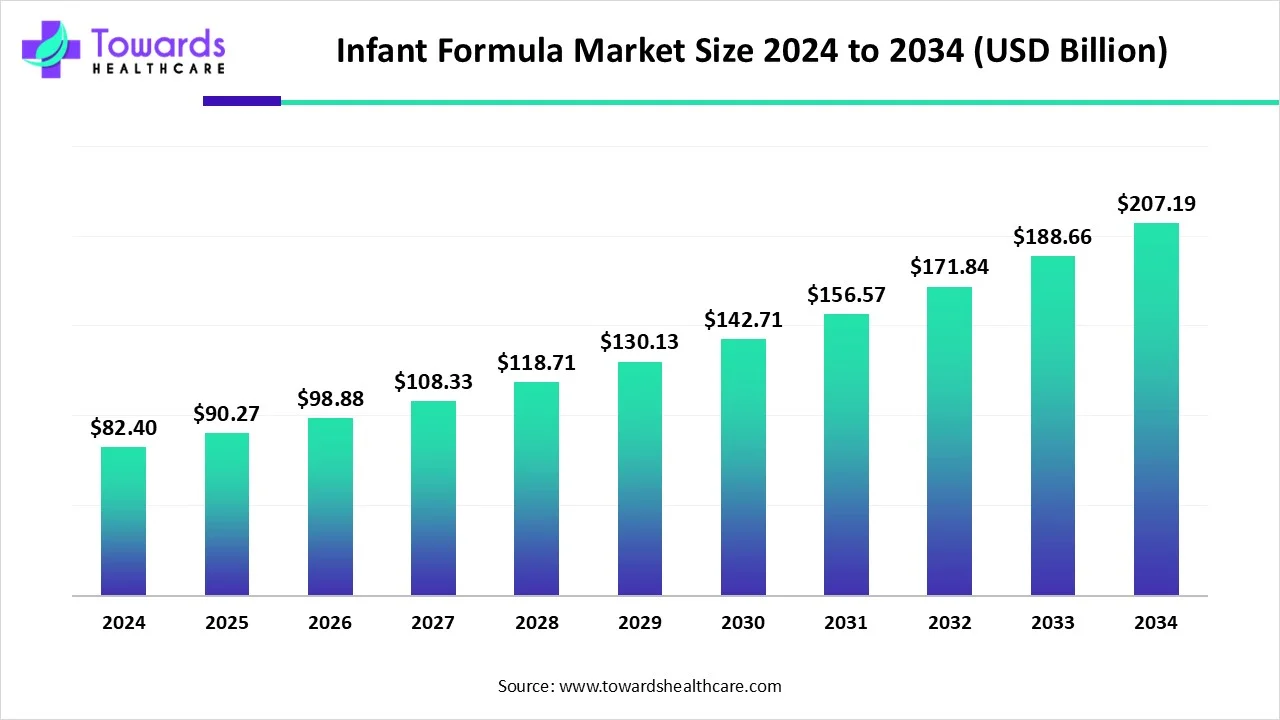
Medical care facilities establish a comprehensive maintenance system which involves regular inspections, testing, and cleaning of devices to prevent breakdowns and confirms precise readings. By making a maintenance schedule and following significant tips, hospitals ensure that their devices is in advance condition, lowering the challenges of device failures and enhancing patient care. It is significant to note that major types of healthcare equipment needs particular maintenance, involving diagnostic healthcare devices such as X-ray machines and ultrasound machines. These machines specifically sensitive to wear and tear and needs regular calibration to confirm precise readings. Failure to correctly maintain diagnostic devices lead to misdiagnosis, delayed management, or unwanted exposure to radiation. By protecting equipment in good working condition, hospitals avoid expensive repairs or substitutions. It increases the lifespan of healthcare, meaning hospitals get more use out of each piece earlier the require to purchase a new one arises.
Indian Pharmacopoeia Commission (IPC) is a self-governing institution of the ministry of health and family welfare, govt. of India. It sets standards for entire medicines which are manufactured, retailed and used in India. Indian Pharmacopoeia Commission (IPC) work as to update frequently the standards of medication generally needed for management of diseases prevailing in India. IP is published by IPC for enhancing quality of medicines by way of adding novel and updating presenting monographs. It also increases rational applications of generic therapeutic by publishing National Formulary of India (NFI). IP prescribes standards for purity, identity and strength of drugs fundamentally required from health care standpoint of human beings and animals.
A recent report by Towards Healthcare highlights that the infant formula market is growing because continuous maintenance increases the lifespan of their tools, which save money in the long run. It confirms that tools is available when required, lessening downtime and enhancing the effectiveness of medical care facility. The lifetime importance of the healthcare tools increases as a consequence, that is, the returns get from the equipment throughout its usage. Accurate maintenance also supports to prevent premature wear and tear, another thing which leads to costly repairs or the required to replace equipment overall. The aim of this maintenance is to confirm that the tools have function precisely and offers proper outputs, which in turn supports to lowers the challenges of errors, malfunctions, and breakdowns. Medical tools maintenance increase the lifetime value of tools as much as it enhances patient care.


