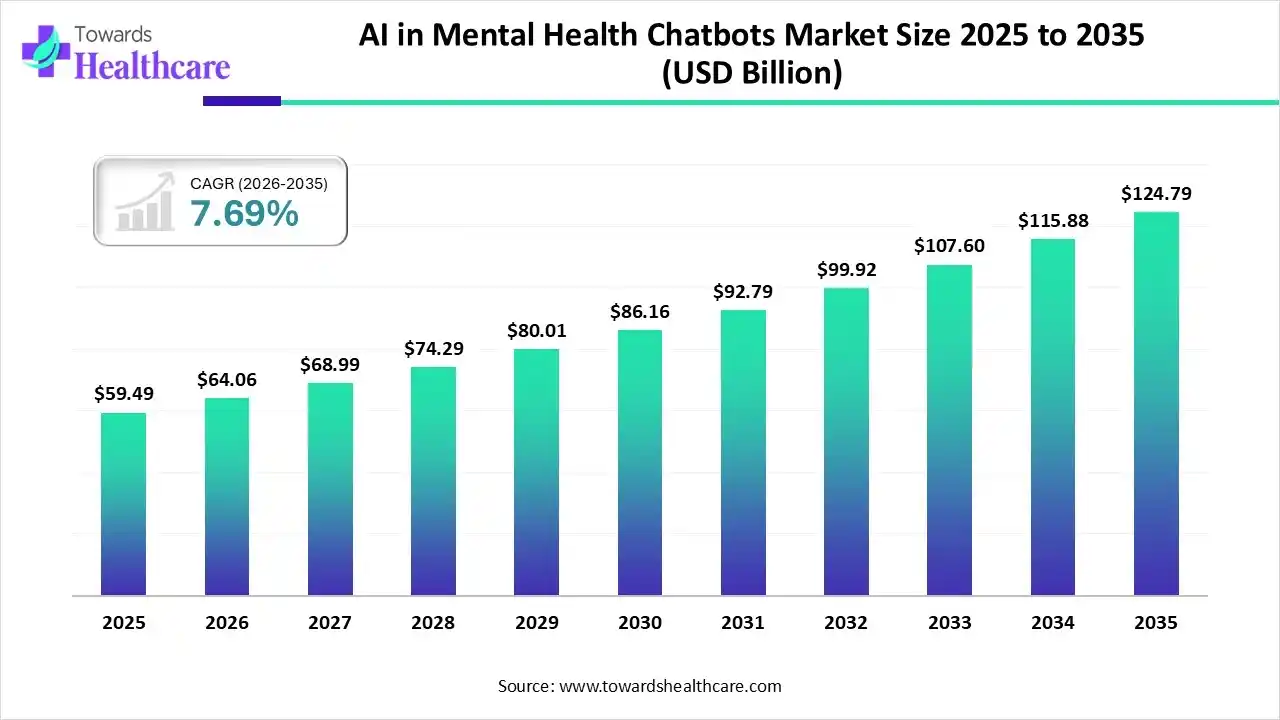
The global AI in mental health chatbots market size was estimated at USD 59.49 billion in 2025 and is predicted to increase from USD 64.06 billion in 2026 to approximately USD 124.79 billion by 2035, expanding at a CAGR of 7.69% from 2026 to 2035.
The growing mental health disorders are increasing the demand for effective diagnosis and treatment options globally, which is increasing the use of AI-powered chatbots. The companies are investing in their development, where the presence of AI startups, advanced healthcare sectors, and growing mental health awareness is also increasing their use. The companies are launching new products, promoting market growth.
The AI in mental health chatbots market is driven by a significant gap in professional mental healthcare availability and growing mental health awareness. The AI in mental health chatbots refers to the platform utilizing artificial intelligence to offer mental health support, interactions, and guidance. They help in providing friendly conversations, mental health monitoring, early detection of mental disorders, risk alerts, personalized solutions, along with 24/7 availability, enhanced accessibility, and improved integration with health systems.
Flourishing AI Technology
Different types of AI technologies are being developed and optimized to offer more humanlike interactions, where they are also being integrated with text and voice recognition models.
Blooming Healthcare Integrations
The healthcare sector is increasingly utilizing AI in mental health chatbots to offer improved clinical decisions and preventive care by integrating them with EHRs, wearable sensors, and telehealth platforms.
Personalized Care on the Rise
The companies are developing various chatbots and platforms to offer individual support by detecting the patient's history, behavioral data, and mood patterns, promoting personalized care.
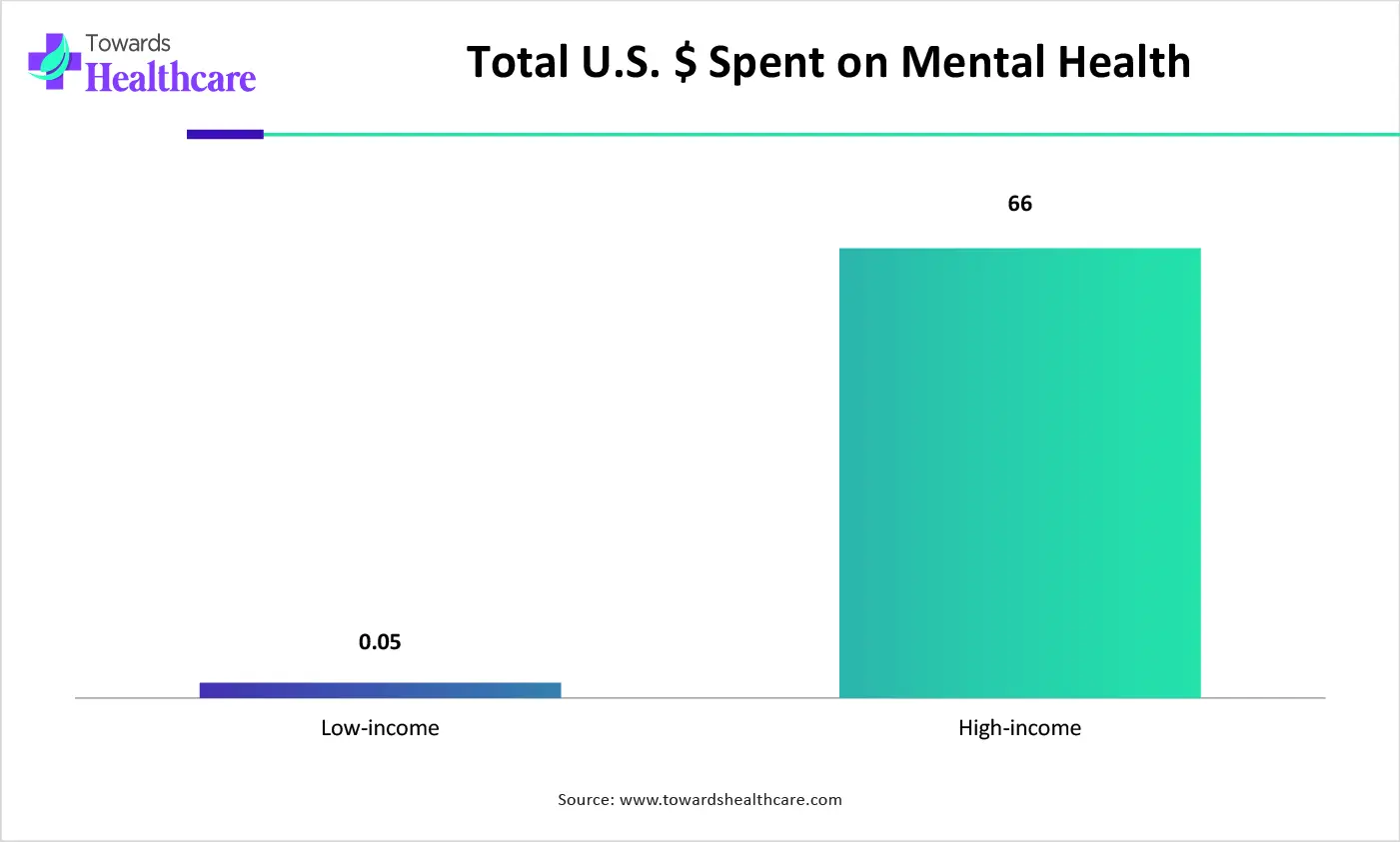
| Countries | Total US$ Spending on Mental Health |
| Low-income | 0.05 |
| High-income | 66 |
| Key Elements | Scope |
| Market Size in 2026 | USD 64.06 Billion |
| Projected Market Size in 2035 | USD 124.79 Billion |
| CAGR (2026 - 2035) | 7.69% |
| Leading Region | North America by 40% |
| Key Applications | Anxiety management, depression support, CBT delivery, stress reduction, employee wellness, mental health screening, therapy augmentation, patient engagement |
| Primary End Users | Healthcare providers, hospitals, behavioral health clinics, employers, payers, universities, consumers |
| Key Growth Drivers | Rising mental health burden, therapist shortages, digital health adoption, AI advancements, demand for scalable behavioral care, employer wellness investments |
| Measurable Values | USD Millions/Units/Volume |
| Market Segmentation | By Component, By Technology, By Application, By Platform, By Region |
| Top Key Players | Woebot Health, Wysa, Replika, Youper, Tess (X2AI), Ginger (Headspace Health), Talkspace, Offers AI Smart Notes, Provides Lyra Clinical AI, Mindstrong Health |
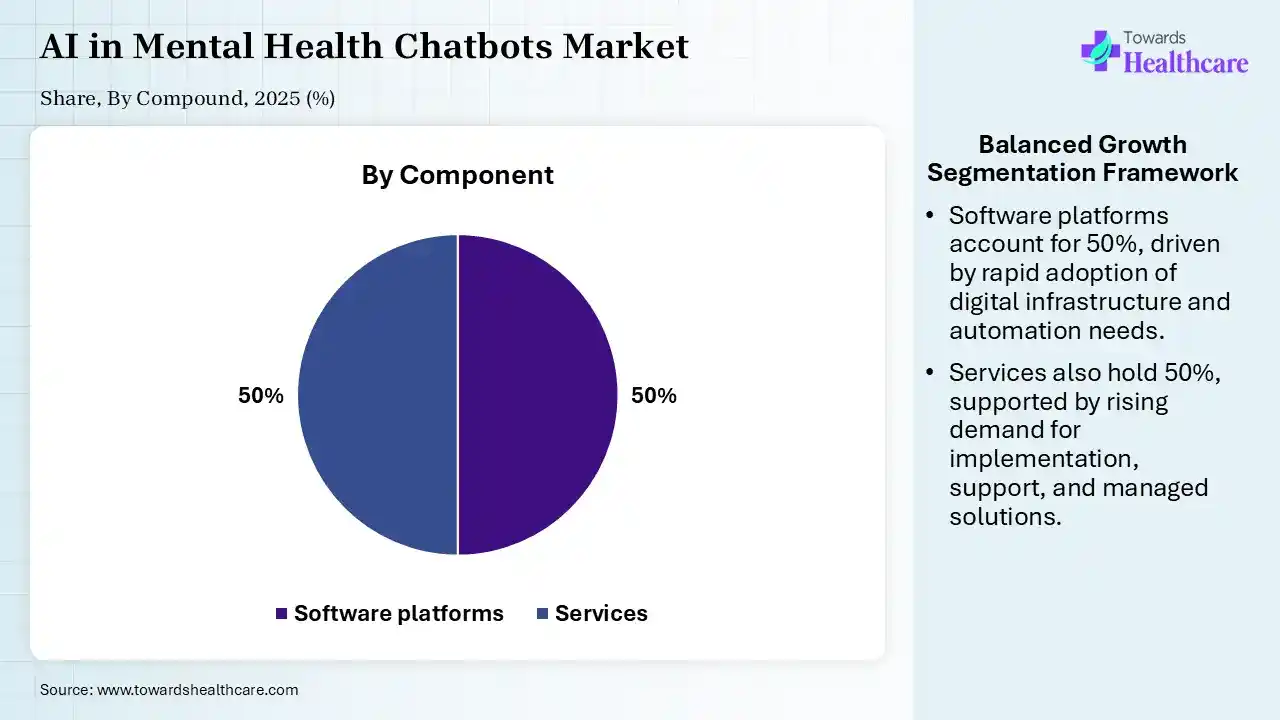
| Segments | Shares % |
| Software platforms | 50% |
| Services | 50% |
Why Did the Software Platforms Segment Dominate in the Market in 2025?
The software platforms segment held the largest share of 50% in the AI in mental health chatbots market in 2025, due to their widespread availability. At the same time, they also offered cloud-based platforms, which enhanced their adoption rates in low infrastructure regions. Moreover, personalized plans also increased their use.
Services
The services segment is expected to show the fastest growth rate during the upcoming years, due to growing adoption across the healthcare sector. They are being integrated with their systems, where their personalized consultations are also attracting patients. They are also being used for training purposes.
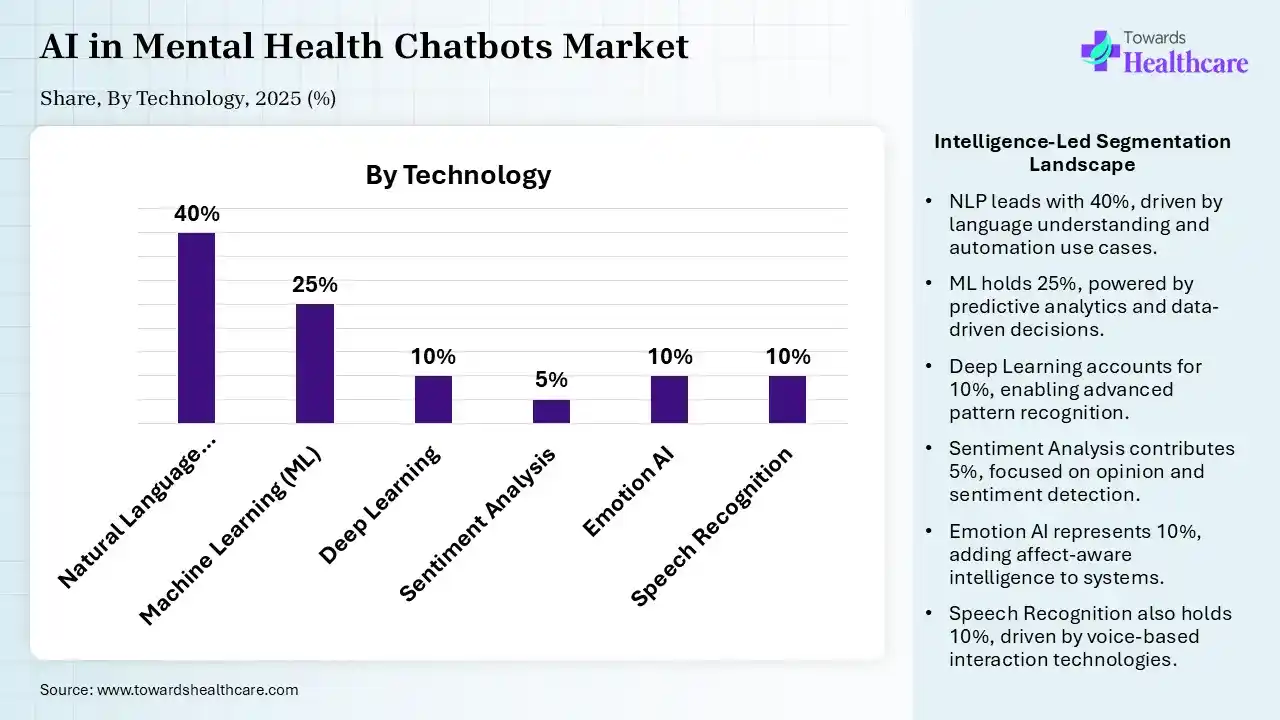
| Segments | Shares % |
| Natural Language Processing (NLP) | 40% |
| Machine Learning (ML) | 25% |
| Deep Learning | 10% |
| Sentiment Analysis | 5% |
| Emotion AI | 10% |
| Speech Recognition | 10% |
How Natural Language Processing (NLP) Segment Dominated the Market in 2025?
The natural language processing (NLP) segment led the AI in mental health chatbots market in 2025, by 40% share due to their ability to detect the patient's emotion and offer human-like interactions. At the same time, they also offered high scalability and personalized support, where their multilingual feature also increased their acceptance rates.
Machine Learning (ML)
The machine learning (ML) segment is expected to show the highest growth during the upcoming years, driven by its predictive analytics, leading to the early detection of complex mental health and its associated risk. Furthermore, their personalized care, processing of large datasets, and advanced automation are increasing their use for a wide range of applications.
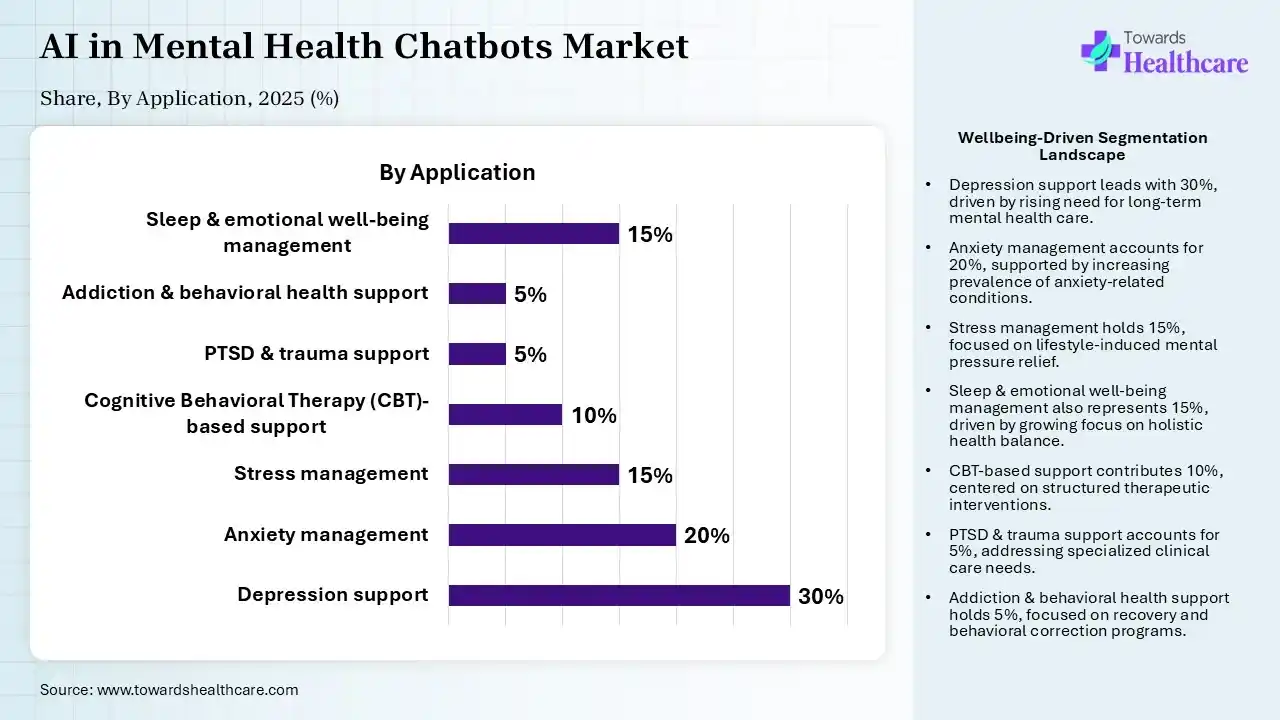
| Segments | Shares % |
| Depression support | 30% |
| Anxiety management | 20% |
| Stress management | 15% |
| Cognitive Behavioral Therapy (CBT)-based support | 10% |
| PTSD & trauma support | 5% |
| Addiction & behavioral health support | 5% |
| Sleep & emotional well-being management | 15% |
Which Application Type Segment Held the Dominating Share of the Market in 2025?
The depression support segment held the dominating share in the AI in mental health chatbots market by 30% share in 2025, due to the growth in their incidence rates. This, in turn, is increasing the use of AI-powered chatbots to reduce their complication and stigma. Moreover, they also provided mood monitoring, which increased their adoption rates.
Anxiety Management
The anxiety management segment is expected to show the fastest growth rate during the predicted time, due to its growing burden, which is increasing the demand for AI chatbots. They are being used to offer immediate support and early detection. Furthermore, the growing health awareness is also increasing their adoption rates.
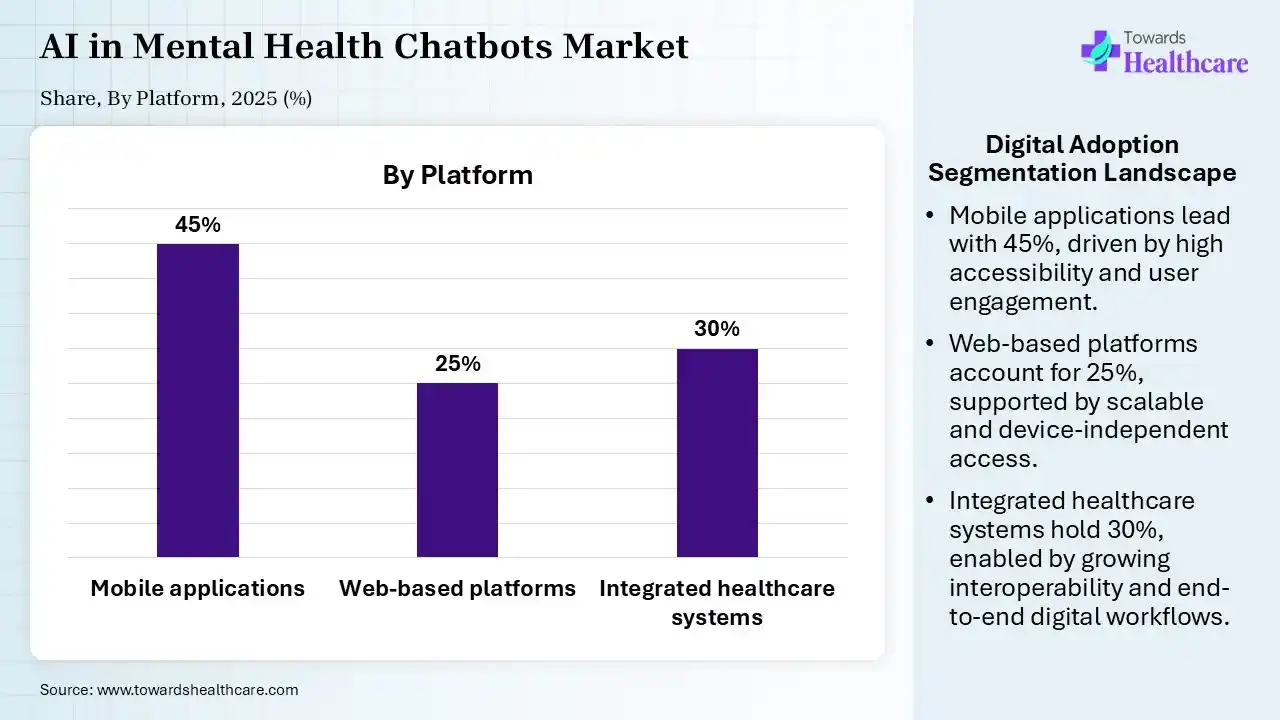
| Segments | Shares % |
| Mobile applications | 45% |
| Web-based platforms | 25% |
| Integrated healthcare systems | 30% |
What Made Mobile Applications the Dominant Segment in the Market in 2025?
The mobile applications segment led the AI in mental health chatbots market by 45% in 2025, due to growing smartphone penetration. This enhanced the access of the AI-powered chatbots, where their 24/7 availability also increased their use. Moreover, they also offered reminders, mood monitoring, and personalized support, which increased their adoption rates.
Integrated Healthcare Systems
The integrated healthcare systems segment is expected to show the highest growth during the predicted time, driven by its seamless workflow. This, in turn, is increasing their demand for continuous mental health monitoring. Furthermore, their affordability, 24/7 services, and enhanced scalability are also increasing their use.
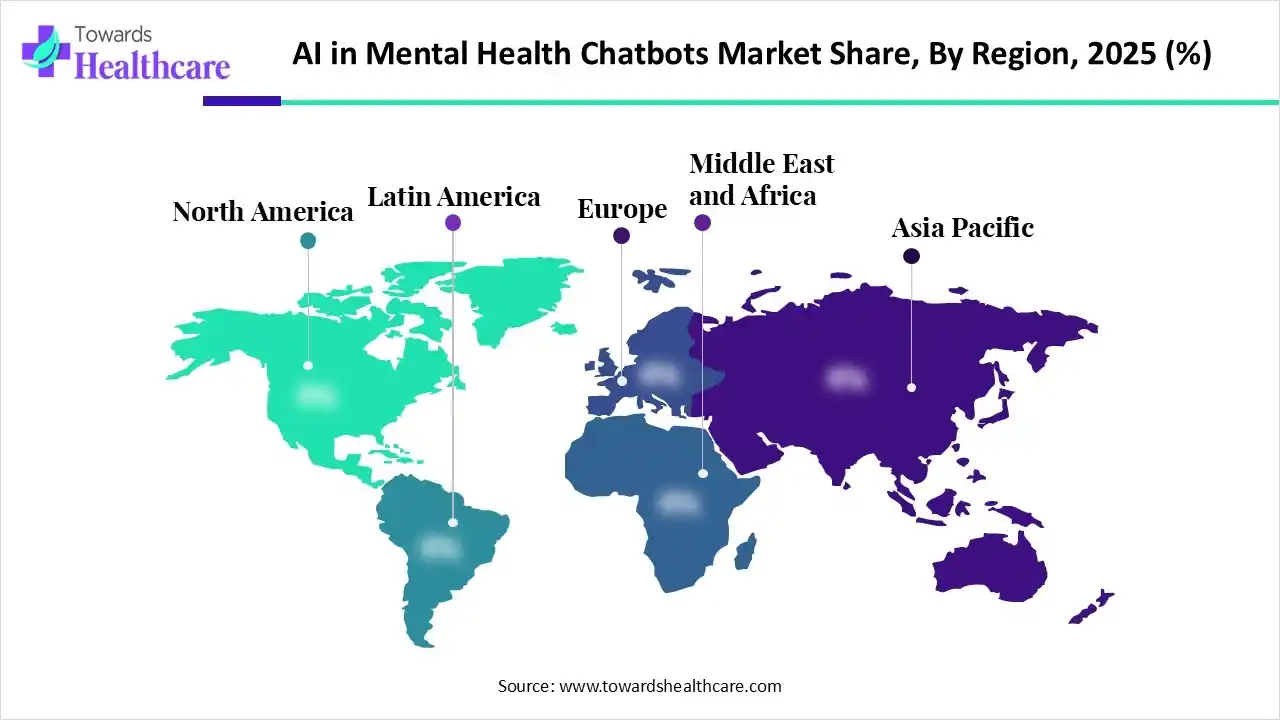
North America dominated the AI in mental health chatbots market by 40% share in 2025, due to the growth in digital health solutions. At the same time, the presence of a well-developed healthcare sector also increased their adoption rates, where the growing health awareness also increased their use. Thus, all these factors contributed to the market growth.
U.S. Market Trends
The U.S. consists of a large number of AI startups, which are increasing the development of various AI-powered chatbots and are driving the adoption of various chatbots along with other AI platforms. Additionally, the growing health awareness and funding are also encouraging their innovations and collaborations.
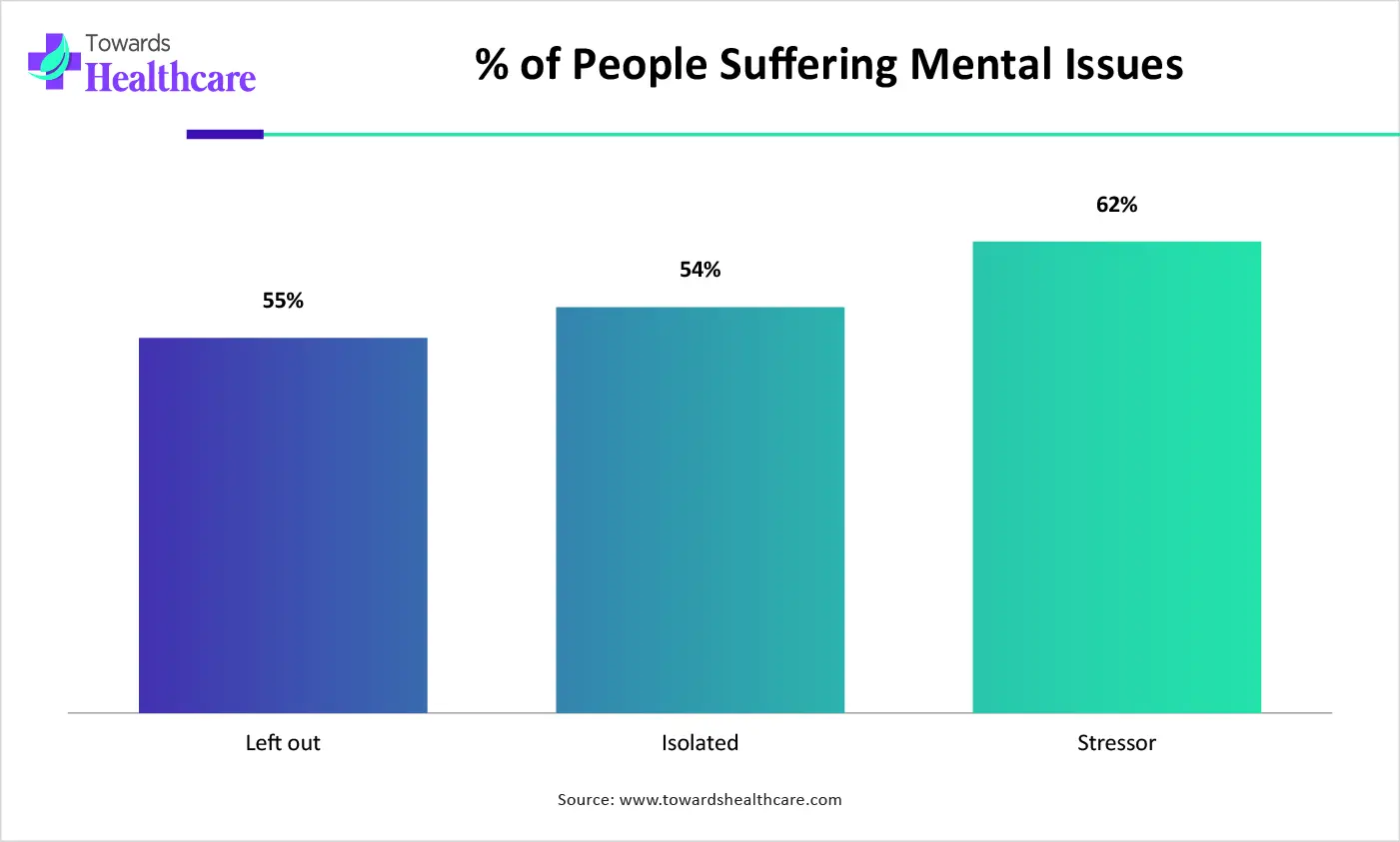
| People with Mental Disorders | Total % |
| Left out | 55% |
| Isolated | 54% |
| Stressor | 62% |
Asia Pacific is expected to host the fastest-growing AI in mental health chatbots market by 20% share during the forecast period, due to growing mental health disorders. The growing population, health awareness, and government initiatives are also increasing the demand for digital health solutions, driving the adoption of AI in mental health chatbots, which is enhancing the market growth.
The growing mental health awareness is increasing the demand for digital solutions, where the presence of a large population is increasing the incidence of mental disorders, driving the demand for AI chatbots. The shortage of mental health professionals and government support is also increasing their use.
Europe is expected to grow significantly in the AI in mental health chatbots market by 25% share during the forecast period, due to growing mental health awareness, which is increasing the adoption of AI tools. The presence of advanced healthcare infrastructure is also increasing its integration with other healthcare systems, promoting market growth.
UK Market Trends
The UK consists of well-developed healthcare systems, which are increasing the use of AI chatbots for the detection of mental disorders. Additionally, the regulatory support and government investments are promoting the innovations, where growing health awareness and startup ecosystems are also driving their advancements.
South America is emerging as a vital growth area for AI mental health chatbots, driven by a shortage of professionals, increased digital usage, and the need for affordable care. Cities in South America, particularly Brazil, Argentina, Colombia, and Chile, are rapidly adopting these technologies. The region's digital landscape, dominated by WhatsApp and similar apps, allows for easy access to mental health chatbots without the need for separate installations. Local companies are developing AI chatbots tailored to Spanish and Portuguese languages and cultural contexts, lowering usage barriers compared to generic options.
Brazil Market Trends
Brazil is a frontrunner in this market, addressing the urgent need for accessible care through affordable mobile tools. The demand for mental health services is high, but traditional healthcare often falls short. AI chatbots offer a scalable, cost-effective solution for underserved communities. The Brazilian government supports innovation through the Brazilian Artificial Intelligence Plan (PBIA) 2024–2028, promoting AI in public health services. Initiatives like the AI platform for mental health in Primary Care (SUS) aim to integrate these technologies into the public health system to tackle issues such as anxiety and depression.
The Middle East and Africa (MEA) region is seeing rapid growth in AI mental health chatbots by 10% share, driven by digital health adoption, government investments especially in GCC countries like the UAE and Saudi Arabia high smartphone usage, and a pressing need for mental health professionals. Major funding in AI and digital healthcare, particularly in the GCC, is boosting mental health platform usage. The shortage of qualified professionals has created a demand for scalable AI solutions, while growing awareness and reduced stigma around mental health are increasing the appeal of chatbot services.
UAE Market Trends
The UAE is at the forefront of the AI mental health chatbot market, supported by strong government initiatives, significant health tech investments, rapid digital solution adoption, and a culturally diverse population needing accessible mental wellness tools. Key cities like Dubai and Abu Dhabi utilize AI for 24/7 crisis support in English and Arabic. The UAE's national strategy (UAE AI Strategy 2031) emphasizes AI, with the Ministry of Health allocating AED 50 million for mental health initiatives. The appointment of the world's first Minister of State for AI in 2017 highlights the commitment to digital solutions. AI chatbots provide a private, non-judgmental space for users to discuss sensitive mental health issues, making it easier to seek help compared to traditional therapy.
| Ecosystem Segment | Key Participants | Role in Market |
| Technology Providers | OpenAI, Anthropic, Microsoft, Google Cloud, AWS | Provide foundational AI, NLP, LLM, cloud infrastructure, and generative AI capabilities. |
| Mental Health Chatbot Developers | Woebot Health, Wysa, Limbic, Youper, Koko | Develop AI-driven conversational mental health solutions. |
| Platform Providers | Headspace Health, Spring Health, Lyra Health | Deliver integrated digital behavioral health platforms incorporating AI chatbots. |
| Healthcare IT Vendors | Teladoc Health, Oracle Health, Epic Systems | Integrate AI mental health tools into broader healthcare ecosystems. |
| Service Providers | Modern Health, Talkspace, BetterHelp | Combine human therapy services with AI-enabled engagement tools. |
| Research Institutions | Stanford University, Harvard Medical School, King's College London, MIT | Conduct validation studies, AI safety research, and behavioral health innovation. |
| Software Vendors | Microsoft, Salesforce, Google Cloud | Offer AI, analytics, workflow automation, and healthcare integration solutions. |
| End-User Industries | Healthcare, Insurance, Corporate Wellness, Education, Government Health Programs | Deploy chatbot solutions for population mental health support. |
| Tier 1 | Tier 2 | Tier 3 | |
| Typical Market Influence | 62% | 26% | 12% |
| Tier 1 | ||||
| Company Name | Headquarters | Country | Why Relevant to This Market | Key Products/Services |
| Headspace Health | Santa Monica, California | USA | Large-scale digital mental health provider integrating AI-driven engagement and coaching capabilities. | Headspace Care, AI-assisted mental wellness tools |
| Spring Health | New York, New York | USA | Major employer-focused mental health platform utilizing AI for care navigation and support. | AI-powered mental health navigation, behavioral health platform |
| Lyra Health | Burlingame, California | USA | Strong enterprise behavioral health platform with AI-enabled care matching. | Mental health coaching, AI care recommendation systems |
| Tier 2 | ||||
| Company Name | Headquarters | Country | Why Relevant to This Market | Key Products/Services |
| Wysa | Boston, Massachusetts | USA | One of the most widely deployed AI mental health chatbot platforms globally. | Wysa AI Coach |
| Youper | San Francisco, California | USA | Specialized AI emotional health assistant with strong consumer adoption. | Youper AI therapy assistant |
| Modern Health | San Francisco, California | USA | Enterprise behavioral health platform integrating digital coaching and AI tools. | AI-guided mental health engagement |
| Tier 3 | ||||
| Company Name | Headquarters | Country | Why Relevant to This Market | Key Products/Services |
| Limbic | London, England | United Kingdom | AI mental health assessment and triage leader working with healthcare systems. | Limbic Access, AI triage tools |
| Tess Health | San Francisco, California | USA | Developer of conversational mental health AI solutions. | Tess conversational mental health assistant |
| Wysa Assure | Boston, Massachusetts | USA | Expanding enterprise and payer-focused AI behavioral health offerings. | AI behavioral health platform |
Strengths
Weaknesses
Opportunities
Threats
By Component
By Technology
By Application
By Platform
By Region










Principal Consultant
Rohan Patil is a seasoned market research professional with over 5+ years of focused experience in the healthcare sector, bringing deep domain expertise, strategic foresight, and analytical precision to every project he undertakes.
Learn more about Rohan Patil

Reviewed By
Aditi Shivarkar is a seasoned professional with over 14 years of experience in healthcare market research. As a content reviewer, Aditi ensures the quality and accuracy of all market insights and data presented by the research team.
Learn more about Aditi Shivarkar