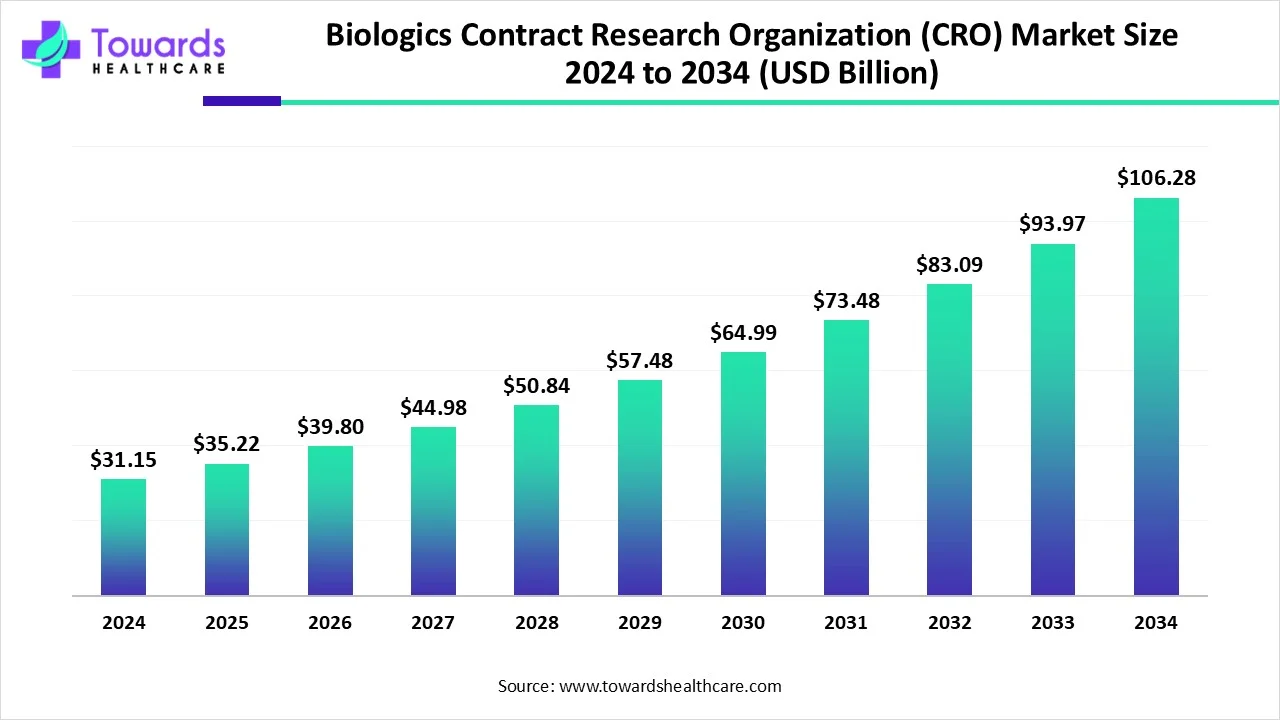
The global biologics contract research organization market size is calculated at USD 35.22 billion in 2025, grew to USD 39.8 billion in 2026 and is projected to reach around USD 106.28 billion by 2034, reflecting a CAGR of 13.04%.
| Metric | Details |
| Market Size in 2024 | USD 31.15 Billion |
| Projected Market Size in 2034 | USD 106.28 Billion |
| CAGR (2025 - 2034) | 13.04% |
| Leading Region | North America |
| Market Segmentation | By Type of Biologic, By Scale of Operation, By Target Therapeutics Areas, By Region |
| Top Key Players |
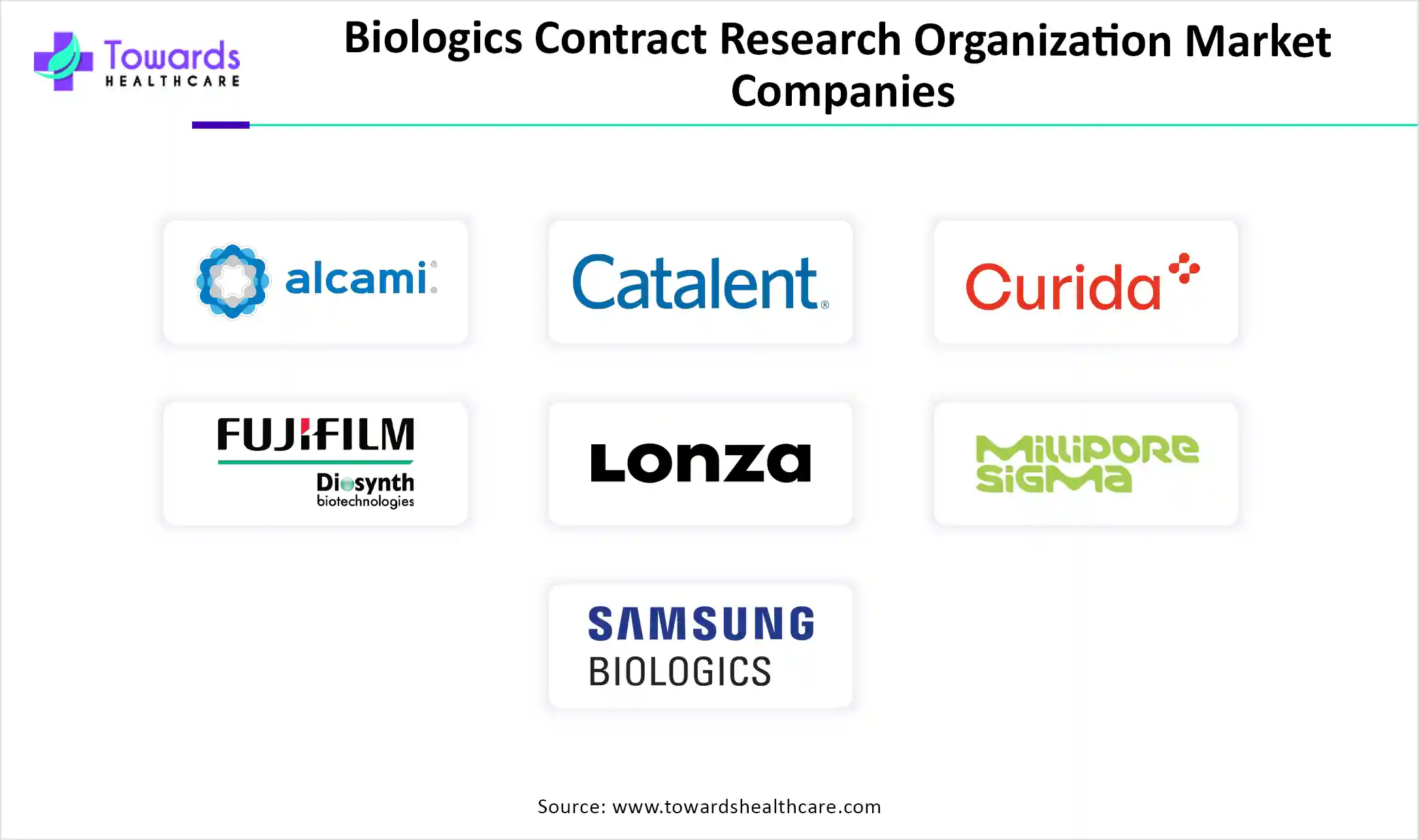
Alcami Corporation, Alphora, Inc., Catalent, Inc., Curida Holding, ASFujifilm Diosynth Biotechnologies, Lonza Group AG, MilliporeSigma, Samsung Biologics, Tanvex CDMO, Thermo Fisher Scientific, WuXi Biologics |
Biologics contract research organization provides specialized services to pharmaceuticals, biotechnological, and medical device companies in the development and testing of biologics drugs. These services include research preclinical testing, clinical trials, and regulatory support. Biologics contract development companies provide a full range of services, including cell line development, analytical testing, process development, formulation, and quality assurance. Manufacturers outsource these tasks by contracting with other companies to supply products, parts, or components. Contract research organizations (CROs) help businesses meet the growing needs of the pharmaceutical and medical device industries by reducing R&D costs. They specialize in developing stable cell lines for drug screening, gene research, and biological production.
AI has the potential to revolutionize the market by improving efficiency, reducing costs, and enhancing the accuracy of drug development processes. AI-driven analytics can accelerate drug discovery by analyzing vast datasets, identifying potential drug candidates, and optimizing protein structures. It can also streamline clinical trials by improving patient recruitment, designing more efficient trial protocols, and monitoring data in real time. AI aids in the personalization of treatments by analyzing genetic data to develop biologics tailored to specific patient profiles. In biologics manufacturing, AI optimizes both upstream and downstream processes, improving yield and product quality while ensuring regulatory compliance. By predicting market trends and potential outcomes, AI helps CROs reduce time-to-market for new treatments, making drug development faster, more precise, and cost-effective.
Biologics contract research organizations (CRO) are specialized companies that provide outsourced research services to support the development of biologic medicines, from early discovery and laboratory studies to clinical development and regulatory activities. The market is growing as drug developers increasingly rely on external expertise to manage technically demanding biologic programs and optimize development timelines. Key trends include integrated outsourcing models, increasing collaboration between biotechnology companies and CROs, and growing demand for specialized support for complex biologic therapies. Technological advancements in AI, automation, advanced analytics, and high-throughput platforms are improving research efficiency and data quality. Future opportunities are expanding across cell and gene therapies, antibody-based treatments, biosimilars, and personalized medicines. Major drivers include rising biologics pipelines, increasing R&D complexity, demand for specialized capabilities, cost optimization, and the need to accelerate therapy development.
Internal factors such as scientific expertise, availability of skilled professional technological capabilities, service quality, project management, and laboratory infrastructure influence the performance of biologics CROs. Strong analytical platforms and specialized research capabilities can improve client confidence and support long-term partnerships. External factors include the expanding biologics pipelines, biotechnology investments, outsourcing strategies, regulatory expectations, and changing drug-development requirements. Growing interest in complex therapies creates additional demand for specialized CRO services, while economic uncertainty, talent shortage, data-security concerns, challenge. Increasing collaboration between pharmaceutical companies, biotechnology firms, and research organizations is also reshaping the competitive environment and creating opportunities for CROs to expand their capabilities and service offerings.
Rising Demand for Biologics
The increasing demand for biologics is due to their effectiveness in treating complex and chronic diseases, such as cancer, autoimmune disorders, and rare genetic conditions. As the biologics pipeline continues to expand, pharmaceutical and biotech companies are increasingly outsourcing the specialized services required for biologic drug development, such as cell line development, clinical trials, regulatory compliance, and manufacturing processes, to CROs. This helps these companies manage the high costs, complexity, and time constraints associated with biologic drug development, ultimately driving the growth of the biologics contract research organization market. Additionally, the rising focus on personalized medicine and the growing number of biologics entering the market contribute significantly to the expansion of the CRO industry. In 2023, the FDA approved 55 new treatments, the second-highest total in the last 30 years. Among these approvals, 17 were biologics, including 12 monoclonal antibodies (mAbs).
High Cost and Complexity of Biological Drug Development
Biologics are more expensive to develop than traditional small-molecule drugs, requiring specialized expertise, advanced technologies, and significant investment in infrastructure, which can make it difficult for smaller CROs to keep up. Additionally, the complex regulatory requirements for biologic drugs, including rigorous clinical trials and stringent manufacturing standards, can delay development timelines and increase costs. These factors can act as barriers to market growth and create uncertainties for companies seeking to navigate the evolving biologics landscape.
Increase the Growth of Personalized Medicine
The biologics contract research organization market lies in the growth of personalized medicine and the increasing demand for biosimilars. As more treatments are tailored to individual patients, CROs can expand their services in genetic analysis and biomarker discovery. Additionally, the rise of biosimilars offers CROs the chance to support the development and regulatory approval of cost-effective biologic alternatives. Advances in AI and automation also present opportunities for CROs to improve efficiency, streamline clinical trials, and shorten development timelines, further driving demand for their services.
By type of biologic, the gene therapies antibodies segment held a dominant presence in the market in 2024. The rising demand for gene therapies, which offer potential cures for genetic disorders, has made CROs specialized in these areas crucial for the research and development process. These therapies are very complex, and they require specialized knowledge and advanced techniques, which positions CROs as key partners in preclinical and clinical trials. This surge in R&D, combined with the increasing regulatory complexity of both gene therapies in these areas highly sought after. Furthermore, technological advancement in biological production and the growing prevalence of personalized medicine contribute to its dominant role in the biologics contract research organization market.
By type of biologic, the cell therapies segment is anticipated to grow at the fastest rate in the biologics contract research organization market during the studied years. Cell therapies particularly in the field of immunotherapy and regenerative medicine, are gaining traction as they offer innovative treatment options for various diseases, including cancer and autoimmune diseases. It majorly involves complex processes such as cell manipulation and genetic modification, which require specialized expertise from CROs. As these therapies advance toward commercialization, the demand for expert CRO support in clinical trials and regulatory compliance is driving rapid market growth.
By scale of operation, the clinical segment was dominant in the market in 2024 due to an increased number of biologic drug candidates progressing through clinical trials. As the demand for biologics grows, pharmaceutical and biotech companies rely heavily on CROs to manage complex clinical trials, ensuring regulatory compliance and efficient data management. The clinical segment plays a critical role in the development of new biologics, particularly with the rising number of biologics, including gene therapies, monoclonal antibodies, and cell therapies, entering the clinical phases. The need for specialized expertise, scalability, and cost-effectiveness in conducting these trials has solidified the clinical segment’s dominance in the biologics contract research organization market.
By scale of operation, the preclinical segment is expected to grow at the fastest rate in the coming years. As more biologic drugs, including gene therapies, monoclonal antibodies, and cell therapies, move through the pipeline, there is an increasing need for specialized preclinical research to assess safety, efficacy, and toxicity before the human trials. The growing complexity of biologics requires advanced testing models and technologies, which are often provided by CROs specializing in preclinical services. Additionally, the rise of personalized medicine and innovation in drug discovery is driving the demand for early-stage research, fueling growth in the preclinical segment.
By target therapeutic area, the oncology disorders segment held the highest share of the biologics contract research organization market in 2024 due to the increasing prevalence of cancer globally and the significant focus on developing innovative cancer therapies. The American Cancer Society estimates more than 2 million cancer cases in the U.S. in 2025. Oncology remains a major therapeutic area, with a large number of biological drugs, including monoclonal antibodies, immune checkpoint inhibitors, and cell therapies, being developed to treat various types of cancer. The high demand for new and more effective cancer treatments has driven substantial investment in oncology research and clinical trials, making it a key focus for CRO. In the second quarter of 2024, the U.S. Food and Drug Administration approved 17 new biologicals for the treatment of cancer.
By target therapeutic area, the neurological disorders segment is estimated to grow at the fastest rate during the predicted timeframe due to increasing focus on addressing unmet needs in the treatment of complex neurological disease. Conditions like Alzheimer’s, Parkinson’s, and amyotrophic lateral sclerosis (ALS) have limited treatment options, spurring research into novel biological therapies. The rise of advanced technologies such as gene therapies, RNA-based treatments, and neurogenerative strategies is opening new therapeutic possibilities. Additionally, the growing aging population and understanding of neurological diseases are driving investment and demand for specialized CRO services, accelerating growth in the market.
North America dominated the global biologics contract research organization market in 2024. The region has a well-established healthcare infrastructure, robust research and development capabilities, and a large number of leading pharmaceutical and biotechnology companies. The presence of the major player in the biologics sector, along with significant investment in drug discovery and development, has led to a high demand for CRO services, Additionally, North America benefits from advanced technologies, favorable regulatory environments, and a strong focus on innovation, particularly in areas like oncology, gene therapies, and monoclonal antibodies. Furthermore, the region’s aging population and high incidence of chronic diseases drive the need for new biologics treatment, further boosting the market growth.
The U.S. market is growing rapidly due to high demand from leading pharmaceutical and biotechnology companies, coupled with a favorable regulatory environment that accelerates biologic approvals. Significant investment in research and development, along with advanced clinical trial expertise, also drive market expansion. Furthermore, the aging population and rising healthcare needs are increasing the demand for innovative biologic therapies, positioning the U.S. as a key hub for biologics development and testing.
The Canadian market is expanding due to growing biologics sectors, supported by strong research infrastructure, government backing, and clear regulatory guidelines. Canada’s cost-effective environment, high-quality healthcare system, and diverse patient populations make it an attractive location for clinical trials. Additionally, the rise of precision medicine and international collaboration with global pharmaceutical companies contribute to the market growth.
Asia-Pacific is anticipated to grow at the fastest CAGR in the market during the forecast period. The rising demand for biologics, driven by growing healthcare needs and advancements in biotechnology, is fueling the market growth. The lowered research and development cost, coupled with government initiatives and favorable regulatory frameworks in countries, make the region an attractive destination for global pharmaceutical companies to outsource biologics research. Moreover, the region's Increasing focus on precision medicine and a growing number of pharmaceutical and biotech companies are further driving the demand for CRO services in biologics.
China’s rapid advancement in biotechnology research, coupled with increased investment in healthcare innovation, is creating significant demand for biologics-related services. The country’s focus on enhancing its clinical trial capabilities, along with a strong emphasis on local drug development biosimilars, has expanded opportunities for CROs. Additionally, China's shift towards international standards for drug approval processes and regulatory harmonization with global practice enhances its appeal as a destination for biologics research. Furthermore, the rise of local pharmaceutical companies aiming to develop and commercialize biologics creates increased outsourcing opportunities for CROs.
India’s market is growing due to the country's increasing integration into the global pharmaceutical supply chain, with many multinational companies setting up research and development (R&D) hubs in India. The country’s strong focus on improving its regulatory landscape has fostered confidence among international companies. Moreover, India's growing expertise in manufacturing and scaling up biological products has increased the demand for CROs specializing in biologics. The expansion of India's healthcare infrastructure and the growing number of public-private partnerships focused on advanced biologics research further drive the market growth.
Europe is expected to see significant growth in the biologics contract research organization market during the forecast period. The region has a strong biotechnology and pharmaceutical sector, with many established companies leading in biologics development. Europe also benefits from the highly skilled workforce, advanced research infrastructure, and robust regulatory environment that supports the approval of biologic drugs. Furthermore, the increased focus on personalized medicine and the rise in demand for biosimilars are driving the need for specialized CRO services. The region's commitment to innovation, supported by government funding, encourages biologics development.
The German market is growing due to increasing demand for biologics, such as monoclonal antibodies and gene therapies, which require specialized research and development. Pharmaceutical and biotech companies are increasingly outsourcing R&D to CROs to cut costs and access expertise. Additionally, the expansion of the healthcare system, the rise of precision medicine, and regulatory advancement are contributing to the growth. The growing focus on biosimilars and new drug discovery technologies is also driving the demand for the market.
France has a well-established pharmaceutical and biotechnology sector, with numerous companies focused on the biologics department. The country’s strong research infrastructure, skilled workforce, and government support for innovation foster a favorable environment for biologics R&D. Additionally, France's central location in Europe makes it an attractive hub for conducting multinational clinical trials. The rising demand for biologics, particularly in oncology, immunology, and rare diseases, further drives the need for specialized CRO services. France's regulatory framework, which aligns with European standards, also ensures efficient drug approval processes, boosting the demand for the market.
Strengths
Weaknesses
Opportunities
Threats
In March 2024, Jonathan Hunt, MD & CEO of Syngene, commented, "We see interest not only from existing partners looking to move innovative biologics into clinical and commercial manufacturing but also from new biotechs and big pharma companies. In particular, there is demand from commercial clients looking for immediately available capacity. With US FDA and EMA approvals in place, Unit 3 is a very attractive option, so we are preparing for a busy week at DCAT."
By Type of Biologic
By Scale of Operation
By Target Therapeutics Areas
By Region



Principal Consultant
Payal Rabde is a Healthcare Market Research Analyst at Towards Healthcare Research & Consulting with 4+ years of experience in pharmaceuticals, biotechnology, medical devices, and life sciences.
Learn more about Payal Rabde

Reviewed By
Aditi Shivarkar is a seasoned professional with over 14 years of experience in healthcare market research. As a content reviewer, Aditi ensures the quality and accuracy of all market insights and data presented by the research team.
Learn more about Aditi Shivarkar