
Towards Healthcare

Biotechnology Product Manufacturing Market Executive Guide to AI-Driven Growth

Biotechnology Product Manufacturing Market (By Product Type: Therapeutic Antibodies, Recombinant DNA/RNA Products, Biosimilar, Viral Vaccines, Enzymes and Proteins, Cell And Gene Therapies, Other Products; By Application: Medical and Healthcare, Industrial and Environmental, Research and Development, Agricultural and Food; By Manufacturing Process: Upstream, Downstream, Product Inspection and Analysis; By End-User: Pharmaceutical and Biotechnology Companies, Hospitals and Clinics, Research Institutions, Diagnostic Laboratories, Industrial Users; By Region: North America, Asia Pacific, Europe, Latin America, Middle East and Africa) Global Analysis, Size, Trends, Leading Companies, Regional Outlook and Forecast 2026 to 2035.

Last Updated : 30 March 2026 Category: Biotechnology Insight Code: 6786 Format: PDF / PPT / Excel
Revenue, 2025
USD 9.15 Billion
Forecast, 2035
USD 32.61 Billion
CAGR, 2026-2035
13.55%
Report Coverage
Global

The global biotechnology product manufacturing market size was estimated at USD 9.15 billion in 2025 and is predicted to increase from USD 10.39 billion in 2026 to approximately USD 32.61 billion by 2035, expanding at a CAGR of 13.55% from 2026 to 2035.

The growing advancements in biologics and monoclonal antibodies are increasing the use of biotechnology product manufacturing. Expanding biotechnology industries, AI integration, and the launch of new products are also enhancing the market growth.
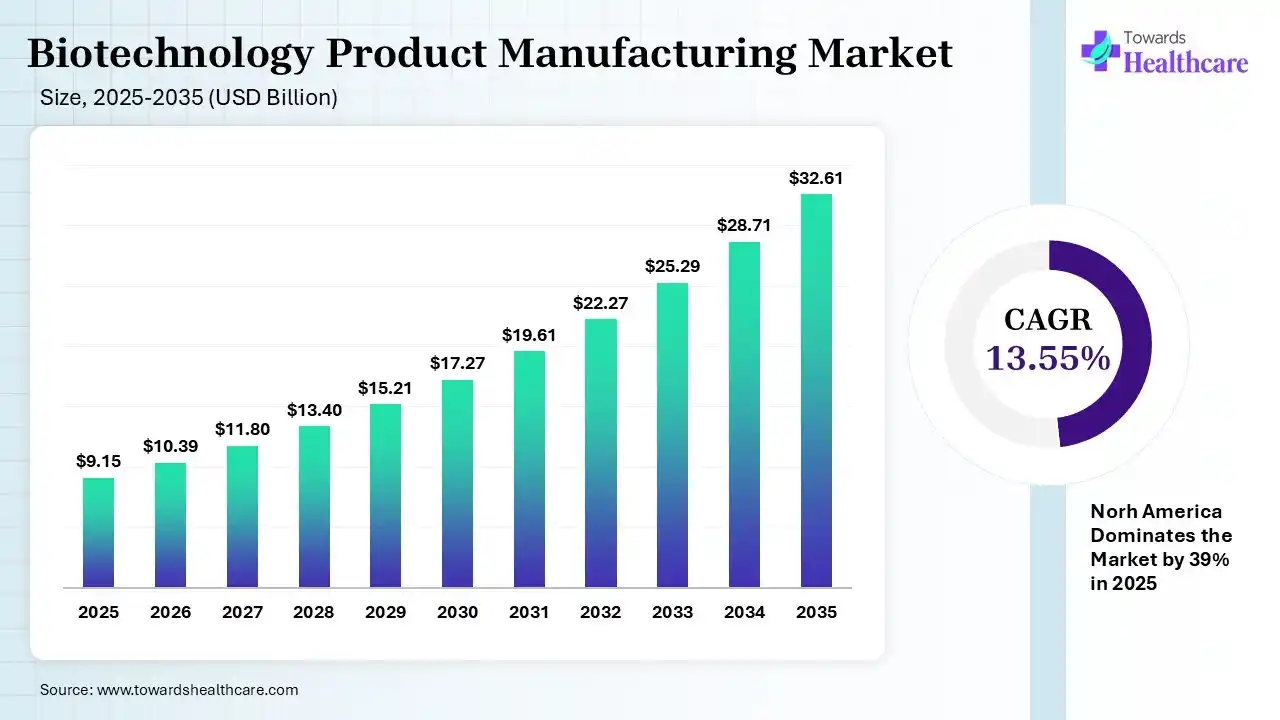
Biotechnology Product Manufacturing Market Size is USD 10.39 Billion in 2026.

Key Takeaways

  • Biotechnology product manufacturing market to crossed USD 10.39 billion by 2026.
  • Market projected at USD 32.61 billion by 2035.
  • CAGR of 13.55% expected in between 2026 to 2035.
  • North America held the major revenue share in the global biotechnology product manufacturing market by 39% in 2025.
  • Asia Pacific is expected to be the fastest-growing region between 2026 and 2035.
  • By product type, the therapeutic antibodies segment dominated the market by 32% in 2025. 
  • By product type, the recombinant DNA/RNA products segment is expected to be the fastest growing during the forecast period.
  • By application type, the medical and healthcare segment held a dominant revenue share of the market by 45% in 2025.
  • By application type, the research and development segment is expected to be the fastest growing during the forecast period.
  • By manufacturing process type, the upstream segment held a dominant position in the market by 50% in 2025.
  • By manufacturing process type, the downstream segment is expected to be the fastest-growing during the forecast period.
  • By end-user, the pharmaceutical and biotechnology companies segment registered its dominance over the global market by 40% in 2025.
  • By end-user, the hospitals and clinics segment is expected to be the fastest growing during the forecast period.

What is the Biotechnology Product Manufacturing?

The biotechnology product manufacturing market is driven by increasing chronic diseases and growing demand for personalized medicine and advanced biopharmaceuticals. The biotechnology product manufacturing involves the production of high-value products with the use of biologically derived, living cells, and enzymes. This process helps in the development of products such as vaccines, medicines, biofuels, and enzymes under controlled conditions.

AI Technological Shifts in the Biotechnology Product Manufacturing Market

The demand for AI in the biotechnology product manufacturing is increasing as it helps in drug discovery and personalized therapies development. It also helps in monitoring and optimizing the manufacturing process, as well as helps in detecting any defects in the product, maintaining its quality. Moreover, its predictive analytics and automation also help in enhancing the yield and workflow efficiency.

What are the Trends & Future Outlook of the Biotechnology Product Manufacturing Market?

Growing Demand for Biologics

The growing incidence of chronic disease and health awareness are increasing the adoption of biologics such as antibody drug conjugates and monoclonal antibodies, which is promoting their manufacturing as well as creating new opportunities.

Expanding Application

The biotechnological products are gaining momentum due to growing applications beyond healthcare, where they are being utilized as biofertilizers, industrial enzymes, and biofuels across various non-healthcare sectors, accelerating their manufacturing processes.

Technological Advancements

The growing technological innovations are enhancing the biotechnology product manufacturing process by utilizing advanced technologies like recombinant DNA/RNA technologies, mRNA platforms, CRISPR, etc.

Key Indicators and Highlights

Table Scope
Market Size in 2026 USD 10.39 Billion
Projected Market Size in 2035 USD 32.61 Billion
CAGR (2026 - 2035) 13.55%
Leading Region North America by 39%
Historical Data 2020 - 2023
Base Year 2025
Forecast Period 2026 - 2035
Measurable Values USD Millions/Units/Volume
Market Segmentation By Product Type, By Application, By Manufacturing Process, By End-User, By Region
Top Key Players Thermo Fisher Scientific, Sartorius, Danaher Corporation, Agilent Technologies, Illumina, Inc., Eppendorf SE, Bio-Rad Laboratories, Waters Corporation, Bruker Corporation, Becton Dickinson (BD)

Segmental Insights

Biotechnology Product Manufacturing Market Segmentation

By Product Type Insights

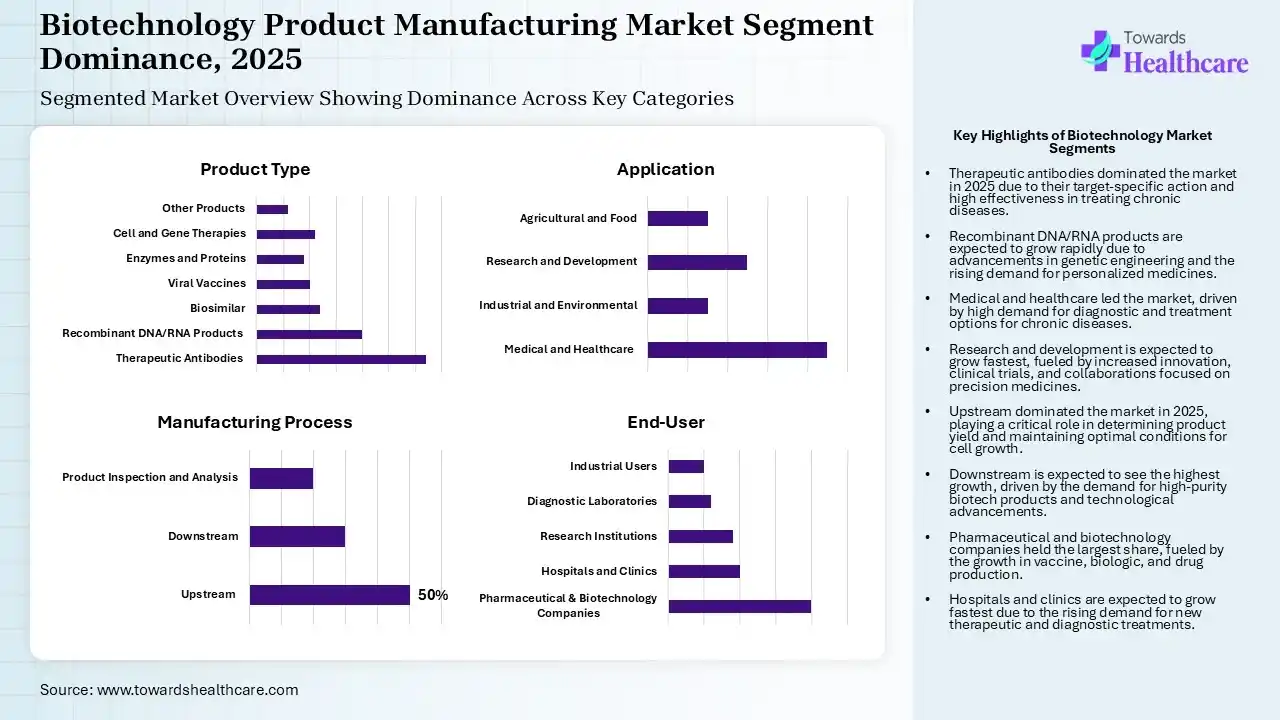
The Therapeutic Antibodies Segment Dominated the Market in 2025

Segment Share 2025 (%)
Therapeutic Antibodies 32%
Recombinant DNA/RNA Products 20%
Biosimilar 12%
Viral Vaccines 10%
Enzymes and Proteins 9%
Cell and Gene Therapies 11%
Other Products 6%

Explanation

  • Therapeutic Antibodies account for 32% of the market, dominating due to their widespread use in treating various diseases, especially cancer and autoimmune disorders.
  • Recombinant DNA/RNA Products make up 20% of the market and are the fastest growing segment, driven by the increasing demand for genetic therapies and personalized medicine.
  • Biosimilar holds 12% of the market, with growth fueled by the demand for cost-effective alternatives to expensive biologic drugs, though it remains a smaller segment.
  • Viral Vaccines represent 10% of the market, driven by global health needs, although their market presence is smaller compared to other therapeutic products.
  • Enzymes and Proteins account for 9% of the market, serving a niche demand across industries, with a smaller share relative to other therapeutic categories.
  • Cell and Gene Therapies hold 11% of the market and are gaining momentum due to advancements in treating genetic disorders and cancer, showing significant growth potential.
  • Other Products make up 6% of the market, covering specialized treatments with a smaller share but still contributing to the overall market.

The therapeutic antibodies segment accounted for the highest revenue share of the market by 32% in 2025, due to their target-specific action and enhanced effectiveness. They were also preferred in the treatment of various chronic diseases, where the growth in the investment also increased their demand and adoption rates.

The recombinant DNA/RNA products segment is expected to expand rapidly during the upcoming year, due to their rapid development and growing R&D activities. The growing demand for personalized medicines and advancements in genetic engineering technologies are also driving their manufacturing.

By Application Insights

The Medical and Healthcare Segment Dominated the Market in 2025

Segment Share 2025 (%)
Medical and Healthcare 45%
Industrial and Environmental 15%
Research and Development 25%
Agricultural and Food 15%

Explanation

  • Medical and Healthcare accounts for 45% of the market, dominating due to the high demand for chemical solutions in pharmaceuticals and healthcare applications.
  • Industrial and Environmental represents 15% of the market, serving niche applications in industrial processes and environmental management.
  • Research and Development holds 25% of the market and is the fastest growing segment, driven by increasing investments in innovation and technological advancements.
  • Agricultural and Food accounts for 15% of the market, supporting the food industry and agricultural applications, but remains a smaller segment compared to others.

The medical and healthcare segment held the dominating share of the market by 45% in 2025, driven by high demand for various diagnostic and treatment options. The growth in chronic disease also increased the use of various biotechnology products, where the rise in healthcare investments accelerated their manufacturing processes.

The research and development segment is expected to grow at the fastest CAGR in the market during the upcoming year, due to growing innovation and clinical trials. The rise in the demand for precision medicines and growing collaborations are also fuelling the manufacturing of various biotechnological products.

By Manufacturing Process Insights

The Upstream Segment Dominated the Market in 2025

Segment Share 2025 (%)
Upstream 50%
Downstream 30%
Product Inspection and Analysis 20%

Explanation

  • Upstream accounts for 50% of the market, dominating due to its critical role in the initial stages of production, such as raw material sourcing and processing.
  • Downstream represents 30% of the market, focusing on the final stages of production and distribution, contributing significantly but less dominantly than upstream.
  • Product Inspection and Analysis holds 20% of the market, ensuring product quality and compliance, but with a smaller share compared to upstream and downstream processes.

The upstream segment contributed the biggest revenue share in the market by 50% in 2025, as it is considered the most critical step determining the overall yield. The process also helped in the identification of the final product’s productivity and quality, where it was also considered essential for maintaining the optimal conditions required for cell growth.

The downstream segment is expected to gain the highest share of the market during the predicted time, driven by growing demand for high-purity biotech products. They are also essential for enhancing the product yield, where the growing technological advancements and funding are also increasing their use.

By End-User Insights

The Pharmaceutical and Biotechnology Companies Segment Dominated the Market in 2025

Segment Share 2025 (%)
Pharmaceutical & Biotechnology Companies 40%
Hospitals and Clinics 20%
Research Institutions 18%
Diagnostic Laboratories 12%
Industrial Users 10%

Explanation

  • Pharmaceutical & Biotechnology Companies account for 40% of the market, leading due to their significant demand for chemical solutions in drug development and production.
  • Hospitals and Clinics represent 20% of the market, driven by their need for various medical products and treatments, but with a smaller share compared to pharmaceutical companies.
  • Research Institutions hold 18% of the market, playing a crucial role in advancing scientific studies and innovations, though not as dominant as pharmaceutical companies.
  • Diagnostic Laboratories make up 12% of the market, focusing on testing and diagnostics, contributing to healthcare but with a smaller share.
  • Industrial Users account for 10% of the market, using chemical products in manufacturing and industrial processes, yet holding the smallest share among the end-users.

The pharmaceutical and biotechnology companies segment held the largest revenue share of the market by 40% in 2025, due to growth in the production of vaccines, biologics, and other drugs. The growth in R&D activities, the launch of new products, and the growth in investments also increased the manufacturing process across these companies.

The hospitals and clinics segment is expected to show the highest growth during the predicted time, due to growing demand for new therapeutic, personalized treatments, and diagnostic options. The expanding healthcare infrastructures and growing disease burden are also increasing their adoption rates, propelling their manufacturing.
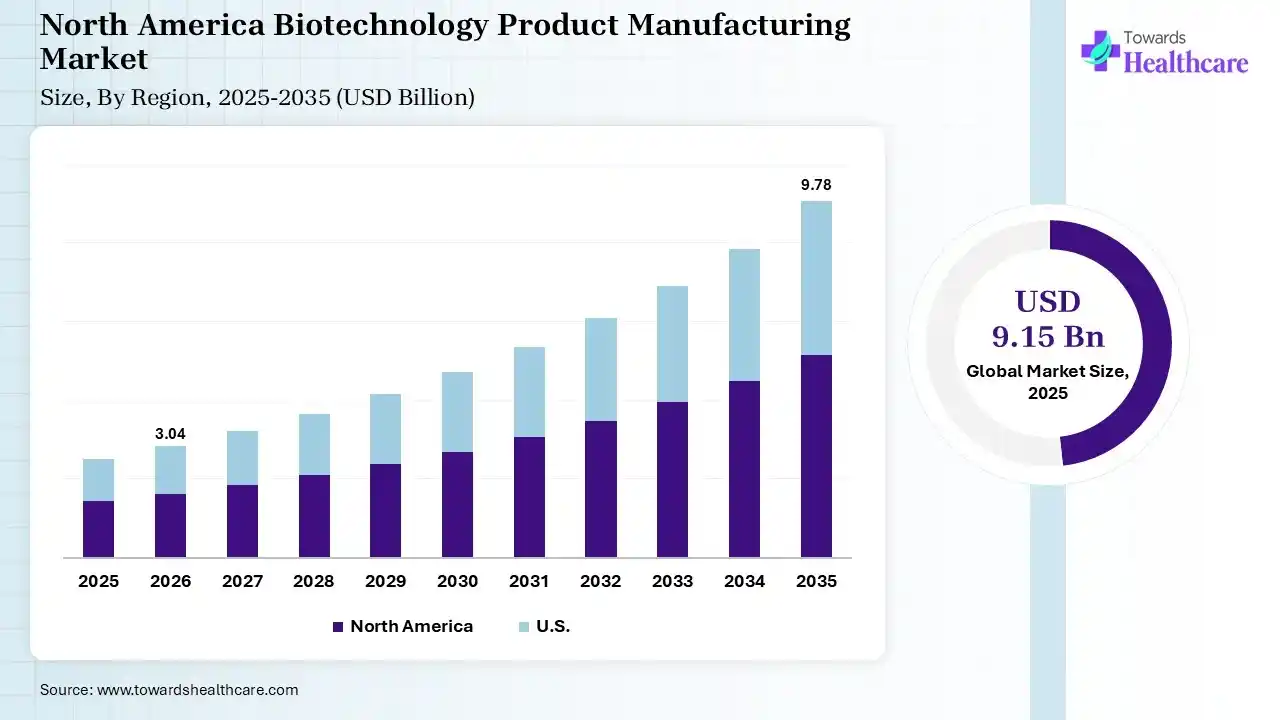
Regional Insights

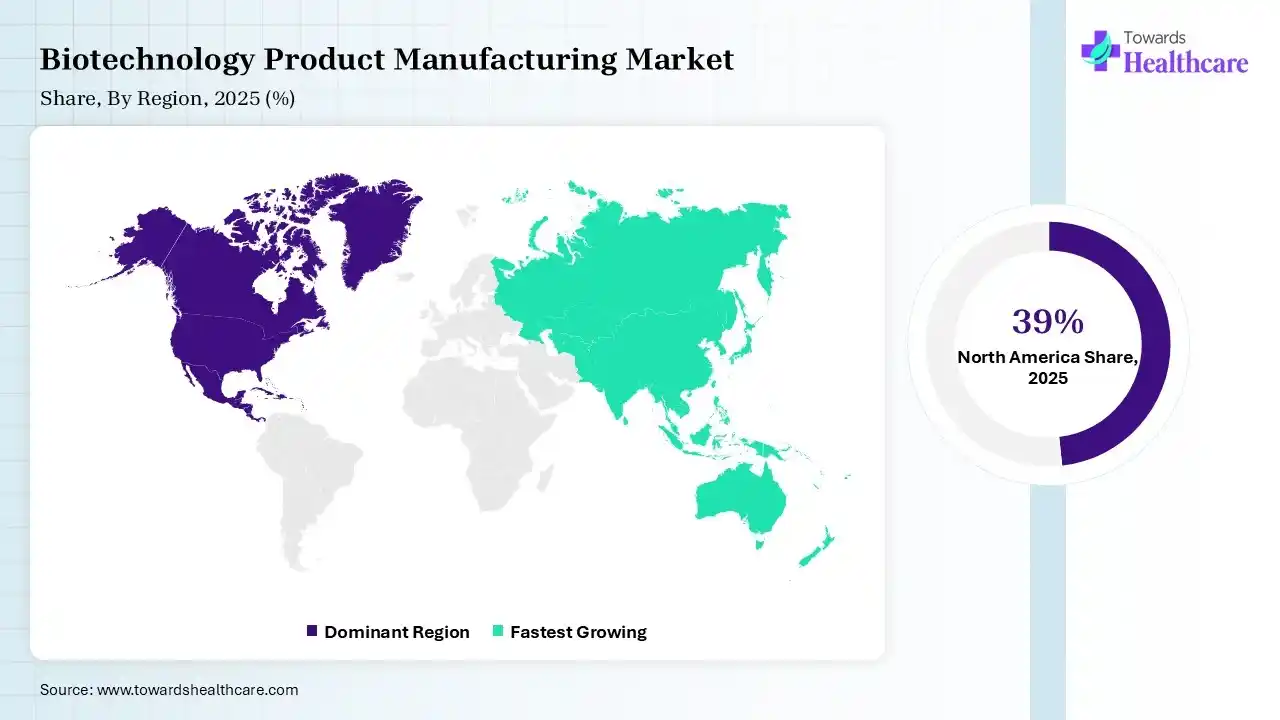
Biotechnology Product Manufacturing Market Shares for North America, Europe, Asia Pacific, Latin America and Middle East and Africa, 2025 (%).

Robust Companies Drive North America

Biotechnology Product Manufacturing Market Size is USD 3.04 Billion in 2026.

North America dominated the biotechnology product manufacturing market by 39% in 2025, due to the presence of robust biotechnology and pharmaceutical companies, along with manufacturing facilities, which increased the production of new biotechnological products. The growth in the R&D investment and stringent regulations also increased their use, which contributed to the market growth.

U.S. Market Trends

The presence of large biotechnology and pharmaceutical companies in the U.S. is driving the biotechnology product manufacturing to deal with the growing demand for gene therapies and vaccines. The growing R&D investments and technological advancements are also driving the adoption and development of new manufacturing techniques.

Expanding Industries Boost Asia Pacific

Asia Pacific is expected to host the fastest-growing biotechnology product manufacturing market during the forecast period, due to the rapid expansion of the biotechnology industries. This is increasing the manufacturing of vaccines and biologics, where the growing government funding, technological advancements, and increasing innovations are also increasing their use, enhancing the market growth.

India Market Trends
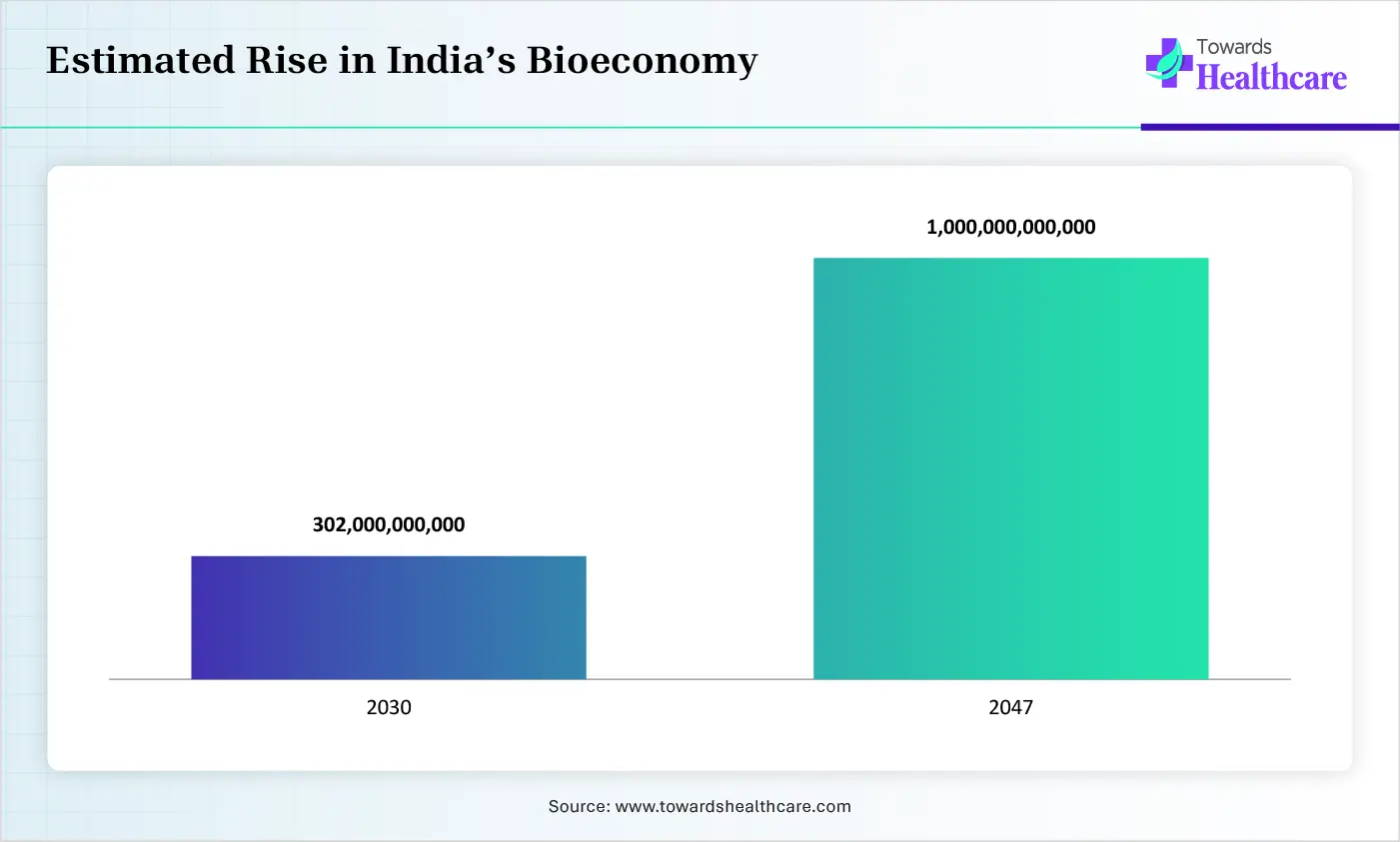
Estimated Rise in India’s Bioeconomy

India is experiencing a rapid growth in the biotechnology and pharmaceutical companies, where the growing government initiatives are also enhancing the biotechnology product manufacturing, promoting the bioeconomy. The growing use of vaccines and new diagnostics is also increasing their use, where their affordability is leading to new collaborations.

Europe Driven by Advanced R&D Infrastructure

Europe is expected to grow significantly in the biotechnology product manufacturing market during the forecast period, due to a well-developed R&D infrastructure and advanced biotechnology industries. The growing demand for personalized therapies and monoclonal antibodies is increasing their manufacturing, where the growing industrial and institute collaborations are also enhancing these processes, promoting the market growth.

UK Market Trends

The UK consists of advanced biotech and pharmaceutical industries, which are increasing the manufacturing of biologics, gene therapies, and vaccines. The growing R&D activities supported by government and private investments are also increasing their use, where technological advancements are leading to a rise in the new manufacturing techniques.

Biotechnology Product Manufacturing Market Value Chain Analysis

R&D

  • The R&D of the biotechnology product manufacturing focuses on automating bioprocesses and scaling single-use technologies for personalized medicines.
  • Key players: Thermo Fisher Scientific, Danaher Corporation, Sartorius.

Clinical Trials and Regulatory Approvals

  • The safety, manufacturing consistency, and efficiency of the biological products are evaluated in the clinical trials and regulatory approvals of the biotechnology product manufacturing.
  • Key players: Roche, Moderna, Pfizer.

Patient Support and Services

  • The financial assistance programs, digital adherence tools, and personalized nurse coaching are provided in the patient support and services of the biotechnology product manufacturing.
  • Key players: Amgen, AbbVie, Novartis.

Who are the Biotechnology Product Manufacturing Market Top Vendors and What are Their Offerings?

Biotechnology Product Manufacturing Market Companies are Thermo Fisher Scientific, Sartorius, Danaher Corporation, Agilent Technologies, Illumina, Inc.

Companies Headquarters Biotechnology Product Manufacturing Solutions
Thermo Fisher Scientific Waltham, U.S. Single-use bioreactors, chromatography systems, and mass spectrometers
Sartorius Gottingen, Germany Biostat STR bioreactors, membrane chromatography, and filtration units
Danaher Corporation Washington, U.S. Xcellerex bioreactors, centrifuges, and a protein purification system
Agilent Technologies Santa Clara, U.S. HPLC, mass spectrometry, and bioanalyzer
Illumina, Inc. San Diego, U.S. Next-generation sequencers and array-based platforms
Eppendorf SE Hamburg, Germany BioBLU single-use vessels, automated pipetting systems, and microcentrifuges
Bio-Rad Laboratories Hercules, U.S. Droplet Digital PCR, electrophoresis systems, and imaging tools
Waters Corporation Milford, U.S.  UPLC systems and mass spectrometry
Bruker Corporation Billerica, U.S. NMR spectrometers and mass spectrometry
Becton Dickinson (BD) Franklin Lakes, U.S. Flow cytometers and automated cell culture media systems

SWOT Analysis

Strengths

  • The biotechnology product manufacturing helps in the development of complex and high-value products.
  • They help in maintaining the biotechnological products’ efficiency and quality, which drives their adoption rates.
  • It also promotes the development of targeted and personalized formulations.
  • They also offer improved scalability, which increases their use across the healthcare sector.

Weaknesses

  • High cost associated with production acts as the major weakness in the biotechnology product manufacturing market, limiting its use.
  • Complex manufacturing processes also reduce their use.

Opportunities

  • The growing demand for targeted therapeutic options and gene therapies are increasing the use of biotechnology product manufacturing processes.
  • The growing incidence of infectious disease are also increasing their use in the development of vaccines.
  • Expanding collaborations and investments are also promoting the manufacturing of advanced therapies.
  • Growing technological advancements are also driving the adoption and development of new biotechnology product manufacturing techniques.

Threats

  • Risk associated with product contamination, batch failure, and product recall also limits the reliance on the biotechnology product manufacturing process.
  • Stringent regulation and high market competition also restrict the use of these processes.

What are the Recent Developments in the Biotechnology Product Manufacturing Market?

  • In March 2026, to overcome the central challenge in cell therapy manufacturing that is scaling the adherent cell processes without introducing unnecessary complexity or compromising biology, the first system in the category of Dynamic Adherent Bioreactor, that is Archimedes® One, was launched by Green Elephant Biotech.
  • In September 2025, with an aim to enhance the time-to-market for biopharmaceutical companies with the use of an integrated and affordable ADC manufacturing and development platform, a collaboration between Mycenax Biotech Inc., and Spera Pharma Inc., was announced, where they will cover linker/payload synthesis, drug substance formulation, production, and aseptic fill-finish by offering turnkey solution for antibody-drug conjugates (ADCs) and bioconjugates.

Segments Covered in the Report

By Product Type

  • Therapeutic Antibodies
  • Recombinant DNA/RNA Products
  • Biosimilar
  • Viral Vaccines
  • Enzymes and Proteins
  • Cell And Gene Therapies
  • Other Products

By Application

  • Medical and Healthcare
  • Industrial and Environmental
  • Research and Development
  • Agricultural and Food

By Manufacturing Process

  • Upstream
  • Downstream
  • Product Inspection and Analysis

By End-User

  • Pharmaceutical and Biotechnology Companies
  • Hospitals and Clinics
  • Research Institutions
  • Diagnostic Laboratories
  • Industrial Users

By Region

  • North America
    • U.S.
    • Canada 
    • Mexico 
    • Rest of North America
  • Latin America
    • Brazil
    • Argentina
    • Rest of Latin America
  • Europe 
    • Western Europe 
      • Germany 
      • Italy
      • France
      • Netherlands
      • Spain
      • Portugal 
      • Belgium
      • Ireland
      • UK 
      • Iceland 
      • Switzerland
      • Poland
      • Rest of Western Europe
    • Eastern Europe 
      • Austria
      • Russia & Belarus 
      • Türkiye
      • Albania 
      • Rest of Eastern Europe 
  • Asia Pacific
    • China 
    • Taiwan
    • India 
    • Japan 
    • Australia and New Zealand
    • ASEAN Countries (Singapore, Malaysia)
    • South Korea 
    • Rest of APAC 
  • MEA 
    • GCC Countries
      • Saudi Arabia 
      • United Arab Emirates (UAE)
      • Qatar 
      • Kuwait 
      • Oman 
      • Bahrain 
    • South Africa
    • Egypt 
    • Rest of MEA

FAQ's

Finding : The biotechnology product manufacturing market currently in 2026 records USD 10.39 billion and is anticipated to grow to USD 32.61 billion by 2035, advancing at a CAGR of 13.55% from 2026 to 2035.

Finding : North America is currently leading the biotechnology product manufacturing market by 39% due to the presence of robust biotechnology and pharmaceutical companies.

Finding : India Bioeconomy Report 2026, Ministry of Health and Family Welfare, Government of India, National Institutes of Health, FDA, WHO, PIB, CDC.

Tags

Meet the Team

Shivani Zoting

Shivani Zoting

Principal Consultant

Shivani Zoting is a dedicated research analyst specializing in the healthcare industry. With a strong academic foundation, a B.Sc. in Biotechnology and an MBA in Pharmabiotechnology, she brings a unique blend of scientific understanding and strategy.

Learn more about Shivani Zoting

Aditi Shivarkar

Aditi Shivarkar

Reviewed By

Aditi Shivarkar is a seasoned professional with over 14 years of experience in healthcare market research. As a content reviewer, Aditi ensures the quality and accuracy of all market insights and data presented by the research team.

Learn more about Aditi Shivarkar

Related Reports

Biotechnology Product Manufacturing Market
Updated Date: 30 March 2026   |   Report Code: 6786
WhatsApp