Pipeline Programs

CGT Companies Tracked

Manufacturing Facilities


The global cell culture supplements market size is predicted to increase from USD 3.15 billion in 2026 to approximately USD 9.71 billion by 2035, expanding at a CAGR of 13.32% from 2026 to 2035.
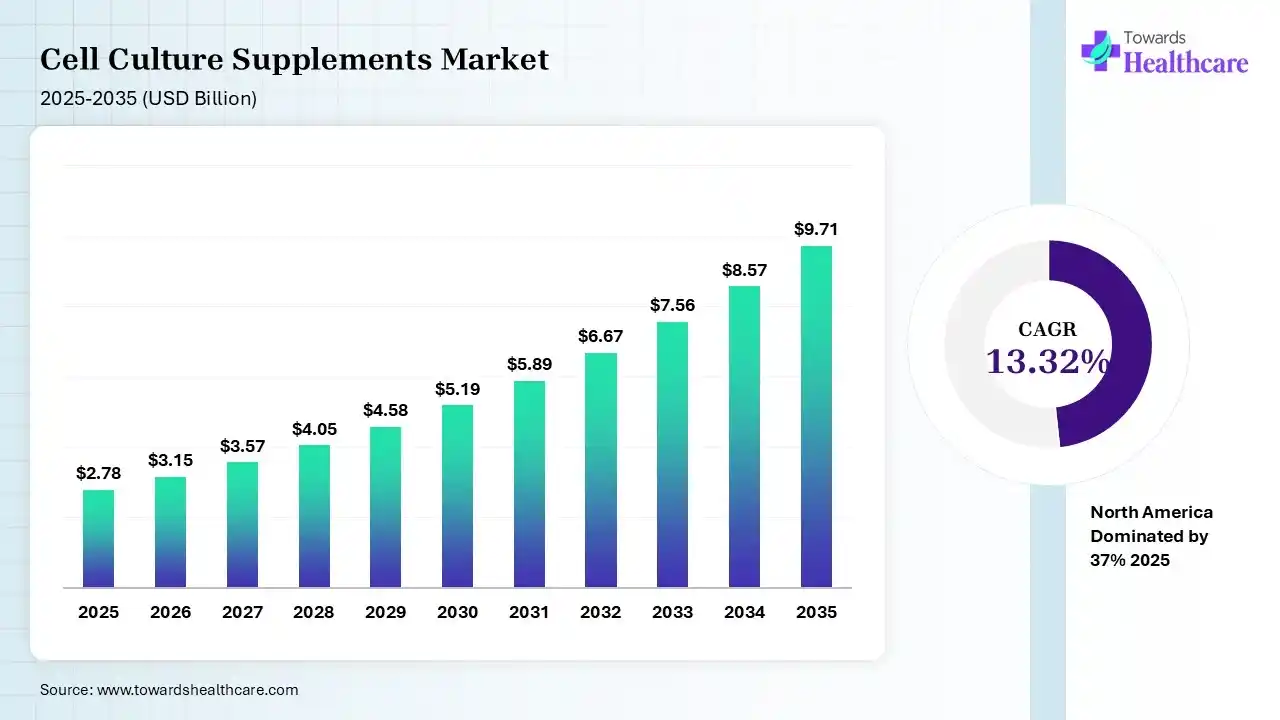
Across the world, many regions are experiencing a rise in demand for biologics, biosimilars, and vaccines, with progression in novelty in cell and gene therapies, which fuels the need for these supplements.
The cell culture supplements market comprises serum, amino acids, vitamins, and the overall expansion is fueled by the growing manufacturing of monoclonal antibodies (mAbs), recombinant proteins, & vaccines. Alongside, the market has been increasingly replacing fetal bovine serum (FBS) with recombinant albumin, insulin, & transferrin. Moreover, the leading firms are exploring CAR-T & stem cell therapies, as well as GMP-grade, animal-free human platelet lysate to boost cell proliferation.
Cell culture supplements are specialized biological or chemically defined additives, including growth factors, cytokines, hormones, amino acids, vitamins, and proteins, that enhance cell growth, viability, differentiation, and productivity in laboratory and biopharmaceutical cell culture systems. The cell culture supplements market is expanding due to increasing demand for biologics, cell and gene therapies, vaccines, and regenerative medicine. Growing adoption of serum-free and animal component-free formulations, along with advances in recombinant protein technologies and chemically defined media, is improving reproducibility and regulatory compliance. Emerging trends include personalized cell culture solutions, AI-enabled bioprocess optimization, and scalable manufacturing platforms for advanced therapies. Future opportunities lie in precision cell engineering, stem cell research, tissue engineering, and next-generation biomanufacturing, supported by continuous innovation in high-performance supplement formulations that improve cell quality, production efficiency, and therapeutic outcomes.
Mainly, AI algorithms have certain impressive advantages in the market, including the adoption of tools, such as CellTune, to evaluate vast, multi-dimensional data to estimate the excellent media formulations for increasing yield. Moreover, AI, like active learning models are assisting in the identification of the most informative experiments to run, which crucially raises medium compositions for optimized cell activity & lower manual testing.
Promoting 3D Cell Culture & Organoids
In this era, the market is progressing 3D models and tissue engineering, which need specialized, high-quality media supplements to foster complex cell-cell interactions.
Surging Customized Medicine & Stem Cell Research
The emergence of specialized media supplements is encouraging patient-derived cell therapies and stem cell research, which propels demand for high-grade, traceable, & GMP-compliant products.
Raising Sustainable & Ethical Sourcing
Day by day, consumers are highly prioritizing ethical products, which speeds up the development of plant-based & synthetic supplements.
| Table | Scope |
| Market Size in 2026 | USD 3.15 Billion |
| Projected Market Size in 2035 | USD 9.71 Billion |
| CAGR (2026 - 2035) | 13.32% |
| Leading Region | North America by 37% |
| Key Applications | Biopharmaceutical production, vaccine manufacturing, cell & gene therapy, regenerative medicine, stem cell research, drug discovery, toxicology testing |
| Primary End Users | Biopharmaceutical companies, biotechnology firms, academic research institutes, CROs, CDMOs, diagnostic laboratories |
| Key Growth Drivers | Expansion of biologics manufacturing, growth of cell & gene therapy pipelines, increasing stem cell research, shift toward serum-free media, rising demand for reproducible cell culture systems |
| Measurable Values | USD Millions/Units/Volume |
| Market Segmentation | By Product, By Application, By End Use, By Region |
| Top Key Players | Merck KGaA, Thermo Fisher Scientific Inc., Cytiva, HiMedia Laboratories, Danaher, Sartorius AG, Corning Inc., R&D Systems (Bio-Techne), STEMCELL Technologies, Repligen Corporation |
Which Product Led the Cell Culture Supplements Market in 2025?
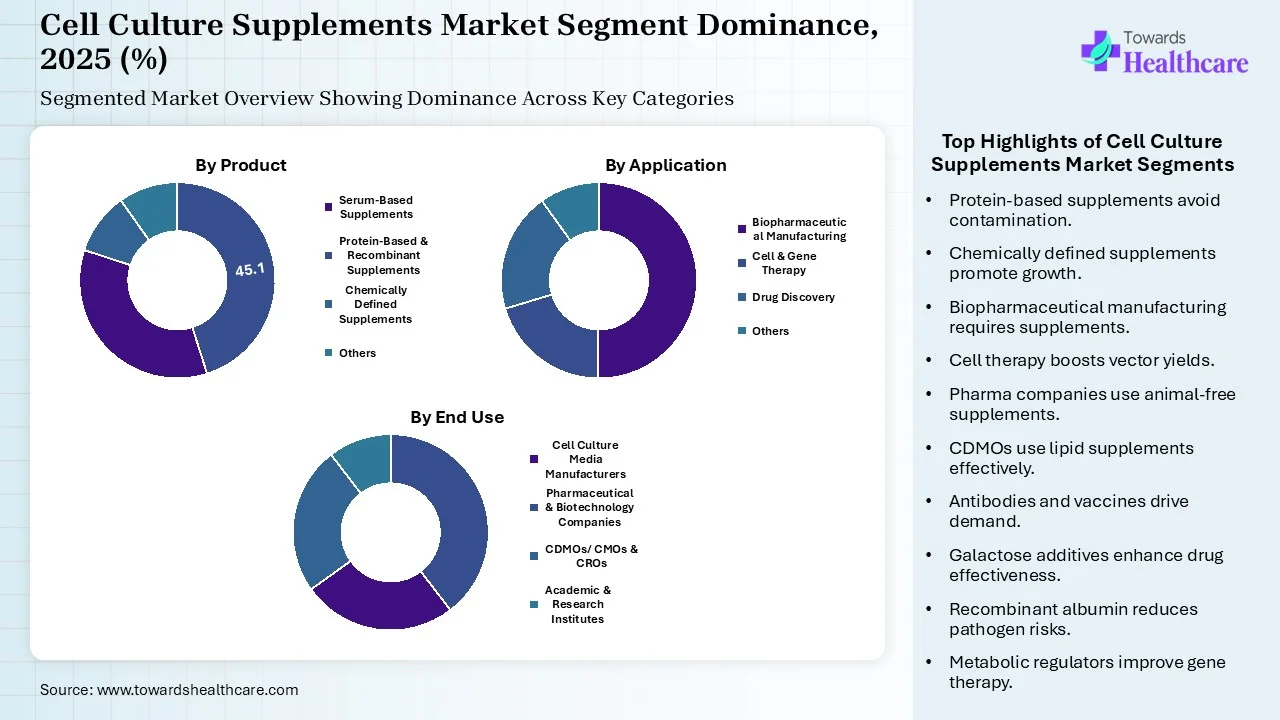
In 2025, the protein-based & recombinant supplements segment held a major revenue share of the market. A key driver is the ongoing significant shift from animal-derived components to combat contamination challenges, and an attractive demand for monoclonal antibodies, vaccines, & recombinant proteins, which need continuous, high-yield, & scalable processes. Besides this, firms, such as InVitria, leverage plants, like Nicotiana benthamiana, to produce recombinant albumin & transferrin, which eliminates animal-derived pathogen concerns.
Chemically Defined Supplements
In the future, the chemically defined supplements segment is predicted to register rapid growth. These supplements facilitate ensured cell proliferation and production, which is important for manufacturing complex biological products, including vaccines and recombinant proteins. Many players are widely using galactose-based additives to certainly modulate N-linked glycosylation, with raised G1F and G2F profiles in CHO cells to boost drug effectiveness. However, researchers are investigating xenofree, chemically defined, & non-plate-coating-based systems for mesenchymal stem cells (MSCs).
Which Application Dominated the Cell Culture Supplements Market in 2025?
By application, the biopharmaceutical manufacturing segment registered dominance in the market in 2025. This is mainly driven by the rising demand for biologics, such as complex antibodies and cell/gene therapies, and consistent investment in large-scale bioreactor capacity, i.e., both stainless steel & single-use by CDMOs. Furthermore, the leading players are implementing these supplements to boost cell viability, enhance protein titers, & keep consistency of glycosylation profiles in host cells, including CHO or HEK293.
Cell & Gene Therapy
During the prospective period, the cell & gene therapy segment is estimated to expand rapidly. The widespread use of specialized media & supplements is substantial for enhancing the yield of vectors, especially AAV and lentivirus, which are employed in gene therapy. Alongside, developing supplements that cover metabolic regulators, which can target specific cellular pathways to raise the efficacy of gene editing or viral transduction.
How did the Pharmaceutical & Biotechnology Companies Segment Lead the Market in 2025?
The pharmaceutical & biotechnology companies segment held the largest share of the cell culture supplements market in 2025. These companies are increasingly adopting serum (FBS), growth factors, amino acids, vitamins, lipids, and recombinant proteins, like insulin. A key catalyst is the involvement of regulatory bodies, which promote well-defined, animal-free components; this further drives the need for advanced supplements.
CDMOs/ CMOs & CROs
On the other hand, the CDMOs/ CMOs & CROs segment is anticipated to witness the fastest expansion. They prefer recombinant growth factors, specialized lipid emulsions, amino acids, vitamins, & shear-protecting surfactants. The globe extensively relied on Contract Development and Manufacturing Organizations (CDMOs/CMOs) for the production of tailored medicines. They are implementing lipid supplements, such as Cell-Ess, for significant enhancement of protein production without rising biomass.
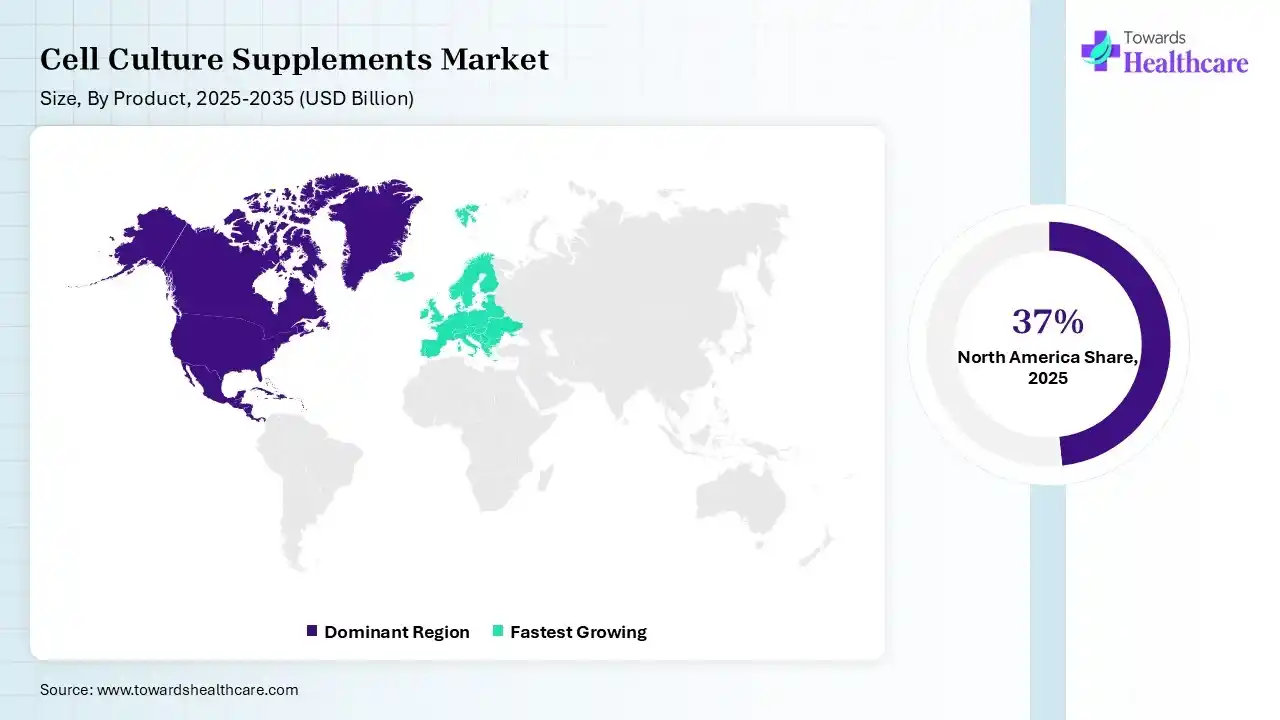
| Regions | Share 2025 (%) |
| North America | 37% |
| Europe | 30% |
| APAC | 23% |
| Latin America | 6% |
| Middle East and Africa | 4% |
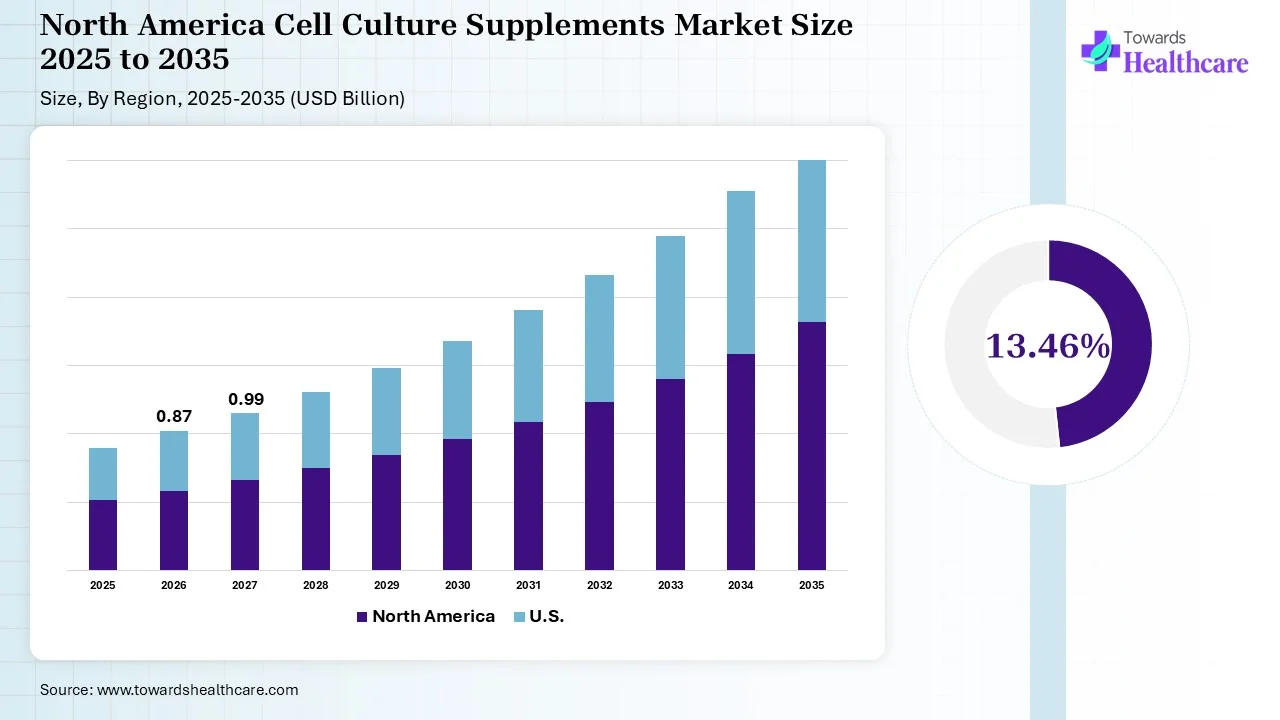
North America led the cell culture supplements market by 37% share in 2025, due to the rigorous biopharmaceutical manufacturing, breakthroughs in stem cell research, and increased investment & research in regenerative medicine & tailored medicine. Numerous regional firms are stepping towards revolutionizing AI-assisted improvement, 3D microtissue models, and specialized media for CAR-T cell therapy.
U.S. Market Trends
The presence of a well-established biotechnology and pharmaceutical sector in the U.S. increases the demand for cell culture supplements. Additionally, rising advancements in cell and gene therapies, as well as monoclonal antibodies and vaccines, are also increasing their use.
The U.S. market was a major contributor to the market, as it is a highly encouraging pipeline of monoclonal antibodies and biosimilars, which requires scalable, GMP-compliant supplements.
For instance,
Canada Cell Culture Supplements Marekt Advances with Biopharmaceutical Innovation
The Canada cell culture supplements market is growing due to increasing investments in biopharmaceutical research, expanding cell and gene therapy development, and rising demand for biologics manufacturing. Strong academic research, government support for life science, and growing adoption of serum-free and chemically defined culture supplements are accelerating market growth. Advances in regenerative medicine and stem cell research are further creating significant opportunities across the country.
Asia Pacific is predicted to show the highest growth in the upcoming years. Specifically, significant government initiatives in China, like the National Key R&D Program & South Korea, i.e., Bio-Vision 2021, are spurring innovation & infrastructure progression. As well as, the Chinese industry is promoting optimisation of media for Chinese hamster ovary (CHO) cells to foster titers, with raised productivity by 50 pg/cell/day.
India Market Trends
Expanding biopharmaceutical industries in India are increasing the demand for cell culture supplements. At the same time, increasing vaccine manufacturing is also driving the use of specialized cell culture products. Furthermore, rising government support is also encouraging their use. India is estimated to expand at a rapid CAGR, as several leaders are highly demanding premium supplements, specifically in vaccines & regenerative medicine. Many Indian manufacturers are actively shifting toward animal-free, recombinant supplements.
For instance,
China Cell Culture Supplements Marekt expands Through Biomanufacturing Growth
The China cell culture supplements market is expanding due to rapid growth in biopharmaceutical manufacturing, increasing investments in cell and gene therapy research, and expanding biotechnology infrastructure. Rising demand for biologics, vaccines, and regenerative medicine is accelerating supplements adoption. Strong government support, growing contract research and manufacturing activities, and advancements in serum-free, chemically defined, and recombinant cell culture technologies are further driving market expansion.
Europe is expected to expand notably in the market during the predicted period, due to the presence of a robust biopharmaceutical industry. The growing biologic products and advances in cell and gene therapy are also increasing their demand. Rising government funding is also promoting market growth.
UK Market Trends
The presence of a robust biotechnology sector in the UK is driving the demand for cell culture supplements. The increasing development of monoclonal antibodies and vaccines are also driving the demand. Additionally, expanding pharma R&D activities are also increasing their use.
Germany Market Trends
Germany is experiencing a rise in biologics manufacturing, which is increasing the demand for cell culture supplements for a wide range of applications. The growing demand for cell and gene therapies, supported by high R&D investments are also increasing their adoption rates.
Latin America is expected to show significant growth during the forecast period due to growing R&D activities. Increasing vaccine manufacturing and government support are also driving the demand for cell culture supplements. The growing contract manufacturing is also increasing demand.
Brazil Market Trends
Rising production of biologics and biosimilars in Brazil is increasing the demand for cell culture supplements. Additionally, growing vaccine production capabilities are also increasing their adoption. Expanding pharmaceutical manufacturing services and biotech innovations are also increasing their use.
MEA is predicted to show lucrative growth in the market during the forecast period, due to growing investments in vaccine production. Expanding biotechnology facilities and research are also driving the demand for cell culture supplements. Furthermore, growing government support and demand for advanced therapies are also increasing their use.
United Arab Emirates (UAE) Market Trends
Increasing advancement in the biotechnology sector, supported by research investments, is driving the demand for cell culture supplements in the UAE. Moreover, increasing government initiatives and expanding biopharmaceutical manufacturing capabilities are also driving the demand for cell culture supplements.
| Ecosystem Category | Key Participants | Role in Market |
| Technology Providers | Thermo Fisher Scientific, Sartorius, Cytiva, Merck | Develop cell culture technologies, media optimization platforms, and bioprocess solutions |
| Product Manufacturers | Thermo Fisher Scientific, Merck, Corning, Lonza, HiMedia | Manufacture sera, growth factors, cytokines, recombinant proteins, and culture supplements |
| Service Providers | Bio-Techne, Repligen, Miltenyi Biotec | Technical support, custom media development, process optimization |
| Platform Providers | Sartorius, Cytiva, Thermo Fisher Scientific | Integrated bioprocessing and cell culture workflow platforms |
| CROs/CDMOs | Lonza, WuXi AppTec, Catalent, Charles River | Cell therapy development and manufacturing using specialized supplements |
| Software Vendors | Sartorius, Cytiva, Thermo Fisher Digital Solutions | Cell culture monitoring, process analytics, manufacturing optimization |
| Research Institutions | National Institutes of Health, Broad Institute, Max Planck Society | Research and validation of advanced cell culture applications |
| End-User Industries | Biopharma, Cell Therapy, Vaccine Manufacturing, Regenerative Medicine | Commercial utilization of supplements |
| Tier 1 | Tier 2 | Tier 3 | |
| Typical Market Influence | 63% | 27% | 10% |
| Tier 1 | ||||
| Company Name | Headquarters | Country | Why Relevant to This Market | Key Products/Services |
| Thermo Fisher Scientific Inc. | Waltham, Massachusetts | USA | Global leader in cell culture reagents through Gibco portfolio | Gibco sera, growth factors, supplements, serum-free additives |
| Merck KGaA | Darmstadt, Hesse | Germany | Extensive cell culture supplement portfolio via MilliporeSigma | FBS, platelet lysates, recombinant proteins, media supplements |
| Danaher Corporation (Cytiva) | Washington, D.C. | USA | Major supplier of HyClone products and bioprocess solutions | HyClone sera, Cell Boost supplements |
| Tier 2 | ||||
| Company Name | Headquarters | Country | Why Relevant to This Market | Key Products/Services |
| Corning Incorporated | Corning, New York | USA | Major supplier of cell culture reagents and proteins | Cell culture supplements, purified proteins, media additives |
| Bio-Techne Corporation | Minneapolis, Minnesota | USA | Strong portfolio of growth factors and cytokines | R&D Systems growth factors, cytokines, supplements |
| STEMCELL Technologies | Vancouver, British Columbia | Canada | Specialized stem cell culture leader | Stem cell supplements, cytokines, serum-free additives |
| Tier 3 | ||||
| Company Name | Headquarters | Country | Why Relevant to This Market | Key Products/Services |
| FUJIFILM Irvine Scientific | Santa Ana, California | USA | Specialized cell culture media and supplements provider | Serum-free supplements, cell therapy media additives |
| Miltenyi Biotec | Bergisch Gladbach, North Rhine-Westphalia | Germany | Cell therapy-focused reagent developer | T-cell expansion supplements, cytokines |
| Proteintech Group, Inc. | Rosemont, Illinois | USA | Growing supplier of recombinant proteins and growth factors | Cell culture growth factors and proteins |
By Product
By Application
By End Use
By Region






Principal Consultant
Payal Rabde is a Healthcare Market Research Analyst at Towards Healthcare Research & Consulting with 4+ years of experience in pharmaceuticals, biotechnology, medical devices, and life sciences.
Learn more about Payal Rabde

Reviewed By
Aditi Shivarkar is a seasoned professional with over 14 years of experience in healthcare market research. As a content reviewer, Aditi ensures the quality and accuracy of all market insights and data presented by the research team.
Learn more about Aditi Shivarkar