


The global cochlear implant market size was estimated at USD 2.32 billion in 2025 and is predicted to increase from USD 2.54 billion in 2026 to approximately USD 5.77 billion by 2035, expanding at a CAGR of 9.54% from 2026 to 2035.
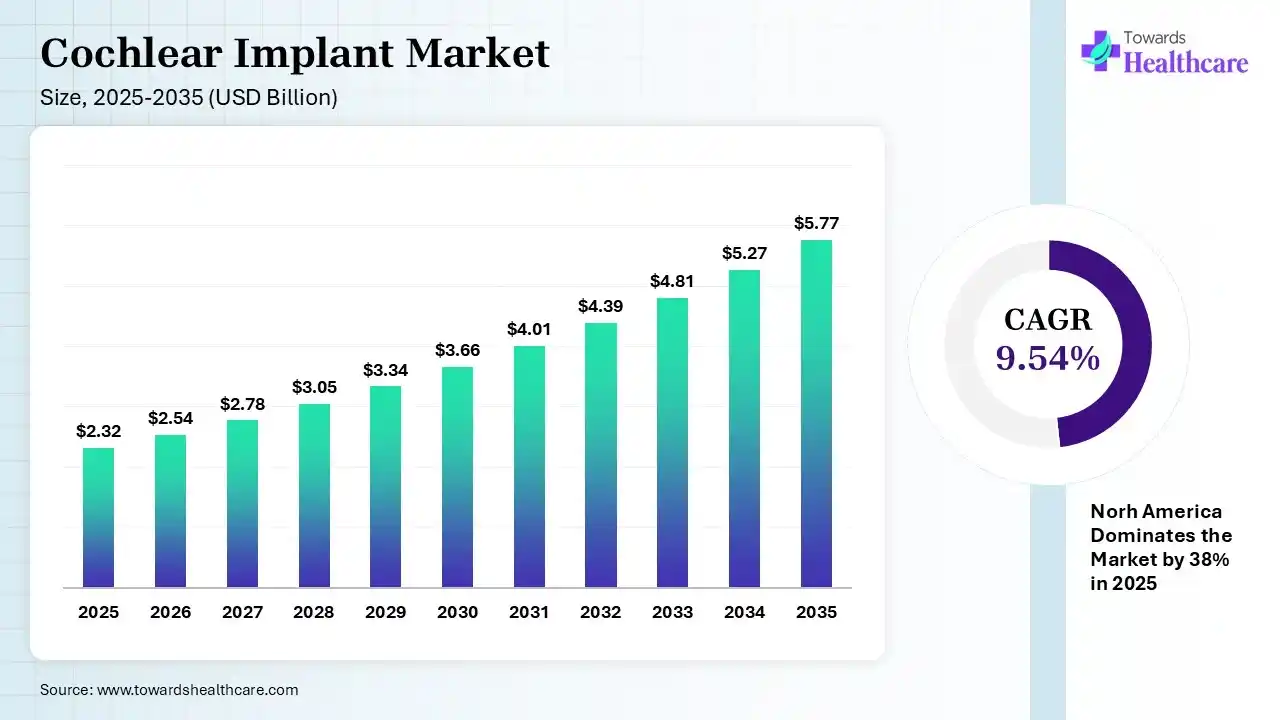
A notable growth in the ageing population, who are highly prone to hearing loss issues, and rising awareness regarding implantation in children, drives the adoption and breakthroughs in cochlear implants. The worldwide leaders are encouraging advances in novel electrode design and bilateral cochlear implants.
The global cochlear implant market covers devices used to treat moderate-to-profound sensorineural hearing loss, bypassing damaged inner-ear hair cells to directly stimulate the auditory nerve. These kinds of devices have several purposes, like preserving speech understanding, enhancing environmental sound perception in both adults & children, which improves communication in noise, & prevents social isolation.
The cochlear implant market also includes external sound processors, microphones, transmitters, and internal implanted receivers with electrode arrays. These systems work together to convert sound into electrical signals that the brain recognizes as hearing. Cochlear implants are widely used for adults with severe hearing loss and children born with profound deafness. Early implantation often improves speech and language development. Growing awareness about hearing rehabilitation is increasing patient acceptance.
Technological advances such as wireless connectivity, rechargeable batteries, artificial intelligence-enabled sound processing, and smartphone compatibility are improving user experience. Expanding newborn hearing screening programs support earlier diagnosis and treatment. Government reimbursement programs and favorable healthcare policies in several countries improve access to these devices. Hospitals, specialty hearing centers, and cochlear implant clinics remain the primary treatment settings. Continuous research focuses on improving sound quality, surgical outcomes, device durability, and long-term hearing performance, supporting broader adoption across diverse patient groups worldwide.
In this era and with an emphasis on prospective benefits, AI assists in customizing device programming, with optimized speech perception, and finally, increased surgical results. Besides this, the wide spread adoption of machine learning offers adjustments in stimulation characteristics based on each user's neural responses, which improves loudness and frequency mapping for excellent auditory performance. Global surgeons are encouraging the use of AI and robotic-assisted, image-guided techniques that provide more precise electrode placement, with minimal trauma & raised hearing preservation.
Seeking Integrated Stimulation (EAS/ENS)
This has been pushed with the utilization of electro-acoustic stimulation (EAS) or electro-natural stimulation (ENS), enabling users to benefit from both the implant and their natural residual hearing.
Spurring Next-Generation Electrode Design
Researchers are putting efforts into designing electrodes that are closer to neural tissue, lowering electrode interaction and improving spatial selectivity, which further comprises drug-eluting electrodes to reduce fibrosis and tissue damage during insertion.
Elevating Fully Implantable Cochlear Implants (FICI)
The market is stepping towards the progression of systems where all components are under the skin, which allows for persistent, invisible hearing and removes the need for external hardware.
| Table | Scope |
| Market Size in 2026 | USD 2.54 Billion |
| Projected Market Size in 2035 | USD 5.77 Billion |
| CAGR (2026 - 2035) | 9.54% |
| Leading Region | North America by 38% |
| Key Applications | Adult hearing restoration, pediatric hearing rehabilitation, bilateral implantation, single-sided deafness (SSD), hybrid electro-acoustic hearing solutions |
| Primary End Users | Hospitals, ENT clinics, audiology centers, cochlear implant centers, ambulatory surgical centers |
| Key Growth Drivers | Rising hearing loss prevalence, expanding reimbursement coverage, earlier pediatric intervention, technological advancements, aging population |
| Measurable Values | USD Millions/Units/Volume |
| Market Segmentation | By Age Group, By Fitting Type, By End Use, By Region |
| Top Key Players | Cochlear Ltd., Sonova, MED-EL Medical Electronics, Demant A/S, Zhejiang Nurotron Biotechnology Co., Ltd. (Nurotron), Amplifon S.p.A. (GAES), Neubio AG |
Which Age Group Led the Cochlear Implant Market in 2025?
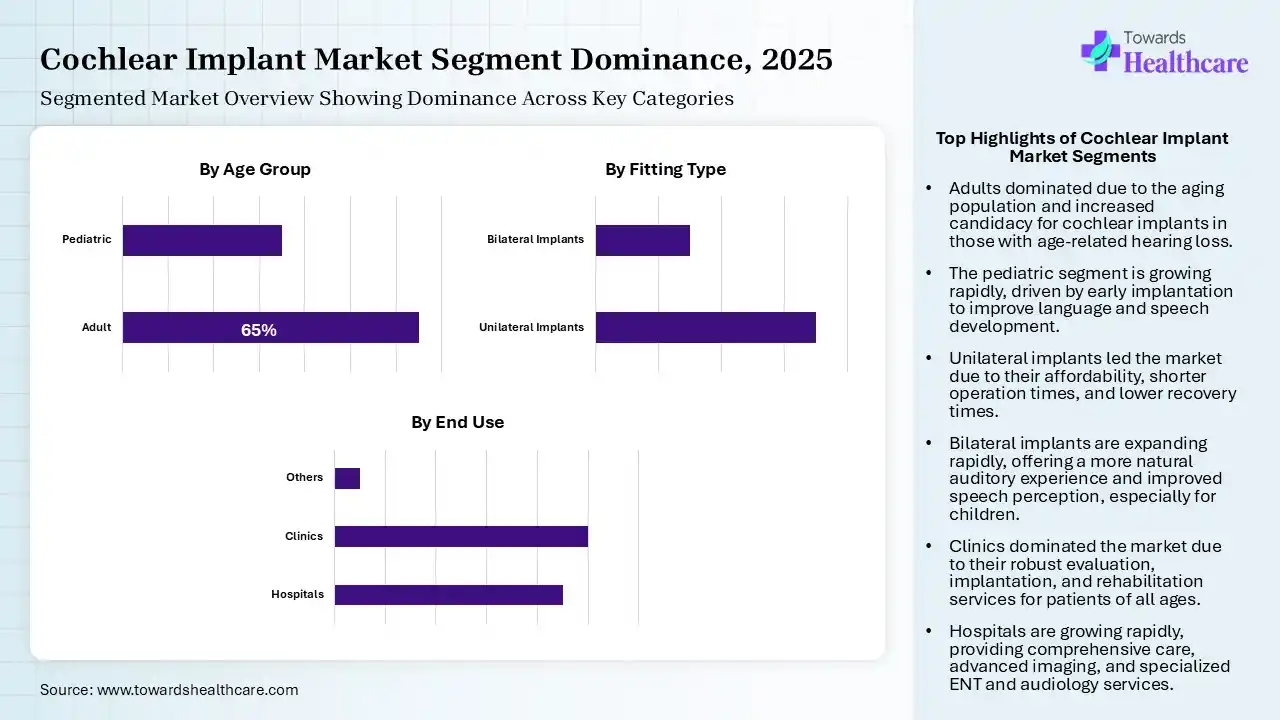
In 2025, the adult segment held a major share of the market by 65%. This mainly includes the ageing population, i.e., 65+, who are facing severe, age-related hearing loss, called presbycusis. The healthcare system has expanded candidacy, like adults with moderate-to-profound high-frequency hearing loss who have good low-frequency hearing. In numerous centers, CI surgery is conducted under local anesthesia with conscious sedation, which is safer for older adults with comorbidities.
Pediatric
On the other hand, the pediatric segment is estimated to show the fastest growth. Segmental expansion is propelled by early implantation, i.e., before 9-18 months, which improves language acquisition, speech quality, & auditory development. The globe is emphasizing the wider adoption of CIs in children with SSD, which gives optimized sound localization and speech perception in noisy environments.
How did the Unilateral Implants Segment Dominate the Market in 2025?
The unilateral implants segment captured the largest share of the cochlear implant market by 70% in 2025. Its dominance is fueled by its affordability, with shorter operation times and lowered recovery times, which makes it preferred by several insurers and patients. Advanced unilateral implants are leveraging shorter or specialized electrode arrays, allowing for shallow insertion, protecting residual low-frequency hearing, which is necessary for excellent sound quality.
Bilateral Implants
In the coming era, the bilateral implants segment is predicted to expand rapidly. This kind facilitates a more natural auditory experience, rigorous hearing in complex listening situations, & improved auditory-linguistic development, especially in children. Companies are promoting novelty in thinner implant designs, refined electrode technology for hearing preservation, & AI-powered, smart sound processors.
Which End-Use Held a Major Share of the Cochlear Implant Market in 2025?
In 2025, the clinics segment led with a dominant share of the market by 45%. They are widely using different types of implants for patients of all ages, which offer robust evaluation, surgical implantation, and long-term audiological rehabilitation. Alongside, clinics are increasingly implementing Cochlear (Nucleus), MED-EL, and Advanced Bionics, often leveraging behind-the-ear (BTE) or single-unit off-the-ear processors.
Hospitals
The hospitals segment is anticipated to expand at a lucrative CAGR. These hospitals possess comprehensive, multidisciplinary care, such as surgery, diagnosis, and rehabilitation. Also, they explore advanced imaging, surgical theaters, and specialized ENT surgeons & audiologists. The trend is supporting combined electrical stimulation with acoustic stimulation (hearing aid) for patients with residual low-frequency hearing.
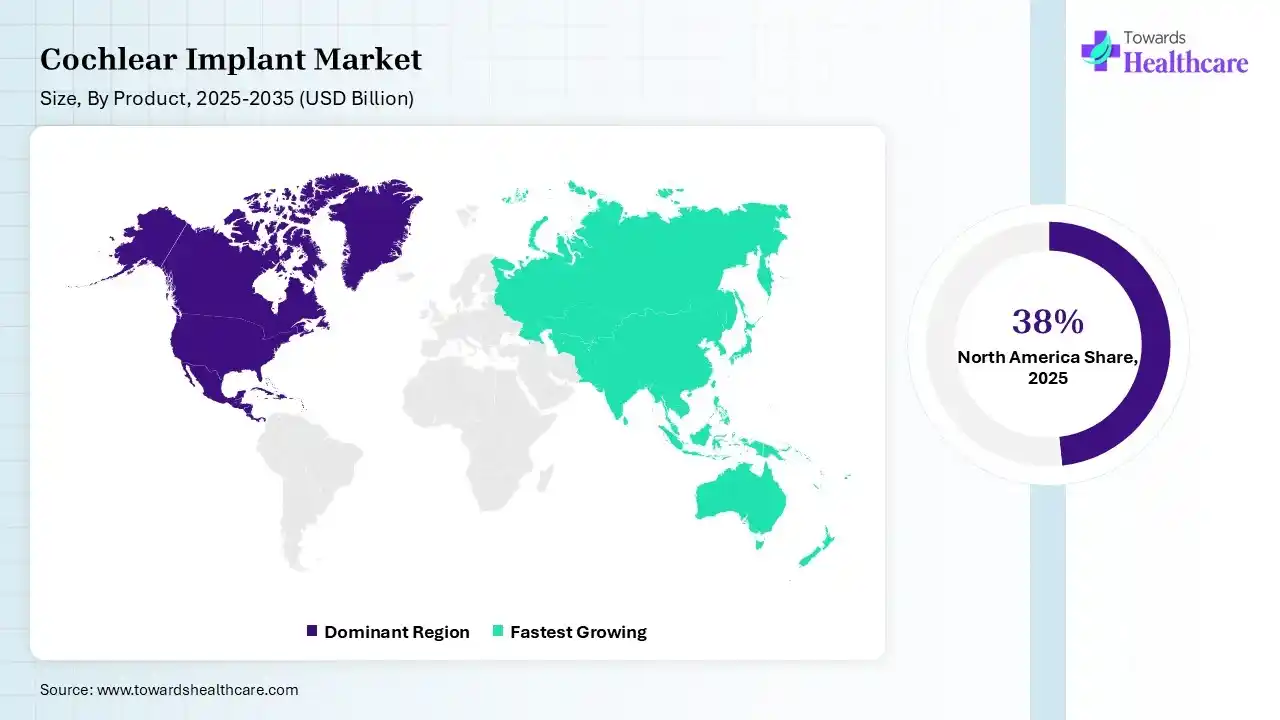
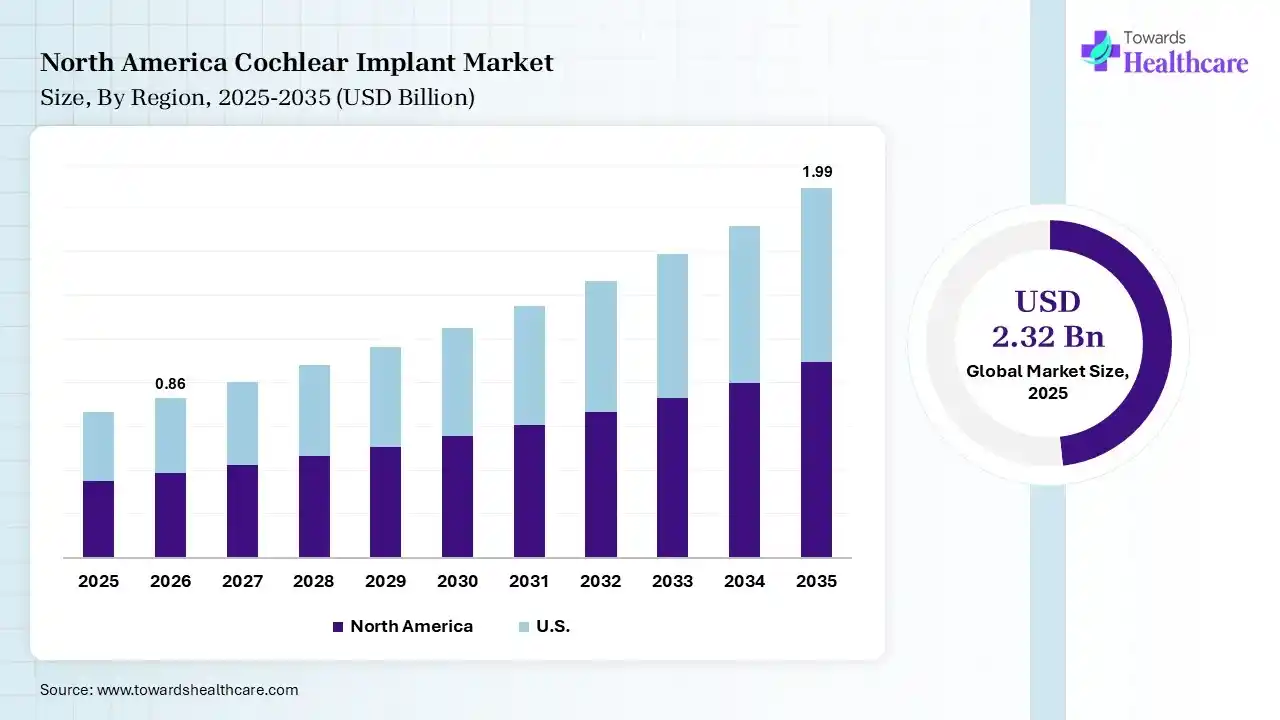
North America registered dominance in the cochlear implant market by 38% due to well-established healthcare infrastructure, broader reimbursement coverage, and widespread adoption of technologically advanced 3T MRI-compatible devices In the early part of this year, CHHA introduced its Spend2Save Canada campaign to bolster the provision of cochlear implants & confirm equitable access across all Canadian provinces.
For instance,
U.S. Market Trends
Whereas the U.S. was the largest contributor to the market, as it is aiming at new-generation processors, like the MED-EL SONNET 3, which emphasizes miniaturization, improved background noise suppression, & direct, seamless Bluetooth streaming to devices.
Canada Market Trends
Canada has a well-developed cochlear implant market supported by universal healthcare, newborn hearing screening, and specialized hearing centers. Around 3 million Canadians live with hearing loss, creating steady demand for advanced hearing solutions. Competition includes leading global manufacturers working with hospitals and audiology clinics. Bilateral implantation and remote programming are becoming more common. Growth opportunities come from expanding services in rural communities, increasing awareness of early intervention, stronger rehabilitation programs, and continuous adoption of wireless sound processors and artificial intelligence-enabled hearing technologies.
During 2026-2035, the Asia Pacific is estimated to witness rapid expansion in the cochlear implant market. More specifically, China & India are encouraging suitable government policies & reimbursement coverage, which ultimately pushes cost-effectiveness and accessibility. Before this, these countries experienced a rise in cases of severe-to-profound sensorineural hearing loss among adults and children.
China Market Trends
China will grow at the fastest CAGR, as Shanghai, Jiangsu, and Zhejiang have employed cochlear implants in their basic medical insurance programs. Besides this, the Hainan Boao Lecheng pilot zone is being utilized to roll out the latest foreign medical devices, nearly simultaneously with Western markets, which omits long approval wait times.
India Market Trends
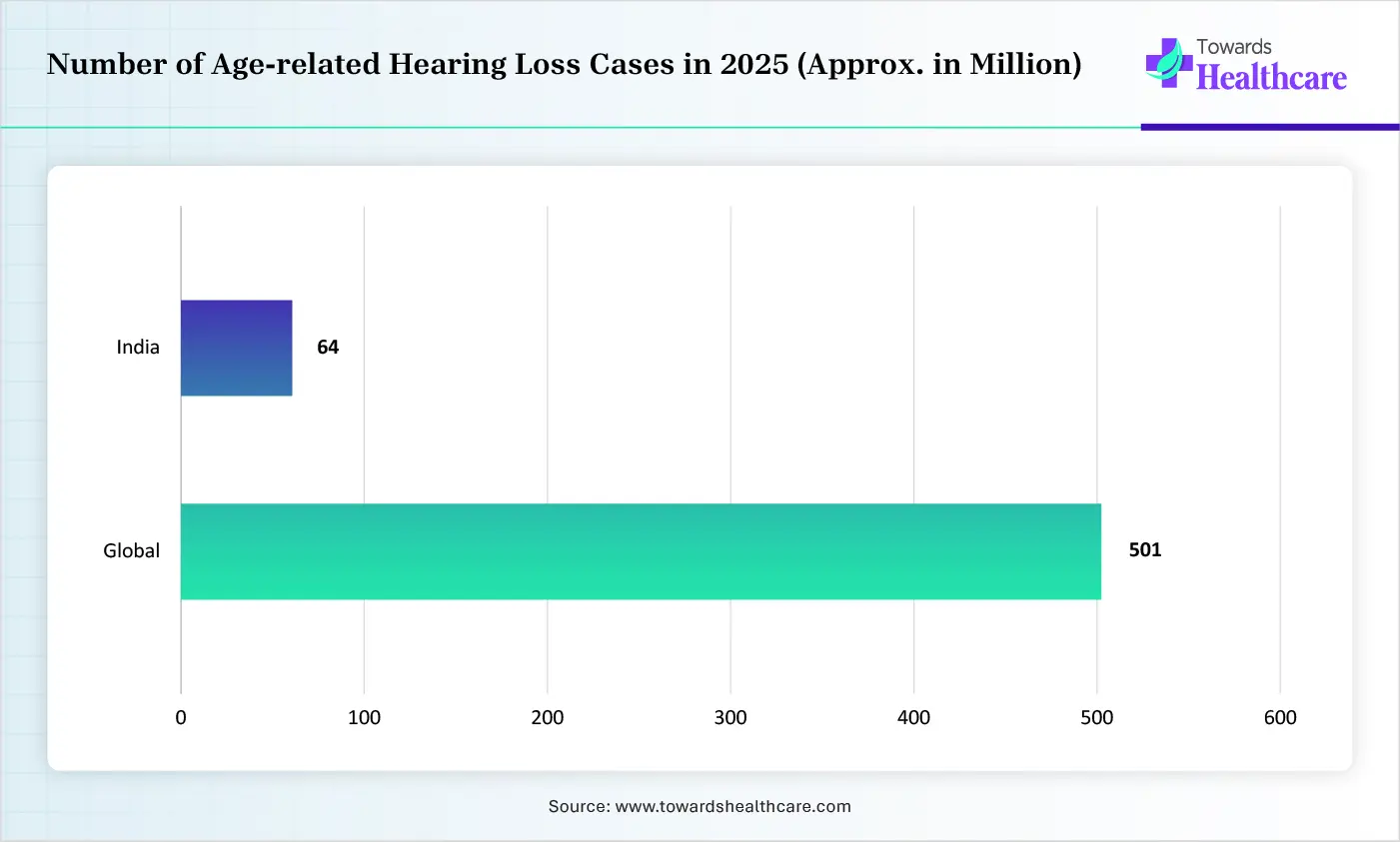
India's cochlear implant market is expanding because over 63 million people live with significant hearing impairment. Government initiatives such as the Assistance to Disabled Persons program improve access for eligible children. Competition includes international manufacturers partnering with major hospitals and local distributors. Newborn hearing screening programs are increasing across urban healthcare centers. Growth opportunities include greater insurance coverage, expanding cochlear implant surgery centers, rising awareness among parents, improved speech therapy services, and increasing investments in hearing care infrastructure across smaller cities and rural regions.
In the future, Europe is predicted to grow notably in the market. The region is highlighting wider access and advocacy under European advocacy groups to promote awareness of CI benefits & spotlight low adult adoption rates. Alongside, the region is aiming at the integration of ear care into national health strategies to escalate adult screening.
Germany Market Trends
The cochlear implant market in Germany is experiencing robust expansion driven by an aging population, rising sensorineural hearing loss cases, and high awareness of rehabilitation options. The market is seeing increased adoption of bilateral implants and advanced, miniaturized technologies in clinical settings. Furthermore, supportive health insurance reimbursement policies and early screening initiatives for both adults and children are accelerating demand. Adults, particularly geriatric patients, represent the largest user group, while pediatric applications show quick growth, benefiting from earlier diagnosis.
UK Market Trends
The UK cochlear implant market benefits from National Health Service funding and well-established referral pathways for eligible patients. Around 12 million people in the country experience hearing loss, supporting long-term demand for hearing rehabilitation. Competition remains strong among global cochlear implant manufacturers supplying specialized implant centers. Increasing use of bilateral implants and advanced sound processors reflects current treatment trends. Growth opportunities include expanded adult implantation programs, improved awareness of hearing health, wider remote patient monitoring, and continued investment in audiology services and rehabilitation.
| Ecosystem Segment | Key Participants | Role in Market |
| Technology Providers | Cochlear Ltd., MED-EL, Advanced Bionics, Nurotron | Develop implant electronics, sound processors, electrodes, stimulation platforms |
| Product Manufacturers | Cochlear Ltd., MED-EL, Advanced Bionics, Nurotron, Envoy Medical | Manufacture cochlear implant systems and accessories |
| Service Providers | Amplifon, GAES, Hearing Implant Solutions, hospital implant programs | Patient counseling, fitting, rehabilitation, audiology services |
| Platform Providers | Cochlear Smart Hearing Alliance, Sonova ecosystem, MED-EL connectivity platforms | Wireless connectivity, remote programming, digital hearing ecosystems |
| CROs/CDMOs | NAMSA, ICON plc, IQVIA | Clinical trials, regulatory support, post-market studies |
| Software Vendors | Cochlear, Sonova, MED-EL | Sound processing software, fitting platforms, remote monitoring tools |
| Research Institutions | Johns Hopkins University, Mayo Clinic, Massachusetts Eye and Ear | Clinical research, technology validation, auditory rehabilitation studies |
| End-User Industries | Healthcare providers, specialty ENT hospitals, audiology clinics | Device implantation and long-term patient management |
Clinical Trials & Regulatory Approvals
Distribution to Hospitals & Clinics
Patient Support &Services
| Tier 1 | Tier 2 | Tier 3 | |
| Typical Market Influence | 87% | 9% | 4% |
| Tier 1 | ||||
| Company Name | Headquarters | Country | Why Relevant to This Market | Key Products/Services |
| Cochlear Limited | Sydney, New South Wales | Australia | Global market leader with largest installed base and extensive product portfolio | Nucleus System, Osia System, Baha System |
| MED-EL Medical Electronics | Innsbruck, Tyrol | Austria | Major global cochlear implant innovator with strong R&D and MRI-compatible systems | SYNCHRONY, SONNET, RONDO |
| Advanced Bionics (Sonova) | Valencia, California | United States | One of the three dominant global cochlear implant manufacturers | HiRes Ultra 3D, Naída CI, Sky CI |
| Tier 2 | ||||
| Company Name | Headquarters | Country | Why Relevant to This Market | Key Products/Services |
| Zhejiang Nurotron Biotechnology Co., Ltd. | Hangzhou, Zhejiang | China | Leading Chinese cochlear implant manufacturer with growing international presence | Venus Cochlear Implant System |
| Amplifon S.p.A. | Milan, Lombardy | Italy | Major hearing care provider supporting implant patient pathways | Implant rehabilitation and audiology services |
| GAES | Barcelona, Catalonia | Spain | Strong hearing care network serving cochlear implant patients | Hearing implant support and fitting services |
| Tier 3 | ||||
| Company Name | Headquarters | Country | Why Relevant to This Market | Key Products/Services |
| Envoy Medical Corporation | White Bear Lake, Minnesota | United States | Developing fully implanted hearing implant technologies | Acclaim Fully Implanted Cochlear Implant |
| iotaMotion, Inc. | Iowa City, Iowa | United States | Robotic-assisted cochlear implantation technology innovator | iotaSOFT Insertion System |
| Neubio AG | Zurich | Switzerland | Emerging neurostimulation and hearing implant participant | Implantable auditory technologies |
In March 2026, Jan Janssen, Chief Technology Officer, explains that Cochlear has re-imagined the internal technology of the cochlear implant system: "The Nucleus Nexa System combines 40+ years of proven reliability of our trusted implants and technology leadership, with a new cutting-edge chipset, which is packed with innovative features," he says. "With onboard diagnostics that monitor system performance to ensure optimal hearing, it reduces the burden on users and carers, setting a new standard in implantable hearing technology. The new chipset powers the implant, enabling the smart features of the system, and it will serve as the platform for Cochlear's future smart implant innovations."
Strengths
Weaknesses
Opportunities
Threats
By Age Group
By Fitting Type
By End Use
By Region








Principal Consultant
Shivani Zoting is a dedicated research analyst specializing in the healthcare industry. With a strong academic foundation, a B.Sc. in Biotechnology and an MBA in Pharmabiotechnology, she brings a unique blend of scientific understanding and strategy.
Learn more about Shivani Zoting
Reviewed By
Aditi Shivarkar is a seasoned professional with over 14 years of experience in healthcare market research. As a content reviewer, Aditi ensures the quality and accuracy of all market insights and data presented by the research team.
Learn more about Aditi Shivarkar










