Pipeline Programs

CGT Companies Tracked

Manufacturing Facilities


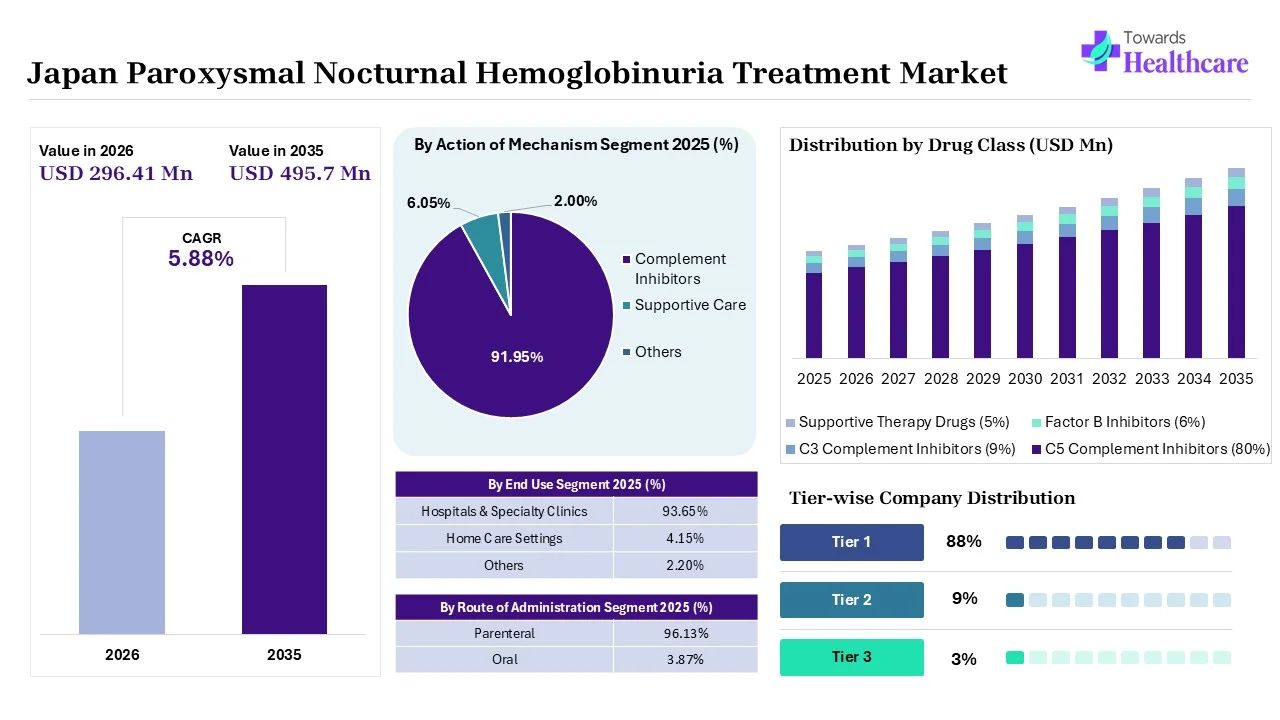
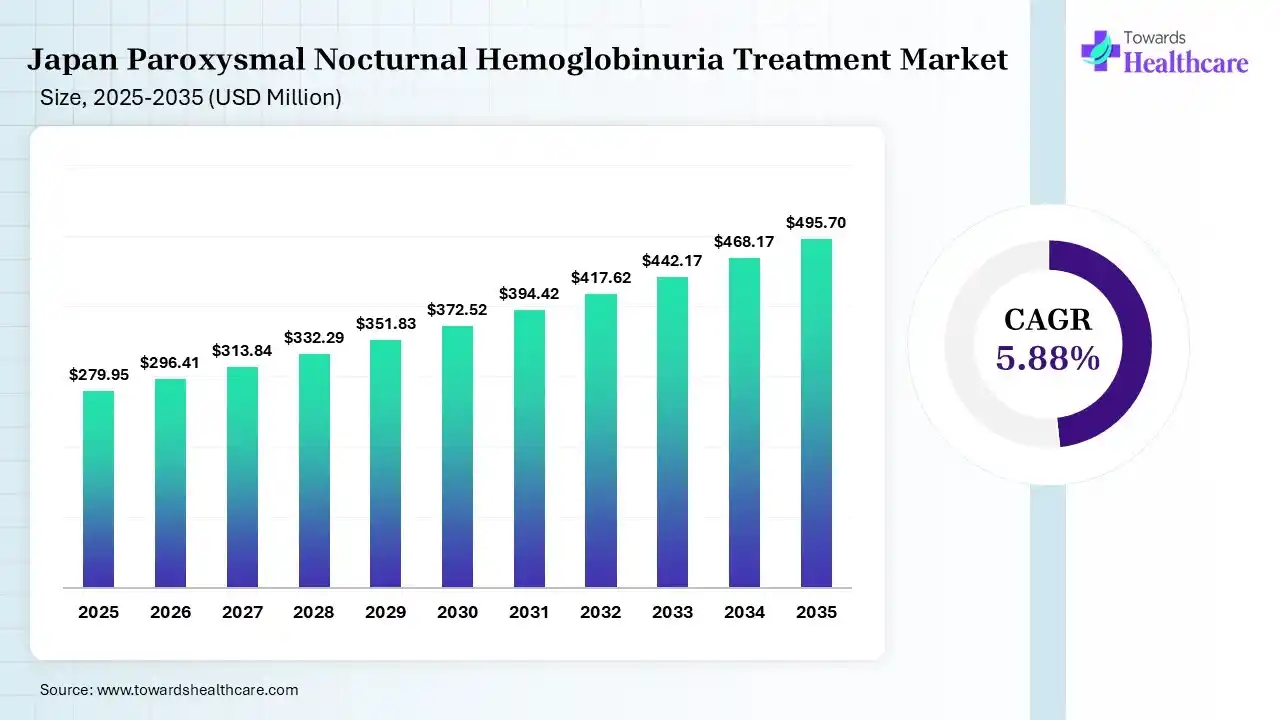
The Japan paroxysmal nocturnal hemoglobinuria treatment market size was valued at US$ 279.95 million in 2025 and is projected to grow to US$ 296.41 million in 2026. Forecasts suggest it will reach approximately US$ 495.7 million by 2035, registering a CAGR of 5.88% during the period.
The Japan paroxysmal nocturnal hemoglobinuria treatment market is driven by growth in the demand for advanced complement inhibitors and government financial subsidisation of orphan drugs. The Japan paroxysmal nocturnal hemoglobinuria treatment encompasses the drugs, therapies, and other healthcare services for the treatment and management of paroxysmal nocturnal hemoglobinuria (PNH) in Japan. PNH is a rare, chronic, multi-system, acquired blood disorder that destroys premature red blood cells, and its complications can lead to intravascular hemolysis, bone marrow failure, thrombotic events, serious infections, and smooth muscle dystonia. Additionally, the growth in their diagnostic rates in Japan is increasing the demand for effective treatment options, driving the market growth.
The well-established healthcare sector in Japan offers a wide range of treatment options, which include complement inhibitor therapy, anticoagulant therapies, immunosuppressive therapies, along with combination therapies and supportive care options, where their aim is to reduce RBC destruction, preventing thrombosis, and managing long-term complications of PNH. They also help in controlling hemolysis, preventing blood clotting, improving hemoglobin levels, as well as reduces their other complications, and improving the quality of life. Expanding healthcare services and reimbursement policies are also increasing their accessibility and enhancing patient outcomes.
AI offers a wide range of applications in the Japan paroxysmal nocturnal hemoglobinuria treatment market, such as early PNH diagnosis, identification of high-risk patient populations, and prediction of treatment response, which increases its demand. It also helps in personalized treatment development, accelerates drug discovery and development, monitors disease progression, and aids in healthcare decision-making. At the same time, AI is also used for remote patient monitoring, adverse effect detection, optimization of clinical trials, and forecasting treatment demand.
Rising Awareness
Growing rare disease awareness across Japan is increasing the early diagnosis of paroxysmal nocturnal hemoglobinuria, driving the demand for its effective treatment options to reduce the risk of further complications. This, in turn, is fueling the demand for precision as well as personalized medicines. Additionally, it is also promoting the development of new treatments, diagnostics, and remote monitoring options, as well as accelerating clinical trials of innovative therapies.
Expanding Advanced Complementary Therapies
The growing adoption of complementary therapies for paroxysmal nocturnal hemoglobinuria treatment is promoting the development of new C3, factor B, and factor D inhibitors. The enhanced efficacy and focus on intravascular and extravascular hemolysis are also increasing their adoption rates. At the same time, growing government support is also driving the development of long-acting complement therapies to enhance treatment adherence and patient satisfaction.
Blooming Gene Therapies
Increasing R&D activities and investment from various sources in Japan are encouraging the development of curative gene therapies for paroxysmal nocturnal hemoglobinuria. They are also promoting the development of regenerative and cell therapies to address the root cause of the disease. Moreover, they are aiming to reduce the lifetime treatment burden by developing gene therapies with long-term outcomes and improved safety and precision.
| Table | Scope |
| Market Size in 2026 | USD 296.41 Million |
| Projected Market Size in 2035 | USD 495.7 Million |
| CAGR (2026 - 2035) | 5.88% |
| Historical Data | 2020 - 2023 |
| Base Year | 2025 |
| Forecast Period | 2026 - 2035 |
| Measurable Values | USD Millions/Units/Volume |
| Market Segmentation | By the Action of the Mechanism, By Route of Administration, By End Use, By Drug Class |
| Top Key Players | AstraZeneca plc, Alnylam Pharmaceuticals, Inc., Chugai Pharmaceuticals, Akari Therapeutics Plc, Novartis AG, BioCryst Pharmaceuticals, Inc., Apellis Pharmaceuticals, Inc., Swedish Orphan Biovitrum AB, Regeneron Pharmaceuticals, Inc. |
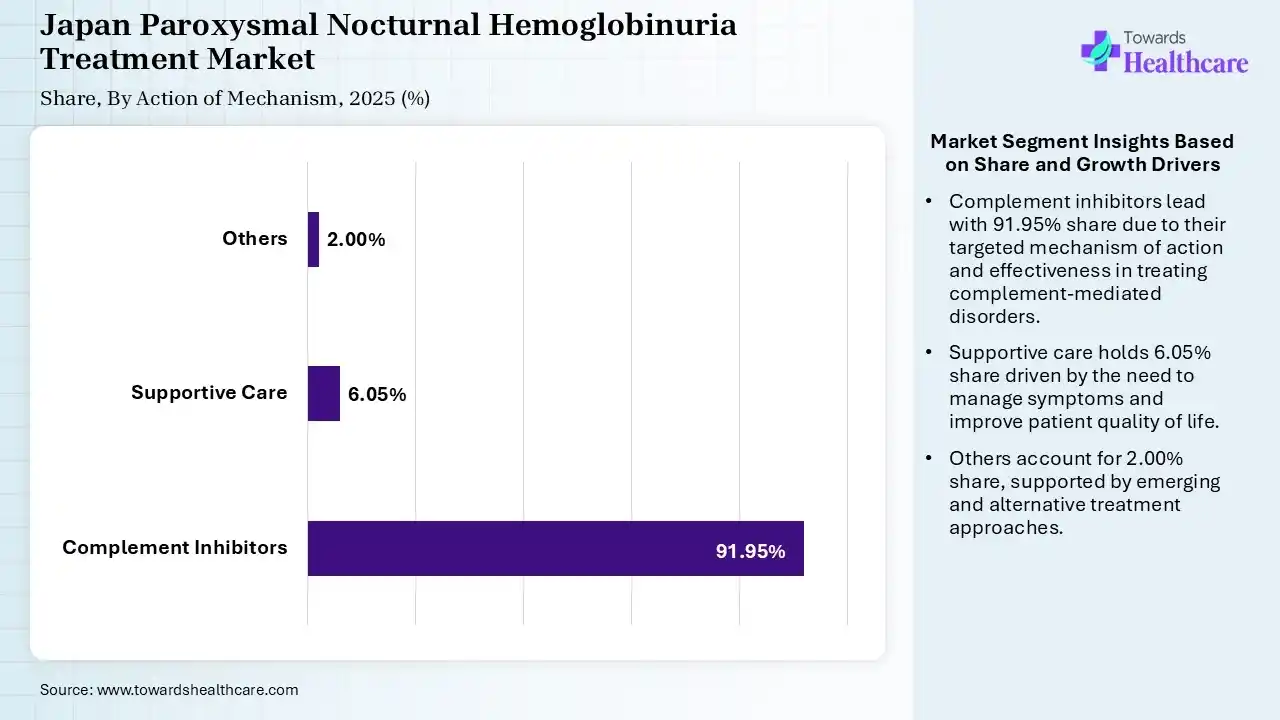
| Segment | Share 2025 (%) |
| Complement Inhibitors | 91.95% |
| Supportive Care | 6.05% |
| Others | 2.00% |
The Complement Inhibitors Segment Dominated the Market With 91.95% in 2025
The complement inhibitors segment held the largest revenue share of 91.95% of the Japan paroxysmal nocturnal hemoglobinuria treatment market in 2025, due to expansion in the use of targeted biologics. They also improved survival and hemolysis control, which promoted their adoption. Benefits from reimbursement support and enhanced safety also increased their use.
The supportive care segment held the second-largest share of 6.05% of the market in 2025, as it supports the management of symptoms like fatigue and weakness. They also help in addressing anemia complications as well as managing thrombosis. They were also necessary in severe cases to enhance the overall patient quality of life.
The others segment held 2% of the Japan paroxysmal nocturnal hemoglobinuria treatment market share in 2025 and is expected to witness the fastest growth with a CAGR of 7.8% during the forecast period, driven by gaining traction through novel therapies. Expanding treatment alternatives also promotes their use. They also support unmet patient needs.
| Segment | Share 2025 (%) |
| Parenteral | 96.13% |
| Oral | 3.87% |
The Parenteral Segment Dominated the Market With 96.13% in 2025
The parenteral segment accounted for the highest revenue share of 96.13% of the Japan paroxysmal nocturnal hemoglobinuria treatment market in 2025, driven by support for biologic delivery. They also provided predictable efficacy, 100% bioavailability, and faster therapeutic action, which increased their use. Moreover, they were widely used by physicians for the long-term management of PNH.
The oral segment held the second-largest share of 3.87% of the market in 2025 and is expected to show the highest growth with a CAGR of 12.20% during the forecast period, as it enhances patient convenience. They also help in reducing the infusion burden, which increases their demand. They also improve long-term adherence, promoting their advancements.
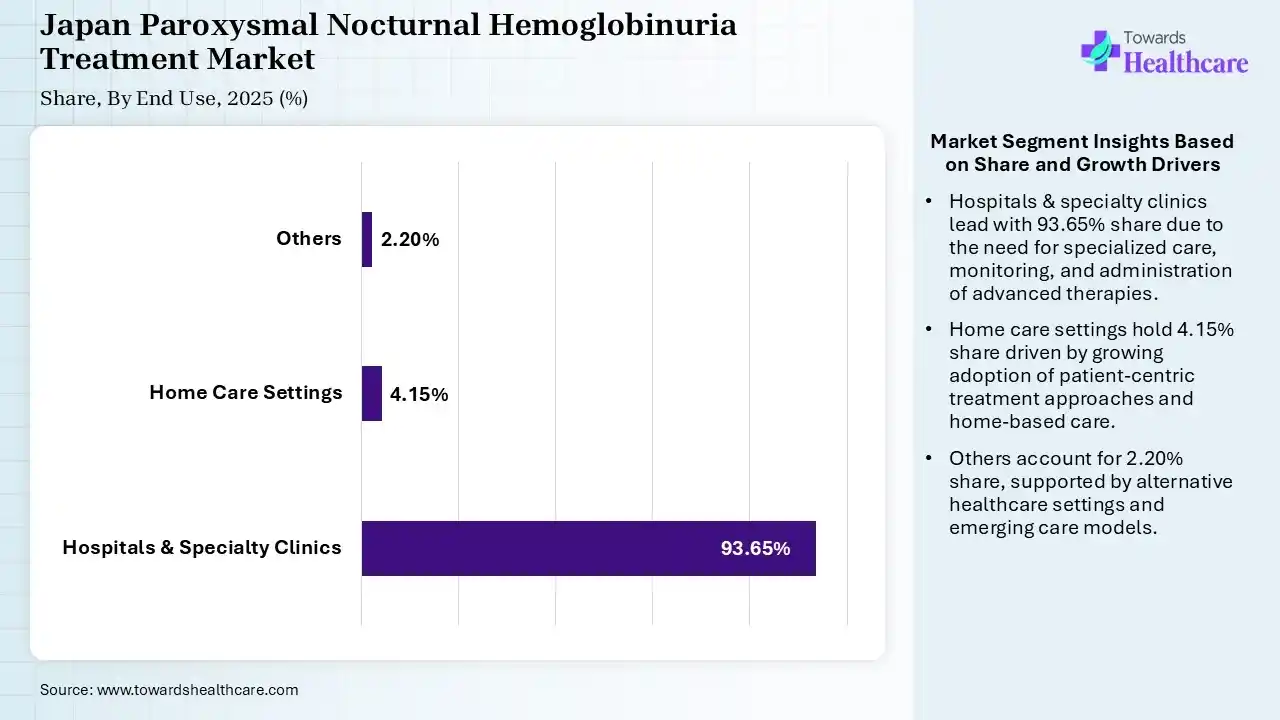
| Segment | Share 2025 (%) |
| Hospitals & Specialty Clinics | 93.65% |
| Home Care Settings | 4.15% |
| Others | 2.20% |
The Hospitals & Specialty Clinics Segment Dominated the Market With 93.65% in 2025
The hospitals & specialty clinics segment held a major revenue share of 93.65% of the Japan paroxysmal nocturnal hemoglobinuria treatment market in 2025, due to concentrated diagnosis and treatment options. They also provided infusion infrastructure, which attracted the patients. They also supported specialist monitoring, as well as offered emergency care and reimbursement support.
The home care settings segment held the second-largest share of 4.15% of the market in 2025 and is expected to expand rapidly with a CAGR of 8.9% during the forecast period, driven by growing encouragement for patient-centric care. They also help in reducing hospital dependence. They also support self-administration trends.
The others segment held 2.20% of the Japan paroxysmal nocturnal hemoglobinuria treatment market share in 2025, due to expanding research participation. They also support outpatient services and provide patient-centred care. They also offer affordable treatment services, which improve their accessibility and adoption rates.
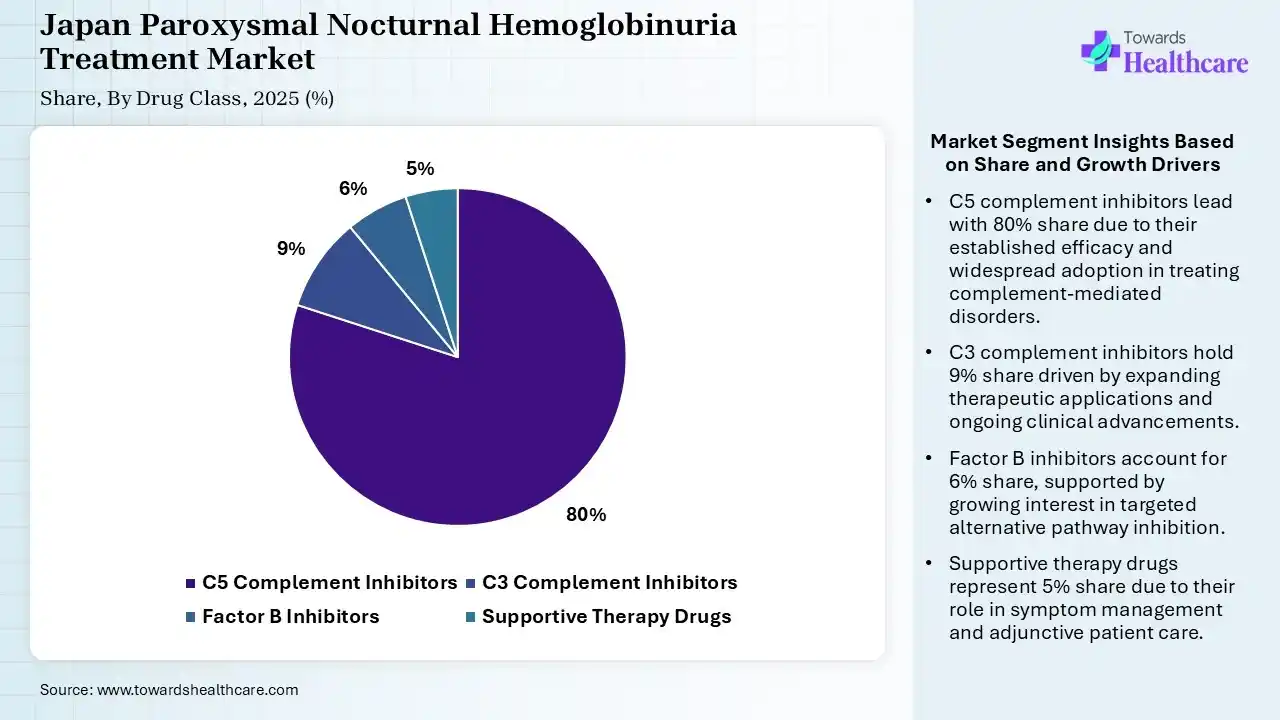
| Segment | Share 2025 (%) |
| C5 Complement Inhibitors | 80% |
| C3 Complement Inhibitors | 9% |
| Factor B Inhibitors | 6% |
| Supportive Therapy Drugs | 5% |
The C5 Complement Inhibitors Segment Dominated the Market With 80% in 2025
The C5 complement inhibitors segment contributed the biggest revenue share of 80% of the Japan paroxysmal nocturnal hemoglobinuria treatment market in 2025, as it remained standard therapy due to its direct action on the C5 protein. They also delivered durable efficacy and reduced the dependence on blood transfusions. Additionally, they helped in maintaining physician confidence.
The C3 complement inhibitors segment held the second-largest share of 9% of the market in 2025, due to improved control of extravascular hemolysis. The expanding use of advanced treatment also promotes its adoption. They also offer enhanced efficacy and safety, which improve patient outcomes and quality of life.
The factor B inhibitors segment held 6% of the Japan paroxysmal nocturnal hemoglobinuria treatment market share in 2025 and is expected to gain the highest share with a CAGR of 12.50% during the forecast period, as they introduce oral treatment options. They also improve convenience. Moreover, their growing demand also accelerates their adoption rates.
The supportive therapy drugs segment held 5% of the market share in 2025, driven by symptom management. They also support combination therapy, reducing the risk of complications. They also help in addressing residual disease burden and maintaining adequate hemoglobin levels.
The Japan paroxysmal nocturnal hemoglobinuria treatment market is expected to show significant growth during the forecast period due to the presence of advanced healthcare infrastructure. Well-established industries and institutions are also contributing to the development of new PNH treatment options, which are further supported by government funding and investments. A rise in health awareness is also increasing the early diagnosis and demand for personalized treatment solutions, which is also fueling the adoption of new targeted therapies. Moreover, favorable reimbursement policies and AI platforms are also increasing accessibility to new treatment options and enhancing patient compliance and convenience, thereby enhancing the market growth.
R&D
Clinical Trials and Regulatory Approvals
Formulation and Final Dosage Preparation
Packaging and Serialization
Distribution to Hospitals, Pharmacies
Patient Support and Services
| Companies | Headquarters | Japan Paroxysmal Nocturnal Hemoglobinuria Treatments |
| AstraZeneca plc | Cambridge, UK | Soliris, Vodyeya, and Ultromiris |
| Alnylam Pharmaceuticals, Inc. | Cambridge, U.S. | Cemdisiran |
| Chugai Pharmaceuticals | Tokyo, Japan | Piasky |
| Akari Therapeutics Plc | London, UK | Nomacopan |
| Novartis AG | Basel, Switzerland | Fabhalta |
| BioCryst Pharmaceuticals, Inc. | Durham, U.S. | BCX10013 |
| Apellis Pharmaceuticals, Inc. | Waltham, U.S. | Empaveli/Aspaveli |
| Swedish Orphan Biovitrum AB | Stockholm, Sweden | Empaveli |
| Regeneron Pharmaceuticals, Inc. | Tarrytown, U.S. | Pozelimab |
In January 2024, Marc Dunoyer, CEO of Alexion, stated that over two decades of research on PNH has firmly established the effectiveness of C5 inhibition in treating this rare disease. The introduction of Voydeya as an additional treatment alongside standard care reflects our commitment to innovation for the PNH community. This development underscores our dedication to meeting the needs of individuals affected by clinically significant EVH, ensuring continuity with established therapies. We eagerly anticipate introducing this significant advancement to the specific subset of PNH patients in Japan grappling with this condition.
By the Action of the Mechanism
By Route of Administration
By End Use
By Drug Class







Principal Consultant
Rohan Patil is a seasoned market research professional with over 5+ years of focused experience in the healthcare sector, bringing deep domain expertise, strategic foresight, and analytical precision to every project he undertakes.
Learn more about Rohan Patil

Reviewed By
Aditi Shivarkar is a seasoned professional with over 14 years of experience in healthcare market research. As a content reviewer, Aditi ensures the quality and accuracy of all market insights and data presented by the research team.
Learn more about Aditi Shivarkar