


The global mental health technology size was estimated at USD 10.08 billion in 2025 and is predicted to increase from USD 11.97 billion in 2026 to approximately USD 56.17 billion by 2035, expanding at a CAGR of 18.74% from 2026 to 2035.
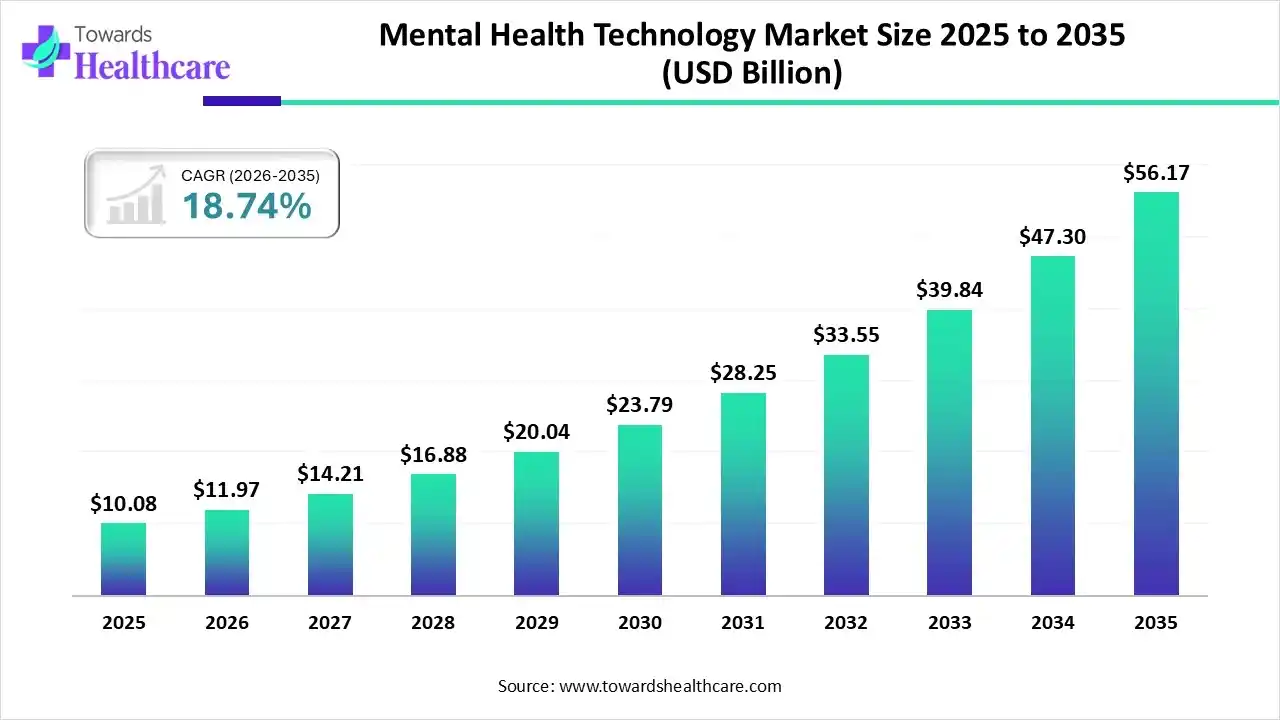
The mental health technology market is expanding rapidly, driven by rising mental health awareness, growing digital health adoption, and increasing demand for accessible care solutions. North America remains the dominant region due to advanced healthcare infrastructure and high technology adoption. Meanwhile, innovations in telemedicine, mobile applications, and AI-enabled tools are reshaping mental health care delivery globally.
The mental health technology market is driven globally by rising awareness of mental health conditions, increasing stress and anxiety levels, growing acceptance of digital healthcare, and widespread smartphone and internet penetration. Supportive government initiatives, employer wellness programs, and the need for accessible, cost-effective mental health solutions further accelerate adoption across developed and emerging economies. Mental health technology refers to the use of digital tools and innovations to support mental well-being, prevention, diagnosis, treatment, and monitoring of mental health conditions. It includes mobile applications, teletherapy platforms, wearable devices, AI-powered chatbots, virtual therapy tools, and data-driven analytics that enable personalized, remote, and continuous mental health care.
AI integration can significantly transform the mental health technology market by enabling more personalized, scalable, and proactive care solutions. Advanced algorithms can analyze behavioral patterns, speech, and biometric data to detect early signs of mental health conditions and support timely interventions. AI-powered chatbots and virtual assistants enhance accessibility by providing continuous support and reducing care gaps. Additionally, AI improves clinical decision-making through predictive analytics, treatment optimization, and outcome monitoring. Automation of administrative tasks also increases efficiency for providers, allowing greater focus on patient care while improving overall service delivery and user engagement.
Increasing Adoption of Telemedicine and Teletherapy
Telemedicine platforms and virtual therapy solutions are gaining widespread adoption, allowing patients to access mental health care remotely. This trend is driven by convenience, reduced stigma, and the need for continuous support, particularly in regions with limited healthcare infrastructure. Future growth will focus on integrating virtual platforms with AI-driven personalized care.
Rise of AI and Machine Learning in Mental Health Solutions
Artificial intelligence is increasingly being used for early detection, personalized treatment plans, and real-time monitoring of mental health conditions. Predictive analytics and AI-powered chatbots enhance patient engagement and clinical decision-making. In the future, AI is expected to drive more precise, scalable, and proactive mental health interventions.
Growth of Self-Management and Wellness Applications
Mobile applications and digital tools for stress management, meditation, sleep tracking, and mood monitoring are rapidly gaining popularity among consumers. These solutions empower individuals to monitor and manage their mental well-being daily. The future outlook suggests broader adoption, integration with wearables, and expansion into preventive mental health care.
Expansion of Wearable and Biometric Devices
Wearable devices that track physiological indicators like heart rate, sleep patterns, and stress levels are becoming integral to mental health monitoring. These devices provide real-time insights, enabling preventive care and personalized interventions. The mental health technology market is expected to witness continued innovation with AI-enabled wearables enhancing data accuracy and predictive capabilities.
Increasing Corporate and Employer-Sponsored Mental Health Programs
Employers are investing in digital mental health solutions to improve workforce well-being, productivity, and retention. Corporate wellness programs, including subscription-based apps and teletherapy platforms, are on the rise. The future outlook indicates stronger adoption across industries, with integrated solutions combining assessment, therapy, and continuous monitoring.
Integration of Data Analytics and Cloud-Based Platforms
Cloud computing and advanced analytics allow mental health providers to securely store, analyze, and share patient data. These tools enhance treatment planning, track outcomes, and support research. In the future, data-driven solutions will improve personalized care, facilitate remote collaboration, and optimize resource allocation in mental health services.
The rising prevalence of mental health disorder has estimated to drive the growth of the mental health technology market.
| Disorder/ Category | Estimated Global Prevalence of Mental Health Disorder (2025) |
| Any Mental Health Disorder | 1.1 Bn |
| Anxiety Disorders | 359 Mn |
| Depression | 332 Mn |
| Bipolar Disorder | 60 Mn |
| Schizophrenia | 23 Mn |
| Eating Disorders | 16 Mn |
| Alcohol Use Disorder | 107 Mn |
| Drug Use Disorder | 71 Mn |
| Key Elements | Scope |
| Market Size in 2026 | USD 11.97 Billion |
| Projected Market Size in 2035 | USD 56.17 Billion |
| CAGR (2026 - 2035) | 18.74% |
| Leading Region | North America by 45% |
| Historical Data | 2020 - 2023 |
| Base Year | 2025 |
| Forecast Period | 2026 - 2035 |
| Measurable Values | USD Millions/Units/Volume |
| Market Segmentation | By Technology, By Target Audience, By Application, By Region |
| Top Key Players | BetterHelp (Teladoc Health), Wysa, Headspace (Headspace Health), Calm, Talkspace, Lyra Health, Spring Health, Woebot Health, Mindstrong Health |
| Segments | Shares % |
| Mobile Apps | 45% |
| Wearable Technology | 25% |
| Platforms for Telemedicine | 30% |
Which Technology Segment Dominated the Mental Health Technology Market?
The mobile apps segment dominates the market by 45% due to widespread smartphone adoption, ease of access, and convenience for users. Apps offer personalized self-help, meditation, mood tracking, and therapy tools, enabling continuous engagement. Their scalability, real-time support, and integration with AI and wearable devices further strengthen their market leadership.
Wearable Technology
The wearable technology segment is estimated to be the fastest‑growing segment in the global mental health technology market due to its ability to continuously monitor physiological and behavioral data, enabling real‑time stress, sleep, and mood tracking. Integration with mobile apps and AI enhances personalized insights and early intervention. Demand for proactive, preventive care and seamless user experience further drives adoption.
| Segments | Shares % |
| Individual Customers | 50% |
| Employers | 30% |
| Healthcare Providers | 20% |
Why Did the Individual Customers Segment Dominate the Mental Health Technology Market?
The individual customers segment dominates the global market by 50% by due to growing awareness of mental well-being, increased smartphone and internet access, and rising preference for convenient, private, and self-guided solutions. Mobile apps, wearable devices, and teletherapy platforms cater directly to personal needs, empowering users to manage stress, anxiety, and overall mental health independently, driving widespread adoption.
Employers
The employers segment is anticipated to be the fastest‑growing segment in the global mental health technology market as companies increasingly invest in employee well‑being to boost productivity, retention, and workplace satisfaction. Employers adopt digital mental health solutions, wellness apps, and virtual therapy services as part of benefits packages, driving rapid demand for scalable, technology‑enabled support across diverse workforces.
| Segments | Shares % |
| Therapy & Treatment | 40% |
| Self Management & Wellbeing | 35% |
| Mental Health Assessment & Diagnosis | 25% |
Which Application Segment Led the Mental Health Technology Market?
The therapy & treatment segment dominates the mental health technology market by 40% share due to the critical need for professional intervention in mental health conditions. Digital therapeutics, teletherapy platforms, and AI-assisted treatment tools provide accessible, personalized care, bridging gaps in traditional services and ensuring consistent support for patients, enhancing adoption and effectiveness.
Self‑Management & Well‑Being
The self‑management & wellbeing segment is anticipated to be the fastest‑growing because users increasingly seek convenient, preventive mental health support. Mobile wellness apps, meditation tools, and mood trackers empower individuals to manage daily stress and emotional balance. Easy accessibility, personalization, and seamless integration with smartphones and wearables boost engagement and adoption across diverse user groups.
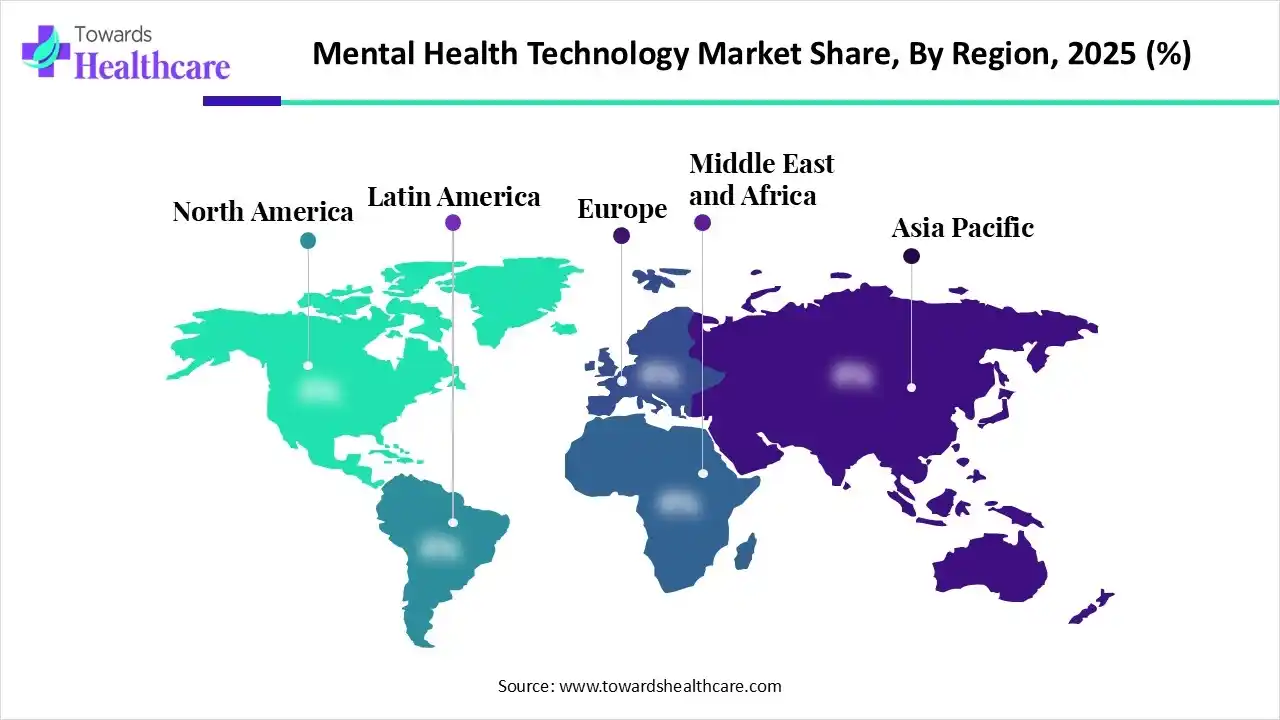
North America dominated the mental health technology market by 45% share in 2025, due to advanced healthcare infrastructure, widespread adoption of digital health solutions, and strong investment in innovation. Businesses leverage teletherapy platforms, mobile apps, and AI-driven tools to deliver scalable, efficient, and personalized mental health services. Supportive regulations, corporate wellness initiatives, and high consumer awareness further drive market leadership and revenue generation.
US Market Trends
The U.S. is the dominant country in North America’s mental health technology market due to its advanced healthcare ecosystem, high digital adoption, and strong investment in innovation. Extensive telehealth infrastructure, widespread use of mobile mental health apps, and supportive government policies enable businesses to deliver scalable, personalized, and efficient mental health solutions nationwide.
U.S. Mental Health Prevalence (Any Mental Illness, Adults 18+) by Year
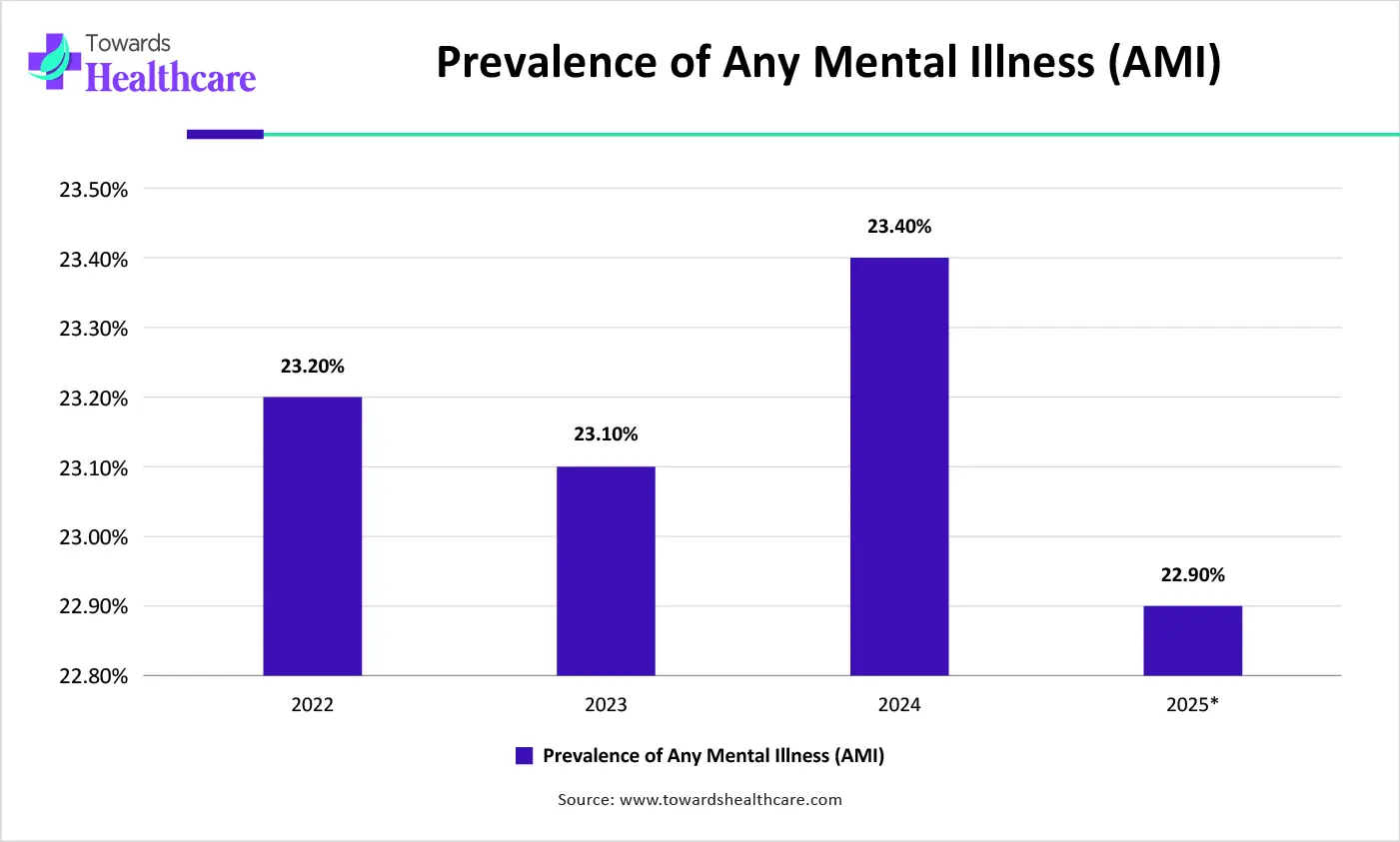
| Year | Prevalence of Any Mental Illness (AMI) |
| 2022 | 23.20% |
| 2023 | 23.10% |
| 2024 | 23.40% |
| 2025* | 22.90% |
Asia Pacific is estimated to host the fastest-growing mental health technology market by 20% share during the forecast period. The Asia-Pacific region is the fastest-growing in the mental health technology market due to rising mental health awareness, expanding smartphone and internet penetration, and increasing adoption of digital health solutions. Growing government initiatives, emerging startup ecosystems, and demand for accessible, cost-effective care drive rapid market expansion across diverse countries in the region.
China Market Trends
China dominates the Asia-Pacific mental health technology market due to its large population, rapid digital adoption, and strong government support for healthcare innovation. High smartphone penetration, widespread use of telemedicine platforms, and growing investment in AI-driven mental health solutions enable businesses to deliver scalable, accessible, and personalized care across the country.
Europe is expected to grow at a significant CAGR in the mental health technology market with share of 23% during the forecast period. Europe is growing at a notable rate in the mental health technology market due to increasing awareness of mental health issues, supportive government policies, and rising adoption of digital health solutions. Investments in teletherapy platforms, mobile apps, and AI-driven tools enable scalable, efficient, and accessible mental health services across the region.
UK Market Trends
The UK is the dominant country in Europe’s mental health technology market due to its advanced healthcare infrastructure, strong government support, and high digital health adoption. Widespread use of teletherapy platforms, mobile mental health apps, and AI-driven solutions enables scalable and personalized care. Corporate wellness programs and public awareness initiatives further drive market leadership.
South America is experiencing a boom in the mental health technology market driven by severely scarce traditional mental healthcare resources, high smartphone penetration in urban hubs like São Paulo and Buenos Aires, rising awareness, and a critical need for accessible telemental health services. Major cities are adopting mHealth apps due to better digital infrastructure and tech-savvy populations. Growing awareness is increasing the demand for mental health services, fueling the need for accessible, app-based solutions. Rising investments and government initiatives aimed at modernizing health technology in Brazil and other nations are driving adoption.
Brazil Market Trends
Brazil has become a significant player in the Mental Health Technology Market, driven by a combination of widespread mental health challenges, extensive smartphone usage, and increased reliance on telemedicine following the pandemic. The market, emphasizing mobile health applications and teleconsultations, addresses the need to connect a geographically dispersed population to limited mental health resources, particularly in rural regions. The country experiences elevated rates of anxiety and depression, influenced by its high-pressure work environment, while over two-thirds of its population has access to smartphones and the internet surpassing the global average which enables the adoption of mHealth solutions. The pandemic accelerated the adoption of telemedicine by transitioning it from a convenience to a necessity. The country is actively transitioning away from institutionalized, hospital-centered mental care toward community-based services (CAPS - Psychosocial Community Centers), which digital tools support. Cities like São Paulo, Rio de Janeiro, and Brasília function as innovation hubs, with advanced healthcare infrastructure aiding in the rapid deployment of new digital platforms.
The mental health technology market by 5% share in the Middle East and Africa (MEA) region is experiencing significant growth, particularly in the UAE and Saudi Arabia, driven by increased digital adoption, government initiatives, and efforts to combat mental health stigma. Both countries are allocating substantial resources, including billions of dollars in AI and digital health investments, to improve mental health accessibility. Additionally, the market is supported by funding initiatives, such as a $2 billion program to enhance local capacity. With a young, highly connected population and widespread smartphone usage, the region is positioned for rapid adoption of apps and virtual counseling services. Telehealth services and mobile applications provide patients with privacy, facilitating access to support without concerns about social judgment, particularly among younger individuals. Innovations such as South Africa's "BlossomCare" AI-powered companion enable users, including those facing stigma, to access continuous care through secure, encrypted communication channels like WhatsApp. Meanwhile, growing awareness of mental health as an important issue in the Middle East has led to higher demand for digital mental wellness tools and platforms.
UAE Market Trends
The UAE leads the mental health technology market, driven by factors such as rapid digital adoption, government initiatives like the National Policy for the Promotion of Mental Health (2023), and widespread smartphone usage. The country has advanced AI-powered diagnostics, telemedicine services, and high-tech infrastructure exemplified by hubs like Dubai and Abu Dhabi. Investments in smart hospitals, unified health records, and innovative telemedicine solutions support comprehensive mental health care efforts, aided by AI, machine learning, and chatbots offering 24/7 crisis support and personalized services. The demand for accessible mental health services in Dubai and Abu Dhabi is being driven by a high concentration of expatriates and growing awareness. Expanding digital health tools are supported by strong partnerships between government health authorities and the private sector.
| Vendor / Key Player | Offerings / Focus |
| BetterHelp (Teladoc Health) | Online therapy and counseling services connect users with licensed therapists via web, messaging, and phone. |
| Wysa | AI‑driven conversational mental health support, coaching, and digital therapeutic tools for self‑management and clinical integration. |
| Headspace (Headspace Health) | Meditation, mindfulness, and mental wellness app with guided exercises, stress reduction, and workplace mental health offerings. |
| Calm | Meditation, sleep stories, relaxation audio, and wellness programs targeted to individuals and employers. |
| Talkspace | Virtual therapy platform offering licensed therapy through messaging and video sessions. |
| Lyra Health | Employer‑focused mental health benefits platform offering coaching, therapy referrals, and personalized care pathways. |
| Spring Health | AI‑driven precision mental health platform for employers, combining coaching, therapy, and personalized recommendations |
| Woebot Health | AI‑based mental health chatbot providing conversational support, mood tracking, and therapeutic modules. |
| Mindstrong Health | Data‑driven solutions leveraging AI for mental health assessment, personalized insights, and clinical support. |
Strengths
Weaknesses
Opportunities
Threats
By Technology
By Target Audience
By Application
By Region





Principal Consultant
Rohan Patil is a seasoned market research professional with over 5+ years of focused experience in the healthcare sector, bringing deep domain expertise, strategic foresight, and analytical precision to every project he undertakes.
Learn more about Rohan Patil

Reviewed By
Aditi Shivarkar is a seasoned professional with over 14 years of experience in healthcare market research. As a content reviewer, Aditi ensures the quality and accuracy of all market insights and data presented by the research team.
Learn more about Aditi Shivarkar









