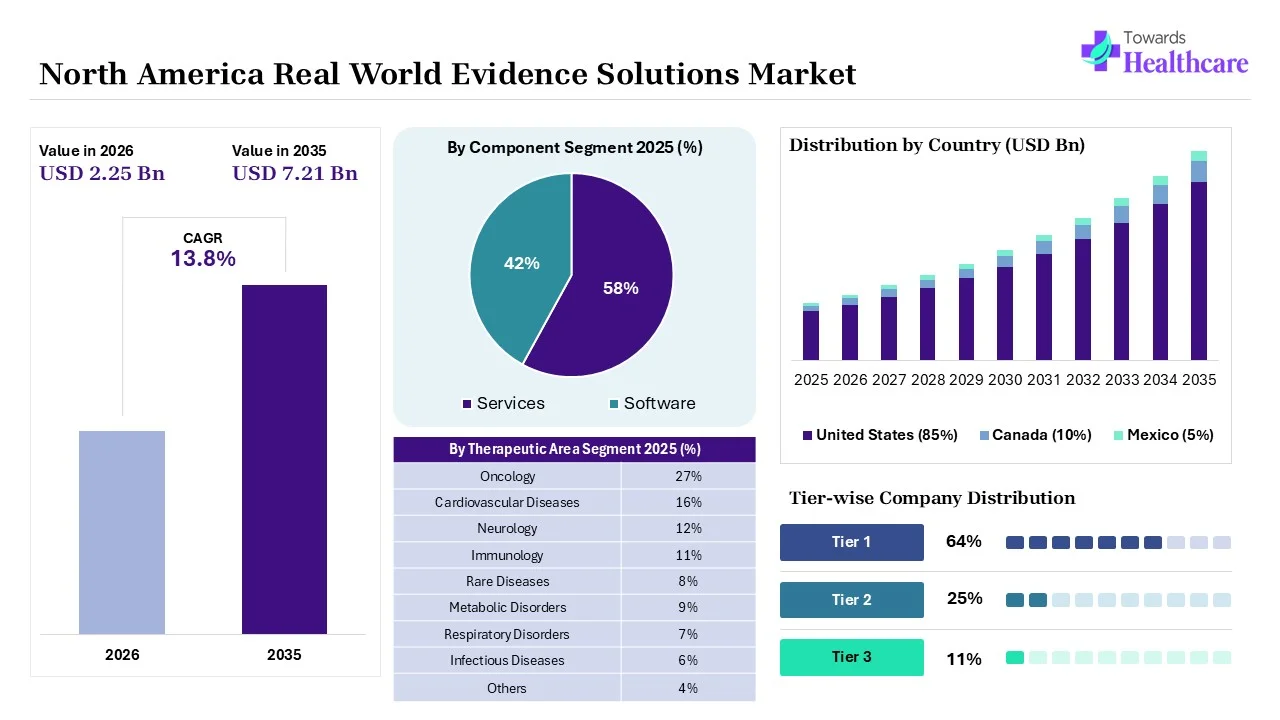
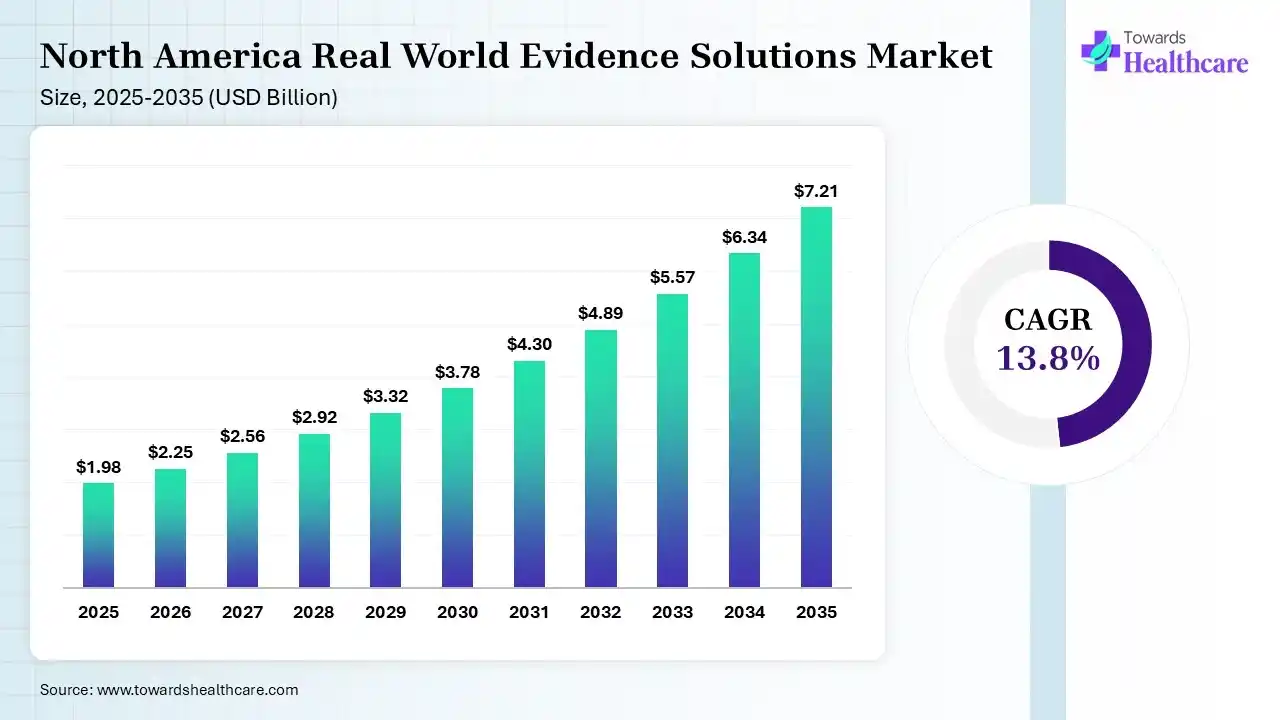
The North America real world evidence solutions market size stood at US$ 1.98 billion in 2025, grew to US$ 2.25 billion in 2026, and is forecast to reach US$ 7.21 billion by 2035, expanding at a CAGR of 13.8% from 2026 to 2035.
Real-world evidence is the clinical evidence related to the usage and significant advantages or challenges of a healthcare product resulting from analysis of RWD. RWE reflects therapies, interventions, and healthcare services performed in real clinical settings, providing insights into treatment efficiency, safety, utilization patterns, and patient results in various populations. RWE plays a significant role in modern drug discovery, clinical advances, governing decision-making, health economics, and accurate medicine, complementing traditional trial-driven evidence with wider and longitudinal insights.
RWE uses real-world data (RWD) to make insights, foresight, and explorative results on diseases, products, and patient populations. This technology is progressively used to enhance trial design, lower recruitment load, and support government decisions, increasing data quality, mixing, and internal alignment in the functional region. This technology provides historical, real-world control data when performing traditional randomization is problematic or unethical, like in rare diseases.
AI-driven technology, such as generative AI and agentic AI, could create transformative solutions to help generate real-world evidence (RWE) for health studies by streamlining research, hastening insights, and enhancing decision-making. Generative AI and agentic AI could be transformative solutions to help generate real-world evidence (RWE) for health research. Integration of AI-driven technology is unlocking new productivity across clinical advancement, PV, and healthcare affairs. Integrating AI and ML into RBM and real-time data analysis to support sponsors and research organizations in making data-based decisions with superior speed and accuracy. AI-based RWE platforms speed up early discovery by integrating clinical, genomic, and phenotypic datasets to uncover disease mechanisms and biomarkers.
Patient-Centric RWE:
Patient-centric practices result in rapid enrollment, affordability, and getting medications to patients facing diseases more rapidly. They involve various demographics and patients with many conditions, providing data that standard, extremely restricted clinical trials cannot provide.
Value-Based Contracting:
RWE plays a significant role in the design and implementation of value-driven contracts. It supports identifying where value exists in medical care technology, offers significant inputs in the VBC design to ensure there is alignment of challenges from all sides, and tracks the patient results that are used to adjudicate the management.
Advanced Privacy-Preserving Techniques:
Bringing privacy-driven technologies like secure multiparty computation and differential privacy to bear on real-world challenges. It leads to a deeper understanding of disease forms, treatment results, and care approaches and empowers medical care providers and policymakers to make more informed selections.
| Table | Scope |
| Market Size in 2026 | USD 2.25 Billion |
| Projected Market Size in 2035 | USD 7.21 Billion |
| CAGR (2026 - 2035) | 13.8% |
| Historical Data | 2020 - 2023 |
| Base Year | 2025 |
| Forecast Period | 2026 - 2035 |
| Measurable Values | USD Millions/Units/Volume |
| Market Segmentation | By Component, By Deployment Mode, By Data Source, By Applications, By End User, By Therapeutic Area, By Region |
| Top Key Players | HealthVerity, Optum, Oracle, IQVIA, Flatiron Health |
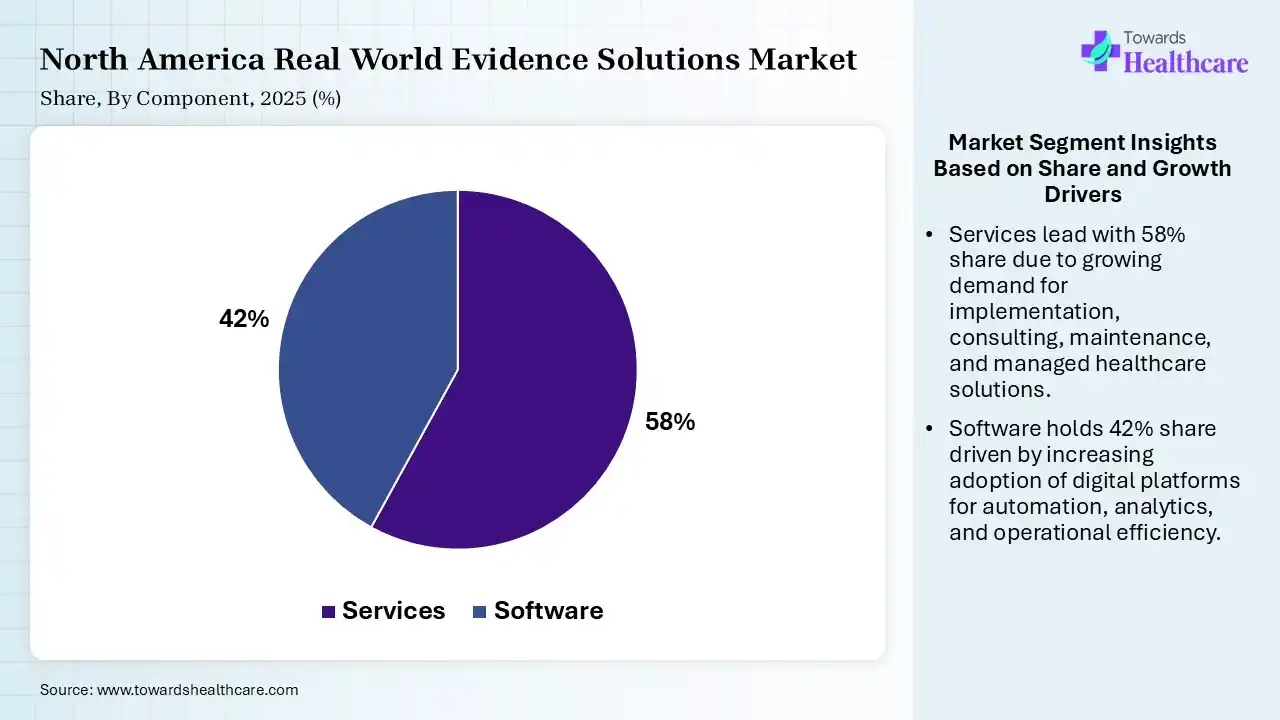
| Segment | Share 2025 (%) |
| Services | 58% |
| Software | 42% |
The Services Segment Led the North America Real World Evidence Solutions Market in 2025
The services segment contributed the largest market share of 58% in 2025, as these services improve external validity, advanced generalizability, better comprehension of the treatments’ long-term properties, lower costs related to drug approval, in-depth inspection of the product/treatment in specific patient subgroups, like those with comorbidities, and rapid research findings.
The software segment held a significant share of 42% and is expected to grow at the fastest CAGR during the forecast period in the market, as real-world evidence and well-developed technologies are shortening timelines, enhancing the effects of research spending, and supporting therapies. Improves the effectiveness of clinical research via observational data beyond controlled surroundings.
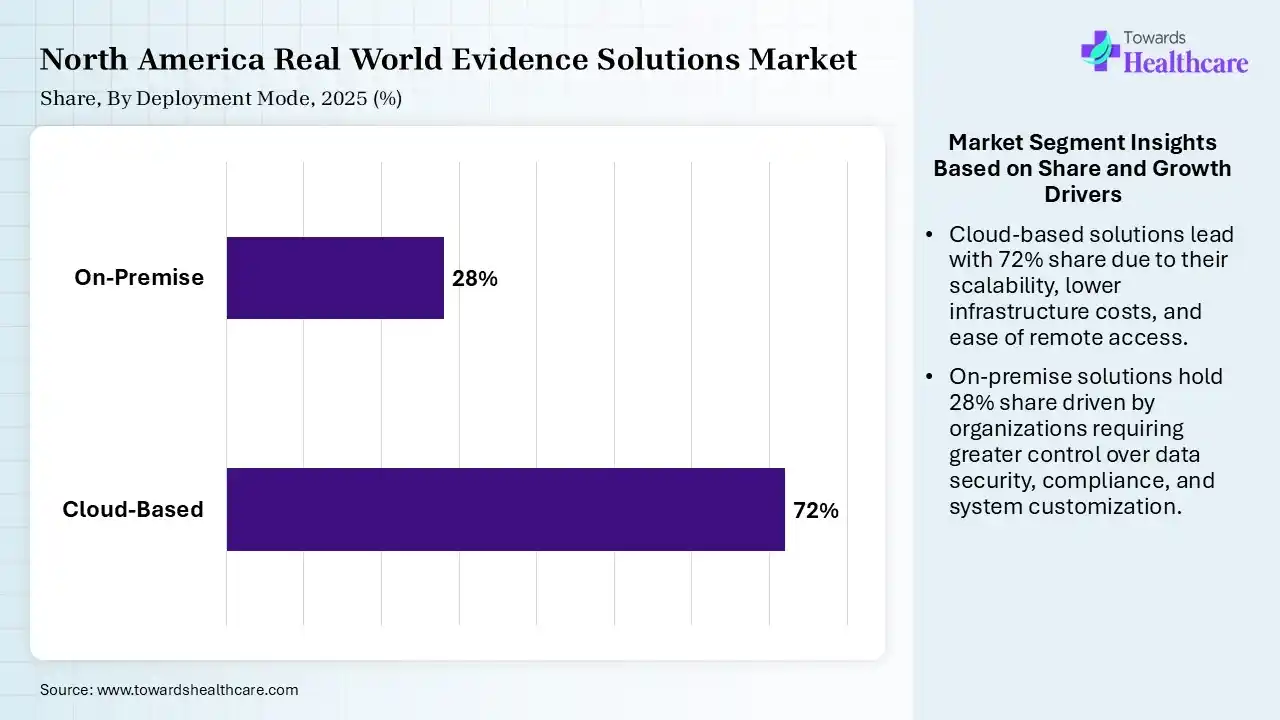
| Segment | Share 2025 (%) |
| Cloud-Based | 72% |
| On-Premise | 28% |
Cloud-Based Segment Led the North America Real World Evidence Solutions Market in 2025
The cloud-based segment contributed the largest market share of 72%, and is expected to grow at the fastest CAGR during the forecast period. Cloud services offer on-demand access to shared computing resources, which can be provisioned and released rapidly. Cloud-based services bring insights to healthcare pharma, or life science data while lowering costs.
The on-premise segment held a significant share of 28% of the market. On-premises deployment provides improved security measures and simple compliance with industry guidelines. On-premise automation has the advantages of increased control and ownership. Suppose a new software version is available. On-premises software often shortens compliance with industry-driven regulations, as data remains under the organization's control through guidelines.
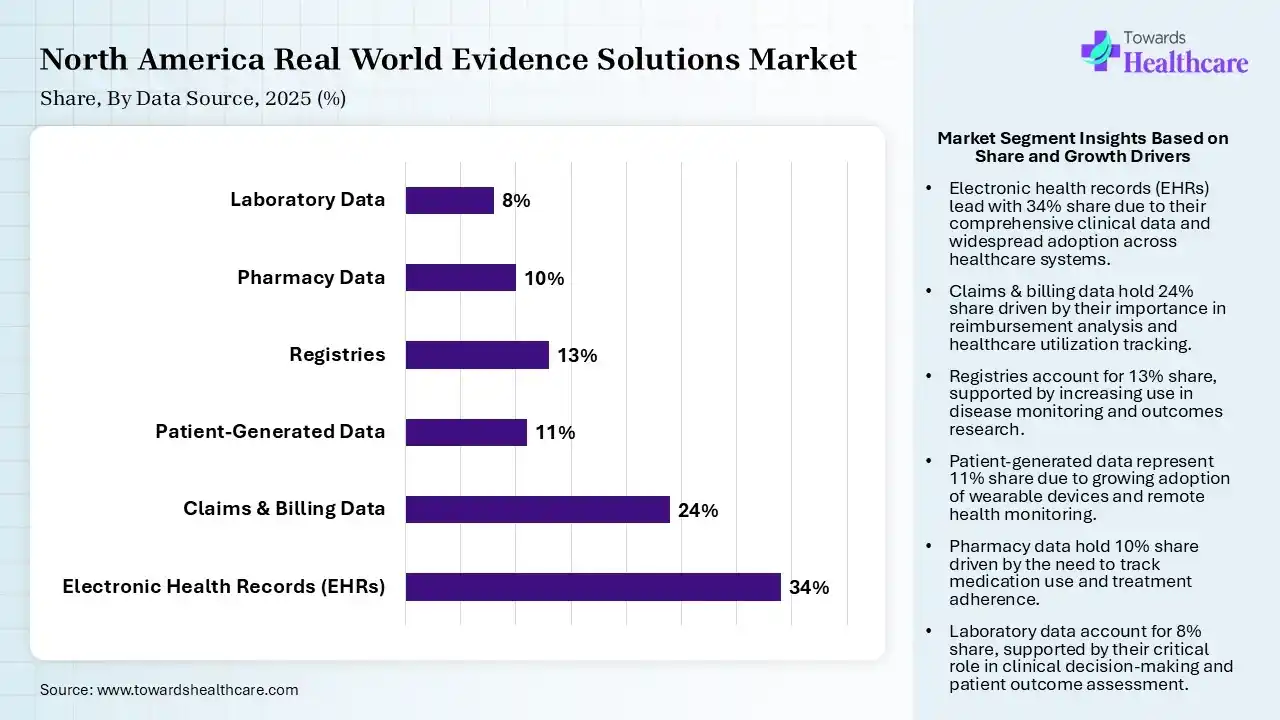
| Segment | Share 2025 (%) |
| Electronic Health Records (EHRs) | 34% |
| Claims & Billing Data | 24% |
| Patient-Generated Data | 11% |
| Registries | 13% |
| Pharmacy Data | 10% |
| Laboratory Data | 8% |
The Electronic Health Records (EHRs) Segment led the North America Real World Evidence Solutions Market in 2025
The electronic health records (EHRs) segment held a significant share of 34% in the market. EHRs potentially enhance the precision and usability of records. Computerized notes are often simpler to read than a surgeon's handwriting. EHR is to offer primary data on patients. This makes it likely for health professionals to make advance decisions, to manage teamwork efficiently, and to provide integrated care to patients in various places.
The claims & billing data segment contributed a market share of 24%, as integrating claims information with other real-world data, additional healthcare research submissions become possible. From assessing management efficiency to monitoring disease outbreaks and enhancing drug safety, it enables insights into real-world patient experiences and healthcare solutions.
The registries segment held a significant share of 13% in the North America real world evidence solutions market, as registries are an incredibly valuable tool in collecting information on patients' usual care, existing treatment landscape, and chronic clinical outcomes to improved understand the influence on the disease population and tactically plan for additional real-world patient research and treatment advancement.
The patient-generated data segment held a significant 11% share of the market and is expected to grow at the fastest CAGR during the forecast period, as patient-generated data from patient-reported results surveys. These data offer insights straight from the patient, and they support investigators in understanding what happens outside of clinic visits, technology, and hospital stays.
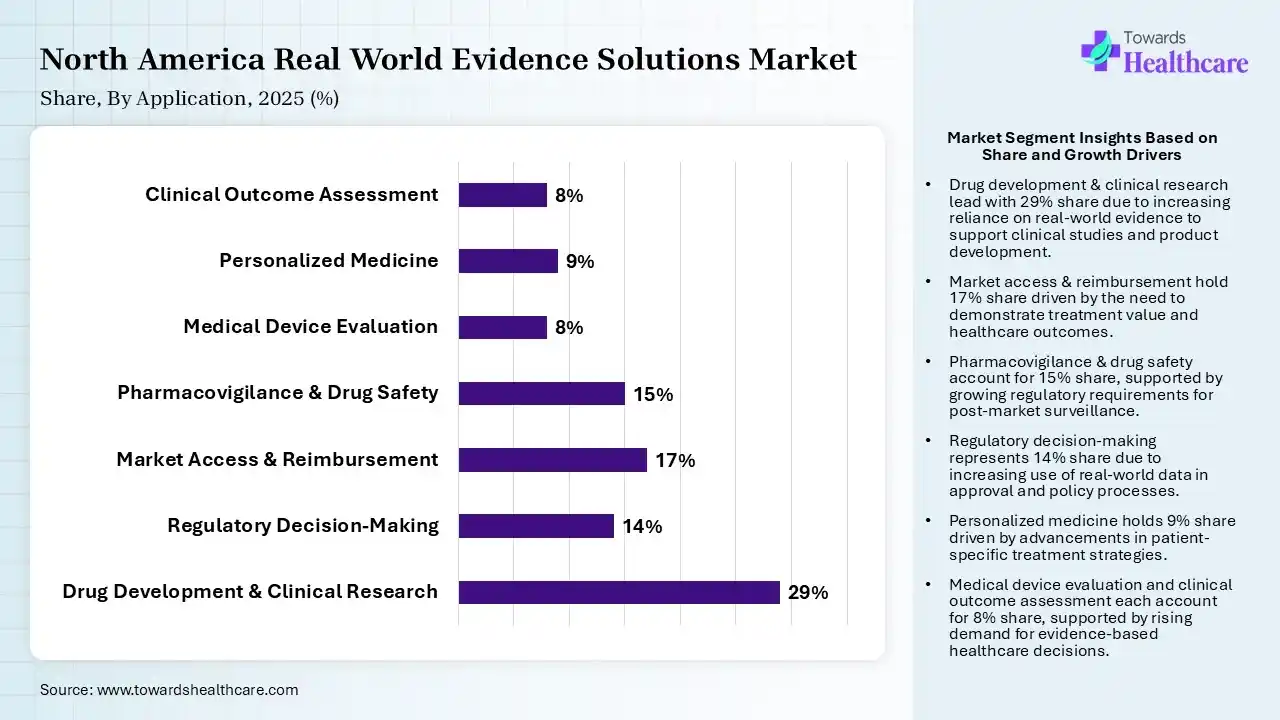
The Drug Development & Clinical Research Segment led the North America Real World Evidence Solutions Market in 2025
The drug development & clinical research segment contributed the largest market share of 29%, as RWD transformed the strategic planning of medical care trials, reducing pharmaceutical industry R&D expenditures. The traditional site selection technology, often inhibited by theoretical information or prior knowledge, is transformed by insights resulting from real-world data.
The regulatory decision-making segment held a significant share of 14% in the market. Real-world evidence (RWE) to help regulatory decision-making in the lifecycle of healthcare products, involving pre- and post-market evaluation of efficiency and care. RWE supports organization satisfy supervisory standards by enabling timely and informed decision-making, which is advantageous for drug approval.
The market access & reimbursement segment held a significant share of 17% in the North America real world evidence solutions market, as real-world evidence provides healthcare organizations with a significant tool to improve market access approaches, strengthen reimbursement cases, and demonstrate worth in ways that resonate beyond healthcare endpoints. RWE supports classifying wider indications, target subpopulations, or off-label achievement patterns.
The personalized medicine segment held a significant share of 9% in the market, and is expected to grow at the fastest CAGR during the forecast period as RWE allows more precise targeting of patient subcategories, helps the advancement of precision treatments, and well-informs approaches to improve treatment adherence.
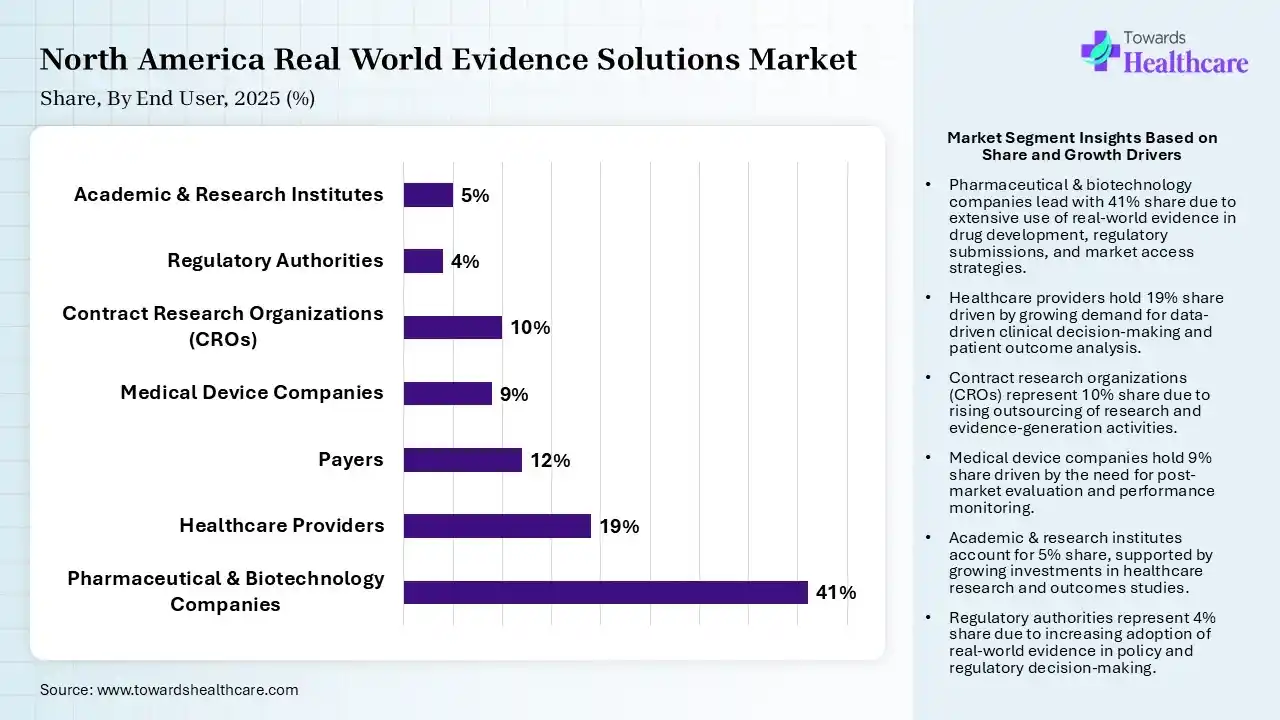
| Segment | Share 2025 (%) |
| Pharmaceutical & Biotechnology Companies | 41% |
| Healthcare Providers | 19% |
| Payers | 12% |
| Medical Device Companies | 9% |
| Contract Research Organizations (CROs) | 10% |
| Regulatory Authorities | 4% |
| Academic & Research Institutes | 5% |
The Pharmaceutical & Biotechnology Companies Segment led the North America Real World Evidence Solutions Market in 2025
The pharmaceutical & biotechnology companies segment contributed the largest market share of 41%, as RWE technology deepens understanding of treatment properties and patient results, but also accelerates the drug development technology, creating it more effective and centred around patients. RWE allows research on more varied and high-risk patient groups, which is also challenging for RCTs.
The healthcare providers segment held a significant share of 19% in the market. Real-world evidence (RWE) authorizes payers and providers to create more up-to-date, affordable treatment and coverage decisions by addressing crucial knowledge gaps. This technology in healthcare transforms drug development, safety, and patient results with IT and government support.
The payers segment held a significant share of 12% in the North America real world evidence solutions market, as payers, RWE, on the scientific validity and efficacy of a specific technology used in pre- and post-market assessments to inform value negotiations and future funding and reimbursement arrangements with producers. Payers observe from real-world evidence, including informed safety monitoring, use management, and cost or value examination.
The contract research organizations (CROs) segment held a significant share of 10% in the market, and is expected to grow at the fastest CAGR during the forecast period. The incorporation of real-world evidence (RWE) in early advantages assessments significantly expedites drug approvals by offering substantial data that supplements traditional clinical trial processes.
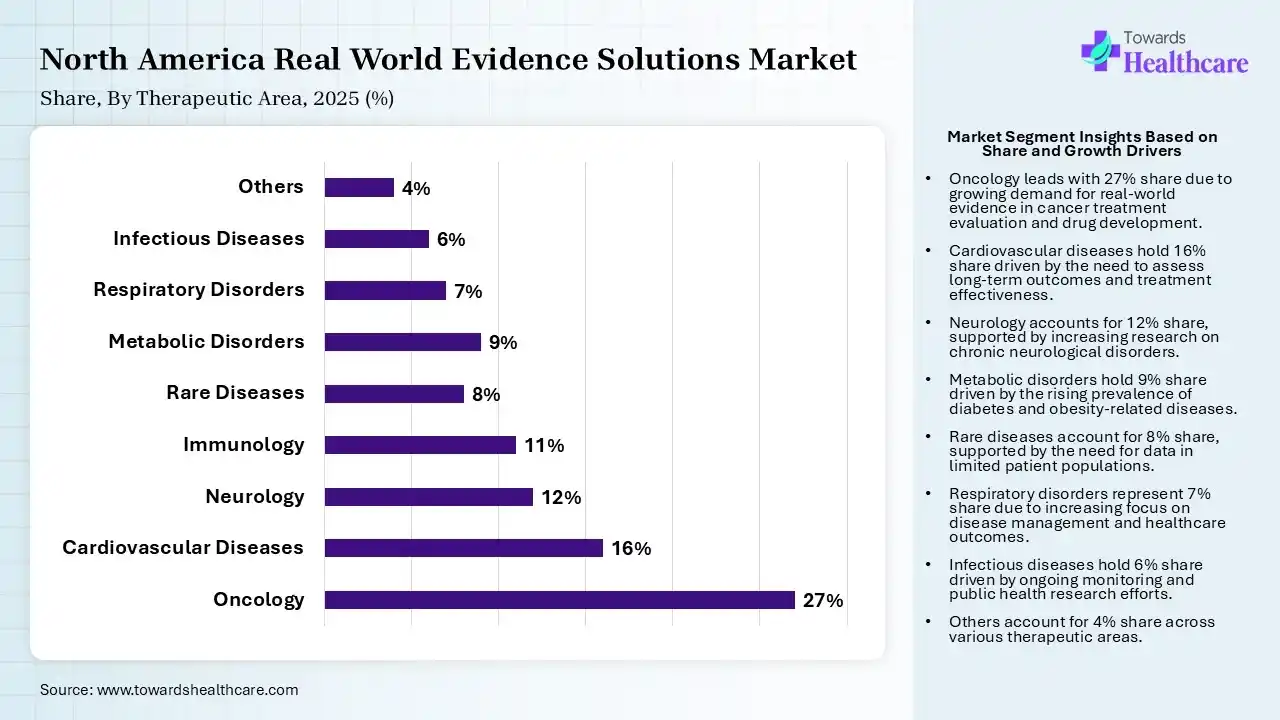
| Segment | Share 2025 (%) |
| Oncology | 27% |
| Cardiovascular Diseases | 16% |
| Neurology | 12% |
| Immunology | 11% |
| Rare Diseases | 8% |
| Metabolic Disorders | 9% |
| Respiratory Disorders | 7% |
| Infectious Diseases | 6% |
| Others | 4% |
The Oncology Segment led the North America Real World Evidence Solutions Market in 2025
The oncology segment contributed the largest market share of 27%, as RWE enables investigators to classify patient populations that precisely reflect the real-world demographic and clinical properties of those who eventually receive the therapy. Early-phase cancer trials often include single-arm trials due to ethical and logistical complexities related to using placebo or standard-of-care controls.
The cardiovascular diseases segment held a significant share of 16% in the market. Real-world evidence supports stratifying patients or classifying them according to risk, such as low-, medium, or high-risk. RWE enables a more inclusive understanding of treatment effects in varied patient populations, offering insights that reflect real-life healthcare settings.
The neurology segment held a significant share of 12% in the North America real world evidence solutions market, as RWE supports clinical advancement, reduces healthcare challenges, improves patient satisfaction, and satisfies payer and supervisory obligations. Neurological diseases are progressive and need long-term management.
The rare diseases segment held a significant share of 8% in the market and is expected to grow at the fastest CAGR during the forecast period, as the evolution of real-world evidence (RWE) provides a hopeful service to overcome these complexities and reshape the landscape of novelty in rare diseases. RWE offers a significant tool to address these complexities and hasten novel research in rare disease research and advancement
The North America real world evidence solutions market is expanding as regulatory bodies increasingly mandate RWE to accelerate drug approvals. To lower soaring clinical trial costs, pharmaceutical companies utilize advanced artificial intelligence to analyze electronic health records and wearable data. Furthermore, a regional shift toward value-based pricing and a rising geriatric population drive demand, allowing providers to demonstrate treatment efficacy and optimize product lifecycle strategies.
US Market Trends
The United States contributed the largest market share of 85%, as the U.S. Food and Drug Administration (FDA) has significantly fostered the integration of RWE into monitoring decisions, dispensing draft guidance detailing information standards, research designs, and regulatory considerations for drug supports and label expansions.
Canada Market Trends
Canada held a significant share of 10% in the market, as Canada's potential as a source for real-world evidence involves its diverse populace, which confirms wide illustration of real-world results, and its comprehensive data capture, which reduces missing data and improves the reliability of research results
Mexico Market Trends
Mexico held a significant share of 5% in the market, as Mexico has advanced real-world evidence services, which are mainly driven by an aging population and the increasing prevalence of long-term diseases. Mexican patients present a high degree of devotion and enduring relationships with their doctors. This results in remarkably low dropout rates in clinical associates, protecting the integrity of longitudinal information
R&D:
Manufacturing Processes:
Patient Services:
| Company | Headquarters | Latest Update |
| HealthVerity | United States | In September 2025, HealthVerity, the leader in real-world data (RWD) technologies and privacy-compliant data exchange, launched HealthVerity eXOs. |
| Optum | United States | Optum leverages its inclusive health data infrastructure to deliver real-world evidence services, helping with drug development. |
| Oracle | United States | Oracle offers a suite of real-world evidence (RWE) solutions tailored for life sciences and medical care. |
| IQVIA | United States | IQVIA integrates AI-based analytics, natural language processing (NLP), and orchestrated analytics to automate research design. |
| Flatiron Health | United States | Flatiron's real-world evidence (RWE) brings together high-fidelity, global real-world data, deep oncology proficiency, and AI-driven intelligence. |
In December 2025, "We're removing unnecessary barriers that have prevented us from using powerful real-world evidence to get life-changing treatments to patients faster," said FDA Commissioner Marty Makary, M.D., M.P.H. "This common-sense reform will unlock access to vast databases like cancer and cystic fibrosis registries that contain critical insights about how treatments work in the real world."
By Component
By Deployment Mode
By Data Source
By Applications
By End User
By Therapeutic Area
By Region










Principal Consultant
Rohan Patil is a seasoned market research professional with over 5+ years of focused experience in the healthcare sector, bringing deep domain expertise, strategic foresight, and analytical precision to every project he undertakes.
Learn more about Rohan Patil

Reviewed By
Aditi Shivarkar is a seasoned professional with over 14 years of experience in healthcare market research. As a content reviewer, Aditi ensures the quality and accuracy of all market insights and data presented by the research team.
Learn more about Aditi Shivarkar