Pipeline Programs

CGT Companies Tracked

Manufacturing Facilities


The global plant-based excipients market size was estimated at USD 2.09 billion in 2025 and is predicted to increase from USD 2.18 billion in 2026 to approximately USD 3.19 billion by 2035, expanding at a CAGR of 4.32% from 2026 to 2035.
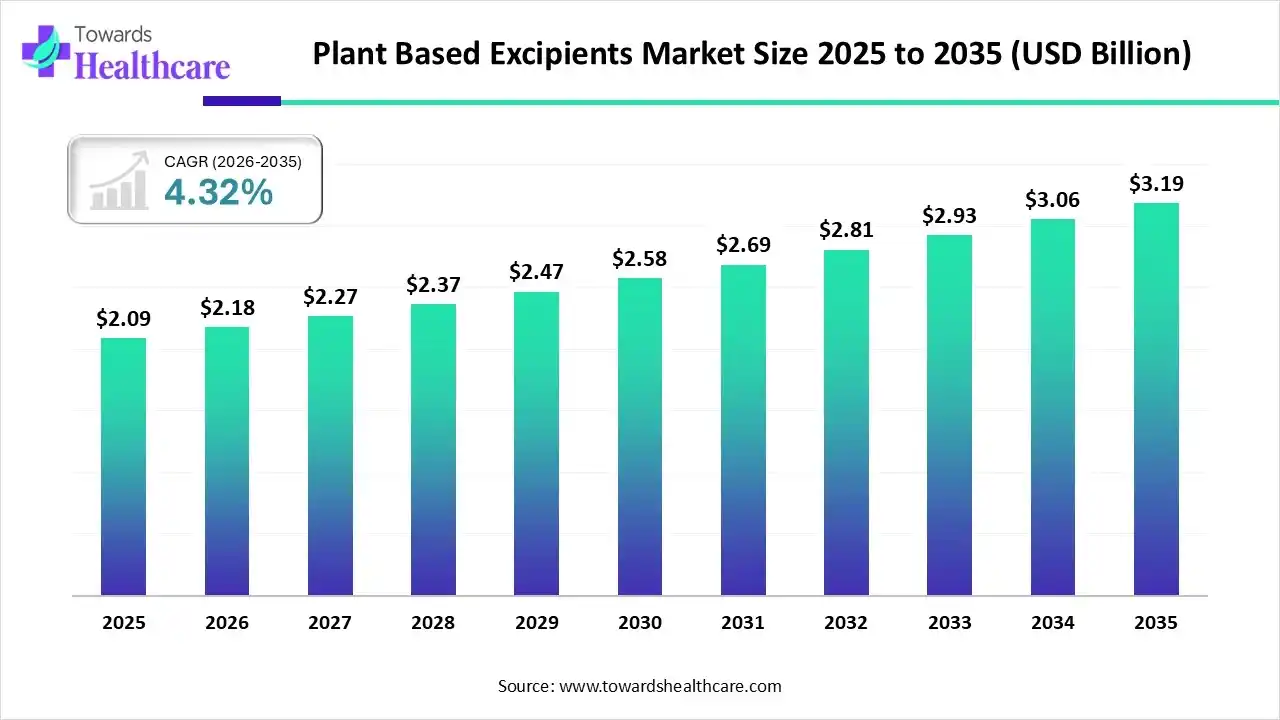
The plant-based excipients market is witnessing steady growth, driven by rising demand for clean-label, sustainable, and health-focused products, with expanding use across food and beverages, nutraceuticals, cosmetics, and animal nutrition industries.
Plant-based excipients are inactive pharmaceutical ingredients derived from natural plant sources, used to aid drug formulation, stability, delivery, and manufacturing without providing therapeutic effects. The plant-based excipients market is growing due to the rising demand for natural, clean-label, and sustainable pharmaceutical ingredients. Increasing focus on patient safety, biocompatibility, and reduced side effects is encouraging the shift from synthetic excipients. growth in herbal medicine, nutraceuticals, and vegan-friendly drug formulation, along with regulatory support for naturally derived materials, is further accelerating market adoption globally.
Also, pharmaceutical manufacturers have been growing their investment in R&D in order to develop new plant-derived excipients that are functional and perform well in newer drug delivery systems. Increased consumer awareness of the need for environmentally-friendly products, as well as the need for sustainability in sourcing, also drives growth. Plant-based excipients are biodegradable and non-toxic, as well as being compatible with a wide variety of formulations, making them ideal for use by the pharmaceutical industry. The growing prevalence of chronic diseases and rising demand for personalized medicine, along with the increase in pharmaceutical manufacturing in developing countries, will continue to provide growth opportunities for the excipient market over the next several years.
Artificial intelligence is transforming the plant-based excipients market by accelerating ingredient discovery, optimizing formulation performance, and improving quality control. AI-driven data analytics helps identify suitable plant sources, predict excipient behavior, and ensure batch consistency. Additionally, AI supports efficient manufacturing, regulatory compliance, and cost optimization, enabling faster product development and wider adoption of sustainable, plant-derived excipients in pharmaceutical and nutraceutical applications.
| Key Elements | Scope |
| Market Size in 2026 | USD 2.18 Billion |
| Projected Market Size in 2035 | USD 3.19 Billion |
| CAGR (2026 - 2035) | 4.32% |
| Leading Region | North America |
| Key Applications | Tablets, capsules, oral solid dosage forms, controlled-release formulations, coatings, binders, fillers/diluents, disintegrants, suspending agents, film-forming agents, nutraceutical formulations |
| Primary End Users | Pharmaceutical companies, generic drug manufacturers, biotechnology companies, nutraceutical companies, CDMOs, formulation developers, research organizations |
| Key Challenges | Raw material variability, regulatory compliance requirements, supply chain dependency on agricultural sources, performance consistency compared with synthetic excipients |
| Measurable Values | USD Millions/Units/Volume |
| Market Segmentation | By Chemical Nature, By Applications and Function, By Region |
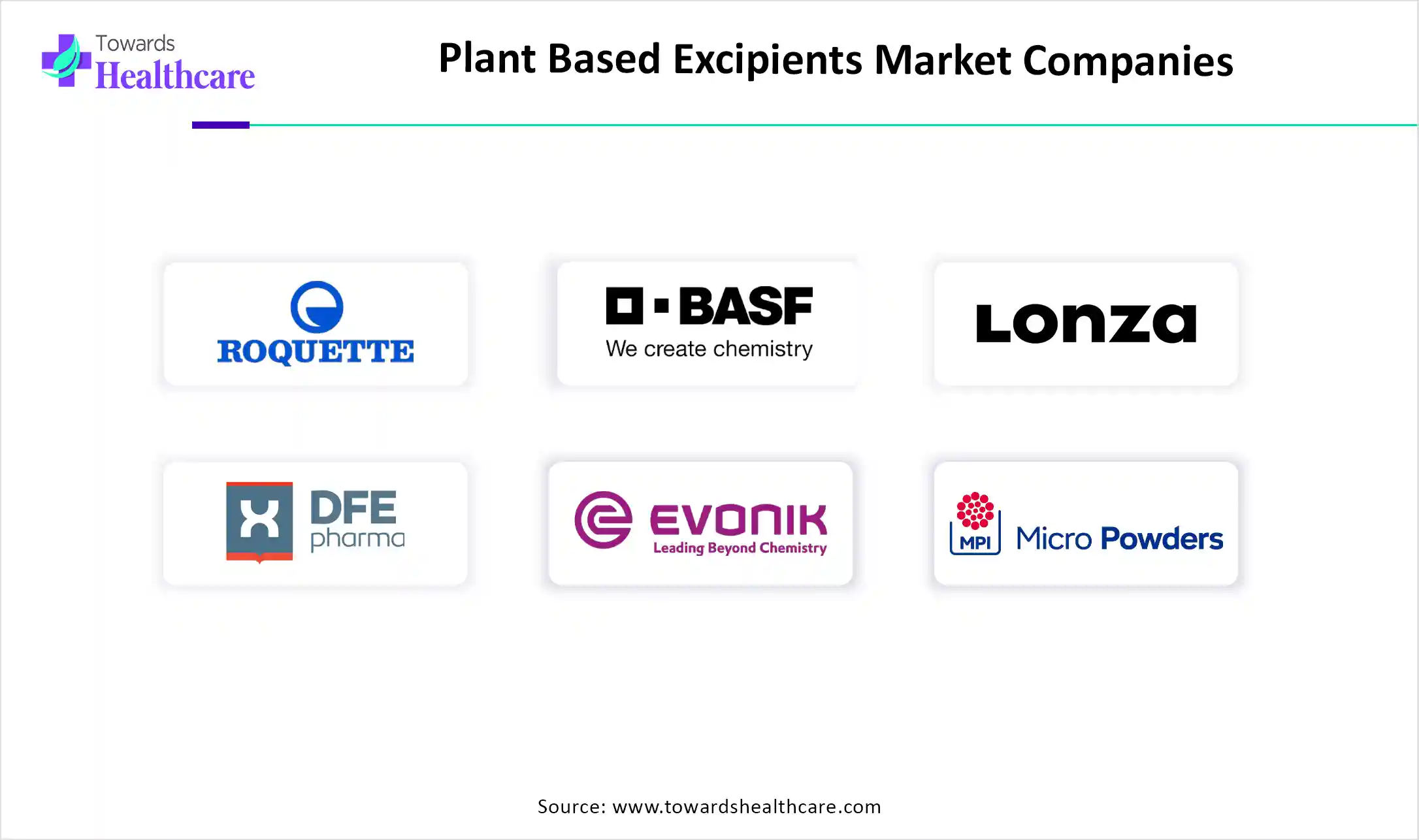
| Top Key Players | Roquette Frères, BASF Corporation (BASF SE), Lonza Group AG, DFE Pharma, Evonik Industries AG, Micro Powders, Inc. |
Why Did the Carbohydrates Segment Dominate in the Market in 2025?
The carbohydrates segment dominates the plant-based excipients market because carbohydrates like starches, cellulose, and gums are highly versatile, water-soluble, and biocompatible. They provide excellent binding, thickening, and stabilizing properties in pharmaceutical and nutraceutical formulations. Their natural origin, low toxicity, and compatibility with various active ingredients make them ideal for controlled-release and immediate-release formulations. These characteristics, combined with cost-effectiveness and wide availability, have positioned carbohydrates as the most widely used plant-based excipients globally.
Ethers & Carboxylic Acids
The ethers & carboxylic acids segments are expected to grow at the fastest CAGR because these excipients offer enhanced solubility, stability, and controlled-release properties in formulations. Their chemical versatility allows improved drug delivery, bioavailability, and compatibility with diverse active ingredients. Increasing demand for advanced, high-performance plant-based excipients in pharmaceuticals and nutraceuticals is driving rapid adoption and fueling market growth during the forecast period.
How the Binders & Diluents Segment Dominated the Market in 2025?
The binders & diluents segments dominated the plant-based excipients market in 2025 because these excipients are essential for ensuring tablet cohesion, stability, and proper dosage uniformity. Their natural origin, safety, and compatibility with a wide range of active pharmaceutical ingredients make them highly preferred in formulations. Growing demand for clean-label, sustainable, and effective drug delivery systems further reinforced their leading position in the market.
Film Forming & Coating Agents
The film-forming & coating agents segment is expected to grow at a notable rate during the forecast period because these plant-based excipients enhance tablet stability, controlled release, and taste masking. Rising demand for natural, clean-label, and patient-friendly oral dosage forms, along with innovations in plant-derived polymers, is driving their increased adoption in pharmaceutical and nutraceutical formulations globally.
North America dominated the market in 2025 due to strong pharmaceutical and nutraceutical industries, high consumer awareness of natural and clean-label products, and strict regulatory standards favoring safe, plant-derived ingredients. Advanced R&D infrastructure, rapid adoption of innovative formulations, and growing demand for sustainable and biocompatible excipients further strengthened the region's leading position in the global market.
U.S. Market Trends
The U.S. led the market in 2025 by capturing the largest revenue share due to its advanced pharmaceutical and nutraceutical sectors, high consumer preference for natural and clean-label products, and strong regulatory support for safe, plant-derived ingredients. Robust R&D activities, widespread adoption of innovative formulations, and increasing demand for sustainable and biocompatible excipients further strengthened the country’s market dominance.
Canada Market Trends
Canada's plant-based excipients industry is seeing ongoing developments due to the increased popularity of using naturally sourced medicinal materials, expanding markets for nutraceuticals, and increasing preferences for eco-friendly and sustainable health care items and services. Manufacturers are using plant-based excipients in their products because they want to comply with clean label standards while also providing goods that have a higher degree of biocompatibility when mixed with medication.
Mexico Market Trends
Mexico's plant-based excipients market has also had limited growth, but this trend is changing as the pharmaceutical manufacturing industry continues to expand, more consumers want to buy natural products, and companies that provide pharmaceutical products are increasingly using herbal products. The demand by pharmaceutical manufacturers for more sustainable, cost-effective ingredients for creating their products is helping to drive the growth of the plant-based excipient market in Mexico.
Asia Pacific is expected to grow at a faster CAGR in the market during the forecast period due to rising pharmaceutical and nutraceutical manufacturing, increasing consumer awareness of natural and clean-label products, and cost-effective production capabilities. Expanding healthcare infrastructure, supportive regulations, and growing demand for sustainable and biocompatible excipients are further driving rapid market adoption in the region.
India Market Trends
India is anticipated to grow at a rapid CAGR in the market during the forecast period due to its expanding pharmaceutical and nutraceutical industries, low manufacturing costs, and increasing focus on natural and clean-label products. Supportive government initiatives, rising healthcare infrastructure, and growing consumer preference for sustainable and safe excipients are driving strong market adoption across the country.
Japan Market Trends
Japan's plant-based excipient market benefits from strong interest in natural health products, advancements in pharmaceutical research, and greater demand for top-quality formulation ingredients in pharmaceutical products. Pharmaceutical companies use plant-based excipients to give customers assurance about product safety and to enhance product performance and environmental sustainability.
China Market Trends
China's plant-based excipient market is one of the fastest-growing in the world due to the existence of one of the largest pharmaceutical sectors in the world, an expanding market for traditional medicine, increasing emphasis on producing products that are environmentally friendly and environmentally sustainable, and an increase in the use of naturally occurring ingredients in the development of drug formulation and nutraceutical products.
Europe is expected to grow at the fastest CAGR in the market during the forecast period due to strict regulatory emphasis on sustainability, safety, and clean-label formulations. Strong demand for natural pharmaceutical ingredients, increasing adoption of eco-friendly excipients, advanced R&D capabilities, and rising use in nutraceutical and specialty drug formulations are driving rapid market expansion across the region.
UK Market Trends
The UK is anticipated to grow at the fastest CAGR in the plant-based excipients market during the forecast period due to strong emphasis on sustainable healthcare solutions and clean-label pharmaceutical formulations. Rising investment in pharmaceutical R&D, increasing adoption of natural excipients, supportive regulatory frameworks, and growing demand from nutraceutical and specialty drug manufacturers are collectively accelerating market growth across the country.
Germany Market Trends
Germany is one of the foremost European countries that is currently enjoying an abundance of plant-based excipient opportunities and a robust demand for sustainable pharmaceutical ingredient resources, innovative and technologically advanced drug manufacturing, and compliance with required governmental environmental regulations, all of which continue to encourage increased use of natural plant-based excipient materials in pharmaceutical applications.
France Market Trends
France’s plant-based excipients market will continue to experience growth due to an increase in consumer demand for natural ingredients, advances in pharmaceutical innovation, and government support of eco-friendly production processes. In addition, there is a growing demand for plant-based formulation materials for all applications within the pharmaceutical, nutraceutical, and healthcare industries.
| Category | Market Participants & Role |
| Technology Providers | Companies developing extraction, purification, modification, and processing technologies for plant-derived polymers such as cellulose derivatives, starch derivatives, and gums. |
| Product Manufacturers | Global excipient manufacturers producing cellulose, starch, coating agents, binders, fillers, and other plant-derived pharmaceutical ingredients. |
| Service Providers | Formulation development companies, analytical testing providers, regulatory consulting firms, and pharmaceutical ingredient suppliers. |
| Platform Providers | Digital pharmaceutical supply chain and ingredient sourcing platforms supporting pharmaceutical manufacturers. |
| CROs/CDMOs | Pharmaceutical development and manufacturing partners supporting formulation optimization using plant-based excipients. |
| Software Vendors | Regulatory management, formulation modeling, quality management, and pharmaceutical manufacturing software providers. |
| Research Institutions | Universities and pharmaceutical research centers studying natural polymers, drug delivery systems, and sustainable excipient technologies. |
| End-User Industries | Pharmaceutical manufacturing, nutraceuticals, biotechnology, consumer healthcare, and specialty drug development sectors. |
R&D
Clinical Trials
Regulatory Approvals
| Tier 1 | Tier 2 | Tier 3 | |
| Typical Market Influence | 62% | 27% | 11% |
| Tier 1 | ||||
| Company Name | Headquarters | Country | Why Relevant to This Market | Key Products/Services |
| Ashland Global Holdings Inc. | Wilmington, Delaware, USA | USA | One of the largest global pharmaceutical excipient suppliers with strong presence in cellulose-based and plant-derived ingredients. | Benecel™ cellulose ethers, pharmaceutical excipients, controlled-release formulation solutions |
| DuPont | Wilmington, Delaware, USA | USA | Major supplier of pharmaceutical excipients through its Nutrition & Biosciences heritage and ingredient portfolio. | METHOCEL™ cellulose ethers, pharmaceutical formulation ingredients |
| Roquette | Lestrem, France | France | Global leader in plant-based ingredients, especially starch derivatives and pharmaceutical excipients. | PEARLITOL® mannitol, LYCOAT® pea starch, plant-based excipients |
| Tier 2 | ||||
| Company Name | Headquarters | Country | Why Relevant to This Market | Key Products/Services |
| Evonik Industries | Essen, Germany | Germany | Provides pharmaceutical excipients and drug delivery materials supporting advanced formulations. | EUDRAGIT® polymers, pharmaceutical formulation technologies |
| Kerry Group | Tralee, Ireland | Ireland | Supplies natural and functional ingredients used in healthcare and pharmaceutical applications. | Natural polymers, functional ingredients, formulation solutions |
| JRS Pharma | Rosenberg, Germany | Germany | Specialized pharmaceutical excipient manufacturer focused on plant-derived cellulose products. | VIVAPUR® microcrystalline cellulose, VIVAPHARM® excipients |
| Tier 3 | ||||
| Company Name | Headquarters | Country | Why Relevant to This Market | Key Products/Services |
| Nitika Pharmaceutical Specialities Pvt Ltd | Nagpur, Maharashtra, India | India | Indian excipient manufacturer supplying pharmaceutical-grade ingredients. | Excipients, formulation ingredients |
| Ankit Pulps and Boards Pvt Ltd | Ahmedabad, Gujarat, India | India | Produces cellulose-based pharmaceutical raw materials. | Microcrystalline cellulose, cellulose products |
| Sigachi Industries | Hyderabad, Telangana, India | India | Major producer of microcrystalline cellulose used as pharmaceutical excipient. | MCC products for tablets and capsules |
Strengths
Weaknesses
Opportunities
Threats
By Chemical Nature
By Applications and Function
By Region




Reviewed By
Aditi Shivarkar is a seasoned professional with over 14 years of experience in healthcare market research. As a content reviewer, Aditi ensures the quality and accuracy of all market insights and data presented by the research team.
Learn more about Aditi Shivarkar