

Pipeline Programs

CGT Companies Tracked

Manufacturing Facilities


The global separation systems for commercial biotechnology market size was estimated at USD 29.57 billion in 2025 and is predicted to increase from USD 31.27 billion in 2026 to approximately USD 56.72 billion by 2035, expanding at a CAGR of 6.84% from 2026 to 2035.
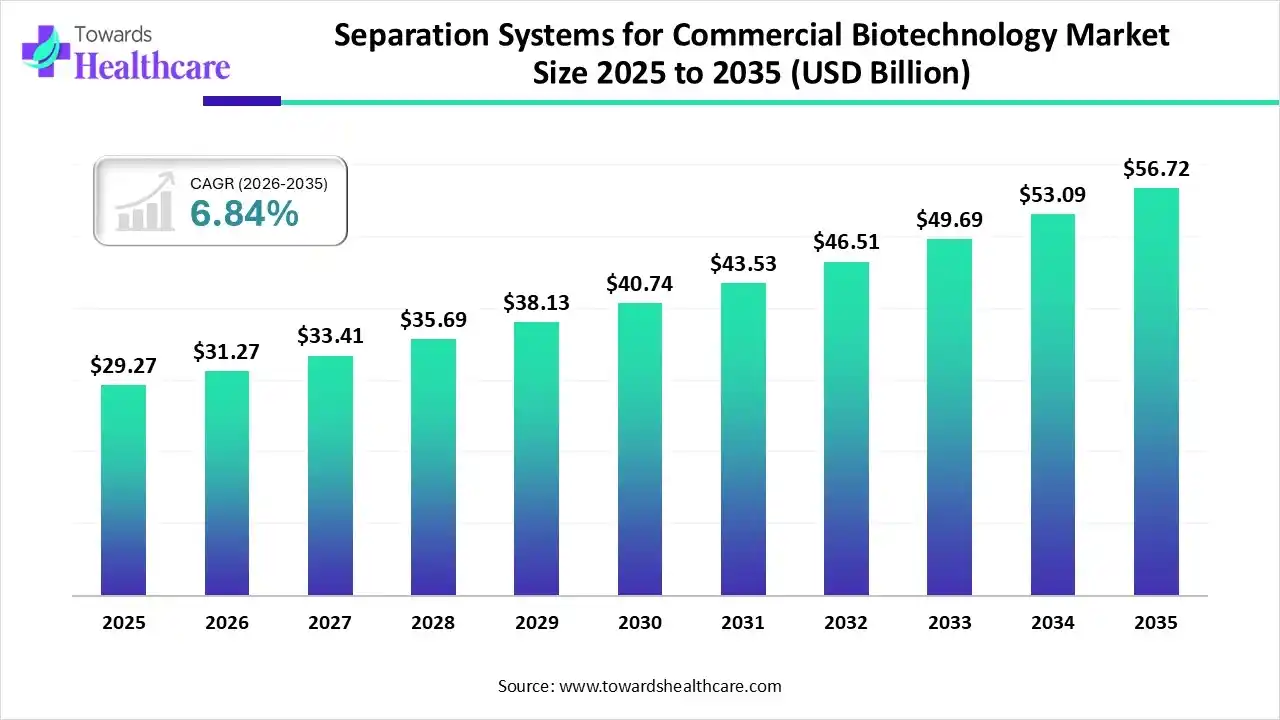
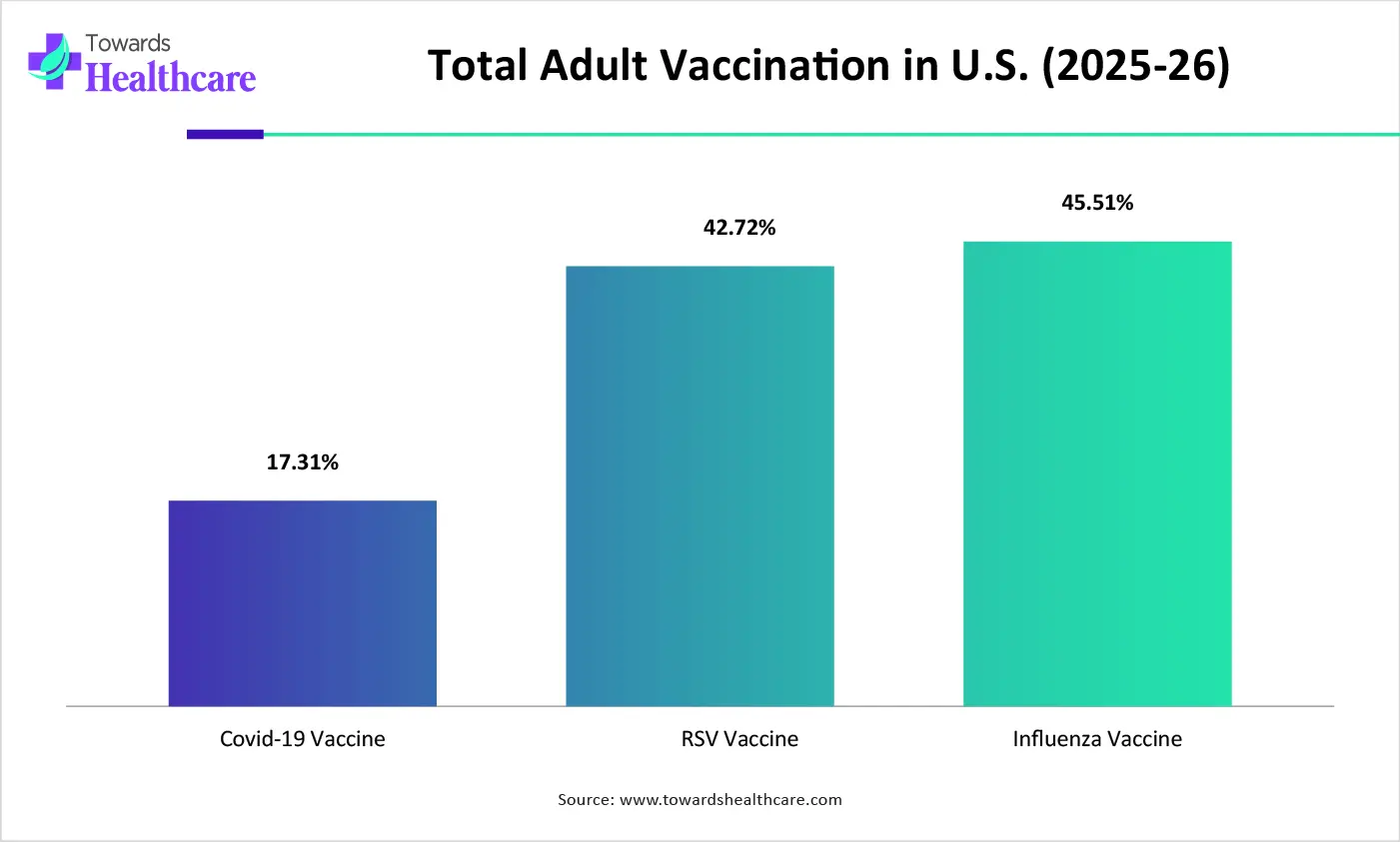
The growing advancements in biologics, therapies, and vaccines are increasing the use of separation systems for commercial biotechnology. AI technologies are also being utilized, where companies are launching new methods, promoting market growth.
The separation systems for commercial biotechnology market is driven by growing demand for personalized cell therapies, vaccines, and monoclonal antibodies. The separation systems for commercial biotechnology refer to systems and technologies used in biotechnological processes such as enzyme production, fermentation, and cell culture for various applications, like purification, isolation, and recovery of specific cells or biomolecules.
Biologic production growth, increased investment in biopharmaceutical research and development, and greater demand for high-quality therapeutic products are driving the growth of the separation systems market. Increasing reliance on continuous bioprocessing and single-use technology is also driving demand for effective and scalable solutions for separation processes. Improvements in automation, process analytics, and membrane technologies are increasing productivity and reducing operational costs. The continued development of biopharmaceutical activities in emerging markets, along with increased contract manufacturing service providers and more stringent regulatory requirements, will create new opportunities for growth in the separation systems market over the next several years.
The use of AI in the separation systems for commercial biotechnology market is increasing, as they help in the optimization of various process parameters. It also helps in regular maintenance by detecting membrane fouling and equipment failure. AI also helps in enhancing the product purity and yield by its automated controls, where it also reduces the error, enhancing their stability and product consistency.
Growth in Advanced Therapies
The growing application and awareness of cell and gene therapies are increasing their acceptance rates, development, and innovations, which is driving the demand for separation systems.
Blooming Single-Use Technologies
To reduce the contamination risk, frequent validation and cleaning, as well as companies, are adopting single-use separation systems, such as single-use filtration and chromatography columns.
Shift Towards Continuous Processing
The companies are focusing on the use of continuous manufacturing processes rather than batch processes to improve productivity, which is increasing the use of separation systems by integrating them with upstream and downstream units.
| Key Elements | Scope |
| Market Size in 2026 | USD 31.27 Billion |
| Projected Market Size in 2035 | USD 56.72 Billion |
| CAGR (2026 - 2035) | 6.84% |
| Leading Region | North America |
| Key Applications | Protein purification, monoclonal antibody manufacturing, vaccine production, chromatography, filtration, centrifugation, cell separation, viral vector purification, plasmid DNA purification, biologics downstream processing |
| Primary End Users | Biopharmaceutical companies, biotech companies, CDMOs, CROs, academic research centers, pharmaceutical manufacturers |
| Key Growth Drivers | Increasing biologics production, rising demand for monoclonal antibodies, expansion of cell & gene therapy manufacturing, automation of bioprocessing, demand for single-use technologies |
| Measurable Values | USD Millions/Units/Volume |
| Market Segmentation | By Method, By Application, By Region |
| Top Key Players | Thermo Fisher Scientific Inc., Danaher Corporation, Merck KGaA, Sartorius AG, Agilent Technologies, Inc., Bio-Rad Laboratories, Inc., Waters Corporation, Repligen Corporation, Shimadzu Corporation, Eppendorf SE |
Which Method Type Segment Held the Dominating Share of the Market in 2025?
The conventional methods segment held the dominating share in the separation systems for commercial biotechnology market in 2025, due to their proven reliability. At the same time, they offered improved scalability and enhanced affordability, which also increased their use. Moreover, their compliance with regulatory standards also increased their use.
Modern Methods
The modern methods segment is expected to show the highest growth during the predicted time, due to their improved selectivity and product quality. They also help in maintaining the product purity, which is increasing their use in the development of various complex biologics. Their faster separation process and high yields are also increasing their demand.
What Made Pharmaceutical the Dominant Segment in the Market in 2025?
The pharmaceutical segment held the largest share in the separation systems for commercial biotechnology market in 2025, due to stringent quality and purity standards. The growth in the development of complex biologics, vaccines, and therapies also increased the use of separation systems. Furthermore, the growth in R&D activities also increased their demand for various applications.
Food & Cosmetics
The food & cosmetics segment is expected to show the fastest growth rate during the upcoming years, due to growing consumer awareness. At the same time, the growing demand for natural ingredients and increasing use of nutraceuticals are also increasing the demand for separation systems to maintain the product's purity, quality, and enhance its yield.
North America dominated the separation systems for commercial biotechnology market in 2025, due to the presence of robust biotechnology and pharmaceutical industries. The growth in R&D investments and the presence of advanced healthcare infrastructure also increased the adoption rates of these separation systems. Moreover, the growing technological advancements also contributed to the market growth.
U.S. Market Trends
The U.S. consists of well-developed industries that use separation systems for the development of various biotechnology, pharmaceutical, and cosmetic products. The growing healthcare investments and innovations are also increasing their adoption rates, where the presence of stringent regulations is also increasing their applications.
Canada Market Trends
Increasing amounts of biopharmaceutical production, an increase in biotech research, and a high level of support from the government for life science innovation are driving the growth of the separation systems for the commercial biotechnology market in Canada. In addition, there is a growing need for efficient purification and downstream processing technologies that will increase the use of advanced separation systems.
Mexico Market Trends
The separation systems for the commercial biotechnology market in Mexico are exhibiting stable growth, supported by continued growth in the production of pharmaceuticals and biopharmaceuticals and increasing investments in biotechnology. The continued demand for high-quality biologics and improved production efficiencies is driving the adoption of modern filtration, chromatography, and separation technologies.
Asia Pacific is expected to host the fastest-growing separation systems for commercial biotechnology market during the forecast period, due to expanding industries. At the same time, the growing biologics development and increasing use of advanced therapies due to increasing government initiatives are also promoting the use of separation systems. Additionally, growing outsourcing trends are also enhancing the market growth.
China Market Trends
The expanding biotechnology industries in China are increasing the adoption of separation systems. The growing government initiatives and increasing demand for biologics are also increasing their acceptance rates. Additionally, the growing outsourcing trends and technological innovations are also encouraging their use.
India Market Trends
A rapidly expanding market exists in India for the separation systems used in commercial biotechnology, due to an active and growing biopharmaceutical sector, increasing production of vaccines, and significant investment in the biotechnology sector. Increased investment in the production of biologics and the development of biosimilars should provide increasing opportunities for advanced purification and separation solutions.
Japan Market Trends
The separation systems for commercial biotechnology in Japan have benefited from advanced biophotechnology research, innovative and successful pharmaceutical development, and increasing production of biologics. There is a strong emphasis on providing and using highly pure products and efficient downstream processes, which are encouraging the use of sophisticated separation techniques in all areas of the biotech industry.
Europe is expected to grow significantly in the separation systems for commercial biotechnology market during the forecast period, due to growing R&D investments. Moreover, the presence of robust biotechnology and pharmaceutical industries and stringent regulations is also increasing the use of separation systems. Furthermore, the growing therapies and collaboration are also promoting the market growth.
UK Market Trends
The presence of the advanced biopharmaceutical sector in the UK is driving the development of vaccines, advanced technologies, and biologics, which increases the use of separation systems. The presence of robust institutes is also increasing their use for various experiments, where the R&D investment and funding are also encouraging their use.
Germany Market Trend
The commercial market for separation systems for biotechnologies in Germany is strong. There is an established ecosystem for biotechnology companies operating in Germany to access the resources that they need to succeed in developing their technology. In addition, Germany has one of the highest levels of research and development of biopharmaceuticals in Europe. Therefore, there is increasing worldwide demand for separation technologies, and as such, the overall commercial market will continue to grow due to the increasing demand for high-efficiency purification technologies.
Netherlands Market Trend
The Netherlands has a well-established biotechnology industry as well as an extensive research infrastructure. As a result, the Netherlands will continue to grow at a steady rate. The biopharmaceutical marketplace is rapidly expanding due to the increased production of biologics and specialty bioproducts, which drives demand for advanced separation technologies.
|
Ecosystem Category
|
Description |
| Technology Providers | Companies developing chromatography, filtration, separation membranes, centrifugation, and purification technologies for biotechnology manufacturing. |
| Product Manufacturers | Suppliers of bioprocess equipment, consumables, resins, filters, and integrated separation platforms. |
| Service Providers | Companies offering bioprocess development, manufacturing support, validation, and outsourcing services. |
| Platform Providers | Companies providing complete downstream processing platforms combining hardware, software, automation, and consumables. |
| CROs/CDMOs | Organizations providing commercial-scale biologics manufacturing and process development services using separation systems. |
| Software Vendors | Providers of process monitoring, automation, and digital biomanufacturing solutions. |
| Research Institutions | Universities and research organizations developing new separation technologies and bioprocess innovations. |
| End-User Industries | Biopharma, vaccines, cell therapy, gene therapy, regenerative medicine, diagnostics, and pharmaceutical industries. |
R&D
Clinical Trials and Regulatory Approvals
Packaging and Serialization
Distribution to Hospitals, Pharmacies
Patient Support and Services
| Tier 1 | Tier 2 | Tier 3 | |
| Typical Market Influence | 72% | 20% | 8% |
| Tier 1 | ||||
| Company Name | Headquarters | Country | Why Relevant to This Market | Key Products/Services |
| Thermo Fisher Scientific | Waltham, Massachusetts, USA | USA | Global leader in bioprocessing solutions with major commercial biotechnology manufacturing presence. | POROS chromatography, purification systems, single-use bioprocess solutions, downstream processing equipment |
| Danaher Corporation | Washington, D.C., USA | USA | Owns major bioprocess brands serving global biologics manufacturing. | Cytiva chromatography systems, ÄKTA systems, filtration and purification technologies |
| Merck KGaA | Darmstadt, Germany | Germany | Major supplier of bioprocessing materials and separation technologies for biologics. | Millipore filtration systems, chromatography media, single-use technologies |
| Tier 2 | ||||
| Company Name | Headquarters | Country | Why Relevant to This Market | Key Products/Services |
| Repligen Corporation | Waltham, Massachusetts, USA | USA | Specialized supplier focused on bioprocess purification technologies. | Protein A ligands, chromatography columns, filtration technologies |
| Eppendorf SE | Hamburg, Germany | Germany | Provides separation and processing equipment for biotechnology workflows. | Centrifugation systems, bioprocess equipment, cell processing technologies |
| Pall Corporation | Port Washington, New York, USA | USA | Strong filtration and separation technology provider for biopharma manufacturing. | Bioreactor filtration, membrane separation, purification systems |
| Tier 3 | ||||
| Company Name | Headquarters | Country | Why Relevant to This Market | Key Products/Services |
| BIA Separations | AjdovšÄina, Slovenia | Slovenia | Specialized in advanced monolith chromatography technologies. | CIM monolith chromatography systems for biomolecule separation |
| Purolite | King of Prussia, Pennsylvania, USA | USA | Develops chromatography resins for biopharmaceutical purification. | Protein purification resins, chromatography media |
| Asahi Kasei Medical | Tokyo, Japan | Japan | Provides membrane-based separation technologies for medical and biotech applications. | Planova virus filtration systems |
Strengths
Weaknesses
Opportunities
Threats
By Method
By Application
By Region




Principal Consultant
Rohan Patil is a seasoned market research professional with over 5+ years of focused experience in the healthcare sector, bringing deep domain expertise, strategic foresight, and analytical precision to every project he undertakes.
Learn more about Rohan Patil

Reviewed By
Aditi Shivarkar is a seasoned professional with over 14 years of experience in healthcare market research. As a content reviewer, Aditi ensures the quality and accuracy of all market insights and data presented by the research team.
Learn more about Aditi Shivarkar










