


Insmed Moved Closer to $6B Opportunity as PAH Drug Shows Long-Term Durability
Insmed's inhalable candidate presented "impressive" long-term effectiveness in pulmonary arterial hypertension, base on analysts at Guggenheim Partners, with functional and biomarker advancement via one year of follow-up.
Insmed's new therapy sustained functional and biomarker development through 12 months in an open-label extension research of patients with pulmonary arterial hypertension. These advantages "strengthen the case" for Insmed's drug applicant, refered treprostinil palmitil inhalation powder (TPIP), "as the best-in-class inhaled prostanoid," analysts at Guggenheim Partners told investors in a Thursday note. The organization projects peak TPIP sales to top $6 billion in the some planned indications, including pulmonary arterial hypertension (PAH).
12-Month Data Shows Sustained 55-Meter Walk Improvement in Ongoing TPIP Study for PAH
The extension research involves more than 90 patients with PAH who were previously on daily TPIP from lead-in research, also those who were transitioning to the inhaled therapy from placebo. The research was intended to follow participants via 24 months. Twelve-month data presented on Thursday demonstrated functional advancement as measured by the 6-minute walk distance (6MWD). Those who continued ongoing TPIP management saw a 55.7-meter rises in 6MWD, while distance grew by 54.1 meters in those who crossed over from placebo.
NT-proBNP, a biomarker symptomatic of heart strain, released by roughly 60% in both groups, Insmed said.
Guggenheim reffered these findings "impressive," adding that "we come away from this information release with incrementally increasing confidence in the healthcare profile of this product." The firm nevertheless flagged some outstanding concerns, including the extension trial's small sample size and the fact that "we are still multiple years away from any Phase 3 readout for TPIP."
Guggenheim called these findings "impressive," adding that "we come away from this data release with incrementally higher confidence in the clinical profile of this product." The firm nevertheless flagged some outstanding concerns, including the extension trial's small sample size and the fact that "we are still multiple years away from any Phase 3 readout for TPIP."
According to Towards Healthcare, the pulmonary arterial hypertension drugs market is projected to experience significant growth, with estimates suggesting the market size will increase from USD 8.4 billion in 2025 to approximately USD 12.38 billion by 2034, representing a compound annual growth rate (CAGR) of 4.44% from 2026 to 2035, driven by, PAH therapeutics work in various ways to rise blood flow via the lungs. Several medications supports to slow the progression of PAH, and keep feeling healthier, for longer.
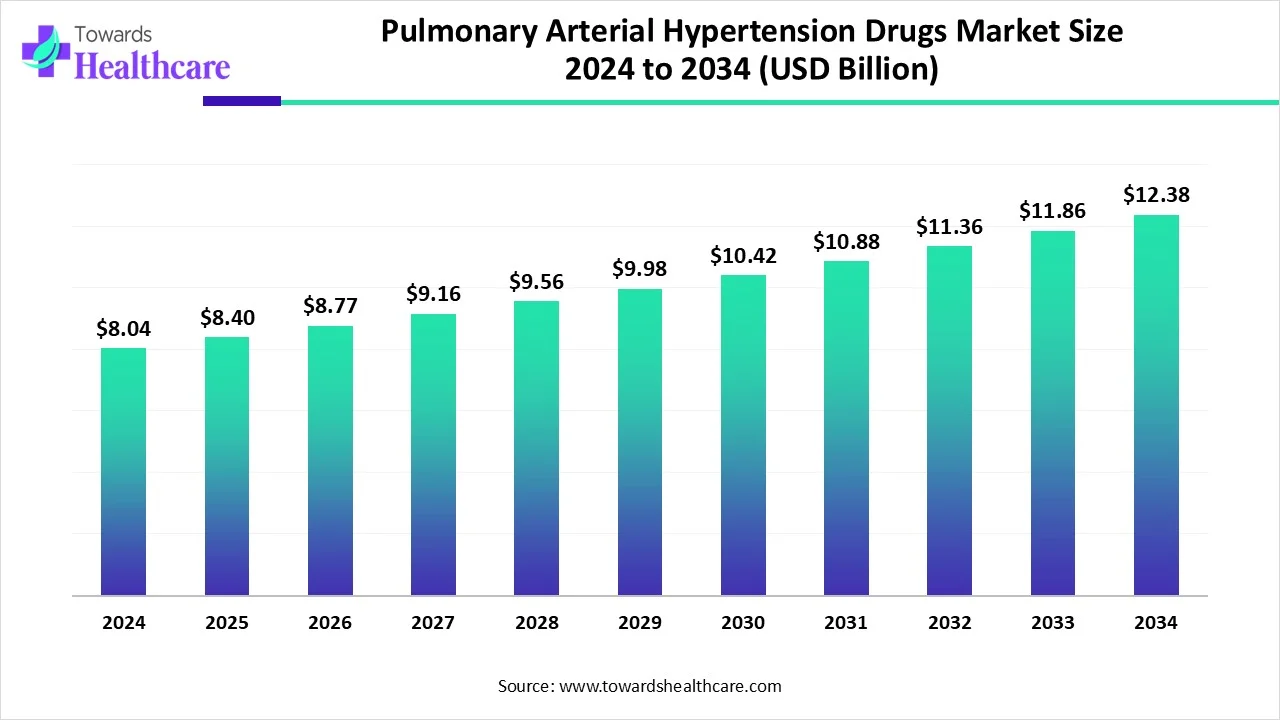
The significant standard for depend on patient health history, symptom seriouness, preferences, and various factors. Pulmonary arterial hypertension (PAH) therapeutics provides life-transforming advantages by relaxing narrowed pulmonary arteries, lessening the workload on heart, and enhancing inclusive blood flow. This drugs are important for increasing exercise capacity, enhancing daily symptoms, preventing disease progression, and increasing survival. PAH management taken in various ways, involving oral (pill), inhaled, infused (pump therapy), and injected forms. Handling PAH also involve managing underlying conditions and significantly considering strength of drug interactions, so consulting with a physician to create an individualized management plan is important.
Insmed Incorporated is a pharmaceutical organization focused on the discovery and advancement of drug applicants for the management of metabolic diseases and endocrine disorders with unmet medical requirement. Company's strategy is to precise metabolic defects in the human body by substituting significant regulatory molecules in a physiologically relevant fashion. This organization believe this strategy will translate in the intrinsic safety benefits for companies products in the marketplace. This organization recently have two product candidates in active internal advancement, rhIGF-I/rhIGFBP-3 and rhIGFBP-3. Insmed is a worldwide pharmaceutical organization indicated to renovating the lives of patients with severe and rare diseases.
A recent report by Towards Healthcare highlights that the pulmonary arterial hypertension drugs market is growing as pulmonary arterial hypertension (PAH) is a challenging and progressive disease considered by growing pressure in the pulmonary artery (the blood vessel which carries blood from the heart to the lungs). Patients generally experience shortness of breath, inflammation of ankles and legs, shakiness, or fainting.
PAH is managed in perticular hospital by experts who also needed to intervene aggressively against a severe and fatal disease. PAH-based medications come in various forms such as oral, inhaled and subcutaneous delivered by an IV or injection. The therapeutics for PAH work in a different ways. Some allow blood to flow more easily via the arteries of lungs. Different help heart and lungs work advance. Treatment goal to restore balance in one or more of three substances that are produced by lungs such as endothelin, nitric oxide and prostacyclin. PAH-driven medications provides clinical advantages, particularly in PAH patients with severe haemodynamic damage. Medications for PAH goal to slow the disease's progression and lessen symptoms such as shortness of breath and tiredness, as there is presently no cure to reverse the condition.


